Showing posts with label fat bike rims. Show all posts

Friday, April 28, 2023

Friday News And Views

Jones Bicycles Debuts 29" X 3.25" Crux Tires:

Back when fat bikes were getting hot there were rumors that a 29" fat bike tire might get produced. That wasn't really a very soild thought though, since mold making machines were barely able to crank out 2.5" width 29"er tires at that point and the over-all diameter of such a tire as a 29' X 3.25" tire would easily exceed anything that could make a tire at that point. 

That said, tire companies that weren't necessarily the biggest dogs in the performance bicycle marketplace started doing odder sized tires just to gain a foothold in the market. (See reference to an example below) Vee Tire and Duro Tires are two brands that, while you may not know it, make tons of bicycle tires for lower end bikes and other brands. They just do not have their name front and center when it comes to tires made under their company name. 

You've likely heard about Vee Tire, and you may have used them on a bike, but they are not a "Maxxis" or "Kenda" in the marketplace. Duro is almost unheard of in the performance tire market for bicycles, although they have made popular DH tires in the past. 

So, it wasn't too surprising then when Vee Tire made there Bulldozer model into a 29" X 3.25" tire, which then Jones Bikes adopted as their featured tire on many of their Jones Bikes builds for bikepacking. Now Jones has worked with Duro Tires to bring another, tubeless ready 29" X 3.25" tire in the Crux model. You can check them out here

Ultima Multipath Long Range (Image courtesy of Ultima)
Interesting Molded Composite HPC :

Electrified two wheeled contraptions are a dime a dozen, so when I see one that I actually am interested in, you can bet that there is a good reason why. This bike by Ultima from France is just such an example.

It features technology borrowed from automobile manufacturing and uses an injection molded composite technique to create a unique, monocoque, single-piece structure for the frame and the fork is made in much the same way. I've chosen to highlight Ultima's "Long Range" version of their bike to show here because it has the most radical fork design and is meant for all-roads/terrain. 

Essentially a trekking bike, the Ultima Long range has a single-sided fork, ala a Lefty, with a unique parallelogram linkage suspension, which as far as I can discern is based on a "blade", or leaf spring design. (I could be wrong, but the website isn't 100% clear without me doing more digging)
 

The disc brake arrangement is kind of interesting. It would allow for the rider to remove the front wheel without removing the caliper, but since the caliper is basically upside down, I cannot imagine that debris would not want to collect in the pad area, not to mention moisture. 

But besides this odd design choice, it is a very interesting bicycle. Typically any injection molded type designs in the past have not been successful due to breakage or a lack of stiffness which led to poor user experiences. Examples of this that you may have heard of are GT mountain bikes from the early 2000's and Ross, who were resurrected briefly in the early 2000's and used an injection molded hard tail frame for a few models. 

Ultima is using recycled plastic in this frame and fork and their goal is to use 100% recycled plastic for the French produced frame and fork by 2025. Hopefully they can pull it off, but time will tell. 

The bike weighs a claimed 45lbs plus a little and costs well North of 4K, which in light of many offerings on the market is not bad at all. It's just going to come down to how this frame and fork technology holds up under daily usage.

Drunken Rhino (Image courtesy of Nextie)

Drunken Rhinos & Mammoths: What?!

The world of fat bikes just got a little fatter recently  when Nextie, the Far East carbon rim manufacturer, announced that they have made a 128mm wide carbon fat bike rim with a 120mm internal rim width. Following is a bit of the announcement as seen on Facebook:

"We thought the Xiphias 105mm rim had been compatible enough for the biggest tires currently on the market. But according to the needs of one of our loyal customer fans, who is a fat-bike enthusiast, the Xiphias 105mm is still not wide enough, especially for the ground with very thick snow. Wider rims are much more beneficial. So we decided to design and to develop the world's widest carbon bicycle rim - the Drunken Rhinoceros 128mm. Even though it's an extremely niche product, it's our duty to push the boundaries of carbon fiber cycling if one product could meet the needs of our wide range of customers from all the world."

The identity of the "loyal customer" wasn't hard to figure out for me. That would be Mike Curiak, who is solely responsible for this product's existence. He typically has been the driving force behind fat biking in "trail-less", ungroomed areas where there have been less people and more solitude. You can see Mike's bike he tested these on and read more about how to get the rims here

In the Facebook comments on Nextie's announcement a link was made available to a bike that probably has the widest Over Lock Dimension (OLD) of any production bicycle that I am aware of. The Mammoth Empire, apparently available from the Philippines, has an over 200mm bolt-on rear hub. 

Snip from a YouTube video on the Mammoth Empire fat bike
Okay, so you've got these huge rear traingle widths, a big, wide carbon fiber rim, and what tire? Well, actually, the big tire came first. That would be the Vee Tire Snowshoe 2XL at 5.05" in width, and it is at least that wide. I've seen side by side comparisons with the Bud and Lou Surly 4.8"ers and the Vee 2XL is noticeably bigger. 

But......could we be on the verge of seeing something even wider come out? 

Thanks for reading Guitar Ted Productions! Have a great weekend!

Friday News And Views

Jones Bicycles Debuts 29" X 3.25" Crux Tires:

Back when fat bikes were getting hot there were rumors that a 29" fat bike tire might get produced. That wasn't really a very soild thought though, since mold making machines were barely able to crank out 2.5" width 29"er tires at that point and the over-all diameter of such a tire as a 29' X 3.25" tire would easily exceed anything that could make a tire at that point. 

That said, tire companies that weren't necessarily the biggest dogs in the performance bicycle marketplace started doing odder sized tires just to gain a foothold in the market. (See reference to an example below) Vee Tire and Duro Tires are two brands that, while you may not know it, make tons of bicycle tires for lower end bikes and other brands. They just do not have their name front and center when it comes to tires made under their company name. 

You've likely heard about Vee Tire, and you may have used them on a bike, but they are not a "Maxxis" or "Kenda" in the marketplace. Duro is almost unheard of in the performance tire market for bicycles, although they have made popular DH tires in the past. 

So, it wasn't too surprising then when Vee Tire made there Bulldozer model into a 29" X 3.25" tire, which then Jones Bikes adopted as their featured tire on many of their Jones Bikes builds for bikepacking. Now Jones has worked with Duro Tires to bring another, tubeless ready 29" X 3.25" tire in the Crux model. You can check them out here

Ultima Multipath Long Range (Image courtesy of Ultima)
Interesting Molded Composite HPC :

Electrified two wheeled contraptions are a dime a dozen, so when I see one that I actually am interested in, you can bet that there is a good reason why. This bike by Ultima from France is just such an example.

It features technology borrowed from automobile manufacturing and uses an injection molded composite technique to create a unique, monocoque, single-piece structure for the frame and the fork is made in much the same way. I've chosen to highlight Ultima's "Long Range" version of their bike to show here because it has the most radical fork design and is meant for all-roads/terrain. 

Essentially a trekking bike, the Ultima Long range has a single-sided fork, ala a Lefty, with a unique parallelogram linkage suspension, which as far as I can discern is based on a "blade", or leaf spring design. (I could be wrong, but the website isn't 100% clear without me doing more digging)
 

The disc brake arrangement is kind of interesting. It would allow for the rider to remove the front wheel without removing the caliper, but since the caliper is basically upside down, I cannot imagine that debris would not want to collect in the pad area, not to mention moisture. 

But besides this odd design choice, it is a very interesting bicycle. Typically any injection molded type designs in the past have not been successful due to breakage or a lack of stiffness which led to poor user experiences. Examples of this that you may have heard of are GT mountain bikes from the early 2000's and Ross, who were resurrected briefly in the early 2000's and used an injection molded hard tail frame for a few models. 

Ultima is using recycled plastic in this frame and fork and their goal is to use 100% recycled plastic for the French produced frame and fork by 2025. Hopefully they can pull it off, but time will tell. 

The bike weighs a claimed 45lbs plus a little and costs well North of 4K, which in light of many offerings on the market is not bad at all. It's just going to come down to how this frame and fork technology holds up under daily usage.

Drunken Rhino (Image courtesy of Nextie)

Drunken Rhinos & Mammoths: What?!

The world of fat bikes just got a little fatter recently  when Nextie, the Far East carbon rim manufacturer, announced that they have made a 128mm wide carbon fat bike rim with a 120mm internal rim width. Following is a bit of the announcement as seen on Facebook:

"We thought the Xiphias 105mm rim had been compatible enough for the biggest tires currently on the market. But according to the needs of one of our loyal customer fans, who is a fat-bike enthusiast, the Xiphias 105mm is still not wide enough, especially for the ground with very thick snow. Wider rims are much more beneficial. So we decided to design and to develop the world's widest carbon bicycle rim - the Drunken Rhinoceros 128mm. Even though it's an extremely niche product, it's our duty to push the boundaries of carbon fiber cycling if one product could meet the needs of our wide range of customers from all the world."

The identity of the "loyal customer" wasn't hard to figure out for me. That would be Mike Curiak, who is solely responsible for this product's existence. He typically has been the driving force behind fat biking in "trail-less", ungroomed areas where there have been less people and more solitude. You can see Mike's bike he tested these on and read more about how to get the rims here

In the Facebook comments on Nextie's announcement a link was made available to a bike that probably has the widest Over Lock Dimension (OLD) of any production bicycle that I am aware of. The Mammoth Empire, apparently available from the Philippines, has an over 200mm bolt-on rear hub. 

Snip from a YouTube video on the Mammoth Empire fat bike
Okay, so you've got these huge rear traingle widths, a big, wide carbon fiber rim, and what tire? Well, actually, the big tire came first. That would be the Vee Tire Snowshoe 2XL at 5.05" in width, and it is at least that wide. I've seen side by side comparisons with the Bud and Lou Surly 4.8"ers and the Vee 2XL is noticeably bigger. 

But......could we be on the verge of seeing something even wider come out? 

Thanks for reading Guitar Ted Productions! Have a great weekend!

Monday, November 16, 2020

Carbon Wheels vs Aluminum Wheels: Questions & Answers

Aluminum rimmed Velocity wheel set.
Note: From time to time I get a comment from a reader that deserves to be answered in the format of a post here on the site. One reason being that the answer- or in this case answers- would take too much space up for a comment in the comments section. Secondly, the answer (s) may be of great use to a wider audience, and such answers would not be noted if they are buried in a comment section which many readers would not see. Finally, these sorts of topics are often searched on the internet and again- you won't come across my thoughts if they are buried in a comments section. So, today I attempt to answer the questions a reader asked.  

So, here we go. These are a couple of great questions that I will attempt to answer. Keep in mind that the answers may be different depending upon who you are, what your expectations are, and how you ride. While it is true that no one needs carbon wheels, we are not going to be taking that sort of an approach to logic today, because if we did, we'd all be riding fixed gear bikes with wooden wheels and solid rubber tires yet. Or you know.......walking. Anyway.... 

Question: Why do some folks think that they need carbon fiber rimmed wheels? 

Answer: Well, first of all, you have to be aware. By that I mean a couple of things. One- You need to understand why stiffer wheels in a lateral sense are a good thing. You have to understand why weight matters. You also may need to have ridden some carbon rimmed wheels to get the point driven home. Unless you care about those things, and have considered those things desirable in wheels for your bicycle, carbon fiber rimmed wheels are something of a joke. I mean, why spend more money than my entire bicycle costs? I was one of these people at one time. Spending hundreds of dollars on one rim? Are you joking? 

So, let's assume you were like that, like I was in my thinking about carbon fiber rimmed wheels, okay? What changed my mind? Well, a few things. One- I spoke with a rim manufacturer representative face to face at Sea Otter one year. His company was just coming out with carbon fiber rims for mountain biking. People were scoffing and laughing at this company for even thinking people would consider spending over 1500 for a pair of rims. The company man told me some things that made me think though. One story was that they had taken bare rims, held them above their heads, and smacked them on rocks as hard as they could to see if they could chip them. Beyond some cosmetic scratches, the rims were, seemingly, unbreakable. 

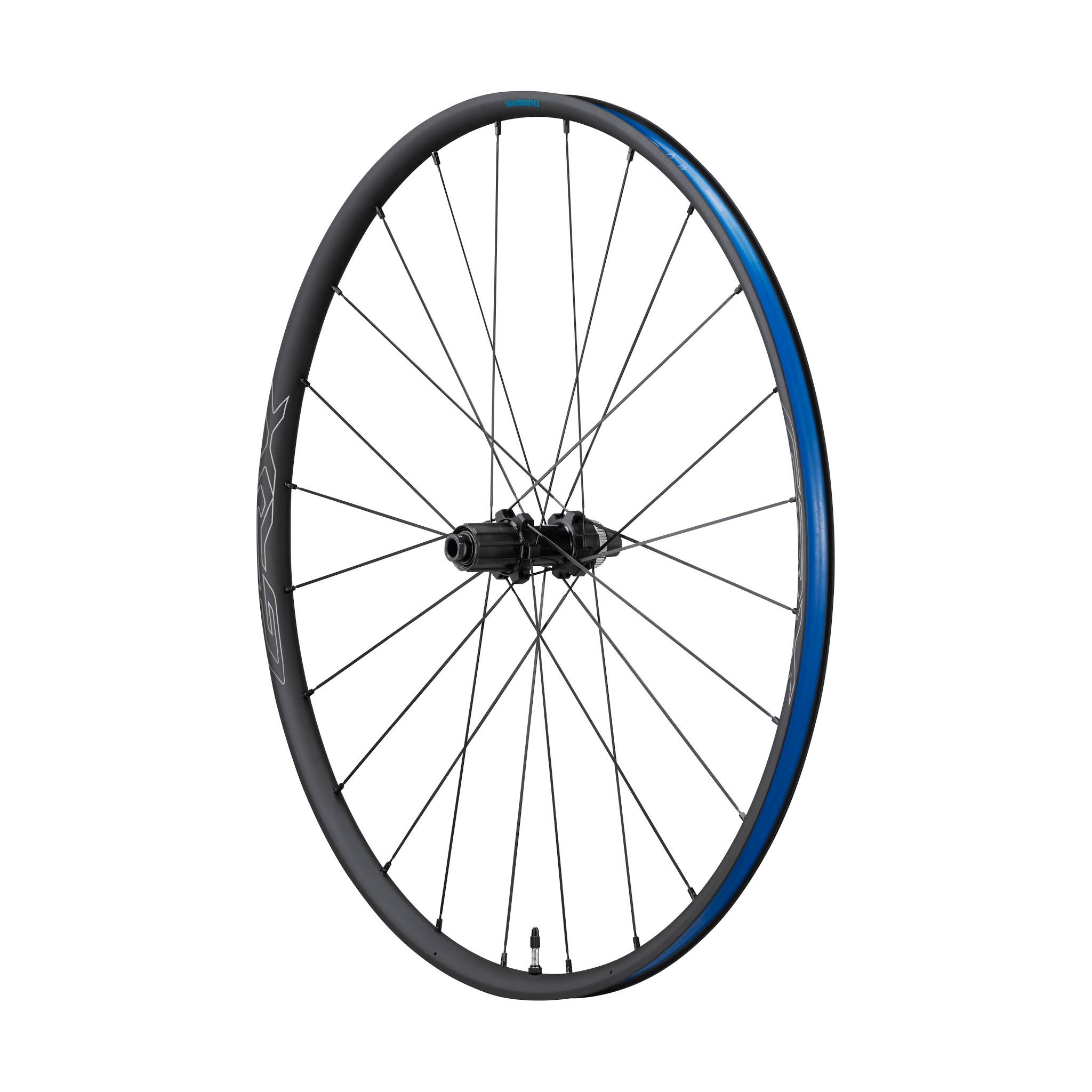
Aluminum rimmed wheels, like this Shimano GRX, represent fantastic value.
This made me pause. An aluminum rim would be destroyed by such an act. But I retorted that the price to get into their rims was still pretty ridiculous. He responded by saying that the wheels built with their rims were expected to last over a decade with daily usage. Hmm......pretty impressive. 

But still, I had built aluminum rims into wheels that had lasted over a decade with constant usage. Maybe not in mountain biking, but certainly as road and daily-driver wheels. And yes, I've actually worn through a rim side wall from braking all those years. So I get that part. But those wheels cost what? Maybe $500.00 back in the day? How many aluminum rimmed wheel sets could I get for 1500-2000 bucks? More than two, maybe three or four? Yeah..... 

So from a cost vs value standpoint, I needed more than some stories from a company man. Well, I actually got that 'more' when I was able to review a set of these rims for my old gig at Twentynineinches.com. I even was able to build these wheel myself. The lateral stiffness was off the charts compared to anything I'd ridden before. Why does that matter? Again- you have to consider these traits important to you and your riding style. For me, it was a game changer. The light weight at that sort of stiffness? You'd have to build an aluminum rimmed wheel with a much stouter- and heavier - rim to get this sort of performance. Hmm...... My mind was changing. 

Oh, and a quick aside on that particular carbon wheel set: I ran them for close to ten years, sold them, and they still are in active duty with no major issues that I am aware of. I never trued them. Not once after being built up. Try that with an aluminum rimmed wheel set that weighs 1400 grams or thereabouts.  

Now, was I ready to accept carbon fiber rim pricing? Not yet, no. I was still on the aluminum value bandwagon. Then came all this gravel road riding stuff. Time went on, things got far more competitive in the carbon rimmed wheel marketplace. I became privileged through my gig with RidingGravel.com to get my mitts on many different wheels. Some carbon rimmed, some not. And here is where I am at today with the value proposition. The next question takes us there......

Question: Help me understand how carbon is 10 times better than aluminum

Answer: This, for me, came down to noticing how much less energy it took to ride a carbon rimmed wheel set. And not because the wheels were lighter, although that is probably where our minds first go when we think about this. No, it was something else and had I not been riding on crushed rock roads, I doubt I'd have ever noted this, and I'd still be on the aluminum rimmed bandwagon. But I did note this and now I am definitely onboard with spending the money it will take to have my own carbon rimmed wheel set for gravel. Why? 

Probably the best money that you'll ever spend on a fat bike is for carbon wheels.
I rode a wheel set this past Summer for review and A/B tested it with a couple of different wheel sets. The aluminum rimmed wheel set, a Shimano GRX wheel set, is really a great value for the dollar. What are they? Sub $500.00 for the pair almost anywhere? Far less for a complete wheel set than any carbon rimmed wheel set, for sure. I rode those wheels, stopped to switch out wheels, then got on a set of FLO Cycling G700 wheels.  The difference in lateral stability was astounding. This 'wobbling' of the aluminum rimmed GRX wheels was causing me to have to expend a LOT more effort into handling the bike as I rode down the gravel road. The G700's were a cakewalk to ride in comparison. I have since noted a level of this with other carbon rimmed wheels as well. THAT makes it worth while to me. If I can ride a wheel set that makes riding gravel easier and with better handling? Sign me up. But there is another place where carbon rims really smacked my sensibilities upside the head. 

Fat bikes. Oh my! There is no comparison to having a tubeless carbon fat bike wheel to any aluminum wheel for a fat bike. The differences are so huge that any comparison is laughable. And by the way, I was one of the biggest critics of this idea several years ago. Take everything about why I would go carbon on a gravel bike for wheels and amplify that 10 times for a fat bike. The size and weight of this sort of wheel magnifies the good qualities a carbon fiber rim can bring to a level that, I'm pretty sure, even the biggest anti-carbon rim curmudgeon would have to agree is worth the bucks. It's so much easier to ride, and the lateral stiffness is awesome. 

Finally, it can't go without saying that carbon rim prices, and more specifically, carbon rimmed complete wheel sets, have dropped in price dramatically over the last 15 years. That FLO Cycling wheel set is well under 2G and I have seen some carbon rimmed wheel sets coming in under 1500 these days. Used to be that was the price of a pair of rims. So, value is getting better.

Conclusion: Is this the end of aluminum rims? Of course not! Aluminum will always have a place in my stable for rims and I will always have a set or nine(!) alongside the carbon rimmed sets. Aluminum is just too good of a value to ignore, and with careful choices and build up, you can approach the characteristics of a carbon wheel set for WAY less money. Plus, if you tend to crash out wheels a lot, maybe carbon is a bad idea then. Let's say you have a commuter bike, or you just don't ride a lot. Okay, carbon rims are definitely a stupid idea. Same if you don't care about weight, stiffness, or handling at the cutting edge. (At all or for a particular bike's use) If you are fine with your aluminum wheels, I get it. Like I say, I am a fan as well. It's just that for certain situations, I'd much rather be on a carbon rimmed wheel set. And as they say: Your mileage may vary.

Carbon Wheels vs Aluminum Wheels: Questions & Answers

Aluminum rimmed Velocity wheel set.
Note: From time to time I get a comment from a reader that deserves to be answered in the format of a post here on the site. One reason being that the answer- or in this case answers- would take too much space up for a comment in the comments section. Secondly, the answer (s) may be of great use to a wider audience, and such answers would not be noted if they are buried in a comment section which many readers would not see. Finally, these sorts of topics are often searched on the internet and again- you won't come across my thoughts if they are buried in a comments section. So, today I attempt to answer the questions a reader asked.  

So, here we go. These are a couple of great questions that I will attempt to answer. Keep in mind that the answers may be different depending upon who you are, what your expectations are, and how you ride. While it is true that no one needs carbon wheels, we are not going to be taking that sort of an approach to logic today, because if we did, we'd all be riding fixed gear bikes with wooden wheels and solid rubber tires yet. Or you know.......walking. Anyway.... 

Question: Why do some folks think that they need carbon fiber rimmed wheels? 

Answer: Well, first of all, you have to be aware. By that I mean a couple of things. One- You need to understand why stiffer wheels in a lateral sense are a good thing. You have to understand why weight matters. You also may need to have ridden some carbon rimmed wheels to get the point driven home. Unless you care about those things, and have considered those things desirable in wheels for your bicycle, carbon fiber rimmed wheels are something of a joke. I mean, why spend more money than my entire bicycle costs? I was one of these people at one time. Spending hundreds of dollars on one rim? Are you joking? 

So, let's assume you were like that, like I was in my thinking about carbon fiber rimmed wheels, okay? What changed my mind? Well, a few things. One- I spoke with a rim manufacturer representative face to face at Sea Otter one year. His company was just coming out with carbon fiber rims for mountain biking. People were scoffing and laughing at this company for even thinking people would consider spending over 1500 for a pair of rims. The company man told me some things that made me think though. One story was that they had taken bare rims, held them above their heads, and smacked them on rocks as hard as they could to see if they could chip them. Beyond some cosmetic scratches, the rims were, seemingly, unbreakable. 

Aluminum rimmed wheels, like this Shimano GRX, represent fantastic value.
This made me pause. An aluminum rim would be destroyed by such an act. But I retorted that the price to get into their rims was still pretty ridiculous. He responded by saying that the wheels built with their rims were expected to last over a decade with daily usage. Hmm......pretty impressive. 

But still, I had built aluminum rims into wheels that had lasted over a decade with constant usage. Maybe not in mountain biking, but certainly as road and daily-driver wheels. And yes, I've actually worn through a rim side wall from braking all those years. So I get that part. But those wheels cost what? Maybe $500.00 back in the day? How many aluminum rimmed wheel sets could I get for 1500-2000 bucks? More than two, maybe three or four? Yeah..... 

So from a cost vs value standpoint, I needed more than some stories from a company man. Well, I actually got that 'more' when I was able to review a set of these rims for my old gig at Twentynineinches.com. I even was able to build these wheel myself. The lateral stiffness was off the charts compared to anything I'd ridden before. Why does that matter? Again- you have to consider these traits important to you and your riding style. For me, it was a game changer. The light weight at that sort of stiffness? You'd have to build an aluminum rimmed wheel with a much stouter- and heavier - rim to get this sort of performance. Hmm...... My mind was changing. 

Oh, and a quick aside on that particular carbon wheel set: I ran them for close to ten years, sold them, and they still are in active duty with no major issues that I am aware of. I never trued them. Not once after being built up. Try that with an aluminum rimmed wheel set that weighs 1400 grams or thereabouts.  

Now, was I ready to accept carbon fiber rim pricing? Not yet, no. I was still on the aluminum value bandwagon. Then came all this gravel road riding stuff. Time went on, things got far more competitive in the carbon rimmed wheel marketplace. I became privileged through my gig with RidingGravel.com to get my mitts on many different wheels. Some carbon rimmed, some not. And here is where I am at today with the value proposition. The next question takes us there......

Question: Help me understand how carbon is 10 times better than aluminum

Answer: This, for me, came down to noticing how much less energy it took to ride a carbon rimmed wheel set. And not because the wheels were lighter, although that is probably where our minds first go when we think about this. No, it was something else and had I not been riding on crushed rock roads, I doubt I'd have ever noted this, and I'd still be on the aluminum rimmed bandwagon. But I did note this and now I am definitely onboard with spending the money it will take to have my own carbon rimmed wheel set for gravel. Why? 

Probably the best money that you'll ever spend on a fat bike is for carbon wheels.
I rode a wheel set this past Summer for review and A/B tested it with a couple of different wheel sets. The aluminum rimmed wheel set, a Shimano GRX wheel set, is really a great value for the dollar. What are they? Sub $500.00 for the pair almost anywhere? Far less for a complete wheel set than any carbon rimmed wheel set, for sure. I rode those wheels, stopped to switch out wheels, then got on a set of FLO Cycling G700 wheels.  The difference in lateral stability was astounding. This 'wobbling' of the aluminum rimmed GRX wheels was causing me to have to expend a LOT more effort into handling the bike as I rode down the gravel road. The G700's were a cakewalk to ride in comparison. I have since noted a level of this with other carbon rimmed wheels as well. THAT makes it worth while to me. If I can ride a wheel set that makes riding gravel easier and with better handling? Sign me up. But there is another place where carbon rims really smacked my sensibilities upside the head. 

Fat bikes. Oh my! There is no comparison to having a tubeless carbon fat bike wheel to any aluminum wheel for a fat bike. The differences are so huge that any comparison is laughable. And by the way, I was one of the biggest critics of this idea several years ago. Take everything about why I would go carbon on a gravel bike for wheels and amplify that 10 times for a fat bike. The size and weight of this sort of wheel magnifies the good qualities a carbon fiber rim can bring to a level that, I'm pretty sure, even the biggest anti-carbon rim curmudgeon would have to agree is worth the bucks. It's so much easier to ride, and the lateral stiffness is awesome. 

Finally, it can't go without saying that carbon rim prices, and more specifically, carbon rimmed complete wheel sets, have dropped in price dramatically over the last 15 years. That FLO Cycling wheel set is well under 2G and I have seen some carbon rimmed wheel sets coming in under 1500 these days. Used to be that was the price of a pair of rims. So, value is getting better.

Conclusion: Is this the end of aluminum rims? Of course not! Aluminum will always have a place in my stable for rims and I will always have a set or nine(!) alongside the carbon rimmed sets. Aluminum is just too good of a value to ignore, and with careful choices and build up, you can approach the characteristics of a carbon wheel set for WAY less money. Plus, if you tend to crash out wheels a lot, maybe carbon is a bad idea then. Let's say you have a commuter bike, or you just don't ride a lot. Okay, carbon rims are definitely a stupid idea. Same if you don't care about weight, stiffness, or handling at the cutting edge. (At all or for a particular bike's use) If you are fine with your aluminum wheels, I get it. Like I say, I am a fan as well. It's just that for certain situations, I'd much rather be on a carbon rimmed wheel set. And as they say: Your mileage may vary.

Tuesday, October 23, 2018

News Season: Part 2- Enve Fat Fork And Fat Wheels

The Enve Fat Bike Fork has some serious gram savings.
Enve Debuts New Fat Bike Fork and Carbon Wheel Set For Fat Bikes:

Enve Composites has been around a while now and probably are most well known for the high quality carbon rims for both mountain bikes and road bikes. But they have dabbled in components since the beginning as well. Enve has a long history with carbon forks and they have also done seat posts, stems, and handlebars.

Today Enve has announced a fat bike fork and a carbon fat bike rim/wheel set. The fork is simply called the Fat Bike Fork and it is not only lightweight, but it is compatible with 26" and 27.5" fat bike wheels.

The clever addition of a flip chip in the drop out allows for the fine tuning of the fork offset to optimize the handling for either wheel size. The obvious is here- 15mm X 150mm through axle, 1 1/4"-1 1/2" tapered steer tube, and a claimed weight of 748 grams. Axle to crown is 490mm and the offset can be set at 51mm or 42mm depending on the position of the flip chips in the drop out. Recommended rotor size is 160mm-203mm. Tire Clearance- 26" X 5.2" - 27.5" X 4.8" maximum. The fork has internally routed brake capability as well.

The MSRP on the Fat Bike Fork is $625.00 and is available for pre-order now. Shipping pre-orders should happen at the end of November.

Comments: The weight is nice, and the clearances are nice, and that dual wheel size compatibility is really nice! That was a nice touch from Enve as the fat bike market is kind of split between 26 and 27.5 wheel sizes right now. You would be good to go either way with this offering. Yeah.......it isn't a bike packer's pick, but I've also heard a few seasoned fat bikers say that weighting the front is bad for trying to traverse softer terrain. Hmm......

I've got a carbon fork on the Ti Mukluk, and the differences in ride characteristics based on the lighter weight alone make the switch an attractive one here. A seemingly minor detail- the internal brake routing- is actually a big deal to me. Getting a fat bike, one actually used in severe conditions like ungroomed snow, mud, and sand, the sleekest and smoothest that you can makes the going easier. I can't tell you how many times I've had to pick mud, or clear snow off that was stuck to the exposed brake line. Then again- you can always run sans front brake. That's what a lot of bushwhacking fat bikers do.

Enve's M685 fat bike wheels. Also available as a rim only.
The wheels are from Enve's M Series so these are "trail rated" and not just for snow, as some other rims out there are only rated for snow riding. They also feature Enve's first asymmetric molded spoke hole design which also accommodates fat bike wheels wider bracing angles. The rim profile was designed to shed snow and not allow build up.

Using a tubeless design, these rims don't need a wide rim strip. They also have a hookless bead design. The rims feature an 85mm inner rim width which should accommodate most fat bike tires out there. The rims are being made in both 27.5" and 26" diameters and the target weight is 600 grams for each rim.

The rims are available separately in both diameters offered at $999.00 MSRP each. The rims can also be purchased built up to Industry 9 hubs with a 150mm front/190mm rear spacing. Complete wheels are set to retail at $2800.00

Comments: Enve will be Enve, so the prices on these U.S. manufactured rims is no surprise. That said, it's hard to make a case for these in terms of price unless you value the claimed durability and the specific features of the rim's design. When every gram counts and durability cannot be compromised, yeah..... I can see getting these. They are a premium product and therefore you have to pay the price. If you just want lighter fat bike wheels and don't do anything extreme, well maybe something else would trip your trigger. A Whiskey No. 9 100 rim is wider, almost as light, and costs less than half as much per rim as the Enve does, for example.

Both wheel sizes are supported again here, so that is cool. I like the thought that went into making these trail rated, because, who knows? You might end up mountain biking your fat bike someday and knowing the rims are going to handle it is a nice chunk of "mind peace" to have. 

Note: Images and information were provided by Enve Composites.

News Season: Part 2- Enve Fat Fork And Fat Wheels

The Enve Fat Bike Fork has some serious gram savings.
Enve Debuts New Fat Bike Fork and Carbon Wheel Set For Fat Bikes:

Enve Composites has been around a while now and probably are most well known for the high quality carbon rims for both mountain bikes and road bikes. But they have dabbled in components since the beginning as well. Enve has a long history with carbon forks and they have also done seat posts, stems, and handlebars.

Today Enve has announced a fat bike fork and a carbon fat bike rim/wheel set. The fork is simply called the Fat Bike Fork and it is not only lightweight, but it is compatible with 26" and 27.5" fat bike wheels.

The clever addition of a flip chip in the drop out allows for the fine tuning of the fork offset to optimize the handling for either wheel size. The obvious is here- 15mm X 150mm through axle, 1 1/4"-1 1/2" tapered steer tube, and a claimed weight of 748 grams. Axle to crown is 490mm and the offset can be set at 51mm or 42mm depending on the position of the flip chips in the drop out. Recommended rotor size is 160mm-203mm. Tire Clearance- 26" X 5.2" - 27.5" X 4.8" maximum. The fork has internally routed brake capability as well.

The MSRP on the Fat Bike Fork is $625.00 and is available for pre-order now. Shipping pre-orders should happen at the end of November.

Comments: The weight is nice, and the clearances are nice, and that dual wheel size compatibility is really nice! That was a nice touch from Enve as the fat bike market is kind of split between 26 and 27.5 wheel sizes right now. You would be good to go either way with this offering. Yeah.......it isn't a bike packer's pick, but I've also heard a few seasoned fat bikers say that weighting the front is bad for trying to traverse softer terrain. Hmm......

I've got a carbon fork on the Ti Mukluk, and the differences in ride characteristics based on the lighter weight alone make the switch an attractive one here. A seemingly minor detail- the internal brake routing- is actually a big deal to me. Getting a fat bike, one actually used in severe conditions like ungroomed snow, mud, and sand, the sleekest and smoothest that you can makes the going easier. I can't tell you how many times I've had to pick mud, or clear snow off that was stuck to the exposed brake line. Then again- you can always run sans front brake. That's what a lot of bushwhacking fat bikers do.

Enve's M685 fat bike wheels. Also available as a rim only.
The wheels are from Enve's M Series so these are "trail rated" and not just for snow, as some other rims out there are only rated for snow riding. They also feature Enve's first asymmetric molded spoke hole design which also accommodates fat bike wheels wider bracing angles. The rim profile was designed to shed snow and not allow build up.

Using a tubeless design, these rims don't need a wide rim strip. They also have a hookless bead design. The rims feature an 85mm inner rim width which should accommodate most fat bike tires out there. The rims are being made in both 27.5" and 26" diameters and the target weight is 600 grams for each rim.

The rims are available separately in both diameters offered at $999.00 MSRP each. The rims can also be purchased built up to Industry 9 hubs with a 150mm front/190mm rear spacing. Complete wheels are set to retail at $2800.00

Comments: Enve will be Enve, so the prices on these U.S. manufactured rims is no surprise. That said, it's hard to make a case for these in terms of price unless you value the claimed durability and the specific features of the rim's design. When every gram counts and durability cannot be compromised, yeah..... I can see getting these. They are a premium product and therefore you have to pay the price. If you just want lighter fat bike wheels and don't do anything extreme, well maybe something else would trip your trigger. A Whiskey No. 9 100 rim is wider, almost as light, and costs less than half as much per rim as the Enve does, for example.

Both wheel sizes are supported again here, so that is cool. I like the thought that went into making these trail rated, because, who knows? You might end up mountain biking your fat bike someday and knowing the rims are going to handle it is a nice chunk of "mind peace" to have. 

Note: Images and information were provided by Enve Composites.