Showing posts with label snow bike. Show all posts

Monday, December 07, 2020

Fat Bikes: An Explanation For The Curious

 The other day in the comments section I got a question about fat bikes in general which prompted me to publish this post. The question I got was prompted when a reader of the blog noted that I made distinctions between capabilities of my three fat bikes. This was something I discovered some time ago, and realizing that not all fat bikes are created equal was why I commented as such in the post. The question then, distilled down to its elemental basics, was , "What are the characteristics and differences between various fat bikes?"

I will attempt to answer this question based upon my experiences over the past nearly 10 years of riding these things. Plus, I have a reference series I wrote in 2016 on this very subject which I will link to at the end. So, here goes......

The Snow Dog during a ride back in January of 2011.

The earliest complete fat bikes which were available were based upon what had come before which was an evolution from 26" mountain bikes of the 1990's. The geometry of those days informed the earliest forms of fat bikes and the Surly Pugsley of 2005 was pretty much following in the footsteps of those early pioneering efforts. The main focus of design was endurance and expedition. The bikes then reflected these traits. Racing (in the XC MTB sense anyway), mountain biking, and other uses of fat bikes weren't ever a consideration then.

The primary limiting forces on design in those days were tires, rims, and the perceived need to accommodate triple crank drive train capability to preserve a wide range of gearing. Since these driving forces were what informed the complete fat bikes that appeared out of Salsa Cycles in 2011, the same that had also influenced the Pugsley, it meant that we had inherited the same limitations on tire/rim sizes and in regard to what was thought in terms of drive train needs. 

For instance, the Mukluk which debuted late in 2010 had a triple ring crank, front derailleur, of course, and a fairly limited rear tire clearance. Not that you could get a tire to fit to max out clearances, because the new Larry tire was only a 3.8" wide tire. (Most probably the Big Fat Larry was already on the drawing board by this time, which would max out tire clearances on the OG Mukluk) So, why weren't these bikes future-proofed? Surely by 2010 it was becoming a thing for mountain bikes to have 2X drive trains, for instance, which would have allowed for even wider tires in the future. Right? 

Well, of course it was, but what wasn't anticipated was that fat bike demand would be so ravenous that bikes couldn't be made fast enough to satisfied demand. Now this necessitates a look at the business side of things circa 2010/2011. This period of time was when the whole 29"er craze had all come to a head and those crazy days of increasing sales from 2007-2009-ish were slowing down. The economic downturn of 2008 had affected the economy as well, so bicycle dealers and brands were looking for the "next big thing". The 650B based, long travel mountain bike scene, (yet to be dubbed "Enduro®") was just getting going, and that was one band wagon brands were jumping ship to for sure, but this Winter-time craze of riding corpulent sized tires in snow was something entirely new. Salsa and Surly dealers, who normally would have been shedding dollars in the off-season, now had a product that was flying out the doors. And this did not go unnoticed.....

One of two prototype test bikes Salsa Cycles had made to develop the Mukluk. Seen here at Interbike 2011.
Remember, manufacturers and brands were looking for the next trend and were not about to be left behind as many were when 29"ers took off. So, seeing the success of Salsa Cycles and Surly, the R&D to bring new fat bikes to market leapt into action. By 2012 there were so many more fat bikes out, or coming soon, that you could not keep track of it all. This in turn pushed innovators to dream 'bigger', and the fat bike pioneers, mainly Alaskan brands like Fat Back and 9-Zero-7, saw a way to keep one step ahead of things and pushed the 150mm front/197mm rear standard. This allowed for 100mm rims and the widest tires, (at the time 4.7" wide) and still have plenty of clearance. The single front chain ring pretty quickly took over as well as this eliminated the complexity, weight, and snow/mud clogging of front derailleurs and shifters. Limitations that Salsa and Surly accepted due to what was available and due to perceived demand previous to 2011 were now being swept aside.

Flotation was the name of the game, and if you wanted to traverse the deepest snow, cruise marshy, wet lands, or go where there was no single track at all, but just deer trails or the natural forest/wood floors, these big, fat tired monstrosities were the thing. But not everyone wanted or needed that. Fat bikes soon also became mountain bikes, bike packing bikes, and even full suspension and racing bikes. Heck, people were using them at gravel road events and fat bike categories soon popped up at many gravel events. 

So, now days you have to figure out what it is that you want from your fat bike. Expedition? Cargo? Racing? Cruising trails? A way to get outside and stay fit in Winter? There are a bunch of ways to tackle any of these desires. To that end, I wrote a four part series in 2016 to help you choose a fat bike that is right for you. Much of what I wrote then is still true today with the possible exception of full-suspension fat bikes, which have tailed off in availability in the last few years. (Used examples are still coming up for sale all the time though) Also, the Cargo/Bikepacking fat bikes, like Surly's Big Fat Dummy or Salsa Cycles current Blackborow are not covered as they didn't exist yet. So, here's the series if you want to check it out:

How To Choose Your First Fat Bike: Introduction

How To Choose Your First Fat Bike: What To Look For

How To Choose Your First Fat Bike: Types Of Fat Bikes

How To Choose Your First Fat Bike: Or Something Else!

The cargo category of fat bike started with Surly's Big Fat Dummy

Since I didn't cover cargo fat bikes in my original series, I will say a word or two here. First of all, these rigs are huge. You need to consider storage space, transporting such rigs, and whether or not you'll really need one. The Salsa Blackborow is a bit more manageable in these regards, but it still is a longtail bike. These aren't necessarily your first fat bike, but for the right conditions and for the right person, this type of rig could prove invaluable.

Then as I re-read the series I noted that I mentioned a few things about tires and wheels, which I never really detailed. So, following are some differences with regard to wheels, rim widths, tires, and a word about axle standards.

Some fat bike tires, like this Terrene Wazia, are stud-able.
Wheels for fat bikes are defined by diameter and the width of the rim. A more trail worthy, more XC MTB type fat bike would have a narrower rim. 70mm-80mm would be in that category. Expedition type fat bikes which require more flotation would have wheels with wider rims to help spread out tires and give better stability at super low pressures. 90mm-100mm rims are in that category. There is some cross-over with some folks using 80mm rims for their lighter weight as expedition category rims, but wider is typically better for flotation. Go narrower for more of a MTB experience. 

Diameter can be either 26" or 27.5". The 27.5" size is a newer standard and it is said that you don't need quite as wide a tire or rim to get similar flotation results as you can with the wider 26" based stuff. I've never tried the 27.5" stuff, so take that with a grain of salt. 

Tires can be 3.8-4.2" which would be best with older fat bikes, fat bikes used for MTB, or gravel riding. 4.5"-5+ inch tires are getting into that max flotation, expedition, go anywhere category. Studded tires exist, but are really expensive. I'm not a huge fan of studded tires, but some people cannot live without them. You have to decide for yourself there. Don't ask me because I'll probably never do a studded fat bike tire. It's just not my jam. Prices for fat bike tires are anywhere from a little under 100 bucks to close to 200 bucks a pop. Expect to spend more like 200-250 for a single studded fat bike tire that is worth its salt. 

Axle widths are almost always the 197R/150FRT standard now, but 150frt/177 rear is also somewhat of a thing yet. Older bikes are quick release, may have weird brake standards, and vary in axle standards quite a bit from modern bikes, so beware in the used market should you decide to go that way. You may get stuck with an outdated fat bike wheel set standard.

And with that I will end this rambling post. If you all have comments or further questions, I'd be glad to entertain those in the comments section. Thanks for reading!

Wednesday, October 21, 2020

Has It Been That Long Already?

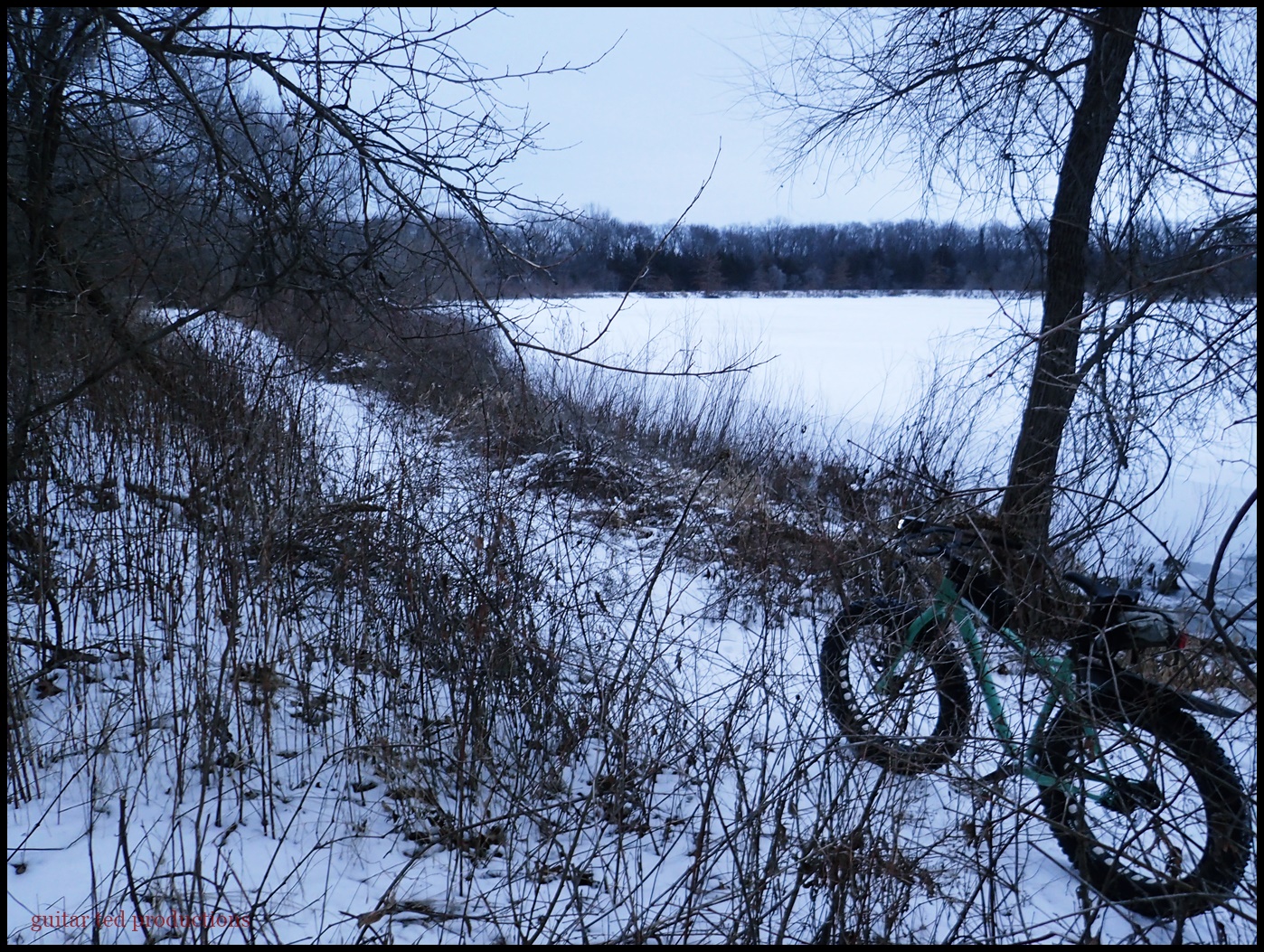
The Snow Dog as it has been for the last few years.
While contemplating where I might end up using the Archer Components D1x shifting system and the Whisky Milhouse bar, I had my thoughts light on the Snow Dog. Oh...... maybe you don't know about the Snow Dog? Well, if you've forgotten, or are a newer reader here, let me refresh your memory or bring you up to speed. I sometimes forget I've been at this for over 15 years and I don't remember there are new readers.......

Anyway, if you recall back previous to 2010, there was one fat bike. And you had to build it up. In fact, it wasn't even known then as a "fat bike". No, the Surly Pugsley wasn't a "fat bike" then, it was a snow bike. That's what everyone called them back then. And to be perfectly fair, there were more 'snow bikes' than the Pugsley, but they were all from small custom builders based out of Alaska or elsewhere that fat tired flotation bikes made sense. The "snow bike" scene was pretty niche and tiny back in those days when you had to build up a bike from parts. Surly made it easier by making a lot of what you'd need to do it, like offering a tire- yes, a single model only- so you could get on with Winter riding. 

So, keep this in mind. You couldn't just run down to the bike shop or department store and buy a bike and be riding an hour later. No. This was a long process of choosing parts, carefully putting them together in a way that was functional, and spending probably 2000 dollars or more in the process. All for a bike that, well back then anyway, we thought you might use for three months out of the year tops. It wasn't a slam-dunk bike to own back in those days. It may not be a particularly practical bike for most people in 2020, but for a few short years, "snow bikes/fat bikes" were all the rage. Once a big hurdle was cleared, that is.

The Snow Dog as it appeared in February 2011.
All that to paint a picture going into 2011 when we found out late in 2010 that Salsa Cycles was going to release a fully built, in the box, snow bike dubbed the Mukluk. The news spread like a Colorado wildfire and people were so excited that the first run of the bike sold out pre-release. Shops were holding parties where gear for Winter riding was being shown and the Mukluk was already being upgraded before anyone had one yet! I know this because I attended one such party at Milltown Cycles in Faribault, Minnesota where a young Ben Witt was the proprietor. Those were crazy days. 

Anyway, I ponied up for a Mukluk. This would have been ten years ago now this November. Ben, who was scrambling to find enough Mukluks to satisfy demand, called one day to ask me if he could sell the wheels off my bike when it came in! He mentioned that there already was an aftermarket hub set from Phil Wood that I could build a better wheel set with, so I gave my consent and ponied up for the new hubs. This meant that I would have to wait last in line to get my Mukluk. But.......what I didn't know was that Ben and some other friends had a plan.

And that plan was to buy my frame and fork for me for my birthday, which is in January. So, here poor ol' Ben was having to put me off, making up excuses as to why my bike was being delayed, until my birthday arrived in late January. To say that I was blown away by that gesture is a gross understatement. I still am amazed by their generosity. So, that's a long story to explain that this bike became the Snow Dog, because, well.....these things were snow bikes to begin with. 

Okay, a long winded story- sorry - but that should bring y'all up to the moment here and now on with it.....

I plan on switching that Archer Components D1x and the Milhouse Bar over to the Snow Dog. It just makes sense and I think it will also help make the ol' Snow Dog a useful rig again. But ya know...... If you've been around here long enough, you know I am full of ideas and many never get beyond this blog. So, don't hold your breath, but my plan is to get the Snow Dog out on a bit of a "Tenth Anniversary Tour" and celebrate the fat bike's tenth year of (complete availability) existence and my tenth anniversary of owning this bike, of course. 

Stay tuned........

Saturday, December 15, 2018

Minus Ten Review- 50

Limited edition Rainier Beer CX bike. Single speed, of course.
Ten years ago on the blog I was reporting on a new frame and fork I had just purchased. It was a Rainer Beer themed cyclo cross bike, single speed, of course. I needed it like I needed a hole in my head. But it was super cool and, well........ Anyway. I got it.

It ended up being built, ridden very little, and eventually I got rid of it. So, it was just a curiosity, more than anything. Had I not been diverted off into the whole 29"er mtb thing for several years and been the gravel road riding fiend I always wanted to be, well maybe then. Maybe I'd have ridden that bike more. Hard to say........

Then there was winter. We actually had snow back then, and plenty of it. This always brought up the "Curse Of The Fat Bike'. What's that, you might ask? Well, it was this thing I wrestled with every Winter for five years. Ever since I had seen Dave Gray's prototype Pugsley at Frostbike, I wondered and fretted, and thought and schemed about fat bikes. How could I get one? What could I do with it? Did I really need one? Maybe I was dreaming. Well.........I definitely was dreaming! I definitely was broke at this time of year, and I was definitely not thinking straight. Witness- The Raleigh here........

Of course, when it was 85°F, Sunny, and everything was green, including the paper in my pocket with pictures of dead presidents on them, I never was thinking about fat bikes. Why would I? I had too many irons in the fire with testing bike stuff, Trans Iowa, doing a few gravel events, and just raising a family.

From a December commute to work in 2008.
Then the above would happen. I had to hoof a LOT of my commute route back then. You see, 29"ers don't roll over stuff like that too well. I would be grousing, bummed, and fat bike curious as all get out.

Looking back I should have just done it. A purple Pugsley and then I would have been over it all. I would have been there and done that and I probably wouldn't have three fat bikes of my own and four in the house over all. Or I would have twice as many..... But yeah- I should have just pulled the trigger in 2006.

Saturday, February 10, 2018

Minus Ten Review - 6

I'm still not really sure what this was all about.
Ten years ago on the blog I was talking about how I wasn't having any fun setting up tubeless tires. Remember- this was 2008 and 29"er tubeless tire tech, and heck.....just getting anything actually meant for tubeless tires, was not a usual thing. So I was trying this and that, sometimes using all tubeless tech and sometimes mixing it up. But whatever I was doing, it was a struggle. A real struggle!

I almost gave up on tubeless tires back then, but somehow I kept trying, and trying, and trying..... Then it started working. I'm pretty much thinking that was because tubeless tires and rims for 29"ers started becoming really good. I'm sure it wasn't anything I actually did!

Then there is this image here. I still don't know what the heck that was all about. You know, after working at the same shop for 15 plus years nothing seems surprising anymore, but weird? yeah. Weird stuff happens all the time yet. I guess that's probably true for any place where the workers come and go with the years. So many different personalities have been there that the changes keep the weird level high. You never have time for anyone's oddities to get mundane. The average length anyone is there is probably less than five years. Then there is the "long timers" like myself. I'm skewing the curve!

The Dos Niner as a snow machine.
I also had a great ride on this old Dos Niner in the snow. Of course, it would be another 3 years before I'd actually have a fat bike, and I generally would default to whatever 29"er had the widest tires that I had at that time for snow riding.

This bike was a surprise 'gift" of sorts from Salsa/Jason Boucher. It just showed up at the shop one day with a note on it that said that I should just enjoy the bike and that I didn't have to review it. Blown away? Totally. Thanks again, by the way. I'm still bowled over that this happened to me.

I had never ridden a Dos Niner before this bike and I still think a soft tail bike is a viable design. Yeah.......you could do a suspension seat post, but that doesn't work when you are not sitting on the saddle. This bike had a rear end that did work over everything. No matter if you were on the saddle or not.

The Reba, the first widely available 29"er fork, with its 38mm offset, was kind of a clunker. It was the best thing that ever happened to 29"ers in 2007, but it was a stinker because it was flexy and it needed a lot of maintenance to keep it in tip-top shape. Later Rebas were really almost maintenance free in comparison. Anyway, this bike was really pretty good despite several short comings.

Saturday, January 27, 2018

Minus Ten Review - 4

We used to ride in the snow here in January......once....long ago!
Ten years ago here on the blog I was talking about feeling better and getting out for a ride in the snow. Not on a fat bike, of course. Not that you couldn't get one, but to get one you had to build it from scratch via Surly or have a custom fat bike made by one of a few builders making rigs for Iditarod riders in Alaska. Neither option was inexpensive.

The thing was, back then I figured I would only need a fat bike for what? Maybe two months? Then I would be back on my mountain bikes and forgetting those fat bikes for 10 months out of the year. I couldn't justify the thousands of dollars it would take to get something I thought I would use so little.

Of course, I hadn't ever ridden one nor had I considered uses outside the box of Winter riding in snow. Sand and mud are big deals here in the woods at times and a fat bike can traverse that sort of  terrain with ease. They also work as "just a mountain bike", and of course, many folks use them on gravel, so there ya go. I wasn't considering any of those options. Had that made sense to me in '07 or '08 I may have had a Pugs a long time ago.

But I was getting along on 29"ers better than I ever had with 26"ers. I used the widest rims and tires I could. I'm pretty sure those are WTB Stouts on some wider rims in that image there, probably 28mm rims. Later I ran 2.4" Ardents on 35mm Blunts and that was even better. It is why I feel that now a 29 inch by three inch tire on a 50mm rim would be the bees knees. But who knows? It doesn't really snow that much any more!

New frame, borrowed parts from another.
I also revealed a new rig I got near the end of 2007. An OS Bikes Blackbuck frame and fork was purchased from Mark Slate, who ran that venture but is better known as one of the pioneers of mtb and a tire designer extraordinaire at WTB.

I still have this frame and the steel fork that came with it. Here in its first iteration I did not use that fork, but the Bontrager Swicthblade I moved over from the On One Inbred. In fact, everything in the picture came off the Inbred.

This single speed is a real nice single track sled. I probably will never get rid of it. I haven't done a lot of riding on it the last several years, but in the beginning I spent a ton of time riding this bicycle. I used it most famously in my fork test for this blog and TNI where I used something like 8 or 9 different forks on it to see what they all did to the handling of the bike.

Mr. Slate apparently was fond most of all of the steel fork he deigned for this frame. It had a really short axle to crown measurement. Something like 425mm or close to that. (For reference, a typical 29"er suspension fork now is around 500mm or longer) Slate also used a 51mm offset. So with that fork and a typical 29"er tire the trail figure was around 52mm. (For reference a typical XC 29"er these days has about 90-ish millimeters of trail. You can check trail figures by plugging in the info here.)

Anyway, the result of the Blackbuck with its steel fork was nothing short of being like a razor sharp steering missile. You had better pay attention or the bike was going to cause you to crash! I could ride it, but the concentration necessary to do so, and do so fast, was draining. I ended up taking it off and using longer forks which were more forgiving. I still have that fork, of course, but I don't know when, if ever, I'd actually use it! Maybe for bike packing where you carry a weight on the front? Anyway.....

Sunday, March 12, 2017

Minus Ten Review- 10

This is what snow in Winter looks like. Same week ten years ago.
Ten years ago on the blog here I was riding 29"ers in the snow and it was working fine and it was fun! Packed down snow in 30°F temperatures with Sun shining brightly. Had I had a fat bike it would have been totally awesome.

Fun fact: No one was riding bikes out of doors in 2007. I had the outside to myself back then. It is great to see that, at least in this one way, fat bikes have changed attitudes about Winter cycling.

The other thing here I note is that I am running a triple crank set. No one does that in 2017. Well, in the general sense, and that's not because triple crank sets are "bad". Misunderstood? Maybe. Not applicable to "modern geometry"? Probably. Not offered due to one component giant's stranglehold on patents which lock the workable tech away from being used by anyone else? Totally.

That tire set, the GEAX Saguaro, actually had a pretty stellar tread pattern for snow. It would be interesting to see something similar in a current fat bike sized tire. Trouble is that 4 inches of tread blocks across a fat tire would weigh a lot! So, this will likely never happen.

This would be one of the last rides I would do on the Haro Mary. It was about that time I realized it was just too small, and I had other bikes coming and going in the rotation which worked a lot better. I'll say it again- I should have gotten the size Large! Dang it! Live and learn.......

Still one of Salsa Cycles best ever paint schemes in my opinion.
Then there was the Thule T2 I bought to haul the fairly new to me Salsa Cycles Dos Niner down to El Paso with. This would be my first rodeo riding down there. I was super stoked to try those 29"er wheels out on a real mountain.

The Thule T2 is probably the forerunner of all the racks you see now similar to it. There are a lot of them that are better now, but this design has aged well. I am on my second one now. This one in the image rusted out living on the back of our vehicles.

The Dos, well, I'll get around to talking about that more in a future "Minus Ten Review" post. For now I will say that it was a favorite in the stable in 2007 up to this point. Back then Salsa was using Scandium enhanced aluminum alloy. It was supposed to be lighter, and it was pretty light, but there were some other issues with it that cropped up down the trail.

Anyway, the image of the Dos on the back of our then vehicle signaled the beginning of Spring Break. That is still happening ten years down the road, and if you are one that is going somewhere, or is somewhere now for the week, have a good one!

Monday, January 30, 2017

Ice And Snow Ride

River ice deposited on the trail made for some technical challenges.
Saturday I had a window of time to sneak in a bit of a fat bike ride in the Green Belt. It had been quite a while since I had ridden back there due to being sick for two weeks. In the meantime it had flooded, frozen, and flooded again. It had snowed, rained, and snowed again. Sub-freezing temperatures insured that I should have no issues with mud or water, but I didn't know what the Green Belt would be like after all of the changes in weather and water levels.

I decided to roll with the Blackborow DS. I had it in "high" range to start out, but after I got off the pavement I stopped and switched to "Low" range for the duration of the ride. Good thing too.

It didn't take long to find the trail littered with river ice broken up and laying like broken bits of pottery all over. Big bits of pottery! Riding on them was a bit sketchy since they would tilt and shift in ways that eventually made me get off and walk for safety's sake. There was no way around these chunks of ice, so I had to gingerly step across the debris field and remount on the further side once I got there.

Then onward to the bridge across the Black Hawk via the steep climb up from the recycling bins. I was put to the test, but I managed to clean that climb to Ansborough. Then I stopped to calm down the heart rate! Once calmed down, I amused some drivers by hopping the curbs and snow piles to the other side. It seems fat bikes are still capable of attracting attention despite their being much more numerous in the area now days.

The trail has become a frozen river of ice in many spots.
Those geometrically shaped objects on the left are more chunks of frozen river ice deposited by flooding.
The Green Belt is a flooded out mess right now, but due to the sub-freezing temperatures, it is passable. As soon as the temperatures get above freezing for an extended period of time though, things will quickly become a quagmire and impassable by cyclist or pedestrian. I was glad I took the chance to get out there. Monday things are forecast to swing back above freezing far enough that the beauty of the white covered desolation will be lost, I am afraid, even if you could still get back in there to ride.

I love how the crystalline structure of ice and the virgin white snow contrast against the water of the creek. 
The ice glowed and sparkled in the limited amount of light there was available late in the afternoon.
The ride was fine with little fanfare. I just had to keep aware of where the trail was snow versus ice. Keeping my tires on the snow meant traction. Avoidance maneuvers were executed aplenty. Ice chunks from the river were seen, but not to the extent that they became an obstacle you couldn't ride over. In fact, one other fat biker and one skinny tire mountain biker had been through here ahead of me. I used their lines to gain the best way up and over the ice in several places.

A view of the frozen lake in the Green Belt.
When I reached the turn off for the lake loop I veered left and back up away from the creek and all the frozen ice puddles on the trail. It appeared that there had been many hikers along the trail here, and maybe a snow shoe or two, but no bicycles as far as I could tell. No more ice chunks either. Just crunchy snow under the tires and silence otherwise. It was really beautiful. There was a lone ice fisherman on the lake and when he heard my tires crunching on the icy snow he turned to look and I gave him a friendly wave which he returned in kind.

Time for the lights to be turned on.
With all the crawling around ice patches and river ice, I was not making great time. It wasn't about going fast though. I was having fun, stopping to take in the beauty where I found it, and just enjoying being outdoors again after all the time off the bike. It got darker, so I stopped and fired up the light to help me see. I made my way around the lake as the lone ice fisherman decided to call it a day. We exchanged hellos again in the parking lot where his eyes grew wide at the sight of the Blackborow's enormous tires. I bet he talked about that afterward to his friends....

Nature is brutal
 I decided to take the bike trail home. I didn't come back North very far from Martin Road when I saw the remains of a deer right in the middle of the trail. A cruel reminder of the realities of nature, or maybe it was a left over from misguided hunters? Who knows. I saw no signs of blood anywhere, so maybe it was drug up out of the woods by dogs. In any case, it was a sight to behold in the wan light of the evening.

After that I pushed onward to find my home in the dark. The lights were on and my wife and son had just returned from the grocery store. Back to civilization!

I enjoy riding in Winter on fat bikes. I am sure glad we have that choice these days as I have always wanted to enjoy riding in Winter, but couldn't. Not with the limitations mountain bikes had up until the fat bike came around. That didn't stop me from trying, of course, and I recall thinking that a fat bike would really be great. I just never did get a Pugsley due to the fact that you had to build it up from scratch and that wasn't a very cost effective way to do things for a bike that, at the time, I thought had limited usage opportunities. Little did I understand that fat bikes were far more than just "snow bikes".

But I am glad that they are that too!