Thursday, July 18, 2024

Country Views: Moody

Escape Route: Burton Avenue
The weekend and first day of this week were brutally hot and I did not venture out of town on the bike at all. But after a severe storm outbreak, from which we barely escaped damage, the weather cracked. 

It was cooler on Tuesday and still humid, but a refreshingly cool Northwest breeze was in the air and I felt like I needed to get out there again and enjoy some riding. Plus I'd be able to inspect the countryside for any damage after the storm. 

Since the breeze was out of the direction I mentioned, I went into it first, which meant that I had to ride North out of town. I decided this breeze wasn't too bad, so the "Northwest Passage" out of the wind to get to gravel would not be necessary this time. I meandered around town and ended up on Burton Avenue going straight North..... Well....not exactly straight, but definitely North.

As you can see, Burton Avenue is not very straight to begin with!

Things started out windy and mostly Sunny.

With all the rains we've had, and the last night's rain being a particularly hard one, the roads have come out nicely. No fresh gravel to speak of, hardly any dust, and smooth going, for the most part. I'm still marveling at the conditions of the gravel roads this year because it has been a long, long time since they've been this good. 

There was a little traffic out here on Tuesday.

East Janesville Church

I had the Wahoo Elemnt ROAM with me on this ride and I was having some fun watching the climbing add up, the elevation readout, and the gradient readout. Of course, I did not need a GPS device to tell me riding out North on Burton was mostly uphill, but it was nice to see some hard data on this fact. 

I've done some elevation hunting South of Waterloo, but not really anything North of town. I was wondering if I'd see anything close to 1,000ft elevation, and in fact, I did. I saw 1,014ft! I know.....it's nothing, but when you live in a state where the highest elevation is a little over 1,600ft, you know you are not going to see big numbers around here. What you will see in Iowa is that to get to 1,014ft from about 800ft where I live, you will ride upward over 1,000ft in less than 30 miles. It was a lot of "up and down"! It's worse in other places in Iowa. And half of the route I rode was against the wind, so there was that to contend with too. 

I didn't realize that the clouds were gathering behind me

Heading back South I had the wind at my back.

It was cheery looking going North and when I went back South the skies were all moody and grey-blue. A random drop of rain would strike me from time to time, but it never even got close to a sprinkle. There was a chill in the air, probably because it felt less like 100 degrees, like it had for days, and was feeling more like the 70's now. But I was reminded that Fall is only a couple of months away. 

I ran across this large dog in a random place.

As I crossed Bennington Road I saw something very large and whitish at the edge of the ditch. At first I thought it might be a large bag, or a piece of abandoned furniture. But as I approached I saw that this was a large dog. A very large dog

It sat there and looked at me sheepishly. As I got closer it ran out into the road, but not at that "attack angle" you might have experienced. It looked like it wanted to run with me. I was having nothing to do with that idea

So I stopped and began talking to the dog nicely. It stopped and gazed at me as if he were listening intently. As I looked at this animal, it seemed to have characteristics of a Great Pyrenees, but it had a different face. Almost Labrador-ish. Maybe it had a Labrador personality? I wasn't all that interested in finding out, so I turned and went back to the intersection and went around the mile instead. 

The rest of the ride was pretty non-descript. As I said, it never really rained, but I was getting random drops on me the rest of the way home. It was good to get out into the countryside again. Can't wait for the next ride....

Wednesday, July 17, 2024

Review: Redshift ShockStop PRO Endurance Seat Post - Final Word

Swapping out elastomers is easy, if not a bit messy!
 Note: Redshift Sports sent over the new ShockStop PRO Endurance seat post for test and review to Guitar Ted Productions at no cost. I was not bribed nor paid for this review and I always strive to give my honest thoughts and opinions throughout.

In my last update on this post from about a week ago, (seen HERE) , I said that I would be getting a stiffer elastomer in from Redshift Sports and that then I was confident that I could better evaluate the post. This happened Saturday and I was able to swap out the elastomer and test the bike a couple of times since then.  

First I should touch on the process of swapping out parts in the PRO Endurance post. The access to the innards is from the bottom of the seat post shaft where the adjuster is. You can use a small screw driver shaft or smaller hex key shaft to help turn the adjuster out and then access the elastomer that you should swap. 

The first thing that comes out is a - what looks like a pvc pipe - spacer. This spacer has a diagram on ot for the proper assembly order of parts inside the post. Nice touch there Redshift! The elastomer may be a tad resistant to coming out but a slight tapping of the post on my cloth-covered bench provided the trick to getting the elastomer to slide down and fall out of the post along with the spring stack and upper elastomer. 

As you can see from my image, things are a bit greasy! But this is important for the post to work correctly, so do not clean it off and don't allow dirt, etc to get in that grease! Assemble the post innards according to the diagram and install the desired elastomer. One trick to getting the adjuster cap started is to make sure that the parallelogram  part of the post is fully extended. You can do this by pulling upward on the saddle. This will allow the innards to be pushed in far enough that you can safely screw in the adjuster. Adjust the post according to Redshift's instructions and done! 

Now I had a supportive post, but the suspension action wasn't bottomed out so easily. Again, I'm sticking with my initial take that this post is kind of a "best-of" mix of Redshift's previous ShockStop posts. You get the active, vibration eating characteristics of the Endurance post, but you also don't get bounced up off the saddle because, like the PRO Race post, this post feels more damped. Plus the PRO Endurance weighs a bit less than the Endurance post, so it really does hit the groove of all the best attributes of Redshift's line up. 

So....why would you look at the other posts Redshift offers? Right. Great question. I think that there are reasons to go with the Endurance post over this new one. First off, if you are heavier, or carry a backpack/hydration pack, the Endurance post is more adept at handling that heavier weight. The springs are theoretically going to last longer and act more consistently over a longer period of time as well.  

You might choose the PRO Race for its more supportive pedaling platform and lighter weight. In my opinion, the PRO Race post is great for anyone that is more sensitive to changing saddle to bottom bracket length. These posts all have that characteristic baked into their design which will shorten the saddle to bottom bracket length as they work through their travel. The PRO Race is not as active a post, so you can tune it to only work when you really want it to, which may be more amenable to sensitive types in this area. 

Of course, the PRO Race is the lightest choice of the three as well, so that definitely may figure into your choice here. 

Final Word: All three ShockStop posts are well designed, well supported products and I feel like all of them should last a rider a long time as far as usage goes. Kudos to Redshift for their attention to detail. Things like the instructions on the pvc spacer inside the post, the hash-marked seat post shaft, and the markings on the adjusters all make owning this post a lot easier. 

While this review was for the newest post, it has kind of become a review of all three of the ShockStop posts. I was happy to get the two older designs out again and ride them. So, you may wonder, which one is my favorite? Well, that honor goes to the PRO Race post. 

My saddle height is kind of sacred, so I notice the slightest change in saddle height and to be honest, if it changes it really gets under my skin. So the entire idea of having a moving saddle height, as you will have with any suspended seat post, doesn't appeal all that much to me. So, the minimalist PRO Race is the post here for me. I have used it on longer gravel rides in the past and plan on doing so in the future.

However; the new PRO Endurance post does have some nice attributes and for the rider that is looking for that isolation from vibrations and a less bouncy ride quality, this post does that thing well. Given the stout construction, ease of use/set-up, and adjustability, I cannot find a fault that would keep me from recommending this post to any rider seeking a more comfortable gravel riding experience.

Tuesday, July 16, 2024

Review: Ritchey Design SuperLogic Carbon Venturemax Handlebar: Final Word

 Ritchey Design sent over a SuperLogic Carbon Venturemax Handlebar for test and review at no charge. I am not being paid nor bribed for this review and I will always strive to give my honest thoughts and opinions throughout. Also, make sure to read the newly revised "Drop Bar Terms Defined" section to better understand this review. 

The time has come to give you my final verdict on this handlebar from Ritchey Design. Before I dive into that, you should check out my previous post on this bar HERE and my introduction to the bar with all the specs HERE

The one thing that kind of bothered me about the SuperLogic was that I just was not finding that "sweet-spot" in the drops like I was finding with the aluminum Venturemax. Everytime I rode the bike with the aluminum bars I was hitting that nice grip in the drops that made my hands happy. But with the SuperLogic Carbon Venturemax (SLCV) I wasn't getting that 'happy-place' feeling. But these Bio-Bend things weren't that different on the SLCV, were they?

I was determined to try anything to find out if I could replicate my experiences on the aluminum bar with that carbon bar. I went out on a ride recently and without changing a thing, hey! Suddenly I was hitting that spot and I feel that perhaps some hand injury I experienced at work during the time I was testing  the SLCV may have been the culprit. 

Whatever it was, the SLCV really did feel like the aluminum bar as I gripped the extensions. Yes - You still have to pick up your hand and move deep into the drop to use the levers. That is one thing I'd change about the Venturemax in both of its iterations if I could. 

The SLCV has a really well done flattish "flats" section from the stem to the ramps. It is shaped and tilted 'just so' and that felt right to my hands and arms. The section is wide enough to lend good hand support yet not so wide that you cannot get a grip on the tops to control the bike. 

Those ergonomically flattened sections past the stem are done quite well.

The overall ride quality is .....fine. I mean, the SLCV is maybe a tic more compliant than the aluminum bar, but I probably couldn't tell the difference if I was blindfolded and rode both bars back-to-back. So, if you were hoping that the SLCV was going to be a vibration absorber, well, I don't know that it would be quite all that. 

It is lighter than an aluminum Venturemax and it has more features due to the use of carbon fiber. In that sense, it is "the better bar" of the two versions, but it does cost well above what an aluminum Venturemax bar would cost. Here you would need to value the ergo tops, the hidden cable routing, and the lighter weight of the SLCV. 

One more thing that may cause you to choose another bar is if you need to clamp on accessories to the handlebar. As you can see from the above image, the SLCV lends little space for your accessory mounts. 

And that Bio-Bend. You have to get on with that, and this facet of the design, more than anything else, is probably going to be the fork in the road for accepting the Venturemax design or not at all. I can only speak for myself and say that this feature is one of the things I do like about the Venturemax design. So, from my viewpoint, it is a positive thing. 

Final Word: The SuperLogic Carbon Venturemax is an evolution of a design that might fit your needs and in my opinion is a very comfortable handle bar in all positions. The Bio-Bend thing is divisive and does cause one to have to adjust for reaching the levers a bit, but if the carbon features appeal to you, and you ride mostly from the hoods anyway, that may not matter to you. In my opinion it is definitely a step up from the aluminum bar and this would make a fine addition to that nice carbon or titanium gravel bike, a great choice for fine steel handmade bike, (or a Ritchey, of course!), or just a general upgrade to your gravel bike, whatever it may be.

Monday, July 15, 2024

Checking In From The Collective

With heat indices above 100° over the weekend I decided to lay low and not do any big rides out in the country. Younger folks with less heat related failures can do that stuff. I'm passing on those experiences these days! 

That doesn't mean I haven't been riding. I have. I just haven't been out on anything longer than an hour or so ride just to keep from getting too hot and probably more importantly, because I've been busy with things relating to my job at the Cedar Valley Bicycle Collective. 

Recently the Collective had another donation from the Waterloo Police Department of bicycles that they pick up which were abandoned in most cases. Occasionally a bike comes through a court case, but typically, in my opinion, these are stolen bikes that are ridden for a bit and then abandoned. I could be wrong about that but.....

Most of these bikes are really pretty used up or just deteriorated from having been made so poorly, out of rust-prone materials, that they are scrapped immediately. One in about every four is a keeper. These bikes get harvested for parts or refurbished and sold to the local population at reduced rates. Some are donated to immigrants, homeless, veterans in need, or are donated to other charitable organizations to help families in need.

This is still a bit of a mystery.

Donations also come through the Collectives front door. Last week was a pretty rare week where we were gifted a lot of parts and bicycles from the public. These get used up as the bikes from the police department do, and the parts are squirreled away for fund raisers like bicycle parts swaps the Collective puts on from time to time. Most of the usable parts get stored for use later on refurbished bikes or marked for sale to customers looking for parts or accessories for older bikes. 

Once in a while something shows up that is a mystery. This happened last week. This strange cage marked with a hand-written tag that said "King Cage Gear Pack SS Handmade USA" on it. I Googled and searched but to no avail. Then I put it out on social media. 

One responder said it was a mount for a tool roll that fit into the open space and that a water bottle cage could go on top. One said it was a tubular tire holder. Both explanations make sense. 

But one person said that King Cage marks their product on the mounting "bridges" with a maker's mark that doesn't exist on this piece. Another person pointed out the "cobby welds" and questioned whether that is congruent with typical King Cage quality. 

Well, I may be a bit closer to finding out what this was for and who made it, or not. I don't know. But it is a curious piece and who knows..... All I can say is that it is hard to know what to do with items like this that come into the Collective when you have no good idea about what it is or how valuable - or not - the thing might be. 

On another front, I have been trying to have a regular schedule of educational classes at the Collective. I've settled on a three hour "Bike 101" class teaching the care and feeding of a typical bicycle, including flat repair, and a break-out of just the flat repair section in its own right. Things around this area are not like other towns and cities, and the populace here doesn't seem to be all that interested in either class, which are free, by the way. But those that do show up are very grateful, for the most part, and that gives me some hope. 

And that's a look at how things are going down at the Collective.

Sunday, July 14, 2024

Two Things

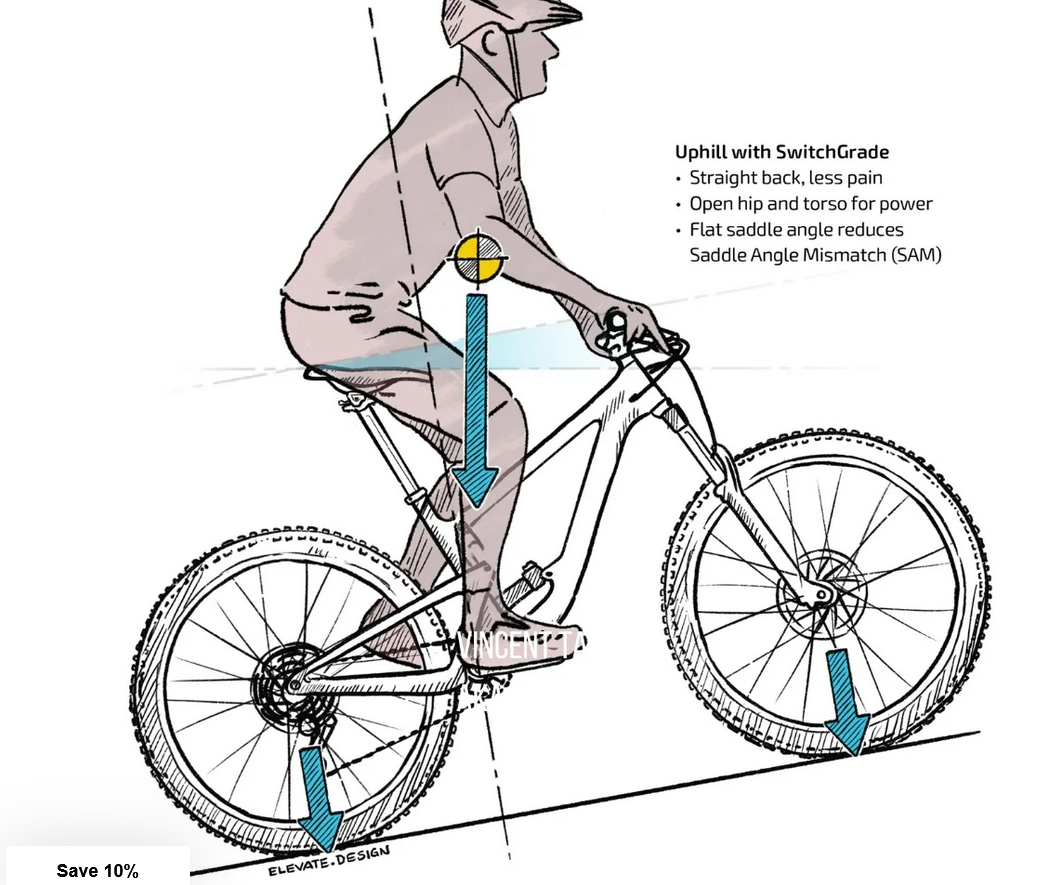
Image courtesy of Switchgrade
Throughout the years, I have enjoyed checking up on what Mike Curiak is doing. Mike was notably a major force in the ultra-distance MTB, ultra-distance snow racing of old. Once upon a time, Mike dominated those scenes, won his share of events, and along the way he "thinkered" up many new ways of doing things. Crazy things like putting camp stove fuel in frame tubing.  In my mind, Mike is as important, probably more important, a figure to MTB, fat biking, bikepacking, and gravel events as Jay Petervary is/ ever was. (Don't tell Mike though. The whole JP thing is kind of a sore subject with him) 

Don't ask about the friction part of what I referenced above, I just wanted to point out that Mike Curiak might just be one of the most underrated, unheralded figures in all of those scenes, and I won't even mention 29"ers, which Mike helped with from the get-go as far as promoting and championing that wheel size. 

You may not have heard of Mike. Maybe it is because Mike has quietly been running a business (Lacemine29.com) since 2004 and riding his bikes in his own way at his own pace and timing now for the better part of a decade, maybe more. Mike eschews the spotlight, and that's his prerogative. I respect that, but I'm telling you, he has done a LOT for off-road and off-pavement cycling. He's worth keeping an eye on. Fortunately you can still do that because he writes an occasional blog post from time to time. (Link in right sidebar)

Most of the time what he chooses to write about is stuff regarding his riding, his white-water rafting, or a wheel set he's trying to sell. But once in awhile Mike will come up with something I've never heard about that makes me stop and ponder things. Such was the case with his latest post (HERE) You can learn more about the Switchgrade HERE

It is good to see that people still think outside of the box today. Mike always has. Good thing too, because Mike was a MAJOR influence on Trans Iowa, and therefore, what came afterward. If you like gravel riding, bikepacking, fat bikes, or 29 inch wheels, a tip of the hat to Mr. Curiak would not be out of line. Although, I dare say, he likely would just rather be left to scaling some way-out-there single track and gazing at mountain flora and fauna. Notoriety seems to be way down on his list of "important things". That's cool..... 

From social media
What's Going On With Alt Wheel Sizes?

Back in 2018 I learned of a new alternative wheel size that WTB was working on dubbed "750D". If you don't remember anything about that, I wrote a post about this wheel size HERE about a year ago now. It seems that it was later last year when other folks started getting wheels and tires from WTB to "play with". I know Meriweather Cycles was one such builder. I know a friend that supposedly was sent a set. But then things went dark on that wheel size, again, so I am not sure what the latest word is on that front.

That said, 750D isn't the only new wheel size being explored. The company, Dirty Sixer, who, as you can probably tell, is the purveyor of 36" wheeled bicycles, is toying around with 32"ers. 

I saw on Facebook a mention that Dirty Sixer had a 32" wheeled gravel bike all set to show at Eurobike recently but the bike got hung up in customs and never made the show. That said, the bike exists, and it will probably get shown at some point soon. So, keep your eyes peeled for that.

Of course, none of these bigger wheels is going to be "the next 29"er". You might think I'm just being a Negative Nancy with a statement like that, but if you consider what was done in the late 19th and early 20th Centuries with regard to engineering and exploring optimal equipment for human powered cycling, you might understand that a statement like that makes more sense than you may think initially. 

700c wheels did not just appear out of thin air, nor were they adopted out of convenience. There was a LOT of math and engineering that went into calculating what wheel size was going to be best for adults. This shouldn't be forgotten. Of course, taller folks could benefit from larger diameter wheels, and there are always those people who have to try things out of curiosity, (raises hand), but wheel diameter and weight matter, and we humans have only so much horsepower and most of us are not well over six feet tall. The equation is still in favor of 700c wheels, and I don't see that changing much in the future.

Saturday, July 13, 2024

I'm Not Sure Why This Took Off

This is a rendering of the first customized header for the blog celebrating 20 years of blogging.
I was recording a podcast recently with The Spinistry's Kevin Lee and after I thanked him for his support of the podcast he stated that he was happy to do so because, as he said of me "...for all of your contributions to gravel cycling....". 

That still blows me away when people speak of me in such a way. Inside the head of Guitar Ted, he still feels as though he is a "regular guy" and is still being amazed that people listen to/read what he has to say. And to be honest, I never thought anyone would care to hear from "Guitar Ted" anyway, but how wrong was I about that?! 

Very wrong!

Taking a look back at the end of 2006, when this blog had barely been around for a year and a half, I can see that things went nuts for me right off the bat. Jeff Kerkove, who pushed me into blogging in the first place, must have been smiling from ear to ear knowing he was right about me. I would never have guessed that anything of the sort would have been happening to me at the end of 2006 if you had asked me about this in May of 2005.

One of the last gravel group ride announcements Jeff Kerkove made.

Ironically it marked the beginning of Jeff's time out of the spotlight. He had been a pretty well known solo 24hr racer. He was sponsored by Giant bicycles, Cannondale, Cat Eye, and Hammer Nutrition at various times in the early 2000's. You don't get two free bikes, lights, and nutrition unless you are making a dent in the bottom line. Either in marketing awareness or actual sales. 

So saying that Jeff was a "big deal" in cycling back then isn't hyperbole. It is a fact. However; Jeff was dabbling for a way to get into the mountains of Colorado, Ergon offered an opportunity to do that with a job, and Jeff took the opportunity and ran with it. 

By the end of 2007 Jeff was pretty much ensconced in all things Ergon and was all but gone from the 24hr racing scene. His timing was impeccable. That was about right when that scene went into a steep decline in popularity. And Jeff did not quit racing. No! Not at all. He just went in a different direction. 

One other thing bears mentioning here is that I credit Jeff with organizing the first gravel group rides that I was ever aware of. One of his clever announcements from his old blog can be seen above. I was fortunate enough to be on that particular ride with he and several other locals here. 

Now, as for me, I went the other way. By the end of 2006 I was onboard with the 29"er site, "Twentynine Inches" as a contributor. I was being promised a salary for my writing, and a possible way out of having to work at a bike shop. In fact, had the original owner of that site not missed his marks, it is quite possible that this blog would have ended in the late 2000's, that I would never had been involved in gravel cycling as deeply as I ended up being, and my expertise and influence would have been limited to the 29" wheel and subsequent innovations coming from that. 

I'm happy that did not happen, by the way! 

What did happen was that a long, drawn out promise, well promises, really, were made to me and then 'poof!' Nothing. I was left with the loose ends and I felt I needed to make amends, because I felt responsible. And right or wrong I ended up turning the ship around with some much needed help from friends and finally was able to cut ties with that site at the end of 2013. It's hard for me to say that "I wish that had never happened" because a lot of great stuff happened and I met so many awesome folks. Maybe things could have gone a little differently, but maybe things happened just how they were supposed to happen. 

I believe it was the latter that is the truth.

Stay tuned for more stories about this blog and what things that it has done in my life, (and maybe yours too) along the way.

Friday, July 12, 2024

Friday News And Views

Image courtesy of Aeron
Left-overs  From Eurobike & Gravelly News:

Aeron TPU Tubes Announced:

TPU tubes are a newer technology applied for tubes for bicycle tires that boasts the advantage of about 1/3rd the weight of comparable butyl rubber tubes, lowered rolling resistance at the similar levels that tubeless tires would have, and being 100% recyclable and repairable. 

One of the downsides to TPU is that previous to these new Aeron tubes, the valve stem attachment to the TPU has been somewhat troublesome in some cases. Also, due to the smoothness of the valve stems on most TPU tubes, pump heads had a proclivity to pop off during inflation. Aeron, a new brand under the same parent company as Ergon, has claimed to have solved these issues. 

Aeron has a new way to attach the valve stems to TPU and claims it is much better than the competition. Also, they have added a textured surface to the stem to help pump heads stay on during inflation. 

Aeron will have a wide range of TPU tubes for road, MTB, and gravel bikes. I am going to focus on the gravel range they will offer which should be available at the start of 2025. 

Interestingly, Aeron will offer three levels of TPU with varying weights and puncture protection characteristics. They call these (from lightest/thinnest to heaviest/thickest) SuperLite Race, ExtraLite Protect, and UltraProtect. Size ranges have not been announced but given what we can see on their site now, even if you went with the heaviest UltraProtect TPU tubes for gravel use they would still only weigh 128 grams.

Comments: This TPU tube thing is heating up and I believe it will be a very popular choice amongst many riders over tubeless tires. Air retention is fabulous. You get puncture protection at a fantastic light weight, You get lowered rolling resistance on par with tubeless tires without the hassles of sealant. Plus these are 100% recyclable now. Yes, they are a bit spendy, but Aeron is posting on their site that the UltraProtect tubes, which are the most expensive option in the gravel category, are only about 27 bucks US. That's not terrible. I suspect prices will become somewhat less with more competitors in the niche as well. 

I believe TPU will overtake butyl rubber tubes for high performance bikes very soon and will be a neck-and-neck competitor with tubeless soon. I base this on the promises of TPU and that one of my most popular posts of 2024 has been my review of WTB TPU tubes. That post is on pace to be - perhaps - my #1 post of 2024 and has already beaten the #1 post for hits from last year. So, there ya go! Interest is high for this technology.

Image courtesy of Feedback Sports

Feedback Sports Shows New E-Bike Home Repair Stand:

This repair stand from Feedback Sports is pretty interesting as it can lift your bike for you to a height that allows you to work on it comfortably. It operates on electricity, and the telescoping mast is driven by a motor at the base of the stand. The operator of the stand needs only to press the lift switch with a foot so your hands are free to steady the bike.

The stand can lift up to 110lbs/50Kg, so those tandems, touring bikes with all the bags on, and eBikes, of course, should all go right up. When finished with the work, the light workstand (54lbs shipped) can be rolled on wheels out of the way.

The Pro E Lift repair stand will retail for $1,200.00 and will be available in January of 2025. 

Comments: Powered repair stands are a smart addition for any shop and especially smart for any cycling enthusiast that owns eBikes, tandems, cargo bikes, or heavier bikes that are difficult to lift. The Feedback repair stand jaws/clamp is easy to use and well designed. I have a really old one that I use that is finally ready for replacement, but lasted many years. 

It's pricey, but your back is worth it. Especially if you work in a shop that does a lot of repairs. 

Wildfires Nix Crusher In The Tushar For 2024:

Ongoing wildfires in the area of the course for the Crusher in the Tushar have forced organizers to announce that the event will not happen in 2024. Rebates and deferrals on entries are being offered via the event website to current roster spot holders. 

Comments: Honestly, I am surprised with how many gravel events we have located in the Rockies that we have not seen this before. It seems as though we have massive amounts of wildfires every Summer anymore, so the chances would seem great that a major event cancellation would occur at some point. 

And now it has and this event is a Life Time Grand Prix event. So now the series had to rejigger things to reflect this event cancellation as well. 

Ridge Road + Gravel Sportif Announced:

On August 17th, 2024, at Church Farm Cafe in Aldbury, Tring, which is Northwest of London, there will be a road or gravel sportif held. 

Riders can expect about 60 miles of "rolling hills and picturesque villages of the Chilterns", according to the press release.  Afterward there will be a barbecue held at the Church Farm Cafe put on by the Suave Foods team. Registration is open now and you can check out further details at the event site HERE.

Image courtesy of Salsa Cycles

Cutthroat Upgraded For SRAM UDH:

Salsa Cycles announced on Tuesday of this week that its venerable Cutthroat carbon bikepacking/gravel/adventure bike has been upgraded to be SRAM UDH compatible. 

This allows Cutthroat buyers to have the option for SRAM Transmission groups or to just have a more commonly available rear hangar for other derailleurs. 

Salsa also upgraded the material that their protective frame plates is made from in the latest Cutthroat models. Along with this, the fork is now all carbon fiber construction going forward. 

Comments: The Cutthroat has gone largely unchanged since its introduction in 2015 with a major evolution done in 2020 which saw Boost spacing introduced along with a new fork and the frame protection plates. That said, you'd be forgiven if you couldn't see the difference. 

But almost a decade of the Cutthroat already? Amazing. Time flies. I'm not sure if Salsa was thinking along the same lines but this new colorway is reminiscent of the original Cutty colors which featured an orange and light aqua color as well.  (The original Cutty had an all black Firestarter fork on it borrowed from the Fargo of the day..) 

That's all for this week! Have a great weekend and ride those bicycles folks!

Thursday, July 11, 2024

The Tour And Gravel

 Last weekend the Tour de France had a stage where an approximately 123 mile course had 14 sectors of gravel equaling approximately 20 miles. These sectors caused more ruffled feathers than you would imagine. Some of the complaints and comments ranged from mildly agreeable to outright comical. 

First of all, there are a few layers to this that we, as Americans anyway, need to keep in mind here. First is the European viewpoint of what a "professional road race" is. There are "certain things" one does and does NOT do which can really tilt the viewpoint on any given road race. 

Secondly, "gravel" is defined  differently by many folks and is physically something different wherever you go. Gravel could mean a few rocks embedded into a dirt road, silty rock, pea gravel, or chunky crushed rock. And that's just scratching the surface of all that is deemed "gravel" in the world. 

Specifically to this stage 9 in the Tour, some riders complained that what they reconned and what ended up being the course were two different things. They found much steeper grades in places and looser gravel across the roads in other places that seemed to upset some of the riders. I can get behind these complaints to a degree as that situation, if true, is a failure on the part of the Tour organizers to set expectations correctly. 

But all that aside, I was thinking that these guys in the Tour would likely quit races in the USA which are held on gravel. For one thing, a "gravel race" or a "gravel stage" in a race should have more gravel than pavement. I think that is not universally held as a standard here, but  I do think it is safe to say most gravel enthusiasts would agree that a "gravel stage" should have a LOT of gravel miles and 20-ish out of a 123 isn't that. It should have been reversed. The stage should have had 100 miles of gravel and about 23 miles of pavement. That would be legit. 

Can you imagine what would have happened had it rained at the Tour on stage 9?
I found it interesting to listen to rider interviews after the stage and hear their thoughts on the day. It became apparent that European Pro roadies see "Classics" and Stage Racing" as two separate entities. I'm not sure we see that in the same light as the Europeans do. 

Many here feel that it is all "Pro road racing" and that the salad days of yore, when Pros rode all the types of races, were the better days. It wasn't until people like Lance came around and only did a certain style of event, that I think this idea that both "classics" and "stage races"weren't to be done by Pro racers. You do one or the other. Or at least only think you'll win one type or the other type. 

That all said, having a gravel sector in a road race doesn't make it a "classic" and not a stage in a stage race. Because if having gravel somehow isn't stage racing then what were those pre-WWII riders doing at those tours in France? We have better bikes for gravel now than they did then, so there should be no complaints. 

And then the comments online afterward stating that the stage was "unsafe". Umm......like bombing a mountain pass at 50mph or faster is not "unsafe'? Or how about those wild bunch sprints? That looks "safe" to me. (HA!) Whatever. 

I will say that what I said about trying to run a gravel event like a Pro road race was proven to be true. Motos, team cars, and any vehicle that is not a bicycle should not be on the gravel with the riders. Dust was a big complaint. But then maybe we should let motos and cars on the course.  Cars and motos actually were cited as an advantage by some who discovered that the compacted gravel from tires on the vehicles was a better and more advantageous place to ride. (I still think the cars and motos need to stay off gravel in races)

All this does is reinforce my opinion that the UCI doesn't really want a "real" gravel event, and neither do their top-tier riders. Stick to pavement if the short punchy climbs, the loose gravel, and the dust bother you. Stick to cute little sections of crushed rock if it offends the riders. It'll be easier to take for them and would be over sooner. Don't even consider a mostly gravel course and I won't even think you'd ever have an event that is 100+ miles of crushed rock. Just leave that to us here in the US. 

Wednesday, July 10, 2024

Review: Redshift ShockStop PRO Endurance Seat Post - Mid-Term

Note: Redshift Sports sent over the new ShockStop PRO Endurance seat post for test and review to Guitar Ted Productions at no cost. I was not bribed nor paid for this review and I always strive to give my honest thoughts and opinions throughout.

The Redshift Sports ShockStop PRO Endurance post is the third offering in the ShockStop seat post range from Redshift Sports. I posted the introduction to this review earlier, so if you missed that, please click THIS LINK to see the specs and details on the new post in the range. 

I have had the privilege to have reviewed the other Redshift ShockStop seat posts as well, so I thought this might be a good comparison chance. Take all three posts for rides, compare and contrast. So, this is what I did and my impressions follow here:

The Original - Endurance Post:

The original ShockStop post is the Endurance, a coil sprung post (with elastomers for bottom-out)  which has the distinction of having the highest weight limit of the range and the post which weighs the most.

This post is very smooth. It eliminates just about every vibration, and gives me the sensation that I am floating. That all sounds great, but there are some downsides to the all-coil sprung suspension. 

First off, there is no real damping, so on some sudden impacts you might find that the spring's rebound will loft you up off the saddle momentarily. That's something you might be able to dial out to some degree with the adjuster located at the base of the seat post's shaft. However; you will sacrifice small vibration compliance by doing so. A balance between "too bouncy" and "not enough vibration elimination" is the decision the rider will have to make with the Endurance post. 

The Endurance post is also a heavy post. No getting around that. It isn't going to be for everyone, but those who are looking for ultimate vibration isolation will find that here. It's just the tuning part that may be something of a challenge for some folks. For instance, I found that when I was really putting pressure down on the pedals the saddle would sag, and sometimes it would bob up and down with each pedal stroke. You could tune that out if you have the 'headroom' to do that, but again, you are making the post stiffer by doing so. 

The Lightweight - PRO Race:

The PRO Race was the second ShockStop post offered and is essentially a stripped back version of the design. It looks the same, but internally it is quite different. 

This is a post designed for those who only want the post to activate when there are harder vibrations. Think washboard, or crossing rail road tracks. The rest of the time, while it may be doing some work, it should be mostly not noticeable. That's my take on it, at any rate. 

And the PRO Race does this job quite nicely. I have found it to also be supportive under hard efforts. So, it is not going to get in the way of your efforts going uphill, or on accelerations. But the downside is that you are going to be subjected to a lot more vibrations with this post than you would have been on the Endurance model. That said, since the PRO Race relies on a stripped down assembly of an elastomeric insert and coil spring for its spring, there is a modicum of damping. This post doesn't ever feel bouncy. 

Obviously, being the lightest post of the three, this attribute of the PRO Race may make it your choice all alone without considering the ride quality.

The Goldilocks - PRO Endurance:

Now Redshift Sports has combined the two types of springs they used in the other posts into another combination for a post they call PRO Endurance. Coil springs and elastomers. You'd think it would be the 'best of both worlds' and it might be for you. A lot of what this post does falls in the middle of the two previous posts in Redshift's line. I found it sagged a bit more than either other model though, and initially, that kind of isolated 'float' was neat.

The elastomer lent a bit of a damped feel to the rebound, keeping that bounce in check. The vibration absorption was pretty good too. However; whether it was hotter weather, which could affect an elastomer, or whether the elastomer, or the rest of the post, broke in more, I could not say at the time, but things got 'not so good' later into the test. 

The post would not support me, allowing the travel to sag almost to the bottom of travel. This was not ideal. So, I stopped using the post. I consulted with my contact at Redshift Sports and learned that there is a stiffer elastomer spring available. (Note: The post shipped with two different durometers of elastomer springs, one which was installed in the post when shipped to me. I did swap to the stiffer elastomer after I received the post.) 

Cutaway samples of all three Redshift ShockStop posts.

  My contact at Redshift did tell me that the elastomers may "break in" a bit soon after the post begins to be used, but that is why the pre-load adjuster at the base of the post is there. So that can be accounted for after it happens. With the elastomer I had, I ran out of adjustment before I could get a satisfactory ride experience after the elastomer broke in. So, it wasn't the weather, it was the elastomer breaking in and becoming a bit more compliant.

When I get this new, stiffer elastomer, I fully expect that I will then have a tunable post which will support me and act as it did at first. I'll get that sorted and do some more riding. Then I'll be back for a final word. Stay tuned....

Tuesday, July 09, 2024

Review: Ortlieb Fuel-Pack & Toptube-Bag - Final Word

The Fuel-Pack mounted using the Toptube-Bag removable base.
Note: Ortleib sent over their Fuel-Pack and Toptube-Bag for test and review at no charge to Guitar Ted Productions. I am not being paid, nor bribed, for this review and I will always strive to give you my honest thoughts and opinions throughout. 

In my last update on this Ortlieb bag review I asked the question, "What about cross-breeding these two bags? Maybe I could use the fact that the two bags use the two-bolt top tube bag mount standard, swap the base from the Toptube-Bag to the Fuel-Pack, and then I could have the bag I really want? "

So, that is what I did. This is only possible because the Toptube-Bag and the Fuel-Pack use the same two-bolt mount pattern for the bottom of each bag. The idea here was to use the removable base from the Toptube-Bag and swap that over to the Fuel-Pack. Then the Fuel-Pack could snap into the fixed base already mounted to my bike. 

Here you can see the removable base plate screwed onto the Fuel-Pack using all provided hardware from Ortlieb.

After the swap it was a simple click-in procedure to mount the Fuel-Pack securely onto my bike.

Riding with the Toptube-Bag was okay until I had to stand to sprint or climb. It was then that I noticed my legs grazing the back corners of the bag at times. Of course, I already mentioned the dismount difficulties due to the size of the Toptube-Bag. The Fuel-Pack, in contrast, is tapered and smaller than the Toptube-Bag and therefore it stays out of the way on standing eforts and mostly stays out of te way on dismounts. 

However; the Fuel-Pack isn't as smooth when it comes to closing the magnetic lid while riding. The bag has always had a slightly misshapen look ever since I received it, and part of this is due to how the "lid" and webbing are sewn or bonded together. 

The front/right corner seems to want to overlap oddly and not close .

It seems the front/right corner of the bottom part of the bag sticks out oddly and the upper right corner of the 'lid' seems to want to fold back and down slightly. This almost always ends up causing the foremost magnet to not land in its pocket. I have to tap the lid with my hand to get it to close rightly. 

Besides that, the bag now is solidly attached to the bike and does not want to rotate around the top tube at all. The bag is big enough, being fairly close in size to most other top tube bags I have here, and it looks classy with its sand color on my dark blue Noble GX5. 

I have the bag that works as I would expect now. Not too big that it gets in teh way, solidly attached, and removable to boot. That said, the lid closure isn't as smooth as it should be. The base looks a bit clunky with those straps and all. Plus, I'm not used to seeing a top tube bag not nestled up against the stem and steer tube. The last thing I can get over, the other two things? 

Final Word: I'm not sure that you can get a Fuel-Pack with the Toptube-Bag's base plate and removable mount. But if you want a bag the size of the Fuel-Pak, its stock mounting system is pretty poor, unless you have the option to bolt the bag on. That or you'd have to have a wide, more rectangular than round carbon or aluminum top tube on your bike.  Then the Fuel-Pack mounts may be okay. 

The Toptube-Bag is just too rectangular. Too big. I would think that you'd maybe get along with it if you are on an XL sized bike. Smaller riders with short top tubes will find this harder to get along with than I did, I would imagine. If that bag was tapered toward the rider, maybe then it would be okay. 

The Fuel-Pack never really ever "sat" right.

The Fuel-Pack just never really ever seemed to sit right on my bikes. It always was misshapen in some way, unlike the Toptube-Bag which always looked "right" in terms of shape. I was constantly trying to smooth out the top of the Fuel-Pack to make it look "right" and not wrinkled or bloated up in the middle of its lid. 

I loved the magnetic lid pockets!  This part of the design blows all the other magnetic lid bags I've tried or seen out of the water. It is by far the best thing about either bag. 

The fabrics used are great. I liked that Ortlieb thoughtfully put a Velcro strip on the inside floor liner to hold it down after you get done accessing the mounting holes. The softer, lofted fabric floor also keeps harder objects from rattling off your top tube as well. A very nice touch there. 

The fabrics are waterproofed and Ortlieb's commitment to reducing the carbon footprint of their manufacturing processes is commendable. I appreciated that Ortlieb can actually ascertain this data and allow the rider to know when they have accumulated enough miles to offset that carbon footprint. Ortlieb is one of the few companies in the World providing us this type of information, and that doesn't go unnoticed. 

That all said, I believe that these two products need a little fine-tuning. The removable base idea should be standard across their range of top tube bags. The two-bolt mounting option is great, but the implementation of the "stand-off" mounts on the Fuel-Pack are not effective in the real-world use of that bag. The Toptube-Bag could use refining as well. The shape of that bag is going to be difficult for many riders and I think either a tapering of the bag's shape, or shortening of it a bit, or both things, would go a long way toward making it a better bag. Perhaps making another Fuel-Pack in a bit smaller size wouldn't be a bad option either. 

There are good things here, but in my estimation, the bags need refinement before I would recommend them.

Monday, July 08, 2024

Delium Tires: First Impressions

 Note: Delium Tire sent over two pairs of tires to Guitar Ted Productions at no cost. I am not being paid, nor bribed, for this review and I will always strive to give my honest thoughts and opinions throughout.

Last week was "New Tire Week" here and I had a triple post day on Wednesday. I don't think that has happened since the Trans Iowa days of the late 00's. 

Anyway, if you missed the Delium Tire introduction, you can find that HERE

In this post I will cover installation, initial widths observed, and I will end on my initial ride impressions for each tire. Throughout all of my experiences so far, the one thing I keep remembering is that these tires cost $49.99 each. Most gravel tires these days are at a suggested retail of 10 to 30 dollars (and higher) a piece more than this. That matters. Keep this in mind as I go along. 

Installation Impressions:  

Expectations for how tires will set up tubeless have changed over the last several years. Especially so since my earliest forays into setting up 29"er tires tubeless in 2007. Now we have systems, better manufacturing tolerances, and better designs in tires and rims. (Hookless rims notwithstanding) That said, not every experience setting up tires tubeless is going to go well. 

Such was the case with the Delium tires in this review. I have identified the issues that made it so that the only way these tires will mount correctly on a rim is with an air compressor. First off, the casings feel 'plasticky' and are not very compliant. This might be due to the quality of rubber Delium used here and it probably has a lot to do with the sidewall protection layer as well. Today's best puncture protection layers are almost as compliant as the non-puncture protected casings have been. So it stands to reason that a less expensive design, materials, or both that may affect the mounting experience were employed here.

AllRounder 700 X 43mm:

After mounting this tire to my Shimano GRX wheels I mounted those wheels to my Black Mountain Cycles MCD and went for an initial test ride. I aired up these tires to about 35psi. which allowed for a bit of 'sag' in the casings. I thought that these tires looked too narrow to be 43mm wide and with their rather rounded profile they looked like a fat road racer tire. 

That said, they ended up measuring out at just a tic under 43mm at 42.98mm, So, given that this measurement was taken right after the initial mounting, I think it is safe to assume that the AllRounder is what it is marked as far as width goes. 

The tires are very quiet, which was interesting. I also could not get away from the nagging sensation that these tires felt 'draggy', like a brake pad was laying against a rotor. But maybe this was just a first impression thing. I've learned that many times you will come away from something with an entirely different outlook if you try it a few times rather than just once. I also noted that this tire rode very smoothly.

On to the roll-down tests. The AllRounder came up in the lower half of "average" on the pavement section. On the gravel section it came up just a bit worse with a below average result. I will revisit this after a bit for several reasons, but one being that my test track has taken on some rain of late making the gravel portion a bit soft. With the more rounded casing of the AllRounder, this caused the tire to cut in more than roll over. So, look for this test to be done again in the next update. 

Speed-X 700 X 40mm:

The very same experience setting up the tires was had with the Speed-X as I had with the AllRounder. Get an air compressor and these tires come onto the rim as they should. This isn't ideal for many folks, and it isn't what I would expect in 2024. These days it is something of a miss if your tubeless tire doesn't mount with a standard floor pump. That's my take, at any rate. 

The Speed-X showed a flatter profile than the AllRounder and it looked like a 40mm tire as well. I ended up with a slightly wider tire than marked at 41+mm wide. However; I am using a Blunt SS rim from Velocity which is 26+mm wide internally, so that is affecting the outcome on the tire width as well. 

The roll down test was slightly below average on the paved portion of the course and at the lower end of the average range on the gravel portion of the test. Ride quality was exactly as it was with the AllRounder - Very smooth, but I did not notice that annoying 'draggy' feeling as I had with the AllRounder. 

Note how the tread design grabs little things?

So Far...

Again, these are budget-friendly retail priced tires and I do not believe you are going to get premium materials and design in a bicycle tire without the tires costing a lot more than $49.99 each. That said, I have, as mentioned in the opener post, tested similarly priced tires with a similar intention from American Classic. So, I will draw my comparisons from those tires. 

The Good:

Both tires were really smooth and quiet riding tires. Perhaps the unique Dual Zone casing construction Delium is using has merit. The way the tires mounted I wouldn't have suspected that they would be anything other than harsh  feeling. That turned out not to be the case at all.

Both tires come out at advertised width, which is refreshing to see. This was better than the competition's tires I tested. I will continue to monitor the width to see if the casings stretch any and I will report back in my next update.

Air retention seems to be at least 'normal' for tubeless tires. I will revisit this also in an upcoming post. 

The Not-So-Good:

Mounting these is not happening without an air compressor. I doubt that even those fancy floor pumps with a tubeless mounting blast could handle these tires, as it took a few seconds of high pressure air to get these to behave. Even a high-flow tubeless valve didn't help. The Delium tires are some of the most difficult tires to mount tubeless I have come across recently. 

These tires don't have the greatest initial roll-down results. That may change with some miles put in on them. So, stay tuned for a possible change here.  

That 'draggy' feeling of the AllRounder was not fun. I hope that this changes as the tire breaks in. 

Stay tuned for an update in a few weeks....

Sunday, July 07, 2024

The Evolution Of Bicycle Retail

On Wednesday of this past week Trek Bicycles announced to their dealer network that the company was going to begin a direct to consumer sales model. The news was first reported by "Bicycle Retailer and Industry News" via an insider tip from several Trek dealers who shared part of a video conference showing the announcement. 

The news, in and of itself, is not all that surprising. Once Canyon Bikes entered into the US market with their direct to consumer model (D2C), it was only a matter of time before all brands would have to offer some avenue to sell their merchandise through an online model. My take isn't so much that Trek finally capitulated to this, but it is more about a statement Trek President John Burke made in the video conference call, and how this might be a portent to what bicycle retail looks like going forward. 

First, the statement: (Quoted from the "Bicycle Retailer and Industry News article linked above)  "There's a certain segment of the population who buys online," Burke told retailers. "They do not go to stores. They buy online."

On one hand, this is an obvious statement. But who is this "customer" in Burke's estimation? Is he referring to the vast amount of people that would have never visited a retail bike shop, or is it that there is a certain amount of "bike shop" type riders that have now chosen NOT to visit a bicycle shop? If it is the latter, why has that happened? I believe it is the latter that Burke is referring to here.

Bike shops used to be where you went to see "the cool stuff".

I think the answer to the last question is tied to the evolution for the reason a bike shop exits. That reason has evolved, it continues to evolve, and soon "bike shop" won't mean anything that it once meant. 

I don't think the "bike shop" will go away, but what that means and what that looks like will be radically different soon. 

First, let's think about what a "bike shop" used to be defined as and what that meant to the community. 

First of all, a bicycle shop served as the obvious place to purchase a bicycle and to have it serviced. But beyond this, the bicycle shop had a few more meaningful characteristics that made bicycle shops essential to riders. These things were varied, but necessary. In my opinion, these can be boiled down to four pillars. Service, Retail, and two other pillars. One of those was that the bicycle shop was THE place to go see "what was new and cool". 

I can recall that the majority of customers back in the 1990's that were into cycling would come into the shop where I worked and ask, "What's new?", or "What's the coolest thing you have on the floor now?" This was an indication that in those times people went to bicycle shops to lay eyes on the things they had read about or had seen pictures of in bicycle magazines. It was the only way information on cycling was available. Things were written about in the mags, people got excited about these "new things", and then expected to see those things in bicycle shops. There was a reason beyond purchasing bicycles to visit a bicycle shop. 

Well, those days are long gone, and you can thank the internet for that. Good or bad, the internet swept up that reason bike shops existed. Now you can simply swipe your smart phone to see the latest and greatest in a never ending stream of information. Actually seeing the product seems to have lost its appeal to some degree. Virtual observation seems to be good enough for most folks.

Bike shops used to be the hub for social activities like group rides.

Bicycle shops also served as a meeting place, a hang-out, or the hub for events and group rides. This pillar that shops had is still hanging on in some places, but it has largely been supplanted by connections made by social media. 

Now a group ride can start from anywhere, and reliance on the bike shop as a meeting place has been lost. Furthermore, the bike shop's place for off-season hangs has also been lost to spin classes or "indoor cycling" where cyclists can hop on a trainer/indoor cycling machine at their leisure and virtually cycle with a group at any time they want to. 

So, the bicycle shop has lost two main functions that it used to posses to serve riders. Those being the representative of the bicycle industry and the agency of bicycle activity locally. Neither function exists at a meaningful level anymore for a bicycle shop. All were reasons for people to darken a bicycle shop's front (or back!) door. Now?

The only two reasons a bicycle shop "needs" to exist is for retail sales and service. The first reason is being usurped by consumer's practices of buying online and they want to do this with bicycle accessories and bicycles more and more. The retail part of a bicycle shop's reason for being is constantly being eroded as a result. It is my belief that this explains Mr. Burke's comment quoted above. 

That leaves service as the lone pillar of reasons to have a bicycle shop exist. At least in the sense that this part of the equation hasn't been significantly eroded as the others have been. Maintenance is also becoming more technical and specialized. Electric bicycles are making this even more of a critical point and the need for specialized knowledge in maintenance and repair of such two-wheeled devices is a need that is not going away anytime soon. 

Many bicycle shops are already in the midst of pivoting to a maintenance/repair first model with retail sales becoming less and less of a focus. As we move forward, I would expect this trend to intensify further. 

What Will The Future Of Bike Shops Look Like? -

This is the big question. I would speculate here and say that two models will emerge, and are emerging, going forward. The maintenance shop and "dealerships". 

The "dealership" model is already in full-swing. Trek being the biggest mover in that direction. Bike shops using this model will have certain models on the "showroom" with mostly "halo" models being shown as those are what people would come in to see. I mean, a $700.00 hybrid bike isn't going to attract the flies like a 16K road or MTB flagship model, or that 30mph eBike. Think car dealerships which have the top of the line models sitting inside for you to drool over while you buy your next car. 

These shops will order in and set up your bike, maybe even delivering it to you. (Exactly what Trek is proposing) and in the case that you are outside the delivery area, the bike would ship directly to you. Maintenance would only be done on models that shop sells, so people showing up with ten year old bikes from other companies would be enticed to trade (maybe inducing a dealership trade-in model?) and buy a new bike rather than repair it. 

These "dealerships won't be good "hangs" or places to go see the latest and greatest bicycle accessories and bikes, unless you are a fan of the "uni-brand" that store sells. This will be very corporate feeling in terms of customer experience.

The maintenance shop will be just that - a repair shop that does all models and makes of bicycle repairs, but has very little in terms of retail items for sale. This will mark an increase in labor costs and for parts. Since this model will be reliant on labor, the costs for labor won't be able to be suppressed by under-trained staff and high employee turnover rates, which has been the case in the past. This model will demand seasoned, knowledgeable people to be turning the wrenches, diagnosing electrical issues, and specializing in high-tech suspension and mechanical design. Those kinds of people are not cheap to hire, and so the result will be a more professional, higher priced shop. 

Finally, there will be no real dents made into the populace that doesn't ride a bike currently. We need to see disincentives to driving matched with better, safer cycling infrastructure before we see an increase in bicycle usage in stead of electric cars or ICE vehicles. Until those changes start to happen, the bicycle industry will be fighting for slices of a pie that will not increase in size anytime soon.