Saturday, March 25, 2023

The Singular Gryphon Mk3: First Impressions And My Intentions For This Bike

Now that my Singular Gryphon Mk3 has been together and ridden several times I thought I might drop a few impressions of this rig and then cover my intentions for this bicycle. 

This is obviously a 29"er drop bar MTB and takes the Gryphon from its more gravelly side, which really suited the original Gryphon, more towards the MTB/off-road side with its burlier tube set, heavier-duty fork, and wide tire gobbling capabilities. Not that I couldn't slap on some narrower rubber and go gravel grinding, or even pavement riding, but when you behold this beast, it exudes a feeling of off-road capability and toughness that the original Gryphon did not do as well. And I've had both the Mk1 and now this Mk3, so I feel I know what I am on about here. 

Honestly, this version of the Gryphon fills a hole that I've been trying to fill in my bike corral since 2015 or so. The original Gryphon I had, while being a beautiful bike in its own right, wasn't "that bike" and I had duplicate types of that bike anyway. So, while I still do really miss that old Gryphon, this one fits what I need in a way that is much more practical now. But I'll get to that more in a bit....

The Gryphon Mk1 I used to own.

The Gryphon Mk3

Impressions: 

You can see from the images above how radically different the two Gryphons are one from another. There really isn't much comparison. The new Gryphon also is more of a versatile rig as well. The nice addition of mounts for fenders, racks, and storage more useful for bikepacking and longer gravel rides are all welcomed here. The larger tire clearances allow you to configure the bike in a way that makes this Gryphon a more mountain bike friendly rig, and it allows for more comfortable long-distance touring off-road with those cushy tires. 

The original Gryphon had a really sweet ride quality, no doubt enhanced by its Reynolds steel fork and nice, compliant frame tube set. I was a bit worried that this beefier looking Gryphon would lose all of that, but the good news is that this bike also has a very nice steel springiness to the frame and fork. Part of that might be attributable to the longer lengths of tubing used in the Mk3 over that of the Mk1. This is also noticeable in the larger front triangle, which also lends itself to more voluminous frame bag opportunities. 

This is how I have it kitted out for use at the moment.

The bike is longer as well, which is probably going to make me want a shorter stem, but for now I am trying to see if this is a set up that is better for me or if I will have to revert back to my tried and true "numbers" I have for my fit. You never know! This might actually change my mind and be better. 

So, this is a very satisfying ride and I am overall very happy with the frame and fork. The ride is very smooth, and I imagine that with a load on, it will only feel that much better. I also should note that it doesn't feel too flexy where it shouldn't, so this is a plus also. 

Intentions For The Gryphon Mk3:

Why did I get this bike? As I stated above, something that I observed back in 2014, I believe it was, at Odin's Revenge in East-Central Nebraska, made me want a 'plus-sized' tire 29"er. The way I noted that a tire and rim combo like that could walk away from normal MTB and gravel bike tires in muddy, soft conditions was eye-opening. I later made my then Ti Muk fat bike into a 29+ wheeled bike, and it was "okay", but not at all what I really wanted. I sold the wheels and tires and dreamed of a day when I could make a bike like that up for myself that had the 29+ tires and drop bars in a geometry I would get on with.

I hatched a plan for a two-day gravel tour last year using this set-up.

The Gryphon Mk3 is that bike and it allows for those big, 3" wide 29"er tires. I decided 29" X 2.8" would suffice, and so here I am. The bike came out just as well as it could have - better than I anticipated, so I am very hopeful that what I put this bike up against will prove to be an easy task for it. 

One of those things will be a two-day, over night gravel trip I have been cooking up for a while now. Since late last summer, in fact, and things did not work out then for this to happen, but this year my circumstances are different. I see no reason why this tour won't occur. But the best thing now is that I have the Singular, whereas last year I was going to "get by" with my BMC. 

The BMC loaded up was a bit of a handful in looser, deep gravel to the point that it was going to be a detriment to me getting this tour in if conditions were like that for a big part of my planned route. The fact that this Singular has wider, more loose terrain friendly rubber will take that worry right off my mind now. So, this Gryphon will be the bike I use for that tour. 

With trips like that planned one and with the capabilities for loose, muddy road, and light snow riding covered, this bike will find a lot of usage here. It also can be my MTB hardtail, so it takes a place in the stable for those rides as well. 

And those are my intentions for this bike. Any questions? You know what to do....

The Singular Gryphon Mk3: First Impressions And My Intentions For This Bike

Now that my Singular Gryphon Mk3 has been together and ridden several times I thought I might drop a few impressions of this rig and then cover my intentions for this bicycle. 

This is obviously a 29"er drop bar MTB and takes the Gryphon from its more gravelly side, which really suited the original Gryphon, more towards the MTB/off-road side with its burlier tube set, heavier-duty fork, and wide tire gobbling capabilities. Not that I couldn't slap on some narrower rubber and go gravel grinding, or even pavement riding, but when you behold this beast, it exudes a feeling of off-road capability and toughness that the original Gryphon did not do as well. And I've had both the Mk1 and now this Mk3, so I feel I know what I am on about here. 

Honestly, this version of the Gryphon fills a hole that I've been trying to fill in my bike corral since 2015 or so. The original Gryphon I had, while being a beautiful bike in its own right, wasn't "that bike" and I had duplicate types of that bike anyway. So, while I still do really miss that old Gryphon, this one fits what I need in a way that is much more practical now. But I'll get to that more in a bit....

The Gryphon Mk1 I used to own.

The Gryphon Mk3

Impressions: 

You can see from the images above how radically different the two Gryphons are one from another. There really isn't much comparison. The new Gryphon also is more of a versatile rig as well. The nice addition of mounts for fenders, racks, and storage more useful for bikepacking and longer gravel rides are all welcomed here. The larger tire clearances allow you to configure the bike in a way that makes this Gryphon a more mountain bike friendly rig, and it allows for more comfortable long-distance touring off-road with those cushy tires. 

The original Gryphon had a really sweet ride quality, no doubt enhanced by its Reynolds steel fork and nice, compliant frame tube set. I was a bit worried that this beefier looking Gryphon would lose all of that, but the good news is that this bike also has a very nice steel springiness to the frame and fork. Part of that might be attributable to the longer lengths of tubing used in the Mk3 over that of the Mk1. This is also noticeable in the larger front triangle, which also lends itself to more voluminous frame bag opportunities. 

This is how I have it kitted out for use at the moment.

The bike is longer as well, which is probably going to make me want a shorter stem, but for now I am trying to see if this is a set up that is better for me or if I will have to revert back to my tried and true "numbers" I have for my fit. You never know! This might actually change my mind and be better. 

So, this is a very satisfying ride and I am overall very happy with the frame and fork. The ride is very smooth, and I imagine that with a load on, it will only feel that much better. I also should note that it doesn't feel too flexy where it shouldn't, so this is a plus also. 

Intentions For The Gryphon Mk3:

Why did I get this bike? As I stated above, something that I observed back in 2014, I believe it was, at Odin's Revenge in East-Central Nebraska, made me want a 'plus-sized' tire 29"er. The way I noted that a tire and rim combo like that could walk away from normal MTB and gravel bike tires in muddy, soft conditions was eye-opening. I later made my then Ti Muk fat bike into a 29+ wheeled bike, and it was "okay", but not at all what I really wanted. I sold the wheels and tires and dreamed of a day when I could make a bike like that up for myself that had the 29+ tires and drop bars in a geometry I would get on with.

I hatched a plan for a two-day gravel tour last year using this set-up.

The Gryphon Mk3 is that bike and it allows for those big, 3" wide 29"er tires. I decided 29" X 2.8" would suffice, and so here I am. The bike came out just as well as it could have - better than I anticipated, so I am very hopeful that what I put this bike up against will prove to be an easy task for it. 

One of those things will be a two-day, over night gravel trip I have been cooking up for a while now. Since late last summer, in fact, and things did not work out then for this to happen, but this year my circumstances are different. I see no reason why this tour won't occur. But the best thing now is that I have the Singular, whereas last year I was going to "get by" with my BMC. 

The BMC loaded up was a bit of a handful in looser, deep gravel to the point that it was going to be a detriment to me getting this tour in if conditions were like that for a big part of my planned route. The fact that this Singular has wider, more loose terrain friendly rubber will take that worry right off my mind now. So, this Gryphon will be the bike I use for that tour. 

With trips like that planned one and with the capabilities for loose, muddy road, and light snow riding covered, this bike will find a lot of usage here. It also can be my MTB hardtail, so it takes a place in the stable for those rides as well. 

And those are my intentions for this bike. Any questions? You know what to do....

Friday, March 24, 2023

Friday News And Views

SRAM's new T Type derailleur attachment .
SRAM Announces Eagle T Type:

SRAM announced a radical new MTB drive train set up, (they claim it is now a "transmission, not a drive train), in a new "hangar-less" rear derailleur attachment arrangement that is 8 years in the making. 

They have refined other bits of the T Type Eagle system, but the only real "innovation" here is the way the rear derailleur attaches to the frame now. Instead of a hangar that attaches to one side with the derailleur attaching to that, the derailleur "sandwiches" the drop out and is skewered by the through axle, creating a much more stable platform. 

Comments: While this changes a long standing standard, this is actually something that makes a lot of sense. But first, let's clear up something in terms of what is going on here and what SRAM is calling it. 

Derailleurs used to attach directly to frames. Back then, a drop out had a provision for a derailleur to screw into to mount it. The "sandwich" idea utilized by SRAM was impossible due to the fact that a quick release axle had to be able to exit the drop out in some way, making a drop out have to have an "opening" to allow the axle to pass through. This prevented a "sandwich" style derailleur attachment scheme, which admittedly would be a lot more stable. 

So, SRAM saying this is a "hangar-less" design is nothing more than a bit of a marketing twist. What they have is a derailleur which mounts directly on the inside piece and has a "passive" part on the outside that only comes into play when a side-force is exerted on the derailleur. (See the image) The frame's through axle mounting hole supports the whole she-bang. Replaceable derailleur hangars were a part of the frame- a separate part, that is. You could say the "hangar" now is actually integrated into the derailleur with the T Type, and is no longer a part of the frame. That would be more of an accurate marketing angle. 

But whatever.... 

It's a great idea nonetheless. However; it is extremely expensive and completely proprietary. Even the chain, cassettes, and obviously the derailleur itself will not work with other Eagle drive train bits, or on many other frames. Although SRAM claims it is compatible now with over 200 different MTB frames and more are coming. 

But for now, you either have to buy a whole new bike, or shell out at least $1500.00+ bucks to have the privilege of having marginally better shifting. How it will affect MTB, road bikes, or gravel bikes in the future? Yet to be seen, but take my word for it- This will be spread across all SRAM bicycle groups at some point.   

The Cardinal Bar by Wilde (Image courtesy of Wilde Bikes)

Wilde Introduces The Cardinal Bar:

Wilde Bikes partnered up with BMX bike legends S&M Bikes to produce this new moto-inspired bar called the Cardinal Bar. 

The bar is offered in Transparent Black, Transparent Gold, or Clear. All three finishes are a powdercoat type finish. The bars will be 830mm wide, have a 7° upsweep, a 22mm clamp diameter, a 73mm rise, and a 15° backsweep. Bars will be handmade in California at a cost of $130.00 each. The bars weigh in at 793 grams. 

Comments: Another cruiser inspired bar for the fashion-conscious bike packer.  Not that there is anything wrong with that, but this bar is not really all that practical. It does look cool though. I imagine some will find its stout, all-steel construction to be a benefit in rough, rowdy MTB terrain, or for dirt jumping, but there are a lot of bars for that already, and I doubt that is who Wilde is marketing toward anyway. 

But, if this speaks to you, then who am I to say. At least there is an opportunity for prospective buyers of this bar to decorate it with a customized cross-bar protector. If you're going to be fashionable, you may as well go all-in. 

The Arclight PRO shown with no light modules.

Redshift Sports Announces Arclight PRO Pedals:

 This week Redshift Sports announced its new Arclight PRO pedals with their LED light modules that turn white or red depending upon their orientation on the bike. 

These pedals can also be clipless, or not, flats with or without traction pins,half clipless, half flat, or just clipless due to their modular design. 

I wrote up a post on all the features and technical details for Riding Gravel here

Comments:  I have these installed on my Gryphon Mk3 for now and will be doing the testing mostly with that bike. That said, these pedals seem to be a good "one-stop" solution for all your pedal needs. I'm not aware of any other pedal that does what this one will/can do. 

That said, maybe it is a "Jack of all trades, Master of none.." We'll see about that, but I like that it is night-time commuter friendly and that it can support clipless pedal usage as well as flat pedal usage. Now I don't have to choose a bike based on which pedals I have installed. With these, I could have flats with pins on one side and a clipless set up on the other. 

As always, The Standard Disclaimer applies. 

From the Brake Ace site.
Brake Ace Brings Data Acquisition To Your Bicycle's Brakes. 

Brake Ace, a new start-up which has just cleared their Kickstarter goal, is a company that wants to help you improve your bicycle's performance via data acquisition and analysis.

The system works with a little sensor that mounts on an adapter under your caliper and it measures how much you use your brakes and with the amount of force you apply. This data is then sent via a Bluetooth signal to an app on your smart phone. Data can be analyzed and the company offers coaching to help you improve your braking technique and therefore to go faster. 

Comments: It's expensive and really meant for racers on mountain bike courses for now, but this is the sort of thing that tends to show up on consumer products sooner or later. I thought that this is sort of the wave of the future, in a way. 

I mean, you can easily see how data concerning your biomechanics, breathing, heart rate, power output, and environmental data points could all be mashed up into some whiz-bang system that shifted your bike for you when it was most advantageous for you to do that. It could indicate when you should brake, on a known course, making adjustments for weather and road conditions.  

We hear about self-driving cars all the time. What makes you think bicycles won't fall under the cloud of techno-controls? 

UCI Adjusts Points Considerations For Start Positions At Gravel World Championships:

The UCI has been working on tweaks to points considerations for athletes which determine starting grid positions at their World Championship gravel event. Apparently, last year at the inaugural Gravel World Championships held by the UCI, points gathered in other disciplines of cycling counted fully. So, the leading athletes of the gravel series, who had dedicated their entire season to the gravel series, were in such a deficit in terms of points to riders from other disciplines that they were relegated to mid-pack starting grid positions. 

You can read the full details on what happened and how the UCI addressed this for the coming year in this Cyclingnews.com story.

Comments: Yikes!! This brings those rainbow jerseys won last year for gravel into question. The situation certainly was not at all fair to the athletes who dedicated a full season to the UCI gravel series. But the plum prizes went to those who swooped in and poached those jerseys based upon preferred starting positions - and obvious talent. It's a hard situation to judge, but giving someone a head start in a series championship that they had not participated in up to that point seems distasteful, at the least, and cheating at the worst.  

And what does this say about the UCI, who obviously gave their blessing to the way it was done last year and only changed up the points considerations after a hue and cry went up from those who were wronged? This and the seemingly blind eye most of the endemic media have concerning this story makes me think a whole lot less of the UCI's legitimacy in terms of gravel events. Now we have riders in the USA who will be vying for spots to go to this year's UCI version of a gravel worlds and the points system, even adjusted as it has been claimed, will end up biting them as well. Unless.... Unless those racers come to the 'dark side' and race a full UCI points season too. Same song, second verse.

Nice!  

This is one of the reasons we were all against sanctioning bodies for gravel racing back in the day. What a mess! Not to mention that the entire "preferred start" thing makes me want to vomit. Gah! 
 

That's a wrap for this week. Have a great weekend and thanks for reading Guitar Ted Productions!

Friday News And Views

SRAM's new T Type derailleur attachment .
SRAM Announces Eagle T Type:

SRAM announced a radical new MTB drive train set up, (they claim it is now a "transmission, not a drive train), in a new "hangar-less" rear derailleur attachment arrangement that is 8 years in the making. 

They have refined other bits of the T Type Eagle system, but the only real "innovation" here is the way the rear derailleur attaches to the frame now. Instead of a hangar that attaches to one side with the derailleur attaching to that, the derailleur "sandwiches" the drop out and is skewered by the through axle, creating a much more stable platform. 

Comments: While this changes a long standing standard, this is actually something that makes a lot of sense. But first, let's clear up something in terms of what is going on here and what SRAM is calling it. 

Derailleurs used to attach directly to frames. Back then, a drop out had a provision for a derailleur to screw into to mount it. The "sandwich" idea utilized by SRAM was impossible due to the fact that a quick release axle had to be able to exit the drop out in some way, making a drop out have to have an "opening" to allow the axle to pass through. This prevented a "sandwich" style derailleur attachment scheme, which admittedly would be a lot more stable. 

So, SRAM saying this is a "hangar-less" design is nothing more than a bit of a marketing twist. What they have is a derailleur which mounts directly on the inside piece and has a "passive" part on the outside that only comes into play when a side-force is exerted on the derailleur. (See the image) The frame's through axle mounting hole supports the whole she-bang. Replaceable derailleur hangars were a part of the frame- a separate part, that is. You could say the "hangar" now is actually integrated into the derailleur with the T Type, and is no longer a part of the frame. That would be more of an accurate marketing angle. 

But whatever.... 

It's a great idea nonetheless. However; it is extremely expensive and completely proprietary. Even the chain, cassettes, and obviously the derailleur itself will not work with other Eagle drive train bits, or on many other frames. Although SRAM claims it is compatible now with over 200 different MTB frames and more are coming. 

But for now, you either have to buy a whole new bike, or shell out at least $1500.00+ bucks to have the privilege of having marginally better shifting. How it will affect MTB, road bikes, or gravel bikes in the future? Yet to be seen, but take my word for it- This will be spread across all SRAM bicycle groups at some point.   

The Cardinal Bar by Wilde (Image courtesy of Wilde Bikes)

Wilde Introduces The Cardinal Bar:

Wilde Bikes partnered up with BMX bike legends S&M Bikes to produce this new moto-inspired bar called the Cardinal Bar. 

The bar is offered in Transparent Black, Transparent Gold, or Clear. All three finishes are a powdercoat type finish. The bars will be 830mm wide, have a 7° upsweep, a 22mm clamp diameter, a 73mm rise, and a 15° backsweep. Bars will be handmade in California at a cost of $130.00 each. The bars weigh in at 793 grams. 

Comments: Another cruiser inspired bar for the fashion-conscious bike packer.  Not that there is anything wrong with that, but this bar is not really all that practical. It does look cool though. I imagine some will find its stout, all-steel construction to be a benefit in rough, rowdy MTB terrain, or for dirt jumping, but there are a lot of bars for that already, and I doubt that is who Wilde is marketing toward anyway. 

But, if this speaks to you, then who am I to say. At least there is an opportunity for prospective buyers of this bar to decorate it with a customized cross-bar protector. If you're going to be fashionable, you may as well go all-in. 

The Arclight PRO shown with no light modules.

Redshift Sports Announces Arclight PRO Pedals:

 This week Redshift Sports announced its new Arclight PRO pedals with their LED light modules that turn white or red depending upon their orientation on the bike. 

These pedals can also be clipless, or not, flats with or without traction pins,half clipless, half flat, or just clipless due to their modular design. 

I wrote up a post on all the features and technical details for Riding Gravel here

Comments:  I have these installed on my Gryphon Mk3 for now and will be doing the testing mostly with that bike. That said, these pedals seem to be a good "one-stop" solution for all your pedal needs. I'm not aware of any other pedal that does what this one will/can do. 

That said, maybe it is a "Jack of all trades, Master of none.." We'll see about that, but I like that it is night-time commuter friendly and that it can support clipless pedal usage as well as flat pedal usage. Now I don't have to choose a bike based on which pedals I have installed. With these, I could have flats with pins on one side and a clipless set up on the other. 

As always, The Standard Disclaimer applies. 

From the Brake Ace site.
Brake Ace Brings Data Acquisition To Your Bicycle's Brakes. 

Brake Ace, a new start-up which has just cleared their Kickstarter goal, is a company that wants to help you improve your bicycle's performance via data acquisition and analysis.

The system works with a little sensor that mounts on an adapter under your caliper and it measures how much you use your brakes and with the amount of force you apply. This data is then sent via a Bluetooth signal to an app on your smart phone. Data can be analyzed and the company offers coaching to help you improve your braking technique and therefore to go faster. 

Comments: It's expensive and really meant for racers on mountain bike courses for now, but this is the sort of thing that tends to show up on consumer products sooner or later. I thought that this is sort of the wave of the future, in a way. 

I mean, you can easily see how data concerning your biomechanics, breathing, heart rate, power output, and environmental data points could all be mashed up into some whiz-bang system that shifted your bike for you when it was most advantageous for you to do that. It could indicate when you should brake, on a known course, making adjustments for weather and road conditions.  

We hear about self-driving cars all the time. What makes you think bicycles won't fall under the cloud of techno-controls? 

UCI Adjusts Points Considerations For Start Positions At Gravel World Championships:

The UCI has been working on tweaks to points considerations for athletes which determine starting grid positions at their World Championship gravel event. Apparently, last year at the inaugural Gravel World Championships held by the UCI, points gathered in other disciplines of cycling counted fully. So, the leading athletes of the gravel series, who had dedicated their entire season to the gravel series, were in such a deficit in terms of points to riders from other disciplines that they were relegated to mid-pack starting grid positions. 

You can read the full details on what happened and how the UCI addressed this for the coming year in this Cyclingnews.com story.

Comments: Yikes!! This brings those rainbow jerseys won last year for gravel into question. The situation certainly was not at all fair to the athletes who dedicated a full season to the UCI gravel series. But the plum prizes went to those who swooped in and poached those jerseys based upon preferred starting positions - and obvious talent. It's a hard situation to judge, but giving someone a head start in a series championship that they had not participated in up to that point seems distasteful, at the least, and cheating at the worst.  

And what does this say about the UCI, who obviously gave their blessing to the way it was done last year and only changed up the points considerations after a hue and cry went up from those who were wronged? This and the seemingly blind eye most of the endemic media have concerning this story makes me think a whole lot less of the UCI's legitimacy in terms of gravel events. Now we have riders in the USA who will be vying for spots to go to this year's UCI version of a gravel worlds and the points system, even adjusted as it has been claimed, will end up biting them as well. Unless.... Unless those racers come to the 'dark side' and race a full UCI points season too. Same song, second verse.

Nice!  

This is one of the reasons we were all against sanctioning bodies for gravel racing back in the day. What a mess! Not to mention that the entire "preferred start" thing makes me want to vomit. Gah! 
 

That's a wrap for this week. Have a great weekend and thanks for reading Guitar Ted Productions!

Thursday, March 23, 2023

More Tire Talk

The most recent Guitar Ted Podcast was about tires.
About a week ago, I wrote up a mini-series about tires and the questions folks have about them which end up, generally speaking, in a discussion that looks a whole lot like a discussion about religion. 

The tire theme is a VERY popular subject on the podcast I do, on Riding Gravel, and almost anywhere that there are more than two people in a forum online. I guess tires matter to y'all, and so I keep talking about them and writing about them here and elsewhere. 

In the latest "Guitar Ted Podcast" episode, I mention in the podcast that "air pressure is the most misunderstood thing about tires." I mentioned this in my mini-series briefly by saying the following:

"Tire pressures are another easy to understand difference here. But these settings should always change with weight, terrain concerns, and with regard to the weather conditions. Tire pressures are "set and forget' for many riders, but this is an oversimplification and those folks are cheating themselves of the best results that they could have. But then again, if you don't care......"

I made a mistake in that quote by saying simply that "Tire pressures are another easy to understand difference here." when I should have said "....easy to understand once you examine the reasons why." The thing is, most riders don't think about this, so they misunderstand, or maybe more accurately, are ignorant to, the differences tire pressure can make for a rider. 

In other words, you should carry a gauge and a pump for reasons of changing tire pressures more than you should for flat repairs. I said it on the podcast, but think about any motorsport: They make micro-adjustments to tire pressures all the time to effect various performance outcomes. We cyclists even practice this with our 'more sensitive to air pressure changes' tires such as fat bike tires or "plus sized" tires. (If you aren't doing pressures adjustments with fat bike tires, YOU NEED TO!) 

A tire's construction should inform tire pressure choices.

Not only should you be experimenting with tire pressures, you should also understand that how a tire is made should inform which tire pressures you should use. 

For instance, a tire that is simply a folding bead tire with no extra puncture protection belts or that is not tubeless can be run at a higher pressure and have a certain performance outcome. Now, switch that tire out for a puncture protected tire that is tubeless ready. What should you do? 

If you understand that puncture protection belts and that tubeless construction techniques make a tire sidewall stiffer, then you might understand why a lower pressure than you used with the first tire will help you reach the same/similar performance outcomes of that first tire. 

This can be illustrated by a tire I used when testing 29"er products from GEAX, (now Vittoria). I had run one of these tires which was not puncture protected and was used at about 28psi. When I got a hold of the armored tire in the same size and model, I had to lower my tire pressure into the upper teens to realize similar riding characteristics to the previous tire. 

Now, that is obviously an extreme example, but it illustrates that choosing an air pressure to run tires at arbitrarily and loosely based on the flawed maxim that "higher pressures roll better", is bad thinking. It is a mistake that many riders still make. 

Now, you may be thinking, "Okay Ted, but your examples are all for MTB and fat bike tires which you say are more sensitive to air pressures. What about gravel tires?

Even gravel tires, like this 40mm IRC Boken, are sensitive to air pressure changes.

Gravel tires respond to changes in air pressures also. The difference is that the amount of change is more to effect a change than it is with high air volume tires. 

So, for instance, my 'plus sized' Teravail 29" X 2.8" Coronado tires can be noticeably different in ride feel when changing from 18psi to 20psi. You can feel a BIG difference. Now, changing a gravel tire's pressure by 2 psi makes no discernible difference, but it makes a difference. If you want a discernible difference, you'll likely have to change the pressure by at least 5psi. So, I like to say that your "window" of hitting it right for what you are looking for is wider with a gravel tire than it is with a fatter, plus sized tire, or even a fat bike tire, where going 1psi either way is noticeable in terms of ride performance in snow or mud. 

Okay, so tire construction will help you choose tire pressures, and making changes in air pressures experimentally will help me dial in a "right" pressure for me and my riding style. But when you arrive at :The Pressure", you're done, right? 

Wrong!

 Conditions also will dictate what pressures you should be running. Are the roads you are going to be riding fairly clear of loose gravel and hard, or are these roads littered with fresh gravel? You need to adjust pressures accordingly. I mean, obviously, if you don't care, you can ride whatever pressures you want. This advice is for anyone wanting to arrive at the best performing tire and best ride feel that they can get. 

So, think about all that and see if it makes sense to you to try different air pressures or not. The bottom line? Just ride. You are better off riding your bike, no matter what the air pressures are, than not riding and over-thinking the minutiae of tire pressures. 

Thanks for reading Guitar Ted Productions!

More Tire Talk

The most recent Guitar Ted Podcast was about tires.
About a week ago, I wrote up a mini-series about tires and the questions folks have about them which end up, generally speaking, in a discussion that looks a whole lot like a discussion about religion. 

The tire theme is a VERY popular subject on the podcast I do, on Riding Gravel, and almost anywhere that there are more than two people in a forum online. I guess tires matter to y'all, and so I keep talking about them and writing about them here and elsewhere. 

In the latest "Guitar Ted Podcast" episode, I mention in the podcast that "air pressure is the most misunderstood thing about tires." I mentioned this in my mini-series briefly by saying the following:

"Tire pressures are another easy to understand difference here. But these settings should always change with weight, terrain concerns, and with regard to the weather conditions. Tire pressures are "set and forget' for many riders, but this is an oversimplification and those folks are cheating themselves of the best results that they could have. But then again, if you don't care......"

I made a mistake in that quote by saying simply that "Tire pressures are another easy to understand difference here." when I should have said "....easy to understand once you examine the reasons why." The thing is, most riders don't think about this, so they misunderstand, or maybe more accurately, are ignorant to, the differences tire pressure can make for a rider. 

In other words, you should carry a gauge and a pump for reasons of changing tire pressures more than you should for flat repairs. I said it on the podcast, but think about any motorsport: They make micro-adjustments to tire pressures all the time to effect various performance outcomes. We cyclists even practice this with our 'more sensitive to air pressure changes' tires such as fat bike tires or "plus sized" tires. (If you aren't doing pressures adjustments with fat bike tires, YOU NEED TO!) 

A tire's construction should inform tire pressure choices.

Not only should you be experimenting with tire pressures, you should also understand that how a tire is made should inform which tire pressures you should use. 

For instance, a tire that is simply a folding bead tire with no extra puncture protection belts or that is not tubeless can be run at a higher pressure and have a certain performance outcome. Now, switch that tire out for a puncture protected tire that is tubeless ready. What should you do? 

If you understand that puncture protection belts and that tubeless construction techniques make a tire sidewall stiffer, then you might understand why a lower pressure than you used with the first tire will help you reach the same/similar performance outcomes of that first tire. 

This can be illustrated by a tire I used when testing 29"er products from GEAX, (now Vittoria). I had run one of these tires which was not puncture protected and was used at about 28psi. When I got a hold of the armored tire in the same size and model, I had to lower my tire pressure into the upper teens to realize similar riding characteristics to the previous tire. 

Now, that is obviously an extreme example, but it illustrates that choosing an air pressure to run tires at arbitrarily and loosely based on the flawed maxim that "higher pressures roll better", is bad thinking. It is a mistake that many riders still make. 

Now, you may be thinking, "Okay Ted, but your examples are all for MTB and fat bike tires which you say are more sensitive to air pressures. What about gravel tires?

Even gravel tires, like this 40mm IRC Boken, are sensitive to air pressure changes.

Gravel tires respond to changes in air pressures also. The difference is that the amount of change is more to effect a change than it is with high air volume tires. 

So, for instance, my 'plus sized' Teravail 29" X 2.8" Coronado tires can be noticeably different in ride feel when changing from 18psi to 20psi. You can feel a BIG difference. Now, changing a gravel tire's pressure by 2 psi makes no discernible difference, but it makes a difference. If you want a discernible difference, you'll likely have to change the pressure by at least 5psi. So, I like to say that your "window" of hitting it right for what you are looking for is wider with a gravel tire than it is with a fatter, plus sized tire, or even a fat bike tire, where going 1psi either way is noticeable in terms of ride performance in snow or mud. 

Okay, so tire construction will help you choose tire pressures, and making changes in air pressures experimentally will help me dial in a "right" pressure for me and my riding style. But when you arrive at :The Pressure", you're done, right? 

Wrong!

 Conditions also will dictate what pressures you should be running. Are the roads you are going to be riding fairly clear of loose gravel and hard, or are these roads littered with fresh gravel? You need to adjust pressures accordingly. I mean, obviously, if you don't care, you can ride whatever pressures you want. This advice is for anyone wanting to arrive at the best performing tire and best ride feel that they can get. 

So, think about all that and see if it makes sense to you to try different air pressures or not. The bottom line? Just ride. You are better off riding your bike, no matter what the air pressures are, than not riding and over-thinking the minutiae of tire pressures. 

Thanks for reading Guitar Ted Productions!

Wednesday, March 22, 2023

Brown Season: In One Direction

Escape Route: Sergeant Road bike path.
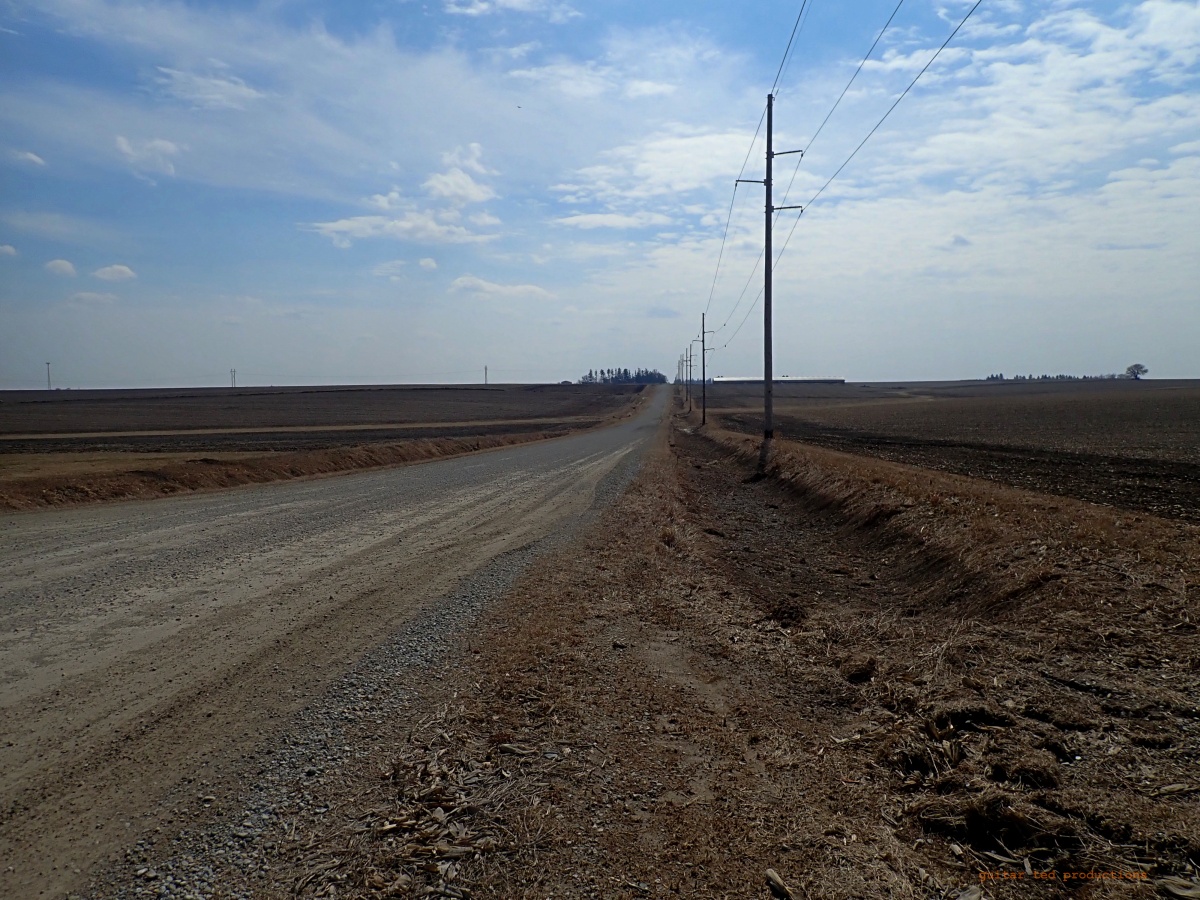
As you may have read here, I have been battling a cold for the better part of two weeks now. I'm getting better, but I'm still not out of the woods just yet. But that didn't stop me from getting out for a short one on Tuesday. 

We've finally turned the corner in terms of weather here. For the past two weeks it has been a roller coaster in terms of decent days versus really blustery, and even frigid weather. It's been so tough weather-wise that even if I had been well, I probably wouldn't have gotten out very much at all. 

But now things are looking up in both departments- both in terms of my health and in terms of the weather. And I wasn't about to just sit here another day and watch the clouds roll by in a beautiful blue sky without giving the bike a go. So I got dressed in some knickers, a wind vest, and the rest of my cycling garb, but no gloves! (WooHoo!) Then I headed off South straight into the wind.

It may not look like much, but it was very good medicine for my soul.

The only thing I cannot convey here with this image is the strength of the wind at the time.

This was one of those Spring days we get here where the wind is brutal. Really brutal. Like 25mph-30mph brutal. It didn't take long for me to figure out that too much of this headwind was going to end up being a bad thing for a guy coming off a wicked head cold. 

It won't be long and this all will be green.

I turned off sooner than my mind wanted to, but it was the right decision. What is that old saw? "Baby steps"? Yeah, that's it. Take it easy, build up. Going longer and taking the risk that I would end up relapsing, or stressing out the knees, was not worth it. 

Looking at the road that would take me back into town.
Poachers? Or just lazy hunters? I see this every Spring somewhere in the country.

I live in the center, more or less, of the city I live in, so it takes about 6 or so miles for me just to get to the gravel heading South out of town. I ended up riding almost an hour and a half. That's good to start with. I can build off of that.

Oh yeah.... Going in the other direction? That was fun!

Brown Season: In One Direction

Escape Route: Sergeant Road bike path.
As you may have read here, I have been battling a cold for the better part of two weeks now. I'm getting better, but I'm still not out of the woods just yet. But that didn't stop me from getting out for a short one on Tuesday. 

We've finally turned the corner in terms of weather here. For the past two weeks it has been a roller coaster in terms of decent days versus really blustery, and even frigid weather. It's been so tough weather-wise that even if I had been well, I probably wouldn't have gotten out very much at all. 

But now things are looking up in both departments- both in terms of my health and in terms of the weather. And I wasn't about to just sit here another day and watch the clouds roll by in a beautiful blue sky without giving the bike a go. So I got dressed in some knickers, a wind vest, and the rest of my cycling garb, but no gloves! (WooHoo!) Then I headed off South straight into the wind.

It may not look like much, but it was very good medicine for my soul.

The only thing I cannot convey here with this image is the strength of the wind at the time.

This was one of those Spring days we get here where the wind is brutal. Really brutal. Like 25mph-30mph brutal. It didn't take long for me to figure out that too much of this headwind was going to end up being a bad thing for a guy coming off a wicked head cold. 

It won't be long and this all will be green.

I turned off sooner than my mind wanted to, but it was the right decision. What is that old saw? "Baby steps"? Yeah, that's it. Take it easy, build up. Going longer and taking the risk that I would end up relapsing, or stressing out the knees, was not worth it. 

Looking at the road that would take me back into town.
Poachers? Or just lazy hunters? I see this every Spring somewhere in the country.

I live in the center, more or less, of the city I live in, so it takes about 6 or so miles for me just to get to the gravel heading South out of town. I ended up riding almost an hour and a half. That's good to start with. I can build off of that.

Oh yeah.... Going in the other direction? That was fun!

Tuesday, March 21, 2023

Spring Brings The "New" In For Review

Shimano S-Phyre Ridescape GR sunglasses.
Well, the supply chain is full to over-flowing again and that means review items are coming in hot this Spring. I thought I'd share with you all what I have going on here as a lot of this stuff will be figuring into my upcoming rides. Generally I have shared what I was up to anyway with regard to reviewing product, so this shouldn't be too much of a shock for you readers here.

As always, The Standard Disclaimer applies. 

First up I have these Shimano S-Phyre Ridescape GR sunglasses in for review which has this magnetic lens retention system. It's pretty crazy to see how many uses for neodymium magnets that there are now. 

These have the frameless design, which I like as there are no frames to hinder your peripheral vision. Plus it is big enough not to look goofy on my large noggin. That is a plus! 

Then I have what seems like my most popular review category product of all-time which would be tires. The first proper review I ever wrote was on a set of bicycle tires. So, maybe I was destined for this? Maybe....

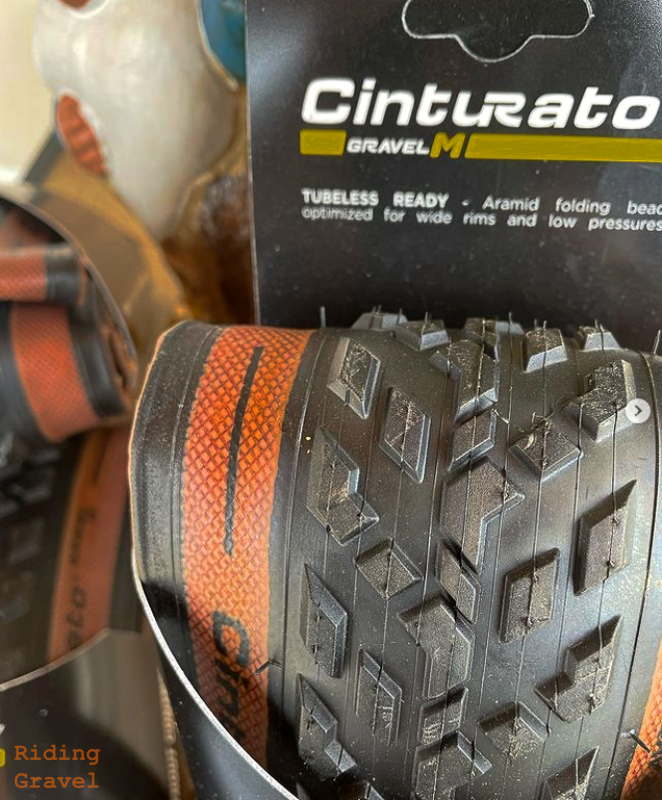
Anyway, I have two sets of Pirelli Cinturato Gravel M tires to test now. These are Pirelli's "multi-surface" tires, thus the "M" in the name. 

A couple of odd things I noted about these tires when I first laid eyes on them. One was that the sidewalls on these "Classic" versions of the Gravel M look a lot like a Continental tire sidewall. The second? These Italian brand tires are made in France. Weird. 

These kind of remind me of old ATB tires like the Tioga versions of mountain bike tires from back in the day. Actually, my friend Ari was the first to point this out when he spied my image of them on Instagram. Despite the old-school ATB looks, these are not designed to do anything like those old tires. 

They have a centralized tread block pattern that creates a virtual solid center line which helps with hard surface rolling.The other knobs are there ostensibly for traction and stability in looser soil and gravel. I will have to ride them a bit before I know if that is true or not.

I will say that they set up tubeless well and hold air like a champ. So far, so good.....

Security minded seat collar from Kinekt

Sometimes I get these odd items which sort of defy categorization in terms of "gravel" or MTB or road biking. Maybe commuting? But sometimes it's just an odd deal that someone wants me to amplify that is out there as a choice. This Kinekt  "Anti-Theft Locking Collar" is such a product. 

It's obvious job is to prevent anyone from hijacking your saddle and seat post. The keyed tool, which comes with the $44.95 collar, has a hex key socket on the one side and the 4-pin interface on the other. The tool is tethered which you can connect to a key chain for convenience. it also comes with the proper 4mm hex key as well. 

I dunno..... I guess if you live and ride in an urban or collegiate area that has a higher chance for saddle/post theft, this might make sense. Maybe for a bikepacking trip, or a tour, where a bit of security can go a long way toward peace of mind. I get it. I don't think this is necessarily anything I'd ever need, but there you go.

Now that the snow is gone....

I have even more stuff that I either cannot talk about yet or that is on its way in yet. So, stay tuned for more review items to be mentioned here. Of course, I will also review the Teravail tires on my Gryphon Mk3, as well as the bike, in future posts. 

So, now you know some of what to expect here over the coming months. reviews will be happening. Of course, that also means ride reports will be happening as well. That is, if I ever get over this stinkin' cold I have! 

Spring Brings The "New" In For Review

Shimano S-Phyre Ridescape GR sunglasses.
Well, the supply chain is full to over-flowing again and that means review items are coming in hot this Spring. I thought I'd share with you all what I have going on here as a lot of this stuff will be figuring into my upcoming rides. Generally I have shared what I was up to anyway with regard to reviewing product, so this shouldn't be too much of a shock for you readers here.

As always, The Standard Disclaimer applies. 

First up I have these Shimano S-Phyre Ridescape GR sunglasses in for review which has this magnetic lens retention system. It's pretty crazy to see how many uses for neodymium magnets that there are now. 

These have the frameless design, which I like as there are no frames to hinder your peripheral vision. Plus it is big enough not to look goofy on my large noggin. That is a plus! 

Then I have what seems like my most popular review category product of all-time which would be tires. The first proper review I ever wrote was on a set of bicycle tires. So, maybe I was destined for this? Maybe....

Anyway, I have two sets of Pirelli Cinturato Gravel M tires to test now. These are Pirelli's "multi-surface" tires, thus the "M" in the name. 

A couple of odd things I noted about these tires when I first laid eyes on them. One was that the sidewalls on these "Classic" versions of the Gravel M look a lot like a Continental tire sidewall. The second? These Italian brand tires are made in France. Weird. 

These kind of remind me of old ATB tires like the Tioga versions of mountain bike tires from back in the day. Actually, my friend Ari was the first to point this out when he spied my image of them on Instagram. Despite the old-school ATB looks, these are not designed to do anything like those old tires. 

They have a centralized tread block pattern that creates a virtual solid center line which helps with hard surface rolling.The other knobs are there ostensibly for traction and stability in looser soil and gravel. I will have to ride them a bit before I know if that is true or not.

I will say that they set up tubeless well and hold air like a champ. So far, so good.....

Security minded seat collar from Kinekt

Sometimes I get these odd items which sort of defy categorization in terms of "gravel" or MTB or road biking. Maybe commuting? But sometimes it's just an odd deal that someone wants me to amplify that is out there as a choice. This Kinekt  "Anti-Theft Locking Collar" is such a product. 

It's obvious job is to prevent anyone from hijacking your saddle and seat post. The keyed tool, which comes with the $44.95 collar, has a hex key socket on the one side and the 4-pin interface on the other. The tool is tethered which you can connect to a key chain for convenience. it also comes with the proper 4mm hex key as well. 

I dunno..... I guess if you live and ride in an urban or collegiate area that has a higher chance for saddle/post theft, this might make sense. Maybe for a bikepacking trip, or a tour, where a bit of security can go a long way toward peace of mind. I get it. I don't think this is necessarily anything I'd ever need, but there you go.

Now that the snow is gone....

I have even more stuff that I either cannot talk about yet or that is on its way in yet. So, stay tuned for more review items to be mentioned here. Of course, I will also review the Teravail tires on my Gryphon Mk3, as well as the bike, in future posts. 

So, now you know some of what to expect here over the coming months. reviews will be happening. Of course, that also means ride reports will be happening as well. That is, if I ever get over this stinkin' cold I have!