Showing posts with label history. Show all posts

Monday, April 17, 2023

Let's Talk About Geometry Again

Diagram showing what "trail" is on a bicycle
With the brief return of Winter here in Iowa and elsewhere in the Mid-West, there wasn't much riding being done. So, what better time is there to grab a hot cup of coffee or tea and ruminate on the finer details of bicycle design? 

So, with that said, here are some reasons for this post today to start out with. I have written a LOT about bicycle geometry in the past, specifically concerning geometry for gravel road/rough road riding. This all came out of a research I did in the late 2000's into what older ideas were for road bikes in terms of geometry. Scouring the internet for old ideas led me to thinking more critically about what would make my perfect gravel bike. Which leads me to....

This originally was all about what "I" wanted. I was not ever thinking about these geometry ideas for anyone else other than myself and a potential custom designed gravel going bike. Context: At the time I was using a Surly Karate Monkey as my main gravel bike. I knew it could be refined and made better to do what it was that I was falling in love with doing, namely "gravel grinding". Of course, there were others doing this as well, but at that time there were no options specifically designed for gravel, and the hope that there ever would be was not high. In fact, there may have been no notion at all that the cycling industry would ever take notice and do for us what they have done. So, keeping in mind that this was concerning my take for myself, and that any ideas that this "gravel thing" would take root were not very hopeful, I came up with a refined idea for what I thought would make a good gravel bike design on my own. 

The Raleigh Tamland Two ended up being the bike I would have designed.

Briefly I will then just say that due to a set of circumstances beginning in 2012 things turned out so that my design didn't have to be custom made. It ended up being (mostly) realized in the production of the 2014 Raleigh Tamland Two bike, which I then purchased. 

While it is true that the Tamland fit the mold of what I was after in a gravel bike, it was still based upon "my ideal" and not necessarily what a lot of other folks would think was, or would think of in the future as, "Gravel Bike Geometry". 

Much to my surprise then, the "gravel bike", as we have come to know it now, is pretty much an approximation of these ideas I put together back in the early "twenty-teens". Sure, there are variants, but the meat of what is used as geometry now for these bikes is pretty much based upon the same ideas I found back then. Note- I did not say, or ever would say "I invented gravel bike geometry". That would be preposterous. So, let's not be confused. I mined history for ideas that others came up with and by coincidence or influence, I do not know which, the cycling industry did a similar thing as well.

Now, on to something recent that appeared on social media that is relevant to this discussion....

Courtesy of Steve Garro's Facebook page

The above image, courtesy of Steve Garro's Facebook page, (he of Coconino Cycles), shows a page from a 1946 edition of "Bicycling" discussing the geometry and technical features of a frame from a "Willie Honeman", who was a three-time National Champion track cyclist and, apparently, he dabbled in frame making in the 1940's. This design being discussed is one that Mr. Honeman would have ridden on the board tracks in the late 1920's and early 1930's, but aparently was still relevant in the 40's as well.

You'll note, amongst other things, the odd nomenclature for frame parts, but what I wanted to draw our attention to was the geometry. This bike is what could be considered prototypical gravel bike geometry. Note- This is a board track bike design! In the notes on the frame, you'll see a recommendation for a slacker head tube angle for "a Road Machine to absorb some of the vibrations caused by bumpy roads." That angle range being listed as "20 or 22 degrees", which may be confusing until you realize that this is looking at the angle from 90° perpendicular to the ground to the centerline of the steer tube. The vertical line being "zero" degrees and adding degrees until you get to the steer tube angle. Reading it as we do now this would be 70° - 68°! 

A deep bottom bracket drop is also specified (Hangar drop) which turns out to be approximately 75mm. The chain stay is specified at 17" which is a bit more than 431mm. So, as I looked at this, I realized that these numbers, besides the surprisingly slack head angles recommended, were right in the same pocket I was thinking about back in 2010. 

Of course, one could argue that materials technology was part of the reason for those odd geometry numbers.  Also, you might say that this is a hold-over from earlier thoughts on rough road riding and track bikes, but here I'd have to think that while traditions may have been part of these choices, I would also assume that they did actually work in real-world applications. If they didn't, well one could assume that we'd have never heard about bikes like this. 

My main purpose here is to show that these ideas we are plumbing for gravel bikes today have deeper roots than we may have thought. This particular design offered by Mr. Honeman being but one example. 

I hope you find this as interesting as I did. I think it is fascinating to see that many ideas we have now have their roots in the past. We only refine them minutely and when materials technologies allow for things to actually be made that were designed and thought of back in the late 19th and early 20th Centuries.

Let's Talk About Geometry Again

Diagram showing what "trail" is on a bicycle
With the brief return of Winter here in Iowa and elsewhere in the Mid-West, there wasn't much riding being done. So, what better time is there to grab a hot cup of coffee or tea and ruminate on the finer details of bicycle design? 

So, with that said, here are some reasons for this post today to start out with. I have written a LOT about bicycle geometry in the past, specifically concerning geometry for gravel road/rough road riding. This all came out of a research I did in the late 2000's into what older ideas were for road bikes in terms of geometry. Scouring the internet for old ideas led me to thinking more critically about what would make my perfect gravel bike. Which leads me to....

This originally was all about what "I" wanted. I was not ever thinking about these geometry ideas for anyone else other than myself and a potential custom designed gravel going bike. Context: At the time I was using a Surly Karate Monkey as my main gravel bike. I knew it could be refined and made better to do what it was that I was falling in love with doing, namely "gravel grinding". Of course, there were others doing this as well, but at that time there were no options specifically designed for gravel, and the hope that there ever would be was not high. In fact, there may have been no notion at all that the cycling industry would ever take notice and do for us what they have done. So, keeping in mind that this was concerning my take for myself, and that any ideas that this "gravel thing" would take root were not very hopeful, I came up with a refined idea for what I thought would make a good gravel bike design on my own. 

The Raleigh Tamland Two ended up being the bike I would have designed.

Briefly I will then just say that due to a set of circumstances beginning in 2012 things turned out so that my design didn't have to be custom made. It ended up being (mostly) realized in the production of the 2014 Raleigh Tamland Two bike, which I then purchased. 

While it is true that the Tamland fit the mold of what I was after in a gravel bike, it was still based upon "my ideal" and not necessarily what a lot of other folks would think was, or would think of in the future as, "Gravel Bike Geometry". 

Much to my surprise then, the "gravel bike", as we have come to know it now, is pretty much an approximation of these ideas I put together back in the early "twenty-teens". Sure, there are variants, but the meat of what is used as geometry now for these bikes is pretty much based upon the same ideas I found back then. Note- I did not say, or ever would say "I invented gravel bike geometry". That would be preposterous. So, let's not be confused. I mined history for ideas that others came up with and by coincidence or influence, I do not know which, the cycling industry did a similar thing as well.

Now, on to something recent that appeared on social media that is relevant to this discussion....

Courtesy of Steve Garro's Facebook page

The above image, courtesy of Steve Garro's Facebook page, (he of Coconino Cycles), shows a page from a 1946 edition of "Bicycling" discussing the geometry and technical features of a frame from a "Willie Honeman", who was a three-time National Champion track cyclist and, apparently, he dabbled in frame making in the 1940's. This design being discussed is one that Mr. Honeman would have ridden on the board tracks in the late 1920's and early 1930's, but aparently was still relevant in the 40's as well.

You'll note, amongst other things, the odd nomenclature for frame parts, but what I wanted to draw our attention to was the geometry. This bike is what could be considered prototypical gravel bike geometry. Note- This is a board track bike design! In the notes on the frame, you'll see a recommendation for a slacker head tube angle for "a Road Machine to absorb some of the vibrations caused by bumpy roads." That angle range being listed as "20 or 22 degrees", which may be confusing until you realize that this is looking at the angle from 90° perpendicular to the ground to the centerline of the steer tube. The vertical line being "zero" degrees and adding degrees until you get to the steer tube angle. Reading it as we do now this would be 70° - 68°! 

A deep bottom bracket drop is also specified (Hangar drop) which turns out to be approximately 75mm. The chain stay is specified at 17" which is a bit more than 431mm. So, as I looked at this, I realized that these numbers, besides the surprisingly slack head angles recommended, were right in the same pocket I was thinking about back in 2010. 

Of course, one could argue that materials technology was part of the reason for those odd geometry numbers.  Also, you might say that this is a hold-over from earlier thoughts on rough road riding and track bikes, but here I'd have to think that while traditions may have been part of these choices, I would also assume that they did actually work in real-world applications. If they didn't, well one could assume that we'd have never heard about bikes like this. 

My main purpose here is to show that these ideas we are plumbing for gravel bikes today have deeper roots than we may have thought. This particular design offered by Mr. Honeman being but one example. 

I hope you find this as interesting as I did. I think it is fascinating to see that many ideas we have now have their roots in the past. We only refine them minutely and when materials technologies allow for things to actually be made that were designed and thought of back in the late 19th and early 20th Centuries.

Friday, December 23, 2022

Friday News And Views

SunTour S-1 Rear Derailleur. (Image courtesy of Disraeli Gears)
 Really Old Rear Derailleur Idea Gets Resurrected - Again!

Bicycle technology is a strange soup made up of really smart ideas cooked up in the late 19th/early 20th Centuries and reinvented as "new" ideas decades later. Today I have a fun one that popped up because Rene Herse came out with a "Nivex" rear derailleur recently, a design manufactured around 1935. Then it was infamously resurrected by SunTour in the early 1990's

The new RH remake looks to be made of a CNC'ed aluminum, although their site gives little information on it. The piece is manufactured partially in the USA and Taiwan. The derailleur necessitates the use of a chain stay braze-on to mount it, and a special shifter that pulls a continuous cable is also part of the system, but not included in the $729.00 price for the rear derailleur. 

Comments: I've worked on several of the SunTour examples. They were indexed at the derailleur for seven speed cassettes and free wheels, usually. This rear derailleur from RH will be friction, so it could work with many different speed systems. Its main benefit is that it remains tucked up and out of the way from trail debris and it is less likely to be bent, or cause a bent hangar due to its more robust, low profile mount. 

The Nivex rear derailleur. (Image courtesy of Rene Herse)

This particular RH example is, in my opinion, inferior to the SunTour model in that it relies on a CNC type manufacturing design which, in my experience and observation, is not as robust a way to manufacture a thing like a rear derailleur as the stamped metal construction that most S-1 rear derailleurs employed. RH says the Nivex (The name is derived from one of the original makers of this design in the early 20th Century) is rebuildable and spares will be available. Yep! That's what the 1990's CNC rear derailleurs had going for them as well. That doesn't help when you grenade a rear derailleur in the middle of nowhere. (I blew two 1990's examples up, so I know about that) 

Then there is the price tag. Considering that you may have to modify your steel frame (aluminum and carbon frame owners probably aren't going with this, but you could) and that you need a shifter to match up, this is going to send your little weirdo rear derailleur experiment over the 1K mark easily. Hmm..... Why?

You could just as easily do an old friction shifter and an old 1990's XT rear derailleur for peanuts and not have to mod a frame. Same experience, less cabbage. You decide.....

The route for the 2009 Guitar Ted Death Ride Invitational
Asking For A Friend:

Recently a reader of this blog asked about the 2009 route for the Guitar Ted Death Ride Invitational which I spoke about in detail in this post recently. the request was whether or not there were cues or a gpx file for the route. 

Upon further inspection, I found 2/3rds of the original route, but what happened to the rest is a mystery. No matter, because I can recreate that with little problems. However; I also would modify the route to reflect the way that we did it in 2014/15 instead.

The reason being is that when the route starts out of Backbone State Park, the options for over nights and resupply make a lot more sense. Starting in the State Park allows you the option of camping there, and Backbone State Park is a very nice venue to start from, with amenities for showers, camping, cabin rentals, and stuff to do for support/family members that are not riding, if that is the case for you. 

It also puts you in Elkader around lunchtime, (if you start bright and early, as you should), and that village has several lunch options. Resupply towns fall in good places as well. You'd have Wadena, Volga, (admittedly not much there) and Elgin. Plus Garber, and just off course, Edgewood, although by that time you'd be so close to coming back through Strawberry Point you may as well stay the course. 

So, anyway... Any interest in me doing up the route again, making it available in gpx and in cue sheet forms? Let me know. I probably would do this on a free will donation basis, just so you know. Merry Christmas!

Velo Orange's eccentric bottom bracket.

Velo Orange Teases New EBB Option:

Sometimes you just have to simplify, but if that means going single speed for you, it may not be an option with your particular bike. Some companies in the past have recognized this fault of some frames to have any way to tension a chain for single speed use and have offered eccentric bottom brackets, or in the case of the ENO hub, an eccentric rear hub. 

Velo Orange sent out an email to its subscribers to their newsletter last Monday showing, amongst other future offerings, an eccentric bottom bracket. It works by utilizing outboard cups which are then set up with a pair of offset bearings. This allows for a 24mm spindled crank set, (typically Shimano), to be adjusted to tension a chain even if your bicycle has vertical drop outs or a rear through axle set up.  

I used a similar idea that was offered by Wheels Manufacturing to set up my Twin Six Standard Rando v2 as a single speed, only thing being that my bike had a PF-30 shell. The Velo Orange offering will work with a threaded BSA bottom bracket shell in 68mm or 73mm widths. So, for instance, I could get this and set up my Gen I Fargo as a single speed, or- I could use that bottom bracket to allow for a single speed bail-out option should I have a rear derailleur failure. 

This bottom bracket that VO is offering looks to be adjusted via the hexagonal shaped outer casing using a large wrench, I would assume. There seems to be what looks like a grub screw there which I would imagine sets the tension so the eccentric stays where you adjust it. No price has been revealed, but VO says that they expect these in for sale in late February, early March. 

Scott Bikes Debuts Solace eGravel Bike:

Scott bikes introduced a new electrified bicycle yesterday for gravel riding/racing called the Solace. Featuring a sleek, integrated motor and battery, the bike weighs in with zero accessories at 26.5lbs. It has great geometry, and it is claimed that it's new mid-motor has almost zero drag, so that if you had to go without the electrical assistance, it wouldn't feel draggy. It has a generous weight limitation of approximately 262lbs including rider and gear.

Comments: First, a question- Aren't electrified bicycles supposed to "get people who cannot/normally would not ride out riding? Aren't these bicycles supposedly here to improve the cycling experience for those who could not participate well, or at all, without electrification? 

Your answer to those questions should inform your opinion of this new bike. I would argue that this new Scott Solace does none of the things those questions seek to answer. 

First off, it costs over ten thousand dollars. Nuff said there, I think.

Secondly, its range for assistance, which admittedly can vary due to terrain, rider weight, etc, is very limited. One reviewer I read said that at 82K rider weight, he was only able to get twenty-seven miles before he ran out of battery, and that was with 900Ft of elevation gain. (!!!) 

Finally, the bike weighs over 26 pounds. Great for an electrified bike, but it is obvious that most of the time you are riding it won't be that sort of bike, especially if you like your rides to go for a few hours at a crack. So, spending 10k+ for that? 

Fail.

That's a wrap for this week. MERRY CHRISTMAS!

Friday News And Views

SunTour S-1 Rear Derailleur. (Image courtesy of Disraeli Gears)
 Really Old Rear Derailleur Idea Gets Resurrected - Again!

Bicycle technology is a strange soup made up of really smart ideas cooked up in the late 19th/early 20th Centuries and reinvented as "new" ideas decades later. Today I have a fun one that popped up because Rene Herse came out with a "Nivex" rear derailleur recently, a design manufactured around 1935. Then it was infamously resurrected by SunTour in the early 1990's

The new RH remake looks to be made of a CNC'ed aluminum, although their site gives little information on it. The piece is manufactured partially in the USA and Taiwan. The derailleur necessitates the use of a chain stay braze-on to mount it, and a special shifter that pulls a continuous cable is also part of the system, but not included in the $729.00 price for the rear derailleur. 

Comments: I've worked on several of the SunTour examples. They were indexed at the derailleur for seven speed cassettes and free wheels, usually. This rear derailleur from RH will be friction, so it could work with many different speed systems. Its main benefit is that it remains tucked up and out of the way from trail debris and it is less likely to be bent, or cause a bent hangar due to its more robust, low profile mount. 

The Nivex rear derailleur. (Image courtesy of Rene Herse)

This particular RH example is, in my opinion, inferior to the SunTour model in that it relies on a CNC type manufacturing design which, in my experience and observation, is not as robust a way to manufacture a thing like a rear derailleur as the stamped metal construction that most S-1 rear derailleurs employed. RH says the Nivex (The name is derived from one of the original makers of this design in the early 20th Century) is rebuildable and spares will be available. Yep! That's what the 1990's CNC rear derailleurs had going for them as well. That doesn't help when you grenade a rear derailleur in the middle of nowhere. (I blew two 1990's examples up, so I know about that) 

Then there is the price tag. Considering that you may have to modify your steel frame (aluminum and carbon frame owners probably aren't going with this, but you could) and that you need a shifter to match up, this is going to send your little weirdo rear derailleur experiment over the 1K mark easily. Hmm..... Why?

You could just as easily do an old friction shifter and an old 1990's XT rear derailleur for peanuts and not have to mod a frame. Same experience, less cabbage. You decide.....

The route for the 2009 Guitar Ted Death Ride Invitational
Asking For A Friend:

Recently a reader of this blog asked about the 2009 route for the Guitar Ted Death Ride Invitational which I spoke about in detail in this post recently. the request was whether or not there were cues or a gpx file for the route. 

Upon further inspection, I found 2/3rds of the original route, but what happened to the rest is a mystery. No matter, because I can recreate that with little problems. However; I also would modify the route to reflect the way that we did it in 2014/15 instead.

The reason being is that when the route starts out of Backbone State Park, the options for over nights and resupply make a lot more sense. Starting in the State Park allows you the option of camping there, and Backbone State Park is a very nice venue to start from, with amenities for showers, camping, cabin rentals, and stuff to do for support/family members that are not riding, if that is the case for you. 

It also puts you in Elkader around lunchtime, (if you start bright and early, as you should), and that village has several lunch options. Resupply towns fall in good places as well. You'd have Wadena, Volga, (admittedly not much there) and Elgin. Plus Garber, and just off course, Edgewood, although by that time you'd be so close to coming back through Strawberry Point you may as well stay the course. 

So, anyway... Any interest in me doing up the route again, making it available in gpx and in cue sheet forms? Let me know. I probably would do this on a free will donation basis, just so you know. Merry Christmas!

Velo Orange's eccentric bottom bracket.

Velo Orange Teases New EBB Option:

Sometimes you just have to simplify, but if that means going single speed for you, it may not be an option with your particular bike. Some companies in the past have recognized this fault of some frames to have any way to tension a chain for single speed use and have offered eccentric bottom brackets, or in the case of the ENO hub, an eccentric rear hub. 

Velo Orange sent out an email to its subscribers to their newsletter last Monday showing, amongst other future offerings, an eccentric bottom bracket. It works by utilizing outboard cups which are then set up with a pair of offset bearings. This allows for a 24mm spindled crank set, (typically Shimano), to be adjusted to tension a chain even if your bicycle has vertical drop outs or a rear through axle set up.  

I used a similar idea that was offered by Wheels Manufacturing to set up my Twin Six Standard Rando v2 as a single speed, only thing being that my bike had a PF-30 shell. The Velo Orange offering will work with a threaded BSA bottom bracket shell in 68mm or 73mm widths. So, for instance, I could get this and set up my Gen I Fargo as a single speed, or- I could use that bottom bracket to allow for a single speed bail-out option should I have a rear derailleur failure. 

This bottom bracket that VO is offering looks to be adjusted via the hexagonal shaped outer casing using a large wrench, I would assume. There seems to be what looks like a grub screw there which I would imagine sets the tension so the eccentric stays where you adjust it. No price has been revealed, but VO says that they expect these in for sale in late February, early March. 

Scott Bikes Debuts Solace eGravel Bike:

Scott bikes introduced a new electrified bicycle yesterday for gravel riding/racing called the Solace. Featuring a sleek, integrated motor and battery, the bike weighs in with zero accessories at 26.5lbs. It has great geometry, and it is claimed that it's new mid-motor has almost zero drag, so that if you had to go without the electrical assistance, it wouldn't feel draggy. It has a generous weight limitation of approximately 262lbs including rider and gear.

Comments: First, a question- Aren't electrified bicycles supposed to "get people who cannot/normally would not ride out riding? Aren't these bicycles supposedly here to improve the cycling experience for those who could not participate well, or at all, without electrification? 

Your answer to those questions should inform your opinion of this new bike. I would argue that this new Scott Solace does none of the things those questions seek to answer. 

First off, it costs over ten thousand dollars. Nuff said there, I think.

Secondly, its range for assistance, which admittedly can vary due to terrain, rider weight, etc, is very limited. One reviewer I read said that at 82K rider weight, he was only able to get twenty-seven miles before he ran out of battery, and that was with 900Ft of elevation gain. (!!!) 

Finally, the bike weighs over 26 pounds. Great for an electrified bike, but it is obvious that most of the time you are riding it won't be that sort of bike, especially if you like your rides to go for a few hours at a crack. So, spending 10k+ for that? 

Fail.

That's a wrap for this week. MERRY CHRISTMAS!

Tuesday, May 10, 2022

Guitar Ted's Massive, Huge Flared Drop Bar Review

Flared drop bars for 'off road' have been in my wheelhouse for almost 20 years now. As a result, I have collected quite the pile of aluminum which has been shaped into tubing, bent into weird shapes, and sold as drop bars. I guess I didn't really understand just how many flared drop bars I had until I started poking around my shop and finding stashes of old drop bars here and there, stuck away in dark corners and forgotten. 

So, I decided after writing my post last week about flared drop bar usage in early gravel times that I should do a review of what I've got here. One- Because it might be of interest to those who once knew, have forgotten, or never knew and want to learn more. I know my "Archived Drop Bar Articles" page gets consistent hits, and so I understand that a certain amount of people get their kicks out of checking out what is out there. 

So here is how this review will work. I have a lot of flared drop bars! So, I will link to reviews I have done in many cases to keep the words short here. Secondly, this will be split into three categories: Early And Out Of Production Flared Drop Bars, Current Production Flared Drop Bars, and Innovative Flared Drop Bars. Obviously, as time goes on even handle bars I have listed as 'current' may fall out of production, so if you are coming here many months or years after this posts, don't take this as gospel for what you might be able to get your hands on.

Finally, many of these handle bars were review items sent to me at no charge. These will have asterisks by their names and this means that they fall under my Standard Disclaimer. I will, in any case, offer a short, pithy comment or three on whichever bar I show and my opinions are my own. You may not agree, and that is fine, but I've got riding time on all of these and I don't think I am changing my mind about any of them. So, there ya go.....

Now, on with the show!
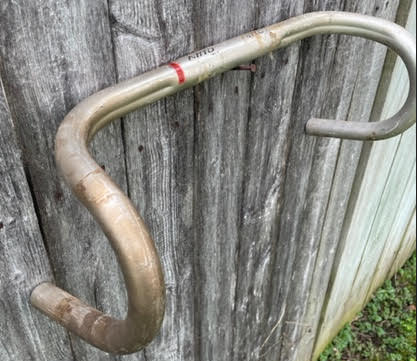
Nitto standard road drop bars

 Wait!
Those are NOT flared drop bars!! Yes.....that is correct. I just thought it prudent to remind ourselves what classic road drop bars look like, and yes- I used these for a time on a road bike. Note that the extensions are directly underneath the ramps and the 'reach' of the drop is pretty far forward. These features were seen as 'problems' for the drop bar user who wanted to go off-road riding with drops. Thus shallow drop, short reach, flare, and sweep were introduced to solve the problems. I won't get into all the 'why' of these features, but I do have a page to help you see these terms in a visual sense here

EARLY AND OUT OF PRODUCTION FLARED DROP BARS
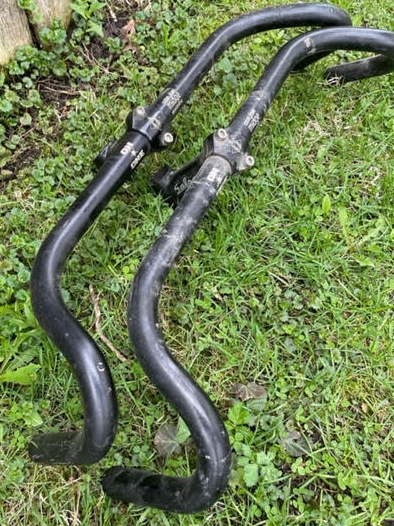
The venerable Midge Bar. The one that got this all started for me.

The Midge Bar was once pretty much my favorite and only flared drop that I would use. I have my longest rides ever on Midge Bars, and I still have a gold anodized Midge bar in use. The two seen here have been around since the 00's! See a good comparison I did early on between this and the next handle bar on this list HERE. Amazingly, you can still buy the Midge Bar. It probably is the flared drop bar that has been in production the longest of any of them! 
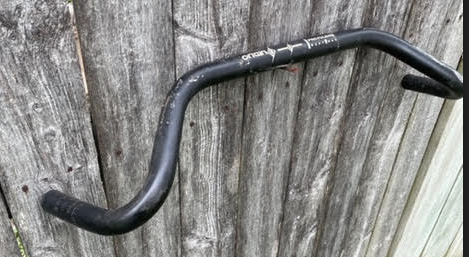
Probably the second flared drop you could get that was widely available, the original Gary Bar.

There are many versions of the Gary Bar* out there, but this was the 'OG' of them all. It was similar to the Midge Bar, (see link above), but it had a wildly sloping 'flare' to it which the Midge did not have. This laid the brake levers out really weirdly. This is almost a mustache bar in that regard. A short intro for this out-of-production bar is HERE. I have this one and one I purchased which is still in use on my Raleigh Fixed Gear Rat-Rod. 
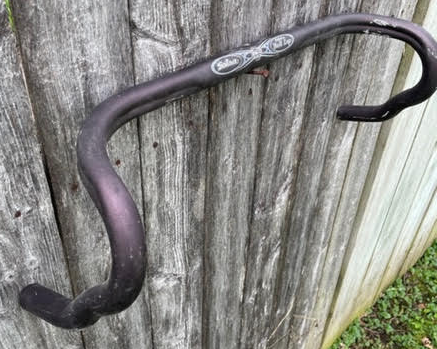
The Salsa Cycles Bell Lap Bar

The Salsa Cycles Bell Lap Bar* wasn't one that I wanted to review or even purchase. It was just what came on the Salsa Cycles Fargo Gen I when I received it. I never did a proper look at this bar, but I did compare it to its replacement, the Cowbell, in 2011 here. The Bell Lap had some degree of 'flare', but it had too deep a drop and wasn't really what many of us were looking for. However; a handle bar I have coming up is actually pretty similar to the Bell Lap. Stay tuned.....
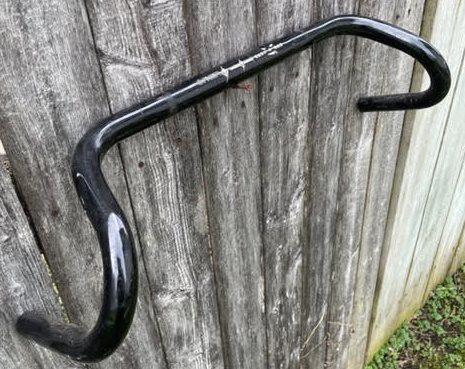
The Origin 8 Gary 2 Bar was made to address the concerns with the original Gary Bar.

The Origin 8 Gary II Bars were out by 2011 and addressed the perceived shortcomings with the original Gary Bar. I wrote up a review for it here. I wasn't all that impressed as it appeared that Origin 8 went after the Woodchipper Bar which was kind of a mistake in and of itself. No longer in production. 
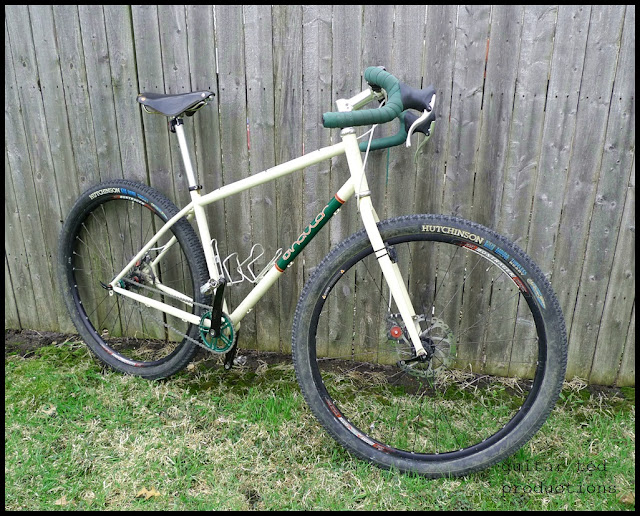
My old Singular Cycles Gryphon set up with Salsa Cycles Woodchipper Bars

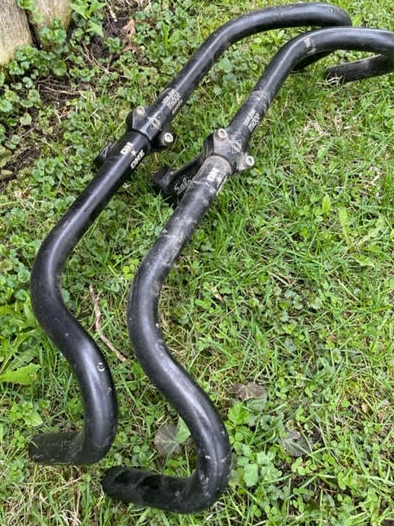
The first big splash made in flared drop bars beyond the Midge Bar was the Salsa Cycles Woodchipper Bar. I definitely do not like Woodchippers. This was a fail in design, in my opinion, due to the radius the designers chose to use and the weird transition from the tops to the swept extensions. While I no longer have any Woodchipper Bars around, you can still get them today

Yet another variation of the Gary Bar, the Gary Sweep OS Bar.

The Gary Sweep OS Bar was another variation Origin 8 had made on the flared drop bar concept. I reviewed this one here, and I found it to be 'okay', but it was now a time when bars like the Cowchipper and others were popping up that just were better designs. Had this bar come out five years earlier, it may have well been a classic. It's close, but no cigar. I think this is still available.

The Ragley Luxy Bar, (lower) and a Woodchipper for comparison.

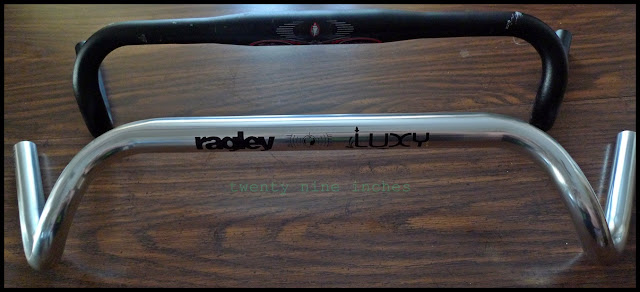
 The Ragley Luxy Bar* was a collaboration between myself, Sam at Singular Cycles, and Brant Richards of Ragley Bikes, (at that time). Not much of anything I gave input on was retained, but anyway- they asked me! Had they done what I was requesting we would have ended up with a Cowchipper-like bar before the Cowchipper, but as it was, it came out really well. I was sent two Luxy Bars to check out and they are fantastic. Since then I've tracked down another couple and one I gave away. This bar reached cult-like status after Ragley discontinued it after only one run of them was made. You can read all about it here.

Current Production Flared Drop Bars

The SOMA June Bug is pretty much a knock-off of an On One Midge Bar, but a good one at that.

The SOMA June Bug Bar* was pretty good and a bar I liked well enough. No big surprise as it is nearly an identical bar to the On One Midge Bar. I reviewed the bar here. Good design, good handle bar, but it certainly is not an original design in any way to SOMA. 
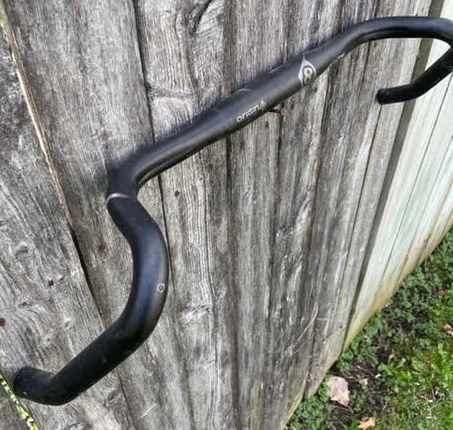
You can find this design sold under various names. This one is branded "Gary Ergo Sweep OS" from Origin 8

The next bar up is branded and sold under various names, but probably most notably by Velo Orange and Origin 8. The one I tried out is called the Gary Ergo Sweep OS* and it was a chore to get on with. The drops are weird and they put my wrists at a strange angle which was uncomfortable. Your mileage may vary. I didn't like them and so I did not write up a review. 
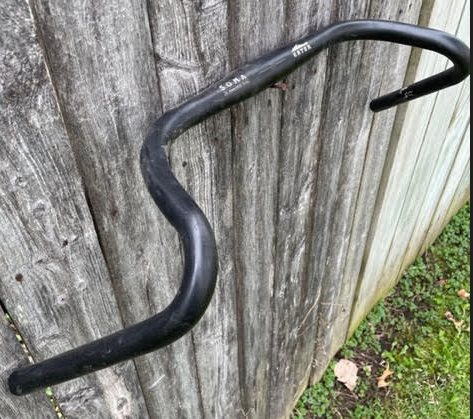
The SOMA Gator Bar

The SOMA Gator Bar* might just be the oddest bar ever made in this genre. I wrote a review here. Nuff said....
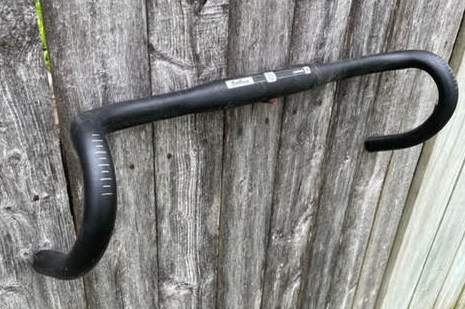
The Salsa Cycles Cowbell

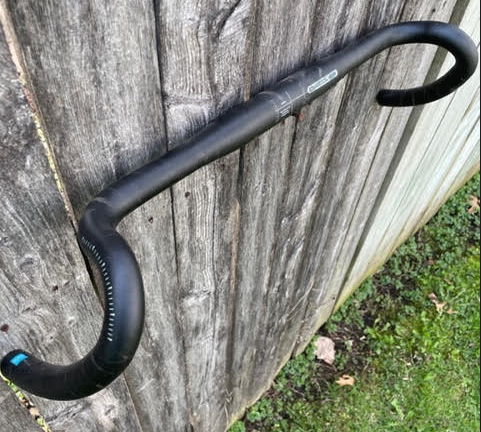
This handle bar is probably largely responsible for the adoption of flared drop bars for gravel cycling. The Salsa Cycles Cowbell II is an amazingly comfortable bar which is about as close to a traditional road drop bar as you can get in a flared drop bar. I wrote a review here.
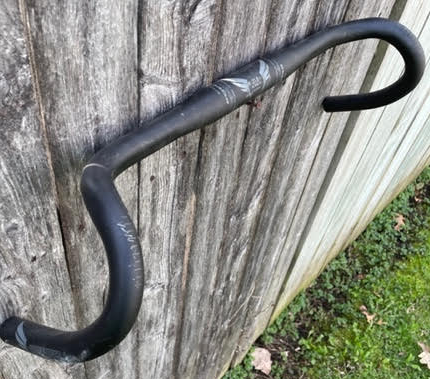
The Salsa Cycles Cowchipper is a Cowbell with more flare and a bit more sweep.

In my mind, the Cowchipper from Salsa Cycles pretty much set the bar for any other flared drop bars for gravel to meet or exceed, if that is possible. It is darn near the perfect gravel bar, in my estimation. I wrote a review here

The PRO Discover Big Flare handle bar

Of course, the Cowchipper also influenced a lot of following designs, and one of them is the PRO Discover Big Flare Handlebar*. I wrote a review in tandem with MG on this bar here. Still one of my favorites although it isn't currently on one of my bikes. 
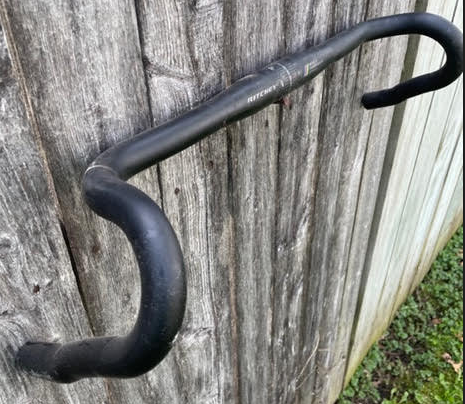
The Ritchey Venturemax Handlebar

Remember that Salsa Bell Lap bar above? Well, here is the bar I was referring to in my description of the Bell Lap. It is the Ritchey Design Venturemax Bar*. This handle bar was a good one, and I have been thinking about putting it on a bike again for a long time, but these other handle bars keep coming out and I only have so many bicycles! Anyway, here is my review on this handlebar

Whiskey No. 9 24° handlebar on my BMC MCD

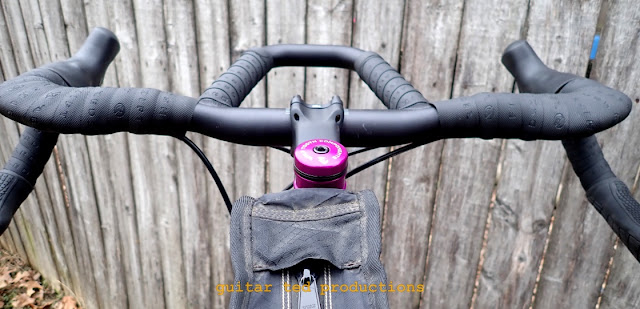
 Eventually there were carbon fiber flared drop bars and one of them is the excellent Whiskey No. 9 24°* flared drops. I got these as a gift for my BMC MCD build. They are pretty much carbon Cowchippers, (yes- I realize there actually are carbon Cowchippers) and they feel a lot like them, but better. 

Innovative Flared Drop Bars
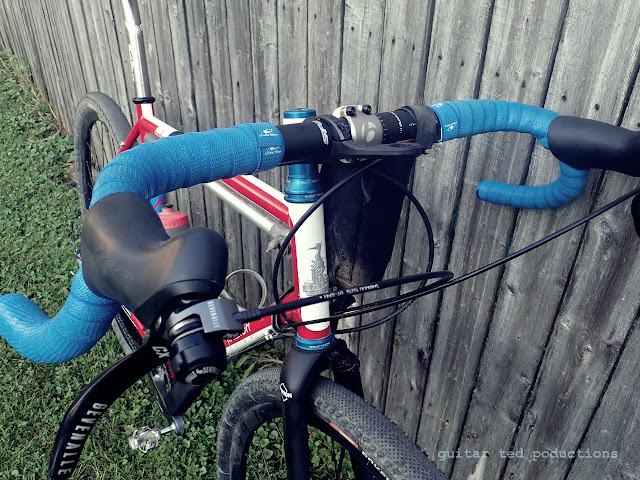
Spank Industries Flare Vibrocore 25 Handlebars

Another cool handle bar I got to check out is the Spank Flare Vibrocore 25* Handlebars. These are kind of different from the aspect of the vibration absorbing foam which is inside of these. Another interesting aspect of these is that they have a 31.8mm diameter from the stem to the ramps. I reviewed these here. Pretty cool handle bar that I am still using. 
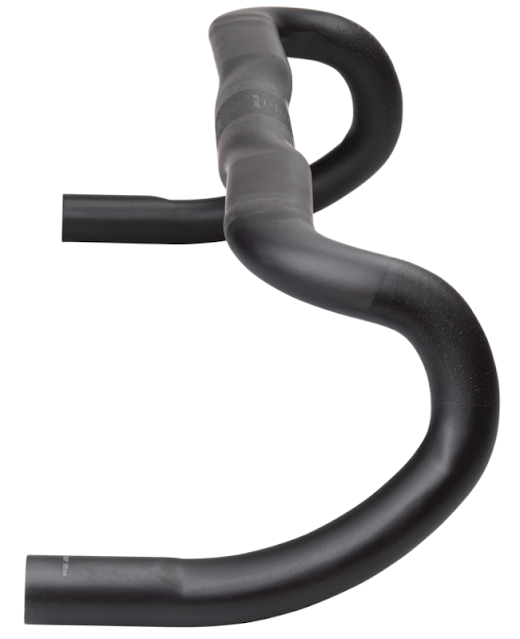
Whiskey Spano Bar

Of course, carbon fiber affords you all the shaping and layup possibilities which aluminum is limited on or cannot do similarly. This is exemplified in the excellent Whiskey Spano Bar*. I have been pretty enamored of this one since I have had it and I don't plan on it going away anytime soon. I wrote a review here

Redshift Sports unusual Kitchen Sink Bar

Well, if you cannot form aluminum like carbon fiber, and you want some ergonomic benefits, the Kitchen Sink Handlebar by Redshift Sports* may be the option for you. Now I have to admit that I really did not think I would last very long after the review period with this bar, but I cannot seem to find any reasons to take it off. It is just that comfy with the extras in the grips that are accessories for the bar. I wrote a review here. It is heavy, and the aero section is sort of useless, but it is so good with those grips. Anyway, it's pretty nice from an ergonomic place. 

______________________________________________________________________________

And that is a wrap for now. If I get anymore bars to add to this, I will jump in and do that. this is in no way exhaustive, representative of now, or what have you. This isn't even all the drops I have ridden. (I can think of a couple others I have tried off the top of my head) But this represents a good overview from the worst, to the best, and from the weirdest to the commonplace designs. It's historical and interesting, I think, and I hope that you enjoyed this look at the flared drops I have tried.

Guitar Ted's Massive, Huge Flared Drop Bar Review

Flared drop bars for 'off road' have been in my wheelhouse for almost 20 years now. As a result, I have collected quite the pile of aluminum which has been shaped into tubing, bent into weird shapes, and sold as drop bars. I guess I didn't really understand just how many flared drop bars I had until I started poking around my shop and finding stashes of old drop bars here and there, stuck away in dark corners and forgotten. 

So, I decided after writing my post last week about flared drop bar usage in early gravel times that I should do a review of what I've got here. One- Because it might be of interest to those who once knew, have forgotten, or never knew and want to learn more. I know my "Archived Drop Bar Articles" page gets consistent hits, and so I understand that a certain amount of people get their kicks out of checking out what is out there. 

So here is how this review will work. I have a lot of flared drop bars! So, I will link to reviews I have done in many cases to keep the words short here. Secondly, this will be split into three categories: Early And Out Of Production Flared Drop Bars, Current Production Flared Drop Bars, and Innovative Flared Drop Bars. Obviously, as time goes on even handle bars I have listed as 'current' may fall out of production, so if you are coming here many months or years after this posts, don't take this as gospel for what you might be able to get your hands on.

Finally, many of these handle bars were review items sent to me at no charge. These will have asterisks by their names and this means that they fall under my Standard Disclaimer. I will, in any case, offer a short, pithy comment or three on whichever bar I show and my opinions are my own. You may not agree, and that is fine, but I've got riding time on all of these and I don't think I am changing my mind about any of them. So, there ya go.....

Now, on with the show!

Nitto standard road drop bars

 Wait!
Those are NOT flared drop bars!! Yes.....that is correct. I just thought it prudent to remind ourselves what classic road drop bars look like, and yes- I used these for a time on a road bike. Note that the extensions are directly underneath the ramps and the 'reach' of the drop is pretty far forward. These features were seen as 'problems' for the drop bar user who wanted to go off-road riding with drops. Thus shallow drop, short reach, flare, and sweep were introduced to solve the problems. I won't get into all the 'why' of these features, but I do have a page to help you see these terms in a visual sense here

EARLY AND OUT OF PRODUCTION FLARED DROP BARS

The venerable Midge Bar. The one that got this all started for me.

The Midge Bar was once pretty much my favorite and only flared drop that I would use. I have my longest rides ever on Midge Bars, and I still have a gold anodized Midge bar in use. The two seen here have been around since the 00's! See a good comparison I did early on between this and the next handle bar on this list HERE. Amazingly, you can still buy the Midge Bar. It probably is the flared drop bar that has been in production the longest of any of them! 

Probably the second flared drop you could get that was widely available, the original Gary Bar.

There are many versions of the Gary Bar* out there, but this was the 'OG' of them all. It was similar to the Midge Bar, (see link above), but it had a wildly sloping 'flare' to it which the Midge did not have. This laid the brake levers out really weirdly. This is almost a mustache bar in that regard. A short intro for this out-of-production bar is HERE. I have this one and one I purchased which is still in use on my Raleigh Fixed Gear Rat-Rod. 

The Salsa Cycles Bell Lap Bar

The Salsa Cycles Bell Lap Bar* wasn't one that I wanted to review or even purchase. It was just what came on the Salsa Cycles Fargo Gen I when I received it. I never did a proper look at this bar, but I did compare it to its replacement, the Cowbell, in 2011 here. The Bell Lap had some degree of 'flare', but it had too deep a drop and wasn't really what many of us were looking for. However; a handle bar I have coming up is actually pretty similar to the Bell Lap. Stay tuned.....

The Origin 8 Gary 2 Bar was made to address the concerns with the original Gary Bar.

The Origin 8 Gary II Bars were out by 2011 and addressed the perceived shortcomings with the original Gary Bar. I wrote up a review for it here. I wasn't all that impressed as it appeared that Origin 8 went after the Woodchipper Bar which was kind of a mistake in and of itself. No longer in production. 

My old Singular Cycles Gryphon set up with Salsa Cycles Woodchipper Bars

The first big splash made in flared drop bars beyond the Midge Bar was the Salsa Cycles Woodchipper Bar. I definitely do not like Woodchippers. This was a fail in design, in my opinion, due to the radius the designers chose to use and the weird transition from the tops to the swept extensions. While I no longer have any Woodchipper Bars around, you can still get them today

Yet another variation of the Gary Bar, the Gary Sweep OS Bar.

The Gary Sweep OS Bar was another variation Origin 8 had made on the flared drop bar concept. I reviewed this one here, and I found it to be 'okay', but it was now a time when bars like the Cowchipper and others were popping up that just were better designs. Had this bar come out five years earlier, it may have well been a classic. It's close, but no cigar. I think this is still available.

The Ragley Luxy Bar, (lower) and a Woodchipper for comparison.

 The Ragley Luxy Bar* was a collaboration between myself, Sam at Singular Cycles, and Brant Richards of Ragley Bikes, (at that time). Not much of anything I gave input on was retained, but anyway- they asked me! Had they done what I was requesting we would have ended up with a Cowchipper-like bar before the Cowchipper, but as it was, it came out really well. I was sent two Luxy Bars to check out and they are fantastic. Since then I've tracked down another couple and one I gave away. This bar reached cult-like status after Ragley discontinued it after only one run of them was made. You can read all about it here.

Current Production Flared Drop Bars

The SOMA June Bug is pretty much a knock-off of an On One Midge Bar, but a good one at that.

The SOMA June Bug Bar* was pretty good and a bar I liked well enough. No big surprise as it is nearly an identical bar to the On One Midge Bar. I reviewed the bar here. Good design, good handle bar, but it certainly is not an original design in any way to SOMA. 

You can find this design sold under various names. This one is branded "Gary Ergo Sweep OS" from Origin 8

The next bar up is branded and sold under various names, but probably most notably by Velo Orange and Origin 8. The one I tried out is called the Gary Ergo Sweep OS* and it was a chore to get on with. The drops are weird and they put my wrists at a strange angle which was uncomfortable. Your mileage may vary. I didn't like them and so I did not write up a review. 

The SOMA Gator Bar

The SOMA Gator Bar* might just be the oddest bar ever made in this genre. I wrote a review here. Nuff said....

The Salsa Cycles Cowbell

This handle bar is probably largely responsible for the adoption of flared drop bars for gravel cycling. The Salsa Cycles Cowbell II is an amazingly comfortable bar which is about as close to a traditional road drop bar as you can get in a flared drop bar. I wrote a review here.

The Salsa Cycles Cowchipper is a Cowbell with more flare and a bit more sweep.

In my mind, the Cowchipper from Salsa Cycles pretty much set the bar for any other flared drop bars for gravel to meet or exceed, if that is possible. It is darn near the perfect gravel bar, in my estimation. I wrote a review here

The PRO Discover Big Flare handle bar

Of course, the Cowchipper also influenced a lot of following designs, and one of them is the PRO Discover Big Flare Handlebar*. I wrote a review in tandem with MG on this bar here. Still one of my favorites although it isn't currently on one of my bikes. 

The Ritchey Venturemax Handlebar

Remember that Salsa Bell Lap bar above? Well, here is the bar I was referring to in my description of the Bell Lap. It is the Ritchey Design Venturemax Bar*. This handle bar was a good one, and I have been thinking about putting it on a bike again for a long time, but these other handle bars keep coming out and I only have so many bicycles! Anyway, here is my review on this handlebar

Whiskey No. 9 24° handlebar on my BMC MCD

 Eventually there were carbon fiber flared drop bars and one of them is the excellent Whiskey No. 9 24°* flared drops. I got these as a gift for my BMC MCD build. They are pretty much carbon Cowchippers, (yes- I realize there actually are carbon Cowchippers) and they feel a lot like them, but better. 

Innovative Flared Drop Bars

Spank Industries Flare Vibrocore 25 Handlebars

Another cool handle bar I got to check out is the Spank Flare Vibrocore 25* Handlebars. These are kind of different from the aspect of the vibration absorbing foam which is inside of these. Another interesting aspect of these is that they have a 31.8mm diameter from the stem to the ramps. I reviewed these here. Pretty cool handle bar that I am still using. 

Whiskey Spano Bar

Of course, carbon fiber affords you all the shaping and layup possibilities which aluminum is limited on or cannot do similarly. This is exemplified in the excellent Whiskey Spano Bar*. I have been pretty enamored of this one since I have had it and I don't plan on it going away anytime soon. I wrote a review here

Redshift Sports unusual Kitchen Sink Bar

Well, if you cannot form aluminum like carbon fiber, and you want some ergonomic benefits, the Kitchen Sink Handlebar by Redshift Sports* may be the option for you. Now I have to admit that I really did not think I would last very long after the review period with this bar, but I cannot seem to find any reasons to take it off. It is just that comfy with the extras in the grips that are accessories for the bar. I wrote a review here. It is heavy, and the aero section is sort of useless, but it is so good with those grips. Anyway, it's pretty nice from an ergonomic place. 

______________________________________________________________________________

And that is a wrap for now. If I get anymore bars to add to this, I will jump in and do that. this is in no way exhaustive, representative of now, or what have you. This isn't even all the drops I have ridden. (I can think of a couple others I have tried off the top of my head) But this represents a good overview from the worst, to the best, and from the weirdest to the commonplace designs. It's historical and interesting, I think, and I hope that you enjoyed this look at the flared drops I have tried.