Sunday, February 18, 2024

Curve Cycling Pushes Boundaries Of Gravel Bikes

Image of Curve Titanosaur courtesy of Curve Cycling.
 Many years ago, at the first Dirty Kanza 200 in 2006, I met a frame builder who was singing the theoretical benefits of a 36" inch diameter wheel for gravel cycling. He theororized that the possibilities of having a momentum-saving, "flywheel" effect could help propel riders up and over the rollers common to Mid-Western gravel roads. 

The idea was so appealing to this man that he was certain it would work, if only.....

If only wheels and tires existed that would be tuned for such riding. All that did exist at that point were items meant for the niche of unicycling. That one-wheeled vehicle whose gearing was determined by wheel diameter only. To get "lower" gearing you had to build a unicycle with a smaller wheel. 20" and 24" being very popular wheel sizes for unicycles. But for over-the-road cycling, those smaller diameter wheels presented "too low a gear", as it were. So bigger hoops were made. The 29"er tires made this more available, but what about larger wheels than that?

That's where 32" and 36" wheels came into play for unicyclists. In 2006 the market for such behemoth sized 'wagon wheels' was super small. So, the available parts reflected that. They were heavy, reliable but heavy. 

Late into 2006 Ben Witt, then the owner of Milltown Cycles in Faribault, Minnesota, had a nutty idea: Take those heavy 36"er unicycle tires and wheels and make a bicycle out of that! And so he did. By February of 2007 he had the finished, but unpainted bike, in the parking lot of parts distributor Quality Bicycle Products and was letting people ride it. I was one of those folks. 

Image of a Salsa El Mariachi 29"er next to Ben Witt's 36"er. (Image courtesy of Ben Witt)

Ben is the "father" of modern 36"ers, as far as I am concerned. No one else was doing this in 2006/07 when Ben had Mike Pofahl braze up that frame and when Ben hand-cut the tread into the heavy 36"er tires. 

Of course, there were things that weren't that great about this idea and this bike in particular. The wheels were ponderous. Due to the straight-gauge, super-long spokes, the brakes were kind of winding up the wheel, and with all that momentum, a typical MTB disc brake was getting pretty over-worked. The geometry of the frame and fork weren't completely realized either. That said, the bike was amazingly fun to ride and the idea sparked off a 36"er movement across the world. Eventually. by 2011, the company, Dirty Sixer came along and started making more 36"er bikes for big and tall folks. This sparked enough activity to warrant lighter tires, rims, better geometries, and other fine details which made 36"ers a "real" viable bicycle, not a novelty item. 

Image courtesy of Curve Cycling
This brings us up to date and now we can appreciate what Curve Cycling has produced here better than we maybe could have before. It should be noted that Curve Cycling basically made this a pre-order option with a trigger for production set at 20 units committed to be purchased. Once they have reached that goal, these bikes, in titanium and carbon, will be coming out. 

With modernized carbon rims, "real" tires that are tubeless, and geometry dialed in, I have no doubt that this bike would ride amazingly well. I know it looks goofy, but that's just us not being around 36" wheels, that's all. I mean, people thought the same about 29"er wheels in 2003, but who thinks a 29"er wheel looks "weird" now? Not may do. We're used to them. 

Will 36"ers be a more commonly seen bike? Doubtful, but you may spy one here or there. They are really best for folks 6ft-plus. The Curve marketing blurb states that this could fit someone as short as 5'7", but.....yeah. You're going to see this more often under 6'4"-plus sized riders than shorter than that height. 

But it is super-cool, and while I cannot vouch for that frame builder's opinion given to me in 2006, I'd sure give this a try to find out if he was right all along. 

Saturday, February 17, 2024

Brown Season: Ford Road Access Adventure

Escape Route: Old Commute Route To Andy's
My Turkey Burn Ride for 2023 was a ride up the Washington-Union Access Trail and then back on Ford Road and then through Cedar Falls and Waterloo. There was one thing eating at me ever since I did that ride. "Where was the intersection of the Washington-Union Access Trail and the Ford Road Access Trail?

I tramped around that day back in November and found nothing but dead ends. So, I figured on getting back to there and attacking from the Ford Road side where I knew there was good trail from Ford Road. 

Through family events, sickness, weather, and time for snow to melt, I bade my time until things were ripe for an adventure out that way again. Without cutting the approach short by using my truck, it takes nearly an hour to get out there at a fair pace. So, it isn't as though I could just hop on over there and check things out.

By nearly Valentine's Day I was seeing reports from all over the Mid-West that mountain bike trails were open. That is simply unheard of this time of the year. So, with that knowledge, I assumed a trip down the dirt trail that I knew as Ford Road Access Trail would be dry enough to pass through. That is, if one could pass through. See, years ago I recall riding through there and having to bushwhack a portion of that trail, nearly crawling/dragging my bike in places. There was a time shortly after that which saw clear passage through to the fire road (Washington - Union Access Trail) Who know what I'd find this time.

Nearly 50°F, barely a whisper of a breeze. February! Where art thou?

Barns For Jason: I don't think I've ever photographed this one.

The weather was darn near perfect for March. Only it is February! I decided to wear bib tights, a base layer, a long-sleeved wool jersey, and my PCL windbreaker. On my head was a buff, and a helmet, and on my feet were wool socks and Northwave winter boots. It was a perfect get-up for this ride. The bike was the Singular Gryphon Mk3. I wanted those wider tires in case I ran into mud, soft grounds, or some leftover snow patches. 

Ford Road. The gravel rode more like chip seal due to the Winter conditions.

Barns For Jason: Another one that has escaped me over the years.

While the weather was nearly perfect, at least for this time of the year, that long slog out to get to Ford Road is not perfect in the least. I tried to slip in as many alleys and bike paths as possible, but the terrain is so flat most of the time, due to my paralleling the Cedar River, more or less, that you end up just pedaling all the time. Good for training. Sucks the fun out though. 

What wind there was was out of the Northwest so I was working against that as well. Eventually I got out there, but I could not find the Ford Road Access Trail parking area off Ford Road. So, I stopped to consult my "map". (iPhone)

A quick stop to research where I missed the trailhead.

Aha! There you are!

Somehow I passed the entrance which was plain as the nose on my face, but I eventually found it. I dove in knowing the first fifty yards or so were good and led to a steep down hill section. After that, I did not know what I might find. 

Initially things were good. The trail was wide, looked to have been mown, and dead falls were cut back. It was encouraging and I thought this would end quickly at the Washington - Union Access Trail and show me where I had missed the intersection. 

But then the adventure part began!

The trail suddenly narrowed after I passed a field on my right where there was an opening to the field. That field looked kind of familiar to me as I had puttered around a field looking for the Ford Road Access last November. Could it be that I missed the access by mere feet? 

Maybe, because while the trail I was on kept following a fence line, it was soon littered with deadfalls and looked unkempt. I kept pressing on, as it was clear that there had been a trail here at one time. But then the trail veered to the right, went down steeply into a ravine, and disappeared. 

Things were looking good for a while.....

...until they weren't.

I kept probing forward but all I found was the flotsam and jetsam from decades of flooding. This was a lowland area and probably marshy in "normal" times. But with two years worth of drought this area had all but dried up and all that was left were the tangled masses of branches and grasses. It was no place to be hiking and that with a bicycle. 

I decided to hike back to the fence line and follow it Westward which I figured lead me to where the trail was. After a bit, I saw a place where I could cross the downed fence over into the field. It was getting nigh unto impossible to walk where I was walking due to all the bramble and dead falls. By this point any semblance of a trail was gone. 

I then came out to a place at the corner of the field where, if I went straight, I would be walking through more fallow land, lots of tall dead grasses, and who knows what lay underneath. At this point there was a high-tension electrical pole carrying lots of cables. Those five or six story high behemoths that march across the prairies here. I had seen that this line crossed Ford Road on my way out. I grabbed the "map" again for some consultation. 

Follow the poles!

Annnnd.....Back on Ford Road!

The map showed that I had about a mile to get back to Ford Road. I assumed that the utility's right of way would allow me somewhat clear passage back to Ford Road, but I did have to hike-a-bike it for well over a hundred yards to get to clear double-track where I could ride again. 

I came out in between two farms and I was hoping I didn't catch anyone outside that could see me, because, well... Even though I was on the easement I was fair game for some confrontation. But nothing of the sort happened and after a short while I was back on Ford Road and pedaling back home. 

Conclusion: I did not miss the Ford Road Access intersection with the Washington-Union Access Trail because it no longer exists. Maybe I could have bailed out onto that field I saw but that is most likely private property. 

I think the Ford Road Access could be opened up again, but with little traffic, if any, most of the time, it would be hard to keep it that way for long. The County, or whomever did the maintaining closer to Ford Road doesn't seem interested in pushing the trail through. So, I doubt anything is going to happen there. 

At least that mystery has been solved and I can put that to bed. I got a little over three hours straight of hike-a-bike and riding, so it was a great time on a fantastic day in February.

Friday, February 16, 2024

Gravel Grinder News: Heathland Gravel To Be Qualifier Event For Unbound

 Will Unbound Gravel Eventually Be Like Kona?

Friday on social media Unbound Gravel announced that the Heathland Gravel, an event in the Flanders region of Belgium, would serve as a qualifier for "at least 50 riders" to get a ticket to Unbound Gravel's event in 2025. The Heathland Gravel event is scheduled for the 9th-11th of August this year. 

Riders who choose the 160km distance for Heathland will have a chance to be awarded a coin based upon performance, or receive one through a random process for riders in that distance. The event site claims that half will be distributed based upon performance with the other half going through a randomized process. 

Heathland Gravel is an event under the management of Flanders Classics and the event will serve as the only European qualifier event for Unbound. Unbound's President of Life Time's Events, Kimo Seymour is quoted on the website as saying, "We are excited to grow the reach and appeal of Unbound Gravel to Europe." Also, on the"About Us" page for Heathland Gravel, there is a statement which reads, "In the future, the intention is to expand the number of official qualifiers for Unbound Gravel internationally".

Comments: The development of Unbound Gravel by Life Time is taking on similar vibes to their triathlon side. In fact, on that "About Page" Flanders Classics' CEO, Thomas Van Den Spiegel is quoted as saying, "Unbound gravel is for gravellers what Kona in Hawaii is for the triathlete."

This is veering from the original intentions of not only gravel events at the grassroots level, (which arguably happened with Unbound years ago), but it is also not in the vein of gravel events as a whole. Some may see this as an elevation of the Unbound events, but others, who may already be decrying Unbound as a sell-out and worse, will no doubt find this news even more damning for the popular gravel event in Emporia. 

It will be interesting to see how Europeans react to the news and how this will be accepted there. Unbound already had a fairly strong draw from European riders, but perhaps Life Time is looking to expand that appeal for the future event opportunities it may create. 

This news also begs a question: Do the qualifying people take away from the roster limitations, and if this idea is expanded to other venues worldwide, does Life Time move away from the lottery to a full-on event qualified field for Unbound? 

This is how it works for Kona, a Life Time triathlon event. Interestingly, a quick Google search brought up the percentage chances an individual has for getting qualified for Kona: "In general, the chance to qualify for Kona ... is less than 10% for most age groupers, and for most of the IMQ events, it is less than 5%."

Will this eventually be the case for gravel riders in the future? Heathland Gravel may just be the start of a sea change for Unbound Gravel.

Friday News And Views

BMC is another company suffering from economic headwinds.
 Rumors Dominate Worrying 2024 Outlook:

I continue to see and listen to (on YouTube) that many brands and companies are having difficulties navigating the poor economic situation cycling is suffering through now. 

From brands like Swiss bicycle manufacturer BMC cutting employee hours back to rumors of one of the large bicycle parts distributors having difficulty staying afloat, things seem precarious, to say the least, in the cycling sector. 

A report came out on Tuesday of this week that Shimano's sales were way down and profits were cut in half. That's crazy!

Of course, if you are looking for deals, it doesn't get much better than it is now for someone looking to buy a bike or high-end parts. That won't last forever, and it remains to be seen if that by marking down so severely and flooding the market with product that it will perhaps damp any demand in the near future as people will have bought what they needed and won't be open to buy for some time. 

Some punters in the sector feel that will affect the market for at least two to three more years. Who will make it out the other side when it comes to brands and companies? Time will tell. 

Image courtesy of Twisted Spoke

Twisted Spoke Debuts Single-Serve Pour-Over Coffee:

Last year I went on a ride and stopped at a local park and made some pour-over coffee. It was a very pleasant experience and I've wanted to do that some more coming up this year.  

Now, I realize I am about 20 years late to this, or more, and that I know nothing about "how you are supposed to do this". However you are supposed to do that. Anyway, I received a presser recently that Twisted Spoke, the company famous for its CBD products, has a non-CBD coffee in single serve, pour-over packets now. 

I have zero affiliation with Twisted Spoke, and maybe other companies do this same thing, but I thought it was pretty cool. It would make what I was trying to do easier. What, if anything, do you do for coffee out in the field on a ride? Let me know in the comments. 

Image courtesy of SOMA

SOMA Announces New Vesrion Of Juice 29"er:

Lots of folks may not know, or remember, that SOMA was one of the first to offer a 29"er frame set for folks which was a great value and set many riders off on the path of big wheels. 

That frame set was the Juice 29"er, and it has been offered by SOMA almost as long as the Surly Karate Monkey. In fact, in many ways the Juice has followed the Karate Monkey's development with some important differences here and there, as with the previous version's belt drive capabilities. 

That feature, ironically, has been left off the latest version of the Juice which  is being billed as a somewhat "old school" single track/bike packing/all-day MTB with some modernized features like a steeper seat tube angle and a lowered bottom bracket. they did not go for a slack head tube angle, at least not anything like most of this year's hardtails. With a Soma 485 axle to crown rigid fork ($289.00 extra), the head angle comes out to be a relatively conservative 68.5°. The frame is single speed compatible with sliding drop outs. The frame comes in two color choices, the orange (shown) or a "Desert Metallic" which is a kind of champagne metallic color.

The Tange tubed frame has clearance for up to a 29" X 2.4" tire or a 27.5" X 2.8" tire. Price for just the frame alone is a reasonable $699.00. You can purchase one at the SOMA Shop HERE

Comments: It has been a while in coming, but I have often thought that the absence of a reasonably priced, high-value, single track oriented 29"er hard tail was sorely missing from choices out there. This Juice hard tail is a welcome breath of fresh air in a world of choppered-out downhill oriented hard tails that handle like barges on climbs and single track. 

I only wish that this bike had the capabilities to deal with bigger 29"er tires. But be that as it may, it is a great alternative to the usual slack, low, and long 29"er which currently dominates the marketplace. 

New Guitar Ted Podcast:

A new episode of the Guitar Ted Podcast just dropped last night. In it we have some pre-interview banter, N.Y. Roll and I, and then we bring on Dave Pryor.

Dave has been the person I have interviewed the most. He is one of the principals of the unPAved of the Susquehanna River Valley gravel event in Lewistown Pennsylvania. Dave did understudy work in gravel race promotions at Unbound and has a long history of putting on cyclo-cross and other grassroots events on bicycles. So, he has a very unique perspective when it comes to events, how they are put together, how people integrate into them, and more. 

Anyway, if you want to check it out click the link HERE.
 

That's a wrap on this week's FN&V. Thanks for reading Guitar Ted Productions!

Thursday, February 15, 2024

Gravel Grinder News: Hall Of Fame Inductees & Rock Cobbler Race Report

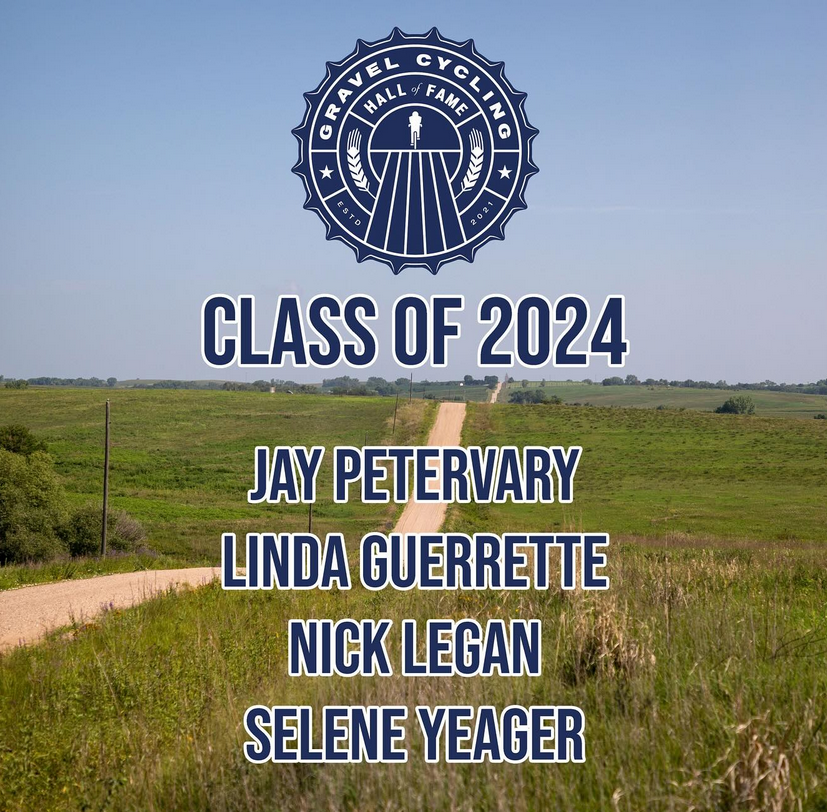
The Gravel Cycling Hall of Fame has announced its 2024 class. 

The Gravel Cycling Hall of Fame announced four new inductees to the Hall on Wednesday morning. The new class will consist of Linda Guerrette, Selene Yeager, Nick Legan, and Jay Petervary. The GCHoF will install these four new members to the hall on May 29th in a special ceremony at the Grenada Theater in downtown Emporia,Kansas. People who are in Emporia for that weekend's gravel event are also welcomed to come see these four individuals be feted for their contributions to the gravel scene.Tickets to the banquet at the Grenada Theater are available now via the Gravel Cycling Hall of Fame site. 

Comments: I was a bit surprised at first when I saw who had been elected into the Hall, but after some reflection I have come to see that these four should have been pretty obvious choices. Nothing against any of them, (I had one of the four on my final ballot), but what the electors are seeing as "important" is not necessarily what I see as the Hall's reason for being. I think all you have to do is look at the first class, compare it to last year's, and then see the progression to this year's class and - if you've been around the gravel scene since the early days, you start to see a pattern developing. 

While I am an elector, it is important to remember that there are a lot of current media and current cycling industry folks who are also electors and they don't know what they don't know. Added to that is the way the Hall guides you in electing people which is going to lean toward "famous/well-known" and not so much on "historical impact". Also, they mention a world-wide view, which again leaves some stories worthy of the Hall (my opinion) on the cutting room floor. But in the end, to paraphrase "The Dude", "That's like, just my opinion, man."

 Rock Cobbler Race Report:

Wednesday I received a "race report" video from Tim of Cassette & Co. for the Rock Cobbler, an event recently held near Bakersfield California. Without further comment, here is the full clip:

Wednesday, February 14, 2024

More Maintenance & Changes

Maintenance has been ongoing with the "fleet" of bikes here throughout the end of January and early February. I thought I might take some time to detail what I've been up to and show any changes i've made of late. 

The Tamland got some long, long overdue maintenance recently. How long has this been waiting? Well, I got the chain and cassette for this repair over a year ago. That long! 

I took the opportunity to clean it up thoroughly as well. At the time I did this I was thinking we might be in for an epic "slop season" with all that snow. However; that did not materialize and now I am contemplating removal of the fenders so I can test something else out on the bike. Stay tuned on that...

Otherwise the Tamland Two is pretty much good to go. That bike is "set in stone" as far as how I have it set up with the exception of the fenders and I do have alternate wheels for it. I gotta get that out a few more times than I did last year. It's the ten year anniversary for this bike, by the way, which happens next month. Look for a special post about that coming in a few weeks.

I road the Fargo a couple of times recently for some in-town rides and I was rethinking my take on the Hy Rd calipers

I was pretty much thinking they were much like the TRP brakes on the aforementioned Tamland Two. That being more "on-off" with little modulation. But then I found through more riding that the Hy Rd does have a bit softer feel than the TRP full hydraulics do. 

This probably has a lot to do with the fact that my cable housing flexes somewhat and a full hydraulic set up has very little housing expansion. That would account for the softer feel of the Hy Rd right there. 

It is still a very powerful brake, and very quiet. This, more than anything else, is what I like best about the Hy Rd's. I cannot remember a time where those old Avids were "quiet". BB-7's are inherently noisy unless you have the really old and really rare single piece caliper BB-7's. Those are a lot quieter than the newer versions are. 

The Pofahl Signature Custom single speed. Notice anything different? (Ha!)

The Pofahl had the maintenance wand waved over it recently as well. I cleaned out the old I-9 hub and re-greased it with some DuMonde Tech Liquid Grease. It needed it too! It was very black and dried up for the most part inside there before I cleaned it all out with some Finish Line degreaser followed up with some WD-40 and then the Liquid Grease. 

That hub was insanely buzzy before the maintenance but afterward it was relatively quiet. I actually have to attune my ear to it now. So, that's a big improvement and a testament to what a good grease can do inside a hub. 

So, another rig ready to go and I hope to do just that with this bike and the Karate Monkey which I also did a little change to. I swapped out the 17T cog for an 18T rear cog to take the bite out of accelerating that bike. One tooth? Yes. Yes it does make a difference. I know because I have been riding it a fair amount of late. I probably will be doing some country rides on it soon to get accustomed to single speed gravel again and so I can test something on the bike I can't talk about just yet. 

That's about it for now. Stay tuned for more soon....

Tuesday, February 13, 2024

The Guitar Ted Wheel Series: Custom Wheels

What You Need To Know:

So, let's wrap up this series on wheels today with a look at having custom wheels laced up by a wheel builder. There is an advantage to having this done, but there is also a responsibility on the rider to have done some research ahead of time. The wheel builder is only going to know what to do if you tell him what you want, how you ride, and what your expectations are. Without those critical bits of information, the wheel builder will have a lot harder time satisfying you. 

So, what should you have decided and be able to share with you wheel builder? Honestly assess your riding style and expectations for the wheel set. Racing wheels, daily-drivers, or will this wheel have to do it all? Then there is the hardware.

Hubs: There are some basics that will fall into place regarding hubs like axle style, overlock dimension, and free hub type that you will likely have already made a decision on. If you don't know the difference between 142 through axle and 148 through axle, or what an XD driver is, those are things you can ask about at your wheel builder of choice. 

Speaking of XD drivers.... The free hub body (The splined bit your gears/cassette slide on to),  on your rear hub matters. So, if you are a SRAM person and run that gear, you'll likely want an XD style driver. (Yes, there is more than one) If you want Shimano running gear, you'll likely want a HyperGlide style free hub body, but nobody calls them that anymore, they are just called "Shimano" style free hub bodies now. There are some MicroSpline Shimano hubs out there now if you are into 12 speed MTB, and of course, there are Campagnolo hubs, but if you have those, you already know about their free hubs.

Shimano style free hub bodies come in aluminum on most aftermarket hubs. This is fine if you don't run cassettes with separate cog/spacer type construction. Cassettes with "carriers", or cogs that are riveted to aluminum center pieces that have a wider base and will not cut into aluminum free hub bodies, are what you will want to use. However; those types of cassettes are top-dollar and the cheaper cassettes are the separate cog/spacer types that will damage an aluminum free hub body. Since cassettes are wear items and get replaced fairly often, many times people want to be able to use the less expensive options. So, be honest with yourself and make an appropriate choice when you have the wheels built.

American Classic Hubs, (R.I.P.) had a steel insert to protect their aluminum free hub from damage.

 Alternatives to a full aluminum free hub body exist. Some aluminum free hubs now have a steel insert, (see above) that prevents cogs from cutting into the aluminum. Otherwise you have to go with a steel option, or as with White Industries, a titanium free hub body option. 

Another free hub related decision would maybe be how quickly the free hub engages after coasting. This is usually measured in degrees of rotation. Some hubs, like the old American Classic design that used cams instead of ratcheting pawls, had a quite noticeable amount of "free turn" after coasting, when you started to pedal, before you felt the mechanism engage. Some free hubs, like Onyx Racing Products hubs, have instantaneous engagement. By the way, if you want to see how many hub options there are, visit Onyx's MTB hub page and take a gander. It is quite comprehensive. 

An exploded view of a Profile Racing free wheel (Image courtesy of Profile Racing)

A Word About "Engagement": A lot of people get hung up on "points of engagement" or how fast the hub starts to transmit power after coasting. I get it, but really, who needs to have "instant engagement" or anything near that? Pro and semi-Pro racers? Those whose livelihoods depend upon racing results? Yes.... But outside of Onyx, who use a sprag clutch design, keep in mind that the more pawls there are and the more teeth there are in the ratchet/drive ring, the more friction you will create during coasting. There is that physics based concern that a lot of people don't talk about. Also, those types of hubs tend to be louder, if that matters to you. Just something to think about there.... 

Some rims are hookless (Image courtesy of ENVE)

Rims: We've already covered aluminum and carbon rims, but I wanted to remind folks again that there is a difference in how a rim is designed to engage with a tire. 

Some carbon rim manufacturers have decided to pursue a "hookless" rim design. There are several reasons for this, but for gravel riders, unless you are nearly or are mountain biking with your "skinny" 45mm tires, hookless designs are not necessary and may, in fact, cause you troubles if you alternate using higher pressures for road rides versus gravel or off-road with the same tires.  

As well, if you have to resort to using a tube, or prefer to, hookless rims are not recommended for such use. So, that's a feature that you may want to be aware of and avoid if the use of tubes or higher pressures is a thing you might find yourself doing. 

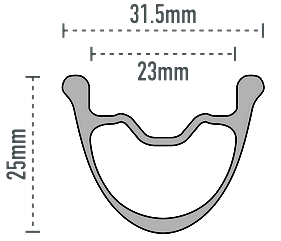
In terms of gravel use, you also have to decide what width tires you are going to want to run. This will help you determine what inner rim width that you should shoot for. I know from my own experiences that if you are planning on running under 50mm wide tires, say in the 42mm -47mm size range - that a 25mm inner rim width is about as wide as you'll want to go. If you are running less than 42mm wide tires you can drop that down to 21mm inner rim width. That said, My wheels are mostly 25mm inner rim width and that seems to work really well for anything from 38mm - 47mm wide tires. 

Riders using 50mm and up for widths would be better suited to wider inner rim widths to get the most out of your tires. For instance, I am running 2.8" tires on 30mm inner rim width rims and that seems perfect for gravel travel. 

A new choice in tubes (Image courtesy of Tubolito)

Tubeless Or Tubed

Not that it makes a lot of difference anymore, but there was a day when tubeless compatible rims were rare. Now it is probably the opposite, but you will want to double-check that your rim choice is tubeless compatible. If you are a rim brake aficionado, and you like tubeless, your choices get really slim, but there are some choices. 

A good wheel builder will also include a taping job and valves with your wheel build, so you will also want to research your choices there as well. 

Tubed usage is getting a fresh look now with the advent of "TPU" based tubes which are not rubber, weigh a half to a third as much as a butyl rubber tube, and give nearly the same ride qualities as tubeless or latex rubber tubes. The choices are expanding in this area also, you have Tubolito, Pirelli, Schwalbe, and State Bicycle Co. now offering TPU tubes. There are more coming as well. (I am currently testing a new-comer to this space) So, if you don't like doing the tubeless dance, TPU tubes offer the convenience of a traditional tube with less rolling resistance, good to great puncture resistance, and superior air retention characteristics. 

If you want to go tubed, your wheel builder should know this and he can finish tape the wheels accordingly. 

Maintenance: Finally, your wheels will need looking after. Some better wheel builders will offer service after the sale.  A free true of your new wheels after some miles, or "check-ups" can give you more value for the dollar spent. But that said, you should learn how to check your wheels and true them. You don't need to invest in anything more than some time to learn and a spoke wrench. 

In Closing: This is not an exhaustive look at wheels, but this was meant to give you, the reader some basic knowledge and a "where to go" with thoughts and research when it comes to gravel wheels. I may revisit this subject later on if there is a need. 

Thanks for reading Guitar Ted Productions!

Monday, February 12, 2024

The Guitar Ted Wheel Series: Materials Part 2

Alternative Spoke Materials For Gravel Riding:

Now that I've gone over aluminum vs carbon for rims, I want to touch on some exotic materials used for spokes. Hubs are almost always made out of aluminum with aluminum, titanium or steel free hub bodies. Which free hub body you'd want really only comes into play if you use cassettes with separate cogs and spacers instead of the types of cassettes which are built on aluminum carriers. I'll save that for another post in this series, so I won't dive into that here. 

Spokes generally are made of stainless steel, unless you buy an entry level bike which may use spokes made from other steel alloys. We're going to assume here that the wheels we are comparing to have stainless steel spokes. 

Spokes made of stainless steel can be drawn into bladed shapes, or into shapes that are thicker on the ends, thinner in the middle part. Those of the latter type are referred to as butted spokes. There are some attributes for each type that are, in the general sense, not really worth the time to get bent about, although some debates over these choices exist. I will say that bladed and butted spokes generally have higher tensile strength and straight gauge spokes, those with no shaping, are generally tougher and heavier. In the end, these minor differences aren't going to make a well built wheel do anything you, as a rider, will be able to feel differences between - all other things being equal. 

Steel spokes also exist that are "straight pull" and are different than the traditionally made "J" bend spokes. This refers to the anchoring end of the spoke which has a "nail" head which is either bent about 90° from the main shaft in a tight curve that resembles the letter "J", or just terminates in the "nail" head as in a straight-pull spoke design. Again, there are arguments for either design, but all you should know is that "J" bend spokes are a lot easier to find should you need a replacement. 

"J" bend spokes and a spoke cutting/threading machine.
Steel spokes are - by far and away - the most common spoke type, but there are some alternatives to steel. There are the super-rare titanium spokes which have similar characteristics to steel spokes with more stretch and"flex" due to the nature of titanium. Then there are the fibrous based spokes like Spinergy's "PBO" spokes and Berd spokes.

Berd spokes: Very nice riding. VERY expensive!

Spinergy's PBO fiber spokes are always covered in sheaths which can be different colors.

I won't say a lot in this post about the exotic fiber based spokes, but I will refer you to this post written in 2022 that takes a deep dive into wheel dynamics and why fiber spokes actually do absorb vibrations. 

Oddly enough, the Spinergy spokes are built into wheels which retail for pretty reasonable prices. The Berd spokes? Well, at $8.00 to $10.00 for each spoke, and the price to have a trained Berd spoke wheel builder build you a set, you can guess rightly that any wheel with those spokes in them will be at a pretty dear price. 

I will say that of all the alternative spokes that you might consider, the Berd spokes are amazing to ride. You really do feel the difference in smoothness. While this also can be attributed to Spinergy wheels, the effect is more subtle. However; at prices which are in line with average, good quality aluminum wheels and cheaper carbon sets, you really get a good value there. 

The downside is that if you should happen to break a fiber based spoke, it won't be easy to fix quickly. You can do it, but replacement parts will have to be ordered in. I have rebuilt a PBO spoked Spinergy wheel so I can vouch for their repair-ability. 

Industry 9 famously uses aluminum spokes in some of their wheels

A Word About Aluminum Spokes:

I own two sets of Industry 9 wheels that use aluminum spokes and I have ridden a few others enough to say that these wheels are not life-changing because they have aluminum spokes. The spokes can be anodized in an array of eye-popping colors and are really cool, but in the end all they are is window dressing. Great wheels, just don't expect anything radically different from the aluminum spokes. 

A bag of aluminum spoke nipples and a bunch of stainless steel, "J" bend spokes.

A Few Words About Spoke Nipples: If you go ahead with wheels that use traditional steel spokes, you may have noticed that there is a mention of brass or aluminum for spoke nipples. Which is better? 

Well, alloy nipples (aluminum nipples go by this name most often in wheel-nerd language) are lighter, and like the Industry 9 aluminum spokes, can be had in an array of fun colors. If you have to have the colors I get that, but your wheels had best be built with that nipple material in mind. If they are not, they will be prone to shearing off at the nipple's head, where it flares out to anchor inside the rim. Also, you had better be double-careful not to allow any tubeless sealant to touch those nipples because aluminum and sealant don't get along well a lot of times. (See previous Materials post on rims)

Brass nipples, while heavier, and duller because you only get silver or "black" choices for colors, will typically fare better in the long run. So, if you want to have more reliability, and if you don't care about colors, go for the brass nipples. Alloy nipples are technically lighter, but not by much. Usually they are not worth the troubles they can cause. That said, I have built with alloy nips a LOT and I have several wheel sets that use alloy nipples. So, it isn't as though they are terrible. It's just that when I do happen to have trouble with a nipple shearing, you can bet it is an alloy one. And I've had a few fail on me despite doing everything right with regard to sealant and building the wheel. 

Next: Custom Wheels - What You Need To Know.

Sunday, February 11, 2024

The Guitar Ted Wheel Series: Materials - Part 1

Why Aluminum or Carbon Rims May Be Best For You.

What your wheels are made of will help determine the price, but maybe more importantly, how you experience the wheels. Of course, how all that gets put together matters as well. It's kind of like a recipe. You have to get the right ingredients, in the proper amounts, and then prepare them perfectly to get the optimum wheel.

That said, we're going to break it down here to rim materials first. Hubs are usually aluminum. Spokes are usually stainless steel. Sure, there are outliers, but we'll get to that when we talk about the more exotic stuff. 

Rims are pretty much in two camps: Aluminum or Carbon Fiber. Some will tell you that "You gotta have carbon!', while others will tell you "Aluminum rims are just as good but cost less!". Which person is right? Well, let's see about this, shall we?

Keeping in mind that my focus these days is on what works best on crushed rock roads, I will refer to something I discovered when testing some carbon fiber wheels a few years ago now. I was riding a wheelset that was incredibly stable on loose gravel. The bike I had the wheels on I was intimately familiar with, so I knew it wasn't the bike, it was these new wheels I was testing. What was going on here?

These wheels had a profound effect on my understanding of what makes a good wheel.

I'll fast-forward to the good part and spare you all the testing observation. What I found was that these wheels did not oscillate, or 'wobble' in deep, loose crushed rock. They basically were so stiff that the vibrations that would normally induce a wheel to 'wobble' side-to-side weren't having much of an effect on the wheels. 

This really opened up my eyes because I then saw why certain wheels were a chore to ride while others felt better and felt "smoother". This is definitely not what I was looking for, but I found this to be true, and it is why you want stiff rims. Stiff laterally. Not vertically, but unfortunately that probably will be the case anyway. (I'll get to all that later)

So, "Just get carbon fiber rims, right?". Well.....not so fast. Some carbon rims aren't all that stiff laterally, and some aluminum rims are. But yes - In general, getting carbon rims will give a better ride, just not for the reasons you may have thought. Vibration absorption is not a factor. I'm not saying it doesn't happen, but if you are running 35mm-plus wide tires and at a realistic pressure (not MAX). your vibrations are getting soaked up more by tires than by any rim. And there are vibrations at certain frequencies that are going to get passed through to you no matter what. There is no magic bullet. 

But having a wheelset that doesn't oscillate in chunky gravel is a boon to handling and allows the rider to relax, spending less energy on corrective inputs, and then be able to exert more effort into pedaling over a longer period still feeling fresh. 

Other Considerations: As stated, some aluminum rims ride very well, and you can get pretty decent weight wheels for not a lot of cash. Aluminum lasts a long time, is resistant to gravel stones pinging off them, (and they will), and also will do tubeless or tubed very nicely. While spoke count matters for other reasons more heavily, having more spokes is generally better if you want stiffness laterally. However, unless you have your wheels built up, or build your own, 28 spokes is going to be max and there are a ton of 24 spoke count wheels. I'm of the opinion that pre-built, low spoke count wheels aren't always the best thing, especially for riders that want to do some bikepacking, touring, or that are heavier people AND also want to carry stuff on the bike. 

Image courtesy of HED Wheels

Good quality carbon rimmed wheelsets will automatically push you into a price range that isn't cheap, and maybe that's uncomfortable, but I would seriously consider carbon rims for ride quality and especially if you are concerned about rotating weight. That's a place where carbon will also make a big difference without sacrificing strength, in most cases. 

Carbon is pretty tough these days, but do be aware that pinging rocks will ding up the finish and theoretically could damage a rim to a point that you'd be advised to replace the rim. 

I'd stay away from hookless designs in carbon just because they are not high pressure friendly and if you end up having to put a tube in to get you home those hookless designs are not meant for tubed applications, so.... 

Another advantage to carbon rims is that they are resistant to damage from sealants. Aluminum will corrode when exposed to ammonia, which many sealants have in them as one of their ingredients. Any exposed parts of the inner rim well due to tape slippage can be corroded by sealant and allow spoke nipples to be exposed to sealant, which is really bad if you have alloy nipples. This is a common issue with aluminum rims that are used tubeless. 

One other thing that may be of concern if you live in a rockier area is the tendency for aluminum rims to be dented. This can happen when using low pressures and when speed and bigger rocks are in play. Carbon is more resistant to such damage, but it is not impervious to being damaged in this way. 

Of course, any pre-built wheels you consider may have weight limits, so it is wise to check on that before purchasing any wheelset. Be aware that anything you carry on you or on the bike is weight that needs to be considered in that weight limitation as well. Riders needing to have wheels to bear up under their weight and a load, or are just heavier humans, should consult a wheel builder and have a custom set of wheels made just for them. Rims are part of that equation, but I'll get into all that matters with custom wheel builds after I finish up on the materials in my next post. 

Conclusions: Carbon or aluminum? Either can be a great choice. Carbon will cost you more money, all things being equal, but can bring the ultimate performance benefits. Aluminum is a value in that the performance aspect can be very high, but the cost of an aluminum wheelset usually is quite a bit less and for utilitarian purposes, this material is perfectly suited for a rim. Not to say that you cannot race on an aluminum wheelset. You can, and this works well for many riders. 

Personally, I have both types of rims in regular service and I can recommend either as long as the wheel is built well with quality parts and is used appropriately. I have found that carbon is best on gravel due to that "wobble" characteristic described above and that aluminum rims just don't quite have as good a result in that way. Close, but not quite. So that's my personal take on it. 

Next: Materials Part 2: Alternative Spoke Materials For Gravel Riding

Saturday, February 10, 2024

The Guitar Ted Wheel Series: Cheap vs Expensive

What Do You Get For Your Money?

Wheel prices can be all over the place for a wheel that you may be looking for. Cheap, foreign made wheels all the way up to expensive wheels with US made components. Which is best? Can you get top dollar performance for little cash outlay? Do you always "get what you pay for", or is there a point of diminishing returns?

There are a couple of things to keep in mind when looking at wheel sets. I have some opinions based upon my research and experiences. Here goes...

If It Looks Too Good To Be True - It Probably Is: Let's say you are in the market for some gravel wheels with through axles and carbon rims. You shop around online and see an ad for wheels costing $500.00/pr. They look just like the $1500.00 wheels! Why pay more when you can get those wheels for less?

Because they are not as good. How can I say that? Because materials, like carbon fiber, come in varying qualities. There is "excellent" quality carbon, "average quality" carbon, and - you guessed it - poor quality carbon. Same goes for bearings, hub shells, etc. Cheaper parts may look the same, but may not last as long, weigh what you think, or be replaceable/serviceable. A wheelset for $500.00 is not going to have the same quality parts or materials as a $1500.00 set. Not to mention the probability of the more expensive wheels having a crash replacement warranty, service after the sale, and replacement parts down the road. But as always, if you want to gamble with your money, that's your call. 

A good warranty and service after the sale is worth something.
Research & Development, Service, and Warranties Are Not "Free":

Good and better wheelsets have warranties worth the digital images they are communicated with and research and development that goes into a wheelset can make those wheels perform at a higher level. 

That stuff is not free.

And you have to decide - honestly - if that matters to you. If it does, then your wheelset will meet and maybe exceed your expectations, be utterly forgettable while riding (a good thing - See the previous post in the series), and if you have a problem, there can be a reasonable solution. And you'll have better resale value, if that matters to you. 

If It Matters To You - It Is "Worth It": Then you have things like "Made In The USA", brand image, "parking lot cred", (it's a real thing in places), and ultra-technical, fine details that may give you an infinitesimal advantage. These things add dollars and won't make you go any faster, ride smoother, or make the wheels last any longer, probably. But....if you have the scratch, you can buy into those things if they matter to you. As an example, I saw a wheelset offered recently with gold leaf lettering on the carbon rims. No one needs that, and it made the wheelset cost $7,000.00, reportedly. But hey! Who am I to say that's crazy? Well, I am Guitar Ted, and I say "That's crazy!", so there! 

Image courtesy of Easton

There Are Lots Of Great Wheels Out There

This is probably why people have such a hard time choosing wheels for themselves. There are just too many good ones! Seriously. If you purchase a wheelset in Aluminum from $500.00 - $1000.00, or a carbon wheelset from around a grand to maybe a bit more than 1500 bucks, you are probably in the sweet spot for great wheels. 

I've tested a lot of wheelsets and ridden even more. All of them had differences, of course, but almost every one of them were at least "good" and many were great. I can think - off the top of my head - of maybe two or three wheels that were really bad. (Crank Brothers. oof!) So, yes - There are stinkers out there, but in this day and age of instantaneous reviews and reactions, a product cannot afford to be sub-par and last in the marketplace very long. That is just reality in 2024. 

Conclusions: So, to answer the question - Cheap versus Expensive, which is best? The answer? Neither one! Look more toward the middle ground, and only spend more if the nuances mean anything to you. 

Next: Materials: Why Aluminum or Carbon Rims May Be Best For You.

Friday, February 09, 2024

Friday News And Views

Screen shot from Performance Bicycle online.

Question: Does everything happen on Tuesdays?......

 You Know Things Are Bad When....

On Tuesday this week I saw someone posting on social media about Specialized bikes being sold out of Performance Bicycles online. This is a "Wow!" moment in cycling.

Ten years ago the market in specialty retail for cycling was flat. There was pretty much no real gains or losses to be had and most brands were scrambling for their piece of a pie that was not growing significantly, or at all. 

Then COVID hit. You could say that COVID was the excrement that hit the proverbial fan. That sent cycling into a weird trajectory that we are still dealing with in 2024. We knew coming into this year that sales were down, or near to where they were in 2019 in some pockets of the country. We knew that prices were higher, inventory was at an all-time high, and that bills for that inventory were coming due. Added to that, 2025 product is being made and will ship in a short time from now. Something has to give.

That "give" is unprecedented discounting and now - direct to consumer, online retailers like Performance liquidating stock for brands. But Specialized? That is one of the "Big-Four" brands here in North America with a big dealer network and a Pro road team or two, and..... Wow! Really?

The saying goes that "desperate times call for desperate measures", so I see that Specialized is pretty desperate to get rid of their inventory and liquidate it for cash, which they must desperately need. That doesn't bode well for their dealers, but more than that is the perception that Specialized is now a brand that could be had at discount prices. Consumers will remember this, and it will make selling Specialized in the future harder to do at a price that makes carrying the brand sustainable for a local bike shop. 

This is a big deal in cycling in North America. How it all shakes out will be very interesting to see.

Equipt "Sardine" multi-tool.

Equipt Sardine Multi-Tool On Test:

Recently I was contacted by a person I only know from being online who asked if I would like to try out a new multi-tool he had been working on. I stated that, "yes", I would, so he sent me out these "Sardines". (Ha!)

These are designed and tested in Japan and made in Taiwan. The Sardine has the essential hex keys and a Torx fitting for basic repairs and adjustments out in the field. Each end of the Sardine has two tool selections which can be made by simply flipping the end around on its pivot. There is also one more tool in the mid-section of the Sardine, which is hidden in the image. 

The company's name is Equipt, and they also have a plastic holder for the tool which can be mounted off a water bottle cage mount, or accessory bolt mount that your bicycle may have. The Equipt site isn't quite live yet, and I don't know what the Sardine will sell for at this point, but I will be testing this multi-tool out and giving my verdict on it later. You can follow Equipt on Instagram HERE.

Image courtesy of Wolf Tooth Components

Wolf Tooth Announces ReMote Drop Bar Lever:

Wolf Tooth Components announced on Tuesday that a new dropper lever was now available for remote activation of a dropper post on drop bar bikes. Dubbed the "ReMote Drop Bar", the lever mounts to the inside of the drop section of a drop bar just below the shifter/brake lever clamp. 

The design allows for the activation of a dropper post from either the drop position or the hoods position. Wolf Tooth claims that the design is ergonomic for both larger and smaller hand sizes. 

The lever features two stacked cartridge bearings for smooth operation and Wolf Tooth claims that there is no side-to-side play in the lever as a result. The clamp is cleverly designed so that it does not interfere with ergonomics and it has a machined in cable pocket to allow for under-the-tape routing of the cable. 

The ReMote Drop Bar lever retails for $64.95 from Wolf Tooth and is made in the USA. 

Comments: This is a pretty cool lever and it reminds me a lot of the old SunTour Accushift drop bar shifters that were meant to shift SunTour's first indexed shifting systems in the 1980's. Those had a similar "butterfly" design. 

This lever makes me wonder if you could use the ReMote as a friction shifter for drop bars. Hmm.... Probably not enough throw to make it work across many gears. Anyway, a cool new lever for those who use a dropper post on their gravel bikes or drop bar bike set-ups. 

Image courtesy of Velo Orange

Velo Orange Announces A Camera (!):

In a bit of a shocker, Velo Orange introduced a camera to their line on Tuesday of this week. 

A camera?

Yes, a camera. It's called the "Camp Snap", and it hearkens back to the 2000's "point-and-shoot" style, simplistic cameras that were small in size and had little to no controls. While this may seem like a detriment to camera nerds, sometimes having less choices just means you get to use the device more and not worry about the outcome. 

In my experience, I found that my old Fuji Finepix X5 had a certain charm and graininess to the images that gave them a certain character that really popped with a black & white film simulation. Maybe this new Camp Snap, with its 8 megapixel sensor , on-off white balance, and on-off flash is going to be similar. (By the way, that is ALL the Camp Snap's features!)

Image taken with my old Fuli Finepix X5 in B&W mode.

So, I don't know about the Camp Snap, but for sixty-five bucks it might be worth a whirl. I checked online to see what vintage Fuji Finepix X5's are going for and I found a pretty mint one in Japan that had a battery but no card and no cable for $130.00 plus shipping. So, yeah.... I might have to check that Camp Snap out and see what it feels like. 

Image courtesy of KMC
KMC Cassettes Announced

Thursday (What! Not Tuesday?) KMC announced a new line of 10 and 11 speed cassettes made from high-tensile steel. Available in 11 -42 or 11 - 50 teeth ranges in 11 speed and 11 -42 or 11 - 36 in ten speed. Prices are $65.00 for either the ten or eleven speed cassettes. KMC calls the range "React".

The KMC React cassettes are made to fit Shimano HyperGlide type free hub bodies. They have shift ramps engineered to work best with KMC chains, although I would wager that any 10 or 11 speed chain would work fine here. The finish on the cassettes appears to be a dark or black finish, but it is hard to tell from images I have seen online.

The React cassettes can be purchased from various vendors or direct from KMC

Comments: This looks like another good, inexpensive option for those running 10 or 11 speed MTB's or 1X gravel bikes. The cassettes are not light, (900+ grams for the 11 - 42 10 speed), but steel cassettes last a bit longer, usually. 

I don't know what, if any, carrier is used, and if these are totally separate cogs, (by the price, I would guess that they are), I'd probably pass on this offering. There isn't a lot of information yet on these since most sites just regurgitated KMC's press release. Hopefully more details will emerge over the next weeks and months.

That's it for this week! Thanks for reading Guitar Ted Productions!