Showing posts with label David Pals. Show all posts

Sunday, April 20, 2025

On The Bunny Trail

 In celebration of the twentieth year of this blog, I have a few tales to tell. This post is one of them. This series will occur off and on throughout this anniversary year, I hope to illuminate some behind-the-scenes stories and highlights from the blog during this time. Enjoy


 We are in the final stretch of celebrating the 20th year of blogging here at Guitar Ted Productions. In about a month the day will arrive which will mark when this blog started. Expect there to be a bit more 20th Year posts as the day approaches.

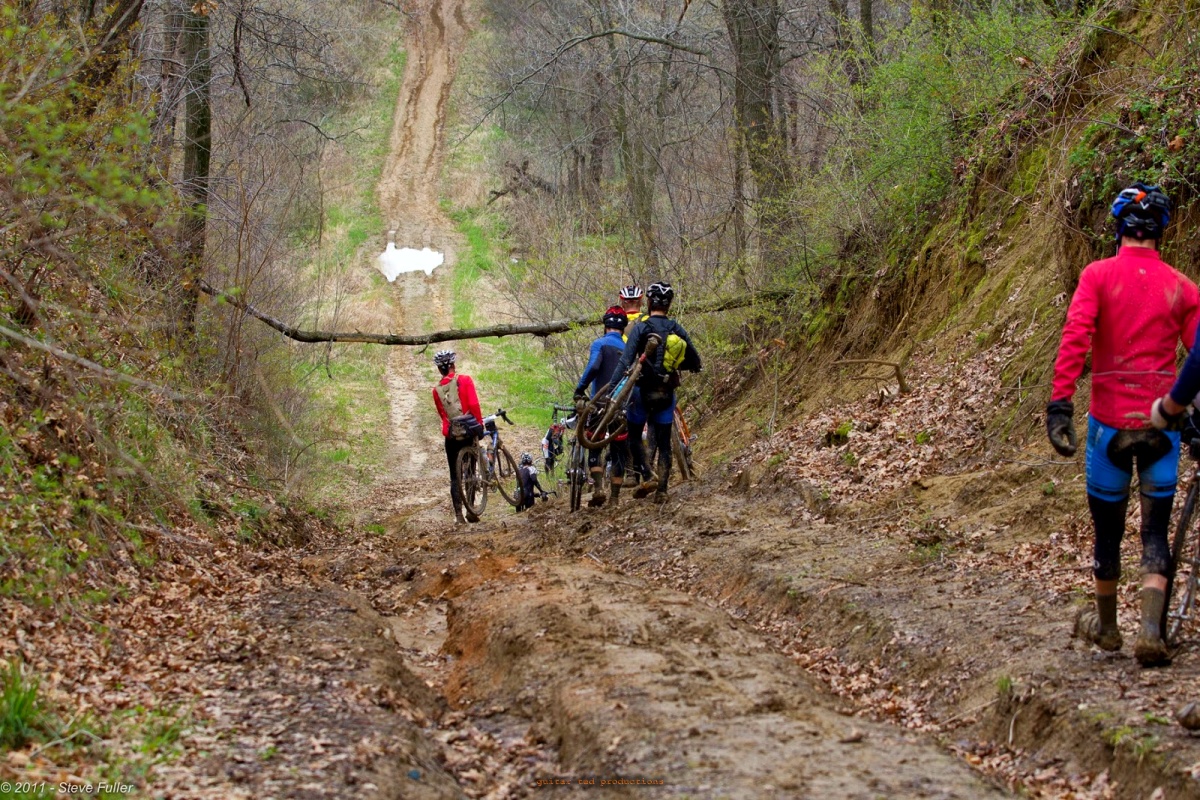
A Level B road in Tama County during Trans Iowa v7, Image by Steve Fuller
When David Pals and I started thinking about running a seventh Trans Iowa the date of the event was sort of a given. By this time I had determined I would set Trans Iowa's date whenever the last full weekend of April was. This had been the default anyway, with the exception of Trans Iowa v5, which I pushed back to being the first weekend in May due to my involvement covering the Sea Otter Festival in mid-April. Having a week of separation between those events was not ideal for putting on Trans Iowa

But by 2011, when Trans Iowa v7 was run, I was no longer doing a trip out to Sea Otter, so we were solidly back to the last weekend of April for Trans Iowa. It wasn't until registration for T.I.v7 was about to open that I was made aware by a potential entrant that the weekend we had chosen was Easter weekend.

I had a small bit of anxiety over this. I understand the importance of this event to many, including myself, and was afraid we'd get a lot of push-back over the date if we stuck to it. I was in favor of changing the date, but David allayed my fears and sent me some information about how Paris-Roubaix had been held during an Easter weekend once upon a time in heavily Catholic (at that time) France and there was no real issues with this happening.

So, I capitulated and put my fears behind me and we forged on ahead with it. Trans Iowa v7 was one for the record books. We had eighteen finishers that year out of 76 with 40 of those riders being "rookie" first-timers. We had our very first female finisher of a Tans Iowa in Janna Vavra. It would turn out to be the last Trans Iowa I put on with David Pals as co-director.

John Gorilla finishes T.I. v7 on a prototype Warbird with his wife Adele looking on. Note the bunny ears.

 We had a crazy, epic flip-flop during the last hours of this event where leader John Gorilla, riding a prototype titanium Salsa Cycles Warbird, had five flats and relinquished his lead to eventual surprise winner Dennis Grelk. John ended up coming in fifth place.

We had one of the legendary stories of the early gravel days happen at this event. Earlier in the event, on Saturday morning, Corey "Cornbread" Godfrey blew his derailleur off his bike and damaged his frame to the point which he was looking like a sure DNF. However; he hitched a ride back to the start in Grinnell, had the local bike shop fix his bike up as a single speed, returned to the course, and caught up with some buddies. He ended up riding the entire rest of the event. Although he had to be DQ'ed for outside assistance, his determination to ride and complete the course was without peer, and stands as one of the outstanding accomplishments of Cornbread's Hall of Fame career in gravel.

It turned out to be quite the Easter Sunday that year, and is one I won't soon forget, especially since this was the event which was documented by Jeff Frings and won an Emmy award for regional best documentary. That documentary is called "300 Miles Of Gravel", in case you are interested in seeing it.

Sunday, October 02, 2022

The GTDRI Stories: How The Second One Came Together

Jeff Kerkove designed this for the '07 GTDRI from an image by David Story from T.I.v3
  "The GTDRI Stories" is a series telling the history, untold tales, and showing the sights from the run of Guitar Ted Death Ride Invitationals. This series will run on Sundays. Thanks for reading!

As I have said, 2007 was a very busy year and I was scrambling from project to project trying to keep up. The recently completed Trans Iowa v3 had really taken a toll on me as well. Yet I was being encouraged all along to keep at the gravel thing. Both in terms of Trans Iowa and the Guitar Ted Death Ride Invitational. 

I've mentioned how an email from Jason Boucher changed my mind about stopping Trans Iowa, but continuing the GTDRI wasn't a slam dunk. Not by a long shot, and if you stop to think about this a moment, it isn't hard to see why I may have wanted to just drop the whole thing when it came to gravel riding.

From my July 4th gravel ride in 2007. I tweaked my knee during this ride causing me to be off the bike a while.

That isn't to say that I was ever going to quit riding gravel. No- I loved riding gravel roads. I likely would have kept doing those rides if I had gotten out of the scene in 2007, but I didn't. And besides the whole "being too busy" thing, why would I? Well, there was one thing I was thinking about here....

One of Jeff Kerkove's ride announcements.

You see, my feeling was that Jeff Kerkove was Trans Iowa. I was merely a helper alongside him for the event. At least that's how I viewed things for the first two events. But by 2007 I was picking up the slack that Jeff laid out, either by design or just by happenstance, and I became the de facto leader of Trans Iowa. Believe me, it wasn't my choice to be "The Man" for that event!

And when Jeff decided to take the job in Colorado with Ergon in late 2006, I kind of felt like he was also taking the gravel scene, such as it was, from the area as well. He pretty much was the instigator for any ride on gravel around here for the better part of two years. 

And me? I was 'nobody'. I was just a mechanic, in my mind, who had no business leading any ride, because I was no where near the caliber of rider that Jeff was, (and still is, by the way). So maybe I had a bad case of "Imposter Syndrome", or something, but that's the situation I was in back then. 

So, left to my own devices, between being "too busy", not being "good enough", and thinking this whole gravel thing was a bit goofy, I was ready to focus it all on my 29"er gig. But again, outside influences, like those of Jason, Jeff, and David Pals, changed all that. 

So, since I was able to rely on David as a resource for the route, there was a GTDRI in 2007. Of course, earlier I had intended for there to be a GTDRI #2, but as I said, it wasn't a done deal. After T.I.v3, I had reservations as I have stated. I didn't announce that there would be a GTDRI for sure until June of 2007. Early on I made a reference to having a course in mind, but I don't think this was the one David came up with. I think this was my idea which ended up becoming the 2009 GTDRI. 

One of three sections of Level B road that would become part of the T.I.v5 course which were in the '07 GTDRI.

Eventually David wanted to show me some of the course he had in mind for the 2007 GTDRI. I made some time in July and met David at Doose's Cafe in Marengo for breakfast. We then took to the gravel along the Iowa River Greenbelt. This was an area completely unfamiliar to me at that time, but an area I would become intimately familiar with in the years to come.

David was pretty chuffed to be able to show off some of the more rustic and gnarly roads he had discovered during his explorations on gravel. We came up on an old iron bridge not far West of Belle Plaine, which I need to go find again - if it still exists! Anyway, on from there were three short sections of some of the most crazy Level B Roads in Iowa.

David Pals checking his camera during the GTDRI recon for the 2007 ride.

I was simply amazed and excited about the roads that David was showing me. We ended up putting in a good amount of miles on a hot, sultry day, but even though I was exhausted by the end of it all, I think my passion for gravel riding was pumped up to a new level that day. Often times I wonder what I would have done had I not gotten that invitation from David to help with the '07 GTDRI. It was a pretty important time for me and my participation in the gravel scene from that point on. 

And because of that day, those sections of Level B road found there way into a future Trans Iowa. Much of the Iowa River Green Belt road system ended up becoming parts of various Trans Iowa routes as well. Belle Plaine featured in several Trans Iowa events afterward, and all because of this recon day back in 2007. 

It wouldn't be the last time a GTDRI inspired Trans Iowa routes either.

Next: The 2007 GTDRI

The GTDRI Stories: How The Second One Came Together

Jeff Kerkove designed this for the '07 GTDRI from an image by David Story from T.I.v3
  "The GTDRI Stories" is a series telling the history, untold tales, and showing the sights from the run of Guitar Ted Death Ride Invitationals. This series will run on Sundays. Thanks for reading!

As I have said, 2007 was a very busy year and I was scrambling from project to project trying to keep up. The recently completed Trans Iowa v3 had really taken a toll on me as well. Yet I was being encouraged all along to keep at the gravel thing. Both in terms of Trans Iowa and the Guitar Ted Death Ride Invitational. 

I've mentioned how an email from Jason Boucher changed my mind about stopping Trans Iowa, but continuing the GTDRI wasn't a slam dunk. Not by a long shot, and if you stop to think about this a moment, it isn't hard to see why I may have wanted to just drop the whole thing when it came to gravel riding.

From my July 4th gravel ride in 2007. I tweaked my knee during this ride causing me to be off the bike a while.

That isn't to say that I was ever going to quit riding gravel. No- I loved riding gravel roads. I likely would have kept doing those rides if I had gotten out of the scene in 2007, but I didn't. And besides the whole "being too busy" thing, why would I? Well, there was one thing I was thinking about here....

One of Jeff Kerkove's ride announcements.

You see, my feeling was that Jeff Kerkove was Trans Iowa. I was merely a helper alongside him for the event. At least that's how I viewed things for the first two events. But by 2007 I was picking up the slack that Jeff laid out, either by design or just by happenstance, and I became the de facto leader of Trans Iowa. Believe me, it wasn't my choice to be "The Man" for that event!

And when Jeff decided to take the job in Colorado with Ergon in late 2006, I kind of felt like he was also taking the gravel scene, such as it was, from the area as well. He pretty much was the instigator for any ride on gravel around here for the better part of two years. 

And me? I was 'nobody'. I was just a mechanic, in my mind, who had no business leading any ride, because I was no where near the caliber of rider that Jeff was, (and still is, by the way). So maybe I had a bad case of "Imposter Syndrome", or something, but that's the situation I was in back then. 

So, left to my own devices, between being "too busy", not being "good enough", and thinking this whole gravel thing was a bit goofy, I was ready to focus it all on my 29"er gig. But again, outside influences, like those of Jason, Jeff, and David Pals, changed all that. 

So, since I was able to rely on David as a resource for the route, there was a GTDRI in 2007. Of course, earlier I had intended for there to be a GTDRI #2, but as I said, it wasn't a done deal. After T.I.v3, I had reservations as I have stated. I didn't announce that there would be a GTDRI for sure until June of 2007. Early on I made a reference to having a course in mind, but I don't think this was the one David came up with. I think this was my idea which ended up becoming the 2009 GTDRI. 

One of three sections of Level B road that would become part of the T.I.v5 course which were in the '07 GTDRI.

Eventually David wanted to show me some of the course he had in mind for the 2007 GTDRI. I made some time in July and met David at Doose's Cafe in Marengo for breakfast. We then took to the gravel along the Iowa River Greenbelt. This was an area completely unfamiliar to me at that time, but an area I would become intimately familiar with in the years to come.

David was pretty chuffed to be able to show off some of the more rustic and gnarly roads he had discovered during his explorations on gravel. We came up on an old iron bridge not far West of Belle Plaine, which I need to go find again - if it still exists! Anyway, on from there were three short sections of some of the most crazy Level B Roads in Iowa.

David Pals checking his camera during the GTDRI recon for the 2007 ride.

I was simply amazed and excited about the roads that David was showing me. We ended up putting in a good amount of miles on a hot, sultry day, but even though I was exhausted by the end of it all, I think my passion for gravel riding was pumped up to a new level that day. Often times I wonder what I would have done had I not gotten that invitation from David to help with the '07 GTDRI. It was a pretty important time for me and my participation in the gravel scene from that point on. 

And because of that day, those sections of Level B road found there way into a future Trans Iowa. Much of the Iowa River Green Belt road system ended up becoming parts of various Trans Iowa routes as well. Belle Plaine featured in several Trans Iowa events afterward, and all because of this recon day back in 2007. 

It wouldn't be the last time a GTDRI inspired Trans Iowa routes either.

Next: The 2007 GTDRI

Sunday, September 25, 2022

The GTDRI Stories: Take A Load Off

The blog header for the second GTDRI by Jeff Kerkove.
  "The GTDRI Stories" is a series telling the history, untold tales, and showing the sights from the run of Guitar Ted Death Ride Invitationals. This series will run on Sundays. Thanks for reading!

The 2006 season was a big season of change for me. In less than one year, I went from being pretty much anonymous to having a blog following, industry people haunting my blog for what I would say next, and to having my name on the internet sites for 29"er bike and parts reviews and news in two places. I went to Interbike for the first time in a decade, and I was running a gravel event or two. Basically, I went from 'zero to sixty' in such a short span that my life did not resemble anything I had known before May of 2005 when this blog started.  

In retrospect, it was too much too soon. I had two young children and a wife whom I had just married eight years previous. I had a busy schedule taking care of those people, plus a job which now demanded more of me than ever since Jeff had departed the shop and had started with Ergon.

To add to this miserable situation, I had let myself get talked into putting on a 29"er MTB festival in Decorah, Iowa. While the idea wasn't bad, (it was actually pretty cool), it wasn't what I needed to be doing. It was just another brick on my back and I was getting pretty loaded down. I needed to jettison something and initially, Trans Iowa was it. However; a very important email from a friend changed all of that, and Trans Iowa was back on. 

David Pals bike seen on a recon of the T.I.v6 course. He did a lot of recon by bike for the second GTDRI as well.

 In the meantime, that friend I mentioned who went with me to the first DK200, David Pals, and who had come along for the inaugural GTDRI, was communicating with me about what the next GTDRI might look like. He was excited to show off some roads in his neck of the woods, which for him at the time was Marengo, Iowa. We mutually agreed that David should take over the route planing of the next GTDRI, which I was glad to have off my plate at the time. 

I guess I should point out that while I was feeling overwhelmed on one end, I was also feeling extremely blessed on the other hand. I had several new friends and acquaintances. I had industry support, mentoring in the area of writing, and opportunities galore for consideration. So, I don't mean to make this seem as though this was a dark, gloomy, unwanted burden in terms of the happenings of those days. It's just that I should have been wiser and more judicious as to what I allowed myself to get wrapped up into. 

Jeff Kerkove at Europa Cycle and ski circa 2006.

I can say on one hand that "I wish I'd never had done that!", and then on the other hand I can see where all of it led me to where I am now, and without those questionable decisions, I may not have landed where I am today, which is a pretty good place, if I am honest.

Back then though, I was dealing with an increased workload, as Jeff had vacated the mechanic job at the bike shop we worked at together and his replacement, a young man who's name I do not recall now, left the job in June, right as the workload ramped up. I was inundated with repairs and working my tail off. 

So, having David step in to take care of the second route for the GTDRI was a huge blessing. He would email me updates on occasion and let me know how things were progressing as the Summer of 2007 went along. Since I was keen not to be gone during the lead-up to RAGBRAI, the second GTDRI was scheduled for August 4th. This wasn't done so much out of consideration for the endurance freaks as it had been the year previous. As you may recall,  they were not wanting my event to happen during the 24hr Nationals event in Wisconsin, which was earlier in the Summer. But by now I knew that gravel riders and endurance MTB people were two different groups. I just decided that we had carved out a space in August and that was pretty much the reason the ride ended up around this time period afterword. Keep in mind that Gravel Worlds was not a thing yet, and the Good Life Gravel Adventure, which Gravel Worlds sprang from, wouldn't happen for the first time until a year after the second GTDRI. So, at this point, August was wide open.

While I was glad that David could be relied upon to do some of the course finding, and allow me to focus on the festival, review work, and the shop, I was missing riding out in the countryside badly. Suffice it then to say that one of my bigger regrets is that I let work and this other business I detailed earlier take me away from the nascent gravel scene. That would be a big internal issue for me from this time until about 2014. But getting back to this story, I was eager to see where David would take this idea, and we ended up having a few interesting recon rides, and a GTDRI in 2007 which was very memorable for me. 

Next: How The Second One Came Together

The GTDRI Stories: Take A Load Off

The blog header for the second GTDRI by Jeff Kerkove.
  "The GTDRI Stories" is a series telling the history, untold tales, and showing the sights from the run of Guitar Ted Death Ride Invitationals. This series will run on Sundays. Thanks for reading!

The 2006 season was a big season of change for me. In less than one year, I went from being pretty much anonymous to having a blog following, industry people haunting my blog for what I would say next, and to having my name on the internet sites for 29"er bike and parts reviews and news in two places. I went to Interbike for the first time in a decade, and I was running a gravel event or two. Basically, I went from 'zero to sixty' in such a short span that my life did not resemble anything I had known before May of 2005 when this blog started.  

In retrospect, it was too much too soon. I had two young children and a wife whom I had just married eight years previous. I had a busy schedule taking care of those people, plus a job which now demanded more of me than ever since Jeff had departed the shop and had started with Ergon.

To add to this miserable situation, I had let myself get talked into putting on a 29"er MTB festival in Decorah, Iowa. While the idea wasn't bad, (it was actually pretty cool), it wasn't what I needed to be doing. It was just another brick on my back and I was getting pretty loaded down. I needed to jettison something and initially, Trans Iowa was it. However; a very important email from a friend changed all of that, and Trans Iowa was back on. 

David Pals bike seen on a recon of the T.I.v6 course. He did a lot of recon by bike for the second GTDRI as well.

 In the meantime, that friend I mentioned who went with me to the first DK200, David Pals, and who had come along for the inaugural GTDRI, was communicating with me about what the next GTDRI might look like. He was excited to show off some roads in his neck of the woods, which for him at the time was Marengo, Iowa. We mutually agreed that David should take over the route planing of the next GTDRI, which I was glad to have off my plate at the time. 

I guess I should point out that while I was feeling overwhelmed on one end, I was also feeling extremely blessed on the other hand. I had several new friends and acquaintances. I had industry support, mentoring in the area of writing, and opportunities galore for consideration. So, I don't mean to make this seem as though this was a dark, gloomy, unwanted burden in terms of the happenings of those days. It's just that I should have been wiser and more judicious as to what I allowed myself to get wrapped up into. 

Jeff Kerkove at Europa Cycle and ski circa 2006.

I can say on one hand that "I wish I'd never had done that!", and then on the other hand I can see where all of it led me to where I am now, and without those questionable decisions, I may not have landed where I am today, which is a pretty good place, if I am honest.

Back then though, I was dealing with an increased workload, as Jeff had vacated the mechanic job at the bike shop we worked at together and his replacement, a young man who's name I do not recall now, left the job in June, right as the workload ramped up. I was inundated with repairs and working my tail off. 

So, having David step in to take care of the second route for the GTDRI was a huge blessing. He would email me updates on occasion and let me know how things were progressing as the Summer of 2007 went along. Since I was keen not to be gone during the lead-up to RAGBRAI, the second GTDRI was scheduled for August 4th. This wasn't done so much out of consideration for the endurance freaks as it had been the year previous. As you may recall,  they were not wanting my event to happen during the 24hr Nationals event in Wisconsin, which was earlier in the Summer. But by now I knew that gravel riders and endurance MTB people were two different groups. I just decided that we had carved out a space in August and that was pretty much the reason the ride ended up around this time period afterword. Keep in mind that Gravel Worlds was not a thing yet, and the Good Life Gravel Adventure, which Gravel Worlds sprang from, wouldn't happen for the first time until a year after the second GTDRI. So, at this point, August was wide open.

While I was glad that David could be relied upon to do some of the course finding, and allow me to focus on the festival, review work, and the shop, I was missing riding out in the countryside badly. Suffice it then to say that one of my bigger regrets is that I let work and this other business I detailed earlier take me away from the nascent gravel scene. That would be a big internal issue for me from this time until about 2014. But getting back to this story, I was eager to see where David would take this idea, and we ended up having a few interesting recon rides, and a GTDRI in 2007 which was very memorable for me. 

Next: How The Second One Came Together

Sunday, April 25, 2021

Trans Iowa Stories: Closer To Home

A look up Petrie Road's Level B section in 2020.
  "Trans Iowa Stories" is an every Sunday post which helps tell the stories behind the event. You can check out other posts about this subject  by clicking on the "Trans Iowa Stories" link under the blog header. Thanks and enjoy! 

Route planning for most of the last several Trans Iowa events generally started out with my pinpointing a small village to use as the first checkpoint. This started with our very first visit to Grinnell for Trans Iowa v6. Perhaps Grinnell is not unique in this, but it just so happened that several villages were around the distance from Grinnell that I could make a route work out with a 50-60 mile segment which was what I preferred to do for the first stop on the course. I would identify a town that we had not been through before and try out a route to make it work. Then I'd design outward from there depending on what I had in mind for an overall theme that year. 

For the first two out of Grinnell, those checkpoints were influenced mostly by David Pals' desires to steer the course either through his former 'backyard' of Marengo or as with the v7 edition, his desire to see the course go by Phil Wood's old residence in Baxter, Iowa. (Yes- that Phil Wood!) So the courses kind of had to reflect those ideas. But by v8, of course, the course ideas were all on me. So by this point, what I described above was the norm for the genesis of a route. 

Many times these ideas would be generated by bicycle rides. Either just adventuring or by way of the Guitar Ted Death Ride Invitationals and Geezer Rides I held out of Grinnell. For instance, a scouting ride David Pals and I did for Trans Iowa v7 revealed the small village of Ira, Iowa, which became checkpoint #1 for Trans Iowa v9. Other times bits of Trans Iowa routes were generated out of these rides. Someimes I would get ideas generated by doing recon, as you might suspect, or by even local knowledge, as when Craig Cooper and Rob Versteegh recommended the Lynville/Sully area to us on several occasions. The first checkpoint for v10 came about that way. 

One area that had intrigued me due to our routing by it several times was Deep River, Iowa. I first went through this village during T.I.v6 recon and when we were rushing back to North English to stop the event short that year. Then again during v7 recon, we went through that village. The hills were attractive and the area looked beautiful to my eyes. I was wondering if I could make a route work and tried this for the planning stages of V12. 

Once I had identified a way to make the route work into and out of Deep River via gravel, and once the distance was fine tuned to what I wanted, I locked in that first section of the route, but what to do from there? I did not have a good idea, since what I really wanted to do was to find a covered bridge, (none out that direction), or to circumnavigate Des Moines, (wrong direction), so I was kind of left hanging for a bit. Some folks would have told me to just utilize the unseen parts of the previous Trans Iowa, and to be sure- that would have worked out, but I was stubborn. There was no way I was going to use any of that unused part of Trans Iowa v11. So......what to do? 

T.I.v9 came within about 25 miles of Waterloo. Image by Wally Kilburg

By this point in my life I had stopped doing mountain bike parts and MTB bike reviews. I had switched over to gravel with my merging of "Gravel Grinder News" with "Riding Gravel". That meant that I was riding the gravel roads a lot more around my home town of Waterloo, Iowa. This led to my using a rare, for Black Hawk County, section of Level B Maintenance road on the Western end of Petrie Road South of Waterloo. 

Throughout Trans Iowa's history, thoughts of bringing the event through the Waterloo/Cedar Falls area have popped up. This goes back to before a Trans Iowa event ever took place when Jeff Kerkove and I were brainstorming what the event would look like. There were thoughts of bringing it through George Wyth State Park where there is a bit of single track. This never happened, but the idea did bring Trans Iowa v3 around the Waterloo/Cedar Falls area, as close as 7 miles away. Trans Iowa v4 also came near the area as well. 

But since that time, Trans Iowa had not veered much Northward. The v9 edition did come up within about 25 miles of Waterloo, but that was it. One day, as I was riding Petrie Road's Level B section, I thought that it would make the perfect Level B road in a Trans Iowa. Thoughts grew, and when I got home, I drew up a route Northward, just to see if I could make it work. My fear being that the distance would get far too long. I wanted to keep things under 340 miles, maybe 330 being tops, so just bringing up Trans Iowa to ride Petrie Road wouldn't work if it was going to make the route way too long. It was a fantasy. Just a ruse to satisfy my mind- to make sure it was a dumb idea. 

But I made it work......

Next: The GT and Jeremy Show

Trans Iowa Stories: Closer To Home

A look up Petrie Road's Level B section in 2020.
  "Trans Iowa Stories" is an every Sunday post which helps tell the stories behind the event. You can check out other posts about this subject  by clicking on the "Trans Iowa Stories" link under the blog header. Thanks and enjoy! 

Route planning for most of the last several Trans Iowa events generally started out with my pinpointing a small village to use as the first checkpoint. This started with our very first visit to Grinnell for Trans Iowa v6. Perhaps Grinnell is not unique in this, but it just so happened that several villages were around the distance from Grinnell that I could make a route work out with a 50-60 mile segment which was what I preferred to do for the first stop on the course. I would identify a town that we had not been through before and try out a route to make it work. Then I'd design outward from there depending on what I had in mind for an overall theme that year. 

For the first two out of Grinnell, those checkpoints were influenced mostly by David Pals' desires to steer the course either through his former 'backyard' of Marengo or as with the v7 edition, his desire to see the course go by Phil Wood's old residence in Baxter, Iowa. (Yes- that Phil Wood!) So the courses kind of had to reflect those ideas. But by v8, of course, the course ideas were all on me. So by this point, what I described above was the norm for the genesis of a route. 

Many times these ideas would be generated by bicycle rides. Either just adventuring or by way of the Guitar Ted Death Ride Invitationals and Geezer Rides I held out of Grinnell. For instance, a scouting ride David Pals and I did for Trans Iowa v7 revealed the small village of Ira, Iowa, which became checkpoint #1 for Trans Iowa v9. Other times bits of Trans Iowa routes were generated out of these rides. Someimes I would get ideas generated by doing recon, as you might suspect, or by even local knowledge, as when Craig Cooper and Rob Versteegh recommended the Lynville/Sully area to us on several occasions. The first checkpoint for v10 came about that way. 

One area that had intrigued me due to our routing by it several times was Deep River, Iowa. I first went through this village during T.I.v6 recon and when we were rushing back to North English to stop the event short that year. Then again during v7 recon, we went through that village. The hills were attractive and the area looked beautiful to my eyes. I was wondering if I could make a route work and tried this for the planning stages of V12. 

Once I had identified a way to make the route work into and out of Deep River via gravel, and once the distance was fine tuned to what I wanted, I locked in that first section of the route, but what to do from there? I did not have a good idea, since what I really wanted to do was to find a covered bridge, (none out that direction), or to circumnavigate Des Moines, (wrong direction), so I was kind of left hanging for a bit. Some folks would have told me to just utilize the unseen parts of the previous Trans Iowa, and to be sure- that would have worked out, but I was stubborn. There was no way I was going to use any of that unused part of Trans Iowa v11. So......what to do? 

T.I.v9 came within about 25 miles of Waterloo. Image by Wally Kilburg

By this point in my life I had stopped doing mountain bike parts and MTB bike reviews. I had switched over to gravel with my merging of "Gravel Grinder News" with "Riding Gravel". That meant that I was riding the gravel roads a lot more around my home town of Waterloo, Iowa. This led to my using a rare, for Black Hawk County, section of Level B Maintenance road on the Western end of Petrie Road South of Waterloo. 

Throughout Trans Iowa's history, thoughts of bringing the event through the Waterloo/Cedar Falls area have popped up. This goes back to before a Trans Iowa event ever took place when Jeff Kerkove and I were brainstorming what the event would look like. There were thoughts of bringing it through George Wyth State Park where there is a bit of single track. This never happened, but the idea did bring Trans Iowa v3 around the Waterloo/Cedar Falls area, as close as 7 miles away. Trans Iowa v4 also came near the area as well. 

But since that time, Trans Iowa had not veered much Northward. The v9 edition did come up within about 25 miles of Waterloo, but that was it. One day, as I was riding Petrie Road's Level B section, I thought that it would make the perfect Level B road in a Trans Iowa. Thoughts grew, and when I got home, I drew up a route Northward, just to see if I could make it work. My fear being that the distance would get far too long. I wanted to keep things under 340 miles, maybe 330 being tops, so just bringing up Trans Iowa to ride Petrie Road wouldn't work if it was going to make the route way too long. It was a fantasy. Just a ruse to satisfy my mind- to make sure it was a dumb idea. 

But I made it work......

Next: The GT and Jeremy Show

Sunday, May 31, 2020

Trans Iowa Stories: Here I Am Again On My Own

I've spent a LOT of time alone out in rural Iowa.
"Trans Iowa Stories" is an every Sunday post which helps tell the stories behind the event. You can check out other posts about this subject by going back to earlier Sunday posts on this blog. Thanks and enjoy!

This deal was always about relationships with people and having fun. Part of the 'fun', for me at least, was being alone. Getting away from it all is something I have to do more so than most folks. I admire any of you that can navigate living in big, metropolitan areas, because there is no way I'd make it living in places like that. In fact, I try to avoid such places. That's me. I don't take anything away from anyone else that digs being in the big city life. If you get on with that, like I said, I admire your abilities to do so.

Anyway, the point is that I relished being alone in "The Truck With No Name" doing recon and adventuring out in the rural areas of Iowa. Trans Iowa v8 probably was one of the most remote, unexplored bits of Iowa countryside I ever experienced, besides some bits of T.I.v11's course recon which no one else but Jeremy Fry experienced with me. That'll be spoken of here in upcoming "Trans Iowa Stories".

Of course, I didn't really have a choice in the matter, since David Pals had quit being the co-director, and I was determined to do this all in my way, which meant that recon and route planning were on my shoulders. I guess this made me take stock in a lot of things in my life. This time alone- hours upon hours of it- left me no choice but to think about many things in my life. Things outside of Trans Iowa, like my family, my website work, and my job as a mechanic at a bicycle shop. I did a LOT of deep thinking and what is more, I never listened to music or the radio. I watched nature as the miles rolled by, and I saw a lot of things. This led to one strange practice of mine which was in regard to how I verified a "good route".


I have given special significance to birds of prey if I see them during recon. This eagle was seen during recon for T.I.v12.
I usually mapped out a route at home using various sources like the "Iowa Sportsman's Atlas", Google Earth, and the county PDF files on the State of Iowa's Department of Transportation site. But nothing really tells you about how a course flows, how a rider might see it, or how scenic the route is unless you get out there and either ride it on a bike or drive it. Of course, the possibilities for changing a route present themselves as well. You might, for instance, see a better road choice and go with that, but a map may not show you any reasons to make that sort of change.

Sometimes as I rode along I found myself second guessing my choices, and with no one else in the truck to bounce any ideas off of, I was left to wonder. Now I have to kind of take you back to my youth for a minute to help explain what helped me in route finding over the years.

See, when I grew up, it was during the height of the use of  the chemical DDT. They used it to get rid of mosquitoes, and as a general insecticide on farms, but it was found to be environmentally dangerous to birds of prey and humans. So eventually it was banned. That's when I started seeing hawks again. Then Bald Eagles, which I never saw as a youth, started appearing while I was in my 20's. Now they are a fairly common site in Iowa, but that didn't used to be the case.

So I always took it as a good omen, a sign I was doing things right, when I saw a hawk soaring, and especially if I saw an Eagle on the proposed route. Many times, in fact I cannot recall a time this didn't pan out, the direction a hawk was flying almost always coincided with my course choices. It was as if I was getting a 'second opinion' on what I was doing. Crazy? Well......many of you will think so. I found it to be of great comfort and it seemed to work out in the end. Make of that what you will. I have my deep beliefs on the matter and I am not changing them. The point is, that is what I did, and maybe it was just too much time alone, but hawks and Eagles were a welcomed sight on those recon trips for T.I.v8 and others where I saw these birds.


From the T.I.v8 course.
It was likely during the recon for T.I.v8 where I was solidifying my plans for getting out of the website "Twentynine Inches" and plotting my escape from Trans Iowa with T.I.v10 as the endgame there. It would be 2012 when T.I.v8 would be run, and by the end of 2014 I was looking for freedom from the tyranny of all these stressors in my life, and those two things were at the top of my list.

I guess the previous Trans Iowas were to blame. From T.I.v3 and v4 to the craziness of v6 and the messy T.I.v7 cue sheet/bridge out debacle which culminated in a very personal trial with two friends. Only T.I.v5 went without much issue. I guess I figured most any Trans Iowa would be leading my emotions through a painful knothole. I didn't know how many more I could take. But I figured getting through to ten of these events would be a goal to shoot for. So, if that was the case, why not make 2014 a really big year and retire from TNI too. Sounded like a plan to me.

And I would be able to get three more chances to get Trans Iowa 'right"- v8, v9, and v10. I figured that if I couldn't get it right by then, well I'd quit anyway. But that wasn't an option, really. I mean, I was going to get it right. That's just how it was going to be. Besides having all this time alone planning Trans Iowa v8, I was also constantly bearing down on myself. I was going to do this! It was a LOT of self-induced pressure.

Next: The Story Behind "300 Miles Of Gravel".

Trans Iowa Stories: Here I Am Again On My Own

I've spent a LOT of time alone out in rural Iowa.
"Trans Iowa Stories" is an every Sunday post which helps tell the stories behind the event. You can check out other posts about this subject by going back to earlier Sunday posts on this blog. Thanks and enjoy!

This deal was always about relationships with people and having fun. Part of the 'fun', for me at least, was being alone. Getting away from it all is something I have to do more so than most folks. I admire any of you that can navigate living in big, metropolitan areas, because there is no way I'd make it living in places like that. In fact, I try to avoid such places. That's me. I don't take anything away from anyone else that digs being in the big city life. If you get on with that, like I said, I admire your abilities to do so.

Anyway, the point is that I relished being alone in "The Truck With No Name" doing recon and adventuring out in the rural areas of Iowa. Trans Iowa v8 probably was one of the most remote, unexplored bits of Iowa countryside I ever experienced, besides some bits of T.I.v11's course recon which no one else but Jeremy Fry experienced with me. That'll be spoken of here in upcoming "Trans Iowa Stories".

Of course, I didn't really have a choice in the matter, since David Pals had quit being the co-director, and I was determined to do this all in my way, which meant that recon and route planning were on my shoulders. I guess this made me take stock in a lot of things in my life. This time alone- hours upon hours of it- left me no choice but to think about many things in my life. Things outside of Trans Iowa, like my family, my website work, and my job as a mechanic at a bicycle shop. I did a LOT of deep thinking and what is more, I never listened to music or the radio. I watched nature as the miles rolled by, and I saw a lot of things. This led to one strange practice of mine which was in regard to how I verified a "good route".


I have given special significance to birds of prey if I see them during recon. This eagle was seen during recon for T.I.v12.
I usually mapped out a route at home using various sources like the "Iowa Sportsman's Atlas", Google Earth, and the county PDF files on the State of Iowa's Department of Transportation site. But nothing really tells you about how a course flows, how a rider might see it, or how scenic the route is unless you get out there and either ride it on a bike or drive it. Of course, the possibilities for changing a route present themselves as well. You might, for instance, see a better road choice and go with that, but a map may not show you any reasons to make that sort of change.

Sometimes as I rode along I found myself second guessing my choices, and with no one else in the truck to bounce any ideas off of, I was left to wonder. Now I have to kind of take you back to my youth for a minute to help explain what helped me in route finding over the years.

See, when I grew up, it was during the height of the use of  the chemical DDT. They used it to get rid of mosquitoes, and as a general insecticide on farms, but it was found to be environmentally dangerous to birds of prey and humans. So eventually it was banned. That's when I started seeing hawks again. Then Bald Eagles, which I never saw as a youth, started appearing while I was in my 20's. Now they are a fairly common site in Iowa, but that didn't used to be the case.

So I always took it as a good omen, a sign I was doing things right, when I saw a hawk soaring, and especially if I saw an Eagle on the proposed route. Many times, in fact I cannot recall a time this didn't pan out, the direction a hawk was flying almost always coincided with my course choices. It was as if I was getting a 'second opinion' on what I was doing. Crazy? Well......many of you will think so. I found it to be of great comfort and it seemed to work out in the end. Make of that what you will. I have my deep beliefs on the matter and I am not changing them. The point is, that is what I did, and maybe it was just too much time alone, but hawks and Eagles were a welcomed sight on those recon trips for T.I.v8 and others where I saw these birds.


From the T.I.v8 course.
It was likely during the recon for T.I.v8 where I was solidifying my plans for getting out of the website "Twentynine Inches" and plotting my escape from Trans Iowa with T.I.v10 as the endgame there. It would be 2012 when T.I.v8 would be run, and by the end of 2014 I was looking for freedom from the tyranny of all these stressors in my life, and those two things were at the top of my list.

I guess the previous Trans Iowas were to blame. From T.I.v3 and v4 to the craziness of v6 and the messy T.I.v7 cue sheet/bridge out debacle which culminated in a very personal trial with two friends. Only T.I.v5 went without much issue. I guess I figured most any Trans Iowa would be leading my emotions through a painful knothole. I didn't know how many more I could take. But I figured getting through to ten of these events would be a goal to shoot for. So, if that was the case, why not make 2014 a really big year and retire from TNI too. Sounded like a plan to me.

And I would be able to get three more chances to get Trans Iowa 'right"- v8, v9, and v10. I figured that if I couldn't get it right by then, well I'd quit anyway. But that wasn't an option, really. I mean, I was going to get it right. That's just how it was going to be. Besides having all this time alone planning Trans Iowa v8, I was also constantly bearing down on myself. I was going to do this! It was a LOT of self-induced pressure.

Next: The Story Behind "300 Miles Of Gravel".

Sunday, May 17, 2020

Trans Iowa Stories: A Brief History Of Numbers And Cues

Joe Frost, a v2 rider, showing his v2 number plate. Image by Jeff Kerkove
"Trans Iowa Stories" is an every Sunday post which helps tell the stories behind the event. You can check out other posts about this subject by going back to earlier Sunday posts on this blog. Thanks and enjoy!

Look around any bicycle racers "bike room", wherever in their abode that may be, and you are likely to find the most common "souvenir" from events hanging somewhere. Race/Event number plates are often saved and displayed by many racers. I've got number plates going back to my mountain bike racing days in the 1990's hanging from the ceiling of my Lab. I know other friends of mine who display theirs as well. It's a common thing to do.

So, when I mentioned something about race numbers and Trans Iowa on social media recently, it got some interest. I figured that since this was an important part of the ephemera surrounding cycling events in general, and also adding in cue sheets in particular to Trans Iowa, that a full on post about it all might be of interest.

Since Jeff Kerkove was pretty much in charge of things concerning Trans Iowas v1 and v2, he being a semi-Pro racer and all, our number plates reflected this. They were the "legit" type with the name "Trans Iowa" on them and they had a yellow background on a white plate with black numerals. Apparently they were the same for both v1 and v2 according to the images I have been able to find showing them. I have no "extras" in my stash to prove this though. But at any rate, this was , once again, a small but important part of the puzzle for the new event which made it seem legitimate.

Once Jeff had been courted by Ergon, that beginning at the middle of 2006, he left more and more of the details for Trans Iowa in my hands. Besides much of the main route finding, I then had smaller details including what to do about number plates on my "to do" list. Owing to the fact that we were then not taking entry fees, the cost to put on Trans Iowa became something I had become keenly aware of. Previous to this, I had little cash outlay, seeing how Jeff had handled most of the financial end of the event. But buying number plates seemed "extravagant" to me when, perhaps, a simpler solution costing less might be had.

This led to me finding stickers which triathletes used for their events and cost far less. I ended up getting a metric-ton of these and they were used for v3, v4, and partially, at least, for v6.


A Trans Iowa v3 rig with the number "70" on the top tube.
The number "178" on Steve Fuller's T.I.v6 rig.
The stickers weren't disliked, and I never really heard any complaints about them from the riders. Not that there weren't any, I just never heard any. Many stuck the sticker on their helmet. Many on their bikes. I recall seeing bikes in later Trans Iowa events that still were sporting their sticker numbers, so I guess that was one way that riders saved those.

The sticker numbers ended up being kind of a pain since there was almost no way to see a number unless you are almost on top of them in the event. For instance, identifying a rider for race commentary purposes, or just for keeping track of folks in groups, was impossible. It kind of was put into focus when in T.I.v5's run up we got a sponsorship for race number plates. Having those and seeing how it made keeping track of folks easier, made me rethink the sticker thing. Plus, I was running out of them by T.I.v6 and I needed to do something about that.

You can clearly see an example of the T.I.v5 plates here on Joe Meiser's bike from CP#1 of that year.

Trans Iowa v5 was singular in many ways, as I have said, but we are talking number plates. It was the only time we had "sponsored" number plates and it was the last time we did that. These were sent to us and I wish I could remember which sponsor did this, but right now I cannot recall who it was. And maybe David arranged for these and that is why I have little to no memory of this. Could very well be....

Anyway, they featured  "Trans Iowa" over the number in red, a black numeral, and a red font saying "Version 5" underneath. Again, I have no extra examples to draw any info from. But they were nice and this plate greatly influenced my getting back into Tyvek number plates again starting full-on for Trans Iowa v8.

Which leads me to a mystery about T.I.v6. We know we used some stickers for numbers but there is some indication that we also may have used some Tyvek plates as well. I have no visual evidence for that, but records on the blog here seem to point to that.


Thanks to Matt Jennings for this showing v7-v14 plates.  This is what sparked this post, actually.
Trans Iowa v7 was unique in that we didn't use numbers at all! In fact, the idea for v7 came from two different places. First of all, if you grew up in Iowa it was common to see seed bags for corn or beans flopping in the wind from barbed wire fences. Farmers seemed to fill their planters and then just fold the empty bags over a wire and leave them to be destroyed by the wind. Later, when plastic bags became common, these were also seen flopping off fences. Now days seeds come in plastic containers, so this practice has disappeared from the Iowa landscape.

I also was aware of how these flopping bags from fence lines were similar to Buddhist prayer flags. Jeff Kerkove had taken a trip to ride in Nepal once and had a few images of this which he shared. I combined the two ideas and suggested we do "prayer flags" for the riders. David Pals loved the idea and made it happen.

Originally, our idea was to have riders tie off their prayer flag to a fence where they DNF'ed, if they did, and we'd have these flags fluttering across Iowa, but that was unrealistic of us to expect that from anyone, of course. It is noteworthy to make the point that there were three, maybe four colors for these, the most prominent being yellow. If you have one that is another color, it is rare.

Then after v7 I dipped into a stash of Tyvek number plates that were sitting in a box where I used to work. No one was ever going to use these which likely dated from the late 80's/early 90's. So, I availed myself of them and started the practice of personalizing them for each rider. These plates were huge, by the way, and very easy to spot from a distance, which made tracking riders really much easier. Also, I had a ton of them to use, which kept costs down for a few versions of Trans Iowa.

But starting with v11, I found I was running a bit shy in numbers, and instead of using duplicates, which I had, I ended up supplementing the old plates with newer Tyvek plates which were smaller in size, but otherwise similar in every other way. You can see in the image above where a v11 plate is smaller and a v12 plate is back to the old size. I kept mixing sizes as needed until v13 and v14 where I had to go to using the newer size for everyone, or almost everyone.

As far as style, well, I mixed styles within years even, so for instance- I might have done single speed class rider's plates one way, the Women's plates another, and everyone else may have had a third different way. There was no rhyme or reason to it. I just did whatever I felt like doing. And of course, since they were all done by hand, no two are alike.


Trans Iowa v2 cues
Cue Sheets: 

Now cue sheets were also something that varied wildly over the first half of Trans Iowa's run. Originally we fashioned these to be similar to what Mike Curiak and his helpers were using for the Great Divide Race out West. We didn't need to use a lot of detail since Iowa roads are typically marked by "street signs", and so we made our cues a lot less detailed than the Great Divide race used as a result.

This changed over time though, and as cues were changed, the formatting changed as well. I have been digging through old records here and I have noted a few odd things about old cue sheets which, frankly, I was a bit surprised by. I also had thought that the latter years type of cues had been used earlier than they were.

The first thing that struck me was how big those early cue sheets were. They were ginormous compared to the last cues sheets I used! This persisted until T.I.v8, but not quite as huge as the first couple of years cues were. There were several formats used also, which I found strange. Part of this is due to splitting up the cue sheet duties between David Pals and I for versions 4-7.

The paper was also pretty much just your garden variety of typing paper, or printer paper which could be had free or nearly free. In fact, the first Trans Iowa cues were printed off on the old shop printer at Europa using paper meant for the recycling bin! Jeff and I hand cut those cues using an ancient paper cutter at the shop, which was also done for v2 as well.

Due to the snafu with v3's cues, I redid them, printed them on a ratty old printer hooked up to my PC, and cut them with scissors, if I recall correctly, all in my home. Starting with v4-v6 I had not a lot of hands on work with cues since that was David's domain. So, my memories of those cues is cloudy, as far as production of them. I do know, from looking at the examples I have, that every year they looked different from versions 4-7.


Josh Lederman's cue set from a past TI. (Route obscured by GT )
Starting with v8, the Trans Iowa cues fell into the format I used through to v14. I found this template when I searched for that on the internet from a now defunct randonnuer cycling site which had a few formats free to download at the time. I looked at the ones available and settled in on this as the way that made the most sense to my mind. Ironically I had seen the "tulip" style sheets and I wasn't impressed by them enough to choose that format over what I ended up with. So, my style came off as unique in the gravel world, since to my knowledge no one else ever used this format for gravel racing. The tulip style ended up being the most widely used type. Probably due to a romanticized view of cycling, and mostly that this style is the most easily found format today.

At any rate, I used that old, rare style and never veered away from it. In fact, I still use it for the C.O.G. 100. My feedback over the various Trans Iowa events and from a wide variety of riders has told me it works well. So, don't fix what ain't broke, right? That's my take on these cues.

 The first couple of years of the last format were printed here at G-Ted HQ with me cutting cues sheets up from card stock on the previously mentioned paper cutter from my old job. I also handled all the stuffing of those cues into their bags. Then, oh about T.I.v11 or so, former finisher and veteran of Trans Iowa, Mike Johnson offered to pay for the cue sheet printing, paper, and he and his wife Amy, along with N.Y. Roll or Jeremy Fry at times, would help with the stuffing of cues into their bags. We had that system down pat for the last few years, for sure. Thanks to Mike, Amy, N.Y, Roll, and Jeremy for all the help with that in the years they helped. What a huge relief that was to have those folks as resources!

I always took a lot of heat in the latter years for using cues and I heard the "I'll never do a Guitar Ted event because he uses those stupid cue sheets" plenty of times. Well, there are various event types for a reason. Go do something where you don't have to figure out where you are going then. I never cared what they said, and still don't.

In fact, besides the distance, I'm pretty sure my number plates and cue sheets kept a lot of people from entering Trans Iowa. I'm actually pretty happy about that. Why? Because if silly reasons like using cue sheets and cheesy numbers kept you from coming to Trans Iowa, well you probably didn't belong in an event like that in the first place.

Next: I'll get back into the run-up for Trans Iowa v8.

Trans Iowa Stories: A Brief History Of Numbers And Cues

Joe Frost, a v2 rider, showing his v2 number plate. Image by Jeff Kerkove
"Trans Iowa Stories" is an every Sunday post which helps tell the stories behind the event. You can check out other posts about this subject by going back to earlier Sunday posts on this blog. Thanks and enjoy!

Look around any bicycle racers "bike room", wherever in their abode that may be, and you are likely to find the most common "souvenir" from events hanging somewhere. Race/Event number plates are often saved and displayed by many racers. I've got number plates going back to my mountain bike racing days in the 1990's hanging from the ceiling of my Lab. I know other friends of mine who display theirs as well. It's a common thing to do.

So, when I mentioned something about race numbers and Trans Iowa on social media recently, it got some interest. I figured that since this was an important part of the ephemera surrounding cycling events in general, and also adding in cue sheets in particular to Trans Iowa, that a full on post about it all might be of interest.

Since Jeff Kerkove was pretty much in charge of things concerning Trans Iowas v1 and v2, he being a semi-Pro racer and all, our number plates reflected this. They were the "legit" type with the name "Trans Iowa" on them and they had a yellow background on a white plate with black numerals. Apparently they were the same for both v1 and v2 according to the images I have been able to find showing them. I have no "extras" in my stash to prove this though. But at any rate, this was , once again, a small but important part of the puzzle for the new event which made it seem legitimate.

Once Jeff had been courted by Ergon, that beginning at the middle of 2006, he left more and more of the details for Trans Iowa in my hands. Besides much of the main route finding, I then had smaller details including what to do about number plates on my "to do" list. Owing to the fact that we were then not taking entry fees, the cost to put on Trans Iowa became something I had become keenly aware of. Previous to this, I had little cash outlay, seeing how Jeff had handled most of the financial end of the event. But buying number plates seemed "extravagant" to me when, perhaps, a simpler solution costing less might be had.

This led to me finding stickers which triathletes used for their events and cost far less. I ended up getting a metric-ton of these and they were used for v3, v4, and partially, at least, for v6.


A Trans Iowa v3 rig with the number "70" on the top tube.
The number "178" on Steve Fuller's T.I.v6 rig.
The stickers weren't disliked, and I never really heard any complaints about them from the riders. Not that there weren't any, I just never heard any. Many stuck the sticker on their helmet. Many on their bikes. I recall seeing bikes in later Trans Iowa events that still were sporting their sticker numbers, so I guess that was one way that riders saved those.

The sticker numbers ended up being kind of a pain since there was almost no way to see a number unless you are almost on top of them in the event. For instance, identifying a rider for race commentary purposes, or just for keeping track of folks in groups, was impossible. It kind of was put into focus when in T.I.v5's run up we got a sponsorship for race number plates. Having those and seeing how it made keeping track of folks easier, made me rethink the sticker thing. Plus, I was running out of them by T.I.v6 and I needed to do something about that.

You can clearly see an example of the T.I.v5 plates here on Joe Meiser's bike from CP#1 of that year.

Trans Iowa v5 was singular in many ways, as I have said, but we are talking number plates. It was the only time we had "sponsored" number plates and it was the last time we did that. These were sent to us and I wish I could remember which sponsor did this, but right now I cannot recall who it was. And maybe David arranged for these and that is why I have little to no memory of this. Could very well be....

Anyway, they featured  "Trans Iowa" over the number in red, a black numeral, and a red font saying "Version 5" underneath. Again, I have no extra examples to draw any info from. But they were nice and this plate greatly influenced my getting back into Tyvek number plates again starting full-on for Trans Iowa v8.

Which leads me to a mystery about T.I.v6. We know we used some stickers for numbers but there is some indication that we also may have used some Tyvek plates as well. I have no visual evidence for that, but records on the blog here seem to point to that.


Thanks to Matt Jennings for this showing v7-v14 plates.  This is what sparked this post, actually.
Trans Iowa v7 was unique in that we didn't use numbers at all! In fact, the idea for v7 came from two different places. First of all, if you grew up in Iowa it was common to see seed bags for corn or beans flopping in the wind from barbed wire fences. Farmers seemed to fill their planters and then just fold the empty bags over a wire and leave them to be destroyed by the wind. Later, when plastic bags became common, these were also seen flopping off fences. Now days seeds come in plastic containers, so this practice has disappeared from the Iowa landscape.

I also was aware of how these flopping bags from fence lines were similar to Buddhist prayer flags. Jeff Kerkove had taken a trip to ride in Nepal once and had a few images of this which he shared. I combined the two ideas and suggested we do "prayer flags" for the riders. David Pals loved the idea and made it happen.

Originally, our idea was to have riders tie off their prayer flag to a fence where they DNF'ed, if they did, and we'd have these flags fluttering across Iowa, but that was unrealistic of us to expect that from anyone, of course. It is noteworthy to make the point that there were three, maybe four colors for these, the most prominent being yellow. If you have one that is another color, it is rare.

Then after v7 I dipped into a stash of Tyvek number plates that were sitting in a box where I used to work. No one was ever going to use these which likely dated from the late 80's/early 90's. So, I availed myself of them and started the practice of personalizing them for each rider. These plates were huge, by the way, and very easy to spot from a distance, which made tracking riders really much easier. Also, I had a ton of them to use, which kept costs down for a few versions of Trans Iowa.

But starting with v11, I found I was running a bit shy in numbers, and instead of using duplicates, which I had, I ended up supplementing the old plates with newer Tyvek plates which were smaller in size, but otherwise similar in every other way. You can see in the image above where a v11 plate is smaller and a v12 plate is back to the old size. I kept mixing sizes as needed until v13 and v14 where I had to go to using the newer size for everyone, or almost everyone.

As far as style, well, I mixed styles within years even, so for instance- I might have done single speed class rider's plates one way, the Women's plates another, and everyone else may have had a third different way. There was no rhyme or reason to it. I just did whatever I felt like doing. And of course, since they were all done by hand, no two are alike.


Trans Iowa v2 cues
Cue Sheets: 

Now cue sheets were also something that varied wildly over the first half of Trans Iowa's run. Originally we fashioned these to be similar to what Mike Curiak and his helpers were using for the Great Divide Race out West. We didn't need to use a lot of detail since Iowa roads are typically marked by "street signs", and so we made our cues a lot less detailed than the Great Divide race used as a result.

This changed over time though, and as cues were changed, the formatting changed as well. I have been digging through old records here and I have noted a few odd things about old cue sheets which, frankly, I was a bit surprised by. I also had thought that the latter years type of cues had been used earlier than they were.

The first thing that struck me was how big those early cue sheets were. They were ginormous compared to the last cues sheets I used! This persisted until T.I.v8, but not quite as huge as the first couple of years cues were. There were several formats used also, which I found strange. Part of this is due to splitting up the cue sheet duties between David Pals and I for versions 4-7.

The paper was also pretty much just your garden variety of typing paper, or printer paper which could be had free or nearly free. In fact, the first Trans Iowa cues were printed off on the old shop printer at Europa using paper meant for the recycling bin! Jeff and I hand cut those cues using an ancient paper cutter at the shop, which was also done for v2 as well.

Due to the snafu with v3's cues, I redid them, printed them on a ratty old printer hooked up to my PC, and cut them with scissors, if I recall correctly, all in my home. Starting with v4-v6 I had not a lot of hands on work with cues since that was David's domain. So, my memories of those cues is cloudy, as far as production of them. I do know, from looking at the examples I have, that every year they looked different from versions 4-7.


Josh Lederman's cue set from a past TI. (Route obscured by GT )
Starting with v8, the Trans Iowa cues fell into the format I used through to v14. I found this template when I searched for that on the internet from a now defunct randonnuer cycling site which had a few formats free to download at the time. I looked at the ones available and settled in on this as the way that made the most sense to my mind. Ironically I had seen the "tulip" style sheets and I wasn't impressed by them enough to choose that format over what I ended up with. So, my style came off as unique in the gravel world, since to my knowledge no one else ever used this format for gravel racing. The tulip style ended up being the most widely used type. Probably due to a romanticized view of cycling, and mostly that this style is the most easily found format today.

At any rate, I used that old, rare style and never veered away from it. In fact, I still use it for the C.O.G. 100. My feedback over the various Trans Iowa events and from a wide variety of riders has told me it works well. So, don't fix what ain't broke, right? That's my take on these cues.

 The first couple of years of the last format were printed here at G-Ted HQ with me cutting cues sheets up from card stock on the previously mentioned paper cutter from my old job. I also handled all the stuffing of those cues into their bags. Then, oh about T.I.v11 or so, former finisher and veteran of Trans Iowa, Mike Johnson offered to pay for the cue sheet printing, paper, and he and his wife Amy, along with N.Y. Roll or Jeremy Fry at times, would help with the stuffing of cues into their bags. We had that system down pat for the last few years, for sure. Thanks to Mike, Amy, N.Y, Roll, and Jeremy for all the help with that in the years they helped. What a huge relief that was to have those folks as resources!

I always took a lot of heat in the latter years for using cues and I heard the "I'll never do a Guitar Ted event because he uses those stupid cue sheets" plenty of times. Well, there are various event types for a reason. Go do something where you don't have to figure out where you are going then. I never cared what they said, and still don't.

In fact, besides the distance, I'm pretty sure my number plates and cue sheets kept a lot of people from entering Trans Iowa. I'm actually pretty happy about that. Why? Because if silly reasons like using cue sheets and cheesy numbers kept you from coming to Trans Iowa, well you probably didn't belong in an event like that in the first place.

Next: I'll get back into the run-up for Trans Iowa v8.