Showing posts with label Gravel History With Guitar Ted. Show all posts

Saturday, September 05, 2026

Gravel History With Guitar Ted: The Past Is The Future

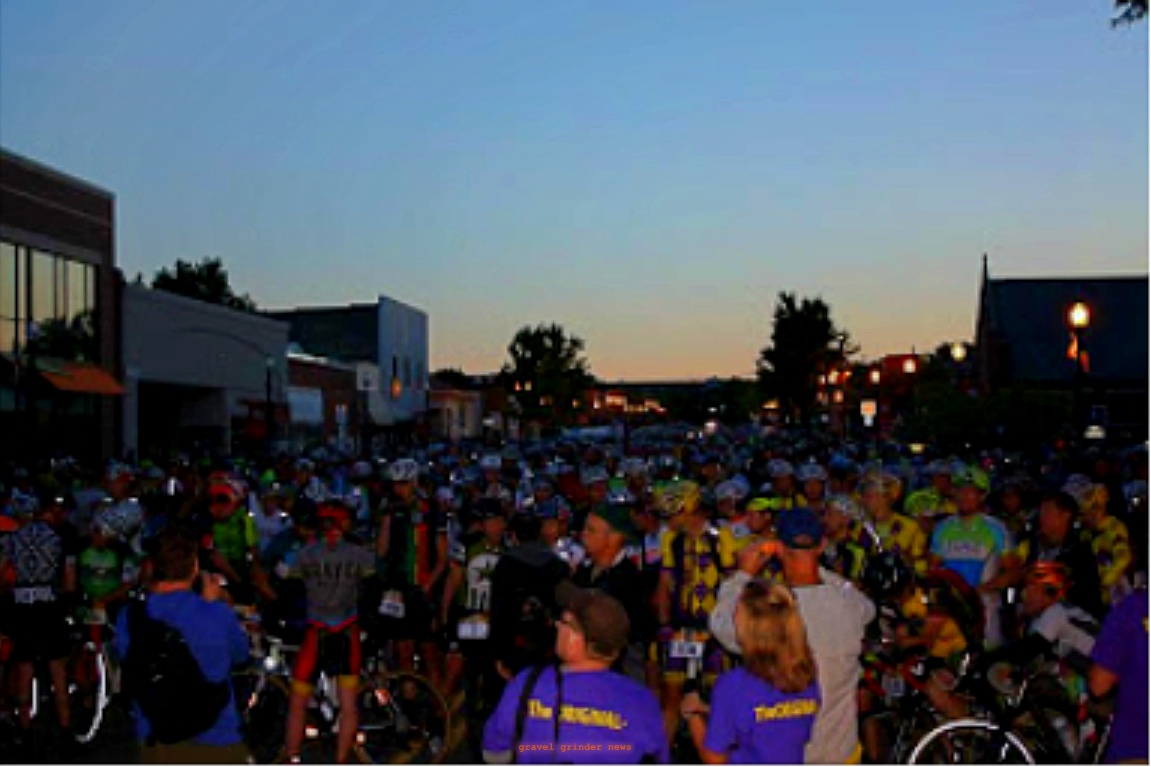
2006 DK200 checkpoint
 Welcome To Gravel History With Guitar Ted! This will be a random series here on the blog where I will give you my take on the history of gravel riding and racing in the "modern era.* 

There may be a "Ted-terview" or two where I speak with those from the early days of the Modern era of Gravel as well. 

Finally: This is my perspective, but I welcome other perspectives, even if they oppose mine, and in the end, we maybe can sharpen the focus of what really did happen versus fiction, lore, and speculations.

* The "Modern Era of Gravel" started when Trans Iowa was concocted by myself and Jeff Kerkove in the Fall of 2004. From that point forward what became known as a new niche of cycle-sport and cycling culture was born.  For more on this, see the following.....HERE

 Tire Tech & Fashions:

Fat tires are all the rage in gravel now. It wasn't that long ago when anything 43mm and above was considered "big" for gravel. Most bikes came with 40mm - 42mm tires, and races were run on these width tires for years. 

But it wasn't always this way. Going way back to the beginnings of Modern Gravel circa 2006 - 2010, it wasn't odd to see a large portion of the field at most Mid-West gravel events on mountain bikes. 

Fatter tires were known to be much more stable, comfortable, and could be just as fast as those folks who were running touring class tires on 700c sized rims. It wasn't until the bicycle industry made gravel specific tires in 2012 that this started to change. 

Tubeless tires for gravel weren't a thing until 2015 when WTB made the Nano 40 a tubeless ready tire. That pretty much sent the MTB sized rubber to the sidelines, seemingly for good. Gravel bikes came along with clearances for 40 - 43mm tires, and no one at the time figured on running anything wider, because most forgot how fatter tires tamed gravel. 

Of course, no one was making a racy, drop bar gravel bike with big tire clearances in 2015. So it was also a matter of availability to even do such a thing as sticking a MTB sized tire in a gravel bike. There were some other things, like 1X gravel drive trains, which helped as time went along to facilitate such an experiment.  

There was also a revolution happening in rim widths. It is forgotten, and hilarious, that only ten years ago we were freaking out over inner rim widths for gravel wheels being 23mm. Twenty-three millimeters? No one wants THAT in 2026! It's crazy how fast technology and "fashion" changes in cycling. 

WTB sponsored Trans Iowa with tubeless Nano 40's before anyone else could get them!

Now, in 2026 a 45mm gravel tire is considered normal, if not "skinny". Inner rim widths are creeping to 30mm and wider. Gravel bikes come with clearances for 50mm tires at a minimum now. Many companies offer a 50mm gravel tire these days. 

On the flip side you see the disappearance of "skinny gravel". You can find all sorts of 700 x 38mm and 40mm gravel tires on close-out pricing. Wheels with 23mm inner rim widths to 25mm inner rim widths are considered "old school" now. It is all indicative of where gravel fashion is going from here looking forward. Given that "endurance road" tire widths are creeping up to 40mm in width, it is getting kind of hard to not call those bikes  gravel bikes!

But I digress....

The irony here is that what is now considered "cutting edge" in gravel tires is not all that "new". We knew this about wider tires back in the day. What will be new, and is new now, is the materials technology and the design which is being applied to this sort of tire. Things which will make these tires less "drop bar MTB" and more "Gravel™". But the overall concept? 

Yeah, that's old news folks!  

Friday, July 17, 2026

Friday News And Views


Image courtesy of Gravel Worlds


 Gravel Worlds Re-brands:

 On Friday of last week news broke concerning a re-branding of Gravel Worlds. The event held annually in Lincoln, Nebraska, is going on its seventeenth year. The event is generally held around the second or third week of August and the course is a loop in and out of Lincoln. 

 Citing Nebraska's status as a top beef producer, the agricultural nature of the Gravel Worlds course, and the fact that the roads Gravel Worlds uses are primarily farm to market roads, the team at Gravel Worlds has designed an iconic logo. A logo which embodies the spirit of these facts. It has also incorporated the name of one of Gravel Worlds sponsors, McGrills, an outdoor grill brand which is manufactured in Beatrice, Nebraska. 

Following is a review of old Gravel Worlds logos, just for kicks..... 

Gravel worlds branding used most through the 2010's

 
Garmin comes on as a sponsor

In 2018 the site header lost the rainbow colors due to a cease and desist from the UCI


Celebrating 10 years in 2019

Obviously....

Logo from 2024, the year the founders of the event left and when the current team took over the event.

2025 header/logo

That's a good overview of how this event branded itself for most of its existence. Originally it was just a Pirate Cycling League event and the logo used was the PCL logo, but I did not include those in this mini-review. 

Virtual Ride For Jacob:

I was thinking the other day that there may be a few of you who might want to do a "ride for Jacob" but cannot come to Cedar Falls on the 25th to join me. Well.....what about a virtual Ride For Jacob? 

Here's what you can do. Let me know you've dedicated a ride for my son and tell me a bit about it. I'll send you a "Jacob" sticker. 

Just make sure I get an address to send it to. If you haven't seen one of these stickers they look like the sticker below. 

The story of your ride and why you did it can be sent to me at g.ted.productions@gmail.com.There is no time date stamp, so if you want to do this now, next week, or on the 25th, that is fine with me. I know of one fellow who is doing RAGBRAI who is dedicating a day to this. 

I guess if we want to make this a thing you could also send in a image or two and I'd post your story and images on the blog, much like I do for the Virtual Turkey Burn Ride. 

Or.....you don't have to do anything. Please do not feel obligated to write up anything, or even do a special ride. I'll still send you a sticker if you want one. 

Okay, that's really all I have for this idea. Thanks to "Tim" for the spark which led to this idea.  

Image courtesy of social media post
Wildfires In Northern Minnesota/Canada Affecting Air Quality:

Look, it's wildfire season again! And - of course - we need to be thinking about those losing their homes and livelihoods to these fires. And we need to be thinking about air quality. 

The map here is showing air quality for the Northeastern US for yesterday. Wildfire smoke issues are affecting a wide swath of this part of the nation. 

Whether or not we start seeing this in Iowa will depend on winds and air currents, but as of now we do not have issues here. However; we have had issues in the past and a few years ago, wildfire smoke pretty much shut down outdoor cycling for the month of June. 

Be safe out there! Inhaling smoke-riddled air is no joke, so consider not doing any cycling if your air quality is poor. 


Image courtesy of Trek Bikes
Trek Announces E-Fat Bike Models:

Trek announced a new e-Bike range on Thursday.. The new bikes are called "Borrego" and feature fat tires with a hub drive and 80mm suspension forks. 

Two models exist and the price starts at about $2,500.00.  

Comments: This looks a whole lot like the common e-Bike style we've seen from Radpower and other brands sold online. It's fairly obvious Trek is trying to reach those types of consumers here who would otherwise probably not look to Trek for an e-Bike at all.  

The price point may seem a bit steep, compared to the likes of other look-a-like e-Bikes, but here you have a dealer network and ostensibly a dealer network that will actually work on the bike when it inevitably needs work.  Try that with your Amazon sourced e-Fat bike. 

Maybe Trek will make a dent into this market, but it could be also that they are a little too late to jump on this bandwagon. I mean, this bike is totally ten years behind the times, in terms of tech and what is cutting edge now. We shall see how it goes....  

Not much else in the way of news for the week. So, that's a wrap for now. Thanks for reading Guitar Ted Productions! Now get out there and RAGBRAI, or ride however you ride!

Sunday, April 12, 2026

Gravel History With Guitar Ted: Changing Times

About this time ten years ago...
A story I told in the latest episode of the Guitar Ted Podcast had to do with this image. The image is of myself out North and East of Waterloo at about this time of year in 2016. It is a trading card, one of a set, which was handed out at the tenth anniversary of the Dirty Kanza 200 event in Emporia, Kansas. You know.....the event known as Unbound now? Yeah, that gravel race. 

I remember when the DK folks reached out to me and asked me to send them an image. They wanted something of me recent on a bike. Well.......there are not a lot of images of myself riding a bicycle, so this was a bit of an issue for myself. 

I thought it was a bit of an odd request anyway. I mean....who cares about Guitar Ted riding bikes? Especially racers. I never amounted to much when it comes to bicycle racing. As far as my event went, Trans Iowa was weird and being eclipsed by several other events by that time in gravel. Essentially, the gravel world had grown and passed myself and Trans Iowa by. 

Sure, there was the influence, the history, which Trans Iowa and myself represented. But even by 2016 most gravel folk had no idea concerning any of that. None. Zero. 

This is why I find it ironic when today I see stories written on major online cycling media sites stating how gravel didn't really see growth until 2018, or 2019, and some punters place the "explosion of gravel" after the pandemic. 

They don't know what they are talking about.

I used to compile a calendar of gravel events every year from 2008 until 2020. Gravel events increased in number from 2010 to 2019 by a factor of over six times. Talk about "an explosion of gravel events" But no one cares to research anything in their stories, I guess. That's why I write this stuff down. 

Anyway, back to the trading cards. I eventually settled on taking a quick selfie out on a ride and I sent it off for the DK200 folks to look at. I promptly forgot all about the promotion as I was deep in the throes of organizing the next Trans Iowa event. 

Then it came time for the DK200. I went down with Tony, a friend of mine, and I was there mostly as support for Tony. But I also was there to attend this goofy, (my opinion) autograph session for people who wanted autographed trading cards. The rest of that story is on the podcast, so I'll save you from reading it here. 

The whole deal was pretty much a flop, as I recall. I did get a complete set of cards for being there.  I went home, and probably like most everyone else, I tossed these cards in a "junk drawer" to eventually get thrown out at some point in the future. 

Then one day, well over a year later, I received an odd little package in the mail. It was a playing card box full of my trading cards. I think I have around 30+ of my card in that box yet. I have no idea why I got them afterward or what I will ever do with them in the future. 

Probably throw them out in some fit of cleaning someday.....

Saturday, April 04, 2026

The Path To Discovering Gravel Grinding: Part 6

 This is Part 6 of a mini-series of posts telling the story of what it was like to attend events in the early days of the Modern Gravel Era. In today's post I am going to explore things which, in my opinion, made early gravel events unique and more than just a competition. 

Image by Ari Andonopoulos
Early gravel races and rides had something which up until the start of the Modern Gravel era in 2005 were mostly unheard of anywhere else. This would be a side of gravel which drew many into the scene and gave rise to the term, "Gravel Family". A term co opted by a certain big-time gravel event now. 

What am I speaking of, you might ask? Well, it would be the social functions surrounding many of the different gravel events in those early days of gravel grinding. 

This was always a part of the gravel scene right from the jump. At the first two Trans Iowa events there was a pre-race meeting, but it was held at a Pizza Ranch restaurant with a full spaghetti meal for all in attendance. This served as a social meeting, as the riders were all in one place and could meet each other. Given the low-key nature of these early events, the front-runners mixed in with the back-of-the-packers and everyone got along famously. It was as if Pro racer perks were against the rules. And in a way, this was kind of an unspoken rule in gravel. No one was above anyone else. Snobbery, in even the slightest form, was looked down upon. 

From the beginnings, in the mid-2000's, this facet of gravel events was evolved by different event promoters. Some copied the Trans Iowa format, while others invented their own ways, and it even infiltrated the actual events in some cases. 

The first Gravel Worlds held their sign-in at Oso's restaurant in downtown Lincoln, Nebraska.

Trans Iowa held a "meat-up" where riders had to grill their own meals. Image by Wally Kilburg (R.I.P.)

Eating together is a basic human activity and is conducive to having people engage in discourse with each other. This helped bond the riders and created reasons to go to other events which had similar social gatherings to reconnect. 

Odin's Revenge sandwiched their event with a beginning social at the Walker's Steakhouse...

...and ended at a KOA Kampground with food, beer, and socializing.

Events branched out to do some different things then and each event director tended to have a bit of a different spin on the social activities. It was a fun time to go see how things would be done, and if the event was successful, word of mouth would spread and the event was sure to get even more attention in following years. 

Night Nonsense, an event held entirely at night, had a truck with volunteers handing out slices of pizza about 3/4's of the way through the course. 

The Moonshine Metric started and ended in the RD's garage and there was a potluck afterward. 

Not every event did things this way, and some still do, but I think early on this facet of the gravel scene was a huge draw for riders tired of going to an event, racing, packing up, and driving home. Now you had reasons to go besides the bicycle racing/riding. You went to see those folks you met at another gravel event, and you had time to talk, and maybe even enjoy something like a meal, a cold one, or some other activity with those folks. 

The Fargo Adventure Rides often had meet-ups the evening prior with food and drink with a social gathering afterward, (Image by Jason Boucher)

Gravel clinics, like this one for Trans Iowa held in 2014, were another excuse to gather together outside of competitive riding.

I truly believe that without a social component to these pioneering gravel events we would not have seen the rise of gravel as a sport such as we have now in the last ten years. All this talk about how "gravel has grown up" and become "serious" now is not possible without the bedrock foundation the Pro level sport stands upon now. People are making a living off gravel because of the way events were done back then, not despite the way they were done. (And in many cases, still are being run.)

So, when you see the malarkey being posted online concerning how Pro racing has legitimized gravel, you should call "BS", because that isn't what happened. The early gravel scene made what they are doing now to the sport possible, and without it, no one would be making bank off gravel. Not that I am concerned about the money, because I honestly don't care. But when the story gets twisted, I don't like the results the twisting of the actual background stories causes. Or the out-right ignorance of the way gravel history unfolded. Which, honestly, is more the case than not, unfortunately. 

Too bad there isn't some organization out there to gather up this history, preserve it, and tell the real stories behind gravel cycling. Hmm.... anyway. 

Now you know, and knowing is half the battle.  

Tuesday, March 04, 2025

Where We Came From: The History Of Modern Gravel Cycling

 As promised in the post entitled "So, When Did You Discover Gravel?" last week, I have settled on a name for the series once known as "Gravel History With Guitar Ted". The name stems from what I called our latest podcast. The latest episode dropped on Thursday evening last week and is entitled "Where We Came From". 

This name is a good one, in my opinion, because I feel many riders today have no idea where this all stems from when it comes to gravel cycling. One thing I want to make perfectly clear before I go any further. 

This isn't about who did what first. 

I'm not going to even entertain this idea nor debate it. I find pursuits of this nature to be fruitless and divisive. The way gravel cycling evolved came from a focal point which - yes - a very few were involved in. Ideas were gleaned from past cycling events and ideals. Certain elements were deleted from consideration for these early gravel events. Certain events from decades past were taken as guide posts and inspirations. Those pre-modern day gravel events were never going to become gravel as we know it today. However; those bits are important ingredients that helped make gravel great and helped form the ideas that did get modern-day gravel started. 

Beyond events and culture there were the days when there were no gravel cycling specific bicycles, tires, or other accessories and gear. Yet people came to the events on bicycles and used ideas to help them conquer those rural crushed rock roads. Many of these ideas spurred designers, brands, and marketers to come up with gravel-purposed bicycles, tires, and gear which helped propel gravel cycling to new heights. We will be covering this as well. 

The series will entail conversations with pioneering gravel cyclists and others who were around when these events happened. There will also be supporting articles which will cover the gear and accessories used in early gravel events. So, some of this will be on "The Guitar Ted Podcast" while some will be written up on this blog. 

As always, feel free to make suggestions and comments for ideas you'd like to see covered in this series.

Wednesday, January 15, 2025

Gravel History With Guitar Ted: "Answering The Call..."

 Gravel Grinder History With Guitar Ted is a series of posts covering the early days of gravel grinding, racing, and tech which helped build and make gravel riding the hottest form of cycling in the 2020's. Many of these articles were first published on my "Gravel Grinder News" blog which started in late 2008. 

In today's post you will read a race report by Matt "MG" Gersib who wrote "Answering The Call..." for Gravel Grinder News in 2013. This is a race report for the event then called the Dirty Kanza 200. (Now Unbound Gravel) In it you will learn much about how gravel events once were run. Pay specific attention to details like navigation, the names of people Matt thought were at the top of the heap in gravel racing, and to what some of the fears of gravel racers were concerning growth. 

I've lightly edited this post (removing dead links mostly, spiffing up the images) and I have added a few notes to clarify things for today's readers, but otherwise this is how this post appeared on June 11th, 2013. Enjoy!

Answering the Call…

by Matt Gersib

 Images by Cornbread, Kyle Thompson, Dave Mable, and MG

 Gravel grinding is getting pretty big in the Midwest, as evidenced by the nearly 1,000 combined entrants in the 2013 Dirty Kanza 200, “Half-Pint” 100-miler, and 20- or 50-mile “DK-Lite” fun rides. Held at the doorstep of the Kansas Flint Hills in the college town of Emporia, Kansas, the Dirty Kanza was first run in 2006. Since then, the event has grown from just a few dozen participants that first year to become one of, if not the, largest gravel grinder in North America.

Since 2010, the Dirty Kanza 200 has started and finished in-front of the historic Granada Theater in downtown Emporia. Photo: Cornbread (Cory Godfrey)
In many ways, the 2013 Dirty Kanza 200 was a test – a test to see how much was too much. I can’t count how many times I was asked “is it going to be too much to have 750 people on-course at the same time?” prior to the event. Some folks had serious doubts as to how it’d be possible to avoid pile-ups, traffic jams and other calamities caused by too many riders on the same gravel roads.

I wasn’t one of the doubters, however, and whenever asked, I told them that I thought 200 miles was a lot of space, and that there would be plenty of room for everyone to ride. I even suggested there would be times when we’d feel really alone out there, even with all the people we knew were on-course with us. 

Riders assemble prior to the 6:00a.m. start. Photo: Cornbread (Corey Godfrey)

Fast forward to race day and while the start line was an awesome spectacle, it was really the only time (on the bike) that I felt like it was any different than the Dirty Kanza 200s that had come before. Perhaps the overall level of the field was a bit higher overall due to the increased numbers, but the quality riders only enhanced the quality of the event. I mean, who doesn’t want to go to a race and meet Tour Divide champion, Jay Petervary, the “Queen of Pain”, Rebecca Rusch, and a number of other cycling legends?

I knew that bettering, or even matching my personal best DK200 placing (fifth overall in 2008) would be extremely tough as I surveyed the riders on the start line. And with my recent failure at Trans Iowa fresh in the back of my mind, I wasn’t willing to risk going too hard in the front 100-miles of the race in a vain attempt to stay near the front.

Racers roll-out onto the course just after the start of the 2013 Dirty Kanza 200. Photo: Kyle Thompson


 At one point during the first leg, I even thought I might have been going too easy, but I stopped thinking that after stopping to help Specialized rider, Garth Prosser (eventual 7th place overall finisher) with a flat rear tire. Garth offered to pull me into checkpoint one in return for stopping to help, but was clearly riding much stronger than I. It was a struggle simply to hold his wheel, so I let him go.

His strength gave me a glimpse into my own mortality if I chose to play with fire, so it was a good exercise, but it reminded me that I needed to pay attention to my game plan. I backed off and resumed a comfortable, but reasonably fast pace.

Checkpoint one came at about mile 50, and my wife Laura was amazing at taking care of everything I needed, often before I knew I needed it.

“You aren’t drinking enough,” she said to me as she topped my bottles off.

“It’s OK sweetheart,” I replied. “It’s not hot and I’ll be drinking a lot more on this leg, so you won’t be telling me that when I see you in 50-miles.”

We both laughed as I finished the smoothie I was drinking. It was just a couple more minutes and I was back out on the course, on the second 50-mile segment. As I rode away from the checkpoint, I thought to myself, “this is where the fun starts!”

I was thinking sarcastically, of course, as I knew that there would be a lot of head wind in the next 100-miles. Unfortunately for all of us on this day, the head wind was significant. Combine that with the fact that I was once again experiencing pain in my right knee (similar to what I experienced at Trans Iowa), and it made for some times of fairly slow going.

And then I missed a turn and rode a total of six miles off-course…

I realized the error in my ways when I saw corner markers set into a corner, only they were 180-degrees opposite from their standard orientation… “What is this?” I thought to myself. (Editor's Note: The DK200 used "flags" to mark corners in the early years of the event. If you saw a flag (just a surveyor's pole with a Hi-Viz ribbon flying from it like a streamer), on your right, you then looked down the intersection each way to see where another flag like it was. If it was seen on the right side of the road in any direction from the intersection, it indicated which way to turn. In this instance Matt noted the flags were on the left side of the road, indicating he had come up on another portion of the course from the wrong direction.)

It was an earlier section of the course (ahead of checkpoint 1) that, after missing the corner I was supposed to take, I’d ridden up to. As I perused my course map in an attempt to locate myself, two riders approached from the opposite direction and asked if I needed help. I politely declined and wished them good luck on their ride.

Surveying the map, I deduced that while I wasn’t exactly sure of my location (the location wasn’t marked on the map I was reading – for segment two), turning around was my best option and hope for getting back on-course as quickly as possible. As it turns out, I rode for three miles before I came upon the turn I’d missed, which was right before a water crossing in the road (located after the corner). I’d gotten so focused on the water crossing that I didn’t even see the turn markers (or the road itself, for that matter). I was super focused-in on figuring out if the water could be ridden, and if so, which line I needed to take.

Since the water crossing was about 50 yards long (my guess, no ruler in-hand), it required considerable concentration. Oh, and yes, I was riding alone. So much for the theory that it’d be “too crowded” out on the road! HA!

The head wind turned oppressive around mile 75, and I went into energy conservation mode. That said, the gnarly Flint Hills terrain combined with the wind to take it out of me from mile 75 to 100. I came into the second checkpoint eager to tear into the Valentino’s pizza we’d brought from Lincoln in the cooler. It actually made me go faster coming into the checkpoint, but coming into the Salsa tent to receive my new map and check-in, the ladies excitedly exclaimed as I rode up:

 “Number 59… There he is. Are you Matthew?”

“Ummm. I think so,” I think I uttered.

“Laura’s car broke down on the highway…”

(Thinking to myself “Holy Shiiiii”)

“…but she did send this Monster and water for you, and we have some food we’d be happy to give you.”

“Ummmmmmm…..”

Cue the appearance of Joe Reed, the checkpoint coordinator and my host for the weekend. “Matt, why don’t you sit down here and we’ll just take care of you,” he said. “No problem.”

Joe and I sat down and chatted while one of the checkpoint angels, Ingrid, offered up some of the summer sausage and Colby Jack cheese she had in her cooler. Meat and cheese during a bike race? I’m from Nebraska – bring it on! Thank you Ingrid – you single handedly saved my 2013 Dirty Kanza. For while that might not have been the pizza I was expecting, it was exactly what I needed.

Thank you to everyone at checkpoint two – Amanda, Amanda, Jen, Ingrid, Joe and everyone else involved with the stop. Without your generous support, I wouldn’t have been able to continue, but after leaving the checkpoint, I had no choice but to finish. You all were key to my finish. Thank you doesn’t seem like enough.

Still smiling in the first 100 miles of the event. Photo: Eric Benjamin
As I left checkpoint two with a belly fully of meat and cheese and questions swirling in my head about the status of my wife, our dog and our car, I pedaled out onto the course. We had 13 miles of a crossing tailwind before turning into a constant headwind for the remaining 37 miles of the leg into checkpoint three at Cottonwood Falls. Though the crossing tailwind was pushing me along, I was careful to meter my effort, as I knew what we were about to face.

About four miles into the leg, three riders pulled up on me – Salsa’s Tim Ek, and the Cycle Works/Moose’s Tooth duo of Scott Bigelow and James Blake. All were looking strong and for a minute I upped my tempo to ride with them. It was at about this time that the Salsa-sponsored film crew pulled up in a Jeep and, almost as if on cue, Eki raised the pace about five miles per hour. All of the sudden we were doing 23 mph…

Homie wasn’t playin’ that, so I dialed it back to a more reasonable pace for my legs and watched Eki quickly gain a hill on me as he picked off rider-after-rider for the camera. Meanwhile, I tore into a package of Honey Stinger drops with the abandon of a raging hyena. That cherry cola flavor is to die for and I hadn’t gotten many carbs during my stop at checkpoint two, so I had a bit of a hankerin’.

 So, here’s where the DK200 gets a little bleak, as the turn northward into the wind was a doozy. As we rode among the nodding donkeys in the oil fields of the Flint Hills, the sparse terrain provided little respite from the sustained 20+ mph northwest winds. The same winds we’d flown on in the earlier stages of the event were the same ones that now forced my speed below ten miles per hour regularly.

Each ten miles of the leg seemed magnified by the wind-fueled slowness. It didn’t help that my knee was giving me consistent shooting pains, which concerned me, but I decided were something I just had to live with. “Grin and bear it,” I thought to myself as I pedaled through the veil of pain.

Image: Cornbread (Corey Godfrey)

MG at Checkpoint #3

I rode into the third checkpoint with a gentleman from Washington – near Olympia. Since my parents and sister’s family live in Oly, we quickly struck up some good conversation that at some point turned to the calamity with our car. He quickly offered to let me sag out of his support car, driven by his wife. But as we rode into the checkpoint and received our new maps, who was the first person I saw? It was my beautiful wife, Laura. She’d gotten the Subaru towed to Emporia, rented a car and was back out to support me. What an awesome wife and an incredible person!

  I was so overjoyed to see Laura that I immediately and completely forgot my earlier plans, and immediately left for the rental car (and our cooler with the pizza) with Laura. Ironically, after the stop, I saw the same rider back out on-course and he said “I never saw you after we got our maps,” so I apologetically told him about finding Laura at the checkpoint and how overcome I was with joy in seeing her. About then, my knee started locking up and I had to stop to stretch it for a bit.

As I rejoined the race, two riders approached – singlespeed rider, PA single speeder, Mark Elsasser and Kansas cycling icon, Keith Walberg. It was great to ride with these two guys, if for too short a time, as after ten or so more miles I again had to stop and stretch my tightening IT band. In retrospect, when I stopped, I should have tried raising my saddle 3-4 millimeters, as that may have helped the situation, but I didn’t have the presence of mind at that point in the event to think of it. Hindsight is 20-20 however, so I’ll save that one for future reference.

The final 20 miles of the race were largely with the wind, as we rode familiar roads through the small town of Americus and into Emporia. The sun set as I rolled through Americus, dashing my hopes of scoring one of the limited edition prints that were being given to those who finished before sunset, but I decided it didn’t matter and pushed to the finish with a steeled resolve to catch as many racers in-front of me as possible before the line.

Thumbs-up at the finish. Photo: Eric Benjamin

I ended up finishing 86th overall (32nd veteran), with a course time of 15 hours and 25 minutes. It wasn’t my fastest Dirty Kanza 200, but given the challenges we had during the race, I was happy with the result and feel like it’s due to the work of a lot of folks, some of whom I’ll never be able to thank. But I’ll try, and the first person I’d like to thank is my incredible wife, Laura. I don’t know who had it harder on race day, but she came through it and was the rock I needed when I needed her. Thank You! And to everyone involved with the Dirty Kanza 200 – Jim, Kristi, Tim, and everyone at the checkpoints – Thank You all! And thanks to our host for the weekend, Joe Reed – an awesome person and good friend. And finally, thanks to Marty Larson and Sam Alison at Singular Cycles, and Rob Versteegh at Oakley for their support in 2013!

See you down the road!

What a great race report! Thanks again, Matt. This was an excellent look at what events were like a mere decade and a little more ago. There were a lot of things yet to be figured out then. Most riders were on cyclo - cross, mountain bikes, or some cobbled together rig. Most were not running tubeless yet. There were no GPS computers to use for turn prompts or massive roadside hand-ups for the fast guys. 

But you can also see the beginnings of what the Dirty Kanza event brought to gravel. The fancy finish line chute, proper timing, and promoting the event th4rough the invitation to elite athletes (Jay Petervary, Rebecca Rusch). The popularity of this event skyrocketed after 2013.

I hope you enjoyed this fascinating look back at gravel racing. 

Saturday, April 20, 2024

It Has Been Ten Years Already?! Part 2

From the recon of Trans Iowa v10's course.

 Here's another tale I'd forgotten about concerning Trans Iowa v10 which happened ten years ago this month. Oh, and by the way, good luck to those riding in Iowa Wind and Rock today, tonight, and tomorrow!

If you missed the first tale, you can read that HERE.

One of the enduring facets concerning riding gravel in the Mid-West has to do with our unmaintained roads. Those (usually) dirt roads that leave you wondering if you've made a right choice by entering an event that uses them. The mystery of the dirt road has caused much wonder, consternation, and has been the hammer that forged a lot of people's characters over the past 20 years of gravel grinding. 

This all started when, back in 2005, I included, unwittingly, two miles of what we call in Iowa, a Level B Road. This was a feature that was expanded upon for the following year, but with copious amounts of moisture, it made the event unfinishable that year. The legend was born concerning muddy dirt roads and ever since then these roads have been a legendary part of several gravel events. 

A previously unpublished image by Jeff Kerkove from T.I.v2 showing riders dealing with mud from a Level B Road.

Of course, being the RD of Trans Iowa all those years, I got a LOT of queries concerning Level B roads and how to deal with them. The effects of putting these roads into my courses was weighed heavily and was not done willy-nilly by any means. Each section of dirt was carefully considered and work-arounds were usually in place in case things got really crazy. But even then, keeping the crazies happy by including these challenges was not easy as a LOT of people would cry foul as well. 

The whole thing with the Level B road madness came to a head in Trans Iowa v10's run-up as potential riders of the event were concerned that I would be putting in too many roads of dirt and doom and that this alone would prevent their finishing of Trans Iowa. Little did they know what would actually happen that year that would knock most of the field out, and it was not any dirt roads! 

Of course, the riders had no clue as the event approached. The focus for them was on what these roads, which I had said there would be 10 sections of in the event, one for each year of T.I.'s existence, would be on their efforts. One or two riders asked about how long it might take to traverse a Level B Road with a typical bike set up for Trans Iowa. Well, I took that as a challenge. 

From my test of 2014 to see how long it took to walk one mile of Level B Road.

I had a bike, my Raleigh Tamland Two, that was all set up for gravel travel, much as a Trans Iowa competitor might have a bike set up, and as fortune would have it, it was a rainy Spring. I had an opportunity to go down to Petrie Road's Level B Section, a prototypical Level B Road from the standpoint of how it had a hill, a flat section, sand, and mud when wet, so that I could actually time myself walking that section of road. That particular Spring the road was wet, muddy, unrideable, and so it was perfect for this test. 

Turns out that, at a moderately fast pace, it takes 20 minutes to walk a muddy mile of Level B Road. That was what I found, at any rate, and was what I reported to my riders for T.I.v10. How they used that information was up to them after that.

Naturally, as I alluded to above, it wasn't muddy Level B Roads that would knock riders out of the running that year. No, it was a mighty East wind, sideways rain in the night, and lots of miles. The Level B roads? Certainly, they played a part, but they were not the knock-out punch many were thinking that they could be that year. 

One more tale to go!

Thursday, August 10, 2023

Gravel History With Guitar Ted: The Good Life Gravel Adventure

Welcome To Gravel History With Guitar Ted! This will be a random series here on the blog where I will give you my take on the history of gravel riding and racing in the modern era.* 

There may be a "Ted-terview" or two where I speak with those from the early days of the Modern era of Gravel as well. 

The early days of the gravel scene, as we have come to know it, were very, very different than they are today. Nothing illustrates this better than looking at the transition of what was an idea on a relatively unknown blog in 2008 to what became one of the most well known gravel events on the planet. Of course, I am speaking of "Gravel Worlds", which will take place in Lincoln, Nebraska in a little over two weeks from now. 

My connection to Gravel Worlds goes way back and I have known the promoters of the event for a long time, but the beginnings of Gravel Worlds goes back further than that. The beginnings of the event are closely tied to the development of a loose confederation of cyclists who called themselves "The Pirate Cycling League". 

That story is another one for another time. I'm going to keep the focus here on the genesis of Gravel Worlds. That event grew out of another event, which itself has its beginnings in the very earliest part of the Modern Era of gravel riding/racing. 

The blogging scene, which was at its zenith in the mid-2000's, helped bring a sense of community to many facets of American culture. Cycling was no different in that regard. Suddenly everyone had a voice, and the Lincoln area cycling community capitalized upon this phenomenon very successfully. At first, it was exemplified by the "Folks from Lincoln" blog. This was a blog that featured all sorts of activities ranging from cycling, music, skate boarding, and art. I suspect that the amount of cycling related stuff, especially the gravel stuff, made the Pirate Cycling League's decision to form its own blog a rather easy decision to make. Much like the "Folks From Lincoln" blog, the PCL's blog was, at first, a community driven affair. Everyone was welcomed, and everyone had a voice. 

"CVO" or Christopher Van Oyen, at Gravel Worlds 2010

The PCL blog and the Folks From Lincoln" blogs worked together for a while, but eventually the man known as "CVO", (Christopher VanOyen) sort of became the de-facto blogger of that site and it became a quite different thing. So, the PCL eventually was the clearing house for anything "gravel" in terms of cycling in the Lincoln/Omaha areas.

During the Summer of '08, an idea was floated on the PCL blog which would become an event. But as with what came before, this was decidedly a "community driven" idea. You can get the gist of it here from a post I found on the PCL blog which is still on the net!

"As a reminder, the Pirate Cycling League is race promotion group focusing on fun, free, and friendly bicycling events. The PCL is run by no one and everyone. Anyone can organize a PCL event. The founding fathers will remain anonymous. I (Corey "Cornbread" Godfrey) have taken the reigns to create a blog. If you would like to become a contributor, please send me an email and I'll send you an invite."

As the Summer rolled along the event ideas came in and things were cooked down to a singular idea. Again from the PCL blog:

"In keeping with PCL tradition and mission statement, there will be no entry fee. Riders will be required to purchase Nebraska Lottery Powerball tickets as proof of reaching a checkpoint (date and time are indicated on the ticket). Four lottery tickets should cover ya (not every town will be an official checkpoint). The local convenience stores will serve as the checkpoints which will also provide nutritional support for your $."

No date or distance had been determined at this point, but taking a bigger picture look at the landscape at that time will reveal that Spring and early Summer were pretty set with gravel events by 2008. You had Trans Iowa, Almanzo 100, and the DK200, (now Unbound Gravel), going on and in deference to those events, the PCL leaders were thinking about late Summer or Fall. 

The event idea was to be one that kind of fit into the ethos of the first Modern Era gravel events and so a longer distance was contemplated. Eventually settling in on a 150-ish mile course, the event, which was known as "The Good Life Gravel Adventure", was run in September of 2008. 

The results for the first GLGA (Courtesy of the PCL Blog)
One of the event's attendees, my co-director at the time for Trans Iowa, was David Pals. He could not stop talking about how great the event was and insisted that I give it a try the following year. Upon his recommendation,and with a few "life" things falling my way, I was a part of that second running of the GLGA in 2009. 

Unfortunately, my camera decided to not charge up, so I have no visual record of the event, but I did write up this race report afterward here on the blog in 2009. 

The event was deemed a success and the PCL saw their attendance numbers more than double. This and the positive feedback they received was more than enough to spur the PCL guys and gals along the way to re-up for another go at things in 2010. By that time of the announcement, which was a month after the last GLGA,  response to their event had indicated to the PCL crew that maybe a name change and a venue change was in order. 

I don't know why they decided to go with "Gravel Worlds", but my impression was that at that time it was a stab at the stuffy, overly-complicated Pro roadie scene and its age-old conventions. A tongue in cheek take on racing which flew in the face of normal road racing conventions and even going so far as to usurp the icon of Pro road racing's achievement, the rainbow jersey, with a Gravel Worlds version. 

One of the PCL's co-founders, Craig Schmidt, holding the inaugural Gravel Worlds jersey.

Of course, this got the PCL in hot water with the UCI several years later, but all is well nowadays! The "rainbow stripe" design has been modified and now appears a bit differently on the current jersey for the category winners of Gravel Worlds in 2023. 

My post card entry for the 2010 event.

That first Gravel Worlds, held in mid-August of 2010, solidified the event as one of the important gravel grinders on the calendar for years to come. The event grew by over twice its size again in 2010 over 2009, with attendance somewhere over 150 riders. Gravel Worlds had now become a staple of the gravel scene.

And of course, it has only grown with every coming year to become one of the most important gravel grinders in the USA. What I find amazing is that through it all - the growth years and through a pandemic through to the other side - Gravel Worlds has maintained that "everyman's event" feeling and its basis for inclusiveness which it has had from its beginnings. It has grown, and it has become fancier, with all the race event trappings which many events have, but somehow that basis from which the event has its foundations has remained solid and unyielding. A true testament to its founders and to the directors, volunteers, and sponsors that the event has today. 

Additionally, this event and Barry-Roubaix are really the only gravel events which can trace an unbroken line from before 2010 to the present day. The Gravel Worlds event is one of those iconic American inventions that not only represents "gravel" in perhaps its truest form today, but is an event with a historical importance that not many current events can even hope to touch. That one of its founders is in the Gravel Cycling Hall of Fame should underscore that sentiment. 

 I want to also take a moment to say that I wish all those involved in Gravel Worlds this year much success. 

Until next time on Gravel History With Guitar Ted.

Gravel History With Guitar Ted: The Good Life Gravel Adventure

Welcome To Gravel History With Guitar Ted! This will be a random series here on the blog where I will give you my take on the history of gravel riding and racing in the modern era.* 

There may be a "Ted-terview" or two where I speak with those from the early days of the Modern era of Gravel as well. 

The early days of the gravel scene, as we have come to know it, were very, very different than they are today. Nothing illustrates this better than looking at the transition of what was an idea on a relatively unknown blog in 2008 to what became one of the most well known gravel events on the planet. Of course, I am speaking of "Gravel Worlds", which will take place in Lincoln, Nebraska in a little over two weeks from now. 

My connection to Gravel Worlds goes way back and I have known the promoters of the event for a long time, but the beginnings of Gravel Worlds goes back further than that. The beginnings of the event are closely tied to the development of a loose confederation of cyclists who called themselves "The Pirate Cycling League". 

That story is another one for another time. I'm going to keep the focus here on the genesis of Gravel Worlds. That event grew out of another event, which itself has its beginnings in the very earliest part of the Modern Era of gravel riding/racing. 

The blogging scene, which was at its zenith in the mid-2000's, helped bring a sense of community to many facets of American culture. Cycling was no different in that regard. Suddenly everyone had a voice, and the Lincoln area cycling community capitalized upon this phenomenon very successfully. At first, it was exemplified by the "Folks from Lincoln" blog. This was a blog that featured all sorts of activities ranging from cycling, music, skate boarding, and art. I suspect that the amount of cycling related stuff, especially the gravel stuff, made the Pirate Cycling League's decision to form its own blog a rather easy decision to make. Much like the "Folks From Lincoln" blog, the PCL's blog was, at first, a community driven affair. Everyone was welcomed, and everyone had a voice. 

"CVO" or Christopher Van Oyen, at Gravel Worlds 2010

The PCL blog and the Folks From Lincoln" blogs worked together for a while, but eventually the man known as "CVO", (Christopher VanOyen) sort of became the de-facto blogger of that site and it became a quite different thing. So, the PCL eventually was the clearing house for anything "gravel" in terms of cycling in the Lincoln/Omaha areas.

During the Summer of '08, an idea was floated on the PCL blog which would become an event. But as with what came before, this was decidedly a "community driven" idea. You can get the gist of it here from a post I found on the PCL blog which is still on the net!

"As a reminder, the Pirate Cycling League is race promotion group focusing on fun, free, and friendly bicycling events. The PCL is run by no one and everyone. Anyone can organize a PCL event. The founding fathers will remain anonymous. I (Corey "Cornbread" Godfrey) have taken the reigns to create a blog. If you would like to become a contributor, please send me an email and I'll send you an invite."

As the Summer rolled along the event ideas came in and things were cooked down to a singular idea. Again from the PCL blog:

"In keeping with PCL tradition and mission statement, there will be no entry fee. Riders will be required to purchase Nebraska Lottery Powerball tickets as proof of reaching a checkpoint (date and time are indicated on the ticket). Four lottery tickets should cover ya (not every town will be an official checkpoint). The local convenience stores will serve as the checkpoints which will also provide nutritional support for your $."

No date or distance had been determined at this point, but taking a bigger picture look at the landscape at that time will reveal that Spring and early Summer were pretty set with gravel events by 2008. You had Trans Iowa, Almanzo 100, and the DK200, (now Unbound Gravel), going on and in deference to those events, the PCL leaders were thinking about late Summer or Fall. 

The event idea was to be one that kind of fit into the ethos of the first Modern Era gravel events and so a longer distance was contemplated. Eventually settling in on a 150-ish mile course, the event, which was known as "The Good Life Gravel Adventure", was run in September of 2008. 

The results for the first GLGA (Courtesy of the PCL Blog)
One of the event's attendees, my co-director at the time for Trans Iowa, was David Pals. He could not stop talking about how great the event was and insisted that I give it a try the following year. Upon his recommendation,and with a few "life" things falling my way, I was a part of that second running of the GLGA in 2009. 

Unfortunately, my camera decided to not charge up, so I have no visual record of the event, but I did write up this race report afterward here on the blog in 2009. 

The event was deemed a success and the PCL saw their attendance numbers more than double. This and the positive feedback they received was more than enough to spur the PCL guys and gals along the way to re-up for another go at things in 2010. By that time of the announcement, which was a month after the last GLGA,  response to their event had indicated to the PCL crew that maybe a name change and a venue change was in order. 

I don't know why they decided to go with "Gravel Worlds", but my impression was that at that time it was a stab at the stuffy, overly-complicated Pro roadie scene and its age-old conventions. A tongue in cheek take on racing which flew in the face of normal road racing conventions and even going so far as to usurp the icon of Pro road racing's achievement, the rainbow jersey, with a Gravel Worlds version. 

One of the PCL's co-founders, Craig Schmidt, holding the inaugural Gravel Worlds jersey.

Of course, this got the PCL in hot water with the UCI several years later, but all is well nowadays! The "rainbow stripe" design has been modified and now appears a bit differently on the current jersey for the category winners of Gravel Worlds in 2023. 

My post card entry for the 2010 event.

That first Gravel Worlds, held in mid-August of 2010, solidified the event as one of the important gravel grinders on the calendar for years to come. The event grew by over twice its size again in 2010 over 2009, with attendance somewhere over 150 riders. Gravel Worlds had now become a staple of the gravel scene.

And of course, it has only grown with every coming year to become one of the most important gravel grinders in the USA. What I find amazing is that through it all - the growth years and through a pandemic through to the other side - Gravel Worlds has maintained that "everyman's event" feeling and its basis for inclusiveness which it has had from its beginnings. It has grown, and it has become fancier, with all the race event trappings which many events have, but somehow that basis from which the event has its foundations has remained solid and unyielding. A true testament to its founders and to the directors, volunteers, and sponsors that the event has today. 

Additionally, this event and Barry-Roubaix are really the only gravel events which can trace an unbroken line from before 2010 to the present day. The Gravel Worlds event is one of those iconic American inventions that not only represents "gravel" in perhaps its truest form today, but is an event with a historical importance that not many current events can even hope to touch. That one of its founders is in the Gravel Cycling Hall of Fame should underscore that sentiment. 

 I want to also take a moment to say that I wish all those involved in Gravel Worlds this year much success. 

Until next time on Gravel History With Guitar Ted.