Showing posts with label Mike Curiak. Show all posts

Friday, October 17, 2025

Friday News And Views

Image courtesy of Mavic
Mavic Introduces New AllRoad Wheelset In Carbon

The news about a carbon rimmed Mavic wheel set for gravel was released last Monday. Called the ALLROAD SL Carbon, this wheel set has a 25mm internal rim width and a 42mm deep rim profile. Featuring 24 aero, double butted spokes with a 2X lacing pattern on aluminum Mavic hubs, this wheel set weighs a claimed 1,550 grams. 

The rims feature a hookless design. They are built to Mavic's UST dimensions. Mavic claims these rims are compatible with tire widths from 30mm - 64mm in width. (64mm is approximately equivalent to a 2.5" wide tire)

The hubs are 100mm/142mm through axle front/rear.. The wheels can be ordered with a SRAM XDR or Shimano HG freehub. The wheel set retails for $1,889.00USD. 

Comments: This is a difficult wheel set to make sense out of for myself. I've no issues with much of the specifications, and Mavic makes a fine product. However; hookless design - as stated here before - seems like an unnecessary feature which has shown risks in usage. Then you have the price. It seems a bit dear when you can pick up similar wheels for less or spend about the same and get lighter wheels. (Based upon research done on offerings by Specialized/Roval and Trek/Bontrager)

Original image courtesy of Gary Fisher

So, What About This 32"er Nonsense?

I've been curious about all the 32" wheel news coming out and I've not seen any real, rational takes on this wheel size until recently. And I was not surprised to find the source for this clear-minded take. It was from Mike Curiak, of course. 

Mike is perhaps the quintessential "thinkerer" when it comes to bicycle tech and especially design and tech outside of current thinking. 32 inch wheels certainly qualifies as such a thing.  Mike, unsurprisingly, has been testing 32" wheels on a Lenz full suspension bike.   

If you have any curiosity for this subject, you might want to head on over to Mike's blog and check it out HERE.  

In other 32"er news, Zinn Cycles is showing a 32" full suspension mountain bike designed for taller folks. Zinn has been in the business of making bicycles and components for taller folks for quite some time, so this comes as no surprise. Many would probably guess that 32"ers would most likely work best for people over 6 foot in height. 

However; it is also interesting to note Mike Curiak is right around six feet, and he rides a Medium sized bike. So, reading what he had to say maybe will change your mind if you are one to think this 32 inch nonsense is only for taller riders. I know I am rethinking this a bit.  

Image courtesy of SILCA
SILCA Offers TPU Tubes:

News came out on Tuesday from SILCA on their newest product. They now offer TPU tubes which feature mechanically connected, threaded aluminum valve stems with a traditional Presta Valve nut to affix the stem to a rim more securely. (Or you can leave the nut off, it is an option.)

SILCA is sourcing these TPU tubes from Germany and they are made from dye-free TPU material. The site for the tubes on SILCA's page does not indicate whether or not the valve core is removable. 

SILCA offers two sizes in these TPU tubes with ranges of 24mm - 43mm. or 44mm - 64mm for tire width. The narrower tubes come in either a 50mm or 70mm length valve stem. The wider TPU tube only comes in a 50mm long valve. Each tube comes with an alcohol wipe and TPU patch. Tubes sell for $39.00 each USD. 

Comments: I like the valve stem design except for the core. SILCA doesn't say if it is removable or no, but looking at their image on the TPU page, I'd guess it is not removable. This isn't a deal-breaker, but as long as you are doing an aluminum valve there seems to be no reason not to offer a removable core. 

These are still kind of pricey, but as a reliable back-up for a tubeless set up, carrying around a tube which weighs far less than 100 grams seems pretty appealing. If you have bought into TPU tubes, this offering seems better than much of what the competition is offering mainly based upon the valve stem design. 

 Image courtesy of Wolf Tooth Components

Wolf Tooth Components Pedals:

Last week this news came out, but it was too late to make the FN&V.  But we did talk about these on the latest "Guitar Ted Podcast". Wolf Tooth has a three pedal range called "CTRL", "ALT", and "DEL", which represent computer keyboard keys. In Wolf Tooth's pedal line, "CTRL" is their trail pedal. "ALT" is their take on a standard SPD pedal. Finally, "DEL" is a stripped back clipless pedal with one side entry and the lightest weight of the range at just a bit over 200 grams a pair. 

All three are machined and assembled in Wolf Tooth's facility in Minnesota. The range also all cost the same at $219.00 USD each. The pedals all can be ordered in black or purple.  Wolf Tooth claims the range provides the rider with a better pedaling platform and a closer shoe-to-pedal interface than the competition.  Finally, the "Q" factor of these pedals is adjustable. 

Comments: N.Y. Roll ordered the ALT (Actually it is the DEL he ordered) model for his girlfriend, Morgan. Hopefully I can get a ride report once she has used them a bit. Of all the various SPD-clone type pedals in existence, the Wolf Tooth offerings do promise a little something different. Now it will all hinge upon whether or not these can have a reasonable lifespan in comparison to Shimano SPD pedals which are nearly bombproof.  

That is a wrap for this week! Thanks for reading Guitar Ted Productions and get out there and ride those bicycles! 

Sunday, July 14, 2024

Two Things

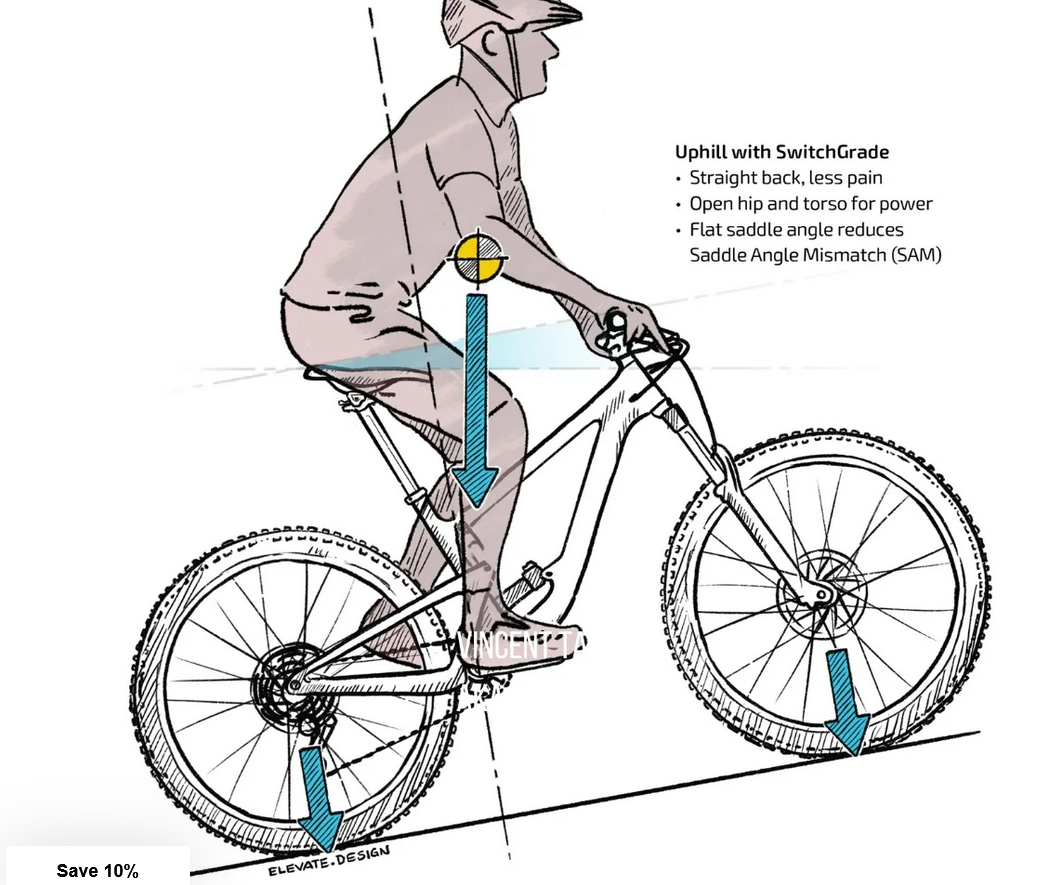
Image courtesy of Switchgrade
Throughout the years, I have enjoyed checking up on what Mike Curiak is doing. Mike was notably a major force in the ultra-distance MTB, ultra-distance snow racing of old. Once upon a time, Mike dominated those scenes, won his share of events, and along the way he "thinkered" up many new ways of doing things. Crazy things like putting camp stove fuel in frame tubing.  In my mind, Mike is as important, probably more important, a figure to MTB, fat biking, bikepacking, and gravel events as Jay Petervary is/ ever was. (Don't tell Mike though. The whole JP thing is kind of a sore subject with him) 

Don't ask about the friction part of what I referenced above, I just wanted to point out that Mike Curiak might just be one of the most underrated, unheralded figures in all of those scenes, and I won't even mention 29"ers, which Mike helped with from the get-go as far as promoting and championing that wheel size. 

You may not have heard of Mike. Maybe it is because Mike has quietly been running a business (Lacemine29.com) since 2004 and riding his bikes in his own way at his own pace and timing now for the better part of a decade, maybe more. Mike eschews the spotlight, and that's his prerogative. I respect that, but I'm telling you, he has done a LOT for off-road and off-pavement cycling. He's worth keeping an eye on. Fortunately you can still do that because he writes an occasional blog post from time to time. (Link in right sidebar)

Most of the time what he chooses to write about is stuff regarding his riding, his white-water rafting, or a wheel set he's trying to sell. But once in awhile Mike will come up with something I've never heard about that makes me stop and ponder things. Such was the case with his latest post (HERE) You can learn more about the Switchgrade HERE

It is good to see that people still think outside of the box today. Mike always has. Good thing too, because Mike was a MAJOR influence on Trans Iowa, and therefore, what came afterward. If you like gravel riding, bikepacking, fat bikes, or 29 inch wheels, a tip of the hat to Mr. Curiak would not be out of line. Although, I dare say, he likely would just rather be left to scaling some way-out-there single track and gazing at mountain flora and fauna. Notoriety seems to be way down on his list of "important things". That's cool..... 

From social media
What's Going On With Alt Wheel Sizes?

Back in 2018 I learned of a new alternative wheel size that WTB was working on dubbed "750D". If you don't remember anything about that, I wrote a post about this wheel size HERE about a year ago now. It seems that it was later last year when other folks started getting wheels and tires from WTB to "play with". I know Meriweather Cycles was one such builder. I know a friend that supposedly was sent a set. But then things went dark on that wheel size, again, so I am not sure what the latest word is on that front.

That said, 750D isn't the only new wheel size being explored. The company, Dirty Sixer, who, as you can probably tell, is the purveyor of 36" wheeled bicycles, is toying around with 32"ers. 

I saw on Facebook a mention that Dirty Sixer had a 32" wheeled gravel bike all set to show at Eurobike recently but the bike got hung up in customs and never made the show. That said, the bike exists, and it will probably get shown at some point soon. So, keep your eyes peeled for that.

Of course, none of these bigger wheels is going to be "the next 29"er". You might think I'm just being a Negative Nancy with a statement like that, but if you consider what was done in the late 19th and early 20th Centuries with regard to engineering and exploring optimal equipment for human powered cycling, you might understand that a statement like that makes more sense than you may think initially. 

700c wheels did not just appear out of thin air, nor were they adopted out of convenience. There was a LOT of math and engineering that went into calculating what wheel size was going to be best for adults. This shouldn't be forgotten. Of course, taller folks could benefit from larger diameter wheels, and there are always those people who have to try things out of curiosity, (raises hand), but wheel diameter and weight matter, and we humans have only so much horsepower and most of us are not well over six feet tall. The equation is still in favor of 700c wheels, and I don't see that changing much in the future.

Saturday, June 15, 2024

Zero To Sixty

 In celebration of the twentieth year of this blog, I have a few tales to tell. This post is one of them. This series will occur off and on throughout this anniversary year, I hope to illuminate some behind-the-scenes stories and highlights from the blog during this time. Enjoy!

The original header for this blog

 Zero To Sixty:

As I ponder where I've been in life over the past twenty years I have to point to this blog as being a big influence on the rudder of my ship. Where I went over these last two decades was heavily influenced by who read the blog and what that helped me to accomplish in life. 

Becoming a part of this group started 20 years ago.

The biggest change in my life, overall, stemming from this blog writing, was two-fold and both things started at the same time. One was obviously gravel related and the other was 29"er wheels for mountain biking. 

In 2024, both of these concepts for cycling are regarded as "normal". Nothing could have been further from the truth twenty years ago. 

Take twentynine inch wheels for mountain biking. They were weird, regarded as a lot less capable than the then entrenched 26 inch wheels, and at best, these wheels were a fad. 

However; a grassroots on-line community believed in the wheels, this spurring on custom bicycle builders, and that garnered enough sales attention to perk up the ears of some marketing folks. Then in 2005 The Rig changed everything. 

Gary Fisher - the man and the bicycle company, had introduced 29"ers as a bike shop available bike in their brand line up as early as 2001. However; it wasn't going well, to say the least, and Trek, the parent company of Gary Fisher Bicycles, was getting impatient. Talk was bubbling up that Trek was going to axe the 29"er line and move on. But then the hybrid "Dual Sport" bikes gave 29"ers some life support with brisk sales. Following that Gary Fisher made a masterstroke decision to unleash a single speed 29"er with a "legitimate fork" in the Rock Shox Reba. They sold like hotcakes and this spurred on the 29"er revolution. (Along with many other folks. I generalize here, of course!)

But going into this blog while that was all going on, and ballyhooing 29"ers like I was, didn't make sense from a "popularity" standpoint. Most folks thought I was a nutcase, ill-informed, and they even labeled me as a "religious zealot" for the big wheels. But I persisted onward and, of course, we all know where 26 inch wheels are now. That said, who'd have thunk it in 2005? Even I am amazed at where we are at today with 29"ers. 

(L-R) Mike Curiak, Dave Kerkove, GT with his back to the camera, T.I.V1

The other thing I became noted for, "Gravel", also started off back in 2005 with my involvement with Trans Iowa. 

Gravel racing? What?!! No one had ever heard about such a thing back in 2005. Well, some folks think that they had heard about it. Some had actually done events on gravel. 

There was the Flint Hills Death Ride, the Colesburg 40, Iron Cross, and other "monster-cross" events. There was a gravel series on MTB's in the late 1980's and early 1990's up in the Decorah area. These were mostly associated with mountain biking, and in the case of monster-cross, with cyclo-cross racing, because there was no other context for this. 

Somehow Trans Iowa, even though Jeff Kerkove, my co-founder of Trans Iowa, tried to frame this as a mountain bike event, wasn't seen in that light. Maybe it was the battle online previous to the first Trans Iowa regarding folks wanting to use any bicycle they wished. (Originally we were going to limit this to MTB's), maybe it was all that gravel. Three hundred-plus miles of it. Maybe it was the point-to-point nature of the first Trans Iowa. 

Whatever "it" was, the difference between what came before Trans Iowa and Trans Iowa, and what came afterward, was the perception of the event. Amongst those who knew about Trans Iowa and other  gravel events which came afterward, it was more about "something else" and not MTB. This became even more entrenched in 2006 at the second Trans Iowa. The whole "MTB" thing wasn't a thing anymore, unlike what had occurred previously, which were events primarily perceived of as MTB events by their contemporaries, but held on gravel or unpaved roads. As an example, there was a time when it was "an MTB event held on gravel", but after Trans Iowa it was "people using MTB's at Gravel events".

There is a reason events like the Flint Hills Death Ride, Iron Cross, and the Colesburg Back Forty are considered "gravel events" today, and that is because perceptions changed, and that all started with Trans Iowa. That first Trans Iowa event influenced a lot of other events that called themselves 'gravel' events, and that in turn started another revolution in cycling. Here we are today, with "Gravel" racing being at, arguably, the pinnacle of bicycle racing in North America now. Again - who'd have thunk it in 2005

So, this blog has taken me from a nobody bicycle mechanic in a Mid-Western town, to a Hall of Fame and recognition I never thought I would get, nor did I seek out, when I started the blog. It all went to a speed in 2005 that I found shocking.  

Trans Iowa v1 start. I'm leading out the racers in the van. A start to a journey I am still on today.

Of course, Trans Iowa happened a half a month ahead of the start of this blog, but I was already guest-posting on Jeff's blog by the end of 2004. So, I count that bit as well when it comes to my journey so far. I guess if you really wanted to be picky about things, I already have completed most of my 20th year of blogging at this point. But I draw the line at the beginning of this blog for timing.

The speed at which all this happened I attribute to the online blogging community in 2005 and to various online sites for 29"ers, but primarily mtbr.com, which for all intents and purposes was the clearing house for online cycling chatting back in the day. Had I started this blog even a year or two later than I did, I think I wouldn't be where I am at today at all. So, it was the timing, and the speed at which this happened on the blog that really mattered to where I am today. 

That's it for this look back. I'll have more in the coming weeks and months to check back on regarding the 20th Anniversary of this blog. Thanks for reading!

Friday, April 28, 2023

Friday News And Views

Jones Bicycles Debuts 29" X 3.25" Crux Tires:

Back when fat bikes were getting hot there were rumors that a 29" fat bike tire might get produced. That wasn't really a very soild thought though, since mold making machines were barely able to crank out 2.5" width 29"er tires at that point and the over-all diameter of such a tire as a 29' X 3.25" tire would easily exceed anything that could make a tire at that point. 

That said, tire companies that weren't necessarily the biggest dogs in the performance bicycle marketplace started doing odder sized tires just to gain a foothold in the market. (See reference to an example below) Vee Tire and Duro Tires are two brands that, while you may not know it, make tons of bicycle tires for lower end bikes and other brands. They just do not have their name front and center when it comes to tires made under their company name. 

You've likely heard about Vee Tire, and you may have used them on a bike, but they are not a "Maxxis" or "Kenda" in the marketplace. Duro is almost unheard of in the performance tire market for bicycles, although they have made popular DH tires in the past. 

So, it wasn't too surprising then when Vee Tire made there Bulldozer model into a 29" X 3.25" tire, which then Jones Bikes adopted as their featured tire on many of their Jones Bikes builds for bikepacking. Now Jones has worked with Duro Tires to bring another, tubeless ready 29" X 3.25" tire in the Crux model. You can check them out here

Ultima Multipath Long Range (Image courtesy of Ultima)
Interesting Molded Composite HPC :

Electrified two wheeled contraptions are a dime a dozen, so when I see one that I actually am interested in, you can bet that there is a good reason why. This bike by Ultima from France is just such an example.

It features technology borrowed from automobile manufacturing and uses an injection molded composite technique to create a unique, monocoque, single-piece structure for the frame and the fork is made in much the same way. I've chosen to highlight Ultima's "Long Range" version of their bike to show here because it has the most radical fork design and is meant for all-roads/terrain. 

Essentially a trekking bike, the Ultima Long range has a single-sided fork, ala a Lefty, with a unique parallelogram linkage suspension, which as far as I can discern is based on a "blade", or leaf spring design. (I could be wrong, but the website isn't 100% clear without me doing more digging)
 

The disc brake arrangement is kind of interesting. It would allow for the rider to remove the front wheel without removing the caliper, but since the caliper is basically upside down, I cannot imagine that debris would not want to collect in the pad area, not to mention moisture. 

But besides this odd design choice, it is a very interesting bicycle. Typically any injection molded type designs in the past have not been successful due to breakage or a lack of stiffness which led to poor user experiences. Examples of this that you may have heard of are GT mountain bikes from the early 2000's and Ross, who were resurrected briefly in the early 2000's and used an injection molded hard tail frame for a few models. 

Ultima is using recycled plastic in this frame and fork and their goal is to use 100% recycled plastic for the French produced frame and fork by 2025. Hopefully they can pull it off, but time will tell. 

The bike weighs a claimed 45lbs plus a little and costs well North of 4K, which in light of many offerings on the market is not bad at all. It's just going to come down to how this frame and fork technology holds up under daily usage.

Drunken Rhino (Image courtesy of Nextie)

Drunken Rhinos & Mammoths: What?!

The world of fat bikes just got a little fatter recently  when Nextie, the Far East carbon rim manufacturer, announced that they have made a 128mm wide carbon fat bike rim with a 120mm internal rim width. Following is a bit of the announcement as seen on Facebook:

"We thought the Xiphias 105mm rim had been compatible enough for the biggest tires currently on the market. But according to the needs of one of our loyal customer fans, who is a fat-bike enthusiast, the Xiphias 105mm is still not wide enough, especially for the ground with very thick snow. Wider rims are much more beneficial. So we decided to design and to develop the world's widest carbon bicycle rim - the Drunken Rhinoceros 128mm. Even though it's an extremely niche product, it's our duty to push the boundaries of carbon fiber cycling if one product could meet the needs of our wide range of customers from all the world."

The identity of the "loyal customer" wasn't hard to figure out for me. That would be Mike Curiak, who is solely responsible for this product's existence. He typically has been the driving force behind fat biking in "trail-less", ungroomed areas where there have been less people and more solitude. You can see Mike's bike he tested these on and read more about how to get the rims here

In the Facebook comments on Nextie's announcement a link was made available to a bike that probably has the widest Over Lock Dimension (OLD) of any production bicycle that I am aware of. The Mammoth Empire, apparently available from the Philippines, has an over 200mm bolt-on rear hub. 

Snip from a YouTube video on the Mammoth Empire fat bike
Okay, so you've got these huge rear traingle widths, a big, wide carbon fiber rim, and what tire? Well, actually, the big tire came first. That would be the Vee Tire Snowshoe 2XL at 5.05" in width, and it is at least that wide. I've seen side by side comparisons with the Bud and Lou Surly 4.8"ers and the Vee 2XL is noticeably bigger. 

But......could we be on the verge of seeing something even wider come out? 

Thanks for reading Guitar Ted Productions! Have a great weekend!

Friday News And Views

Jones Bicycles Debuts 29" X 3.25" Crux Tires:

Back when fat bikes were getting hot there were rumors that a 29" fat bike tire might get produced. That wasn't really a very soild thought though, since mold making machines were barely able to crank out 2.5" width 29"er tires at that point and the over-all diameter of such a tire as a 29' X 3.25" tire would easily exceed anything that could make a tire at that point. 

That said, tire companies that weren't necessarily the biggest dogs in the performance bicycle marketplace started doing odder sized tires just to gain a foothold in the market. (See reference to an example below) Vee Tire and Duro Tires are two brands that, while you may not know it, make tons of bicycle tires for lower end bikes and other brands. They just do not have their name front and center when it comes to tires made under their company name. 

You've likely heard about Vee Tire, and you may have used them on a bike, but they are not a "Maxxis" or "Kenda" in the marketplace. Duro is almost unheard of in the performance tire market for bicycles, although they have made popular DH tires in the past. 

So, it wasn't too surprising then when Vee Tire made there Bulldozer model into a 29" X 3.25" tire, which then Jones Bikes adopted as their featured tire on many of their Jones Bikes builds for bikepacking. Now Jones has worked with Duro Tires to bring another, tubeless ready 29" X 3.25" tire in the Crux model. You can check them out here

Ultima Multipath Long Range (Image courtesy of Ultima)
Interesting Molded Composite HPC :

Electrified two wheeled contraptions are a dime a dozen, so when I see one that I actually am interested in, you can bet that there is a good reason why. This bike by Ultima from France is just such an example.

It features technology borrowed from automobile manufacturing and uses an injection molded composite technique to create a unique, monocoque, single-piece structure for the frame and the fork is made in much the same way. I've chosen to highlight Ultima's "Long Range" version of their bike to show here because it has the most radical fork design and is meant for all-roads/terrain. 

Essentially a trekking bike, the Ultima Long range has a single-sided fork, ala a Lefty, with a unique parallelogram linkage suspension, which as far as I can discern is based on a "blade", or leaf spring design. (I could be wrong, but the website isn't 100% clear without me doing more digging)
 

The disc brake arrangement is kind of interesting. It would allow for the rider to remove the front wheel without removing the caliper, but since the caliper is basically upside down, I cannot imagine that debris would not want to collect in the pad area, not to mention moisture. 

But besides this odd design choice, it is a very interesting bicycle. Typically any injection molded type designs in the past have not been successful due to breakage or a lack of stiffness which led to poor user experiences. Examples of this that you may have heard of are GT mountain bikes from the early 2000's and Ross, who were resurrected briefly in the early 2000's and used an injection molded hard tail frame for a few models. 

Ultima is using recycled plastic in this frame and fork and their goal is to use 100% recycled plastic for the French produced frame and fork by 2025. Hopefully they can pull it off, but time will tell. 

The bike weighs a claimed 45lbs plus a little and costs well North of 4K, which in light of many offerings on the market is not bad at all. It's just going to come down to how this frame and fork technology holds up under daily usage.

Drunken Rhino (Image courtesy of Nextie)

Drunken Rhinos & Mammoths: What?!

The world of fat bikes just got a little fatter recently  when Nextie, the Far East carbon rim manufacturer, announced that they have made a 128mm wide carbon fat bike rim with a 120mm internal rim width. Following is a bit of the announcement as seen on Facebook:

"We thought the Xiphias 105mm rim had been compatible enough for the biggest tires currently on the market. But according to the needs of one of our loyal customer fans, who is a fat-bike enthusiast, the Xiphias 105mm is still not wide enough, especially for the ground with very thick snow. Wider rims are much more beneficial. So we decided to design and to develop the world's widest carbon bicycle rim - the Drunken Rhinoceros 128mm. Even though it's an extremely niche product, it's our duty to push the boundaries of carbon fiber cycling if one product could meet the needs of our wide range of customers from all the world."

The identity of the "loyal customer" wasn't hard to figure out for me. That would be Mike Curiak, who is solely responsible for this product's existence. He typically has been the driving force behind fat biking in "trail-less", ungroomed areas where there have been less people and more solitude. You can see Mike's bike he tested these on and read more about how to get the rims here

In the Facebook comments on Nextie's announcement a link was made available to a bike that probably has the widest Over Lock Dimension (OLD) of any production bicycle that I am aware of. The Mammoth Empire, apparently available from the Philippines, has an over 200mm bolt-on rear hub. 

Snip from a YouTube video on the Mammoth Empire fat bike
Okay, so you've got these huge rear traingle widths, a big, wide carbon fiber rim, and what tire? Well, actually, the big tire came first. That would be the Vee Tire Snowshoe 2XL at 5.05" in width, and it is at least that wide. I've seen side by side comparisons with the Bud and Lou Surly 4.8"ers and the Vee 2XL is noticeably bigger. 

But......could we be on the verge of seeing something even wider come out? 

Thanks for reading Guitar Ted Productions! Have a great weekend!

Friday, October 28, 2022

Friday News And Views

The Trimm "one lite" GPS computer (Image courtesy of Trimm
 Another GPS Option:

Recently a reader of the blog here tipped me off to another interesting GPS based cycling computer option. The company is a Korean based company called Trimm and the model they sell which I figure is analogous to most Garmin, Wahoo, and Hammerhead users is the "One Lite"

It has a similar "smart-phone" type format and uses a Gorilla Glass screen which puts this in a similar class as many of the top-flite GPS units offered by the companies I mentioned above. This One Lite model weighs in at sub-60 grams though, and is supposedly thinner than an iPhone. And it costs less than $200.00USD.

The unit has a feature which many might find interesting- A solar powered attachment that can keep the computer charged all the time. (You can see a bit of the cord to the solar panel in the image here) There is a short, sub-12 minute review of the unit here on YouTube

Comments: If you look at the YouTube review, it seems as though this thing has a leg up on Garmin's extremely expensive solar powered unit. Even without the solar panel, the runtime is 50 hours if you use their speed sensor on your bike. Pretty impressive. Oh, and for an extra $50.00 you can go with the Trimm One and get an aluminum case in 8 different colors, and color screen with the solar charge feature at only a slight weight penalty of a claimed 62 grams. 

I assume it does turn-by-turn navigation, but the YouTube reviewer doesn't specifically call this out. I think it does or what's the point of importing route files, right? Anyway... That's a reasonable price and if it works as advertised, it could be a big disrupter in this field. 

"One-eyed" Zeke Shepherd.

Kansas City Bike Mechanic Gets Hit:

Apparently in the early morning hours of Saturday October 22nd, Kansas City bicycle mechanic, Zeke Shepherd was involved in a hit and run while riding his bicycle. The person who hit him has not been found at this point, as far as I know. 

Zeke, known as "One-Eyed Zeke' to many of us here in Iowa, is a good guy. I had a tiny slice of time spent with him during a Gent's Race deal once upon a time. Anyway, Zeke is pretty banged up, will require a long recovery, and his employer, "velogaragekc", has set up a GoFundme page to help defray his recovery expenses. 

The bicycle community has been really very supportive of me, and I know Zeke will get a big boost from his cycling brothers and sisters out there. Please, consider donating to his cause, if you are so led. 

Image courtesy of Canyon Bikes

Will "KIS" Be Coming To Your Bike Soon?

Steering stabilization ideas for bicycles are nothing new. You can see them often on cargo bikes, where they are more for self-centering the wheel while the bike is parked. Hopey's steering damper or Cane Creek's Viscoset may also come to mind here. But whatever the level of technology, the idea is to overcome wheel flop in certain situations.

I've followed along with some interest in this because of my affinity for riding my fat bike in deeper snowy conditions. Mike Curiak, being a big influencer in that regard. However; there are other instances where a steering damper, or self-centering steering device, would be welcomed. Canyon apparently thinks so too, and so they are offering this proprietary system they call "KIS". That stands for "Keep It Stable". 

It works internally, inside the top tube of their 29"er enduro model only- for now. It is a coil sprung self-centering device that is adjustable at the "anchor" in the top tube via a 4mm hex head bolt. The other end is attached to the cam which itself is clamped over the steer tube and that attached to the coil springs by a synthetic material in the form of two bands. 

Image courtesy of Canyon Bikes

The effect of the KIS system is that of more stability on loose, off-camber to flat turns and a more stable front wheel during slow speed climbs, according to accounts I have read. So, for those times when your body has to make sudden corrections either at the bars or through the pedals, this KIS thing helps calm that down and therefore saves the rider energy. 

Comments: So, to answer my header for this, the answer? No- This won't be coming to your gravel bike anytime soon, and probably not to most mountain bikes either, although, it may make sense for some of you. In which case, the Cane Creek Viscoset would be the likely choice. Anytime you see something like Canyon's KIS system, you have to figure that most companies wouldn't be interested in the licensing fee to use the technology. That's going to limit how much you see of this as well.

To my mind, as I look at this, it seems like an over-thought self-centering spring the likes of which I have seen on cargo bikes. This KIS thing is far more elegantly done, and no doubt works well. I could see this as standard issue technology for cargo bikes in the future. 

But for most bikes? No. I don't see this as being a thing. You have no idea how much friction in a headset/steering causes weird handling until you've ridden a bike with a severely indexed headset race, or a bike with a head set adjusted too tightly. I have done all of that, and it isn't my cup of tea. Not for regular riding. 

But maybe for the fat bike......

The GR3 Image courtesy of Argonaut Cycles

Argonaut Cycles Launches GR3 Bike:

Argonaut Cycles announced a new bicycle today for gravel racing, the GR3 model. This bike is touted as the custom made, hand-laid carbon answer for specific customer physiology and terrain needs. Claiming that "professional gravel racing is the ultimate testing grounds", Argonaut has focused on high-performance, extreme "GravelFirst" geometry, and their marketing focuses heavily on what they think makes for a great racing bike on gravel with a side of mountain biking to spice things up even more. Although that last bit is inferred, not specifically called out. Just looking at their chosen imagery and descriptions points me in that direction immediately. 

Sporting a very short 415mm chain stay length, a 75mm bottom bracket drop, and a very slack (for gravel) 68.5° head angle probably nudged me to thinking "long, slack, and low", like current enduro bike geometry. The marketing also points to their professional athlete that they sponsor having an experience on the GR3 that "... also enhanced her descending abilities to the point where she has seen multiple podiums atop her GR3 and racked up numerous QOM’s for downhill segments!"

Comments: I received a press release for this bike that made it sound as though that they were eager to send over a review bike. I gotta say, first off- I am honored anytime I get an offer like this. Secondly, I hesitate to review a bike that is super-pigeonholed as a "racing bike" with the force of hype that this release has in it. Thirdly, I hesitate to accept an offer to review a bike that I understand is expensive, but one that most of my audience wouldn't ever be able to afford. I mean, sixty five hundred for a frame set? That's $6500.00 for those who may have missed that.

Look, I get it- Racing at the top levels is spectacular and maybe a lot of us wish we were "those folks" and a bike like this maybe can make you feel like a super-hero at times. Maybe.... But my contention is that this is exactly what we do not need for the majority of the riding public. This bike doesn't put "more butts on bikes", as the saying goes. It caters to Pro racers, Pro racer-wannabees, and people with a  LOT of disposable income. That's not many people. And.....that's not me. 

Oh yeah, and Evil Bikes Chamois Hagar would like to have a word with you.....We've seen this before already. Anyway.... 

That's a wrap for today! Have a great weekend and don't eat all the Halloween candy!

Friday News And Views

The Trimm "one lite" GPS computer (Image courtesy of Trimm
 Another GPS Option:

Recently a reader of the blog here tipped me off to another interesting GPS based cycling computer option. The company is a Korean based company called Trimm and the model they sell which I figure is analogous to most Garmin, Wahoo, and Hammerhead users is the "One Lite"

It has a similar "smart-phone" type format and uses a Gorilla Glass screen which puts this in a similar class as many of the top-flite GPS units offered by the companies I mentioned above. This One Lite model weighs in at sub-60 grams though, and is supposedly thinner than an iPhone. And it costs less than $200.00USD.

The unit has a feature which many might find interesting- A solar powered attachment that can keep the computer charged all the time. (You can see a bit of the cord to the solar panel in the image here) There is a short, sub-12 minute review of the unit here on YouTube

Comments: If you look at the YouTube review, it seems as though this thing has a leg up on Garmin's extremely expensive solar powered unit. Even without the solar panel, the runtime is 50 hours if you use their speed sensor on your bike. Pretty impressive. Oh, and for an extra $50.00 you can go with the Trimm One and get an aluminum case in 8 different colors, and color screen with the solar charge feature at only a slight weight penalty of a claimed 62 grams. 

I assume it does turn-by-turn navigation, but the YouTube reviewer doesn't specifically call this out. I think it does or what's the point of importing route files, right? Anyway... That's a reasonable price and if it works as advertised, it could be a big disrupter in this field. 

"One-eyed" Zeke Shepherd.

Kansas City Bike Mechanic Gets Hit:

Apparently in the early morning hours of Saturday October 22nd, Kansas City bicycle mechanic, Zeke Shepherd was involved in a hit and run while riding his bicycle. The person who hit him has not been found at this point, as far as I know. 

Zeke, known as "One-Eyed Zeke' to many of us here in Iowa, is a good guy. I had a tiny slice of time spent with him during a Gent's Race deal once upon a time. Anyway, Zeke is pretty banged up, will require a long recovery, and his employer, "velogaragekc", has set up a GoFundme page to help defray his recovery expenses. 

The bicycle community has been really very supportive of me, and I know Zeke will get a big boost from his cycling brothers and sisters out there. Please, consider donating to his cause, if you are so led. 

Image courtesy of Canyon Bikes

Will "KIS" Be Coming To Your Bike Soon?

Steering stabilization ideas for bicycles are nothing new. You can see them often on cargo bikes, where they are more for self-centering the wheel while the bike is parked. Hopey's steering damper or Cane Creek's Viscoset may also come to mind here. But whatever the level of technology, the idea is to overcome wheel flop in certain situations.

I've followed along with some interest in this because of my affinity for riding my fat bike in deeper snowy conditions. Mike Curiak, being a big influencer in that regard. However; there are other instances where a steering damper, or self-centering steering device, would be welcomed. Canyon apparently thinks so too, and so they are offering this proprietary system they call "KIS". That stands for "Keep It Stable". 

It works internally, inside the top tube of their 29"er enduro model only- for now. It is a coil sprung self-centering device that is adjustable at the "anchor" in the top tube via a 4mm hex head bolt. The other end is attached to the cam which itself is clamped over the steer tube and that attached to the coil springs by a synthetic material in the form of two bands. 

Image courtesy of Canyon Bikes

The effect of the KIS system is that of more stability on loose, off-camber to flat turns and a more stable front wheel during slow speed climbs, according to accounts I have read. So, for those times when your body has to make sudden corrections either at the bars or through the pedals, this KIS thing helps calm that down and therefore saves the rider energy. 

Comments: So, to answer my header for this, the answer? No- This won't be coming to your gravel bike anytime soon, and probably not to most mountain bikes either, although, it may make sense for some of you. In which case, the Cane Creek Viscoset would be the likely choice. Anytime you see something like Canyon's KIS system, you have to figure that most companies wouldn't be interested in the licensing fee to use the technology. That's going to limit how much you see of this as well.

To my mind, as I look at this, it seems like an over-thought self-centering spring the likes of which I have seen on cargo bikes. This KIS thing is far more elegantly done, and no doubt works well. I could see this as standard issue technology for cargo bikes in the future. 

But for most bikes? No. I don't see this as being a thing. You have no idea how much friction in a headset/steering causes weird handling until you've ridden a bike with a severely indexed headset race, or a bike with a head set adjusted too tightly. I have done all of that, and it isn't my cup of tea. Not for regular riding. 

But maybe for the fat bike......

The GR3 Image courtesy of Argonaut Cycles

Argonaut Cycles Launches GR3 Bike:

Argonaut Cycles announced a new bicycle today for gravel racing, the GR3 model. This bike is touted as the custom made, hand-laid carbon answer for specific customer physiology and terrain needs. Claiming that "professional gravel racing is the ultimate testing grounds", Argonaut has focused on high-performance, extreme "GravelFirst" geometry, and their marketing focuses heavily on what they think makes for a great racing bike on gravel with a side of mountain biking to spice things up even more. Although that last bit is inferred, not specifically called out. Just looking at their chosen imagery and descriptions points me in that direction immediately. 

Sporting a very short 415mm chain stay length, a 75mm bottom bracket drop, and a very slack (for gravel) 68.5° head angle probably nudged me to thinking "long, slack, and low", like current enduro bike geometry. The marketing also points to their professional athlete that they sponsor having an experience on the GR3 that "... also enhanced her descending abilities to the point where she has seen multiple podiums atop her GR3 and racked up numerous QOM’s for downhill segments!"

Comments: I received a press release for this bike that made it sound as though that they were eager to send over a review bike. I gotta say, first off- I am honored anytime I get an offer like this. Secondly, I hesitate to review a bike that is super-pigeonholed as a "racing bike" with the force of hype that this release has in it. Thirdly, I hesitate to accept an offer to review a bike that I understand is expensive, but one that most of my audience wouldn't ever be able to afford. I mean, sixty five hundred for a frame set? That's $6500.00 for those who may have missed that.

Look, I get it- Racing at the top levels is spectacular and maybe a lot of us wish we were "those folks" and a bike like this maybe can make you feel like a super-hero at times. Maybe.... But my contention is that this is exactly what we do not need for the majority of the riding public. This bike doesn't put "more butts on bikes", as the saying goes. It caters to Pro racers, Pro racer-wannabees, and people with a  LOT of disposable income. That's not many people. And.....that's not me. 

Oh yeah, and Evil Bikes Chamois Hagar would like to have a word with you.....We've seen this before already. Anyway.... 

That's a wrap for today! Have a great weekend and don't eat all the Halloween candy!

Saturday, October 02, 2021

When The Numbers Seem To Come Together

The Fezzari Shafer (Image courtesy of Fezzari Bikes)
 One thing about bicycles is that things don't stay the same for very long. Changes come and go, but you can count on fashion and design to mold our bicycles into different directions all the time. 

It used to be that things were settled. The geometry was what it was. You bought a frame and fork because it had a certain frame tubing, or because a certain guy brazed it together. Not because it had a 'long, low, slack' geo, or because it had 'progressive geometry', or because it had a certain head angle. 

But all those things and more are constantly in flux now as designers try new things and connect buzz-words to their recipe for geometry. Marketers get a hold of this and run with it, then the media reinforces this with reviews and opinions saying that you simply cannot ride anymore unless you have such-and-such geometry. 

Well, as we know, sometimes this goes a little too far. 

I'm not saying what I like is 'the right geometry' for gravel riding, but historically speaking, there have been certain things done which were proven concepts that weren't driven by marketing so much as they were by what actually works for most folks. I have done research and delved into the history enough to have a basic understanding of some of these concepts and I have had enough experience riding lots of different bicycles to have formed my own opinion. Which, if you didn't catch that, is my opinion. You will have to figure things out for yourself, because I may not be right for you. Close? Maybe, but not 'right', whatever that may mean to you. 

So, when I see something put out there that dances around the same circle as my mind does with geometry numbers, I get excited. Again- not for anyone else, necessarily, but for myself. So, when I saw the press release for the Fezzari Shafer, I was pleased to find out that Fezzari hits on several things I have had in mind for a gravel bike for years. Things I've wanted to see done since the late 00's, and you folks that have read this blog for a long time know that this is true. 

The Shafer's geometry table courtesy of Fezzari Bikes.
So, what the heck did Fezzari do? Well, they dumped the bottom bracket drop to 77mm. Yes! I've always thought that somewhere around 75mm was pretty good, and I've wanted to try something a bit deeper, and there ya go. 77mm. Nice! 

Then Fezzari slackened out the head tube angle to a 68.5° figure and matched that up with a 50mm fork offset. Bold! Pretty 'out there' for a gravel bike. Only the Evil Bikes Chamois Hangar goes beyond the bottom bracket drop and head angles here, and honestly, I think they crossed a line with that bike. 

Then Fezzari went and did that three in the triangle bottle mount thing with fork mounts as well, which I absolutely love. Internally routed cables for everything? Meh! It is what it is, and yes- easily cleaned. I get it. But I am a mechanic too, so..... On that note, a threaded bottom bracket! Rejoicing here! Plus, all of that and a reasonable price for a frame and fork at about a grand less than that Evil Bikes model. 

So, what did they get wrong? I would point to that fork offset at 50mm. I would have liked to have seen that increased a bit. Maybe 53mm? maybe even 55mm. But at 50mm I would still give that a try. My thoughts being that on a long, slow grind of a climb with looser gravel, that makes the mechanical trail figure a bit much to hold steady. But yeah, everything else there looks pretty spot on, so a slightly less than inspiring trail figure may not be all that bad a deal. 

So, here's a great example of where fork trail in particular was a big surprise for me. It was at Bootleg Canyon for an Interbike Outdoor Demo. Mike Curiak had been working over Devin Lenz of Lenz Sport Bikes to make a long travel 29"er with certain aspects of geometry that were- at that time- considered to be the death of handling for 29"ers. Mike had dialed me up to the existence of the bike, and asked me to demo it at Bootleg Canyon, but would not tell me anything about the geometry until after my ride. 

Well, needless to say the bike handled really well and the geometry was whack for the day in regards to what we all thought was 'right' for a 29"er. The trail figure, in particular, was off the charts for a 29"er, as in the three digit range! Far higher than anything I would have thought would have worked on a climb, but it did. 

And so I say that to point out that Fezzari may have it right and what the heck do I know? Maybe someday I can swing a leg over this new fangled rig and find out.

When The Numbers Seem To Come Together

The Fezzari Shafer (Image courtesy of Fezzari Bikes)
 One thing about bicycles is that things don't stay the same for very long. Changes come and go, but you can count on fashion and design to mold our bicycles into different directions all the time. 

It used to be that things were settled. The geometry was what it was. You bought a frame and fork because it had a certain frame tubing, or because a certain guy brazed it together. Not because it had a 'long, low, slack' geo, or because it had 'progressive geometry', or because it had a certain head angle. 

But all those things and more are constantly in flux now as designers try new things and connect buzz-words to their recipe for geometry. Marketers get a hold of this and run with it, then the media reinforces this with reviews and opinions saying that you simply cannot ride anymore unless you have such-and-such geometry. 

Well, as we know, sometimes this goes a little too far. 

I'm not saying what I like is 'the right geometry' for gravel riding, but historically speaking, there have been certain things done which were proven concepts that weren't driven by marketing so much as they were by what actually works for most folks. I have done research and delved into the history enough to have a basic understanding of some of these concepts and I have had enough experience riding lots of different bicycles to have formed my own opinion. Which, if you didn't catch that, is my opinion. You will have to figure things out for yourself, because I may not be right for you. Close? Maybe, but not 'right', whatever that may mean to you. 

So, when I see something put out there that dances around the same circle as my mind does with geometry numbers, I get excited. Again- not for anyone else, necessarily, but for myself. So, when I saw the press release for the Fezzari Shafer, I was pleased to find out that Fezzari hits on several things I have had in mind for a gravel bike for years. Things I've wanted to see done since the late 00's, and you folks that have read this blog for a long time know that this is true. 

The Shafer's geometry table courtesy of Fezzari Bikes.
So, what the heck did Fezzari do? Well, they dumped the bottom bracket drop to 77mm. Yes! I've always thought that somewhere around 75mm was pretty good, and I've wanted to try something a bit deeper, and there ya go. 77mm. Nice! 

Then Fezzari slackened out the head tube angle to a 68.5° figure and matched that up with a 50mm fork offset. Bold! Pretty 'out there' for a gravel bike. Only the Evil Bikes Chamois Hangar goes beyond the bottom bracket drop and head angles here, and honestly, I think they crossed a line with that bike. 

Then Fezzari went and did that three in the triangle bottle mount thing with fork mounts as well, which I absolutely love. Internally routed cables for everything? Meh! It is what it is, and yes- easily cleaned. I get it. But I am a mechanic too, so..... On that note, a threaded bottom bracket! Rejoicing here! Plus, all of that and a reasonable price for a frame and fork at about a grand less than that Evil Bikes model. 

So, what did they get wrong? I would point to that fork offset at 50mm. I would have liked to have seen that increased a bit. Maybe 53mm? maybe even 55mm. But at 50mm I would still give that a try. My thoughts being that on a long, slow grind of a climb with looser gravel, that makes the mechanical trail figure a bit much to hold steady. But yeah, everything else there looks pretty spot on, so a slightly less than inspiring trail figure may not be all that bad a deal. 

So, here's a great example of where fork trail in particular was a big surprise for me. It was at Bootleg Canyon for an Interbike Outdoor Demo. Mike Curiak had been working over Devin Lenz of Lenz Sport Bikes to make a long travel 29"er with certain aspects of geometry that were- at that time- considered to be the death of handling for 29"ers. Mike had dialed me up to the existence of the bike, and asked me to demo it at Bootleg Canyon, but would not tell me anything about the geometry until after my ride. 

Well, needless to say the bike handled really well and the geometry was whack for the day in regards to what we all thought was 'right' for a 29"er. The trail figure, in particular, was off the charts for a 29"er, as in the three digit range! Far higher than anything I would have thought would have worked on a climb, but it did. 

And so I say that to point out that Fezzari may have it right and what the heck do I know? Maybe someday I can swing a leg over this new fangled rig and find out.

Friday, July 16, 2021

Friday News And Views

Well, that didn't take long!
 Changes Made To The Standard Rando v2:

Wednesday in my review of the Standard Rando v2 I made mention of wanting to swap out the handle bars from the Whisky Winston mustache bars to the Whisky carbon drop bars I had sitting around. Well, I went and did it. 

And right off, I knew that change was a smart one, for myself, at any rate. I was feeling far better comfort and I had a better, more aggressive stance on the bike for dealing with winds and what not. So, that seems to have been a good change to make. The image here is of the new set up. 

One thing I didn't mention in my one year review of the bike is that I really like the 'classic' profile that the Standard Rando v2 cuts. It has that level top tube and it just looks more like a 'proper' road bike- Not that there is anything wrong with a sloping top tube style, but this 'older' look is something missing in today's world of carbon swoopiness and metal-formed madness. The Twin Six looks like a right-proper bike, and it seems to really please my eyes in that way. 

Maybe I'm just an old fuddy-duddy. Hmm..... 

Anyway, the drops really do make the bike ride differently because your weight is placed over the wheels in a slightly different way. I think it makes sense for this bike in a way that the Winston Bar did not. I'll have to find another rig for those bars and see if I can find a happy home for them, but for now, I won't be messing with my drop bar set up on this Twin Six. I just need to get some new black handle bar tape soon. Then I will be good to go. 

From Bicycle Retailer and Industry News social Twitter account.

Your Bicycle News Is Being Brought Under One Rule:

Mainstream cycling media just became more homogenized Wednesday when the Outside group acquired "Pink Bike" and "CyclingTips". Maybe you don't care, but it is interesting that almost all the mainstream sites and publications are now owned by one corporation. In looking at history, that almost is never a good thing when it comes to consumers looking for information and for the employees of the 'The Man'. 

Of course, that is not the narrative you'll hear. No, what we got from the press release published on "Bicycle Retailer and Industry News" is more akin to a sales pitch, which you would expect from a takeover. It also is interesting to see how this is all geared toward getting readers to support the titles monetarily. The idea is to get readers to subscribe to a 'benefits' scheme called "Outside+". From the 'BRAIN' article:

"Outside+ offers enthusiasts various bundles of content, services, discounts, and other offerings for an annual fee. The membership revenues complement Outside's revenues from advertising, creating a business model for publishing that CEO Robin Thurston said is sustainable."

As we know, advertising was traditionally how publications and websites made their money to continue existing. That model has proven to be harder to sustain in the bicycling world as brands have gone more 'consumer direct' with marketing, using 'influencers', their own published edits, stories, and independent marketing companies.  Publishing concerns like "Outside" found it harder to sustain growth, or to even maintain their status quo. Engaging the end user, as the brands have done, is their next ploy. 

Will it work? Traditionally 'news' has been free, or at least on the internet, that's been the case. Magazine subscriptions have fallen off a cliff and that model is no longer sustainable, or even viable. "Outside" has harnessed every 'horse' in mainstream cycling media to corner the info stream and now will try to get the end users who are 'addicted' to using such sites to pony up some cash in the form of 'benefits and perks'. It is an interesting gambit and we'll have to wait and see if consumers bite. 

Meanwhile, if what is happening to "BRAIN" and BikeReg.com is any indication, consumers will see more corporate generated content. For instance, on "BRAIN" I have noted more press release material which used to be absent from their feed. And while it always has a disclaimer attached, the fact that these releases are being published on THAT site gives it a bit of a newsworthy credibility that it would not otherwise have, nor does this sort of content deserve. There are job openings posted on "BRAIN from across all of 'Outside' corporate holdings, and some other minor editorial changes in tone have been noted. 

BikeReg, the site many use to sign up for events, which has recently been taken over by Outside, also is changing its policies in accordance with the Outside group's wishes. They are going to start sharing data across Outside's various companies and advertisers to "better offer you customized content, and to provide targeted offers and advertising that may be of interest to you. ", and they will be".....sharing data across the Outside family of brands, and with our service providers to support business, professional, marketing, analytics, and technical functions necessary to help us operate our business and promote our services."

So what? Well, corporations have a way of doing things that affects companies under the corporate banner and those who work for those companies. There is no escaping, despite all the 'we'll still be who we are' platitudes you might read. Yes.....I'll give it time, but my take is that this is a dim time for news on cycling. We stand to get news that serves the corporate/advertising agenda first, and even if that is driven by old ways of thinking, or embedded traditionalist/cultural ways of doing things, then that's what people will think is "normal" down the line. Judging from past history, I'm not too hopeful that any of this is a 'good' thing for individual riders.

Answer Pro Taper Carbon handle bar

Remember "Alt Bars"? 

Back almost 20 years ago a big craze began with handle bars that were different than the 'normal' riser flat bar or traditional drop bar. These weird handle bars proliferated at a crazy pace for several years throughout the 00's and while many of them saw an early demise, (Luxy Bar anyone?), some have held on to become standards in the cycling world. 

Handle bars like the venerable Midge Bar, or the Salsa Cowbell, have been around a long time now. The Jones Bar has morphed over the years to become the "Loop" bar we all know by now. Various other oddball handle bars have also crept into the scene and have made a name for themselves. I used to call this family of handle bars "Alt Bars", which of course, is short for 'alternative handle bars'. 

I was perusing Mike Curiak's newest mountain bike recently and noted that he was using the Answer Pro Taper Carbon bars. I remember seeing these a while ago, so they are not 'new', but I had forgotten about their existence until I saw them on Mike's bike. (And isn't that LenzSport Mammoth cool? Criminally underrated bike there)

So, I was thinking that maybe I'd try to order in one of those and try it on my Ti Muk, which has a Carbon Jones Loop Bar on it now. The Answer bar has less sweep, and maybe that is exactly what I am looking for in terms of comfort on the Ti Muk. I often have found myself thinking that the 45° of sweep on the Jones Bar was a tic too much, so that 20° sweep on the Pro Taper? Could be the sweet spot. 

That's the thing with the "Alt Bars". You have to try a few, or a lot, before you settle on one you really get on with. That can be an expensive proposition if, like me and Mike, you won't use anything but carbon bars in cold weather, or at all anytime of year. But we'll see..... I'm still contemplating this. 

The Surly "Corner Bar". Image courtesy of Surly Bikes.

Speaking Of "Alt" Bars....This Could Be "Alt Bar Friday!"

Surly Bikes dropped a nugget on Thursday with the news of a handle bar designed to kind of work like a drop bar but that fit MTB controls only. This truly defines "alt bar" and if it doesn't, nothing else does! 

Surly says that it comes in three wide widths and is made from CroMoly steel, because, this is Surly Bikes we're speaking of here. The handle bar should be available in September from Surly dealers. No pricing was made prominent in their wording on the site, nor was a weight published there, although I think one of their two current YouTube reviews shares that.

Comments: At first glance, I thought this was another rebranded Dajia Far Bar or a knock-off of it. But upon closer inspection, I could see the construction was different. Still, there is more than a passing resemblance there, and I would suspect that two could be set up similarly, albeit with the different controls, of course. The critical difference here is that the placement of the brake levers on the little stubs of the Corner Bar does not determine the position of the 'extensions' like it does on the Far Bar. That is a very good thing, by the way. 

The way MTB controls will shoot the cables and brake hoses out and up is not ideal in a crash-prone sport like mountain biking. That said, if you are bikepacking, or turning a MTB into a gravel rig, then that may not matter. Just remember, when you lay down a bike with these Corner Bars on it, the first thing that hits the deck, usually, are the controls, just like on a road bike. Hydraulic brake fittings may not take a shine to that kind of abuse. 

But otherwise it is a cool idea and offers an alternative way to experience a ride, which is cool.

That's all for this week. Have a fantastic weekend!