Showing posts with label Tires You Should Know About. Show all posts

Thursday, July 21, 2022

Tires You Should Know About: Goodyear County Bicycle Tires

 The Goodyear County Tires
It's another edition of "Tires You Should Know About". In this post I will share a bit about a tire company you ALL probably know about. That's the ironic part. What you may not know is that they brand bicycle tires again now. 

I brought this to your attention with this post in May, and you readers with longer memories may recall that I mentioned Goodyear making bicycle tires again back in 2018 in an "FN&V" post. But if you are not familiar with what Goodyear is putting their name on for bicycle tires for gravel, read on....

First off, you might notice that I am inferring that Goodyear doesn't actually make the tires in question, and you would be correct if you are thinking that. Some other Far East vendor makes these. I haven't been able to ferret out just who it is, but I am certain we've all probably heard about other brand's that this mysterious factory makes. That said....

I'm sure Goodyear has some final say on design and properties of this tire, so with that in mind, I can tell you that while these are derivative in terms of tread design, they have a unique quality which may or may not appeal to you. Specifically, when I think about these County model tires, I would say that the excel at mostly paved travel with a little smoother gravel/dirt as a side dish. That's the short version of this review. If you don't need to know anything else, you could stop right here. For a deeper dive.....

Note how the shoulder tread is not at the outer circumference of the tire casing here.
I say that because of the way the casing and tread cap are shaped. The emphasis is on having the smoother, faster rolling central part of the tread hit the terrain you are riding on first. Those more aggressive tread features you see in the image above are set in such a manner that you'd have to be cutting into the terrain - or running really low pressures - to get that part of the tread to engage with the terrain. 

On gravel and most dirt, that isn't going to happen. Cornering tread? Yeah....You are going to have to lean over pretty hard to get that tread to engage and then what? I'm not buying it. Stability in loose gravel maybe? Yeah, but for the fact that the casing almost has what I would call a 'peak' for that central strip of smooth tread. It's rather obvious this is a tire for faster, smoother surfaces. Not that this is a bad thing. It isn't. But remember- horses for courses. The County is not my favorite loose gravel tire, and that's a predominant feature of our roads around here which are unpaved. 

 Goodyear makes more treaded gravel tires called the "Peak" and the "Connector" respectively, but even those tires look to have a similar casing shape. I'm not generally a fan of that casing shape for looser terrain because it makes the tires 'plow', or 'hunt' for the path of least resistance instead of floating up and over the looser stuff. That may seem counter-intuitive to many of you. However; when tires try to find more solid ground because of their casing shape on looser gravel, sand, or in loamy dirt, you end up with either a huge rolling resistance penalty, or a tire that rattles the front end severely causing the rider to have to 'herd' the bike down the road, or both simultaneously. That saps strrength and causes fatigue. 

Conversely, a tire which surfs up above the looser stuff rides calmer and causes less resistance to forward motion. An extreme example of this would be a fat bike tire in snow. If you can stay 'on top' of snow, you roll. When the tires cut into the snow, it's game over for forward motion and control. So, while having a tire that wants to find solid ground in loose terrain may seem safer, it causes a bunch of other issues and, in my opinion, is not a lot of fun to ride.
 

So, back to the Goodyear County tires. What would I use these for? Well, as mentioned above, any ride that featured a lot of back roads which had broken up, rough pavement, or any courses of off-pavement roads which were smoother, not having sections of loose rock for miles, and no sand or loose dirt. There I would ride this tire. It is fast, comfortable, holds air well, and has puncture protection. I like the rest of the tire's features and performance a lot.

The Connector and Peak have more tread, but I am willing to bet that they have a similarly peaked crown to the casing like the County does. That would be less appealing to me because more tread in the central strip area of the casing makes for less free rolling tires. Generally speaking, anyway, and so I'd say the pick of the litter in the Goodyear gravel range is the County. 

Now, you can ride it in loose gravel. I've done it. It just is not the best choice there. So, if you do have some looser sections of crushed rock, it's 'okay' there, just not optimal. At nearly 70 bucks a pop, I would not get this tire if I had roads predominantly in loose gravel. I'd look at something like the American Classic Kimberlite, or Donnelly's Strada USH for a better version of a tire for loose gravel that was also fast on pavement. 

But if you think the County is looking good for where you live, and you want to fly the Wingfoot on your skins, go for it. These are pretty nice tires if they are applied in the right places. 

Note: I purchased these tires with my own damn money- so there!

Tires You Should Know About: Goodyear County Bicycle Tires

 The Goodyear County Tires
It's another edition of "Tires You Should Know About". In this post I will share a bit about a tire company you ALL probably know about. That's the ironic part. What you may not know is that they brand bicycle tires again now. 

I brought this to your attention with this post in May, and you readers with longer memories may recall that I mentioned Goodyear making bicycle tires again back in 2018 in an "FN&V" post. But if you are not familiar with what Goodyear is putting their name on for bicycle tires for gravel, read on....

First off, you might notice that I am inferring that Goodyear doesn't actually make the tires in question, and you would be correct if you are thinking that. Some other Far East vendor makes these. I haven't been able to ferret out just who it is, but I am certain we've all probably heard about other brand's that this mysterious factory makes. That said....

I'm sure Goodyear has some final say on design and properties of this tire, so with that in mind, I can tell you that while these are derivative in terms of tread design, they have a unique quality which may or may not appeal to you. Specifically, when I think about these County model tires, I would say that the excel at mostly paved travel with a little smoother gravel/dirt as a side dish. That's the short version of this review. If you don't need to know anything else, you could stop right here. For a deeper dive.....

Note how the shoulder tread is not at the outer circumference of the tire casing here.
I say that because of the way the casing and tread cap are shaped. The emphasis is on having the smoother, faster rolling central part of the tread hit the terrain you are riding on first. Those more aggressive tread features you see in the image above are set in such a manner that you'd have to be cutting into the terrain - or running really low pressures - to get that part of the tread to engage with the terrain. 

On gravel and most dirt, that isn't going to happen. Cornering tread? Yeah....You are going to have to lean over pretty hard to get that tread to engage and then what? I'm not buying it. Stability in loose gravel maybe? Yeah, but for the fact that the casing almost has what I would call a 'peak' for that central strip of smooth tread. It's rather obvious this is a tire for faster, smoother surfaces. Not that this is a bad thing. It isn't. But remember- horses for courses. The County is not my favorite loose gravel tire, and that's a predominant feature of our roads around here which are unpaved. 

 Goodyear makes more treaded gravel tires called the "Peak" and the "Connector" respectively, but even those tires look to have a similar casing shape. I'm not generally a fan of that casing shape for looser terrain because it makes the tires 'plow', or 'hunt' for the path of least resistance instead of floating up and over the looser stuff. That may seem counter-intuitive to many of you. However; when tires try to find more solid ground because of their casing shape on looser gravel, sand, or in loamy dirt, you end up with either a huge rolling resistance penalty, or a tire that rattles the front end severely causing the rider to have to 'herd' the bike down the road, or both simultaneously. That saps strrength and causes fatigue. 

Conversely, a tire which surfs up above the looser stuff rides calmer and causes less resistance to forward motion. An extreme example of this would be a fat bike tire in snow. If you can stay 'on top' of snow, you roll. When the tires cut into the snow, it's game over for forward motion and control. So, while having a tire that wants to find solid ground in loose terrain may seem safer, it causes a bunch of other issues and, in my opinion, is not a lot of fun to ride.
 

So, back to the Goodyear County tires. What would I use these for? Well, as mentioned above, any ride that featured a lot of back roads which had broken up, rough pavement, or any courses of off-pavement roads which were smoother, not having sections of loose rock for miles, and no sand or loose dirt. There I would ride this tire. It is fast, comfortable, holds air well, and has puncture protection. I like the rest of the tire's features and performance a lot.

The Connector and Peak have more tread, but I am willing to bet that they have a similarly peaked crown to the casing like the County does. That would be less appealing to me because more tread in the central strip area of the casing makes for less free rolling tires. Generally speaking, anyway, and so I'd say the pick of the litter in the Goodyear gravel range is the County. 

Now, you can ride it in loose gravel. I've done it. It just is not the best choice there. So, if you do have some looser sections of crushed rock, it's 'okay' there, just not optimal. At nearly 70 bucks a pop, I would not get this tire if I had roads predominantly in loose gravel. I'd look at something like the American Classic Kimberlite, or Donnelly's Strada USH for a better version of a tire for loose gravel that was also fast on pavement. 

But if you think the County is looking good for where you live, and you want to fly the Wingfoot on your skins, go for it. These are pretty nice tires if they are applied in the right places. 

Note: I purchased these tires with my own damn money- so there!

Tuesday, July 12, 2022

Tires You Should Know About: IRC Boken

The IRC Tires Boken 700 X 40mm
Another episode of "Tires You Should Know About" is on tap for today and this time I am highlighting a little known Japanese brand called IRC Tire. The company has been around a long time and older MTB'ers might remember their sponsoring of several famous MTB riders and teams back in the 1990's. IRC was also an early adopter of the 29 inch MTB tire size and was integral in helping that wheel size get off the ground in the early 2000's. 

But then the company disappeared from the North American market for several years, only coming back in the twenty-teens again with little to no fanfare. I was contacted by the company in 2019 to do a gravel tire review of their Boken series. 

I have conducted 'roll-down' tests of different tires for years now, and while I won't ever claim that my tests are all that technical or precise, I do get repeatable results from tires I try out. So, I think as a measure of rolling resistance in the 'real world' the results can be used a guideline of sorts. A reference, if you will, and I'd be willing to bet that what I find is going to be repeatable with other riders as well, given that the set-ups are at least similar.

I state all that because I am making the claim that these are the fastest rolling tires I have ever tested. Not by a little bit either. It isn't even a close battle. Now I've swapped courses since 2019, so I should remount those tires and give them a go on my current test track which has pavement and gravel test sections. 

But whatever- These are fast. They wear fast too, but if you are racing on gravel, you'd be hard pressed to find a better tire. Those knobs help a lot with stability, and cornering, and the over-all profile of these lends the tire a better ride on loose gravel than other, more rounded profile tires in the 40mm width. 

I'd pair these with something in the 23mm inner rim width on a light, carbon wheel set and I think that would make for a very fast, very nicely damped ride for most gravel courses. Of course, we're not going to expect these to survive a rock infested course with tire-eating, sharp stones. So, use yer noggin' here. Horses for courses, and all that.

I see these online now for 60 a pop. Not bad for a lightweight, high quality racing tire. Dead easy to set up and they do tubeless really well. Check them out if you are so inclined. Again- these are racing oriented. They will wear quickly and are not your "daily-driver", puncture protected, last forever tires. Just so we're clear on that.

Keep in mind that the Standard Disclaimer applies to these tires. I'll come back soon with another tire you should know about.

Tires You Should Know About: IRC Boken

The IRC Tires Boken 700 X 40mm
Another episode of "Tires You Should Know About" is on tap for today and this time I am highlighting a little known Japanese brand called IRC Tire. The company has been around a long time and older MTB'ers might remember their sponsoring of several famous MTB riders and teams back in the 1990's. IRC was also an early adopter of the 29 inch MTB tire size and was integral in helping that wheel size get off the ground in the early 2000's. 

But then the company disappeared from the North American market for several years, only coming back in the twenty-teens again with little to no fanfare. I was contacted by the company in 2019 to do a gravel tire review of their Boken series. 

I have conducted 'roll-down' tests of different tires for years now, and while I won't ever claim that my tests are all that technical or precise, I do get repeatable results from tires I try out. So, I think as a measure of rolling resistance in the 'real world' the results can be used a guideline of sorts. A reference, if you will, and I'd be willing to bet that what I find is going to be repeatable with other riders as well, given that the set-ups are at least similar.

I state all that because I am making the claim that these are the fastest rolling tires I have ever tested. Not by a little bit either. It isn't even a close battle. Now I've swapped courses since 2019, so I should remount those tires and give them a go on my current test track which has pavement and gravel test sections. 

But whatever- These are fast. They wear fast too, but if you are racing on gravel, you'd be hard pressed to find a better tire. Those knobs help a lot with stability, and cornering, and the over-all profile of these lends the tire a better ride on loose gravel than other, more rounded profile tires in the 40mm width. 

I'd pair these with something in the 23mm inner rim width on a light, carbon wheel set and I think that would make for a very fast, very nicely damped ride for most gravel courses. Of course, we're not going to expect these to survive a rock infested course with tire-eating, sharp stones. So, use yer noggin' here. Horses for courses, and all that.

I see these online now for 60 a pop. Not bad for a lightweight, high quality racing tire. Dead easy to set up and they do tubeless really well. Check them out if you are so inclined. Again- these are racing oriented. They will wear quickly and are not your "daily-driver", puncture protected, last forever tires. Just so we're clear on that.

Keep in mind that the Standard Disclaimer applies to these tires. I'll come back soon with another tire you should know about.

Wednesday, June 15, 2022

Tires You Should Know About: American Classic

American Classic: A familiar name, perhaps, but not on tires.
It is another episode of "Tires You Should Know About". Today, I will be talking about the new line of rubber from American Classic. But first, if you haven't seen the posts on Hutchinson and Pirelli tires, click those hyperlinks to see about those tires you should know about. 

American Classic may be a name familiar to many of you, but not for tires. The company, in its original version, was a component manufacturer, and eventually focused on wheels and hubs exclusively. That version of American Classic is no more. In its place is a new venture focused upon tires, but hints have been dropped that components may also be introduced at some point in the future. 

The interesting bit about the new American Classic is that they are consumer direct and sell their products on an Amazon webpage. So, you won't find these at your local bike shop, and if that shop is one of the more corporate entities which are becoming more ubiquitous in larger cities, these American Classic tires will get slagged because those corporate owned shops are pressing their employees to sell the company lines. That's an unfortunate side effect of all this buying out of shops by Trek, Specialized, and Pon Holding Company. 

While I've tested other models, the Kimberlites are on deck now.

That's why I think you should know about American Classic tires. Not many people are going to be hip to these right away, but there are a few reasons why you might want to consider them for your next tire purchase. 

And before I get to my points on American Classic, the whole series of "Tires You Should Know About" is partially driven by the current developments in the retail landscape.  It used to be that shops were independent, knew product lines from several sources, and could order you almost anything. Not so much in 2022.....

Okay, so I have seen and ridden almost the entire range of American Classic gravel tires. The original designs have great tread patterns for almost any situation, but I was a bit 'meh' on the ride quality and performance of their first efforts. So much so that I probably wouldn't have included them here in this series. That despite the fact that American Classic debuted the line with pricing at $35.00 per tire! 

But now American Classic has updated the casings of these gravel tires to a brand new design which raises the level of performance and rides better. Yes- they cost more, but at $45.00 a pop? That's still ridiculous compared to the competition. So, you may want to check out the line up of American Classic tires and try a pair. 

I will say that their so-called 50mm tires that they offer are really 47-48mm wide, which is fine, but don't think those are big, almost 29"er tires, or you will be disappointed. The 40's are pretty spot on though. On the plus side, they are offered in three side wall colors, and all look great. 

Check them out, and look for another "Tires You Should Know About" next week. 

Note: The Standard Disclaimer applies with this post on the American Classic Tires.

Tires You Should Know About: American Classic

American Classic: A familiar name, perhaps, but not on tires.
It is another episode of "Tires You Should Know About". Today, I will be talking about the new line of rubber from American Classic. But first, if you haven't seen the posts on Hutchinson and Pirelli tires, click those hyperlinks to see about those tires you should know about. 

American Classic may be a name familiar to many of you, but not for tires. The company, in its original version, was a component manufacturer, and eventually focused on wheels and hubs exclusively. That version of American Classic is no more. In its place is a new venture focused upon tires, but hints have been dropped that components may also be introduced at some point in the future. 

The interesting bit about the new American Classic is that they are consumer direct and sell their products on an Amazon webpage. So, you won't find these at your local bike shop, and if that shop is one of the more corporate entities which are becoming more ubiquitous in larger cities, these American Classic tires will get slagged because those corporate owned shops are pressing their employees to sell the company lines. That's an unfortunate side effect of all this buying out of shops by Trek, Specialized, and Pon Holding Company. 

While I've tested other models, the Kimberlites are on deck now.

That's why I think you should know about American Classic tires. Not many people are going to be hip to these right away, but there are a few reasons why you might want to consider them for your next tire purchase. 

And before I get to my points on American Classic, the whole series of "Tires You Should Know About" is partially driven by the current developments in the retail landscape.  It used to be that shops were independent, knew product lines from several sources, and could order you almost anything. Not so much in 2022.....

Okay, so I have seen and ridden almost the entire range of American Classic gravel tires. The original designs have great tread patterns for almost any situation, but I was a bit 'meh' on the ride quality and performance of their first efforts. So much so that I probably wouldn't have included them here in this series. That despite the fact that American Classic debuted the line with pricing at $35.00 per tire! 

But now American Classic has updated the casings of these gravel tires to a brand new design which raises the level of performance and rides better. Yes- they cost more, but at $45.00 a pop? That's still ridiculous compared to the competition. So, you may want to check out the line up of American Classic tires and try a pair. 

I will say that their so-called 50mm tires that they offer are really 47-48mm wide, which is fine, but don't think those are big, almost 29"er tires, or you will be disappointed. The 40's are pretty spot on though. On the plus side, they are offered in three side wall colors, and all look great. 

Check them out, and look for another "Tires You Should Know About" next week. 

Note: The Standard Disclaimer applies with this post on the American Classic Tires.

Wednesday, June 01, 2022

Tires You Should Know About: Pirelli Cinturato H

The Pirelli Cinturato H Gravel tires in 700 X 45mm size.
 Pirelli Cinturato H Gravel Tires: Tough- 'Set It And Forget It' Gravel Tires:

Much as with last week's Hutchinson tires I wrote about, these Pirelli tires are another tire I would highly recommend to anyone looking for an easy tubeless experience, or as a first tubeless try. They hold air fantastically well and are not too hard to set up initially. In fact, I thought thet they were really easy to set up, but your mileage may vary there.

 These come in various sizes, but I got the 700 X 45's, (I paid for them myself, actually), and while rim width will influence tire size, I found that an inner rim width of 25mm made these tires go to 47mm in width, but they never stretched beyond that. So, keep that in mind if you are tight on clearances. Might want to opt for a narrower Cintuarato H. 

What I found out was that these tires are a bit heavy, but not terribly so, and actually are not all that bad when you consider that they are puncture protected with a nylon belt that covers the sidewalls and underneath the tread. You also will probably be wowed, as I was, by the ride quality, despite that belt. 

In fact, these ride even better than the Hutchinson Touaregs I mentioned last week, which are pretty nice riding tires. The Cinturato H also has a different profile which rolls over looser gravel better. So, for anyone that wants more stability in their ride, this tire is a good one to look at getting. (Just do not run it at a high pressure)

It is truly a 'set-it-and-forget-it' tire in that this tire just works, as long as things are not muddy. Then all bets are off. So, if you never see yourself riding in the mud, or wet, then this is a great tire. I think it would make a killer touring tire for gravel or dirt roads, actually. As long as things didn't get deep and loose, where flotation is king, I think the Cinturato H would shine in a touring role. 

Pirelli may not be a name that comes to the top of your mind for gravel tires, but this is a great tire and deserves to be known in a wider sense than it is. Check it out if you get the chance and it fits your expectations. 

Reviewed for Riding Gravel here and here. (Link above is to intro post too)

Tires You Should Know About: Pirelli Cinturato H

The Pirelli Cinturato H Gravel tires in 700 X 45mm size.
 Pirelli Cinturato H Gravel Tires: Tough- 'Set It And Forget It' Gravel Tires:

Much as with last week's Hutchinson tires I wrote about, these Pirelli tires are another tire I would highly recommend to anyone looking for an easy tubeless experience, or as a first tubeless try. They hold air fantastically well and are not too hard to set up initially. In fact, I thought thet they were really easy to set up, but your mileage may vary there.

 These come in various sizes, but I got the 700 X 45's, (I paid for them myself, actually), and while rim width will influence tire size, I found that an inner rim width of 25mm made these tires go to 47mm in width, but they never stretched beyond that. So, keep that in mind if you are tight on clearances. Might want to opt for a narrower Cintuarato H. 

What I found out was that these tires are a bit heavy, but not terribly so, and actually are not all that bad when you consider that they are puncture protected with a nylon belt that covers the sidewalls and underneath the tread. You also will probably be wowed, as I was, by the ride quality, despite that belt. 

In fact, these ride even better than the Hutchinson Touaregs I mentioned last week, which are pretty nice riding tires. The Cinturato H also has a different profile which rolls over looser gravel better. So, for anyone that wants more stability in their ride, this tire is a good one to look at getting. (Just do not run it at a high pressure)

It is truly a 'set-it-and-forget-it' tire in that this tire just works, as long as things are not muddy. Then all bets are off. So, if you never see yourself riding in the mud, or wet, then this is a great tire. I think it would make a killer touring tire for gravel or dirt roads, actually. As long as things didn't get deep and loose, where flotation is king, I think the Cinturato H would shine in a touring role. 

Pirelli may not be a name that comes to the top of your mind for gravel tires, but this is a great tire and deserves to be known in a wider sense than it is. Check it out if you get the chance and it fits your expectations. 

Reviewed for Riding Gravel here and here. (Link above is to intro post too)

Wednesday, May 25, 2022

Tires You Should Know About: Hutchinson Touareg Tires

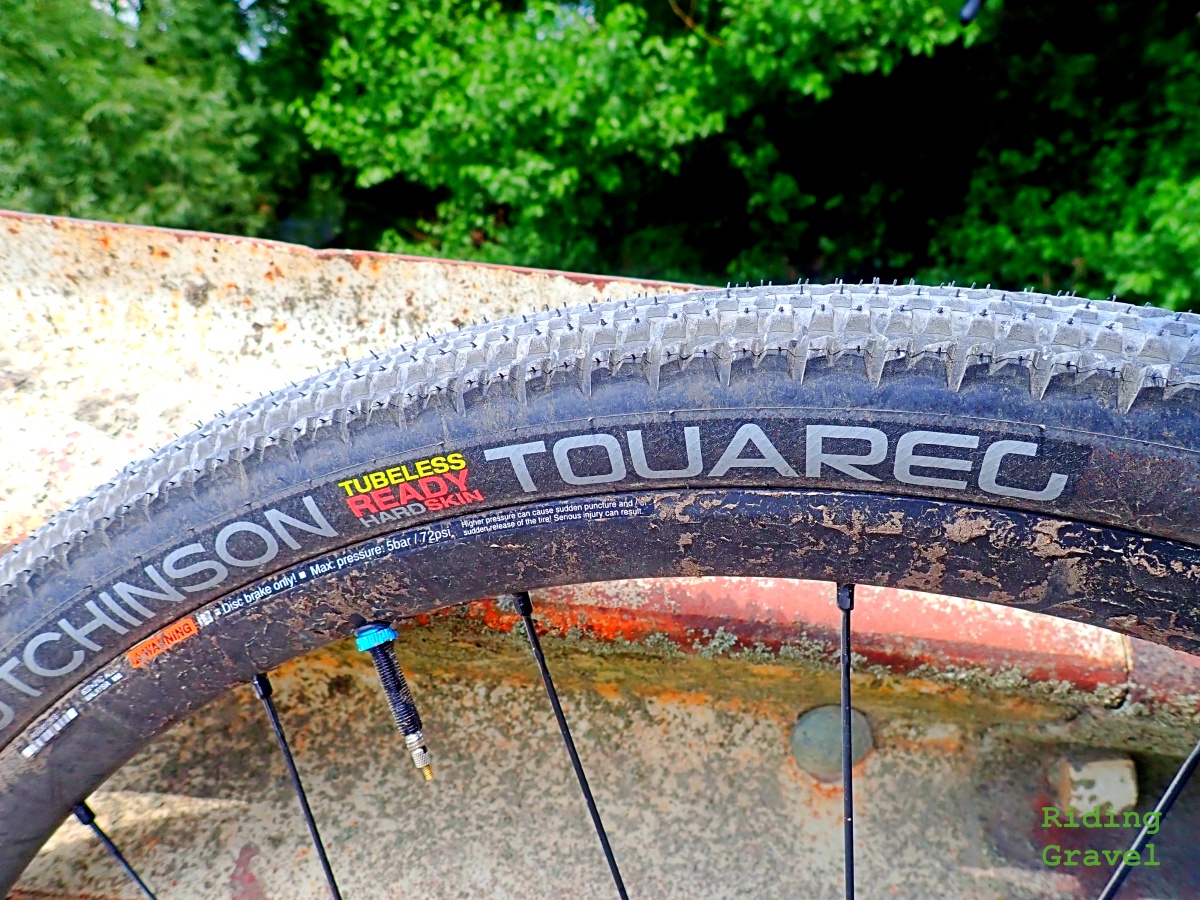
The Touareg tire may be hard to find in the US, but it is well worth seeking out.
Hutchinson Touareg: Tubeless Made Easy-

 Many people still are reticent to try out tubeless tires for their gravel rigs. If you are one of these folks, I recommend finding a set of Hutchinson Touareg tires. You will not find an easier to live with tubeless tire than this. 

Now, I admit, finding these tires may be difficult. I almost did not include this tire on my list but for the fact that I did find an online source for them recently. Hutchinson, if you did not know, is a French based tire manufacturer that was making a push into the US market right about at the same time the pandemic hit. Then after about a year, they made the curious decision to pull out of the US market. So, it may be hard to find a set of Touaregs, but they are well worth your time to search for.

So, why the bother? Well, if you don't like the sound of all the tubeless goop, failures, and hassles you may have heard about, the Touaregs will put all of that behind you and your mind will be at ease. The Touareg holds air as well as a tubed tire, maybe even better, and sealant seems to last longer as well, at least in my case. In other words, you'd be hard pressed to say that running a tubeless Touareg was anything but a positive experience. 

Bonus points for the Touareg are that it rolls fast and has a really long wearing tread.

 Okay, but how is it as a tire for gravel? Actually, it holds its own on gravel, giving up very little to the best rolling and riding feel tires. The mini-blocks roll fast on pavement, and the rounded casing profile make this tire quick on smoother dirt and gravel. The ride feel is pretty good if you bump the pressures down a few psi from your normal settings to offset the stiffness due to the puncture protection belt the Touareg has. 

Negatives are that this tire doesn't do well in mud at all, it tends to get a bit squirrely on loose, deep gravel, and it isn't the lightest tire in its class. (But at just under 500 grams each, (as I tested them, it isn't the heaviest either) The Touareg is also a bit of a 'gravel flinger' in that the small blocks will toss up small pebbles and squirt bigger chunks of gravel sideways at times. This can be annoying depending on the state of your gravel. 

You can read more in the long form review series on this tire on Riding Gravel. From that link there are links back to two previous posts on that site which will give you a long, detailed look at these tires.

These are still some of my favorite tires. They are tough, long wearing, and as I say, really good at being tubeless. These are not the best riding tires, the fastest tires, or the best feeling tires, but if you are not sold on the tubeless idea 100%, these tires will change your mind on that. Plus, if you just want a tire that does its job and does it well without worry on your part, look at the Touareg. Had these not been available at all, I would have been disappointed that I could not share these with you. And yes- they may be really hard to get a hold of. But in my opinion, these tires are worth the effort. 

Keep in mind that the Standard Disclaimer applies to these tires. I'll come back next week with another tire you should know about.

Tires You Should Know About: Hutchinson Touareg Tires

The Touareg tire may be hard to find in the US, but it is well worth seeking out.
Hutchinson Touareg: Tubeless Made Easy-

 Many people still are reticent to try out tubeless tires for their gravel rigs. If you are one of these folks, I recommend finding a set of Hutchinson Touareg tires. You will not find an easier to live with tubeless tire than this. 

Now, I admit, finding these tires may be difficult. I almost did not include this tire on my list but for the fact that I did find an online source for them recently. Hutchinson, if you did not know, is a French based tire manufacturer that was making a push into the US market right about at the same time the pandemic hit. Then after about a year, they made the curious decision to pull out of the US market. So, it may be hard to find a set of Touaregs, but they are well worth your time to search for.

So, why the bother? Well, if you don't like the sound of all the tubeless goop, failures, and hassles you may have heard about, the Touaregs will put all of that behind you and your mind will be at ease. The Touareg holds air as well as a tubed tire, maybe even better, and sealant seems to last longer as well, at least in my case. In other words, you'd be hard pressed to say that running a tubeless Touareg was anything but a positive experience. 

Bonus points for the Touareg are that it rolls fast and has a really long wearing tread.

 Okay, but how is it as a tire for gravel? Actually, it holds its own on gravel, giving up very little to the best rolling and riding feel tires. The mini-blocks roll fast on pavement, and the rounded casing profile make this tire quick on smoother dirt and gravel. The ride feel is pretty good if you bump the pressures down a few psi from your normal settings to offset the stiffness due to the puncture protection belt the Touareg has. 

Negatives are that this tire doesn't do well in mud at all, it tends to get a bit squirrely on loose, deep gravel, and it isn't the lightest tire in its class. (But at just under 500 grams each, (as I tested them, it isn't the heaviest either) The Touareg is also a bit of a 'gravel flinger' in that the small blocks will toss up small pebbles and squirt bigger chunks of gravel sideways at times. This can be annoying depending on the state of your gravel. 

You can read more in the long form review series on this tire on Riding Gravel. From that link there are links back to two previous posts on that site which will give you a long, detailed look at these tires.

These are still some of my favorite tires. They are tough, long wearing, and as I say, really good at being tubeless. These are not the best riding tires, the fastest tires, or the best feeling tires, but if you are not sold on the tubeless idea 100%, these tires will change your mind on that. Plus, if you just want a tire that does its job and does it well without worry on your part, look at the Touareg. Had these not been available at all, I would have been disappointed that I could not share these with you. And yes- they may be really hard to get a hold of. But in my opinion, these tires are worth the effort. 

Keep in mind that the Standard Disclaimer applies to these tires. I'll come back next week with another tire you should know about.

Tuesday, May 24, 2022

Tires You Should Know About

Vittoria Terreno Series tires: These are some tires you should know about.
 One of the things I am very privileged to be able to do is to ride a LOT of different tires from a LOT of different manufacturers. One of the things people talk MOST about in regards to bicycles are tires. 

So, this got me to thinking when I see threads on social media concerning tires and in specific, the ubiquitous question: "What tires are best for....?" 

First of all, there are no 'best tires' for anything. There are just too many variables to have anyone tell anyone else what is 'best' for them. I mean, what does 'best' even mean? That could be one thing for you, and a total 'feel' thing, and no one else is going to get that feeling, that sensation you are after, but you and you alone. So, unfortunately, there is no 'easy button' here. 

But the good news is that there are a LOT of really good tires out there. Some that you might think are really great for you, but maybe you are not aware of them. Maybe you just haven't heard much of anything about how they work, even if you have heard about them. In this series I am going to share a bit about some tires I think you should know about. Tires that may be new to you, or that you've heard of, but that you haven't heard much about. 

What this series is not going to be about are the tires everyone out there seems to already have a handle on. Tires like Panaracer's popular Gravel King series. I'll have some mainstream brands here, but I am going to avoid tires that are already talked about a ton online and on social media. What else you won't find in this series is a 'magic tire' that wears forever, is super-light, and has the easiest tubeless set up. Why? Because many traits we look for in tires are mutually exclusive, one from the other. That's why.

Also, this series will concentrate on gravel tires, although I can say that a few could be touring bike tires, or mountain biking tires. However; if you are looking for anything outside of the realm of gravel usage, then this may not be a good read for you. I'll pick on a few traits like which tire I think is best for ease of tubeless use, which tires wear like iron, and which tires ride the best. (See! Three different "best' qualities which may appeal to three different types of riders!) Finally, the Standard Disclaimer will apply to many of these tires I will be talking about in the series.

Okay, that's the idea I have for this series. Got a tire you think I should know about? Hit me up in the comments section. Otherwise, I have a set landing today that may make this list, and I will start out with my first in this series tomorrow. Stay tuned and thanks for reading "Guitar Ted Productions".

Tires You Should Know About

Vittoria Terreno Series tires: These are some tires you should know about.
 One of the things I am very privileged to be able to do is to ride a LOT of different tires from a LOT of different manufacturers. One of the things people talk MOST about in regards to bicycles are tires. 

So, this got me to thinking when I see threads on social media concerning tires and in specific, the ubiquitous question: "What tires are best for....?" 

First of all, there are no 'best tires' for anything. There are just too many variables to have anyone tell anyone else what is 'best' for them. I mean, what does 'best' even mean? That could be one thing for you, and a total 'feel' thing, and no one else is going to get that feeling, that sensation you are after, but you and you alone. So, unfortunately, there is no 'easy button' here. 

But the good news is that there are a LOT of really good tires out there. Some that you might think are really great for you, but maybe you are not aware of them. Maybe you just haven't heard much of anything about how they work, even if you have heard about them. In this series I am going to share a bit about some tires I think you should know about. Tires that may be new to you, or that you've heard of, but that you haven't heard much about. 

What this series is not going to be about are the tires everyone out there seems to already have a handle on. Tires like Panaracer's popular Gravel King series. I'll have some mainstream brands here, but I am going to avoid tires that are already talked about a ton online and on social media. What else you won't find in this series is a 'magic tire' that wears forever, is super-light, and has the easiest tubeless set up. Why? Because many traits we look for in tires are mutually exclusive, one from the other. That's why.

Also, this series will concentrate on gravel tires, although I can say that a few could be touring bike tires, or mountain biking tires. However; if you are looking for anything outside of the realm of gravel usage, then this may not be a good read for you. I'll pick on a few traits like which tire I think is best for ease of tubeless use, which tires wear like iron, and which tires ride the best. (See! Three different "best' qualities which may appeal to three different types of riders!) Finally, the Standard Disclaimer will apply to many of these tires I will be talking about in the series.

Okay, that's the idea I have for this series. Got a tire you think I should know about? Hit me up in the comments section. Otherwise, I have a set landing today that may make this list, and I will start out with my first in this series tomorrow. Stay tuned and thanks for reading "Guitar Ted Productions".