Showing posts with label rant. Show all posts

Sunday, April 06, 2025

Two Things

Fat Tires For Gravel? Nothing New, Maybe Not The Best Thing Either...

Besides cycling media, racers, and brands harping on "aero" lately, I've seen a lot of digital space given to running mountain bike tires as "gravel tires" on "gravel bikes". Okay, so here's my opinion on all of this.

First of all, most  "gravel bikes" are not, and should not be racing bikes for gravel. Just as all squares are rectangles but not all rectangles are squares. Also, not everyone should be looking to racers, or gravel racing, for their direction to take for riding a bicycle on gravel. 

However; this has been, and still is modus operandi for the cycling industry in the USA. Everything revolves around racing, to the great detriment of the average cyclist and those who might become cyclists. (I know, I probably sound like Grant Petersen here) What is happening in "gravel" cycling now is a repeat of the story which happened to road cycling and mountain biking. Competitive ______ racing (fill in the blank) is the measuring stick for ALL ______ biking (fill in the blank) cyclists. The equipment is put up as the "best", and all the things racers do are "better" for you, (even though you probably are the furthest thing from those Professional racers) and their actions and equipment are the goals you are to attain to. 

This is one of the main drivers for all the weird standards, ill fitting bike designs (ill fitting for average shaped humans), and expensive bicycles. But bringing it back to the tire thing, some racer said MTB tires are "better" for gravel, and there is "no reason" to race gravel on 40mm tires. Here's the really bad part about this sort of messaging.

Most people don't consider the source and the context of commentary like this. Maybe for a particular course, and for a small handful of humans who are professional (read: Have tons of time to train, are sponsored, or paid to race) these recommendations may have some merit. But telling me not to consider 40mm tires for gravel racing is pretty bogus. What if the bike I have to "race gravel on" is also my daily driver? Maybe I have pavement for long stretches of my ride, or I commute. A MTB tire at 29" X 2.2" is kinda "not the right tire", perhaps? 

And no - none of what these racers are saying about gravel racing in terms of tires is "new". These racers, and many who are influenced by these racers just don't know what they don't know. That is a completely different story for another day. Point is, if you are not a professional racer, you may want to sift what they suggest very carefully before jumping on their bandwagon. 

Or not...... 

 When It Becomes "Not An All - Roads Bike", What Is It?

Image courtesy of Ridley Bikes

This fat tire gravel thing is leading some down a road which looks suspiciously like XC mountain biking with drop bars. I reported on the Ridley bike in a recent FN&V here. Ridley call this concept "Alpine Gravel"

Another online cycling media outlet asked if full-suspension gravel bikes were the "vision" going forward for gravel bikes.

A certain photographer I follow on social media answered back with, "You mean a drop-bar mountain bike? No." 

Some people have far more sense than the media, or cycling brands give them credit for. Just about anyone with a decent amount of time in mountain biking, gravel riding, or cycling in general can see right through all of this crap. The thing is, most of these brands and media sources don't really care. Their narrative will win out the day eventually if they keep banging the drum for whatever they deem is "The Next Big Thing" and as long as it sells units.

Drop bar mountain bikes, in and of themselves, are not a 'bad' thing. What is wrong about this is how these bikes are being sold to the naive cyclist as something 'new' and different. An XC mountain bike hard tail with drop bars is nothing new. Not even one with 29"er wheels. And especially in this instance, it is laughable to try to push this narrative.

These bikes also do not really fit the originally intended purposes of what became known as "gravel bikes". In the beginnings of all of this, the idea was to have a bicycle which would cover the area between single track and fully paved roads. A bicycle for roads, no matter what their surface was. Not single track. Not mountainous, rock infested terrain. We already had mountain bikes for this activity. We already had great choices for bicycles which did well on fully paved roads.

Somewhere along the way we have been asked to think gravel bikes are mountain bikes as well. Why? Maybe because gravel is a hot category, and XC MTB is not? Yes.....that's pretty much it right there. 

NOTE: Next week a lot of press releases come off embargo previous to Sea Otter. I'll have some news posting at odd times. Thank you for your patience in this matter and for reading Guitar Ted Productions

Tuesday, September 12, 2023

Did You Hear About The Gravel Champs?

A few of the many "US Gravel Champs" I've seen throughout the years.
Hey! Did you see that race this past weekend where the US Gravel Champs were feted? No? 

Well, it was the the "big" race out in Gering, Nebraska over the weekend where 55 elite men and 22 elite women lined up to take part in the USAC version of a gravel national championships. Over 60,000 bucks were up for grabs with 192 total cyclists across all age groups vying for a chance at the cold, hard cash. 

First of all, congratulations to all who made the effort to line up and take on 131 mile course at the event. That is commendable. Congratulations to all who finished as well. 

Bottom line: They are all champions. 

From my social media post on "X" on Sunday.
You can see my reaction from Sunday above. Why did I post that? I'll tell you why, it's because that's how we (should) roll in the gravel scene. That's how it all began. Heck, that's a big reason why it all began. We were sick and tired of rules, classes, and big prize money because it all created a very exclusive nature where only the top athletes get any cred and everyone else? They are just pack fodder. A bunch of dehumanized bib numbers on a stat sheet that no one will ever look at. (So check that link and give those folks some credit, if you ever see them or if you know them) 

We didn't do things that way back when the gravel thing got going. We were all about the individual's performance throughout the field. We celebrated everyone. We, as event directors, stuck around to shake every hand, hug every racer, and acknowledge every story we heard about overcoming, or falling short, of challenges both spectacular in nature and mundane as could be. We celebrated last place as hard as first place. Some still do that at their events. That's awesome. That's how it should be. 

This gravel cycling thing has a UCI National Championships because of people like Kristi Mohn,  Chris Skogen, Bobby Wintle, Jim Cummings, Joel Dyke, Corey Godfrey, and yes- myself, who, along with many helpers and riders, spread the love of gravel and the celebration of athletic effort, no matter the outcomes, in the beginnings of this movement. Many said things like, "When the money comes in, that will ruin it", and if the media only focuses on "gravel champs", a woman and a man winning a jersey, and awards and times, then yes- we've lost what we started all those years ago. 

It's up to you,the event director, the rider, the follower of the scene, to carry on the things that made "gravel" what it was, is, and still could be. Or, you can just sit on your hands, have "Gravel™", and read about a few lucky, sponsored athletes in the scene on your favorite corporate media site. 

Your choice.......

Updated: For another perspective on the USAC Gravel Nats see this article by Peter Stetina for "Velo".

Wednesday, August 02, 2023

Trends And Prognostications For Gravel Bikes

Looking at what is being introduced this year for gravel bikes, which is, admittedly, not much, due to the circumstances, I am seeing a few things starting to emerge. I've written a bit about the "mountain bike-ification" of gravel bikes, and that is one thing, but not all new bikes are headed down that road.

If there is anything one can say about this "gravel category" of bikes, (can I reiterate how dumb this name was to be used for these bikes here again? ), it is that everyone, and every company, has its interpretation of what "that" means. 

It isn't like a gravel bike is one certain thing. Not like it was with say, 1990's XC MTB bikes, or French style rando bikes, or with road racing bikes. All niches of cycling that have a certain parameter that the bikes have to fit into to be "that" style. Gravel bikes still are kind of a "Wild, Wild, West" sort of genre, and that's fun. 

That said, things are pointing to a homogenization of the style and some of that is evidenced by trends I am seeing out there now. There are hints of what is to come in the future as well. This isn't going to be an all-encompassing look at all things "gravel", it is just my take on the scene. You may have a differing opinion, or some of your own examples to share. That's fine. Here are my thoughts....

Co-Op's ADV 1 650B bike (Image courtesy of REI)

650B Is Fading:

Early on in the gravel bike's developmental period, WTB introduced "Road Plus" tires which was an outgrowth of their idea from the MTB side where an optional wheel size was afforded to 29"er riders by using the 650B format. This resulted in "B+", or what has been now called "Plus Sized" tires. That idea was the basis for "Road Plus" which was an idea that would give gravel bikers an option to run a more voluminous tire in a frame normally limited to 40-42mm tires in a 700c format. 

Subsequently many gravel bikes were designed to accept either 700c or 650B tires and wheels. This "compromised" geometry choices a bit, especially when thinking about bottom bracket drop and chain stay length. However; recently designs have been put forth that handle 700c X 50mm or even slightly wider tires. This not only covers the needs of those who want volume in their gravel tires, but it works fine for 40mm-42mm tires too. This negates the "need" to accommodate 650B tires and wheels. The geometry can be tightened up and tuned for better performance with one wheel size. 

Now, that isn't to say that 650B is dead. I'm not intimating that at all here. But you are going to see less and less of that "multiple wheel size" capability in marketing and 650B will likely find its home in bike packing rigs, smaller sized gravel bikes, and niche offerings. Tire manufacturers will have a say in this as well. Less 650B offerings are already being noted. That's another indicator to me that the wheel/tire size is fading in popularity. 

The revised Santa Cruz Stigmata (Image courtesy of Santa Cruz Bikes)

Suspension & Dropper Posts:

Here is another trend. Suspension fork compatibility and dropper post routing on the same bike. These bikes, much like Santa Cruz's revised Stigmata, shown above, are "gravel bikes for mountain bikers". It's a trend I see more of, and I think it hints at something different around the corner to come. 

There is an element of folks out there that want a simpler off-road capable bike that can "do it all". Gravel bikes appeal to these folks with one big problem: They are not "off-road" bikes and that's where these folks also want to go. 

Gravel, as a concept, was never meant to be "that bike that does off-road/all-terrain". It was meant to be a bike for "all roads". Be those paved, not paved, or somewhere in between. Mountain biking, (again, another misused name if ever there was one), was thought of as being "that bike for everything off-roads". Now the gravel bike is being pushed toward that 'off-road' usage category and this will begin to morph into "something else". 

What that "something else" is, I am not sure of at this point. All I know is that 40mm of gravel suspension fork travel is a joke, and drop bars off road are not all that popular. Suspension forks on a gravel road is overkill and the forks are too heavy. Again, you can get a suspension stem and get better results than you can with a gravel suspension fork, and there is no maintenance. Suspension forks on gravel bikes is laughably inept and not a well thought-out concept for on-road or off-road usage. 

That's why I feel that at some point we will see a sea change. Suspension travel will have to increase, drop bars will make less sense, and then.... Hard tail revival? Maybe drop bars stick around and we get revised Fargos/Cutthroats? See what I mean..... 

SRAM "T" Type rear derailleur (Image courtesy of SRAM)

Drive Train Changes:

There will be a lot of changes to come in terms of drive train choices. First and foremost of these will be the death of the traditional derailleur hangar for both off-road/MTB and gravel drive trains. 

SRAM started the sea change to this new, "dual-sided" hangar type for a rear derailleur which essentially integrates the hangar into the main chassis of the derailleur, making the connection to the frame more solid. This was only made possible by through axles, and to a lesser extent, derailleur "clutches" which stabilize the pulley cage. Both these things help derailleurs become more resistant to being ripped off, bent, or damaged than the previous, flimsy designs of the past.

Shimano will adopt something similar, and frame designers are all about this change as it eliminates the need to make a derailleur hangar and it simplifies manufacturing of the frame. I see this as a win-win for consumers and manufacturers. 

Yes....old stuff won't work on new frames. (Possible exception is a UDH  hangar) But the industry has done this before. 1994: Threaded steer tubes are eliminated by "Aheadset", threadless head sets. 1 1/8th supplants 1' steer tubes at about the same time. I can go on... We all lived, and many of those old bikes are still around being ridden. It'll be fine....

Another thing I see coming is electronic shifting in a cheaper, more affordable format. It's being hinted at by SRAM with their sweeping range of AXS, but even more so by off-brand, Chinese manufacturers of really inexpensive electronic drive trains. We're talking a complete group set for the price of a couple of high end Shimano Di2 rear derailleurs here. The big brands (SRAM/Shimano) will have to respond at some point with entry-level, electronic 9/10/11 speed stuff that can be sold on a complete bike for less than 2k. This means that mid-level, less expensive electronic shifting bikes for gravel will also be a thing. 

Electronic CUES? I think so. SRAM will have to do something as well, but the common rider who sees an eBike/HPC as being "not where I want to go" and wants a more technologically advanced bike? I think that's a big chunk of the riding populace that would definitely bite on electronic shifting at a lower price point. Enterprising You Tubers are already showing us how it can be done and Chinese brands are only all too happy to oblige them and their subscribers. As I said- SRAM and Shimano are not going to sit idly by and watch this eat into their market share without a response. 

What do you think? Let me know in the comments. Thanks for reading Guitar Ted Productions.

Trends And Prognostications For Gravel Bikes

Looking at what is being introduced this year for gravel bikes, which is, admittedly, not much, due to the circumstances, I am seeing a few things starting to emerge. I've written a bit about the "mountain bike-ification" of gravel bikes, and that is one thing, but not all new bikes are headed down that road.

If there is anything one can say about this "gravel category" of bikes, (can I reiterate how dumb this name was to be used for these bikes here again? ), it is that everyone, and every company, has its interpretation of what "that" means. 

It isn't like a gravel bike is one certain thing. Not like it was with say, 1990's XC MTB bikes, or French style rando bikes, or with road racing bikes. All niches of cycling that have a certain parameter that the bikes have to fit into to be "that" style. Gravel bikes still are kind of a "Wild, Wild, West" sort of genre, and that's fun. 

That said, things are pointing to a homogenization of the style and some of that is evidenced by trends I am seeing out there now. There are hints of what is to come in the future as well. This isn't going to be an all-encompassing look at all things "gravel", it is just my take on the scene. You may have a differing opinion, or some of your own examples to share. That's fine. Here are my thoughts....

Co-Op's ADV 1 650B bike (Image courtesy of REI)

650B Is Fading:

Early on in the gravel bike's developmental period, WTB introduced "Road Plus" tires which was an outgrowth of their idea from the MTB side where an optional wheel size was afforded to 29"er riders by using the 650B format. This resulted in "B+", or what has been now called "Plus Sized" tires. That idea was the basis for "Road Plus" which was an idea that would give gravel bikers an option to run a more voluminous tire in a frame normally limited to 40-42mm tires in a 700c format. 

Subsequently many gravel bikes were designed to accept either 700c or 650B tires and wheels. This "compromised" geometry choices a bit, especially when thinking about bottom bracket drop and chain stay length. However; recently designs have been put forth that handle 700c X 50mm or even slightly wider tires. This not only covers the needs of those who want volume in their gravel tires, but it works fine for 40mm-42mm tires too. This negates the "need" to accommodate 650B tires and wheels. The geometry can be tightened up and tuned for better performance with one wheel size. 

Now, that isn't to say that 650B is dead. I'm not intimating that at all here. But you are going to see less and less of that "multiple wheel size" capability in marketing and 650B will likely find its home in bike packing rigs, smaller sized gravel bikes, and niche offerings. Tire manufacturers will have a say in this as well. Less 650B offerings are already being noted. That's another indicator to me that the wheel/tire size is fading in popularity. 

The revised Santa Cruz Stigmata (Image courtesy of Santa Cruz Bikes)

Suspension & Dropper Posts:

Here is another trend. Suspension fork compatibility and dropper post routing on the same bike. These bikes, much like Santa Cruz's revised Stigmata, shown above, are "gravel bikes for mountain bikers". It's a trend I see more of, and I think it hints at something different around the corner to come. 

There is an element of folks out there that want a simpler off-road capable bike that can "do it all". Gravel bikes appeal to these folks with one big problem: They are not "off-road" bikes and that's where these folks also want to go. 

Gravel, as a concept, was never meant to be "that bike that does off-road/all-terrain". It was meant to be a bike for "all roads". Be those paved, not paved, or somewhere in between. Mountain biking, (again, another misused name if ever there was one), was thought of as being "that bike for everything off-roads". Now the gravel bike is being pushed toward that 'off-road' usage category and this will begin to morph into "something else". 

What that "something else" is, I am not sure of at this point. All I know is that 40mm of gravel suspension fork travel is a joke, and drop bars off road are not all that popular. Suspension forks on a gravel road is overkill and the forks are too heavy. Again, you can get a suspension stem and get better results than you can with a gravel suspension fork, and there is no maintenance. Suspension forks on gravel bikes is laughably inept and not a well thought-out concept for on-road or off-road usage. 

That's why I feel that at some point we will see a sea change. Suspension travel will have to increase, drop bars will make less sense, and then.... Hard tail revival? Maybe drop bars stick around and we get revised Fargos/Cutthroats? See what I mean..... 

SRAM "T" Type rear derailleur (Image courtesy of SRAM)

Drive Train Changes:

There will be a lot of changes to come in terms of drive train choices. First and foremost of these will be the death of the traditional derailleur hangar for both off-road/MTB and gravel drive trains. 

SRAM started the sea change to this new, "dual-sided" hangar type for a rear derailleur which essentially integrates the hangar into the main chassis of the derailleur, making the connection to the frame more solid. This was only made possible by through axles, and to a lesser extent, derailleur "clutches" which stabilize the pulley cage. Both these things help derailleurs become more resistant to being ripped off, bent, or damaged than the previous, flimsy designs of the past.

Shimano will adopt something similar, and frame designers are all about this change as it eliminates the need to make a derailleur hangar and it simplifies manufacturing of the frame. I see this as a win-win for consumers and manufacturers. 

Yes....old stuff won't work on new frames. (Possible exception is a UDH  hangar) But the industry has done this before. 1994: Threaded steer tubes are eliminated by "Aheadset", threadless head sets. 1 1/8th supplants 1' steer tubes at about the same time. I can go on... We all lived, and many of those old bikes are still around being ridden. It'll be fine....

Another thing I see coming is electronic shifting in a cheaper, more affordable format. It's being hinted at by SRAM with their sweeping range of AXS, but even more so by off-brand, Chinese manufacturers of really inexpensive electronic drive trains. We're talking a complete group set for the price of a couple of high end Shimano Di2 rear derailleurs here. The big brands (SRAM/Shimano) will have to respond at some point with entry-level, electronic 9/10/11 speed stuff that can be sold on a complete bike for less than 2k. This means that mid-level, less expensive electronic shifting bikes for gravel will also be a thing. 

Electronic CUES? I think so. SRAM will have to do something as well, but the common rider who sees an eBike/HPC as being "not where I want to go" and wants a more technologically advanced bike? I think that's a big chunk of the riding populace that would definitely bite on electronic shifting at a lower price point. Enterprising You Tubers are already showing us how it can be done and Chinese brands are only all too happy to oblige them and their subscribers. As I said- SRAM and Shimano are not going to sit idly by and watch this eat into their market share without a response. 

What do you think? Let me know in the comments. Thanks for reading Guitar Ted Productions.

Tuesday, June 27, 2023

Leave No Trace

Note: Today's post contains some graphic descriptions and salty language. You've been forewarned! 

Recently the Iowa Gravel Series head honcho, Chris McQueen, wrote a post on the IGS site regarding an incident that occurred at one of his events. The events Chris puts on have signed turns. He uses "real estate" type signage, the sort you might see in front of a property for sale, to mark corners. So, these are valuable and he retrieves them after every one of his events. 

While fetching signage after a recent event he discovered one sign missing and it had been replaced with a handmade sign bearing the visage of a penis riding a bicycle. The directional arrows were scrabbled on each of the four corners, so riders weren't misdirected. On the reverse side, Chris found the message "Tell Your Riders To Stop Being Dickheads To The People Who Live Here Or Find A Different Route!"

As the race director, he was, unsurprisingly, concerned and is seeking to get to the root of things. But as I contemplated this story, I was reminded of past negative, or potentially negative interactions with "locals" and also how the presence of bicycle riders can leave impacts on local residents. Those impacts can be positive or negative. In some cases, my preference would be that no impact was made at all. 

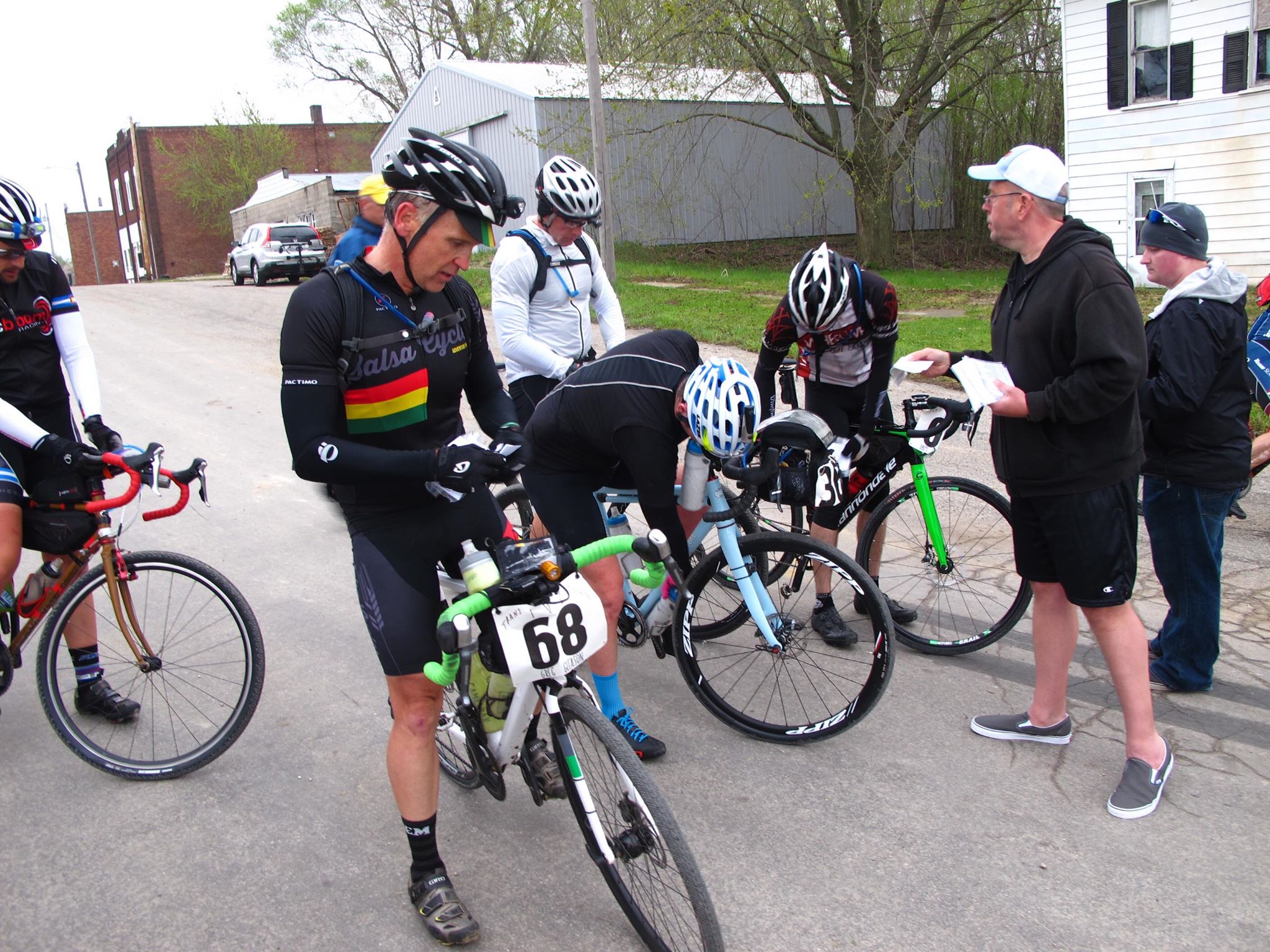
A potentially negative outcome with a local almost shut down this checkpoint location for T.I.v12

  Rural residents are people that are typically very insular and protective of "their" land, (whether or not they actually own said land is not material to the discussion), and suspicions arise whenever a rural person sees anything out of the ordinary when it comes to people, vehicles, or other oddities. Things stand out more in the wide open areas. It's easy to see that the sight of a cyclist is an odd occurrence for most rural residents. 

Rural residents can also be very charming, helpful, and a fantastic resource to cyclists or those involved with putting on events in the cycling realm. Stories of kindness and help unlooked for abound with gravel cycling and I have personally witnessed things like that in my time as an RD and a rider. I recall riding the first DK200 in 2006 and finding a water jug on a card table alongside a dusty road with no farm house in sight. A sign was hastily made and taped to the table's edge that read "Free Water! Take what you need." This was not an outlier either. Folks still do this at many events all across the nation and I hear and see this from gravel events all the time. The kindness and concerns of rural residents is fantastic. 

We can all get along nicely if we try.

But a warning to race directors and gravel event riders or rural riders in general: Ignore rural residents and their concerns at your own peril! Most rural residents will not suffer fools or acts of tomfoolery gently. Trespassing or taking of things is frowned upon and may be met with lethal force if you cross the wrong person. 

Not that I am condoning the reactions rural residents may have, but this is the reality of rural areas. You'd best be aware and ready to be diplomatic, understanding, and willing to compromise. A little grace goes a long way with rural folks. In my experience, a direct explanation of your doings in a kindly tone will smooth over almost every encounter you may have, as long as you are not willfully breaking the law or engaging in other like activity. In fact, I haven't had to really give up anything when having such encounters except some of my time and patience. An inexpensive investment to make to keep the event or ride going. 

Not that every interaction goes swimmingly. You can expect that not all of them will. But the majority of them will if you have the mind to be aware of rural residents concerns and "need to know". Remember, it doesn't help to get aggressive, angry, or combative. You'll only make matters worse. 

Racers that drop garbage chap my hide. (Image by Jon Duke of C.O.G. 100)

The other thing I think is an impediment to racers or riders and rural residents getting along is how racers (especially racers, but regular riders as well) act during events. A few things that I have heard about or personally have witnessed really make me concerned and could be having a negative effect upon the relationship between residents and riders. 

First up is a mostly unspoken concern that happens all the time at many gravel events: People relieving themselves along rural roads. Public urination is pretty much frowned upon almost everywhere you go, but it would seem that many, (mostly male) riders need a reminder that a little prudence goes a long way toward keeping rural residents from crying foul when it comes to your taking a piss. (Shouldn't that be leaving a piss? This never made sense to me....) Anyway... Get behind a tree, out of sight of homes, down in a ditch or something. Or wait till you reach a checkpoint. But don't stand alongside the road in sight of homes and do this. (I feel like I am speaking to children.) 

And finally, why do we even tolerate gel packets, food wrappers, or other garbage being thrown on gravel roads? This is the one that really irks me. I've seen it more and more since "Pro" riders, sponsored riders, and those who think that they are one of those two, got into gravel racing. This needs to be addressed.

Riders will not do anything until race directors take a stand, or...... Race directors have to clean the course after the event. One or the other. The DK200 used to have a Klean Kanza event the week after the 200 where they not only cleaned up their mess, but they picked up ALL the garbage they could find. This was class-leading event operation there. Who does this anymore? 

But if that is not possible, you would have to put the onus on the riders. And you'd have to have a no tolerance policy. In fact, all of the above mentioned issues in this post should be no-tolerance reasons for riders to be kicked out of events. But which race directors have the wherewithal to do that? I'd like to know..... 

I'll tell ya what. If RD's did take a stance as I suggest, you'd see a lot less issues. And yes, you'd see a lot less riders at events in some cases. But does littering and acting a fool make their entry fees worth it? The answer to that says a lot about what is and what is not important in any gravel event.

Leave No Trace

Note: Today's post contains some graphic descriptions and salty language. You've been forewarned! 

Recently the Iowa Gravel Series head honcho, Chris McQueen, wrote a post on the IGS site regarding an incident that occurred at one of his events. The events Chris puts on have signed turns. He uses "real estate" type signage, the sort you might see in front of a property for sale, to mark corners. So, these are valuable and he retrieves them after every one of his events. 

While fetching signage after a recent event he discovered one sign missing and it had been replaced with a handmade sign bearing the visage of a penis riding a bicycle. The directional arrows were scrabbled on each of the four corners, so riders weren't misdirected. On the reverse side, Chris found the message "Tell Your Riders To Stop Being Dickheads To The People Who Live Here Or Find A Different Route!"

As the race director, he was, unsurprisingly, concerned and is seeking to get to the root of things. But as I contemplated this story, I was reminded of past negative, or potentially negative interactions with "locals" and also how the presence of bicycle riders can leave impacts on local residents. Those impacts can be positive or negative. In some cases, my preference would be that no impact was made at all. 

A potentially negative outcome with a local almost shut down this checkpoint location for T.I.v12

  Rural residents are people that are typically very insular and protective of "their" land, (whether or not they actually own said land is not material to the discussion), and suspicions arise whenever a rural person sees anything out of the ordinary when it comes to people, vehicles, or other oddities. Things stand out more in the wide open areas. It's easy to see that the sight of a cyclist is an odd occurrence for most rural residents. 

Rural residents can also be very charming, helpful, and a fantastic resource to cyclists or those involved with putting on events in the cycling realm. Stories of kindness and help unlooked for abound with gravel cycling and I have personally witnessed things like that in my time as an RD and a rider. I recall riding the first DK200 in 2006 and finding a water jug on a card table alongside a dusty road with no farm house in sight. A sign was hastily made and taped to the table's edge that read "Free Water! Take what you need." This was not an outlier either. Folks still do this at many events all across the nation and I hear and see this from gravel events all the time. The kindness and concerns of rural residents is fantastic. 

We can all get along nicely if we try.

But a warning to race directors and gravel event riders or rural riders in general: Ignore rural residents and their concerns at your own peril! Most rural residents will not suffer fools or acts of tomfoolery gently. Trespassing or taking of things is frowned upon and may be met with lethal force if you cross the wrong person. 

Not that I am condoning the reactions rural residents may have, but this is the reality of rural areas. You'd best be aware and ready to be diplomatic, understanding, and willing to compromise. A little grace goes a long way with rural folks. In my experience, a direct explanation of your doings in a kindly tone will smooth over almost every encounter you may have, as long as you are not willfully breaking the law or engaging in other like activity. In fact, I haven't had to really give up anything when having such encounters except some of my time and patience. An inexpensive investment to make to keep the event or ride going. 

Not that every interaction goes swimmingly. You can expect that not all of them will. But the majority of them will if you have the mind to be aware of rural residents concerns and "need to know". Remember, it doesn't help to get aggressive, angry, or combative. You'll only make matters worse. 

Racers that drop garbage chap my hide. (Image by Jon Duke of C.O.G. 100)

The other thing I think is an impediment to racers or riders and rural residents getting along is how racers (especially racers, but regular riders as well) act during events. A few things that I have heard about or personally have witnessed really make me concerned and could be having a negative effect upon the relationship between residents and riders. 

First up is a mostly unspoken concern that happens all the time at many gravel events: People relieving themselves along rural roads. Public urination is pretty much frowned upon almost everywhere you go, but it would seem that many, (mostly male) riders need a reminder that a little prudence goes a long way toward keeping rural residents from crying foul when it comes to your taking a piss. (Shouldn't that be leaving a piss? This never made sense to me....) Anyway... Get behind a tree, out of sight of homes, down in a ditch or something. Or wait till you reach a checkpoint. But don't stand alongside the road in sight of homes and do this. (I feel like I am speaking to children.) 

And finally, why do we even tolerate gel packets, food wrappers, or other garbage being thrown on gravel roads? This is the one that really irks me. I've seen it more and more since "Pro" riders, sponsored riders, and those who think that they are one of those two, got into gravel racing. This needs to be addressed.

Riders will not do anything until race directors take a stand, or...... Race directors have to clean the course after the event. One or the other. The DK200 used to have a Klean Kanza event the week after the 200 where they not only cleaned up their mess, but they picked up ALL the garbage they could find. This was class-leading event operation there. Who does this anymore? 

But if that is not possible, you would have to put the onus on the riders. And you'd have to have a no tolerance policy. In fact, all of the above mentioned issues in this post should be no-tolerance reasons for riders to be kicked out of events. But which race directors have the wherewithal to do that? I'd like to know..... 

I'll tell ya what. If RD's did take a stance as I suggest, you'd see a lot less issues. And yes, you'd see a lot less riders at events in some cases. But does littering and acting a fool make their entry fees worth it? The answer to that says a lot about what is and what is not important in any gravel event.

Wednesday, June 21, 2023

Commuter Blues

This apparel item makes you "less than human" when worn.
 I've been a bicycle commuter steadily since 2002 and before that sporadically since 1993. So, I've built up a lot of knowledge in regard to my interactions with the operators of motor vehicles as I cycle through the Waterloo/Cedar Falls metro area. 

These are my observations only. Your area may be quite different. (I hope it is!) But a recent study reported on by Momentum Magazine online shines a light toward what I have always thought to be true. That being that when I dress in "cycling garb" I am treated quite differently than I am when I wear street clothing to cycle in. 

I have found this to be so true in my experience that - unless I am going for a long ride solo in the country - I wear street clothes to cycle in almost exclusively now. The difference is amazing. 

Of course, there are outliers and times when I get close passed by cars even if I am wearing street clothes and a ball cap, but probably 99% of the time or more I get a wide berth, people defer to me at intersections, and I never get yelled at. Wearing a helmet? That instantly makes my commutes more difficult. I get less consideration, and I have been yelled at. Wearing a full kit?

Fahgeddaboudit. You may as well be a worm.

Yeah, like the study I linked to says, why that is no one really knows yet, but we can guess. I assume that people see a "person" when they see a cyclist in normal garb. But perceptions about "cyclists" in a kit? I imagine those are mostly of the negative sort. Why? Well, I think that can range anywhere from "cyclists are neredowell rule-breakers that are unpredictable and in the way" to worse than that.  

I really don't know, nor do I really care. I just know what works, and what doesn't work, and I have adapted accordingly. Should things be different? Yes. In the meantime, I do what I have to do so I can ride a bicycle. My feeling is that until this culture of car-centrism changes to accommodate cycling and walking at an even plane to automobile usage, or at a higher importance than that, things won't change significantly. We need to see a philosophy of less cars are better, more cycling and walking is better first. 

But I don't think the powers that be are interested in it unless they can make coin out of it. Right now, that isn't the case.

Commuter Blues

This apparel item makes you "less than human" when worn.
 I've been a bicycle commuter steadily since 2002 and before that sporadically since 1993. So, I've built up a lot of knowledge in regard to my interactions with the operators of motor vehicles as I cycle through the Waterloo/Cedar Falls metro area. 

These are my observations only. Your area may be quite different. (I hope it is!) But a recent study reported on by Momentum Magazine online shines a light toward what I have always thought to be true. That being that when I dress in "cycling garb" I am treated quite differently than I am when I wear street clothing to cycle in. 

I have found this to be so true in my experience that - unless I am going for a long ride solo in the country - I wear street clothes to cycle in almost exclusively now. The difference is amazing. 

Of course, there are outliers and times when I get close passed by cars even if I am wearing street clothes and a ball cap, but probably 99% of the time or more I get a wide berth, people defer to me at intersections, and I never get yelled at. Wearing a helmet? That instantly makes my commutes more difficult. I get less consideration, and I have been yelled at. Wearing a full kit?

Fahgeddaboudit. You may as well be a worm.

Yeah, like the study I linked to says, why that is no one really knows yet, but we can guess. I assume that people see a "person" when they see a cyclist in normal garb. But perceptions about "cyclists" in a kit? I imagine those are mostly of the negative sort. Why? Well, I think that can range anywhere from "cyclists are neredowell rule-breakers that are unpredictable and in the way" to worse than that.  

I really don't know, nor do I really care. I just know what works, and what doesn't work, and I have adapted accordingly. Should things be different? Yes. In the meantime, I do what I have to do so I can ride a bicycle. My feeling is that until this culture of car-centrism changes to accommodate cycling and walking at an even plane to automobile usage, or at a higher importance than that, things won't change significantly. We need to see a philosophy of less cars are better, more cycling and walking is better first. 

But I don't think the powers that be are interested in it unless they can make coin out of it. Right now, that isn't the case.

Wednesday, June 14, 2023

Unbound 2023: An Event That Is At Odds With Itself

 It has been over a week and still the issues that plagued the 2023 Unbound Gravel event are still percolating amongst journalists, social media folks, and riders. The event saw not just some tough conditions, but some tough to deal with issues. Issues that are at odds with the event's heritage and where it has grown itself up to this point. 

I received a comment on last week''s post I wrote on Unbound that was three pronged in nature and was going to require too much verbiage to answer in a comment section. Besides, all of you readers would have missed out, and I think this is a relevant, current issue. Part of the comment deals with an ongoing debate that has been in circulation amongst the "gravel faithful" since the 2000's. 

Part 1: Money & Influence

 That ongoing debate being a two faceted one entailing how gravel events are to be run and also a question: When does the pursuit of money/earnings/profits debase the ideas behind grassroots gravel to the point that it (the grassroots ethos) no longer exists?  Some may think this debate started this year with Unbound Gravel. They would be gravely mistaken. I was told that the 2023 Unbound is not relevant to how the 2015 DK200 was, or how Trans Iowa was run, but oh! It is 100% relevant. In fact, all of this is one continuous thread which has evolved- yes - but historically and ethically the issues are related in a very meaningful way. To think otherwise is short-sighted and - frankly, wrong. 

Consider that during this year's Unbound, there were reportedly many destroyed parts, people angry, disappointed, missing the time cuts, not finishing, getting defeated by a water stop that ran out of water, etc. That all is a mirror image of what happened in 2015. What is different? Well, people paid a lot more to get into the 2023 event, but relatively speaking, the people that paid to get into the 2015 DK200 did as well. That event was, at that time, the most expensive, hardest to get into, (maybe Trans Iowa was harder to get in to, but that event was free), gravel event on the calendar. So, historically speaking, these two events are very congruent. Comparisons are not only fair, but expected. Does paying what riders paid to get into the 2023 Unbound mean they "deserve to have an opinion "? (Read: Have influence over the event) Well, if it does, so does what the 2015 DK200 riders paid, and really, using that logic, what any rider paid for an event. How you answer that debate will give you an outcome that is either chaotic, or one that is orderly in nature. 

While the ethos of gravel events has always included challenges such as muddy roads, today's culture of high-dollar gravel events has some riders challenging those values. Image by Wally Kilburg

When an event is run as a for-profit venture, the fees, again- read my post last week - are not just an admission price to ride. These events cost money to put on, and they support some people's livelihoods.  Again, because people get paid to do event productions doesn't mean that they don't care - If anything, you could argue that it means they care more. Without you, the riders, they lose a job. So, I think that gets lost in the debate sometimes. 

But when an event gets into a mindset that a "paid for event/experience" has to look a certain way, or have certain amenities, or have a certain level of competitive athlete attending, then compromises have to be made. If an event started out as a smaller, more intimate affair, and "for profit" ideas start to infiltrate that original ethos, things will naturally change. Simply stated, you cannot have the same event anymore. You can try to balance things, but eventually, you either go all-in, or you quit. The grassroots part fades away. There seemingly is no other way for an event to "grow". Not in this culture. 

Part 2: Logistics For Big Events

As mentioned previously, water was an issue for Unbound this year, (reportedly) and I know for a fact that it was an issue in 2015. The problem stems from "estimating" your needs. This isn't a big deal for an event that has existed for years and remained the same, or nearly so, for all that time. However; in the particular case of Unbound, this event hasn't remained the same for two years in a row at anytime in its history. Especially so in terms of rider participation. 

Basing needs off a known number of riders is easier to dial in than to try to project needs to a bigger field of riders based off a smaller field of riders. There are so many variables. Add weather variances into the equation and things get really squirrely. Imagine that this year's Unbound was drier, but was hot, like over 100 degrees hot. If they ran out of water this year at a high temperature of 90°F  I cannot imagine the carnage a 100+ degree day would have added, and that temperature is somewhat common for that part of the country in early June. So, that failure to supply riders, if true, is regrettable. 

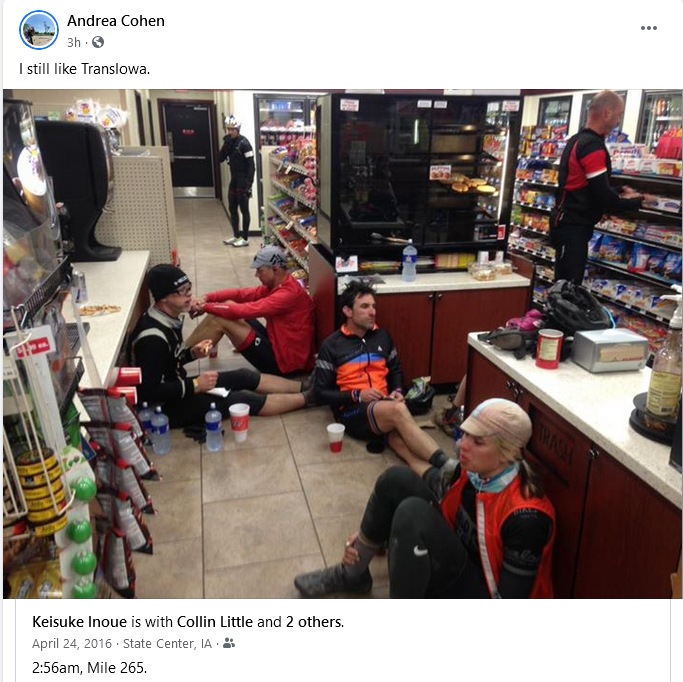
I used to get concerned when even a few riders descended upon a convenience store. Image from T.I.v12

 Part 3: When An Event Idea Is Scaled Up Too Much

Now, maybe I am flattering myself to think this, but when the DK folks came up with the XL idea, I think it was based off of Trans Iowa, which was always a self-supported, 300+ mile, self-navigated challenge with a time limitation. While that idea may seem somewhat appealing to event organizers to add to their existing event distances, there are a couple of very important points that seem to get lost in this idea that are salient to its success. 

One: The original idea is to have "self-navigation" be by cue sheets, not by GPS, and this is a VERY important part of the idea. Without that you are just really putting on an extra long time trial on unpaved (hopefully they are unpaved) roads. Cue sheet navigation is a HUGE part of what made Trans Iowa what it was. Second: This idea cannot work with large fields of riders IF they are to use native resupply options as their source for water and food. Overrunning convenience stores with dirty, uncouth looking outsiders that drain the shelves of vital goods that locals rely on is NOT cool. Especially if those riders leave a mess behind that others outside of the event have to clean up.

I have been told that not only does the Unbound XL have a GPS guided course, but that their field was so big that they overran convenience stores and caused a lot of concerns with local businesses and local residents. If true, that is just really wrong, and not the way we as gravel promoters want to leave our trace.Which, ideally would be no trace.

Conclusion:

Unbound, when it was it was known as the DK200, was originally an event with a completely different feel, rider experience, structure, and goals. It grew to be this behemoth of a corporate run affair over the period of most of two decades. It is vastly unlike its beginnings, yet it clings to vestiges of its past with a dogged determination that would seem to be silly looking at it with 2023 glasses. 

When Kimo Seymour, President of Life Time comes out and states that, ".....as long as I am here, we're never going to change a course just because someone wants to make it easier.", he sounds like one of the early pioneers of gravel events. (I may or may not resemble that comment) On the other hand, when the event charges $290.00 for a 200 mile experience, or $250.00 for the XL, and makes you go through a lottery to even get the chance to pay that, then a certain amount of expectations are going to follow. Can an event like this dictate to riders that they just have to suck it up and deal? 

That's a great question, but what this underscores is the fact that Unbound is perhaps at a crossroads of sorts where it needs to reexamine what it can retain from its past while staying true to its mission to its corporate overlords to make a profit. I think much of that issue needs to be debated within the confines of Life Time's offices. 

Meanwhile the participants in this event, and other gravel events have to exercise their liberties. If an event seems distasteful, demoralizing, uncouth, or otherwise negative, you do not have to participate in it. Unbound did not start out being "The Biggest Gravel Show On Earth", but it was declared as such often enough that you believed it. That could change, but that means you have to decide that it will, or that it won't, based upon your decision to participate. That is often called "voting with your dollars", but in reality, it is a meaningful action of yours that does, in fact, have influence. If you give that up, go ride in Unbound, and still complain about Unbound afterward, well, there is no help for you.

Unbound 2023: An Event That Is At Odds With Itself

 It has been over a week and still the issues that plagued the 2023 Unbound Gravel event are still percolating amongst journalists, social media folks, and riders. The event saw not just some tough conditions, but some tough to deal with issues. Issues that are at odds with the event's heritage and where it has grown itself up to this point. 

I received a comment on last week''s post I wrote on Unbound that was three pronged in nature and was going to require too much verbiage to answer in a comment section. Besides, all of you readers would have missed out, and I think this is a relevant, current issue. Part of the comment deals with an ongoing debate that has been in circulation amongst the "gravel faithful" since the 2000's. 

Part 1: Money & Influence

 That ongoing debate being a two faceted one entailing how gravel events are to be run and also a question: When does the pursuit of money/earnings/profits debase the ideas behind grassroots gravel to the point that it (the grassroots ethos) no longer exists?  Some may think this debate started this year with Unbound Gravel. They would be gravely mistaken. I was told that the 2023 Unbound is not relevant to how the 2015 DK200 was, or how Trans Iowa was run, but oh! It is 100% relevant. In fact, all of this is one continuous thread which has evolved- yes - but historically and ethically the issues are related in a very meaningful way. To think otherwise is short-sighted and - frankly, wrong. 

Consider that during this year's Unbound, there were reportedly many destroyed parts, people angry, disappointed, missing the time cuts, not finishing, getting defeated by a water stop that ran out of water, etc. That all is a mirror image of what happened in 2015. What is different? Well, people paid a lot more to get into the 2023 event, but relatively speaking, the people that paid to get into the 2015 DK200 did as well. That event was, at that time, the most expensive, hardest to get into, (maybe Trans Iowa was harder to get in to, but that event was free), gravel event on the calendar. So, historically speaking, these two events are very congruent. Comparisons are not only fair, but expected. Does paying what riders paid to get into the 2023 Unbound mean they "deserve to have an opinion "? (Read: Have influence over the event) Well, if it does, so does what the 2015 DK200 riders paid, and really, using that logic, what any rider paid for an event. How you answer that debate will give you an outcome that is either chaotic, or one that is orderly in nature. 

While the ethos of gravel events has always included challenges such as muddy roads, today's culture of high-dollar gravel events has some riders challenging those values. Image by Wally Kilburg

When an event is run as a for-profit venture, the fees, again- read my post last week - are not just an admission price to ride. These events cost money to put on, and they support some people's livelihoods.  Again, because people get paid to do event productions doesn't mean that they don't care - If anything, you could argue that it means they care more. Without you, the riders, they lose a job. So, I think that gets lost in the debate sometimes. 

But when an event gets into a mindset that a "paid for event/experience" has to look a certain way, or have certain amenities, or have a certain level of competitive athlete attending, then compromises have to be made. If an event started out as a smaller, more intimate affair, and "for profit" ideas start to infiltrate that original ethos, things will naturally change. Simply stated, you cannot have the same event anymore. You can try to balance things, but eventually, you either go all-in, or you quit. The grassroots part fades away. There seemingly is no other way for an event to "grow". Not in this culture. 

Part 2: Logistics For Big Events

As mentioned previously, water was an issue for Unbound this year, (reportedly) and I know for a fact that it was an issue in 2015. The problem stems from "estimating" your needs. This isn't a big deal for an event that has existed for years and remained the same, or nearly so, for all that time. However; in the particular case of Unbound, this event hasn't remained the same for two years in a row at anytime in its history. Especially so in terms of rider participation. 

Basing needs off a known number of riders is easier to dial in than to try to project needs to a bigger field of riders based off a smaller field of riders. There are so many variables. Add weather variances into the equation and things get really squirrely. Imagine that this year's Unbound was drier, but was hot, like over 100 degrees hot. If they ran out of water this year at a high temperature of 90°F  I cannot imagine the carnage a 100+ degree day would have added, and that temperature is somewhat common for that part of the country in early June. So, that failure to supply riders, if true, is regrettable. 

I used to get concerned when even a few riders descended upon a convenience store. Image from T.I.v12

 Part 3: When An Event Idea Is Scaled Up Too Much

Now, maybe I am flattering myself to think this, but when the DK folks came up with the XL idea, I think it was based off of Trans Iowa, which was always a self-supported, 300+ mile, self-navigated challenge with a time limitation. While that idea may seem somewhat appealing to event organizers to add to their existing event distances, there are a couple of very important points that seem to get lost in this idea that are salient to its success. 

One: The original idea is to have "self-navigation" be by cue sheets, not by GPS, and this is a VERY important part of the idea. Without that you are just really putting on an extra long time trial on unpaved (hopefully they are unpaved) roads. Cue sheet navigation is a HUGE part of what made Trans Iowa what it was. Second: This idea cannot work with large fields of riders IF they are to use native resupply options as their source for water and food. Overrunning convenience stores with dirty, uncouth looking outsiders that drain the shelves of vital goods that locals rely on is NOT cool. Especially if those riders leave a mess behind that others outside of the event have to clean up.

I have been told that not only does the Unbound XL have a GPS guided course, but that their field was so big that they overran convenience stores and caused a lot of concerns with local businesses and local residents. If true, that is just really wrong, and not the way we as gravel promoters want to leave our trace.Which, ideally would be no trace.

Conclusion:

Unbound, when it was it was known as the DK200, was originally an event with a completely different feel, rider experience, structure, and goals. It grew to be this behemoth of a corporate run affair over the period of most of two decades. It is vastly unlike its beginnings, yet it clings to vestiges of its past with a dogged determination that would seem to be silly looking at it with 2023 glasses. 

When Kimo Seymour, President of Life Time comes out and states that, ".....as long as I am here, we're never going to change a course just because someone wants to make it easier.", he sounds like one of the early pioneers of gravel events. (I may or may not resemble that comment) On the other hand, when the event charges $290.00 for a 200 mile experience, or $250.00 for the XL, and makes you go through a lottery to even get the chance to pay that, then a certain amount of expectations are going to follow. Can an event like this dictate to riders that they just have to suck it up and deal? 

That's a great question, but what this underscores is the fact that Unbound is perhaps at a crossroads of sorts where it needs to reexamine what it can retain from its past while staying true to its mission to its corporate overlords to make a profit. I think much of that issue needs to be debated within the confines of Life Time's offices. 

Meanwhile the participants in this event, and other gravel events have to exercise their liberties. If an event seems distasteful, demoralizing, uncouth, or otherwise negative, you do not have to participate in it. Unbound did not start out being "The Biggest Gravel Show On Earth", but it was declared as such often enough that you believed it. That could change, but that means you have to decide that it will, or that it won't, based upon your decision to participate. That is often called "voting with your dollars", but in reality, it is a meaningful action of yours that does, in fact, have influence. If you give that up, go ride in Unbound, and still complain about Unbound afterward, well, there is no help for you.

Wednesday, June 07, 2023

Observations On 2023 Unbound Racing

The same road that was a big problem in 2015 was used again this year with similar results.

WARNING: A long ranty post for today. You've been forewarned... 

 Now after several days of looking at commentary and stories about the 2023 Unbound event, I have a few things to get off my chest concerning how things went down. Especially since our media is so piecemeal now that you cannot get a good read on things unless you read ten articles and look at scads of Insta and Facebook posts. Couldn't we just go back to when we had to wait a month for the cycling mags to print? It was sooo much calmer then! Ha!

So the big deal this year was that the Pro Men and Women would each get separate starts ahead of the plebeian masses whom the event is banked off of. That's another matter for another time, but the important point was that NOW things would be more "fair" in terms of who was racing for a living out there. 

Next: There were a few days of pop-up, heavy thunderstorms leading up to the event that were dumping copious amounts of rain on the course, which was to feature the very same three mile stretch of dirt road that we had to march during the 2015 "Mud Year" of the DK200. These storms were random, but significant enough and occurring often enough that they became a factor in the event. 

The next piece of the puzzle was that Unbound Race Director, Ben Sachs, told media gathered there the day before that there was a re-route which could be implemented if necessary to avoid the three miles of goo, which by the way, was the first time that section had been used since 2015. 

  “Those who cannot remember the past are condemned to repeat it.” – George Santayana, The Life of Reason, 1905.
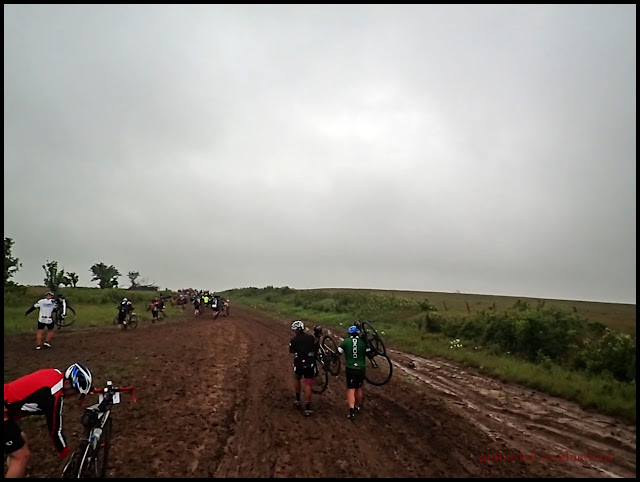
My view of the D Road Hill in 2015
Now there was rain overnight before the 2023 Unbound event and the three mile section in question here is only about 11-12 miles out from Emporia. I dunno...... 

Maybe it wasn't easy to check it out before the riders launched at 6:00am? 

Regardless, the riders were sent off and there was no implementation of the reroute. Was this done to keep the "spirit of the event" or.....? So far, neither Mr. Sachs nor anyone from Unbound will say- yet anyway. That could change. We'll get to why that is and what I think will happen a bit later. 

Right now all you need to know is that many Pro men in the field of 116 riders failed to finish, many of them directly or indirectly due to this stretch of road. This field's stragglers were caught by the Women's field, which was made up of 57 riders, and saw fully about a third of that number as DNF's by the end of the day, again, many blaming this section of road. The women's field, in turn, was caught by the fast end of the amateurs running the 200. By the time all was said and done, by Mile 20 it did not matter much that the Pro Men and Women got a preferred start ahead of the masses, which numbered about 1100, according to stories I read. Of course, of those many did not finish. I read somewhere that the attrition rate in the 200 was 43% of the field.
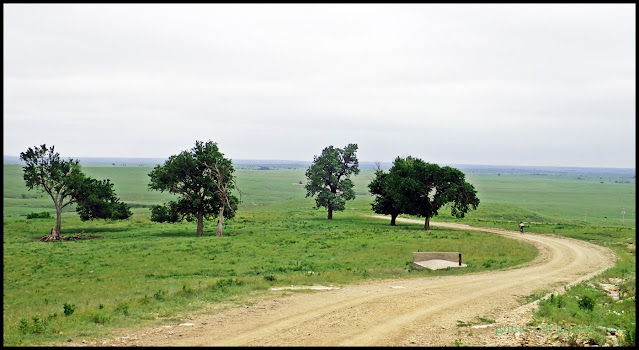
During the 2015 event, the entire course was either wet, mud, or had standing water across the roadway.

So, naturally we could find several instances of complaints about course conditions, how "all that training went to waste in 11 miles" (Where have I heard THAT before!) , or how, at least in second place Woman's Pro rider Sofia Gomez Vllfane's opinion, the Woman should have their own race day and that it should be shorter. 

Here's the deal: First off, the RD, Mr. Sachs did not, for whatever reasons, utilize the reroute for D Road. Why not? This is an important question. Without an answer, I will have to assume that what happened was preordained. Update: Thanks to "Nebo" in the comments on this post, we do have a response from Life Time's President, Kimo Seymour: See HERE)

So, the mud section came and yes- if you have not been paying attention here, you might come away from the Unbound thinking that was too extreme, or that somehow this played into "unfair" situations for some riders. Well, here's the thing folks- weather can squash anyone and elevate others. It's random sometimes, and yes- Low finishing rates are a result. This is what has been accepted in gravel racing since 2005. 

In other words- "Hey Pro riders and media- DO YOUR RESEARCH!" And- If you don't like the idea of any of that mud or rain, or whatever, then maybe these events are not for you. That's right folks. Gravel events are not going to be every cyclists cup of tea, and that's okay. I don't like crit racing, and so I don't enter crits, even if I was good enough to make money at it. I still would not sign up. But that's me. The point here is that I shouldn't ask criterium overlords to make criterium racing easier for me to accept. You shouldn't ask gravel racing promoters to make their events easier either. Just don't go if you have issues with the format.

Checkpoint #1 Trans Iowa v12

The other story I saw wasn't so much a complaint but that what was observed was thought to be a "new tactic" that the Pro Men were using at Unbound. 

What could it have been? Was it new GPS computer tracking? No? How about some nutritional ju-ju no one has tried before? No? What was it?

Here is what it was: The guys and gals are using cell phones to call in to support for the reasons of quicker pit stops. 

As if THAT hasn't been going on since, well since cell coverage got good enough that rural riders could count on getting messages across the air waves. Be that by an actual call or text, the result is the same. 

So, sorry to bust your bubble out there, but this is definitely not a novel use of a cell phone. If you've been reading this blog for a long time, you already know that I wrestled with cell phone usage for years when I put on Trans Iowa. Coaching, emotional support, navigation, awareness of competitor's positions, and more were all used in Trans Iowa. Prearranged support probably was too, I just never caught anyone doing that, but look, I'm pretty sure that happened looking at the evidence. 

And this use of texting in an order to your "pits", (which is essentially what the Pros have for themselves now), is prearranged support. It is not fair to all the riders, but you know, as long as all the plebeians have paid their entry fees, Unbound probably doesn't care about what is fair or not to the entire field. And the whole idea of having three to four mechanics and team people there at those pits is not new either. That came from cyclo cross and 24hr racing. That happened in 2005 at Trans Iowa. So, yeah.... 

Then we have the folks who are complaining that this or that is "unfair" or if not that then it's "not right". This brings us back to whether or not Unbound or its directors will address this mud year thing. In my event it was "Take it or don't come to the event. This is what it is." However; there is a slight bit of an issue with Unbound being able to stand their ground in this area. That would be their entry fee. 

An image from Trans Iowa v6 by Steve Fuller

When you charge a fee for an event, you are taking money in exchange for several things. The event production and maybe the race director get a portion of that. The fee covers insurance, technical things like timing, lights, tape, and race numbers. Stuff like that. Stuff many of you think about when you go to an event that "should be there". 

But there are also intangibles and unseen expectations at work here Things like "The course better be doable by at least 80% of the riders" (where THAT came from is pretty random) , or "My training better pay off here", or related, "My coaching better show up as being worthwhile here". 

Other things like, courses that leave gear in pristine running conditions, or easily traversed terrain, or how about having a big welcome at the finish. (Yes, really. I've seen and heard people have a conniption over not getting fanfare at finish lines) 

So, Unbound has all of that and this becomes even more of a pressure placed on the event organization due to the extremely high entry fee and the fact that the event is difficult to get in to. That it is a "bucket list" event also adds to the pressures with regard to people wanting some assurances/insurance that they will finish and have a good time. 

Well, here's news for ya: Failure Is An Option.  I get that it can be deflating, regrettable, and that it is really hard to see the person in the mirror in front of you as having the most responsibility in that. It's easy to point at the RD, the event, or someone else. But those four other fingers are pointed at the person who really needs to own up to what happened. 

And what happened could be 100% out of your control. Yep! Hard to swallow, I know. I've been there. I know all about this. And it is 100% relatable to this year's Unbound. 
I missed the cut-off at Checkpoint two at the DK200 in 2015 by two minutes.

So, back to Unbound and their high entry fee. You expect to be able to ask - nay demand - that for nearly $400.00 and more for housing, travel, equipment, etc, not to mention all that training time, that you shouldn't have to put up with _____ (Fill in that blank any way you want to) 

And Unbound, well, ya know, they gotta listen. Maybe they hold to their guns, or Corporate may lean on the RD's and say that they gotta start cleaning up the complaints. But I hope that they don't. I hope that Unbound doesn't sanitize their event. I hope that they don't think that they should change because of 173 Pro racers while ignoring the 3K+ others. This is not where gravel racing came from. You want a curated experience with a near 100% chance of a positive outcome as a Pro? Well, again - maybe this is not for you. And yes, we're okay with that. That's what I hope Unbound will do.

Gravel racing was never about making things easier. It was about an event that stretched you, that challenged you, that maybe no one would finish. And that was good. It was seen as something to be celebrated. Hard years at Trans Iowa were cherished and desired. We had a nearly perfect year for Trans Iowa in v12, the year I saw the most finishers ever for one event. You know what I heard afterward from many of the riders? They wanted to try Trans Iowa again and they hoped for a "mud year" because that would be a "real" challenge. 

In other words, the people at Trans Iowa, and many other gravel events, didn't want to participate in an event that "most people would finish". They wanted to be pushed to limits and see if they could go past them. I get that money invested in high entry fees, high-dollar equipment, (which is 100% NOT necessary to compete) and time investments, make it hard to see what is the thing that made gravel events take off. But I can tell you that making things easier, more sanitized, and "equal" is not a recipe for truly satisfying and soul - stretching experiences. 

Failure is an option.

Sometimes it is the best thing that could ever happen to you.