Showing posts with label front suspension gravel bike. Show all posts

Thursday, April 04, 2024

Gravel Riding And Suspension Forks

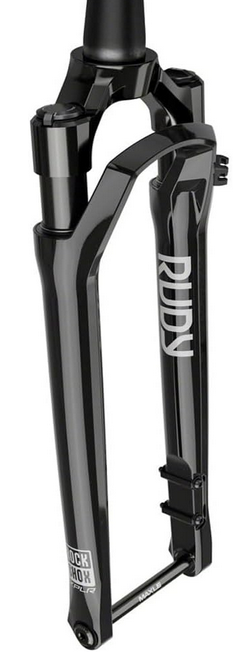
Image poached off Amazon
Does The Cost & Maintenance of a Gravel Suspension Fork Outweigh The Benefits?

I recently read a 'review' (and I use that term loosely in this case) of a Rockshox Rudy Ultimate XPLR gravel suspension fork. The model features some pretty cutting-edge suspension fork technology and comes in either 30mm travel or 40mm travel options. The minimalist travel is mostly due to the restrictions in geometry and stack height for a gravel bike. 

Before I get into my opinions on this, and any gravel bike suspension forks, I will admit to not being a fan of having such a device on a bicycle meant for gravel riding. I understand the "problem" that forks like these are trying to solve, I just do not agree with the solution presented in the form of a telescopic suspension device.  I feel, and I have tested, other forms of dealing with the problems of vibration and rough roads that I feel are not only as effective, or better than a telescopic fork, but are, in most cases, less expensive and easier to maintain than a telescopic suspension fork could ever be. 

Furthermore, I have ridden a gravel suspension fork before on Iowa gravel roads for a good amount of miles, so it isn't as though I don't have any experience with the form factor. So, with all that said, let's dive into this....

The Benefits: Obviously, these things would not exist if it weren't for real, measurable benefits of these forks. Again, it is one way to solve the problem of vibration and bumps that can fatigue a rider, or cause issues like hand pain, etc. The devices offered by Fox and Rockshox are probably the most sophisticated and technologically loaded solutions one can find to address this problem with riding gravel. The forks do a thing and do it with a modicum of success. At least, compared to other solutions meant for riding gravel. Now if we bring in anything meant for a mountain bike, well....That's a totally different story.

I tested this Otso Waheela S with a Fox telescoping suspension fork.

The Problem: Minimal travel on a suspension fork is a handicap for riders. Until, and unless, designers start modifying designs to accept longer axle to crown suspension forks with more travel, this issue with minimal travel cannot be overcome. It is simple physics. Any review of such a device that ignores this is not worth the digital ones and zeros it is made from. 

So, will designers start doing this? Will "gravel bikes" morph into short travel XC mountain biking territory, only with skinnier tires? I doubt this will happen since then the consumer will not see the bike as a "road" bike anymore and at that point, just buy a mountain bike instead of something "less than" a mountain bike. In this way, designers are also pigeonholed into short travel forks for gravel, and therefore they are doomed to proffering up forks that don't quite live up to their billing. 

What They Don't Tell You: The main hidden negative to any telescopic suspension fork is the maintenance that is "required" for such devices. Gravel suspension forks are no different here. Let's take the Rudy Ultimate XPLR as an example.

Service intervals, according to SRAM, the manufacturer of Rockshox forks, is the same across the board for their range of suspension forks. So, every 50 hours SRAM recommends lower leg service and every 200 hours they recommend a full-service on the fork damper and internals. Okay, what does that mean for the average rider? 

That means that you probably should be getting full maintenance done every year, at a minimum, and lower leg service more often than that. By my math, which could be wrong, anyone who rides 2,500 miles a year of gravel with a suspension fork is going to fall into that once a year, deep maintenance category with multiple light services as well. 

From Rockshox social media in 2023

What would that cost? Anywhere from $100.00+ for light service to closer to $200.00 for that deeper service, plus parts. That's not insignificant. That's on top of the price of the fork, which if bought separately is about $700-$800 bucks.

Of course, you could ignore the service intervals. Many likely do. But at some point, your denial will catch up to you and then what? As a mechanic, I can tell you that this will end up costing you more when you finally do decide it is time to fix that fork. There is no way around it. Suspension forks will cost you dollars and downtime at some point.

What Are The Alternatives? I think that before I get into hardware solutions it needs to be said that the first thing to work on is you. The status of your physical condition, your fitness, and your expectations need to be honestly examined. A suspension fork won't fix a person's issues of being out of shape physically, it won't fix a bad bike fit, and it won't make a century ride you are not ready for doable. 

I've seen a lot in my time as a mechanic and many odd solutions for issues that start with the rider have been affixed to and applied to bicycles that were less than effective. In some cases these were downright dangerous. Now, a gravel suspension fork isn't dangerous, of course, but it could be a very expensive band-aid for something else that is not being realized, or that is being ignored. I'll mention this again - Bike fit. It's HUGE, and a good bike fit makes a monumental difference in where you go next in making decisions like getting a component or not. 

Okay, 'nuff said there. Let's take a look at other less expensive ideas. Things like using tire pressure, different handlebars, compliant seat posts, or even a suspension stem. Maybe all of that. Keep in mind that most of your issues stem from medium to higher frequency vibrations. Vibrations that a suspension fork typically does not address, nor is it meant to address. 

This is where the Lauf fork gets a bad rap, in my opinion. Some folks equate that fork with the typical telescoping suspension fork. The Lauf is meant to absorb all that mid to high frequency stuff, not to eat bumps, pot holes, and washboard so much. It can do that, but with no real damper, it doesn't fare well over repeated hits like that. A suspension fork like the Rudy is meant for bigger hits, in terms of design theory, but again, due to gravel fork's limitations (both real and imposed), it cannot do that job really well either. 

But the big kicker is that all of the alternatives do not require the repetitive and expensive maintenance that a telescopic suspension fork does. So, the alternatives are not only more effective, typically, than a suspension fork on gravel, but are also less expensive to own. 

Conclusions: So, maybe I am a "hater", and if you think so, I can see why. However; I would ask you to weigh the evidence and see if you do not agree that a telescopic suspension device, as presented currently for gravel, is not a very effective measure for addressing mid to higher frequency vibrations found commonly on gravel rides. I would even submit that smaller bumps and some lower frequency stuff is also addressed by a simple, low maintenance suspension stem. 

One third the price of a fork, near zero maintenance. (Image courtesy of Cane Creek

Wheels, tires, handle bars, seat posts, and saddles can all combine to nearly erase the mid to high frequency vibrations that fatigue a rider. Now what about those potholes and washboard sections? What about hard, rough trails and roads?

This is where a drop bar MTB-like bike such as a Cutthroat with a suspension fork would be superior. Yes - even those forks require periodic maintenance. However; the 80mm - 120mm telescopic fork has a far, far better performance over potholes, washboard, and hard, rough roads than anything hamstrung by less than two inches of fork travel would. One has to decide what sort of surfaces they will be expecting to ride most. Any decision on any bicycle or component is going to be a compromise to some degree. You have to decide what is best for you and your riding.

Again, I'm not saying a 30mm - 40mm telescopic fork doesn't do anything for the rider. I am saying that such a fork is not the right answer. The maintenance costs outweighs any possible benefits to the rider when the forks with that sort of limited travel don't do anything really well.

Saturday, April 15, 2023

Why I Don't Like Telescopic Front Forks For Gravel Bikes

The Otso Waheela S
 Several years ago telescopic front forks for gravel bikes were introduced with the Fox AX model being the most prominent player. Although there were others in the niche as well, Fox, and now Rock Shox, with its limited travel Ruby fork, are now the main purveyors of this tech for gravel. 

I have tested and ridden the previous Fox AX model enough that I have a pretty good handle on what this idea can and cannot accomplish for the typical gravel rider. But first, let's get into why you might want this in the first place.

I'm going to summarize in the way I describe what is going on when you ride rougher roads and gravel, so I am not trying to dive into the science here too much.  Please forgive my broad brush strokes here, but I will try to give you enough to chew on that the rest will make sense. 

Gravel, unpaved roads, or even rough, broken up paved roads cause vibrations. While your tires can and do deal with some of that, some of the energy that is created by you to pedal gets transferred into energy that is known as vibrations and that has to be dissipated somehow. Most of the time this happens in your muscle tissue and that energy is turned into heat, which then has to be dealt with by other means in your body as well. You can see this happening when the muscles in your arms are shaking while riding rough grounds, and that is energy being transferred to you, which you damp out, and that is not an ideal way to handle this for the cyclist.  

So, maybe you can see how a telescopic suspension fork might prove to be an advantage here because it dissipates the energy, not you. Well, ideally it would do this. That is the goal, but these devices don't damp everything out. But you get the picture, hopefully. 

Okay, so back to these "gravel specific" telescopic fork devices. Almost universally they have been hamstrung by what is seen as the necessary geometry for gravel bicycles, which itself is derived from road cycling, and which is focused on aerodynamics and efficiency of the rider, primarily. This means, for this discussion, that a limitation on the axle to crown height of a fork, (acceptable for aero/geometry reasons) is imposed which in turn limits travel on a telescopic design to around 40-50mm of travel. Basic stuff and completely understandable for gravel bikes. 

Now, let's talk some history. Back in the early 1990's, suspension for MTB was in its infancy. The "standard" amount of travel was about 60-65mm, with Rock Shox settling in at 63mm for its famous Mag 21 model. I rode the equivalent Specialized Future Shock model, (a rebadged Mag 21, basically), and it was woefully over its head on "real" mountain bike terrain. The damping on my fork was modified to be such that it would not "blow through its travel" but still, it wasn't enough. Travel that is. This is why you cannot buy a 63mm travel MTB fork anymore. Many think 80mm is too little, and most "XC" forks now are at 100-120mm of travel. Why? Because to actually be effective, the telescopic design needs that much distance to travel to dissipate energy effectively instead of the rider doing that.

The Fox AX was overwhelmed easily by bigger hits if set up to deal effectively with normal gravel

 Okay, now back to my experience with the Waheela S and the Fox AX fork. This fork had tunability and in my experience, it could be set up in several ways. It made sense to me to have the fork working all the time to absorb as much of the vibrations as possible. This would make up for the added weight of the fork over that of a typical fork for gravel, which was anywhere from a pound to a pound and a half difference. (Depending on the rigid fork) Okay. That was great until you hit something bigger than crushed rock. Then the fork would bottom out violently with a loud "clunk" and forget about it being an advantage in Level B road ruts, pot holes, or washboard where the travel was completely overwhelmed. (Remember my MTB Future Shock here)

Now, I could have opted for the damping to only take effect on the bigger stuff and just lived with the buzz of normal gravel, but that sort of defeats the purpose of pushing around the extra weight on, what normally is, most of my rides. Notice; You may have a differing opinion here, but for me? The suspension fork is a no-go. Not as it is currently configured in 2023. 

From Rock Shox social media

Now let's talk about another issue that any suspension fork, (besides the Lauf leaf spring fork) brings to the table, and that is maintenance.

 The image to the left here is a Rock Shox posting on their social media describing what the foam rings do on their forks and how often you should service those. The foam rings help prevent dust from entering the fork's internals where dust would be detrimental to the inner workings. Now, you all know how much dust gravel riding generates, right? So, maintaining good foam rings would be even more challenging in a gravel riding scenario, one could assume. 

Rock Shox states that these foam rings need servicing after every 50 hours of riding. Now, I don't know about you, but that would be about twice a year, at least, for myself. Just roughly guessing here, but at least twice is a safe bet. 

Ever look up what suspension servicing costs at your local bike shop, (if they even do that at all)? It seems from a quick search on the internet that you could expect this to be a $75.00-$100.00 repair. That is a minimum of $150.00/yr for me, and how many days without the bike the fork is on? Maybe a couple weeks? Hard to say.

I don't know about you, but I can find better ways to spend $150.00+ bucks and however many days of downtime that it would incur to do fork maintenance. I just don't see the performance benefits of telescopic front forks for gravel bikes as being an advantage that is worth more than the initial costs, ($500.00 - $850.00) and the maintenance costs of those types of forks. Especially when I can get what I want in terms of vibration damping out of a Redshift or Cane Creek suspension stem, have no maintenance costs, and a lot less initial cash outlay. I also could opt for the venerable Lauf fork, have no maintenance costs, but yeah, it does cost $990.00! 

Verdict: For my money, the best solution here is a tire that works well and a suspension stem, like the Redshift ShockStop stem, which does a great job at the vibration reduction thing. It is also tunable for your ride style and weight. The ShockStop is also swappable from bike to bike in most cases as well, making it more versatile over the long haul for its owner. I do not need a specific "suspension compatible" gravel frame, nor are there any proprietary limitations. 

To make the telescopic fork actually work on a gravel bike, it would necessarily need to have more travel to work with to dissipate both high frequency, mid frequency, and big impact inputs. Only then would its weight penalty, cost penalty, and maintenance penalty over a suspension stem make it a consideration. However; to gain that function the fork would have to have an axle to crown height that would nullify any aerodynamic efficiencies that a gravel bike needs to have.  (Think about how a Fargo or Cutthroat with suspension would do in a headwind vs a typical gravel bike) Yes- you could do this and maybe be a happy rider, but there is no denying the physics here. And still you have all the economic and practical issues to deal with as well.

Why I Don't Like Telescopic Front Forks For Gravel Bikes

The Otso Waheela S
 Several years ago telescopic front forks for gravel bikes were introduced with the Fox AX model being the most prominent player. Although there were others in the niche as well, Fox, and now Rock Shox, with its limited travel Ruby fork, are now the main purveyors of this tech for gravel. 

I have tested and ridden the previous Fox AX model enough that I have a pretty good handle on what this idea can and cannot accomplish for the typical gravel rider. But first, let's get into why you might want this in the first place.

I'm going to summarize in the way I describe what is going on when you ride rougher roads and gravel, so I am not trying to dive into the science here too much.  Please forgive my broad brush strokes here, but I will try to give you enough to chew on that the rest will make sense. 

Gravel, unpaved roads, or even rough, broken up paved roads cause vibrations. While your tires can and do deal with some of that, some of the energy that is created by you to pedal gets transferred into energy that is known as vibrations and that has to be dissipated somehow. Most of the time this happens in your muscle tissue and that energy is turned into heat, which then has to be dealt with by other means in your body as well. You can see this happening when the muscles in your arms are shaking while riding rough grounds, and that is energy being transferred to you, which you damp out, and that is not an ideal way to handle this for the cyclist.  

So, maybe you can see how a telescopic suspension fork might prove to be an advantage here because it dissipates the energy, not you. Well, ideally it would do this. That is the goal, but these devices don't damp everything out. But you get the picture, hopefully. 

Okay, so back to these "gravel specific" telescopic fork devices. Almost universally they have been hamstrung by what is seen as the necessary geometry for gravel bicycles, which itself is derived from road cycling, and which is focused on aerodynamics and efficiency of the rider, primarily. This means, for this discussion, that a limitation on the axle to crown height of a fork, (acceptable for aero/geometry reasons) is imposed which in turn limits travel on a telescopic design to around 40-50mm of travel. Basic stuff and completely understandable for gravel bikes. 

Now, let's talk some history. Back in the early 1990's, suspension for MTB was in its infancy. The "standard" amount of travel was about 60-65mm, with Rock Shox settling in at 63mm for its famous Mag 21 model. I rode the equivalent Specialized Future Shock model, (a rebadged Mag 21, basically), and it was woefully over its head on "real" mountain bike terrain. The damping on my fork was modified to be such that it would not "blow through its travel" but still, it wasn't enough. Travel that is. This is why you cannot buy a 63mm travel MTB fork anymore. Many think 80mm is too little, and most "XC" forks now are at 100-120mm of travel. Why? Because to actually be effective, the telescopic design needs that much distance to travel to dissipate energy effectively instead of the rider doing that.

The Fox AX was overwhelmed easily by bigger hits if set up to deal effectively with normal gravel

 Okay, now back to my experience with the Waheela S and the Fox AX fork. This fork had tunability and in my experience, it could be set up in several ways. It made sense to me to have the fork working all the time to absorb as much of the vibrations as possible. This would make up for the added weight of the fork over that of a typical fork for gravel, which was anywhere from a pound to a pound and a half difference. (Depending on the rigid fork) Okay. That was great until you hit something bigger than crushed rock. Then the fork would bottom out violently with a loud "clunk" and forget about it being an advantage in Level B road ruts, pot holes, or washboard where the travel was completely overwhelmed. (Remember my MTB Future Shock here)

Now, I could have opted for the damping to only take effect on the bigger stuff and just lived with the buzz of normal gravel, but that sort of defeats the purpose of pushing around the extra weight on, what normally is, most of my rides. Notice; You may have a differing opinion here, but for me? The suspension fork is a no-go. Not as it is currently configured in 2023. 

From Rock Shox social media

Now let's talk about another issue that any suspension fork, (besides the Lauf leaf spring fork) brings to the table, and that is maintenance.

 The image to the left here is a Rock Shox posting on their social media describing what the foam rings do on their forks and how often you should service those. The foam rings help prevent dust from entering the fork's internals where dust would be detrimental to the inner workings. Now, you all know how much dust gravel riding generates, right? So, maintaining good foam rings would be even more challenging in a gravel riding scenario, one could assume. 

Rock Shox states that these foam rings need servicing after every 50 hours of riding. Now, I don't know about you, but that would be about twice a year, at least, for myself. Just roughly guessing here, but at least twice is a safe bet. 

Ever look up what suspension servicing costs at your local bike shop, (if they even do that at all)? It seems from a quick search on the internet that you could expect this to be a $75.00-$100.00 repair. That is a minimum of $150.00/yr for me, and how many days without the bike the fork is on? Maybe a couple weeks? Hard to say.

I don't know about you, but I can find better ways to spend $150.00+ bucks and however many days of downtime that it would incur to do fork maintenance. I just don't see the performance benefits of telescopic front forks for gravel bikes as being an advantage that is worth more than the initial costs, ($500.00 - $850.00) and the maintenance costs of those types of forks. Especially when I can get what I want in terms of vibration damping out of a Redshift or Cane Creek suspension stem, have no maintenance costs, and a lot less initial cash outlay. I also could opt for the venerable Lauf fork, have no maintenance costs, but yeah, it does cost $990.00! 

Verdict: For my money, the best solution here is a tire that works well and a suspension stem, like the Redshift ShockStop stem, which does a great job at the vibration reduction thing. It is also tunable for your ride style and weight. The ShockStop is also swappable from bike to bike in most cases as well, making it more versatile over the long haul for its owner. I do not need a specific "suspension compatible" gravel frame, nor are there any proprietary limitations. 

To make the telescopic fork actually work on a gravel bike, it would necessarily need to have more travel to work with to dissipate both high frequency, mid frequency, and big impact inputs. Only then would its weight penalty, cost penalty, and maintenance penalty over a suspension stem make it a consideration. However; to gain that function the fork would have to have an axle to crown height that would nullify any aerodynamic efficiencies that a gravel bike needs to have.  (Think about how a Fargo or Cutthroat with suspension would do in a headwind vs a typical gravel bike) Yes- you could do this and maybe be a happy rider, but there is no denying the physics here. And still you have all the economic and practical issues to deal with as well.

Friday, December 09, 2022

Friday News And Views

Whiplash Effect Exerts Negative Energy Upon Bicycle Businesses. 

Last week I noted that a former editor/writer for a major cycling based website, who had himself been recently laid off, told of some big layoffs at Wahoo, the GPS/indoor trainer firm. 

In the social media thread that followed I saw a great explanation of the current issues that face cycling businesses, and several other recreational based industries. The theory is that during the pandemic, demand was not actually increased for cycling products, or by way of association, boats, campers, etc. No, all it did was to pile two to three years of sales cycles into about an 18 month period. 

This then manifests itself by a drop off in demand because these people won't be in the market to buy again for the length of another sales cycle, whatever that may be for a particular item. For bicycles, my feeling, having been around the retail end of things, is that is about 5-7 years, (shorter if it is a mountain bike due to the severity of usage and advancements in tech)

Meanwhile this is compounded by a supply chain that is so convoluted and slow to react that orders placed when demand and prices were at their peak are only now being delivered, right at the very same time that the demand has fizzled out, and inflationary pressures have popped up. 

The results are devastating. One commenter on the thread I saw, who is a supplier to the trade, claimed that up to 40% of dealers they used to call on no longer exist and that "large OE's" are claiming that they are strapped for cash. One commenter intimated that this "bust" will last into 2024. 

What does it all mean for you, the average cyclist? It may be a good thing for some that have expendable income as there likely will be good prices on some things, but overall, it will not go well for average cyclists. Retail outlets will disappear, be assimilated into larger, brand-owned chains, and overall choices will be eliminated and customer experience will suffer as well. 

Shimano Announces D2C Sales Of Pedals, Footwear:

On Wednesday of this past week, Shimano North America announced that consumers in the USA will now be able to purchase Shimano cycling footwear, pedals, and some clothing accessory items directly from its US website. (Sorry Europeans and elsewhere- Shimano is only doing this in the USA for now.) 

Comments: To be honest, I was a little shocked, but again- With less opportunities to put product on dealer floors due to there being more Brand Owned Bike Shops (That usually only sell one brand)  and less bike shops overall, I can understand that this is a better way for Shimano and for those who want Shimano product. I'm not sure how they will handle fitting, since that is of utmost importance with footwear, but pedals, well they are a commodity, really. That I totally get. Interesting move for sure.
 

Gravel Cycling Hall of Fame Prepares To Choose 2023 Class Of Inductees:

When the calendar turned from November to December last week, the Gravel Cycling Hall of Fame cut off nominations for its second class of inductees which will be installed in Emporia, Kansas the week of the UNBOUND Gravel event. 

A social media post by the hall thanked those who sent in nominations last week. In that post, the GCHoF claimed that they had received "hundreds of nominees". 

What?!!

Furthermore, the post stated that their team of cyclists, cycling business personalities, cycling journalists, and event promoters would be pouring through those nominees to whittle it down to the next class of Gravel Cycling Hall of Fame inductees. Oh.....and the first class of inductees will also have a say in the matter. 

I guess that means me! I'm not sure what that entails- yet -  but it should prove to be an interesting experience. That's something I'll be looking forward to for the coming year, and hey- Maybe I'll be showing up in Emporia again. If I make plans for that, I'll try not to get lost this time on the way down! 

PSA: Double Posts Throughout December:

I thought I'd let you all know that you are going to start, and already are, seeing many days with two published posts a day. That's the way of it when I have so much "End Of Year" stuff to push out before the month ends. 

Most of those double-post days will be on the subject of my bicycles. I know some of you were hoping for a one post round-up of all the bicycles I have, but I'm not into that and the way it is, I have a ton of bicycles to show off anyway. 

I may have used more of my bicycles this year than at anytime previous, so that makes for a lot of posts. Well, you'll see them, if you keep coming back here! And don't worry! Things settle down a lot again once we get to the New Year.

New SRAM gravel suspension fork design patent drawing.

A Linkage Fork For Gravel?

Recently Wheelbased posted this patent application for a design from SRAM which would be a suspension linkage fork for gravel bikes. 

Veteran MTB riders from the 90's will recognize this design instantly as one that has been "done before". The 1990's were the heyday for linkage fork designs and many companies made versions of the idea for 26" wheeled mountain bikes. Companies like Girvin, AMP, and Control Tech made popular forks many riders would be familiar with that were into the mtb scene back then.

So, why a linkage fork for gravel? SRAM claims that telescopic suspension forks are not very aerodynamic and that this design for a linkage fork would present a much more aero-friendly profile to the wind. The idea is that this design proposal would also be lighter, since it could be made almost entirely out of carbon fiber, minus the pivots and maybe the linkages.

1993 Kona Z-Link ad copy

Okay..... But why aren't there linkage forks all over the place for bikes now? Great question! The linkage fork has several benefits which could be employed for today's bicycles, but their main down fall is that their pivot points are susceptible to high-wear due to energy being focused on them through lateral and twisting forces. Once the pivots get sloppy, the fork is almost unrideable at that point. High maintenance is not a goal for any rider!   

It should be mentioned that the spring in the case of this SRAM proposed design is said to be of "plastic or elastomer material". So.... Okay- Why not just use a Redshift Shock Stop Stem? I know- I keep bringing that stem up, but for the minimal travel you'd garner from this SRAM fork, and judging from the proposed spring material, this Redshift stem I use on my bikes would be the superior choice from the standpoint of maintenance, aerodynamics, and cost. (Standard Disclaimer applies)

Give that linkage more travel and then we have a different conversation, but that is not the design intent here. 

Finally, another question: Are we trying to suspend the wheel for _____ benefits, or isolate the rider from higher frequency vibrations most commonly found in gravel (events, races, just riding around)? 

My position on this is that "if" you are trying to do what mountain bikes already are doing, get a mountain bike. Drop bar MTB is a thing. You'd have a realistic amount of travel to do what suspension does best (anything 80mm+) and you get the technology that actually works for that sort of riding that has been developed over the past 30+ years. Not some resurrected relic of MTB's failed past in that linkage idea. Besides.....

Lauf already has what could be described as a linkage fork without pivots which already does what most folks need in terms of the gravel scene, and it is lighter, and it is maintenance free. 

This is a neat idea to ponder, but don't expect to see this on your gravel bike anytime soon.   

That's a wrap for this week. Stay warm and have a great weekend!

Friday News And Views

Whiplash Effect Exerts Negative Energy Upon Bicycle Businesses. 

Last week I noted that a former editor/writer for a major cycling based website, who had himself been recently laid off, told of some big layoffs at Wahoo, the GPS/indoor trainer firm. 

In the social media thread that followed I saw a great explanation of the current issues that face cycling businesses, and several other recreational based industries. The theory is that during the pandemic, demand was not actually increased for cycling products, or by way of association, boats, campers, etc. No, all it did was to pile two to three years of sales cycles into about an 18 month period. 

This then manifests itself by a drop off in demand because these people won't be in the market to buy again for the length of another sales cycle, whatever that may be for a particular item. For bicycles, my feeling, having been around the retail end of things, is that is about 5-7 years, (shorter if it is a mountain bike due to the severity of usage and advancements in tech)

Meanwhile this is compounded by a supply chain that is so convoluted and slow to react that orders placed when demand and prices were at their peak are only now being delivered, right at the very same time that the demand has fizzled out, and inflationary pressures have popped up. 

The results are devastating. One commenter on the thread I saw, who is a supplier to the trade, claimed that up to 40% of dealers they used to call on no longer exist and that "large OE's" are claiming that they are strapped for cash. One commenter intimated that this "bust" will last into 2024. 

What does it all mean for you, the average cyclist? It may be a good thing for some that have expendable income as there likely will be good prices on some things, but overall, it will not go well for average cyclists. Retail outlets will disappear, be assimilated into larger, brand-owned chains, and overall choices will be eliminated and customer experience will suffer as well. 

Shimano Announces D2C Sales Of Pedals, Footwear:

On Wednesday of this past week, Shimano North America announced that consumers in the USA will now be able to purchase Shimano cycling footwear, pedals, and some clothing accessory items directly from its US website. (Sorry Europeans and elsewhere- Shimano is only doing this in the USA for now.) 

Comments: To be honest, I was a little shocked, but again- With less opportunities to put product on dealer floors due to there being more Brand Owned Bike Shops (That usually only sell one brand)  and less bike shops overall, I can understand that this is a better way for Shimano and for those who want Shimano product. I'm not sure how they will handle fitting, since that is of utmost importance with footwear, but pedals, well they are a commodity, really. That I totally get. Interesting move for sure.
 

Gravel Cycling Hall of Fame Prepares To Choose 2023 Class Of Inductees:

When the calendar turned from November to December last week, the Gravel Cycling Hall of Fame cut off nominations for its second class of inductees which will be installed in Emporia, Kansas the week of the UNBOUND Gravel event. 

A social media post by the hall thanked those who sent in nominations last week. In that post, the GCHoF claimed that they had received "hundreds of nominees". 

What?!!

Furthermore, the post stated that their team of cyclists, cycling business personalities, cycling journalists, and event promoters would be pouring through those nominees to whittle it down to the next class of Gravel Cycling Hall of Fame inductees. Oh.....and the first class of inductees will also have a say in the matter. 

I guess that means me! I'm not sure what that entails- yet -  but it should prove to be an interesting experience. That's something I'll be looking forward to for the coming year, and hey- Maybe I'll be showing up in Emporia again. If I make plans for that, I'll try not to get lost this time on the way down! 

PSA: Double Posts Throughout December:

I thought I'd let you all know that you are going to start, and already are, seeing many days with two published posts a day. That's the way of it when I have so much "End Of Year" stuff to push out before the month ends. 

Most of those double-post days will be on the subject of my bicycles. I know some of you were hoping for a one post round-up of all the bicycles I have, but I'm not into that and the way it is, I have a ton of bicycles to show off anyway. 

I may have used more of my bicycles this year than at anytime previous, so that makes for a lot of posts. Well, you'll see them, if you keep coming back here! And don't worry! Things settle down a lot again once we get to the New Year.

New SRAM gravel suspension fork design patent drawing.

A Linkage Fork For Gravel?

Recently Wheelbased posted this patent application for a design from SRAM which would be a suspension linkage fork for gravel bikes. 

Veteran MTB riders from the 90's will recognize this design instantly as one that has been "done before". The 1990's were the heyday for linkage fork designs and many companies made versions of the idea for 26" wheeled mountain bikes. Companies like Girvin, AMP, and Control Tech made popular forks many riders would be familiar with that were into the mtb scene back then.

So, why a linkage fork for gravel? SRAM claims that telescopic suspension forks are not very aerodynamic and that this design for a linkage fork would present a much more aero-friendly profile to the wind. The idea is that this design proposal would also be lighter, since it could be made almost entirely out of carbon fiber, minus the pivots and maybe the linkages.

1993 Kona Z-Link ad copy

Okay..... But why aren't there linkage forks all over the place for bikes now? Great question! The linkage fork has several benefits which could be employed for today's bicycles, but their main down fall is that their pivot points are susceptible to high-wear due to energy being focused on them through lateral and twisting forces. Once the pivots get sloppy, the fork is almost unrideable at that point. High maintenance is not a goal for any rider!   

It should be mentioned that the spring in the case of this SRAM proposed design is said to be of "plastic or elastomer material". So.... Okay- Why not just use a Redshift Shock Stop Stem? I know- I keep bringing that stem up, but for the minimal travel you'd garner from this SRAM fork, and judging from the proposed spring material, this Redshift stem I use on my bikes would be the superior choice from the standpoint of maintenance, aerodynamics, and cost. (Standard Disclaimer applies)

Give that linkage more travel and then we have a different conversation, but that is not the design intent here. 

Finally, another question: Are we trying to suspend the wheel for _____ benefits, or isolate the rider from higher frequency vibrations most commonly found in gravel (events, races, just riding around)? 

My position on this is that "if" you are trying to do what mountain bikes already are doing, get a mountain bike. Drop bar MTB is a thing. You'd have a realistic amount of travel to do what suspension does best (anything 80mm+) and you get the technology that actually works for that sort of riding that has been developed over the past 30+ years. Not some resurrected relic of MTB's failed past in that linkage idea. Besides.....

Lauf already has what could be described as a linkage fork without pivots which already does what most folks need in terms of the gravel scene, and it is lighter, and it is maintenance free. 

This is a neat idea to ponder, but don't expect to see this on your gravel bike anytime soon.   

That's a wrap for this week. Stay warm and have a great weekend!

Friday, August 05, 2022

Friday News And Views

HiRide fork: Image courtesy of HiRide
 What Is Old Is New Again:

Back in the days when mountain bike design was a hot stew with ever changing ingredients, there was a company known as ActionTec. They were the purveyor of an unusual suspension fork design called the "Pro Shock" which consisted of a coil sprung design based around an extended steer tube and encased within the head tube of a mountain bike. 

The design was somewhat well received and copied when Cannondale came out with a similar idea called a "HeadShok". This idea of a head tube based telescopic suspension fork design had a lot of promise for the gravel bike scene, but both ActionTec and Cannondale's HeadShok were gone before the gravel bike became a hot ticket item in the cycling industry. 

But good ideas never die, they just get re-imagined and turn up again. The case of the head tube based, telescopic suspension fork is just one example. Here we have a new take on the old design called HiRide

The HiRide fork uses a similar design but limits travel to a manageable 20mm. This should make it an appealing design with regard to aesthetics and from a geometry perspective where changing the fork axle to crown length/head tube angle/bottom bracket height via fork travel is not conducive to fast paced road/unpaved road riding. 

Comments: The desire to mitigate vibrations is a bit different than absorbing bumps and obstacles on a dirt trail. There is overlap here, to be sure, but tackling what a gravel rider/allroad cyclist needs for more smoothness and less vibration induced fatigue by way of mountain bike suspension philosophy is wrongheaded. Besides, despite the claims on HiRide's site, it shouldn't come as a surprise that if the design is tuned so it doesn't bottom out harshly, your last several milimeters of travel are not going to be effective over anything but harsher bumps. That means that you really have a lot less travel to deal with vibrations than you might think.

Add in the fact that this fork weighs about twice that of a good carbon rigid fork and now you are looking at a penalty that may not be worth the trouble. (The suspension component of the HiRide weighs a claimed 850 grams- That's without the fork) Again- a suspension stem like the Cane Creek or Redshift types is a better way to go here. You're adding maybe a 100 grams over a traditional stem, and getting the same amount of travel tuned for vibration reduction. Seems like a no-brainer to me, but this fork is pretty cool. 

Trek's New Checkpoint ALR driftless model (Image courtesy of Trek)

Trek's New Checkpoint ALR Driftless Shows What 3G Will Get You:

Since the pandemic hit we've heard a lot about this concept of "new-normal", or alternatively, you might think of the "Great Resignation". However you term the sudden change in.....well, about everything! It is apparent that, yes, things are not the same in the '20's as they were in the teens of the 21st Century.

To help illustrate this I present to you an interesting specimen of a gravel bike, the Trek Checkpoint ALR Driftless special edition bike. This bike runs at just shy of 2900 bucks. So, with tax you are looking at plus-3G and change. What do you get for that coin these days?

Well, the bike has GRX 800 bits sprinkled throughout, which is good. I noted that the brake rotors are pretty much bottom of the barrel Shimano ones though. You get a special paint scheme and a frame bag. Okay.... Looking deeper I see a Praxis T-47 bottom bracket, which might be okay, but Praxis stuff doesn't have a very consistent reputation for high quality bits. The wheels are run of the mill Bontrager branded hubs and rims, and the cockpit parts are as well. Then you have the frame. 

It's a highly formed aluminum piece mated to a carbon legged, aluminum steer tube fork. Nothing crazy here. Just pretty straightforward production level fare from a big bicycle brand. Paint notwithstanding, there is nothing really all that great here. So, 3g? 

Hmm, I guess that's where we are at now these days. That's quite a hike in price for what would have easily been 2G five years ago. I just know that I won't miss the guy that wants to have the shop keep the frame bag and knock off $200 bucks off the price and not charge him sales tax. 

Image courtesy of Wolf Tooth

Wolf Tooth Introduces "Espresso" Ano Parts:

Wolf Tooth has been on a color adding spree when it comes to their components that they offer. Recently they added an olive green, and now there is a brown anodized color they are calling "Espresso". 

You can get this option across their range. Take a look here if you are interested. 

Comments: So.....Is Wolf Tooth the new Chris King? With all these anodized color choices, a (mostly) made in the USA manufacturing process, and competitive pricing, I'd venture to say, "Yes". 

While Wolf Tooth doesn't make hubs, they make a lot of other stuff, and in my experience, their product is pretty tough, long lasting, and performs at a high level. I've been very pleased with all the Wolf Tooth products I have either bought, or reviewed. (See Standard Disclaimer for my position on reviewed product)

Now brown ano? Yeah.... Not my thing, but on the right frame set? Could be a killer look. I like the brighter, shouty anodized bits like purple, gold, blue, and the like. But then again- I came up through the 90's MTB scene! That may be why I am about the brighter anodized colors. 

A meme which used an image from the 1st GTDRI

GTDRI Series Starts Sunday:

The 'Trans Iowa Stories" series finished up last Sunday, but have no fear! If you are wondering what you'll read instead of that series, well I have already been hard at work on the next thing.

It's going to be the tales, the behind the scenes stories, and historical significance to the gravel scene which is bound up in the "GTDRI Stories" series. 

Readers will also learn how Trans Iowa and this 'no-drop group ride' held every Summer from 2006 through 2019 are interconnected as well. So it is only fitting that this series follows on the heels of the Trans Iowa series. 

There is no other reason to tell these stories about the Guitar Ted Death Ride Invitational other than that it has significance to the early gravel scene, some connection to industry changes, and just the shenanigans behind this ride which many have never read about before. 

So, I hope that you enjoy this series which should appear every Sunday here for the foreseeable future. 

Rad Power bikes is being sued for a claim of wrongful death 

U.S. Electrified Bike Market May Be Affected By Litigation:

A wrongful death claim against Rad Power Bikes may affect the future of HPC/electrified bikes in the US dependent upon the outcome of the litigation which is taking place soon. 

An unfortunate fatality has led the parents of a 12 year old girl, who died as a passenger on a Rad Power bike, to file a wrongful death claim against Rad Power, according to this "Bicycle Retailer and Industry News" article

 Apparently, as part of the lawsuit, the plaintiffs claim that the Rad Power bike had poor geometry and features which were pushed by Rad Power regarding the bike's design that led to a death in this instance. One could see how the outcome of this suit might influence lawmakers to look a bit more closely at the way HPC/electrified bikes are sold and how they are not regulated at this point, despite the "three class" system we have in place now. It also would not be out of the question to see insurance companies start to push for more stringent legislation which would further codify these bicycles as "motor vehicles" with all the attendant safety regulations attached. 

Such insurance law was narrowly avoided in Europe recently, which had it been enacted, may have damped sales of electrified bikes to a detrimental degree, according to industry players. Of course, nothing like that may happen at all here in the U.S., but it doesn't take much of a leap to see how it could, since now we have a high-profile case with a child's death attached to it. Similar issues plagued the moped market in the 1980's leading to its demise. 

Time will tell, but this bears watching. 

Note: "HPC" is my term. It stands for "hybrid powered cycles" since these two-wheeled vehicles have a hybrid of human and electric motor power.

That's it for this week. Have a great weekend and get out and ride! Fall is coming!

Friday News And Views

HiRide fork: Image courtesy of HiRide
 What Is Old Is New Again:

Back in the days when mountain bike design was a hot stew with ever changing ingredients, there was a company known as ActionTec. They were the purveyor of an unusual suspension fork design called the "Pro Shock" which consisted of a coil sprung design based around an extended steer tube and encased within the head tube of a mountain bike. 

The design was somewhat well received and copied when Cannondale came out with a similar idea called a "HeadShok". This idea of a head tube based telescopic suspension fork design had a lot of promise for the gravel bike scene, but both ActionTec and Cannondale's HeadShok were gone before the gravel bike became a hot ticket item in the cycling industry. 

But good ideas never die, they just get re-imagined and turn up again. The case of the head tube based, telescopic suspension fork is just one example. Here we have a new take on the old design called HiRide

The HiRide fork uses a similar design but limits travel to a manageable 20mm. This should make it an appealing design with regard to aesthetics and from a geometry perspective where changing the fork axle to crown length/head tube angle/bottom bracket height via fork travel is not conducive to fast paced road/unpaved road riding. 

Comments: The desire to mitigate vibrations is a bit different than absorbing bumps and obstacles on a dirt trail. There is overlap here, to be sure, but tackling what a gravel rider/allroad cyclist needs for more smoothness and less vibration induced fatigue by way of mountain bike suspension philosophy is wrongheaded. Besides, despite the claims on HiRide's site, it shouldn't come as a surprise that if the design is tuned so it doesn't bottom out harshly, your last several milimeters of travel are not going to be effective over anything but harsher bumps. That means that you really have a lot less travel to deal with vibrations than you might think.

Add in the fact that this fork weighs about twice that of a good carbon rigid fork and now you are looking at a penalty that may not be worth the trouble. (The suspension component of the HiRide weighs a claimed 850 grams- That's without the fork) Again- a suspension stem like the Cane Creek or Redshift types is a better way to go here. You're adding maybe a 100 grams over a traditional stem, and getting the same amount of travel tuned for vibration reduction. Seems like a no-brainer to me, but this fork is pretty cool. 

Trek's New Checkpoint ALR driftless model (Image courtesy of Trek)

Trek's New Checkpoint ALR Driftless Shows What 3G Will Get You:

Since the pandemic hit we've heard a lot about this concept of "new-normal", or alternatively, you might think of the "Great Resignation". However you term the sudden change in.....well, about everything! It is apparent that, yes, things are not the same in the '20's as they were in the teens of the 21st Century.

To help illustrate this I present to you an interesting specimen of a gravel bike, the Trek Checkpoint ALR Driftless special edition bike. This bike runs at just shy of 2900 bucks. So, with tax you are looking at plus-3G and change. What do you get for that coin these days?

Well, the bike has GRX 800 bits sprinkled throughout, which is good. I noted that the brake rotors are pretty much bottom of the barrel Shimano ones though. You get a special paint scheme and a frame bag. Okay.... Looking deeper I see a Praxis T-47 bottom bracket, which might be okay, but Praxis stuff doesn't have a very consistent reputation for high quality bits. The wheels are run of the mill Bontrager branded hubs and rims, and the cockpit parts are as well. Then you have the frame. 

It's a highly formed aluminum piece mated to a carbon legged, aluminum steer tube fork. Nothing crazy here. Just pretty straightforward production level fare from a big bicycle brand. Paint notwithstanding, there is nothing really all that great here. So, 3g? 

Hmm, I guess that's where we are at now these days. That's quite a hike in price for what would have easily been 2G five years ago. I just know that I won't miss the guy that wants to have the shop keep the frame bag and knock off $200 bucks off the price and not charge him sales tax. 

Image courtesy of Wolf Tooth

Wolf Tooth Introduces "Espresso" Ano Parts:

Wolf Tooth has been on a color adding spree when it comes to their components that they offer. Recently they added an olive green, and now there is a brown anodized color they are calling "Espresso". 

You can get this option across their range. Take a look here if you are interested. 

Comments: So.....Is Wolf Tooth the new Chris King? With all these anodized color choices, a (mostly) made in the USA manufacturing process, and competitive pricing, I'd venture to say, "Yes". 

While Wolf Tooth doesn't make hubs, they make a lot of other stuff, and in my experience, their product is pretty tough, long lasting, and performs at a high level. I've been very pleased with all the Wolf Tooth products I have either bought, or reviewed. (See Standard Disclaimer for my position on reviewed product)

Now brown ano? Yeah.... Not my thing, but on the right frame set? Could be a killer look. I like the brighter, shouty anodized bits like purple, gold, blue, and the like. But then again- I came up through the 90's MTB scene! That may be why I am about the brighter anodized colors. 

A meme which used an image from the 1st GTDRI

GTDRI Series Starts Sunday:

The 'Trans Iowa Stories" series finished up last Sunday, but have no fear! If you are wondering what you'll read instead of that series, well I have already been hard at work on the next thing.

It's going to be the tales, the behind the scenes stories, and historical significance to the gravel scene which is bound up in the "GTDRI Stories" series. 

Readers will also learn how Trans Iowa and this 'no-drop group ride' held every Summer from 2006 through 2019 are interconnected as well. So it is only fitting that this series follows on the heels of the Trans Iowa series. 

There is no other reason to tell these stories about the Guitar Ted Death Ride Invitational other than that it has significance to the early gravel scene, some connection to industry changes, and just the shenanigans behind this ride which many have never read about before. 

So, I hope that you enjoy this series which should appear every Sunday here for the foreseeable future. 

Rad Power bikes is being sued for a claim of wrongful death 

U.S. Electrified Bike Market May Be Affected By Litigation:

A wrongful death claim against Rad Power Bikes may affect the future of HPC/electrified bikes in the US dependent upon the outcome of the litigation which is taking place soon. 

An unfortunate fatality has led the parents of a 12 year old girl, who died as a passenger on a Rad Power bike, to file a wrongful death claim against Rad Power, according to this "Bicycle Retailer and Industry News" article

 Apparently, as part of the lawsuit, the plaintiffs claim that the Rad Power bike had poor geometry and features which were pushed by Rad Power regarding the bike's design that led to a death in this instance. One could see how the outcome of this suit might influence lawmakers to look a bit more closely at the way HPC/electrified bikes are sold and how they are not regulated at this point, despite the "three class" system we have in place now. It also would not be out of the question to see insurance companies start to push for more stringent legislation which would further codify these bicycles as "motor vehicles" with all the attendant safety regulations attached. 

Such insurance law was narrowly avoided in Europe recently, which had it been enacted, may have damped sales of electrified bikes to a detrimental degree, according to industry players. Of course, nothing like that may happen at all here in the U.S., but it doesn't take much of a leap to see how it could, since now we have a high-profile case with a child's death attached to it. Similar issues plagued the moped market in the 1980's leading to its demise. 

Time will tell, but this bears watching. 

Note: "HPC" is my term. It stands for "hybrid powered cycles" since these two-wheeled vehicles have a hybrid of human and electric motor power.

That's it for this week. Have a great weekend and get out and ride! Fall is coming!

Monday, May 17, 2021

We've Been Here Before

Apparently leaked on social media, this Fox AX sus fork is rumored to be out this Fall.
 Back in the early days of MTB suspension there was a huge debate over whether or not it was necessary, and what, if any design was a good one. Because there were a LOT of weird designs floating about. Obviously telescopic fork design won out, but there also was a 'dirty little secret' about suspension in the early to mid-90's. That was that the Pro racers weren't taking advantage of it.

Many people weren't aware of that, but many Pro XC racers were effectively locking their suspension forks out and riding them rigid. Now, there could be a lot of reasons as to why that happened, but after riding the Fox AX Adventure fork a few years ago, I think I could tell you at least a couple of reasons why that was. 

First of all, one should consider a few parameters which were non-negotiable for suspension on bicycles. One: Weight HAD to be minimized at all costs. This is probably the number one limitation upon suspension fork design to this very day. Since we were, and still are for the most part, speaking of 100% human powered design, weight is a critical factor to deal with and you want that weight to be as low in mass as possible. This means that certain things that may have stiffened up the chassis on forks, made them operate more efficiently, and which may have accounted for pedal induced movement had to be discarded in favor of light weight. 

Secondly: Geometry for the bike had to be compromised to accept suspension. At first, this wasn't that big of a deal. 63mm of overall travel isn't a lot to account for, but there are no forks for MTB with that little of travel anymore, and most have a minimum of 100mm of travel. The 'sweet spot' for average mountain biking is 120mm-130mm. This length of suspension adds to the overall length of a bicycle fork, which has to be accounted for in design. The sloping top tube design was the answer to the question of how to do this, and front end height increased as a result. 

The Fox AX suspension fork I tested for Riding Gravel in 2018.

Why did we need more travel? Because it was quickly realized that 63mm, and really, even 80mm of travel, wasn't enough to account for everything a MTB was seeing in terms of trail obstacles, speeds, and being capable of dispersing energy in a way that riders would find acceptable. 

So, that's a brief description of where we came from and why we went where we did with MTB suspension. What does that have to do with a 'gravel bike'? Well, certain things are happening here that are causing us to see that what is happening now with these short travel gravel forks and the initial wave of MTB forks is related. We also are seeing another effect happening. That being that MTB design has swung so far in one direction that a void exists which some folks are trying to fill with a 'gravel bike'. 

Comments: In my opinion, we are reliving the past if we think for a moment that 40mm of damped travel will work in a way that is intended. These short travel forks, (Fox, White Brothers) address small inputs just fine, but are quickly overwhelmed when faced with anything resembling an MTB experience, and no wonder. While it is true that you could set it up differently, you are playing with such a restricted amount of travel that getting the kind of energy dissipated that one might see from riding rough single track is nearly impossible to do without compromising every other aspect of riding gravel. And then there is weight. You are adding a LOT of weight for not much benefit here. I have not even touched the complexity and maintenance issues either. 

So, just use a Lauf type design then? Well, obviously the Lauf fork wins the weight and simplicity of design over the telescopic options, but it is not damped travel and you have to buy into the odd-ball looks. But yes- that fork is far superior for everything a gravel bike should be doing. I do not think 'gravel bikes' need to have MTB traits to handle MTB trails. Want to take that single track, that connector which has that rocky down hill, or what have you? Great, either live with 'underbiking' or get out your MTB hard tail which has all the versatility, utility, and capability you need to cover everything from fire roads to pretty tough back country stuff. Oh........those modern hard tails don't go very fast? They handle climbs a bit clumsily? You don't need 120-130mm of suspension business up front? I get that, and this is where the bicycle industry has gone wrong. 

Once upon a time when NORBA Pro MTB'ers competed, they had to do a hill climb, a down hill competition, a trials competition, and an XC race, all on the same bike. I know...it sounds far-fetched, but it is true. At one time a mountain bike was made to cover all the mountain biking needs. Of course, specialization came in and changed all of that, but somehow the multi-purpose all-terrain rig held on. Then about ten years ago, that all changed. 

The Gen I Fargo, as seen at the 2008 Interbike Outdoor demo, is 'that' bike that is missing.

 Drive trains became more limited in range on the high end to accommodate short chain stays and huge tires. Front ends got really jacked up to accommodate longer suspension forks, and more, of course, happened along the way and the next thing ya know, that versatile off-road vehicle was gone. Fat bikes could be said to be 'that bike', but those huge, heavy tires and still, you also lack the high speed drive train along with that low end grunt. It just is not the same thing.

So, we get these bikes with curly bars, barely big enough tires (50mm) and now they want to put some anemic front suspension fork on this? I'm saying this is a whack idea based upon the idea that 'anything gravel sells', not on real-life, sensible design and practicality for use. Keep gravel bikes 'road based' and if you go off-road, well then design this bike that is missing in action these days. But don't try to use a 'Gravel®' as a marketing ploy to make 'that' bike happen again. It's going about it all the wrong way. 

The bike that they are all mimicking, the one bike that solves the problem of 'curly barred, big tired, "mountain bike-versa-tool" is the Gen I Fargo which came out in 2008. Make that bike, a flat bar version, (El Mariachi?) and done. Make it accept 650B X 2.1's or 29"er X 2.4"ers and keep the geometry less slack. Add a big ringed crankset with at least two chain rings. (I'd still spec a triple), and make it 11 speed with at least 3 gears below 1 to 1 ratio and a big ring in the 46-48T range for speeding down fire roads and flats. 

It would definitely NOT be a sexy bike, a racer's bike, or a bike that would figure into a marketing plan showing riders catching air, roosting, or bombing edits on social media. No, it would be that bike that most off-roaders should have. Just like most road bikers should not have racing oriented bikes, but they should have that 'all-road' bike misnamed the 'Gravel Bike'. 

And that's my take..............