Showing posts with label standards. Show all posts

Thursday, March 07, 2019

A Promise Of A Better Fit

Rim and tire standards are being looked at again. Do we really think everyone will comply?
This isn't probably going to be something you will read on forums, see in your next magazine, (if you still get those), or hear spoken about at your next group ride, but tire and rim fit is being scrutinized.  This is serious business, yet without a recent story in "Bicycle Retailer and Industry News", I wouldn't have known about this at all.

Even though the number one most debated, most interesting thing to cyclists, (based upon the statistics I see from our RidingGravel.com site), is tires, this story seems to be buried. The beginnings of this go back to 2008, and the debate isn't over yet, but things concerning rim and tire fit are probably going to change soon, and for the better, if what I am reading comes true.

There is a lot to sift through and think about here, but for the purposes of this post, I'll keep it simple. There are two major governing bodies that set standards which much of the world's industries follow. One is called "ETRTO" which stands for European Tire and Rim Technical Organization. This organization sets the standards for tire and rim interfaces for cars, trucks, airplanes, lawnmowers- basically anything that has a tire on a rim, the ETRTO sets standards for industries to live by and these industries and manufacturers are held liable based upon these standards. You may have seen ETRTO designations in terms of rims.

The other organization is "ISO" which stands for International Standards Organization. This organization sets standards worldwide for everything from cyber security, occupational health and safety, to yes.....bicycles. You may have seen "ISO" numbers imprinted on tires, for example. 

Okay....so captains of the cycling industry- both on the bicycle, tire, and rim sides, all sat down together with officials from ETRTO and ISO to talk about setting clear, repeatable, and safe standards for all bicycle tire and rim fitting. Apparently, tubeless tire technology, carbon rim technologies, and the move to wider rims had led to a sort of "wild west" situation where standards had been ignored, invented, or privatized to a degree that rim and tire combinations, in some instances, were proving to be dangerous. This had become a liability for many in the industry, so much so that this meeting was called.

Rim manufacturers will be held to a new standard which the tire manufacturers will then follow.
In a swift and somewhat surprising move, both ETRTO and ISO agreed that the standards needed to be updated and there was a quick move to set the rim manufacturers straight to the point that any tire manufacturer could then build a tire which not only would safely fit any rim, but be mountable and removable by hand. However; in the tubeless realm, there was a fly in the ointment, and that came from Stan's NoTubes.

I've stated for years that Stan's had a different, and incompatible standard for their rims which many other tubeless tire manufacturers did not adhere to. Basically, Stan's rim design was originally developed to accommodate conversion of non-tubeless tires to being set up tubeless. Now days, with the ubiquity of tubeless tires, especially on the mountain bike side, this feature of Stan's has been rendered unnecessary but for a few manufacturers who still build to a Stan's "fit". Now, I never knew exactly what that measurement was, only that it was slightly larger than typical ETRTO standards. Now I know.

The "Bicycle Retailer and Industry News" article linked a letter penned by Challenge Tire's Morgan Nichol, whom I have had the pleasure of meeting a time or two. In his letter, from which I have learned a lot, I found the following nugget.

 "It is clear tire companies cannot test and assure that tires based on a 622+-0.5mm bead seat and other agreed wall height and channel width and depth parameters, especially for high-pressure applications like Road and Track, can be mounted comfortably and still safely maintain proper tire fit with Stan’s 623 +-0.3mm BSD design parameters without high risk of failure." - from Morgan Nichols' letter to "Bicycle Retailer and Industry News"

Without getting into the nitty-gritty, the big deal here is that we now have a solid figure to see that describes why it is that some tires are darn near impossible, or are impossible, to fit to Stan's rims. Interestingly, the objections brought to the summit between the cycling industry and ETRTO/ISO by Stan's claimed that "5 to 10 other companies are using Stan's so-called "B Standard Fit"". So, in a very diplomatic way, in the quoted letter, it can be seen how Stan's representative kind of tried a bit of a trick by first vaguely putting forth the "B Standard". However; when pressed upon to show more details, the actual measurement came out at which point the feeling I get from Mr. Nichols' letter is that Stan's isn't going to see their standard be adopted as a "standard". What the "five to ten" other companies will do is anyone's guess.

So, barring the Stan's gambit to have two standards, it seems that very soon we might actually see tubeless tires and rims get standardized as far as fit goes. But the question remains, since not all manufacturers were there, and not all follow ETRTO/ISO, will this really happen? Time will tell.

A Promise Of A Better Fit

Rim and tire standards are being looked at again. Do we really think everyone will comply?
This isn't probably going to be something you will read on forums, see in your next magazine, (if you still get those), or hear spoken about at your next group ride, but tire and rim fit is being scrutinized.  This is serious business, yet without a recent story in "Bicycle Retailer and Industry News", I wouldn't have known about this at all.

Even though the number one most debated, most interesting thing to cyclists, (based upon the statistics I see from our RidingGravel.com site), is tires, this story seems to be buried. The beginnings of this go back to 2008, and the debate isn't over yet, but things concerning rim and tire fit are probably going to change soon, and for the better, if what I am reading comes true.

There is a lot to sift through and think about here, but for the purposes of this post, I'll keep it simple. There are two major governing bodies that set standards which much of the world's industries follow. One is called "ETRTO" which stands for European Tire and Rim Technical Organization. This organization sets the standards for tire and rim interfaces for cars, trucks, airplanes, lawnmowers- basically anything that has a tire on a rim, the ETRTO sets standards for industries to live by and these industries and manufacturers are held liable based upon these standards. You may have seen ETRTO designations in terms of rims.

The other organization is "ISO" which stands for International Standards Organization. This organization sets standards worldwide for everything from cyber security, occupational health and safety, to yes.....bicycles. You may have seen "ISO" numbers imprinted on tires, for example. 

Okay....so captains of the cycling industry- both on the bicycle, tire, and rim sides, all sat down together with officials from ETRTO and ISO to talk about setting clear, repeatable, and safe standards for all bicycle tire and rim fitting. Apparently, tubeless tire technology, carbon rim technologies, and the move to wider rims had led to a sort of "wild west" situation where standards had been ignored, invented, or privatized to a degree that rim and tire combinations, in some instances, were proving to be dangerous. This had become a liability for many in the industry, so much so that this meeting was called.

Rim manufacturers will be held to a new standard which the tire manufacturers will then follow.
In a swift and somewhat surprising move, both ETRTO and ISO agreed that the standards needed to be updated and there was a quick move to set the rim manufacturers straight to the point that any tire manufacturer could then build a tire which not only would safely fit any rim, but be mountable and removable by hand. However; in the tubeless realm, there was a fly in the ointment, and that came from Stan's NoTubes.

I've stated for years that Stan's had a different, and incompatible standard for their rims which many other tubeless tire manufacturers did not adhere to. Basically, Stan's rim design was originally developed to accommodate conversion of non-tubeless tires to being set up tubeless. Now days, with the ubiquity of tubeless tires, especially on the mountain bike side, this feature of Stan's has been rendered unnecessary but for a few manufacturers who still build to a Stan's "fit". Now, I never knew exactly what that measurement was, only that it was slightly larger than typical ETRTO standards. Now I know.

The "Bicycle Retailer and Industry News" article linked a letter penned by Challenge Tire's Morgan Nichol, whom I have had the pleasure of meeting a time or two. In his letter, from which I have learned a lot, I found the following nugget.

 "It is clear tire companies cannot test and assure that tires based on a 622+-0.5mm bead seat and other agreed wall height and channel width and depth parameters, especially for high-pressure applications like Road and Track, can be mounted comfortably and still safely maintain proper tire fit with Stan’s 623 +-0.3mm BSD design parameters without high risk of failure." - from Morgan Nichols' letter to "Bicycle Retailer and Industry News"

Without getting into the nitty-gritty, the big deal here is that we now have a solid figure to see that describes why it is that some tires are darn near impossible, or are impossible, to fit to Stan's rims. Interestingly, the objections brought to the summit between the cycling industry and ETRTO/ISO by Stan's claimed that "5 to 10 other companies are using Stan's so-called "B Standard Fit"". So, in a very diplomatic way, in the quoted letter, it can be seen how Stan's representative kind of tried a bit of a trick by first vaguely putting forth the "B Standard". However; when pressed upon to show more details, the actual measurement came out at which point the feeling I get from Mr. Nichols' letter is that Stan's isn't going to see their standard be adopted as a "standard". What the "five to ten" other companies will do is anyone's guess.

So, barring the Stan's gambit to have two standards, it seems that very soon we might actually see tubeless tires and rims get standardized as far as fit goes. But the question remains, since not all manufacturers were there, and not all follow ETRTO/ISO, will this really happen? Time will tell.

Tuesday, October 16, 2018

Another New Standard?!!

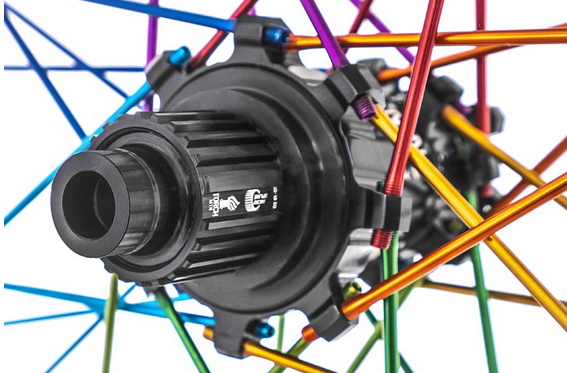
Industry 9 just announced a license agreement with Shimano for Micro Spline freehubs.
The ever changing world of components for bicycles is changing again. You can blame 1X drive trains for this if you want to. You wouldn't be all wrong about that if you did. 

Shimano has introduced a new XTR in 2018, and if you recall, one of the major changes was to the free hub body which hasn't changed for Shimano since the late 80's, not in any significant way at least. However; with the advent of 12 speed drive trains and 1X systems which require a smaller cog to achieve a reasonable high end gear, Shimano has trotted out Micro Spline.

Now, you can think Shimano has done this in answer to SRAM all you want to, but you'd probably be wrong. Shimano generally has ideas, which we know nothing about, in the can for years, tests them for several more years, and then.......maybe, they release them to the public. Want an example? Okay. In 2007 or 2008, I went to a Trek/Fisher mtb press camp. Gary Fisher gave me a bike to ride there, which wasn't part of the goings on. It was a city bike with a Syncro-Shift drive train. You might know that Synco-Shift wasn't released to the public until a few years ago. So, that's just one example of how Shimano works. Shimano has likely been working on this Micro Spline idea for years.

But this is about a different component standard, and with this new announcement from Industry 9, who will offer Micro Spline hubs later this year, you can bet other companies are going to line up to get on board with this standard as well. In effect, you are looking at what will eventually make the wheels you are using now obsolete. Well, at least the rear wheel. 

That may not be entirely true, but with hub standards changing in width as well as the free hub standard, you very well may end up getting new wheels. That said, some hubs, like DT Swiss, are backward compatible with a free hub swap. But in the end, the HG 13 spline free hub you take for granted today will be like the old screw on free wheel hubs of yesterday. The HG free hub won't go away, but it will end up relegated to the cheapest of wheels eventually.

For a good article on the "why" of this technology, see Josh Patterson's article here.