Showing posts with label Gary Fisher. Show all posts

Friday, April 18, 2025

Friday News And Views

Image courtesy of KOM

 A "Thinking Outside Of The Box" FN&V

 KOM Xeno Hubs Redefine Rear Hub Technology:

A U.K. based company called KOM is attempting to redefine how rear hubs will look and work in the future with its Xeno hubset

Boasting a revolutionary design which places the ratcheting pawls, which allow for coasting, on the non-drive side of the hub, the Xeno hubs are a very different take on bicycle hubs. The hub uses a kind of torque tube, which transfers the power of pedaling to the other side of the hub from the cassette carrier. It is nothing like a traditional hub design.

The one-piece, tubular axle is supported by bearings which can be placed more outboard than can be with a traditional design, making for a claimed stiffer axle. This all results in a design which can take advantage of lighter materials and larger diameters for the axles and ratchet ring.

What is really wild about these Xeno hubs are the pawls, which are made from aluminum. KOM claims this is okay because the larger diameter of the system lends more leverage and thus a lighter material can be utilized without sacrificing strength necessary for transmitting pedaling forces. KOM claims the aluminum pawls have less inertia allowing for faster engagement of the 120 points of contact.

Of course, there is a compromise. This design necessitates a different disc rotor due to the non-standard diameter of the hub axle.  KOM sells a rotor with each hub which compensates for this. These are claimed to be lighter than usual rotors, again due to the diameter of the hub, and stiffer because the rotor mounting point is closer to the brake calipers. A unique four bolt mounting pattern is used as well.

Cost for a standard color (silver or black) hub set (front and rear Xeno design)  is approximately $1.100.00USD. Custom colored sets are available as well for an upcharge. 

 Comments: The Xeno hubs are MTB specific for now, but if something like this idea shows merit, it could be applied to other types of bicycles as well. Yes, the disc mount is odd, but this idea makes sense on the surface. If this idea proves to be worthwhile in the long haul there are several benefits to riders which standard hubs cannot provide. Obviously the prices would have to come down a lot for anything like this to become mainstream. Something to watch and see if it takes root here, I think. 

Image courtesy of KAV Helmets

KAV Helmets Redefines Helmet Fit, Tech With 3D Printing:

The helmet technology we ride with today is based upon materials and construction techniques developed decades ago. KAV Helmets looks to break this mold with their range of 3D printed helmets which boast several advantages, the most impressive being a customized fit for each purchaser of their helmets.

KAV Helmets offer a rider the chance to get a helmet which is claimed to be as aerodynamic as anything available, better at cooling your head, and made to fit your head. They do this by leveraging 3D printing.

Utilizing "crumple zone" design, KAV claims their helmets are nearly 3 times better at absorbing impacts. Using a hexagonal design, their helmets shear as well as crumple, which does basically the same thing as MIPS tries to achieve.

Their custom fit allows each helmet to be tailor made for its rider. KAV achieves this by sending you a link to an app after purchase which the customer uses to take an image of their head. The app maps the head and allows KAV to create a custom "Fit Cap" which is sent out to the customer for trial fitting. Once any changes are suggested and the cap is approved then KAV 3D prints your helmet and sends it to you. 

All this sounds incredibly expensive, but looking at the prices, the KAV range falls in line with most helmet company's top-range offerings with KAV helmets starting at $225.00USD and going up to $300.00USD. All manufacturing is based in the USA as well.

Comments: I've got an odd-shaped, BIG noggin, and this technology and manufacturing technique sounds pretty interesting. I'm considering it for myself.  

Image courtesy of Morelle 

Fast Charging In 15 Minutes?

Another outside of the box cycling product which soon might revolutionize things is from Morelle. An ebike that claims a fast charge of 15 minutes.

Using a silicon based battery instead of a graphite one, along with some other electronic wizardry, Morelle promises a bike you will be able to ride and recharge the battery in without much down time, which will allow riders to push the limits of range more than perhaps they do now with slower recharging rates.

Morelle hopes to move into more micro-mobility areas and energy storage systems but this product is a kind of proof-of-concept exercise to show their ideas work. You may have seen Gary Fisher touting the benefits of Morelle recently and he is a part of the company. The first concept bike was shown recently at Sea Otter.

The Morelle bike will go for 3K but if you are interested in having one you have to reserve one now for 2026 delivery. You can check the bike out HERE

Image courtesy of Lezyne.

Lezyne To Release Clik Valve Compatible Inflation Range:

Readers of the blog might be familiar with my ongoing review of Clik Valves and inflation accessories.  One of the negatives for switching over to these valves and valve cores is the dearth of choices in inflation tools which will interface with Clik Valves.

This will be relieved a bit now that Lezyne has committed to partnering with Clik Valve to introduce a range of inflation tools which will interface with the Clik Valve standard. These devices will include mini-pumps, floor pumps, and CO2 adapters for quick repairs in the field.

Details on the partnership can be read on Lezyne's site HERE.

Comments: You love to see it and this should give Clik Valve a big boost in acceptance. Personally, I feel Clik Valve is head and shoulders better than any other valve type and should replace what we are using now. Especially for newer cyclists who may find Presta valves off-putting, and many do in my experience. Clik Valve solves all the negativity around Presta and is easier to use than it and Schrader valves. 

I am looking for a tubeless valve stem offerings from other companies to be developed at this point and if this happens I think I'll start switching over to Clik Valve. I'll have more on my review coming later in the season. 

Iowa Wind And Rock Event This Weekend:

The successor to Trans Iowa, Iowa Wind And Rock, happens starting tomorrow at 4:00am in the morning and will continue on through Saturday, Saturday evening, and into Sunday ending at 2:00pm in the afternoon. 

An event navigated by cue sheet, this oddball of a gravel race is definitely "outside the box" in terms of the gravel racing/riding scene. There are imitators, (Long Voyage, Unbound XL, Mega Mid-South) but none of those can match the original formula which IWAR utilizes to this day.

Sending much love and hoping for tailwinds to all who toe that line tomorrow in the dark. 

Look for my Trans Iowa 20th anniversary post coming up on the 23rd, next week. 

That's a wrap for this week. Get out there and ride those bikes!

Tuesday, October 29, 2024

Three Major Players: 25 Years Of 29"ers

Yesterday I wrote about "The Tire" and wheel diameter as it relates to 29"ers and off-road bicycling.  Today I wanted to highlight three major players in the early 29"er movement that, I believe, without whom the 29"er was doomed to the dust heap. 

The Karate Monkey by Surly as shown at the 2002 Interbike show. (Image courtesy of Surly Bikes)

The Karate Monkey:

In my opinion the Surly Karate Monkey was probably the most influential 29"er ever made. One, because it was the first, widely available, affordable 29"er option that was well thought out. This design was so well done that it inspired a slew of other 29"er models in its wake, not to mention a bunch of custom builders as well who were brazing and welding up new 29"er frames as fast as they could. 

However; the affordability provided by the Karate Monkey maybe was the biggest influence here. One could buy a frame and fork, then pull together the rest of the build from inexpensive parts, parts bin finds, or in whatever way one desired. This provided the 29"er curious an avenue to try bigger wheels before they were forced into plunking down big money for a rare bike shop model or custom build. 

Because Surly built their reputation on versatility, single speed capability, and value to the customer, there perhaps was no better company suited to "evangelizing" the 29"er. You could go a hundred different directions with your build, which was probably another part of why this bike caught on as quickly as it did and was responsible for many converts to big wheels in the early 2000's. 

Niner Bikes was solely focused on 29"ers in 2005. (Image courtesy of Niner Bikes)

The Big Revolution - Niner Bikes:

In late 2004 an advertising banner appeared on the 29"er forum at mtbr.com ballyhooing a new company no one had ever heard of before called Niner Bikes. All it said was "The Big Revolution". No bike was shown. The previous banner for the forum was from a small custom builder called WaltWorks, a builder that had been an early champion of big wheels off road. 

This stirred up a lot of interest and speculation. Was this new imposter really behind 29'ers, or was someone just trying to make a buck on a new trend? Such was the sentiment of many 29"er fans back in the day, earning all of the 29"er crowd the derogatory "29"er zealots" tag from the rest of the MTB community. 

But Chris Sugai and Steve Domahidy were dead serious about this venture. They bankrolled their future success on the big wheels and never looked back. This eventually had a major impact on the 29"er community. By the way, I interviewed both Chris and Steve from Niner Bikes at the time in this "Ted-terview" from 2006.

Niner pushed the boundaries of what 29"ers were capable of from being just a niche, single speed bike to full-on 29"er down hill type rigs. Niner was so confident that 29"ers would eventually be the first choice for wheel size amongst off-roaders that Chris Sugai made the bold statement that 26"ers would be extinct in the near future. 

The bold, forward-thinking direction that Chris and Steve had for 29"ers was a major influence on the cycling industry and showed riders that no off-road discipline was off limits for 29 inch wheels. "Big Revolution" indeed! And what of Chris Sugai's bold prediction? 

You tell me where all the 26"ers are in 2024. 

A titanium Gary Fisher prototype circa 2000. (Image courtesy of Trek Bicycles)

 From The Godfather of Mountain Biking - Gary Fisher Bikes:

Of course, no discussion of this type can be had without the mention of the importance of Gary Fisher and his namesake company. Gary Fisher is also one of those important figures in mountain biking and his influence came to bear behind the scenes in the late 1990's which was critical in the push to get a true 2" wide 29"er tire. Fisher, himself a racer at the time, was interested in how such a larger diameter tire could be utilized to gain an advantage in racing, specifically XC MTB racing. 

Even after "The Tire" was made, Fisher's effervescent personality and endless energy came to bear on Trek, the parent company, and he was convincing enough that by 2002 Gary Fisher Bicycles had a 29"er MTB in their line up. Keeping the foot in the gas, Fisher convinced team racers to try a 29"er, and by the mid 2000's he saw results as Jeremy Horgan-Kobelski became the first successful 29"er XC racer. More results followed and other brands, teams, and athletes began to take notice. By the time the 2000's came to a close, XC MTB racing was starting to see many more 29"ers on the start lines. This all thanks to Gary Fisher's inestimable influence on big wheels. 

On the retail side the road was bumpy, but Trek stuck behind the 29"er and with the coup Trek pulled by getting Rock Shox to give Fisher Bikes the exclusive on the Reba 29"er fork for a year, sales skyrocketed. Soon 29"ers were outselling 26 inch MTB's at Fisher Bikes, and again, brands were taking note. By the close of the decade you could more easily count those companies who were not offering a 29"er than you could count those who were offering 29"ers. 

Perhaps even less known than all of the above was Fisher's influence on women and 29"er acceptance. By offering 29 inch wheeled MTB's to the woman's team, Fisher encouraged the switch to women riding on 29"ers in races all throughout the world. This very thought, that shorter people could ride 29"ers effectively, was a major criticism of big wheels in the 2000's and this eventually was blown away as well by the late twenty-teens. 

Sadly, Trek folded the Fisher brand into its Trek brand in 2010 by saying "The Gary Fisher Collection" will give Trek retailers acces to a unique product line up of 29"ers". In reality the Fisher brand name disappeared and the legacy of Gary Fisher was hidden from view afterward. Whether Trek honestly believed its own marketing hype, or if it was a veiled attempt at killing off the Fisher brand, I don't know. But in my opinion, it is a travesty on Trek's part that they have erased the Fisher brand from the consciousness of the mountain biking public. 

In Closing: All three of these brands built their legacy in 29"ers off the introduction of the 29" WTB Nanoraptor 25 years ago. Had that tire not happened, and it nearly did not, the landscape of MTB would look radically different today. 

Next: Why "The Tire" Matters Today

Friday, March 31, 2023

Friday News And Views

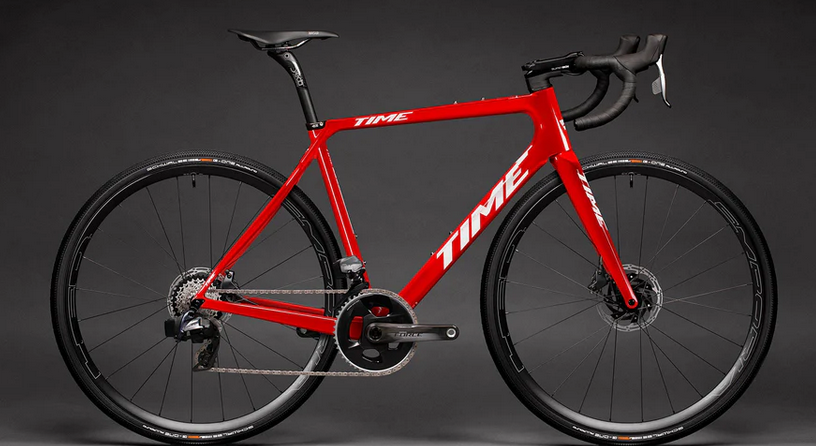
A TIME ADHX (Image courtesy of TIME Bicycles)
TIME Announces Plans For USA Carbon Fiber Frame Production:

Last Thursday TIME Bicycles announced a new initiative which will bring carbon bicycle frame production back to the USA on a large scale for the first time since Trek was building carbon frames in Wisconsin in the very early 2000's. 

 The plans were detailed in a recent "Bicycle Retailer and Industry News" article which stated that the facility would be utilizing a process known as "Resin Transfer Molding", or RTM for short. This is a technology for manufacturing carbon products utilized by the aerospace and auto industries. TIME is owned by the Cardinal Cycling Group, a company that also owns USA bike manufacturer Detroit Bikes. 

Comments: While these plans are still in development, this could be a big trend in bicycle manufacturing in the USA. Europe is experiencing a trend of "re-shoring", which is bringing bicycle manufacturing and component manufacturing closer to the products end users. 

But this plan doesn't seem that it will be in place for TIME to make anything here until late 2024 at the earliest. That's if there are no delays, so with the economy in upheaval, and consumers tightening their budgets due to inflationary pressures, who knows how it will go? But it bears watching as this sort of thing gets talked a lot about in the bicycle industry but there hasn't been any real action on a large scale production facility until (maybe) now. 

The Fish looks to add chapters to this book
Gary Fisher Re-emerges With Company Focused On Batteries:

Gary Fisher was in the news again recently as he announced his partnership with a company that claims it will produce HPC/eBike batteries that will have range up to twice that of current batteries used for electric bicycles. 

The company is called :"Morelle" and apparently they will also be doing bicycles with these new batteries which Fisher claims, in the linked article, will be very "connected' From the "Cyclingelectric.com" article: "Our bikes will be connected. The Bikes will have quite a few sensors. Real time metrics on tyre pressure, power, speed, stress gauges, GPS and an algorithm that includes adaptation to the weather. The battery and the charger will be monitored as well. Our batteries need not be left charging overnight"

 Comments: Once again, this is still a thing far off into the future. the linked article states 2025 as being a likely time for seeing this hit the streets, but aside from the battery business, what strikes me is how everything seems to be headed toward digital connectivity. 

I made a comment to this very point last Friday in the "FN&V" and I bet many of you all reading thought I was being a little bit crazy. And I didn't even know about this quote from Gary. Don't be surprised if it happens, and I think it will. I think this is just the tip of the iceberg and will be required for bicycles in urban areas so that traffic with larger electric self-driving vehicles and robots can coexist without crashing into each other. Robots? Yes.... Robots. 

Just wait and see....

Growtac Announces Plans For Versatile Drop Bar "Brifter":

You may know the name "Growtac" from seeing their brake calipers reviewed or from the "Velo Orange" site which carries their brake calipers for sale. Now the Japanese company is working on a new brake/shift lever, (amongst a few other items),  that is compatible with any drive train system and will shift anywhere from 2 to 13 gears. 

Shifting can be friction, or indexed by adding an indexing plate, and can be configured for several derailleur options via a changeable "winding pulley" which will change the cable pull ratio to match any rear derailleur. 

Furthermore; the right lever can operate two shift cables and a brake cable, enabling single-sided shifting, or enabling the use of a dropper post with the "B Shift lever" operating as a dropper remote. 

There is no price set and availability won't be until 2024, most likely. 

Comments: I'm betting Russ,  the "Path Less Pedaled" guy, is giddy about this product! (If you know- you know!) I see this as an outgrowth of the community of people who are looking for cross-compatibility, and therefore, personalization of their cycling set ups. Bikepacking folks are chief amongst those who I think will flock to a system like this, but gravel riders will likely be all over this as well. At least those who aren't buying into the current marketing trends for gravel. I think it is pretty cool, and especially if it actually works as advertised. The only bummer here is that there is no hydraulic brake option.
 

Gents Race This Weekend- Ready Or Not!

Tomorrow is the annual Gents Race, a team based gravel road event I have done every year, (except the COVID cancelled one) since 2011. I'll be getting up real good and early tomorrow to make it to this one, as I cannot go today and stay overnight since my son shares the "Truck With No Name" with me now.

Will it go well, or will it be hell? Hard to say, but the weather will be the typically cool, windy fare we normally get for this event with the long slog of ten or so miles straight into a Northwest wind forcast to be blowing at a nice 25mph. 

Yep! Figures....

I'm not as well prepped as I was hoping, but I am over that cold and I have a few rides in. So.... I'm not going into this with nothing in the tank! But I am not expecting this to be anything but a long training ride and as long as I can stay upright and turn the pedals I should be okay. Got the bags packed and ready to throw into the truck at "o-dark-thirty" for the two hour drive to get there. 

Stay tuned for a report next week. 

Evidence Surfaces Showing New Shimano RD Design:

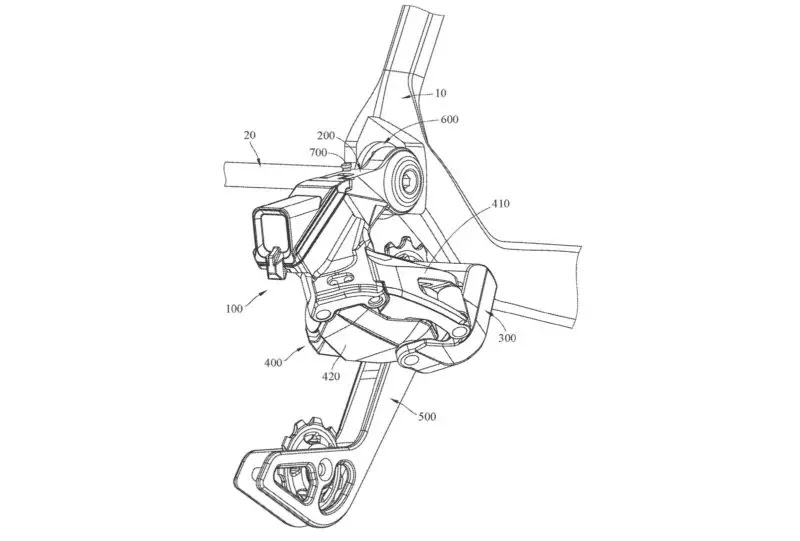
 Monday of this week, "Bike Radar" had this image on their social media. It shows a "hangarless" design similar to the one shown off by SRAM last week. 

As we should all recognize, this is really an "integrated hangar rear derailleur", since the piece that actually does the shifting has to attach somehow, and that is "hanging" off the rear axle now. 

Anyway.... That's missing the point here.

If Shimano is buying into this design (or more likely, has had this in their development pipeline for a long time), then this signals a sea change in how MTB rear derailleurs will mount going forward. Even TRP is showing something similar now. Your MTB bikes with no SRAM UDH compatibility will not be able to be retrofitted with newer rear mechs. 

TRP is patenting something similar as well.

And I believe this is coming to more than just mountain bikes. Remember, one of the main reasons SRAM stated for this design was that it could work better with high-torque electric motors. So, anything using a motor on a bicycle (electric, of course, but isn't that a "motor-cycle"? Anyway...) could use this sort of design. So, I can see gravel bikes, urban bikes, or most any derailleur equipped bicycle, really, using this design. 

We will see.....

That's a wrap for this week! have a good one and Thank You for reading Guitar Ted Productions!

Friday News And Views

A TIME ADHX (Image courtesy of TIME Bicycles)
TIME Announces Plans For USA Carbon Fiber Frame Production:

Last Thursday TIME Bicycles announced a new initiative which will bring carbon bicycle frame production back to the USA on a large scale for the first time since Trek was building carbon frames in Wisconsin in the very early 2000's. 

 The plans were detailed in a recent "Bicycle Retailer and Industry News" article which stated that the facility would be utilizing a process known as "Resin Transfer Molding", or RTM for short. This is a technology for manufacturing carbon products utilized by the aerospace and auto industries. TIME is owned by the Cardinal Cycling Group, a company that also owns USA bike manufacturer Detroit Bikes. 

Comments: While these plans are still in development, this could be a big trend in bicycle manufacturing in the USA. Europe is experiencing a trend of "re-shoring", which is bringing bicycle manufacturing and component manufacturing closer to the products end users. 

But this plan doesn't seem that it will be in place for TIME to make anything here until late 2024 at the earliest. That's if there are no delays, so with the economy in upheaval, and consumers tightening their budgets due to inflationary pressures, who knows how it will go? But it bears watching as this sort of thing gets talked a lot about in the bicycle industry but there hasn't been any real action on a large scale production facility until (maybe) now. 

The Fish looks to add chapters to this book
Gary Fisher Re-emerges With Company Focused On Batteries:

Gary Fisher was in the news again recently as he announced his partnership with a company that claims it will produce HPC/eBike batteries that will have range up to twice that of current batteries used for electric bicycles. 

The company is called :"Morelle" and apparently they will also be doing bicycles with these new batteries which Fisher claims, in the linked article, will be very "connected' From the "Cyclingelectric.com" article: "Our bikes will be connected. The Bikes will have quite a few sensors. Real time metrics on tyre pressure, power, speed, stress gauges, GPS and an algorithm that includes adaptation to the weather. The battery and the charger will be monitored as well. Our batteries need not be left charging overnight"

 Comments: Once again, this is still a thing far off into the future. the linked article states 2025 as being a likely time for seeing this hit the streets, but aside from the battery business, what strikes me is how everything seems to be headed toward digital connectivity. 

I made a comment to this very point last Friday in the "FN&V" and I bet many of you all reading thought I was being a little bit crazy. And I didn't even know about this quote from Gary. Don't be surprised if it happens, and I think it will. I think this is just the tip of the iceberg and will be required for bicycles in urban areas so that traffic with larger electric self-driving vehicles and robots can coexist without crashing into each other. Robots? Yes.... Robots. 

Just wait and see....

Growtac Announces Plans For Versatile Drop Bar "Brifter":

You may know the name "Growtac" from seeing their brake calipers reviewed or from the "Velo Orange" site which carries their brake calipers for sale. Now the Japanese company is working on a new brake/shift lever, (amongst a few other items),  that is compatible with any drive train system and will shift anywhere from 2 to 13 gears. 

Shifting can be friction, or indexed by adding an indexing plate, and can be configured for several derailleur options via a changeable "winding pulley" which will change the cable pull ratio to match any rear derailleur. 

Furthermore; the right lever can operate two shift cables and a brake cable, enabling single-sided shifting, or enabling the use of a dropper post with the "B Shift lever" operating as a dropper remote. 

There is no price set and availability won't be until 2024, most likely. 

Comments: I'm betting Russ,  the "Path Less Pedaled" guy, is giddy about this product! (If you know- you know!) I see this as an outgrowth of the community of people who are looking for cross-compatibility, and therefore, personalization of their cycling set ups. Bikepacking folks are chief amongst those who I think will flock to a system like this, but gravel riders will likely be all over this as well. At least those who aren't buying into the current marketing trends for gravel. I think it is pretty cool, and especially if it actually works as advertised. The only bummer here is that there is no hydraulic brake option.
 

Gents Race This Weekend- Ready Or Not!

Tomorrow is the annual Gents Race, a team based gravel road event I have done every year, (except the COVID cancelled one) since 2011. I'll be getting up real good and early tomorrow to make it to this one, as I cannot go today and stay overnight since my son shares the "Truck With No Name" with me now.

Will it go well, or will it be hell? Hard to say, but the weather will be the typically cool, windy fare we normally get for this event with the long slog of ten or so miles straight into a Northwest wind forcast to be blowing at a nice 25mph. 

Yep! Figures....

I'm not as well prepped as I was hoping, but I am over that cold and I have a few rides in. So.... I'm not going into this with nothing in the tank! But I am not expecting this to be anything but a long training ride and as long as I can stay upright and turn the pedals I should be okay. Got the bags packed and ready to throw into the truck at "o-dark-thirty" for the two hour drive to get there. 

Stay tuned for a report next week. 

Evidence Surfaces Showing New Shimano RD Design:

 Monday of this week, "Bike Radar" had this image on their social media. It shows a "hangarless" design similar to the one shown off by SRAM last week. 

As we should all recognize, this is really an "integrated hangar rear derailleur", since the piece that actually does the shifting has to attach somehow, and that is "hanging" off the rear axle now. 

Anyway.... That's missing the point here.

If Shimano is buying into this design (or more likely, has had this in their development pipeline for a long time), then this signals a sea change in how MTB rear derailleurs will mount going forward. Even TRP is showing something similar now. Your MTB bikes with no SRAM UDH compatibility will not be able to be retrofitted with newer rear mechs. 

TRP is patenting something similar as well.

And I believe this is coming to more than just mountain bikes. Remember, one of the main reasons SRAM stated for this design was that it could work better with high-torque electric motors. So, anything using a motor on a bicycle (electric, of course, but isn't that a "motor-cycle"? Anyway...) could use this sort of design. So, I can see gravel bikes, urban bikes, or most any derailleur equipped bicycle, really, using this design. 

We will see.....

That's a wrap for this week! have a good one and Thank You for reading Guitar Ted Productions!

Friday, July 22, 2022

Friday News And Views

Gary Fisher And Trek Part Ways:

In a recent article posted on "Bicycle Retailer and Industry News", it was revealed that Trek and Gary Fisher have parted ways since March of this year. The 71 year old Mountain Bike Hall of Famer and general icon of the mountain bike and 29'er scenes, is now reportedly having fun "...being Gary Fisher". 

The article also indicates that Fisher is open to collaborating with other brands on ideas now and has spent a lot of time talking with several companies at the recently completed Eurobike show. 

Comments: I've said it before here on the blog, but I've met Gary Fisher several times before in the past. One of those times was back in the late 2000's at a press camp in Santa Cruz, California. At a special introduction for Trek product, Gary Fisher was in attendance. As we spent time in between presentations, I noted Gary bending the ears of several of the Trek engineers and product managers in attendance. One of them, who managed to break away from Gary's banter, mentioned to me that Gary was well known to the engineering department for having many great ideas. So many, in fact, that the engineer told me it was overwhelming and made him weary. 

So, at 71 I do believe that Gary Fisher still has something left to do in the cycling industry, or, as he indicated in the linked article, in the field of advocacy. I would not at all be surprised to find Gary's name on some future cycling product either. 

Finally, I am still baffled that Trek squandered the equity they had in the Gary Fisher bicycle brand. In 2010, they folded the brand into Trek, naming some of their models as being in the "Gary Fisher Collection", which now has been phased out of existence as well. How a brand like Gary Fisher is excluded from being a part of mountain biking in some form is a crime. I suppose one could say that about Klein as well, while Le Mond lives on separately and Bontrager is a well known accessory and component brand. C'mon Trek! This is more than a missed opportunity, it is criminal. 

A 3D printed bicycle frame in Aluminum. Image by Gary Fisher
3D Aluminum Printed Frame By Canyon & More Eurobike Interesting Things:

 I figured something was up with Gary Fisher as he was posting images from Eurobike like a madman, which he did not used to do when he was with Trek. (Probably not allowed to) Anyway, Gary posted this weird canyon 3D printed Aluminum frame which was shown at Eurobike. 

It totally reminded me of the fringe aisles at Interbike, (or better yet, the old basement floor vendors in the Sands Convention Center) where you could often see ideas that were interesting. Sometimes these ideas were better off unseen, but the Canyon bike seems to have its redeeming qualities. As an exercise to see what you could do, it may result in some interesting products down the road. 

There wasn't much of interest in terms of innovation coming out of this show, and that may be due to the supply chain pressures most industry companies face. Why show new things when you cannot even get the current stuff out? But there were a few other interesting bits I saw online.

  • FSA 12spd Electronic Shifting Group: It is a new generation of FSA's electronically shifted drive train. Oh? You didn't already know that FSA has an electronic drive train option out? Exactly.....
  • Classified Expands Brands That Make Their Rear Hub/Wheel System: I've talked about the Classified rear hub here before. I didn't think it would get anywhere without more widespread industry support. Now they number seven brands that will have their wheel/hub system available including FSA, DT Swiss, and Spinergy. This will go a long way toward reaching that goal. However; you still will have the inefficiencies of a 1X chain line and proprietary cassettes. 
  • Scope Cycling Atmoz Air Pressure Changing System: Recently used at Paris-Roubaix, the new hub mounted system from Scope Cycling has wireless controls for up or down pressure on the handle bars and the actual air pressure read-out can be displayed on most Bluetooth compatible GPS computers. This might have legs for Pro level gravel racing. Bears watching......
Ridley Kanzo Fast with aero Apidura frame bags. Image courtesy of Ridley

Aero Gravel: Get Ready, Here It Comes:

 Aero Gravel- I've said it was a thing for years, and I was scoffed at, made fun of, and dismissed. People said that Gravel™ doesn't need "aero". "It'll ruin everything", they said. 

But take a look at what is happening now in the field of gravel racing. (Note- This is quite different from Gravel Riding, which is what most of us do) Gravel events are quickly being pushed into the divisions of "Pro" and "Everything Else" categories when it comes to events. I doubt I'll see a whole lot of "aero-gravel" stuff at most events I attend in the future, but now you may have that "wannabee" dude that shows up with something like this Ridley Kanzo Fast decked out with aero bags from Apidura. 

Will stuff like this "ruin" gravel riding? No. It's the people that do that. 

So, I don't have a problem with aero stuff being employed in the gravel scene. If it makes sense, who am I to argue with the math and science stuff behind it? I've tried a few aero things on gravel, and I am here for it. It seems to make things a bit less hard. I like that. And if someone shows up with a slick, aero set up, and is cool with everyone and whatnot, well, I'm not going to say that "aero stuff ruined Gravel™".

But if I see someone come to a gravel event, look down their nose at my mostly inefficient rig while they walk by with an aero gravel bike acting like they are all that and a bag-o-chips? That's where Gravel™ loses. That's when the scene becomes just another ego-boosting, exasperating scene like XC MTB was in the 90's and road racing was for most of the last three decades. 

Remember, it isn't about the equipment. It's about the People. And when the People quit being cool, then the Scene will Die. 

UCI Gravel Series Not Making Much Noise:

I'm not sure how it is going elsewhere in the World, but as far as coverage of chit-chat about the inaugural UCI gravel series goes, it is pretty minimal. 

Obviously this months events in that series go up against the Tour de France, and well.... You aren't going to get much coverage, if any, during this month in traditional cycling media unless you are connected to that titan of cycling events. So, recently this is no surprise. 

But even in previous months, this tour hasn't gotten the coverage I thought it might from traditional cycling media. Maybe it will take some time to catch on, or perhaps this will fade away and not have much impact. 

"Gravel" cycling in its competitive form still seems to be mostly a North American thing, even though there are Italian and other European based gravel events that get some nods here. Still, it would seem that the focus is on traditional road race competitions and the rising women's Pro scene has a lot to do with that, I think. We'll see, but for now, the whole UCI/USAC getting into gravel doesn't seem to be having the effects that many in the gravel riding scene thought it might.

That's it for this week! Have a fantastic weekend, stay cool if you can, and get out and ride. Good luck and good riding to anyone doing RAGBRAI next week!

Friday News And Views

Gary Fisher And Trek Part Ways:

In a recent article posted on "Bicycle Retailer and Industry News", it was revealed that Trek and Gary Fisher have parted ways since March of this year. The 71 year old Mountain Bike Hall of Famer and general icon of the mountain bike and 29'er scenes, is now reportedly having fun "...being Gary Fisher". 

The article also indicates that Fisher is open to collaborating with other brands on ideas now and has spent a lot of time talking with several companies at the recently completed Eurobike show. 

Comments: I've said it before here on the blog, but I've met Gary Fisher several times before in the past. One of those times was back in the late 2000's at a press camp in Santa Cruz, California. At a special introduction for Trek product, Gary Fisher was in attendance. As we spent time in between presentations, I noted Gary bending the ears of several of the Trek engineers and product managers in attendance. One of them, who managed to break away from Gary's banter, mentioned to me that Gary was well known to the engineering department for having many great ideas. So many, in fact, that the engineer told me it was overwhelming and made him weary. 

So, at 71 I do believe that Gary Fisher still has something left to do in the cycling industry, or, as he indicated in the linked article, in the field of advocacy. I would not at all be surprised to find Gary's name on some future cycling product either. 

Finally, I am still baffled that Trek squandered the equity they had in the Gary Fisher bicycle brand. In 2010, they folded the brand into Trek, naming some of their models as being in the "Gary Fisher Collection", which now has been phased out of existence as well. How a brand like Gary Fisher is excluded from being a part of mountain biking in some form is a crime. I suppose one could say that about Klein as well, while Le Mond lives on separately and Bontrager is a well known accessory and component brand. C'mon Trek! This is more than a missed opportunity, it is criminal. 

A 3D printed bicycle frame in Aluminum. Image by Gary Fisher
3D Aluminum Printed Frame By Canyon & More Eurobike Interesting Things:

 I figured something was up with Gary Fisher as he was posting images from Eurobike like a madman, which he did not used to do when he was with Trek. (Probably not allowed to) Anyway, Gary posted this weird canyon 3D printed Aluminum frame which was shown at Eurobike. 

It totally reminded me of the fringe aisles at Interbike, (or better yet, the old basement floor vendors in the Sands Convention Center) where you could often see ideas that were interesting. Sometimes these ideas were better off unseen, but the Canyon bike seems to have its redeeming qualities. As an exercise to see what you could do, it may result in some interesting products down the road. 

There wasn't much of interest in terms of innovation coming out of this show, and that may be due to the supply chain pressures most industry companies face. Why show new things when you cannot even get the current stuff out? But there were a few other interesting bits I saw online.

  • FSA 12spd Electronic Shifting Group: It is a new generation of FSA's electronically shifted drive train. Oh? You didn't already know that FSA has an electronic drive train option out? Exactly.....
  • Classified Expands Brands That Make Their Rear Hub/Wheel System: I've talked about the Classified rear hub here before. I didn't think it would get anywhere without more widespread industry support. Now they number seven brands that will have their wheel/hub system available including FSA, DT Swiss, and Spinergy. This will go a long way toward reaching that goal. However; you still will have the inefficiencies of a 1X chain line and proprietary cassettes. 
  • Scope Cycling Atmoz Air Pressure Changing System: Recently used at Paris-Roubaix, the new hub mounted system from Scope Cycling has wireless controls for up or down pressure on the handle bars and the actual air pressure read-out can be displayed on most Bluetooth compatible GPS computers. This might have legs for Pro level gravel racing. Bears watching......
Ridley Kanzo Fast with aero Apidura frame bags. Image courtesy of Ridley

Aero Gravel: Get Ready, Here It Comes:

 Aero Gravel- I've said it was a thing for years, and I was scoffed at, made fun of, and dismissed. People said that Gravel™ doesn't need "aero". "It'll ruin everything", they said. 

But take a look at what is happening now in the field of gravel racing. (Note- This is quite different from Gravel Riding, which is what most of us do) Gravel events are quickly being pushed into the divisions of "Pro" and "Everything Else" categories when it comes to events. I doubt I'll see a whole lot of "aero-gravel" stuff at most events I attend in the future, but now you may have that "wannabee" dude that shows up with something like this Ridley Kanzo Fast decked out with aero bags from Apidura. 

Will stuff like this "ruin" gravel riding? No. It's the people that do that. 

So, I don't have a problem with aero stuff being employed in the gravel scene. If it makes sense, who am I to argue with the math and science stuff behind it? I've tried a few aero things on gravel, and I am here for it. It seems to make things a bit less hard. I like that. And if someone shows up with a slick, aero set up, and is cool with everyone and whatnot, well, I'm not going to say that "aero stuff ruined Gravel™".

But if I see someone come to a gravel event, look down their nose at my mostly inefficient rig while they walk by with an aero gravel bike acting like they are all that and a bag-o-chips? That's where Gravel™ loses. That's when the scene becomes just another ego-boosting, exasperating scene like XC MTB was in the 90's and road racing was for most of the last three decades. 

Remember, it isn't about the equipment. It's about the People. And when the People quit being cool, then the Scene will Die. 

UCI Gravel Series Not Making Much Noise:

I'm not sure how it is going elsewhere in the World, but as far as coverage of chit-chat about the inaugural UCI gravel series goes, it is pretty minimal. 

Obviously this months events in that series go up against the Tour de France, and well.... You aren't going to get much coverage, if any, during this month in traditional cycling media unless you are connected to that titan of cycling events. So, recently this is no surprise. 

But even in previous months, this tour hasn't gotten the coverage I thought it might from traditional cycling media. Maybe it will take some time to catch on, or perhaps this will fade away and not have much impact. 

"Gravel" cycling in its competitive form still seems to be mostly a North American thing, even though there are Italian and other European based gravel events that get some nods here. Still, it would seem that the focus is on traditional road race competitions and the rising women's Pro scene has a lot to do with that, I think. We'll see, but for now, the whole UCI/USAC getting into gravel doesn't seem to be having the effects that many in the gravel riding scene thought it might.

That's it for this week! Have a fantastic weekend, stay cool if you can, and get out and ride. Good luck and good riding to anyone doing RAGBRAI next week!

Monday, June 13, 2022

A Chat With Mr. Fisher Spurs Thoughts On Gravel Cycling

The book about the life of Gary Fisher is out now.
Checking out Instagram the other day and I noticed I had a message.

"I am doing a talk on Gravel at Eurobike this July. Can we speak? ...."

It was from Gary Fisher.

So, I arranged a time with him to chat last Thursday, and we ended up speaking with each other for an hour, maybe a bit longer. The topics were not all necessarily gravel related, nor even bicycle related, but there were a few things I wanted to share which Gary prompted me to think about later on. These points will stay in the lane of gravel cycling, and are wide in scope, because- if you've ever had a chat with Gary Fisher, well, you know. Nuff said on that....

Gary Fisher is an iconic figure in cycling and many know his name as the brand for a bicycle company. They may know him as a founding figure in mountain biking. But I know Gary Fisher from a few chats I've had with him in person, from hanging out with him one time at a demo in the forest East of Santa Cruz, California, and from a few brief moments meeting him at Interbike trade shows. Every time I've had the chance to talk to him, he's been full of ideas and historical points concerning cycling, and our most recent chat over the phone was no different. 

So, in a random set of thoughts, I will share some of the more salient points Gary made with me during our chat.

(L-R) Tim Grahl, Gary Fisher, GT. From Interbike 2006

"It's really about the bike and the people you meet......" Gary really hit the nail on the head here and I agree 100%. There is just something about a gathering of cyclists, having fun, and riding. I think any cycling activity can be- and has been for me- a catalyst for bringing folks together from very disparate backgrounds, beliefs, and cultures. For instance, I know for a fact that at Trans Iowa we had the liberals, the centrists, and the right wingers all riding together, having fun, and getting along with each other. (Egads!) 

Cycling can break down barriers, and someone was sharing with me recently, we find out we are all people who have hopes, fears, desires, and that just want to have peace and goodness." (Paraphrasing that thought, but that is the gist of it.) In other words- you are riding, I am riding, let's have fun! 

I don't know, but it works and I've seen it working all my time in the niche of gravel riding. I'm sure that could fall apart at any moment, but I'm here for it as long as that lasts, and for myself, it is the key reason I ever put on events in the first place. It was for the People, and to get to know good folks- no matter what their divisive tags may be in their life outside of cycling. Hopefully, this phenomenon I've seen, and that Gary has seen, infects us more. 

"It was all about pack racing, ya know?" Here Gary was explaining why, in his view, road racing bikes were different than gravel bikes, and where gravel bikes might go on the 'pointy end' of Pro/Semi-Pro racing in the future. His idea was centered around 'pack racing' and how aerodynamics of drafting and race craft worked to inform how bikes evolved for pavement racing. 

Briefly, the idea is to optimize your ability to draft and by steepening the head angle, lengthening the stem, and tweaking a few other aspects of frame geometry. This allowed a rider to get out over the front of the bike, lower their torso and head to maximum effect, and keep aerobic capabilities intact, (with much training, of course). This weighted the front wheel pretty heavily, and is why when sprinting, a rider not in the drops was vulnerable to being pushed aside, or crashed out. 

Aero bar extensions, as seen on Chad Ament's bike from T.I.v11 here, have been a bone of contention. (Image by Jason Boucher)

Obviously, this kind of thing doesn't play so well on gravel, but don't be surprised if you start seeing more aggressive, more 'race oriented' geometry in gravel. I mentioned to Gary that drafting on gravel can be difficult due to the surface, which makes holding a line harder, and he agreed. It might be that we see racing geometry for gravel, but I do not think it will be as radical as we saw things get in the 80's and 90's. 

Aero bar extensions play into this instability issue, and in pack-style racing, such as we see at Unbound Gravel, a rider using aero bars in a pack can be a recipe for a crash. Again, the drafting benefits may push some riders to try this out despite the high cost of consequences for this if things go wrong. To my way of thinking then, the real problem is pack-style racing, which engenders all the issues with drafting, and we haven't even touched upon men/teammates drafting up women competitors, which has been another hot topic in longer gravel events. At least in the faster ranks. 

But as Gary alluded to, the pack-style racing makes for great viewing and is a spectacle, so I don't see it going away because that is what entertains and sells to the masses. 

"Man! What a difference having the tires made!" Gary Fisher was talking about how "real MTB designed tires" made all the difference in the early days of MTB. The same holds true for gravel cycling. I mentioned to Gary that many riders were using Schwalbe Marathon series tires in the early days because they were the only tires with any volume which had the capability to hold up in rougher gravel. Of course, we did not have tubeless tires back then either. 

The Schwalbe comment sent Gary off on a tangent about Dutch commuter bikes, by the way, which, I believe, is one of Gary's favorite subjects to pontificate upon. I found out about flexible fabric chain cases and rolled edge rims which are impervious to pinch flats. But I'll spare you all the details on that, since it veers off the path I set here.

Some of my favorite memories of Gary are his rants about Las Vegas.

"So, Congratulations!! Really...." 

Gary emphasized this strongly. He repeated it three times. I guess I am to take it that I need to understand that fully. "Congratulations"..... Coming from Gary Fisher? Yeah...

So, we spoke about a lot more than this, but it was fun to listen to Gary, his effervescent enthusiasm for bicycles, which I can say hasn't waned in the least since I've first met him, and to hear his ideas. I hope that I contributed a little bit to his talk at Eurobike this coming July.  

I thought you all might find that interesting, that a pioneer of MTB is now being tasked with speaking about gravel riding. But, hold on! Gary pointed out that early mountain biking was done almost entirely on found fire roads, most of which were gravel! Gary said, "Man! We were gravel riders!", and who can argue with that!

A Chat With Mr. Fisher Spurs Thoughts On Gravel Cycling

The book about the life of Gary Fisher is out now.
Checking out Instagram the other day and I noticed I had a message.

"I am doing a talk on Gravel at Eurobike this July. Can we speak? ...."

It was from Gary Fisher.

So, I arranged a time with him to chat last Thursday, and we ended up speaking with each other for an hour, maybe a bit longer. The topics were not all necessarily gravel related, nor even bicycle related, but there were a few things I wanted to share which Gary prompted me to think about later on. These points will stay in the lane of gravel cycling, and are wide in scope, because- if you've ever had a chat with Gary Fisher, well, you know. Nuff said on that....

Gary Fisher is an iconic figure in cycling and many know his name as the brand for a bicycle company. They may know him as a founding figure in mountain biking. But I know Gary Fisher from a few chats I've had with him in person, from hanging out with him one time at a demo in the forest East of Santa Cruz, California, and from a few brief moments meeting him at Interbike trade shows. Every time I've had the chance to talk to him, he's been full of ideas and historical points concerning cycling, and our most recent chat over the phone was no different. 

So, in a random set of thoughts, I will share some of the more salient points Gary made with me during our chat.

(L-R) Tim Grahl, Gary Fisher, GT. From Interbike 2006

"It's really about the bike and the people you meet......" Gary really hit the nail on the head here and I agree 100%. There is just something about a gathering of cyclists, having fun, and riding. I think any cycling activity can be- and has been for me- a catalyst for bringing folks together from very disparate backgrounds, beliefs, and cultures. For instance, I know for a fact that at Trans Iowa we had the liberals, the centrists, and the right wingers all riding together, having fun, and getting along with each other. (Egads!) 

Cycling can break down barriers, and someone was sharing with me recently, we find out we are all people who have hopes, fears, desires, and that just want to have peace and goodness." (Paraphrasing that thought, but that is the gist of it.) In other words- you are riding, I am riding, let's have fun! 

I don't know, but it works and I've seen it working all my time in the niche of gravel riding. I'm sure that could fall apart at any moment, but I'm here for it as long as that lasts, and for myself, it is the key reason I ever put on events in the first place. It was for the People, and to get to know good folks- no matter what their divisive tags may be in their life outside of cycling. Hopefully, this phenomenon I've seen, and that Gary has seen, infects us more. 

"It was all about pack racing, ya know?" Here Gary was explaining why, in his view, road racing bikes were different than gravel bikes, and where gravel bikes might go on the 'pointy end' of Pro/Semi-Pro racing in the future. His idea was centered around 'pack racing' and how aerodynamics of drafting and race craft worked to inform how bikes evolved for pavement racing. 

Briefly, the idea is to optimize your ability to draft and by steepening the head angle, lengthening the stem, and tweaking a few other aspects of frame geometry. This allowed a rider to get out over the front of the bike, lower their torso and head to maximum effect, and keep aerobic capabilities intact, (with much training, of course). This weighted the front wheel pretty heavily, and is why when sprinting, a rider not in the drops was vulnerable to being pushed aside, or crashed out. 

Aero bar extensions, as seen on Chad Ament's bike from T.I.v11 here, have been a bone of contention. (Image by Jason Boucher)

Obviously, this kind of thing doesn't play so well on gravel, but don't be surprised if you start seeing more aggressive, more 'race oriented' geometry in gravel. I mentioned to Gary that drafting on gravel can be difficult due to the surface, which makes holding a line harder, and he agreed. It might be that we see racing geometry for gravel, but I do not think it will be as radical as we saw things get in the 80's and 90's. 

Aero bar extensions play into this instability issue, and in pack-style racing, such as we see at Unbound Gravel, a rider using aero bars in a pack can be a recipe for a crash. Again, the drafting benefits may push some riders to try this out despite the high cost of consequences for this if things go wrong. To my way of thinking then, the real problem is pack-style racing, which engenders all the issues with drafting, and we haven't even touched upon men/teammates drafting up women competitors, which has been another hot topic in longer gravel events. At least in the faster ranks. 

But as Gary alluded to, the pack-style racing makes for great viewing and is a spectacle, so I don't see it going away because that is what entertains and sells to the masses. 

"Man! What a difference having the tires made!" Gary Fisher was talking about how "real MTB designed tires" made all the difference in the early days of MTB. The same holds true for gravel cycling. I mentioned to Gary that many riders were using Schwalbe Marathon series tires in the early days because they were the only tires with any volume which had the capability to hold up in rougher gravel. Of course, we did not have tubeless tires back then either. 

The Schwalbe comment sent Gary off on a tangent about Dutch commuter bikes, by the way, which, I believe, is one of Gary's favorite subjects to pontificate upon. I found out about flexible fabric chain cases and rolled edge rims which are impervious to pinch flats. But I'll spare you all the details on that, since it veers off the path I set here.

Some of my favorite memories of Gary are his rants about Las Vegas.

"So, Congratulations!! Really...." 

Gary emphasized this strongly. He repeated it three times. I guess I am to take it that I need to understand that fully. "Congratulations"..... Coming from Gary Fisher? Yeah...

So, we spoke about a lot more than this, but it was fun to listen to Gary, his effervescent enthusiasm for bicycles, which I can say hasn't waned in the least since I've first met him, and to hear his ideas. I hope that I contributed a little bit to his talk at Eurobike this coming July.  

I thought you all might find that interesting, that a pioneer of MTB is now being tasked with speaking about gravel riding. But, hold on! Gary pointed out that early mountain biking was done almost entirely on found fire roads, most of which were gravel! Gary said, "Man! We were gravel riders!", and who can argue with that!

Saturday, December 11, 2021

The Early Days Of 29"ers- A Gary Fisher Perspective

 During a Fisher Bikes Press camp visit I was on in September of 2009, I was privy to hearing tales told by the famous Gary Fisher himself. This conference of media attendees was entertained and informed on Gary Fisher's take on the history of the wheel size from his perspective. I took notes furiously and after returning home I tossed the note pad in a box which I found again recently. 

So, this is over a decade afterward and some gaps in the notation, which I assume I probably thought at the time would be remembered after I got home, have occurred. This following is, to the best of my ability, a reconstruction of what was told then in the Fall of '09.

There were definitely a few things which Mr. Fisher said that seem to contradict tales told elsewhere, so from that standpoint alone this is an interesting bit of information to add to the history. Who is 'right' and who is 'not so right' really doesn't matter here as much as perhaps being able to see that 'like minds were thinking similarly'. Things said and seen may have been subliminally stored in memories and thought, "not very important', or "obvious" at the time and then brought back to mind later. Then it becomes time to 'fix' timelines and history and you know- things that weren't all that important to mark then have to be marked and well.....it can be messy. 

I'd like to think that some of that happened with regard to 29"ers, because, well, who really thought in 1999 that this wheel size would supplant the mighty 26"er completely? No one did. No one figured this would become what it has, and isn't that the way great things go? With all that in mind......

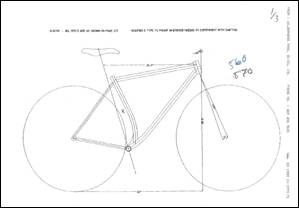
Fisher prototype 29"er drawings
So, this will be given in much the same manner as I received it at the time, which was in a timeline fashion. I will make commentary as this goes along also. 

1999/2000: Starting out with Gary Fisher's first 29"er, which was drawn up and made in Steve Pott's custom bicycle shop. Gary had in mind to do a direct comparison between a 26" and 29" wheeled MTB. His goal was to keep everything he could the same between the two bikes. Geometry, head angles, chain stay lengths, and head tube angles were kept as close as possible to the 26'er. This resulted in a frame with a bent seat tube to keep the chain stays short as possible. Fisher's design goal was to get to an amazingly short 16 1/2" length, which is equivalent to 419.1mm! A modified Manitou Mars fork was crafted as a front fork for the project with travel limited to 50mm. A custom modified XT front derailleur was crafted so it would not interfere with the rear wheel. Much of what was done on this 1st proto were things that would not be seen on 29"ers for a decade or longer. 

Interestingly, Fisher claimed that between he, Mark Slate (head of WTB), and Steve Potts that this was always known as a "29"er" when they referred to this bike. Fisher credits a conversation between he and Mark Slate at Interbike as being when the term was first used. This probably was at the '99 Interbike as "The Tire", the 29"er Nanoraptor, was introduced right at that time. If so, it predates Wes Williams claim of the term by a month, or perhaps a few weeks even. Regardless, as I said, it very well may be that the term was in usage between all the instigators of "The Tire" and no one can really pinpoint when exactly it was first uttered in relation to the wheel size. What matters is that this was a wheel size declared as being the "29"er" out of the gates. 

Update 11/29/23: It has come to light that Slate and Fisher dubbed the tire as a "twenty-nine inch" tire, this according to a Facebook post by Gary himself under his "married name" he uses there, "Gary Zaphiris". I posted the entire written comment by Gary at the bottom of THIS PAGE which is my history of the 29"er. 

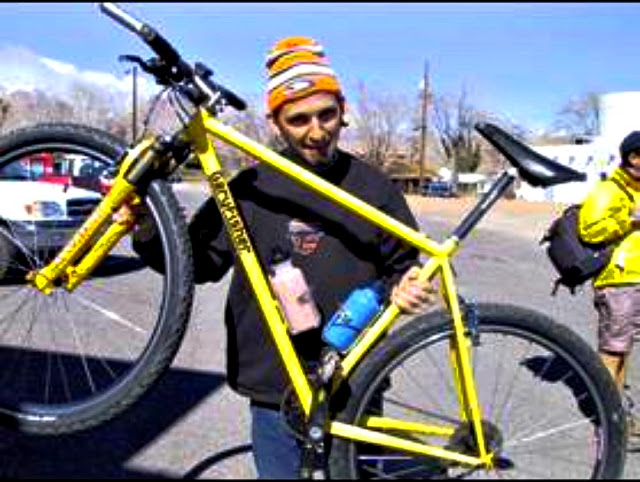
The first Fisher 29"er held by former Mountain Bike Action editor, Zapata Espinoza. (Image courtesy of Gary Fisher.

 As an aside, Gary Fisher claimed that credit for the very first 29 inch wheeled bike belongs to Wes Williams. And what about Fisher's 26'er/29"er comparison? Fisher claimed that in his tests that he was 2-3% faster on the 29"er. That was all he needed to pursue this further. 

The second Fisher proto 29"er. (Image courtesy of Gary Fisher)
 Two more prototypes were made then in rapid succession. One having a Look Fournales Fork lengthened by none other than Gary Klein to fit a 29"er wheel. The fork was said to have a 450mm axle to crown height. (For reference early 29"er suspension forks with telescoping legs and 80mm of travel were approximately 470-480mm axle to crown. ) This bike had a paint scheme designed by Gary Fisher's daughter. 

The third Fisher 29'"er prototype was made in titanium. (Image courtesy of Gary Fisher)


 The second was followed quickly by a third bike, but this time the bike was made in titanium with paint designed by well known designer, Paul Smith. This had a prototype Marzocchi suspension fork on it. In 2000 another 29"er with Paul Smith designed paint was made which featured an integrated head set. Interestingly, Fisher claimed that they also were working on a "69er" design, which was a mixed 29 inch front, 26 inch rear wheeled idea. 

Update 11/29/23: Recently Gary Fisher has been posting a lot of historical images and relating stories about his past that were mostly unknown to the public before now. Relating to the white hard tail above, Gary posted on 11/28/23 the following:

"This frame was built at Trek by Doug Cusack. It is a one-off. (Note: there were other similarly painted "Team Frames" but Gary's had proprietary geometry that the others did not have) The chain stays are super short and the Marziocii (sic) fork had a knob that would lower the front end by 60mm. I set up the geometry, so I still had pedal clearance when the bike was let down, and the head angle when lowered would be 69 1/2°. When you let the fork out to its 100mm travel, the head angle was closer to 68. Degrees.. this was a great bike for European marathons.

It is interesting to note that a 68° - 69° head tube angle for 29"ers was generally thought to be unthinkable, crazy, and "would never work" on big MTB wheels like 29"ers back in those days. To see that Gary had tried this and that it worked out was a sign of things to come and introduces the notion that early 29"ers were chasing the wrong ideas. Ideas that were entrenched in the 26"er mindset and not focused on what bigger diameter wheels were actually good at, which finally came into being after about 2012-2014. 

Another interesting tidbit that Gray Fisher brought back to mind was that the UCI had rules on their books making alternative wheel sizes (anything other than 559ISO/26") illegal to use in competition. This arcane rule was starting to be implemented in European races to ban 29"ers from sanctioned events. Gary Fisher went to the UCI personally to lobby against this rule and did see success when the UCI finally recinded the rule and 29"ers were then free to be used in UCI sanctioned events. 

Now, on with the originally posted material.....

Fisher was working hard at trying to get Trek to buy into mass producing the 29" wheeled mountain bike. However, wheels were lacking, the Marzocchi fork was 'floppy', (Gary's term), and they were still trying to figure out the proper geometry and were trying to integrate their new Genesis Geometry into a 29" format. Fisher said that they were working with "less than the best technology" which hampered early acceptance of Fisher 29"ers by athletes and dealers. 

Ryder Hesjedahl on the first Supercaliber in '01 (Image courtesy of Gary Fisher

2001: Fisher Bikes introduces the first Fisher 29"er, the Supercaliber. IRC Tires were developed for the bike. Fisher had a Marzocchi production 29"er fork made for the bikes as well. 

Dealers were baffled by the wheel size and sales people basically ignored the bikes to sell 26"ers. The pressure mounted within Trek to abandon the 29"er experiment. 

2003: Due to poor sales and Fisher being the only company in North America selling 29"ers on a mass scale, Trek seemed poised to cut their losses and kill the 29"er. Internally a suggestion was made to 'hybridize' the 29"er and the Dual Sport models were introduced for the 2003 season. This model, being more closely relatable to hybrid bikes from the 1990's, were a hit with dealers and consumers alike. Gary Fisher said this model line is to be credited with saving the 29"er MTB line from being cut from the Fisher range. In fact, he went as far as to say this was a 'pivotal year' in the history of 29" MTB. 

2004 Fisher Dual Sport- the model that saved 29"er MTB.

2004: With the strength of Dual Sport sales, Fisher Bikes was ready to double-down on the 29"er. The company paid out of pocket for all the R&D and tooling to make the Rock Shox Reba 29"er fork, the suspension fork which helped legitimize 29"ers to the mountain biking public. Fisher also designed the new "Rig" model, a single speed MTB which was disc brake specific and came with purpose-built 29"er rims as well. 

2005: The Rig with the Rock Shox Reba is released and it is a Fisher only product. This was a brilliant marketing move in retrospect as Fisher sold out of Rig hard tails and 29"er freaks were left to scramble for Reba take-off forks on the second hand market. This pushed 29"er sales to new heights at Fisher and more good news was coming in as well. Athletes were winning races on 29"ers now. Cam Chambers won on a Fisher 29"er at Single Speed World Championships in '05 as did Jesse La Londe at the Chequamegon Fat Tire 40 that fall. 

2006-2009: Within this three year period 29"ers went from a niche, nearly dead category to the hottest bicycle on the planet. Sales of 29"ers doubled for Fisher in 2006. By 2007, Fisher Team rider Jeremy Horgan-Kobelski was racing 29"ers on the World Cup XC scene. By 2009 he switched to 29"ers exclusively. 

Comments: The early struggles at Fisher Bikes to get 29"ers off the ground nearly sunk the category at Trek. One has to wonder if 29"ers would have remained a niche, small market thing had Trek actually cut the cord in 2004. Remember- Fisher was pretty much the only game in town for non-custom 29" MTB. The rest of the 29"er world was pretty much dominated by custom bike makers. Had Trek pulled out I envision 29"ers being much like what we see today with 36"er wheeled bikes. That being a category of bike on the fringes of the mainstream. 

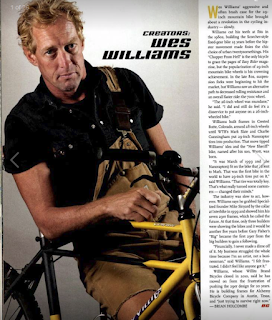
A magazine article featuring Wes Williams and the story of the first 29"er.

You also probably would never have heard about 650B anything. There would have been no reason to move beyond the entrenched 26" wheels. But then again, who knows?

One thing we need to keep reminding ourselves of though is that there are a few key folks who, without their vision, passion, and force of nature in regards to personality, we would not have the bikes we have now. In particular I would single out Gary Fisher, as he not only helped early MTB get off the ground, but it was he that helped push the 29 inch wheel into a place of prominence. Wes Williams has to be credited as the 'force of nature' that would not let big diameter MTB wheels die and no doubt it was Wes that played a pivotal role in getting "The Tire" made in the first place. Then we have to look at Mark Slate and his staff at WTB as the vehicle to get where we are with 29"ers. It was Mark who pretty much had the "kill switch" in his hand which, if pressed, would have pushed the 29 inch wheel off further into the future, or may have killed the idea altogether. 

Obviously there are a host of athletes and industry people to thank here, but if I had to choose a "Mt. Rushmore" of 29"er history it would have Fisher, Slate, Williams, and "The Tire" as its faces. That's my take. You can argue who/what belongs in that pantheon, but in my opinion, those are the main players. 

Thanks: I would be remiss if I did not thank Trek/Gary Fisher Bikes, and specifically Travis Ott, for the invitation all those years ago to go to that Press Camp in Deer Valley Utah. That is where most of the information and images for this post came from.