Showing posts with label materials. Show all posts

Monday, January 27, 2020

Spiffing Things Up

This Pro Dyneema post has one of the easiest to use seat clamps I've laid hands on.
Technology, and specifically materials technology, is a crazy field, as we all can attest to. I mean, once upon a time aluminum rims were unheard of. Then we got heat treated aluminum rims, and well, now those are just.....whatever. Carbon rims are where it is at now, and we all know how those have improved. Even just in the last several years. It's materials technology folks. Crazy, like I said.

Well, there is a new (ish) game in town for carbon fiber. It is called Dyneema. It is claimed to be the world's strongest fiber. It makes ropes better, protects police from stab and gunshot wounds, and is used in aerospace applications. Now Shimano has it and is using it in seat posts and handle bars.

Shimano sent me a PRO Dyneema post in the 27.2mm size to use on one of my gravel bikes in a review for RidingGravel.com. Note- I was not paid for this blog-post, and Shimano/Pro did not request that I do this. I did not purchase the seat post. I decided to put it on the Noble Bikes GX5 which already has a few PRO components, also being reviewed for Riding Gravel. Unfortunately, I cannot say a whole lot about this stuff yet, because, well......Winter. When things get back to a more ridable state, I'll be out on this stuff.

So......Dyneema? Yeah, supposedly it can be used as "hybridization" material with carbon fiber, making it more impact resistant, and possibly even lighter. (See the science discussed here) So, bicycles would seem to be a great application for this hybridized Carbon/Dyneema material. The bicycle industry is not only interested in light weight and strength, but vibration reduction as well. So, Dyneema supposedly helps here. This post from PRO, as an example, can be made lightweight, (my example weighed in at 218 grams), but it can be made to have thicker walls which then can be allowed to flex more without damage or breaking. In fact, this post has a claimed 10mm of deflection with the rider onboard.

That deflection translates to rider comfort and less vibrations. We've run tests at RidingGravel.com in the past using several different seat posts to determine which were best at deflecting and therefore, rider comfort. Others have done this as well. It's a pretty universally acceptable way to make the road smoother. In fact, it is why I run Salsa Regulator Titanium posts on three of my bikes

Now, all that is cool, but one of my pet peeves, when it comes to saddles and seat posts, is installing a seat on a seat post. Most of the time this task can be a curse word fest and in some cases you have to disassemble the entire seat post clamp just to install a saddle. Well, this PRO post is the polar opposite of that. In fact, I would go so far as to say that seat installation was easy with this post. I don't say that lightly either.

Anyway, I have only been able to cruise the snow/ice free zone in front of Guitar Ted Productions' headquarters and while that isn't much to go on, I can say things look promising here. (We have some pretty crappy pavement out front here) That and the fact that this carbon post flexes and is claimed to be stronger, well, that goes a long way with me. I've broken a carbon post before, and while I escaped injury, I do not want to tempt fate twice. (Thus the Ti Regulators and aluminum posts on most of my bikes)

All dressed up, too much snow to go.
So, the GX5 is all spiffed up and I have no where to go with it just yet. I'll probably be checking out the gravel on a fat bike soon, but I saw some images on social media which made the roads look pretty snowy. It'll be a while before I get to put much time on this post and see what the deal is for sure. Look for a review to appear on Riding Gravel in the future. Hopefully sooner than later. I'm ready to go!

Spiffing Things Up

This Pro Dyneema post has one of the easiest to use seat clamps I've laid hands on.
Technology, and specifically materials technology, is a crazy field, as we all can attest to. I mean, once upon a time aluminum rims were unheard of. Then we got heat treated aluminum rims, and well, now those are just.....whatever. Carbon rims are where it is at now, and we all know how those have improved. Even just in the last several years. It's materials technology folks. Crazy, like I said.

Well, there is a new (ish) game in town for carbon fiber. It is called Dyneema. It is claimed to be the world's strongest fiber. It makes ropes better, protects police from stab and gunshot wounds, and is used in aerospace applications. Now Shimano has it and is using it in seat posts and handle bars.

Shimano sent me a PRO Dyneema post in the 27.2mm size to use on one of my gravel bikes in a review for RidingGravel.com. Note- I was not paid for this blog-post, and Shimano/Pro did not request that I do this. I did not purchase the seat post. I decided to put it on the Noble Bikes GX5 which already has a few PRO components, also being reviewed for Riding Gravel. Unfortunately, I cannot say a whole lot about this stuff yet, because, well......Winter. When things get back to a more ridable state, I'll be out on this stuff.

So......Dyneema? Yeah, supposedly it can be used as "hybridization" material with carbon fiber, making it more impact resistant, and possibly even lighter. (See the science discussed here) So, bicycles would seem to be a great application for this hybridized Carbon/Dyneema material. The bicycle industry is not only interested in light weight and strength, but vibration reduction as well. So, Dyneema supposedly helps here. This post from PRO, as an example, can be made lightweight, (my example weighed in at 218 grams), but it can be made to have thicker walls which then can be allowed to flex more without damage or breaking. In fact, this post has a claimed 10mm of deflection with the rider onboard.

That deflection translates to rider comfort and less vibrations. We've run tests at RidingGravel.com in the past using several different seat posts to determine which were best at deflecting and therefore, rider comfort. Others have done this as well. It's a pretty universally acceptable way to make the road smoother. In fact, it is why I run Salsa Regulator Titanium posts on three of my bikes

Now, all that is cool, but one of my pet peeves, when it comes to saddles and seat posts, is installing a seat on a seat post. Most of the time this task can be a curse word fest and in some cases you have to disassemble the entire seat post clamp just to install a saddle. Well, this PRO post is the polar opposite of that. In fact, I would go so far as to say that seat installation was easy with this post. I don't say that lightly either.

Anyway, I have only been able to cruise the snow/ice free zone in front of Guitar Ted Productions' headquarters and while that isn't much to go on, I can say things look promising here. (We have some pretty crappy pavement out front here) That and the fact that this carbon post flexes and is claimed to be stronger, well, that goes a long way with me. I've broken a carbon post before, and while I escaped injury, I do not want to tempt fate twice. (Thus the Ti Regulators and aluminum posts on most of my bikes)

All dressed up, too much snow to go.
So, the GX5 is all spiffed up and I have no where to go with it just yet. I'll probably be checking out the gravel on a fat bike soon, but I saw some images on social media which made the roads look pretty snowy. It'll be a while before I get to put much time on this post and see what the deal is for sure. Look for a review to appear on Riding Gravel in the future. Hopefully sooner than later. I'm ready to go!

Friday, October 11, 2019

Friday News And Views

Updated Cutthroat for 2020. Image courtesy of Salsa Cycles
Salsa Cycles Announces Redesigned Cutthroat:

If you follow social media at all, you already have seen the new Salsa Cycles Cutthroat by now. I won't go over all of the nitty-gritty of the new design, but I wanted to touch upon a few things that struck me about this announcement and the bike.

I've not been a big fan of carbon fiber as an adventure bike/gravel bike frame material since I've seen first hand what a muddy ride can do to a carbon frame. Now, you may say something to the effect of "Well, how many times is that going to happen on typical gravel rides?" Well, I've been doing this activity around the Mid-West for a decade and a half and I can tell you the answer is, "It happens a LOT". Yes- even when it doesn't rain. 

So, with that out of the way, I have advocated for some sort of protective inserts in high wear areas on carbon frames to ward off premature wear through while traversing muddy areas. I've seen damage occur with one passing on a one mile section, and that without riding the entire section. So, this isn't a wild, out of the ordinary request. Now Salsa is doing this on the new Cutthroat. It's a start, but more bike companies need to adopt this practice on gravel/adventure rigs,

The other thing they did with more fork compliance is another "no-brainer" design feature other bike companies need to adopt. At least we aren't still thinking those overly stiff carbon Enve forks and their ilk are good for gravel. Compliance is king, and Salsa figured this out. Kudos.

But did anyone notice that they are calling these new models "Carbon Cutthroats"? Hmm..... This begs the question, "Why even bother using Carbon in the name unless there is a Cutty coming in another material?" I mean, of course a Cutthroat is carbon. They have always been so. Makes you wonder.......
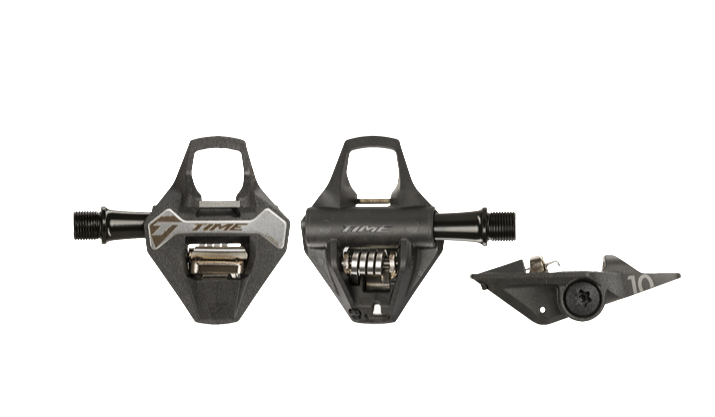
TIME Ciclo "gravel" pedals.
At First They Said It Was Stupid......

1990: Shimano introduces a clipless mountain bike pedal dubbed the M-737, but it quickly became known as "Spud", a verbal rendering of "SPD" which stood for Shimano Pedal Dynamics.

Howls of "you don't need mountain bike specific pedals!" were heard from all sectors of the land back then. But today? While there has been a renaissance of flat pedal use, the clipless pedal is "The Standard" for more than mountain biking.

Fast forward to 2019. TIME introduces a pedal based on road pedals wider, more performance oriented platform, but capable of being used with any two-bolt cleat compatible shoe. (A cleat/shoe compatibility first introduced by the "Spud" in 1990) TIME calls it "the first gravel pedal design". Cue the howls of derision.

I'm really not quite sure about the "how" of this pedals supposed advantages, but here's the deal. If there is anything to it, it will catch on. MTB shoes and pedals are, generally, over-built for what amounts to road riding without the paved roads. You aren't likely to be side swiping big rocks, branches, or pointy, sharp things wielded by desert plants. Not on typical gravel and dirt roads anyway. A more efficient platform and walk-able shoes? Sounds good to me. If it is an advantage, I can totally see it taking off.

Now I have seen comments like, "Yeah, but how many times do you actually get off your bike during a gravel race?" To which I would answer, "Well, if you even have to get off once, wearing road shoes is a disadvantage, not to mention mud, which can foul your pedal interface even if you don't get off." I've actually seen this in an MTB race I was in in the 90's. I've also seen road pedals and shoes finish Trans Iowa. (That rider mentioned the wider platform which he preferred) So, horses for courses and whatever works.

But for those of you that like to poo-poo the latest "specific" component, accessory, or bike, I hope that you are consistent in your lifestyle and use only one bike for everything and use a fixed gear bike, because anything else "you don't really need". On the other hand, if you have some well thought out criticisms or thoughts about the latest craze, well then, carry on......

MG checked out the Roval wheels recently in Calli.
Materials Technology: 

When it comes to bicycles, almost anything you see that is called an "innovation" was already thought of over a hundred years ago, or close to that. When bicycles represented technology akin to what we feel about artificial intelligence, or digital ......well almost anything, back in the 1890's, ideas were flowing like water. Things were dreamt up then that would not look alien to a savvy cycling aficionado today.

So, why didn't they have full suspension bikes, wide, tubeless rims and tires, and more back then? 

Materials technology. Mostly, that is what held everyone back from realizing their dreams back in the day. The recent Roval wheel debut in California is a prime example of what I am talking about.

You don't have to go back a hundred years to see this at work either. Think about 29"er rims circa ten years ago or maybe 12 years ago. The widest thing going was, what? A Stan's Flow? There were oddball rims like the SUN Ringle' MTX and the Salsa Gordo, but those weighed a metric ton. Stan's Flow rims were 28mm outside width, or so. Inner width? Maybe what? 24mm? (HOLD ON)...... Okay, I just remembered I have an old Flow rim. It measured a hair over 27mm outer and 22.3mm inner. Okay.....those were considered trail MTB rims in 2007. 

Build weights for rims that wide back then were close to 2000 grams a pair and we thought that was fine. Fast forward to today. Roval introduces a gravel rim/wheel set. It has 25mm inner width, and full wheel builds are sub-1300 grams for a pair.

WTH!! 

The thing is we are like, "Oh..... Yeah, that sounds pretty cool." When we should be floored. We are sooooo jaded when it comes to this sort of thing, in my opinion. Yes......the wheels are prohibitively expensive. Yes.....no one "needs them", at least in the sense that you cannot cycle without them, or whatever. But, you cannot deny that they would be awesome to ride with. Rims that wide, and light? That's materials technology right there. That's what I was talking about. It's amazing how this facet of engineering has brought so many cool ideas from long ago (or even just ten years ago) to life, or made them practical.

That's it for this week. Have a great weekend and get out and ride!

Friday News And Views

Updated Cutthroat for 2020. Image courtesy of Salsa Cycles
Salsa Cycles Announces Redesigned Cutthroat:

If you follow social media at all, you already have seen the new Salsa Cycles Cutthroat by now. I won't go over all of the nitty-gritty of the new design, but I wanted to touch upon a few things that struck me about this announcement and the bike.

I've not been a big fan of carbon fiber as an adventure bike/gravel bike frame material since I've seen first hand what a muddy ride can do to a carbon frame. Now, you may say something to the effect of "Well, how many times is that going to happen on typical gravel rides?" Well, I've been doing this activity around the Mid-West for a decade and a half and I can tell you the answer is, "It happens a LOT". Yes- even when it doesn't rain. 

So, with that out of the way, I have advocated for some sort of protective inserts in high wear areas on carbon frames to ward off premature wear through while traversing muddy areas. I've seen damage occur with one passing on a one mile section, and that without riding the entire section. So, this isn't a wild, out of the ordinary request. Now Salsa is doing this on the new Cutthroat. It's a start, but more bike companies need to adopt this practice on gravel/adventure rigs,

The other thing they did with more fork compliance is another "no-brainer" design feature other bike companies need to adopt. At least we aren't still thinking those overly stiff carbon Enve forks and their ilk are good for gravel. Compliance is king, and Salsa figured this out. Kudos.

But did anyone notice that they are calling these new models "Carbon Cutthroats"? Hmm..... This begs the question, "Why even bother using Carbon in the name unless there is a Cutty coming in another material?" I mean, of course a Cutthroat is carbon. They have always been so. Makes you wonder.......

TIME Ciclo "gravel" pedals.
At First They Said It Was Stupid......

1990: Shimano introduces a clipless mountain bike pedal dubbed the M-737, but it quickly became known as "Spud", a verbal rendering of "SPD" which stood for Shimano Pedal Dynamics.

Howls of "you don't need mountain bike specific pedals!" were heard from all sectors of the land back then. But today? While there has been a renaissance of flat pedal use, the clipless pedal is "The Standard" for more than mountain biking.

Fast forward to 2019. TIME introduces a pedal based on road pedals wider, more performance oriented platform, but capable of being used with any two-bolt cleat compatible shoe. (A cleat/shoe compatibility first introduced by the "Spud" in 1990) TIME calls it "the first gravel pedal design". Cue the howls of derision.

I'm really not quite sure about the "how" of this pedals supposed advantages, but here's the deal. If there is anything to it, it will catch on. MTB shoes and pedals are, generally, over-built for what amounts to road riding without the paved roads. You aren't likely to be side swiping big rocks, branches, or pointy, sharp things wielded by desert plants. Not on typical gravel and dirt roads anyway. A more efficient platform and walk-able shoes? Sounds good to me. If it is an advantage, I can totally see it taking off.

Now I have seen comments like, "Yeah, but how many times do you actually get off your bike during a gravel race?" To which I would answer, "Well, if you even have to get off once, wearing road shoes is a disadvantage, not to mention mud, which can foul your pedal interface even if you don't get off." I've actually seen this in an MTB race I was in in the 90's. I've also seen road pedals and shoes finish Trans Iowa. (That rider mentioned the wider platform which he preferred) So, horses for courses and whatever works.

But for those of you that like to poo-poo the latest "specific" component, accessory, or bike, I hope that you are consistent in your lifestyle and use only one bike for everything and use a fixed gear bike, because anything else "you don't really need". On the other hand, if you have some well thought out criticisms or thoughts about the latest craze, well then, carry on......

MG checked out the Roval wheels recently in Calli.
Materials Technology: 

When it comes to bicycles, almost anything you see that is called an "innovation" was already thought of over a hundred years ago, or close to that. When bicycles represented technology akin to what we feel about artificial intelligence, or digital ......well almost anything, back in the 1890's, ideas were flowing like water. Things were dreamt up then that would not look alien to a savvy cycling aficionado today.

So, why didn't they have full suspension bikes, wide, tubeless rims and tires, and more back then? 

Materials technology. Mostly, that is what held everyone back from realizing their dreams back in the day. The recent Roval wheel debut in California is a prime example of what I am talking about.

You don't have to go back a hundred years to see this at work either. Think about 29"er rims circa ten years ago or maybe 12 years ago. The widest thing going was, what? A Stan's Flow? There were oddball rims like the SUN Ringle' MTX and the Salsa Gordo, but those weighed a metric ton. Stan's Flow rims were 28mm outside width, or so. Inner width? Maybe what? 24mm? (HOLD ON)...... Okay, I just remembered I have an old Flow rim. It measured a hair over 27mm outer and 22.3mm inner. Okay.....those were considered trail MTB rims in 2007. 

Build weights for rims that wide back then were close to 2000 grams a pair and we thought that was fine. Fast forward to today. Roval introduces a gravel rim/wheel set. It has 25mm inner width, and full wheel builds are sub-1300 grams for a pair.

WTH!! 

The thing is we are like, "Oh..... Yeah, that sounds pretty cool." When we should be floored. We are sooooo jaded when it comes to this sort of thing, in my opinion. Yes......the wheels are prohibitively expensive. Yes.....no one "needs them", at least in the sense that you cannot cycle without them, or whatever. But, you cannot deny that they would be awesome to ride with. Rims that wide, and light? That's materials technology right there. That's what I was talking about. It's amazing how this facet of engineering has brought so many cool ideas from long ago (or even just ten years ago) to life, or made them practical.

That's it for this week. Have a great weekend and get out and ride!

Tuesday, April 17, 2018

Old Idea Reborn: Cane Creek Cranks

The original Sweet Wings crank set in CroMoly
I saw an image on Twitter and I had to do a double take. Wait a minute! I checked the calendar. Yep! It is 2018 alright! I thought I was swept back to 1996 for a minute there. I look at the image on Twitter again...... Nope! It's 1996 again! 

Ah! The 1990's and mountain biking. You could hardly keep up with all the "new" tech that was burbling up out of garages, failed military contract company's materials technology, and whatever color anodization was in vogue at the moment. It was a seemingly ever flowing stream of "the new".

Of course, we didn't have Instagram, Twitter, Facebook, or the internet, (at least schlubs like us didn't), back in the 1990's. We had monthly periodicals. You might remember them as "magazines". Ya know........print media? Yeah, and it refreshed at a rate of once a month. It was really something else. We had a lot of time to do other stuff back then. Not like today where you are checking social media every half a second when you aren't answering push notifications between surfing the innergoogles and trying to eat lunch. Or something..........

Anyway, the Sweet Wings cranks were something that was the answer to a lot of our brainstorming about cranks and bottom brackets back in the old Advantage Cyclery days. My old boss, Tom, actually pretty much conceptually figured out two piece crank sets and outboard bearing bottom brackets one day while we were musing on the deficiencies of square taper crank/bottom bracket designs of the day. I never forgot that conversation, especially when Sweet Wings came about. They were the two piece design done right, not like Bullseye cranks, and they were light. At least for that time they were. A titanium version was teased back then, but I am not sure they saw the light of day before Sweet Wings kind of passed from the scene.

Cane Creek's eeWing Cranks in Titanium
Apparently, in the years that have since passed since those halcyon days of yore, Cane Creek picked up a brake design from a guy with a company called "Edwards Emnginerring". The brake was some CNC'ed masterpiece dubbed the "eeBrake". ("ee" for Edwards Engineering) Apparently this is the design source for the Sweet Wings crank idea, and so now we see in 2018 what you could call a modernized version of Sweet Wings dubbed "eeWing Cranks" by Cane Creek.

You can go read all the amazing hoopla about them here. They really are not a whole lot different than they were over 20 years ago. Same basic concept with some tweaks on the finer details. The big thing is the interface of the two parts of the crank arms. Instead of the splined interface of yore, Cane Creek has gone with a Hirth Joint, which is similar to how Campy road cranks are joined. Of course, the new eeCrank is made from Titanium, fully realizing Edwards Engineering's intentions for the design way back when.

So, why? 400 grams and a thousand bucks? Well..........yeah. You can spin this a thousand ways to Sunday and the fact is that these are insanely expensive crank arms. Cool? High tech? Yes. Better than high end carbon cranks? Probably. At least you shouldn't pull pedal spindle inserts out of these, like I've seen with a certain carbon crank a time or three. And 400 grams is pretty dang light, so......

Anyway, what is old is new again, only better. You could say that about a lot of current bicycle technologies. I just find the eeCrank intriguing as I did over 20 years ago when I saw its ancestor, the Sweet Wing crank. It's a really great idea, but it is just too danged expensive. So, in a way, that hasn't changed in the years since I was a younger shop rat than I am today!

Old Idea Reborn: Cane Creek Cranks

The original Sweet Wings crank set in CroMoly
I saw an image on Twitter and I had to do a double take. Wait a minute! I checked the calendar. Yep! It is 2018 alright! I thought I was swept back to 1996 for a minute there. I look at the image on Twitter again...... Nope! It's 1996 again! 

Ah! The 1990's and mountain biking. You could hardly keep up with all the "new" tech that was burbling up out of garages, failed military contract company's materials technology, and whatever color anodization was in vogue at the moment. It was a seemingly ever flowing stream of "the new".

Of course, we didn't have Instagram, Twitter, Facebook, or the internet, (at least schlubs like us didn't), back in the 1990's. We had monthly periodicals. You might remember them as "magazines". Ya know........print media? Yeah, and it refreshed at a rate of once a month. It was really something else. We had a lot of time to do other stuff back then. Not like today where you are checking social media every half a second when you aren't answering push notifications between surfing the innergoogles and trying to eat lunch. Or something..........

Anyway, the Sweet Wings cranks were something that was the answer to a lot of our brainstorming about cranks and bottom brackets back in the old Advantage Cyclery days. My old boss, Tom, actually pretty much conceptually figured out two piece crank sets and outboard bearing bottom brackets one day while we were musing on the deficiencies of square taper crank/bottom bracket designs of the day. I never forgot that conversation, especially when Sweet Wings came about. They were the two piece design done right, not like Bullseye cranks, and they were light. At least for that time they were. A titanium version was teased back then, but I am not sure they saw the light of day before Sweet Wings kind of passed from the scene.

Cane Creek's eeWing Cranks in Titanium
Apparently, in the years that have since passed since those halcyon days of yore, Cane Creek picked up a brake design from a guy with a company called "Edwards Emnginerring". The brake was some CNC'ed masterpiece dubbed the "eeBrake". ("ee" for Edwards Engineering) Apparently this is the design source for the Sweet Wings crank idea, and so now we see in 2018 what you could call a modernized version of Sweet Wings dubbed "eeWing Cranks" by Cane Creek.

You can go read all the amazing hoopla about them here. They really are not a whole lot different than they were over 20 years ago. Same basic concept with some tweaks on the finer details. The big thing is the interface of the two parts of the crank arms. Instead of the splined interface of yore, Cane Creek has gone with a Hirth Joint, which is similar to how Campy road cranks are joined. Of course, the new eeCrank is made from Titanium, fully realizing Edwards Engineering's intentions for the design way back when.

So, why? 400 grams and a thousand bucks? Well..........yeah. You can spin this a thousand ways to Sunday and the fact is that these are insanely expensive crank arms. Cool? High tech? Yes. Better than high end carbon cranks? Probably. At least you shouldn't pull pedal spindle inserts out of these, like I've seen with a certain carbon crank a time or three. And 400 grams is pretty dang light, so......

Anyway, what is old is new again, only better. You could say that about a lot of current bicycle technologies. I just find the eeCrank intriguing as I did over 20 years ago when I saw its ancestor, the Sweet Wing crank. It's a really great idea, but it is just too danged expensive. So, in a way, that hasn't changed in the years since I was a younger shop rat than I am today!

Wednesday, March 21, 2018

Will This New Materials Technology Revolutionize Cycling?

Graphene, found in tires now, and helmets, is poised to change everything- or will it?
Every so often something happens which opens the door to newer ways of doing the same old things in cycling. Like when steel rims were replaced by aluminum and then those aluminum rims were made stronger by heat treatment. Same idea- something to mount a tire on, but with better and better materials technology.

I recall in the 90's when carbon fiber was just making inroads as a material to be used for cycling. I was a bit apprehensive when I started out using a carbon fiber fork on a road bike in the 1990's. But who can imagine a lightweight road rocket without a carbon fork now? It's common place. Materials technology made it so.

And speaking of carbon fiber, how about this new stuff we've been seeing. Nanotubes, and now Graphene. Just what is Graphene anyway? I had a set of tires to try out from Vittoria with the stuff in them. I knew it was some atomic structure, and Vittoria had a bit of info on the stuff, but it wasn't until I found out helmet maker Catlike was using the stuff in helmets that I found a better explanation. Here's something from their site:

"Graphene is a totally new material, derived from graphite, comprised of very interesting physical and chemical properties. Its basic structure is formed by carbon atoms set out in a hexagonal shape. This creates layered structures (like a honeycomb) of a thick atom whose intercalation, along with the “Van der Waals” forces, achieve a material up to 200 times more resistant than steel, yet is extremely light.

This material exhibits enormous mechanical resistance and some unique electronic properties. Its extraordinary properties and its potential technical applications have made Graphene one of the most active research fields in materials’ physics."


A chart found on the Catlike site showing general uses for Graphene now.
Of course, tires are the big news in cycling regarding this Graphene stuff. It has been touted as a material that increases traction without affecting rolling resistance. It also increases wear life and offers better puncture protection. Sounds like magic? Or maybe B.S.? Yes, it does at first blush, but reports coming back from riders are proving that Graphene is actually the "real deal".

In an article posted to "Bike Europe" recently about Vittoria and Graphene technology, we get a picture painted for us describing Graphene's attributes by the Italian patent holder for the material: 

"In a statement Directa Plus says “The G+ use in tyres produces the joint effect of simultaneously reducing rolling resistance and increasing grip. The result is a tyre that is both faster and safer in turning under braking or in extreme weather conditions. In addition, the effectiveness of G+ reduces fuel consumption as well as increasing the lifespan of the tyre due to reduced wear. As a result the application of G+ offers economic efficiency as well as environmental sustainability.”"

As we can see from the quote, there appears to be a future for Graphene in automotive and e-bike fields. So, that would point to a wider use of the material there. But what if Graphene gets applied to carbon fiber parts for bicycles as well? Could it be a game changer like it appears it is well on its way to be doing in the tire field? It is intriguing to think about.....

I was told recently by a person in the industry that Vittoria has the exclusive on Graphene for tires. I also found out a certain bicycle brand has been pressing Vittoria for them to make tires under their brand with Graphene in them, but they were rebuffed. This would point further to how important this material is and how it could significantly affect tire technology now and in the future.  

Maybe it will be a flash in the pan, but it would seem that in the years to come Graphene and its applications may be seen as a significant advancement just like the heat treating of aluminum for rims or carbon fiber frames and forks were in the past.

Will This New Materials Technology Revolutionize Cycling?

Graphene, found in tires now, and helmets, is poised to change everything- or will it?
Every so often something happens which opens the door to newer ways of doing the same old things in cycling. Like when steel rims were replaced by aluminum and then those aluminum rims were made stronger by heat treatment. Same idea- something to mount a tire on, but with better and better materials technology.

I recall in the 90's when carbon fiber was just making inroads as a material to be used for cycling. I was a bit apprehensive when I started out using a carbon fiber fork on a road bike in the 1990's. But who can imagine a lightweight road rocket without a carbon fork now? It's common place. Materials technology made it so.

And speaking of carbon fiber, how about this new stuff we've been seeing. Nanotubes, and now Graphene. Just what is Graphene anyway? I had a set of tires to try out from Vittoria with the stuff in them. I knew it was some atomic structure, and Vittoria had a bit of info on the stuff, but it wasn't until I found out helmet maker Catlike was using the stuff in helmets that I found a better explanation. Here's something from their site:

"Graphene is a totally new material, derived from graphite, comprised of very interesting physical and chemical properties. Its basic structure is formed by carbon atoms set out in a hexagonal shape. This creates layered structures (like a honeycomb) of a thick atom whose intercalation, along with the “Van der Waals” forces, achieve a material up to 200 times more resistant than steel, yet is extremely light.

This material exhibits enormous mechanical resistance and some unique electronic properties. Its extraordinary properties and its potential technical applications have made Graphene one of the most active research fields in materials’ physics."


A chart found on the Catlike site showing general uses for Graphene now.
Of course, tires are the big news in cycling regarding this Graphene stuff. It has been touted as a material that increases traction without affecting rolling resistance. It also increases wear life and offers better puncture protection. Sounds like magic? Or maybe B.S.? Yes, it does at first blush, but reports coming back from riders are proving that Graphene is actually the "real deal".

In an article posted to "Bike Europe" recently about Vittoria and Graphene technology, we get a picture painted for us describing Graphene's attributes by the Italian patent holder for the material: 

"In a statement Directa Plus says “The G+ use in tyres produces the joint effect of simultaneously reducing rolling resistance and increasing grip. The result is a tyre that is both faster and safer in turning under braking or in extreme weather conditions. In addition, the effectiveness of G+ reduces fuel consumption as well as increasing the lifespan of the tyre due to reduced wear. As a result the application of G+ offers economic efficiency as well as environmental sustainability.”"

As we can see from the quote, there appears to be a future for Graphene in automotive and e-bike fields. So, that would point to a wider use of the material there. But what if Graphene gets applied to carbon fiber parts for bicycles as well? Could it be a game changer like it appears it is well on its way to be doing in the tire field? It is intriguing to think about.....

I was told recently by a person in the industry that Vittoria has the exclusive on Graphene for tires. I also found out a certain bicycle brand has been pressing Vittoria for them to make tires under their brand with Graphene in them, but they were rebuffed. This would point further to how important this material is and how it could significantly affect tire technology now and in the future.  

Maybe it will be a flash in the pan, but it would seem that in the years to come Graphene and its applications may be seen as a significant advancement just like the heat treating of aluminum for rims or carbon fiber frames and forks were in the past.

Saturday, September 03, 2016

Minus Ten Review- 35

Tomatilla Green. I miss this color scheme.
Ten years ago on the blog I was running through a series I called "Materials Of Choice" where I researched all the materials commonly used in cycling. It was pretty enlightening. I actually learned quite a bit by doing it and it became one of the most popular revisited set of posts on my blog for quite a while.

The last post of the week was concerning all the great 29"er news coming out of Eurobike in 2007. At the time, this seemed rather ironic since Europeans were rather cool, (and to some degree still are) concerning the big wheeled bicycles. They were still all about 26"ers back then. So it was a bit puzzling at the time.

Now with the benefit of ten years of perspective, it was really all about how Eurobike was rising in prominence as the show where companies and brands showed off the newest goods first. Interbike was never quite the same after that. Of course, things are still changing, and now with so many people on mobile wifi connections, it is at a tipping point to where it seems a digital launch on news and innovations is really the focus now. The flip side is the dealer only/traveling demo truck shows which aim more at hands on, grassroots marketing. Anyway.....

Ten years ago it was cool to find out more tires were coming out, and rims, and forks. 29"ers were starting their takeover of 26"er mountain bike categories. Those were some exciting days for the 29'er fans.

Minus Ten Review- 35

Tomatilla Green. I miss this color scheme.
Ten years ago on the blog I was running through a series I called "Materials Of Choice" where I researched all the materials commonly used in cycling. It was pretty enlightening. I actually learned quite a bit by doing it and it became one of the most popular revisited set of posts on my blog for quite a while.

The last post of the week was concerning all the great 29"er news coming out of Eurobike in 2007. At the time, this seemed rather ironic since Europeans were rather cool, (and to some degree still are) concerning the big wheeled bicycles. They were still all about 26"ers back then. So it was a bit puzzling at the time.

Now with the benefit of ten years of perspective, it was really all about how Eurobike was rising in prominence as the show where companies and brands showed off the newest goods first. Interbike was never quite the same after that. Of course, things are still changing, and now with so many people on mobile wifi connections, it is at a tipping point to where it seems a digital launch on news and innovations is really the focus now. The flip side is the dealer only/traveling demo truck shows which aim more at hands on, grassroots marketing. Anyway.....

Ten years ago it was cool to find out more tires were coming out, and rims, and forks. 29"ers were starting their takeover of 26"er mountain bike categories. Those were some exciting days for the 29'er fans.

Monday, March 22, 2010

Thoughts On Materials

So with the blessings of being in the position I am in, one of the things I get to experience is the feel of different materials for bicycles. Not just any ol' bicycles either, but really well executed ones. One thing to keep in mind, a frames material is only as good as the engineering and design behind it.

Steel: I suppose just about everybody has ridden a steel bicycle frame at one point or another, and you can debate until the cows come home about whether or not "steel is real" or even what that means. I will say only that a great quality steel used well, like the 853 Reynolds in this Raleigh XXIX, feels pretty darn nice used in a hard tail application. That said, even steel without a "pedigree" can feel pretty nice if the design is correct. Witness the OS Bikes Blackbuck, or the Salsa Fargo for example. Steel also has that advantage of being better at not failing catastrophically. (Not that it can't) And it can last a lifetime with some very reasonable care and maintenance.

Carbon Fiber: This is the mystery material that has people skittish or all hot and bothered. Again, it takes a great design and great execution of that design to make a great carbon frame. I've had the privilege of piloting a Specialized Stumpjumper Carbon Expert lately and I can say it rides pretty sweetly. It isn't without some faults, (A bit torsionally flexy), but it does a stellar job of smoothing the trail in an odd sort of way that is hard to describe. The big rap against carbon is small failures and catastrophic failure fears. I have been hearing about a lot of "cracked" carbon frames, but cracks that are caught out are much better than having a frame disintegrate underneath you on a ride. Thank goodness I have not experienced either cracks or failures in my carbon fiber experiences. That said, any failure, crack or catastrophic, of any bicycle frame is a bummer, bad, or at worst, injury causing.  It isn't a "carbon fiber thing" exclusively. My experience recently riding the rocky trails of El Paso, Texas show that carbon can be pretty resilient. Rocks were pinging off the frame like crazy! However; the high price of entry for a carbon fiber frame, like the pictured rendering of the upcoming Orbea Alma version 2, makes even the slightest damage a very great concern.

Titanium: This isn't a very inexpensive alternative, but in a way, it has some of the features of both carbon fiber and steel, all wrapped up in a pretty durable package.

The titanium story is one of compliance and trying to reign that in so that the ride isn't too flexy. A tough cookie to crack in a 29"er size. Of course, you could throw a bunch of material at the design, but that defeats the allure of titaniums lighter weight advantage. So, titanium hasn't really been all that successful as far as making a great 29"er until recently. As far as durability, titanium really doesn't have a corrosion issue, it doesn't need paint, and can look as nice in 20 years as it does now. You don't have much to worry about as far as failures go either, as long as the frame was prepped and welded properly. If you have the cash, it's hard not to really like titanium.

Conclusions: As far as "value" goes, nothing can touch a steel frame for a bicycle. It can be reasonably light weight, tough, ride nicely, and last a long time for little cash outlay. Is steel "real", or is it really "king"? Tough to argue against that. Carbon fiber is certainly king of light weight while retaining strength. It can be "tuned", but at a greater expense than even titanium in some cases. Due to varying supply originations, it is hard to say what is good and what isn't at the off-brand, lower price scale with carbon frames. In the end, the jury is still out on durability too. Last we have titanium, which if the latest designs are any indication, is making some solid inroads as a great material for a 29"er. The material is certainly durable, rides sweetly, and can retain some of that lighter weight advantage against steel. It is still a pretty pricey proposition though, and there are not too many really outstanding choices in titanium that are readily available that don't have the name "Lynskey" attached to them somehow. (Not that this is a bad thing, I'm just saying...)

So, I would still hand the crown of "best material for a frame" to steel. It is just hard not to like a material that is so well known, so available, so full of potential for performance, and is /can be a real inexpensive choice. That said, carbon fiber is sexy and titanium is dreamy. There really isn't a "bad" choice out there from well known, established companies. In the end though, you'd likely see me happily dusting it up on some steel frame and never looking back.............well............unless that design came in titanium...................or if that carbon beauty wasn't quite soooo spendy...............or..................

It's a good time to be a 29"er freak, eh? 

Thoughts On Materials

So with the blessings of being in the position I am in, one of the things I get to experience is the feel of different materials for bicycles. Not just any ol' bicycles either, but really well executed ones. One thing to keep in mind, a frames material is only as good as the engineering and design behind it.

Steel: I suppose just about everybody has ridden a steel bicycle frame at one point or another, and you can debate until the cows come home about whether or not "steel is real" or even what that means. I will say only that a great quality steel used well, like the 853 Reynolds in this Raleigh XXIX, feels pretty darn nice used in a hard tail application. That said, even steel without a "pedigree" can feel pretty nice if the design is correct. Witness the OS Bikes Blackbuck, or the Salsa Fargo for example. Steel also has that advantage of being better at not failing catastrophically. (Not that it can't) And it can last a lifetime with some very reasonable care and maintenance.

Carbon Fiber: This is the mystery material that has people skittish or all hot and bothered. Again, it takes a great design and great execution of that design to make a great carbon frame. I've had the privilege of piloting a Specialized Stumpjumper Carbon Expert lately and I can say it rides pretty sweetly. It isn't without some faults, (A bit torsionally flexy), but it does a stellar job of smoothing the trail in an odd sort of way that is hard to describe. The big rap against carbon is small failures and catastrophic failure fears. I have been hearing about a lot of "cracked" carbon frames, but cracks that are caught out are much better than having a frame disintegrate underneath you on a ride. Thank goodness I have not experienced either cracks or failures in my carbon fiber experiences. That said, any failure, crack or catastrophic, of any bicycle frame is a bummer, bad, or at worst, injury causing.  It isn't a "carbon fiber thing" exclusively. My experience recently riding the rocky trails of El Paso, Texas show that carbon can be pretty resilient. Rocks were pinging off the frame like crazy! However; the high price of entry for a carbon fiber frame, like the pictured rendering of the upcoming Orbea Alma version 2, makes even the slightest damage a very great concern.

Titanium: This isn't a very inexpensive alternative, but in a way, it has some of the features of both carbon fiber and steel, all wrapped up in a pretty durable package.

The titanium story is one of compliance and trying to reign that in so that the ride isn't too flexy. A tough cookie to crack in a 29"er size. Of course, you could throw a bunch of material at the design, but that defeats the allure of titaniums lighter weight advantage. So, titanium hasn't really been all that successful as far as making a great 29"er until recently. As far as durability, titanium really doesn't have a corrosion issue, it doesn't need paint, and can look as nice in 20 years as it does now. You don't have much to worry about as far as failures go either, as long as the frame was prepped and welded properly. If you have the cash, it's hard not to really like titanium.

Conclusions: As far as "value" goes, nothing can touch a steel frame for a bicycle. It can be reasonably light weight, tough, ride nicely, and last a long time for little cash outlay. Is steel "real", or is it really "king"? Tough to argue against that. Carbon fiber is certainly king of light weight while retaining strength. It can be "tuned", but at a greater expense than even titanium in some cases. Due to varying supply originations, it is hard to say what is good and what isn't at the off-brand, lower price scale with carbon frames. In the end, the jury is still out on durability too. Last we have titanium, which if the latest designs are any indication, is making some solid inroads as a great material for a 29"er. The material is certainly durable, rides sweetly, and can retain some of that lighter weight advantage against steel. It is still a pretty pricey proposition though, and there are not too many really outstanding choices in titanium that are readily available that don't have the name "Lynskey" attached to them somehow. (Not that this is a bad thing, I'm just saying...)

So, I would still hand the crown of "best material for a frame" to steel. It is just hard not to like a material that is so well known, so available, so full of potential for performance, and is /can be a real inexpensive choice. That said, carbon fiber is sexy and titanium is dreamy. There really isn't a "bad" choice out there from well known, established companies. In the end though, you'd likely see me happily dusting it up on some steel frame and never looking back.............well............unless that design came in titanium...................or if that carbon beauty wasn't quite soooo spendy...............or..................

It's a good time to be a 29"er freak, eh?