Wednesday, October 06, 2021

Robots Are The Future- Or Are They?

Diagram showing key components of Rock Shox's Flight Attendant. (Image courtesy of SRAM)
News hit the digital ether yesterday concerning a new technology advancement from Rock Shox/SRAM for mountain bikes. It is what they call "Flight Attendant". Essentially it is a computer algorithm which decides how to adjust your full suspension on the fly based upon inputs from key sensors at the bottom bracket and shocks. Of course, that is a very simplistic look at this. Go hit the link if you want to nerd-out on the specifics. 

I watched a decently long video concerning the new Flight Attendant, (again- what's with these weird names for components?), and it is pretty impressive. Impressive from a technological standpoint, from a novelty standpoint, and it is equally impressively expensive since it comes, for the time being, on only four range-topping bikes from four companies. 

So what? Who cares if these are only going to be seen on the racks of the rich and sponsored? Well, it is the way that the technology was derived for Flight Attendant that matters. It is based off AXS technology, and eTap AXS groups already use the same wireless technology and batteries that Flight Attendant uses. 

Trek's ISO Speed decoupler is passive....for now. (Image courtesy of Trek)

Many attempts are being made at trying to reduce vibrations to riders, and many companies are starting to push 'gravel bikes' into light MTB areas. Who is to say that an eTap AXS system wouldn't be developed which could take the complexity of suspension set up, make it 'automatic', and do the job? 

The fact that SRAM has chosen to milk as many applications for this AXS technology as it can shows me that this idea isn't as far-fetched as it might seem. However; there is one thing holding that back. Conformity. 

Unless SRAM can get some brands to buy into a fork, or a stem/seat post idea that could be affixed to any bike, I don't see it happening. Frame mounted suspension components for MTB bikes are a bit less of a crap shoot to organize a technology around. Almost everyone does telescopic, dual legged forks, and shocks are also telescopic units with standardized lengths and strokes, to some degree. The way those shocks are fitted to bikes is very similar, brand to brand. The gravel bike world doesn't have these restrictions so you get things like Canyon's dual plane handle bar and integrated stem, and Specialized's suspension stem which is integrated, and Trek's ISO Speed decouplers, which are proprietary. 

Rounding up a way to use this AXS/Flight Attendant idea for gravel would be like herding cats, at least for now. (I am sure of this because I have a cat!) But I don't think we've seen the last of suspension for gravel bikes. Robotically controlled or no, I bet something will surface in the next five years that will blow our minds and be really expensive!

Tuesday, October 05, 2021

Review: Tubolito Tubes - Part 1

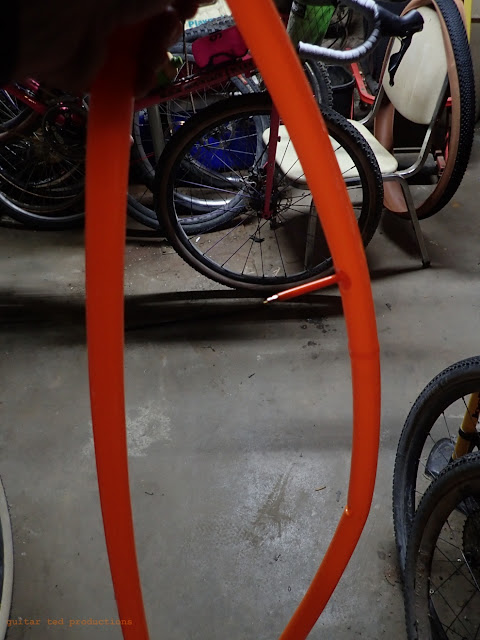
Tubolito tubes in background- patch kit up front.
 NOTE: Please read the Standard Disclaimer Page for reference in terms of review product and my relationship with the product. Thank you! 

Okay, so recently I made mention here that I received a surprise in the American Classic tire box I was expecting for a review for RidingGravel.com. Inside with those tires were two Tubolito tubes and a patch kit for the tubes. So, since I hadn't been asked to review that stuff for RidingGravel.com, I'm going to do that here on this blog. Now you know....

Again, this is not a paid review and I was sent this stuff at no charge. I am doing the review without the knowledge of Tuboloito or its distributors and marketing folks. 

Now with that said, here's my impressions of this product. It is something many riders use as a fail-safe against tubeless failures, but Tubolito suggests that you can use these as 'daily-driver' tubes for your wheels. Many of you said in comments to me that you haven't used this product in that way, so I decided to use these on one of my bikes and we'll see how they perform and hold up. In this post I will impart how it is to use one of these in place of your tubeless set up, which is the most likely scenario from the sounds of it. 

Of course, I did this in a controlled setting, not out along a roadside, but I'll try to impart my take on what it may be like to change out to a Tubolito in an emergency situation despite that. Okay- here we go!

These things are incredibly light.

I'll assume a situation where the tire is intact, but for whatever reason, your sealant failed to seal a puncture. Okay? Obviously you know that at this point you need to bail on the tubeless and peel off one bead from the rim and pull the valve stem for your tubeless set up. Note: This may require that you carry a small pliers of some sort because typically the Presta nut is darn near impossible to take off by hand at this point. Be forewarned that just using fingers may not cut it for that job! Some Presta nuts have flats built in which allow for a small wrench to fit them, but at any rate, know what you need ahead of the emergency and have it packed. If you do not plan in advance for this, you may be stopped in your tracks already, which means nothing beyond this point will matter. 

Now that you have that valve removed, you may want to use a rag or a wipe, (What! You don't pack a rag or wipes?! You heathen!) to wipe up any excess goop (sealant) in the tire. But keep in mind that Tubolito tubes are sealant resistant, according to their information, so if you cannot remove that stuff, then you should be okay. I wiped up as much as I could from the rim wells, but I wasn't super picky, just like you might not be out in the field. 

Note: For my purposes in testing I used a non-tubeless tire to set up the Tubolito tubes with, so I did not have excess goop on the tires. In this case, I grabbed some old Bruce Gordon Rock & Road tires I had. They are 700 X 42mm and the Tubolito tubes I was sent are rated for that size range. In fact, this tube is good for up to 700 X 47mm tires. Curiously it also is suggested for 650B X 30mm tires. Anyway, I'll get to that in a minute. 

The Tubolito is plasticky and feels rather like a prophylactic - if you know what I mean.
With a slight amount of air to give it shape here. Note- You can see the light through this a bit.

So, in the hand these feel and look nothing like a typical bicycle inner tube. They feel slippery, plasticky, and rather like a condom! Airing it up to give it some shape, the tube doesn't fill out in a circular shape, but sections want to stay straight and small folds develop where it bends instead of curving. 

Tubolito recommends no more than a few psi outside of a tire because once a Tubolito stretches it does not return to its previous form and doing this to an unrestricted Tubolito may damage it beyond usefulness. So, don't blow this thing up beyond just giving it some shape. Now, stuffing this into the tire is fairly straight forward with one caveat. Remember how Tubolito says this size can work for 650B? Yeah, this thing comes out a tad smaller in diameter due to that, so be prepared to wrestle with that a bit as well. 

Once you've assured yourself that the Tubolito is in the rim well, you can slip the bead of the tire back into place and begin to air up the tire. That part is no different than any other tire, as far as what air pressures to use. Use your normal pressures here. (See the caveat in the next paragraph though) Note that on the Tubolito site they give you a graph showing the rolling resistance comparisons between a normal tube, a 'super-light' butyl tube, latex tubes, and tubeless versus the Tubolito. The charts show the Tubolito to not be quite as good as tubeless and latex tubes, but much better than butyl rubber tubes. So, you are not losing too much here by having to use a Tubolito.  

No Presta valve nuts here!

 Because the Tubolito has a valve stem seemingly made from the same material as the rest of the tube, and because you cannot use a Presta valve nut, pushing a pump head on is a bit more difficult. It would probably behoove one to use care when pushing a pump head on because these things cost North of 30 bucks by a fair amount and one would be pretty sore if they were to ruin one of these by bending the Presta valve up or by ripping the stem off the tube somehow. Not that there is any evidence that this may happen given by Tubolito, but I would be cautious nonetheless. 

Now, you've gotten yourself back on the go. From this point the this post will focus on how I am using these tubes as 'daily driver' tubes in my set up using the Rock&Road tires. My set up was fairly normal, given that I used a tubeless rim and some used tires. The problems getting the tires to seat properly probaly were not related to the Tubolito, just situational to this particular pairing. Once I managed that it has been nothing to really write about.

I am using the aluminum Irwin wheels on my Raleigh Tamland Two for this test.

 The tires were set at 38-ish psi and rode as I would have expected. I did not feel that there was any real difference between this and a tubeless tire that would be comparable to the Rock&Roads. In fact, I had Vee Tire Rocketman tires on here before set up tubeless and this felt basically the same as that set up. 

Okay, so why would anyone want to use expensive tubes? One reason might be weight savings. The rear Tubolito was the standard CX/Gravel tube and weighed 61 grams. That's a lot lighter than the tube I had been using with this tire, (which I just so happened to still have in the tires when I grabbed them from the hook), and the weight savings was 70 grams on average between the two tires. That's roughly 2.5 ounces. Considering the fact that you would also have had at least 4 ounces of sealant in a tubeless tire, and that these 42mm Rock&Roads weigh around 500 grams, and adding in the additional weight of a tubeless valve stem, this set up is arguably a lot lighter than a similar tubeless set up. You could use the S-CX version of this tube, as I did with the front, and save even more. That tube weighed 36 grams. 

But let's say that you aren't about the weight, but the ride feel is what you are after. Okay, I would be very hard pressed to discern any real differences between tubeless and Tubolitoed here. (Is that even a word? I guess it is now!) Yes, the rolling resistance numbers are not as good as tubeless, (or latex tubed), but they are not terrible either. You say, "But what about puncture protection?" 

Fair question.

Tubolito claims that the standard version of the Tubolito is twice as strong as a standard butyl rubber tube and that the lighter, S-CX version, is the same strength as a standard rubber tube. They say it takes twice the force to puncture, and in the case of a S-CX Tubolito tube, the same as it would a standard rubber tube. If you puncture a lot, then maybe this isn't for you. I don't have that issue here, so for my uses, it makes sense to try this. (Of course, now I've doomed myself to running across a nail in the next few days!)

Now here is another downside: Tubolito does not recommend that you pass the Tubolito from one tire to the next, as these stretch out once and that's it. In fact, Tubolito recommends you replace the Tubolito if you change tires. If you are a consistent tire swapper, then these are probably a bad deal. If, however, you live on a set of tires until they die? Then this may be a good bet. 

So, going forward I am going to use this set up as if I were running tubeless. I'm not trying to aviod any rubbish-filled gutters, needle-sharp thorns in the dirt, or sharp-edged strikes from broken pavement. I'll ride the gravel as if I were on any other set up. (Carrying a butyl tube as a back-up!) We will see how it goes throughout the Fall. 

Stay tuned......

Review: Tubolito Tubes - Part 1

Tubolito tubes in background- patch kit up front.
 NOTE: Please read the Standard Disclaimer Page for reference in terms of review product and my relationship with the product. Thank you! 

Okay, so recently I made mention here that I received a surprise in the American Classic tire box I was expecting for a review for RidingGravel.com. Inside with those tires were two Tubolito tubes and a patch kit for the tubes. So, since I hadn't been asked to review that stuff for RidingGravel.com, I'm going to do that here on this blog. Now you know....

Again, this is not a paid review and I was sent this stuff at no charge. I am doing the review without the knowledge of Tuboloito or its distributors and marketing folks. 

Now with that said, here's my impressions of this product. It is something many riders use as a fail-safe against tubeless failures, but Tubolito suggests that you can use these as 'daily-driver' tubes for your wheels. Many of you said in comments to me that you haven't used this product in that way, so I decided to use these on one of my bikes and we'll see how they perform and hold up. In this post I will impart how it is to use one of these in place of your tubeless set up, which is the most likely scenario from the sounds of it. 

Of course, I did this in a controlled setting, not out along a roadside, but I'll try to impart my take on what it may be like to change out to a Tubolito in an emergency situation despite that. Okay- here we go!

These things are incredibly light.

I'll assume a situation where the tire is intact, but for whatever reason, your sealant failed to seal a puncture. Okay? Obviously you know that at this point you need to bail on the tubeless and peel off one bead from the rim and pull the valve stem for your tubeless set up. Note: This may require that you carry a small pliers of some sort because typically the Presta nut is darn near impossible to take off by hand at this point. Be forewarned that just using fingers may not cut it for that job! Some Presta nuts have flats built in which allow for a small wrench to fit them, but at any rate, know what you need ahead of the emergency and have it packed. If you do not plan in advance for this, you may be stopped in your tracks already, which means nothing beyond this point will matter. 

Now that you have that valve removed, you may want to use a rag or a wipe, (What! You don't pack a rag or wipes?! You heathen!) to wipe up any excess goop (sealant) in the tire. But keep in mind that Tubolito tubes are sealant resistant, according to their information, so if you cannot remove that stuff, then you should be okay. I wiped up as much as I could from the rim wells, but I wasn't super picky, just like you might not be out in the field. 

Note: For my purposes in testing I used a non-tubeless tire to set up the Tubolito tubes with, so I did not have excess goop on the tires. In this case, I grabbed some old Bruce Gordon Rock & Road tires I had. They are 700 X 42mm and the Tubolito tubes I was sent are rated for that size range. In fact, this tube is good for up to 700 X 47mm tires. Curiously it also is suggested for 650B X 30mm tires. Anyway, I'll get to that in a minute. 

The Tubolito is plasticky and feels rather like a prophylactic - if you know what I mean.
With a slight amount of air to give it shape here. Note- You can see the light through this a bit.

So, in the hand these feel and look nothing like a typical bicycle inner tube. They feel slippery, plasticky, and rather like a condom! Airing it up to give it some shape, the tube doesn't fill out in a circular shape, but sections want to stay straight and small folds develop where it bends instead of curving. 

Tubolito recommends no more than a few psi outside of a tire because once a Tubolito stretches it does not return to its previous form and doing this to an unrestricted Tubolito may damage it beyond usefulness. So, don't blow this thing up beyond just giving it some shape. Now, stuffing this into the tire is fairly straight forward with one caveat. Remember how Tubolito says this size can work for 650B? Yeah, this thing comes out a tad smaller in diameter due to that, so be prepared to wrestle with that a bit as well. 

Once you've assured yourself that the Tubolito is in the rim well, you can slip the bead of the tire back into place and begin to air up the tire. That part is no different than any other tire, as far as what air pressures to use. Use your normal pressures here. (See the caveat in the next paragraph though) Note that on the Tubolito site they give you a graph showing the rolling resistance comparisons between a normal tube, a 'super-light' butyl tube, latex tubes, and tubeless versus the Tubolito. The charts show the Tubolito to not be quite as good as tubeless and latex tubes, but much better than butyl rubber tubes. So, you are not losing too much here by having to use a Tubolito.  

No Presta valve nuts here!

 Because the Tubolito has a valve stem seemingly made from the same material as the rest of the tube, and because you cannot use a Presta valve nut, pushing a pump head on is a bit more difficult. It would probably behoove one to use care when pushing a pump head on because these things cost North of 30 bucks by a fair amount and one would be pretty sore if they were to ruin one of these by bending the Presta valve up or by ripping the stem off the tube somehow. Not that there is any evidence that this may happen given by Tubolito, but I would be cautious nonetheless. 

Now, you've gotten yourself back on the go. From this point the this post will focus on how I am using these tubes as 'daily driver' tubes in my set up using the Rock&Road tires. My set up was fairly normal, given that I used a tubeless rim and some used tires. The problems getting the tires to seat properly probaly were not related to the Tubolito, just situational to this particular pairing. Once I managed that it has been nothing to really write about.

I am using the aluminum Irwin wheels on my Raleigh Tamland Two for this test.

 The tires were set at 38-ish psi and rode as I would have expected. I did not feel that there was any real difference between this and a tubeless tire that would be comparable to the Rock&Roads. In fact, I had Vee Tire Rocketman tires on here before set up tubeless and this felt basically the same as that set up. 

Okay, so why would anyone want to use expensive tubes? One reason might be weight savings. The rear Tubolito was the standard CX/Gravel tube and weighed 61 grams. That's a lot lighter than the tube I had been using with this tire, (which I just so happened to still have in the tires when I grabbed them from the hook), and the weight savings was 70 grams on average between the two tires. That's roughly 2.5 ounces. Considering the fact that you would also have had at least 4 ounces of sealant in a tubeless tire, and that these 42mm Rock&Roads weigh around 500 grams, and adding in the additional weight of a tubeless valve stem, this set up is arguably a lot lighter than a similar tubeless set up. You could use the S-CX version of this tube, as I did with the front, and save even more. That tube weighed 36 grams. 

But let's say that you aren't about the weight, but the ride feel is what you are after. Okay, I would be very hard pressed to discern any real differences between tubeless and Tubolitoed here. (Is that even a word? I guess it is now!) Yes, the rolling resistance numbers are not as good as tubeless, (or latex tubed), but they are not terrible either. You say, "But what about puncture protection?" 

Fair question.

Tubolito claims that the standard version of the Tubolito is twice as strong as a standard butyl rubber tube and that the lighter, S-CX version, is the same strength as a standard rubber tube. They say it takes twice the force to puncture, and in the case of a S-CX Tubolito tube, the same as it would a standard rubber tube. If you puncture a lot, then maybe this isn't for you. I don't have that issue here, so for my uses, it makes sense to try this. (Of course, now I've doomed myself to running across a nail in the next few days!)

Now here is another downside: Tubolito does not recommend that you pass the Tubolito from one tire to the next, as these stretch out once and that's it. In fact, Tubolito recommends you replace the Tubolito if you change tires. If you are a consistent tire swapper, then these are probably a bad deal. If, however, you live on a set of tires until they die? Then this may be a good bet. 

So, going forward I am going to use this set up as if I were running tubeless. I'm not trying to aviod any rubbish-filled gutters, needle-sharp thorns in the dirt, or sharp-edged strikes from broken pavement. I'll ride the gravel as if I were on any other set up. (Carrying a butyl tube as a back-up!) We will see how it goes throughout the Fall. 

Stay tuned......

Monday, October 04, 2021

Fall Views: Inter-Urban Colors

I decided to document some of the colors along my regular commuting route.
This past weekend was an oddball where I had to work on Saturday. This was because Andy, of Andy's Bike Shop, committed to being a sponsor of the local cycling team's annual cyclo cross race called "Twisted Cross". The main thing there being that Andy was to be at the race venue to help anyone in need. 

That meant I had to man the shop, so I didn't get out on Saturday to ride any gravel and Sunday I played in the church band and then hung out with the family. That left me with Friday off, so I had a window between doing some work around the house and taking care of some errands to get away for a bit to ride. I also assumed that with the forecast calling for weekend rain that the farming activities would be off the charts Friday so I stuck around town on this particular ride. (Later I learned that I was correct in this assumption)

So, I had to test out these Tubolito tubes, (look for my take on those tomorrow), so I rode my Raleigh Tamland Two which was the bike I decided to use to test those out with. I decided to trace most of my commute to work until it reached the inter-urban park area where George Wyth State Park and Hartman Reserve straddle the Cedar River.
 

The unpaved portion of the Trolley Car Trail near to where it crosses over Hackett Road.

Sumac and Asters make for a nice color combination in the Fall.

I detoured off my route to work at Hackett Road and then headed on over to Shirey Way, the old gravel road that once cut through Shirey property where they dredged sand from the Cedar River. This connected Hackett and the East end of Cedar Falls along the river back in the day. There used to be a few homes along this gravel road until the Hartman Reserve got the land and they eventually blocked off the gravel road which has since deteriorated into a two-track. Essentially, an inter-urban Level B Maintenance road. 

I stopped to check out the old boat ramp access and saw little to no color along the Cedar River yet.

But obviously, the Cedar has picked up some colorful leaves from someplace!

I ended up cruising down Shirey until it terminated and then I took a side route into Hartman Reserve where it looks like they are trying to establish a native prairie again. Lots of trees have been grubbed out and only mature trees were left, which weren't many. 

Part of Shirey Way.

There isn't too much color to speak of yet. I'll have to come back in a week or so. I also want to get up around the Denver, Iowa area to the remnants of the Big Wood and see if I can spy out any colors up that way soon as well. 

Fall colors are just barely getting underway, but this warm weather maybe is putting off the rush to changing colors a little longer. It isn't supposed to cool off much this week so I don't know quite what to expect. Generally things have quit being so hot by now. 

Stay tuned.....

Fall Views: Inter-Urban Colors

I decided to document some of the colors along my regular commuting route.
This past weekend was an oddball where I had to work on Saturday. This was because Andy, of Andy's Bike Shop, committed to being a sponsor of the local cycling team's annual cyclo cross race called "Twisted Cross". The main thing there being that Andy was to be at the race venue to help anyone in need. 

That meant I had to man the shop, so I didn't get out on Saturday to ride any gravel and Sunday I played in the church band and then hung out with the family. That left me with Friday off, so I had a window between doing some work around the house and taking care of some errands to get away for a bit to ride. I also assumed that with the forecast calling for weekend rain that the farming activities would be off the charts Friday so I stuck around town on this particular ride. (Later I learned that I was correct in this assumption)

So, I had to test out these Tubolito tubes, (look for my take on those tomorrow), so I rode my Raleigh Tamland Two which was the bike I decided to use to test those out with. I decided to trace most of my commute to work until it reached the inter-urban park area where George Wyth State Park and Hartman Reserve straddle the Cedar River.
 

The unpaved portion of the Trolley Car Trail near to where it crosses over Hackett Road.

Sumac and Asters make for a nice color combination in the Fall.

I detoured off my route to work at Hackett Road and then headed on over to Shirey Way, the old gravel road that once cut through Shirey property where they dredged sand from the Cedar River. This connected Hackett and the East end of Cedar Falls along the river back in the day. There used to be a few homes along this gravel road until the Hartman Reserve got the land and they eventually blocked off the gravel road which has since deteriorated into a two-track. Essentially, an inter-urban Level B Maintenance road. 

I stopped to check out the old boat ramp access and saw little to no color along the Cedar River yet.

But obviously, the Cedar has picked up some colorful leaves from someplace!

I ended up cruising down Shirey until it terminated and then I took a side route into Hartman Reserve where it looks like they are trying to establish a native prairie again. Lots of trees have been grubbed out and only mature trees were left, which weren't many. 

Part of Shirey Way.

There isn't too much color to speak of yet. I'll have to come back in a week or so. I also want to get up around the Denver, Iowa area to the remnants of the Big Wood and see if I can spy out any colors up that way soon as well. 

Fall colors are just barely getting underway, but this warm weather maybe is putting off the rush to changing colors a little longer. It isn't supposed to cool off much this week so I don't know quite what to expect. Generally things have quit being so hot by now. 

Stay tuned.....

Sunday, October 03, 2021

Trans Iowa Stories: Going The Long Way Around: Part 3

We had used this road the year before, but this wasn't going to work for v13.
 "Trans Iowa Stories" is an every Sunday post which helps tell the stories behind the event. You can check out other posts about this subject  by clicking on the "Trans Iowa Stories" link under the blog header. Thanks and enjoy! Also, I've been treated to some great Trans Iowa stories and memories from riders recently. I am collecting these to - hopefully - put into a book at the end of this series. If you were a Trans Iowa rider and have any memories that you'd like to share, please do and send those to g.ted.productions@gmail.com. Maybe your tale will also end up in the Trans Iowa Book Of Tales! 

By late Summer Trans Iowa v13 had been announced, the registration had been detailed somewhat, and the route details were getting ironed out. Recon needed to happen, but with Jeremy's schedule, and with my son being in football, it wasn't going to work out for us to go until October. Jeremy and I made plans to get going and reach Grinnell to start the recon by around 8:00am, after we had filled our bellies with food from the Frontier Cafe. 

Just like with the event, we could not pick our weather for recon. As things turned out, it was a day which rain threatened for the entire time we were out. It never really let loose, but it did mist and it was dark and sullen the entire time. 

This section of Level B Road was almost several people's undoing in T.I.v13

It did not take long for the first check. We had been basically running the T.I.v12 course backward. At about 20 miles in, where I had stopped earlier that April to have a cry and try to get myself together, we found a small bridge out. Actually, calling this a 'bridge' is giving it way too much credit. It was most like a covered culvert, a slab of concrete spanning maybe 30 feet at best. But what that barricaded slab of concrete did was push all my route to Checkpoint #1 into the garbage. There was no going a mile South or North on the grid here. In fact, this was the only East-West crossing of roadway that was unpaved for many miles in either a North or South direction. A simple reroute option did not exist here. 

With that bit of bad luck out of the way we were onward and forward with the knowledge that I would have to reroute the section. Things would end up being completely different in the end as I was forced into redesigning the entire first section of the event.  Fortunately everything else was falling into place until we got near to Adel. The run into town I had envisioned was on a road that dead-ended instead of passing all the way through. This forced us out onto a paved road, and in the end, I had to go with it. 

Then it was onward to the route just South of I-80. I mentioned in the previous post in the series here that a Level B Road option was explored, and at this point this was what I thought we were going to do, so that actually, at the time, looked very promising. However, having to drive around the Level B to see both ends was a big time suck, since I did not want to get the truck stuck. This stopping for reroutes and dead ends was eating up time. Getting the entire route looked at seemed less and less likely as the day rolled on. 

One of the several unplanned for Level B Roads that ended up on the course of Trans Iowa v13

 There were more Level B Roads- some drive-able, some not, and time kept running out. We discovered Level B roads and gravel in unexpected places. It was quite a route, and assuming I could work out a beginning that wasn't too long, the course looked doable. Jeremy and I ended up having to bail out when it started getting too dark to see and we headed back to Waterloo leaving several small chunks of the course unseen and not 100% figured out. This was unsettling for me since Winter could strike at any time and put further recon off until late Winter at the earliest. 

After 488 miles and an entire day I was left with a lot of good stuff, but without a 100% seal of approval from Jeremy and myself, it wasn't going to matter until I had everything buttoned up. That wouldn't happen for some time, so I concentrated on a few other things in the meantime. Winter kind of made sure of that, as what I feared came true. Snow and bitter cold hit Iowa early and any attempts at a recon were going to have to wait until we either got a thaw or until Spring, whichever came first.

 Next: Let's Talk About The Lottery

Trans Iowa Stories: Going The Long Way Around: Part 3

We had used this road the year before, but this wasn't going to work for v13.
 "Trans Iowa Stories" is an every Sunday post which helps tell the stories behind the event. You can check out other posts about this subject  by clicking on the "Trans Iowa Stories" link under the blog header. Thanks and enjoy! Also, I've been treated to some great Trans Iowa stories and memories from riders recently. I am collecting these to - hopefully - put into a book at the end of this series. If you were a Trans Iowa rider and have any memories that you'd like to share, please do and send those to g.ted.productions@gmail.com. Maybe your tale will also end up in the Trans Iowa Book Of Tales! 

By late Summer Trans Iowa v13 had been announced, the registration had been detailed somewhat, and the route details were getting ironed out. Recon needed to happen, but with Jeremy's schedule, and with my son being in football, it wasn't going to work out for us to go until October. Jeremy and I made plans to get going and reach Grinnell to start the recon by around 8:00am, after we had filled our bellies with food from the Frontier Cafe. 

Just like with the event, we could not pick our weather for recon. As things turned out, it was a day which rain threatened for the entire time we were out. It never really let loose, but it did mist and it was dark and sullen the entire time. 

This section of Level B Road was almost several people's undoing in T.I.v13

It did not take long for the first check. We had been basically running the T.I.v12 course backward. At about 20 miles in, where I had stopped earlier that April to have a cry and try to get myself together, we found a small bridge out. Actually, calling this a 'bridge' is giving it way too much credit. It was most like a covered culvert, a slab of concrete spanning maybe 30 feet at best. But what that barricaded slab of concrete did was push all my route to Checkpoint #1 into the garbage. There was no going a mile South or North on the grid here. In fact, this was the only East-West crossing of roadway that was unpaved for many miles in either a North or South direction. A simple reroute option did not exist here. 

With that bit of bad luck out of the way we were onward and forward with the knowledge that I would have to reroute the section. Things would end up being completely different in the end as I was forced into redesigning the entire first section of the event.  Fortunately everything else was falling into place until we got near to Adel. The run into town I had envisioned was on a road that dead-ended instead of passing all the way through. This forced us out onto a paved road, and in the end, I had to go with it. 

Then it was onward to the route just South of I-80. I mentioned in the previous post in the series here that a Level B Road option was explored, and at this point this was what I thought we were going to do, so that actually, at the time, looked very promising. However, having to drive around the Level B to see both ends was a big time suck, since I did not want to get the truck stuck. This stopping for reroutes and dead ends was eating up time. Getting the entire route looked at seemed less and less likely as the day rolled on. 

One of the several unplanned for Level B Roads that ended up on the course of Trans Iowa v13

 There were more Level B Roads- some drive-able, some not, and time kept running out. We discovered Level B roads and gravel in unexpected places. It was quite a route, and assuming I could work out a beginning that wasn't too long, the course looked doable. Jeremy and I ended up having to bail out when it started getting too dark to see and we headed back to Waterloo leaving several small chunks of the course unseen and not 100% figured out. This was unsettling for me since Winter could strike at any time and put further recon off until late Winter at the earliest. 

After 488 miles and an entire day I was left with a lot of good stuff, but without a 100% seal of approval from Jeremy and myself, it wasn't going to matter until I had everything buttoned up. That wouldn't happen for some time, so I concentrated on a few other things in the meantime. Winter kind of made sure of that, as what I feared came true. Snow and bitter cold hit Iowa early and any attempts at a recon were going to have to wait until we either got a thaw or until Spring, whichever came first.

 Next: Let's Talk About The Lottery

Saturday, October 02, 2021

When The Numbers Seem To Come Together

The Fezzari Shafer (Image courtesy of Fezzari Bikes)
 One thing about bicycles is that things don't stay the same for very long. Changes come and go, but you can count on fashion and design to mold our bicycles into different directions all the time. 

It used to be that things were settled. The geometry was what it was. You bought a frame and fork because it had a certain frame tubing, or because a certain guy brazed it together. Not because it had a 'long, low, slack' geo, or because it had 'progressive geometry', or because it had a certain head angle. 

But all those things and more are constantly in flux now as designers try new things and connect buzz-words to their recipe for geometry. Marketers get a hold of this and run with it, then the media reinforces this with reviews and opinions saying that you simply cannot ride anymore unless you have such-and-such geometry. 

Well, as we know, sometimes this goes a little too far. 

I'm not saying what I like is 'the right geometry' for gravel riding, but historically speaking, there have been certain things done which were proven concepts that weren't driven by marketing so much as they were by what actually works for most folks. I have done research and delved into the history enough to have a basic understanding of some of these concepts and I have had enough experience riding lots of different bicycles to have formed my own opinion. Which, if you didn't catch that, is my opinion. You will have to figure things out for yourself, because I may not be right for you. Close? Maybe, but not 'right', whatever that may mean to you. 

So, when I see something put out there that dances around the same circle as my mind does with geometry numbers, I get excited. Again- not for anyone else, necessarily, but for myself. So, when I saw the press release for the Fezzari Shafer, I was pleased to find out that Fezzari hits on several things I have had in mind for a gravel bike for years. Things I've wanted to see done since the late 00's, and you folks that have read this blog for a long time know that this is true. 

The Shafer's geometry table courtesy of Fezzari Bikes.
So, what the heck did Fezzari do? Well, they dumped the bottom bracket drop to 77mm. Yes! I've always thought that somewhere around 75mm was pretty good, and I've wanted to try something a bit deeper, and there ya go. 77mm. Nice! 

Then Fezzari slackened out the head tube angle to a 68.5° figure and matched that up with a 50mm fork offset. Bold! Pretty 'out there' for a gravel bike. Only the Evil Bikes Chamois Hangar goes beyond the bottom bracket drop and head angles here, and honestly, I think they crossed a line with that bike. 

Then Fezzari went and did that three in the triangle bottle mount thing with fork mounts as well, which I absolutely love. Internally routed cables for everything? Meh! It is what it is, and yes- easily cleaned. I get it. But I am a mechanic too, so..... On that note, a threaded bottom bracket! Rejoicing here! Plus, all of that and a reasonable price for a frame and fork at about a grand less than that Evil Bikes model. 

So, what did they get wrong? I would point to that fork offset at 50mm. I would have liked to have seen that increased a bit. Maybe 53mm? maybe even 55mm. But at 50mm I would still give that a try. My thoughts being that on a long, slow grind of a climb with looser gravel, that makes the mechanical trail figure a bit much to hold steady. But yeah, everything else there looks pretty spot on, so a slightly less than inspiring trail figure may not be all that bad a deal. 

So, here's a great example of where fork trail in particular was a big surprise for me. It was at Bootleg Canyon for an Interbike Outdoor Demo. Mike Curiak had been working over Devin Lenz of Lenz Sport Bikes to make a long travel 29"er with certain aspects of geometry that were- at that time- considered to be the death of handling for 29"ers. Mike had dialed me up to the existence of the bike, and asked me to demo it at Bootleg Canyon, but would not tell me anything about the geometry until after my ride. 

Well, needless to say the bike handled really well and the geometry was whack for the day in regards to what we all thought was 'right' for a 29"er. The trail figure, in particular, was off the charts for a 29"er, as in the three digit range! Far higher than anything I would have thought would have worked on a climb, but it did. 

And so I say that to point out that Fezzari may have it right and what the heck do I know? Maybe someday I can swing a leg over this new fangled rig and find out.

When The Numbers Seem To Come Together

The Fezzari Shafer (Image courtesy of Fezzari Bikes)
 One thing about bicycles is that things don't stay the same for very long. Changes come and go, but you can count on fashion and design to mold our bicycles into different directions all the time. 

It used to be that things were settled. The geometry was what it was. You bought a frame and fork because it had a certain frame tubing, or because a certain guy brazed it together. Not because it had a 'long, low, slack' geo, or because it had 'progressive geometry', or because it had a certain head angle. 

But all those things and more are constantly in flux now as designers try new things and connect buzz-words to their recipe for geometry. Marketers get a hold of this and run with it, then the media reinforces this with reviews and opinions saying that you simply cannot ride anymore unless you have such-and-such geometry. 

Well, as we know, sometimes this goes a little too far. 

I'm not saying what I like is 'the right geometry' for gravel riding, but historically speaking, there have been certain things done which were proven concepts that weren't driven by marketing so much as they were by what actually works for most folks. I have done research and delved into the history enough to have a basic understanding of some of these concepts and I have had enough experience riding lots of different bicycles to have formed my own opinion. Which, if you didn't catch that, is my opinion. You will have to figure things out for yourself, because I may not be right for you. Close? Maybe, but not 'right', whatever that may mean to you. 

So, when I see something put out there that dances around the same circle as my mind does with geometry numbers, I get excited. Again- not for anyone else, necessarily, but for myself. So, when I saw the press release for the Fezzari Shafer, I was pleased to find out that Fezzari hits on several things I have had in mind for a gravel bike for years. Things I've wanted to see done since the late 00's, and you folks that have read this blog for a long time know that this is true. 

The Shafer's geometry table courtesy of Fezzari Bikes.
So, what the heck did Fezzari do? Well, they dumped the bottom bracket drop to 77mm. Yes! I've always thought that somewhere around 75mm was pretty good, and I've wanted to try something a bit deeper, and there ya go. 77mm. Nice! 

Then Fezzari slackened out the head tube angle to a 68.5° figure and matched that up with a 50mm fork offset. Bold! Pretty 'out there' for a gravel bike. Only the Evil Bikes Chamois Hangar goes beyond the bottom bracket drop and head angles here, and honestly, I think they crossed a line with that bike. 

Then Fezzari went and did that three in the triangle bottle mount thing with fork mounts as well, which I absolutely love. Internally routed cables for everything? Meh! It is what it is, and yes- easily cleaned. I get it. But I am a mechanic too, so..... On that note, a threaded bottom bracket! Rejoicing here! Plus, all of that and a reasonable price for a frame and fork at about a grand less than that Evil Bikes model. 

So, what did they get wrong? I would point to that fork offset at 50mm. I would have liked to have seen that increased a bit. Maybe 53mm? maybe even 55mm. But at 50mm I would still give that a try. My thoughts being that on a long, slow grind of a climb with looser gravel, that makes the mechanical trail figure a bit much to hold steady. But yeah, everything else there looks pretty spot on, so a slightly less than inspiring trail figure may not be all that bad a deal. 

So, here's a great example of where fork trail in particular was a big surprise for me. It was at Bootleg Canyon for an Interbike Outdoor Demo. Mike Curiak had been working over Devin Lenz of Lenz Sport Bikes to make a long travel 29"er with certain aspects of geometry that were- at that time- considered to be the death of handling for 29"ers. Mike had dialed me up to the existence of the bike, and asked me to demo it at Bootleg Canyon, but would not tell me anything about the geometry until after my ride. 

Well, needless to say the bike handled really well and the geometry was whack for the day in regards to what we all thought was 'right' for a 29"er. The trail figure, in particular, was off the charts for a 29"er, as in the three digit range! Far higher than anything I would have thought would have worked on a climb, but it did. 

And so I say that to point out that Fezzari may have it right and what the heck do I know? Maybe someday I can swing a leg over this new fangled rig and find out.

Friday, October 01, 2021

Friday News And Views

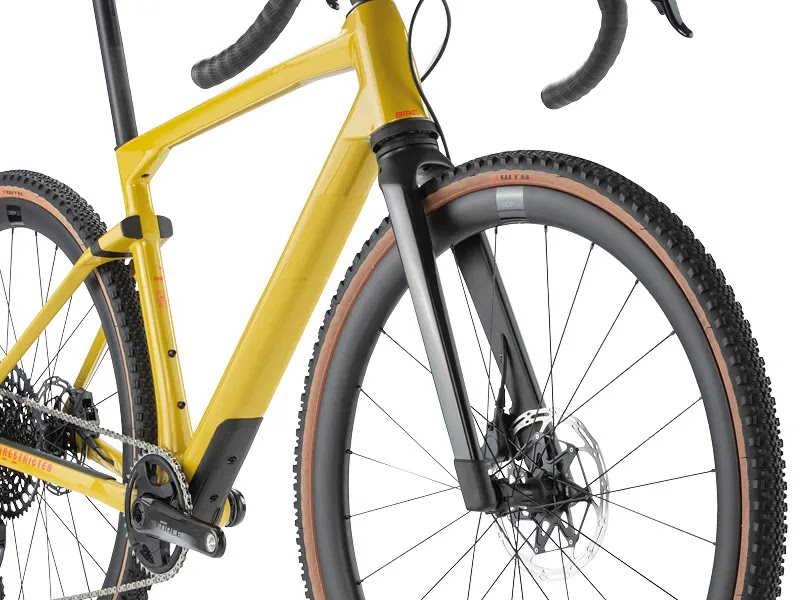
BMC URS LT One (Image courtesy of BMC)
 Will Gravel Bikes Have Suspension?:

Yet another stab at making gravel bikes into ultra-short travel MTB's has been unveiled by Swiss bicycle maker BMC. Their newest gravel bike, the URS LT One, has 20mm of hydraulically damped front suspension and a short travel elastomeric based rear suspension. 

The bikes are made in carbon fiber and feature rack and fender mounts along with a 45mm maximum tire clearance. The front fork is routed for a dynamo hub as well. The two versions of this bike offered will be quite expensive with the top of the range being 7K+. 

Comments: BMC dubs this suspension concept "Micro Travel", and at a mere 20mm of movement, I'd say that is pretty spot on marketing. I would also say that it is pretty useless to have the amount of complexity required to achieve such minuscule amounts of movement. The FOX AX fork I have ridden, with 40mm of travel, wasn't capable enough, in my opinion, to make it worth the extra weight and complexity. But this BMC deal is certainly lighter, yes? 

Actually, no, it isn't. Another report on the bike I have read claims that the BMC fork weighs about the same as the Fox AX. Really? And at half the travel? Wow..... Plus it is proprietary to the frame? Ah.....thanks but no thanks. Let's remind ourselves here that a Redshift Sports ShockStop Stem has 20mm of effective travel, weighs 260-300 grams ( depending upon length), and can be put on any bike with an 1 1/8th steer tube at a cost of $160.00. Plus, if you get tired of your ShockStop equipped bike, you can move on to a new bike and keep the stem. 

The ShockStop is easily tuned, has minimal moving parts, and almost zero maintenance. If I am going for 20mm of travel, the price of 160 bucks sounds a lot better than 7K+. Just my opinion.....

So, to answer the question which led this section- No. Not this way, at any rate. 

Oh! And One More Thing About That:

Just the other day. "Velo News" mentioned that "Another retired European road Pro jumps into the US  gravel scene". (Story here) His name is Paul Voss, and he states in the "Velo News" article that he came over to try out gravel racing because of the over-all feeling that it was closer to 'true sport' and that it seemed to have a more relaxed set of rules for participation. He specifically called out the camaraderie amongst riders who were willing to stop and help those that had crashed, had a flat tire, or other issues. 

We've heard this before from former Pro roadies who heard about gravel racing and dropped in to check it out. People like Ted King, in particular, have really understood and exemplified the 'gravel culture' as it was formulated in the Mid-West. But now all this would seem to be something akin to window dressing, at least amongst many of the Pro/former Pro road riders who are doing gravel events now. I reported here last Saturday that some dissatisfaction has been expressed by certain Pro riders over the lack of formal road racing style rules, especially "... if there's money on the line for the win...." 

And one more thing that I will add here- This UCI nonsense really should have zero effect upon the 'gravel scene', as it is mostly having to do with Pro rider issues and money. What they are about is not gravel racing. It's just more and more looking like Pro Road racing on a different surface. Hopefully Mr. Voss won't fall under that spell again.  

Oh yeah....The UCI is also doing a similar series and World Championships for fat bikes too. You're welcome.

Rangefinder Deore 12 (Image courtesy of Salsa Cycles)
Salsa Cycles Announces New Rangefinder Models:

Yesterday, no doubt, you saw the new Rangefinder models from Salsa Cycles. Sporting four different spec types across six different colors, (two colors for each level with Deore 10/MicroShift Advent sharing colors), the new models are Salsa Cycles entry level hard tail MTB's going forward. 

Interestingly, Deore MTB components can be had now in 10, 11, or 12 speed variants. You'll also note that an alternate MicoShift Advent 10 speed choice is available at the same price as the Deore 10 speed. Prices are $1599.00 for the Deore 12, $1399.00 for the Deore 11, and $1099.00 for the Deore 10/Advent 10 speed models. 

Comments: Interestingly, the press release I got had zero information as to spec. Prices are going up, but the entry level Rangefinder holds the line at $1099.00 which is what the 2021 model was. However; I cannot compare the spec, so...... 

I think people are going to be shocked at what a "real" MTB is going to cost in 2022. Sub-grand MTB-looking bicycles are not going to cut it anymore, and let's be honest, they haven't for many years. But I feel this benchmark is going to be ending up well above 1K, more like $1200.00 to $1300.00 now for a "just okay" hard tail that will get you by.  

Specialized Buys Michigan Retail Chain:

After several years of Trek news breaking about the company buying up retail outlets, now it seems Specialized is also turning down that road as well. The news comes from "Bicycle Retailer and Industry News" who reported that McClain's Cycle and Fitness has been sold to Specialized.

Specialized hasn't really pursued retail outlets run direct by the company up until this point.  Although, it has long run a few retail stores, mainly in SoCal.Trek, meanwhile, has been on a retail store buying spree over the last several years to the point that many industry insiders reckon that Trek is the largest specialty bicycle retailer in the U.S.A. now. 

In cases where Specialized has lost its footing due to Trek retail store chain takeovers, they have resorted to 'delivery operations' which fulfill online customer orders. But now it would appear that they are being a bit more aggressive in going toe-to-toe with Trek in the retail sector. 

What does it all mean? Time will tell, but it would point to more Brand specific stores, much like single brand car dealerships, in which consumers would then have no choices but for the brand that the store is owned by. This is not new in the bicycle industry, as anyone older can attest to. Schwinn tried the concept starting in the early 1960's and had the nation covered in "Authorized Schwinn Dealerships" by the early 1970's. When the mountain bike came into being, Schwinn failed to capitalize on its popularity until it was too late, which contributed to the company going bankrupt in the late 90's. This- and other factors - ended the 'Schwinn Approved' dealership model. Now it would seem that we are on the verge of seeing this revived in some form by Trek, Specialized, and who knows who else. 

That is all for this week! I hope you all get some riding in and have a safe weekend.

Friday News And Views

BMC URS LT One (Image courtesy of BMC)
 Will Gravel Bikes Have Suspension?:

Yet another stab at making gravel bikes into ultra-short travel MTB's has been unveiled by Swiss bicycle maker BMC. Their newest gravel bike, the URS LT One, has 20mm of hydraulically damped front suspension and a short travel elastomeric based rear suspension. 

The bikes are made in carbon fiber and feature rack and fender mounts along with a 45mm maximum tire clearance. The front fork is routed for a dynamo hub as well. The two versions of this bike offered will be quite expensive with the top of the range being 7K+. 

Comments: BMC dubs this suspension concept "Micro Travel", and at a mere 20mm of movement, I'd say that is pretty spot on marketing. I would also say that it is pretty useless to have the amount of complexity required to achieve such minuscule amounts of movement. The FOX AX fork I have ridden, with 40mm of travel, wasn't capable enough, in my opinion, to make it worth the extra weight and complexity. But this BMC deal is certainly lighter, yes? 

Actually, no, it isn't. Another report on the bike I have read claims that the BMC fork weighs about the same as the Fox AX. Really? And at half the travel? Wow..... Plus it is proprietary to the frame? Ah.....thanks but no thanks. Let's remind ourselves here that a Redshift Sports ShockStop Stem has 20mm of effective travel, weighs 260-300 grams ( depending upon length), and can be put on any bike with an 1 1/8th steer tube at a cost of $160.00. Plus, if you get tired of your ShockStop equipped bike, you can move on to a new bike and keep the stem. 

The ShockStop is easily tuned, has minimal moving parts, and almost zero maintenance. If I am going for 20mm of travel, the price of 160 bucks sounds a lot better than 7K+. Just my opinion.....

So, to answer the question which led this section- No. Not this way, at any rate. 

Oh! And One More Thing About That:

Just the other day. "Velo News" mentioned that "Another retired European road Pro jumps into the US  gravel scene". (Story here) His name is Paul Voss, and he states in the "Velo News" article that he came over to try out gravel racing because of the over-all feeling that it was closer to 'true sport' and that it seemed to have a more relaxed set of rules for participation. He specifically called out the camaraderie amongst riders who were willing to stop and help those that had crashed, had a flat tire, or other issues. 

We've heard this before from former Pro roadies who heard about gravel racing and dropped in to check it out. People like Ted King, in particular, have really understood and exemplified the 'gravel culture' as it was formulated in the Mid-West. But now all this would seem to be something akin to window dressing, at least amongst many of the Pro/former Pro road riders who are doing gravel events now. I reported here last Saturday that some dissatisfaction has been expressed by certain Pro riders over the lack of formal road racing style rules, especially "... if there's money on the line for the win...." 

And one more thing that I will add here- This UCI nonsense really should have zero effect upon the 'gravel scene', as it is mostly having to do with Pro rider issues and money. What they are about is not gravel racing. It's just more and more looking like Pro Road racing on a different surface. Hopefully Mr. Voss won't fall under that spell again.  

Oh yeah....The UCI is also doing a similar series and World Championships for fat bikes too. You're welcome.

Rangefinder Deore 12 (Image courtesy of Salsa Cycles)
Salsa Cycles Announces New Rangefinder Models:

Yesterday, no doubt, you saw the new Rangefinder models from Salsa Cycles. Sporting four different spec types across six different colors, (two colors for each level with Deore 10/MicroShift Advent sharing colors), the new models are Salsa Cycles entry level hard tail MTB's going forward. 

Interestingly, Deore MTB components can be had now in 10, 11, or 12 speed variants. You'll also note that an alternate MicoShift Advent 10 speed choice is available at the same price as the Deore 10 speed. Prices are $1599.00 for the Deore 12, $1399.00 for the Deore 11, and $1099.00 for the Deore 10/Advent 10 speed models. 

Comments: Interestingly, the press release I got had zero information as to spec. Prices are going up, but the entry level Rangefinder holds the line at $1099.00 which is what the 2021 model was. However; I cannot compare the spec, so...... 

I think people are going to be shocked at what a "real" MTB is going to cost in 2022. Sub-grand MTB-looking bicycles are not going to cut it anymore, and let's be honest, they haven't for many years. But I feel this benchmark is going to be ending up well above 1K, more like $1200.00 to $1300.00 now for a "just okay" hard tail that will get you by.  

Specialized Buys Michigan Retail Chain:

After several years of Trek news breaking about the company buying up retail outlets, now it seems Specialized is also turning down that road as well. The news comes from "Bicycle Retailer and Industry News" who reported that McClain's Cycle and Fitness has been sold to Specialized.

Specialized hasn't really pursued retail outlets run direct by the company up until this point.  Although, it has long run a few retail stores, mainly in SoCal.Trek, meanwhile, has been on a retail store buying spree over the last several years to the point that many industry insiders reckon that Trek is the largest specialty bicycle retailer in the U.S.A. now. 

In cases where Specialized has lost its footing due to Trek retail store chain takeovers, they have resorted to 'delivery operations' which fulfill online customer orders. But now it would appear that they are being a bit more aggressive in going toe-to-toe with Trek in the retail sector. 

What does it all mean? Time will tell, but it would point to more Brand specific stores, much like single brand car dealerships, in which consumers would then have no choices but for the brand that the store is owned by. This is not new in the bicycle industry, as anyone older can attest to. Schwinn tried the concept starting in the early 1960's and had the nation covered in "Authorized Schwinn Dealerships" by the early 1970's. When the mountain bike came into being, Schwinn failed to capitalize on its popularity until it was too late, which contributed to the company going bankrupt in the late 90's. This- and other factors - ended the 'Schwinn Approved' dealership model. Now it would seem that we are on the verge of seeing this revived in some form by Trek, Specialized, and who knows who else. 

That is all for this week! I hope you all get some riding in and have a safe weekend.