Showing posts with label lights. Show all posts

Thursday, September 04, 2025

Two Things

 Local Sale/Swap

 On September 11th, 2025, from 4:00pm - 7:00pm, N.Y. Roll and I will be holding a bike swap in his yard. I realize many of you are not local to us, but if you are, we will be selling some stuff for pretty sweet deals. 

N.Y. Roll says he's got some crank sets to unload, and I do also. But I also have this Origin 8 Scout fat bike, (in the image), and several wheel sets which will be there.  More surprises if you come. 

Cash or trades only. No holds. No early sales. No shipping. Must be present to purchase/trade. All sales final. No Support After Sales*. N.Y. Roll and I will be at his place located at 237 Arden Street, Waterloo, IA. We will be there from 4:00pm till 7:00pm Thursday, September 11th, 2025. 

Thanks for considering this.  

The Bookman Volume  Light
Nights Are Longer - Here's A Great Light For Night Rides:

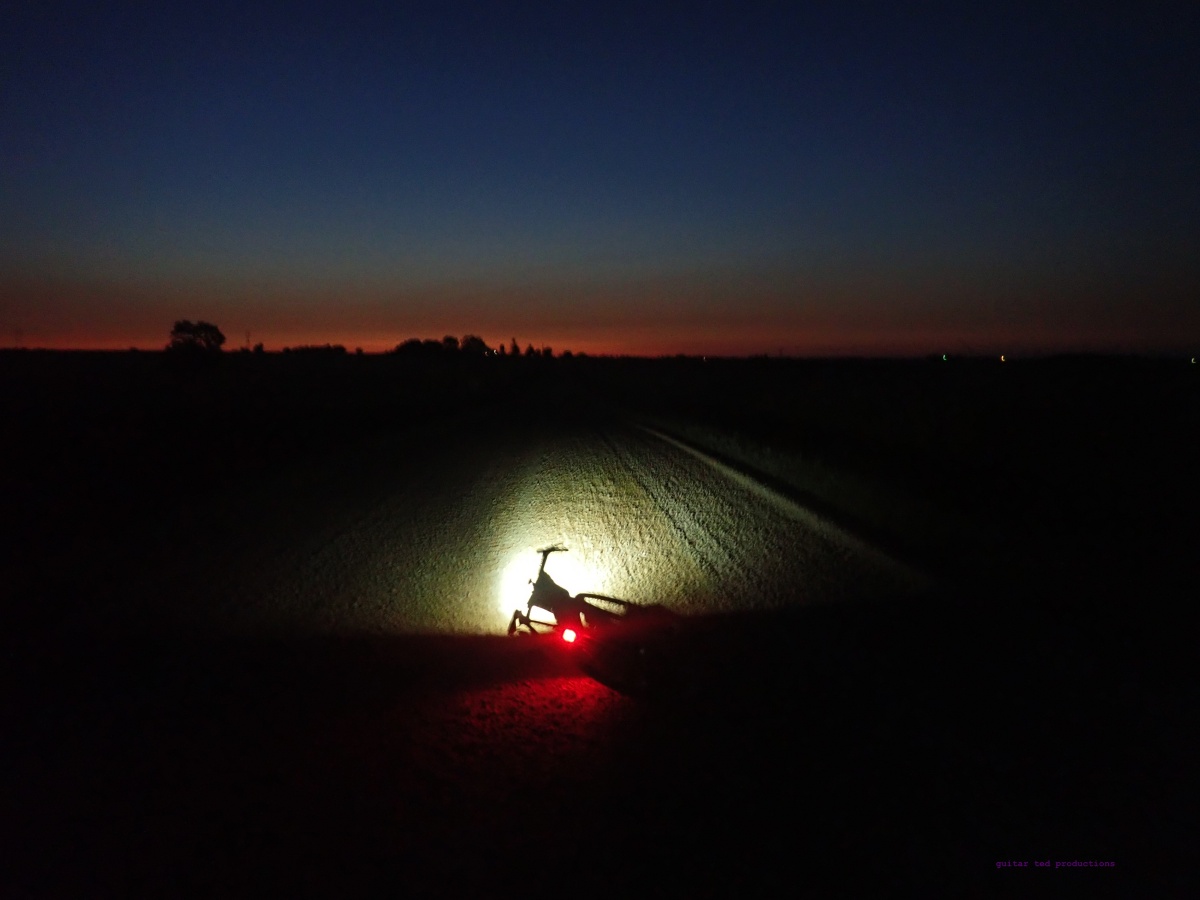
With nights getting longer and night riding becoming more likely, I have a recommendation for a light which I think is not well known but is a fantastic option for night riding. 

It is the Bookman Volume. This light has a couple standout features which I think separate it from almost every other light choice you can make. If you are wanting to know all the things about this light I reviewed two years ago, check out this post HERE. 

The main feature is the knob which allows you to instantly and easily flick to any desired power level on the light without going through multiple pushes of a button. Tired of touch screens and wimpy buttons? This light is for you. 

It also mounts to Garmin mounts, and it comes with a nice mount, by the way, but this opens up the options which you may already have for mounting. The 1500 model, linked above, can run up to 5 hours at 750 Lumens, which is half power for the light and likely bright enough for almost any gravel road. 

Anyway, I LOVE the one sent to me to review two years ago and it is one of the best lights I have ever used. Check it out. 

_______________________________________________________________________________ 

* I've sold things in the past  and had people come back afterward expecting me to do basic maintenance on their purchase, or for other reasons. My point in selling anything is to be rid of it. So, I'm trying to set the expectation that I won't be answering questions, or doing any kind of work on a purchase after the fact from this bike swap. 

Monday, February 20, 2023

Review: Bookman Lights

The Bookman Curve model.
 I mentioned that I had received a set of Bookman lights to review recently  and so here is my thoughts on these new-to-me lights. Keep in mind the Standard Disclaimer applies here. 

Up front, when I heard about these lights, I wasn't all that interested. In fact, I ignored the first request I received on these because these were lights for "urban areas" and I try to stay in my lane, so to speak. But the offer was made again, and in an almost insistent way, so I acquiesced to the request to have me review these lights. 

Of course, just getting the Monocle in was worth the trouble as it is such a useful light for anyone that commutes, of course, or is a runner, or even for bikepacking, setting up camp, or reading cues at night while riding. And I already gave a pretty detailed look at that light. So, what about the other two?

The "Curve" model is available as a front or rear light with four modes for the front light, three for the rear light. The lights have a cam lock/rubber strap attachment system which will work with most handlebar sizes. The clasp doubles as a switch activation to toggle you through the modes and turn the light on or off with a long press. 

Both lights charge via an included USB cable.

The unique shape of the 220 Lumen (on highest setting) Curve allows for the light to be seen better from more angles. The light housing is all plastic, but it seems well built and I could not see any ill-fitting parts or misalignment issues in either example of the Curve light I had. 

Charging duties are accomplished via the ubiquitous USB cable method and charging time from dead flat to full charge is a claimed two hours. Run time on high for the front light is one hour, or it can go to 70 hours in flashing mode. The rear light is rated at 37 Lumen and on steady lasts for two and a half hours or up to 32 hours in flashing mode. 

The lights both were easy to attach to my handle bar and seat post. It seems a bit unfortunate that the front light can only be attached in a vertical orientation, since a side spill of light would seem to be advantageous for commuting. In the vertical position, you are losing a lot of that light as it is aimed up into the air. Fortunately, it seems to "throw" the light frontwards, for the most part, but not being able to orient the light horizontally seems like a miss to me. 

The rear light attachment also does not account for seat post angling which points the rear light slightly downward. However; this may or may not be an issue depending upon the bike used. Another nit I had was that clasping the cam lock over can easily turn the light on, which resulted in one occurrence of myself receiving the full 220 lumen blast to the face. Random? Not really, I had the light come on in both rear and front applications while attaching them several times. 

The Bookman Curve on the front to the Left of my Schmidt Edulux II light.

The Curve on steady at 220 Lumen is bright enough to see by all by itself, but it could not compete with my Schmidt Edulux II with its wider, longer throw of light. Would the Curve get you by in a pinch as a light for maybe an hour? Let's say that your main light runs out just short of your destination, or before Sunrise. I'd say that this would be an okay "bail-out" light, and it would pack small and it is lightweight. 

But in my estimation, where this light really works best is in its flashing mode which I would run alongside a steady torch at night. That flashing light doesn't seem to compete with my main light, and it isn't distracting to ride with it. 

The Curve on the seat post here. The Schmidt tail light is on the rack.

Out on the back end, I felt that the Curve light worked really well. In one of the flashing modes, it almost reminds me of a police/emergency vehicle flashing light. The rear Curve throws light well, has side visibility due to its shape, and despite it being tucked under my Topeak rear seat bag, it shined forth with more authority than the rack mounted Schmidt light. 

Conclusions: I've already spoken to the Monocle, it's a winner in case you didn't check the link, and I won't go back over that one. How about the Curve lights? They retail at $45.00 a piece and come in several colors for the cases. Fashionable. I suppose that is somewhat important. The overall design is pretty clever and has that certain "European" feel and look to it. On these merits the Bookman lights are very much winners.

But in terms of how they work? I like them, but that clasp/power switch combination is somewhat annoying and I wish I could orient the front light horizontally. The rear light would be better if there were an accommodation for seat post angle, and try attaching this light to anything with a light-loop. Like on my Topeak bag, for instance, this light won't work. 

The lights by themselves are great for their intended purposes. I have no beef at all and I especially really like the rear light. The front would be my "bail-out" for long night rides and will be my flasher for commutes. So, in terms of the lights themselves, they are great, it's just the lack of attention to attachment scenarios that brings this light back to being "just okay". 

Get these if you swoon at the sight of them because the design just gets you. Otherwise there are a lot of very good, very well priced alternatives that have a bit better attention to details than the Bookman lights do.

NOTE: As A reminder: Standard Disclaimer

Review: Bookman Lights

The Bookman Curve model.
 I mentioned that I had received a set of Bookman lights to review recently  and so here is my thoughts on these new-to-me lights. Keep in mind the Standard Disclaimer applies here. 

Up front, when I heard about these lights, I wasn't all that interested. In fact, I ignored the first request I received on these because these were lights for "urban areas" and I try to stay in my lane, so to speak. But the offer was made again, and in an almost insistent way, so I acquiesced to the request to have me review these lights. 

Of course, just getting the Monocle in was worth the trouble as it is such a useful light for anyone that commutes, of course, or is a runner, or even for bikepacking, setting up camp, or reading cues at night while riding. And I already gave a pretty detailed look at that light. So, what about the other two?

The "Curve" model is available as a front or rear light with four modes for the front light, three for the rear light. The lights have a cam lock/rubber strap attachment system which will work with most handlebar sizes. The clasp doubles as a switch activation to toggle you through the modes and turn the light on or off with a long press. 

Both lights charge via an included USB cable.

The unique shape of the 220 Lumen (on highest setting) Curve allows for the light to be seen better from more angles. The light housing is all plastic, but it seems well built and I could not see any ill-fitting parts or misalignment issues in either example of the Curve light I had. 

Charging duties are accomplished via the ubiquitous USB cable method and charging time from dead flat to full charge is a claimed two hours. Run time on high for the front light is one hour, or it can go to 70 hours in flashing mode. The rear light is rated at 37 Lumen and on steady lasts for two and a half hours or up to 32 hours in flashing mode. 

The lights both were easy to attach to my handle bar and seat post. It seems a bit unfortunate that the front light can only be attached in a vertical orientation, since a side spill of light would seem to be advantageous for commuting. In the vertical position, you are losing a lot of that light as it is aimed up into the air. Fortunately, it seems to "throw" the light frontwards, for the most part, but not being able to orient the light horizontally seems like a miss to me. 

The rear light attachment also does not account for seat post angling which points the rear light slightly downward. However; this may or may not be an issue depending upon the bike used. Another nit I had was that clasping the cam lock over can easily turn the light on, which resulted in one occurrence of myself receiving the full 220 lumen blast to the face. Random? Not really, I had the light come on in both rear and front applications while attaching them several times. 

The Bookman Curve on the front to the Left of my Schmidt Edulux II light.

The Curve on steady at 220 Lumen is bright enough to see by all by itself, but it could not compete with my Schmidt Edulux II with its wider, longer throw of light. Would the Curve get you by in a pinch as a light for maybe an hour? Let's say that your main light runs out just short of your destination, or before Sunrise. I'd say that this would be an okay "bail-out" light, and it would pack small and it is lightweight. 

But in my estimation, where this light really works best is in its flashing mode which I would run alongside a steady torch at night. That flashing light doesn't seem to compete with my main light, and it isn't distracting to ride with it. 

The Curve on the seat post here. The Schmidt tail light is on the rack.

Out on the back end, I felt that the Curve light worked really well. In one of the flashing modes, it almost reminds me of a police/emergency vehicle flashing light. The rear Curve throws light well, has side visibility due to its shape, and despite it being tucked under my Topeak rear seat bag, it shined forth with more authority than the rack mounted Schmidt light. 

Conclusions: I've already spoken to the Monocle, it's a winner in case you didn't check the link, and I won't go back over that one. How about the Curve lights? They retail at $45.00 a piece and come in several colors for the cases. Fashionable. I suppose that is somewhat important. The overall design is pretty clever and has that certain "European" feel and look to it. On these merits the Bookman lights are very much winners.

But in terms of how they work? I like them, but that clasp/power switch combination is somewhat annoying and I wish I could orient the front light horizontally. The rear light would be better if there were an accommodation for seat post angle, and try attaching this light to anything with a light-loop. Like on my Topeak bag, for instance, this light won't work. 

The lights by themselves are great for their intended purposes. I have no beef at all and I especially really like the rear light. The front would be my "bail-out" for long night rides and will be my flasher for commutes. So, in terms of the lights themselves, they are great, it's just the lack of attention to attachment scenarios that brings this light back to being "just okay". 

Get these if you swoon at the sight of them because the design just gets you. Otherwise there are a lot of very good, very well priced alternatives that have a bit better attention to details than the Bookman lights do.

NOTE: As A reminder: Standard Disclaimer

Friday, January 27, 2023

Friday News And Views

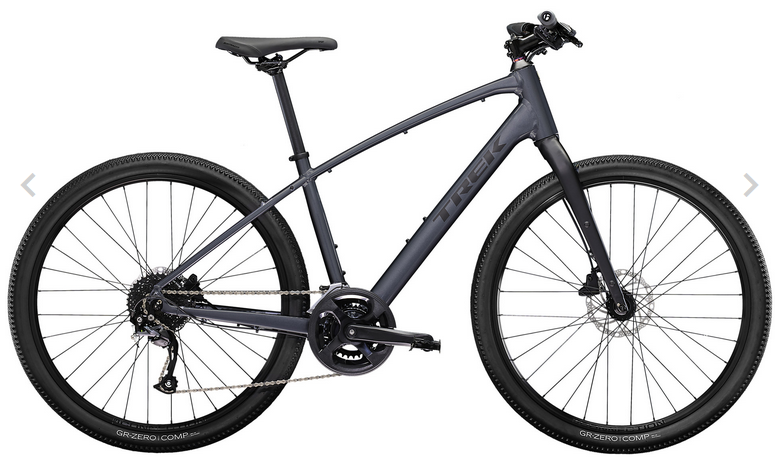
Trek Dual Sport 2 Gen 5 (Image courtesy of Trek)
Trek Re-markets Dual Sport Bikes As "Gravel Bikes":

The Trek Dual Sport, a hybrid bike developed by Trek in the mid-2000's, is the "bike that saved 29"ers". That's what you'd hear if you talked to anyone at Trek that was there back then. The 29 inch wheel experiment was on 'life support' at the company in 2004 when sales of the wagon-wheeled MTB's were dismal. 

The Gary Fisher brand introduced 29"er MTB's to local bikes shops affiliated with the brand in the USA in 2002. However; retailers and salespeople didn't understand the then new idea of big wheels and how they were a distinct advantage over 26" MTB wheels. The wheel size, which up to that point, had been the standard in MTB riding. As a result, the experiment with these bikes, which was the brainchild of Gary Fisher, were up to be cut from the line-up in 2006. But a new hybrid bike, which was sort of like a 29"er, but wasn't, actually saved the 29"er from what may have been its early demise overall. 

That bike, as stated, was the so-called "Dual Sport", which had 29"er-like qualities, 700c wheels, but was positioned as a more dirt-worthy hybrid bike. Hybrid bikes, which were well understood by salespeople and retailers, were an easy sell, and the Dual Sport was the gateway to 29"er acceptance amongst that important link of the chain. Salespeople had to buy-in, and when they did, the lid was blown off for the acceptance of the 29"er side of MTB and well, you know the rest of that story.

Enter in the Gen 5 Dual Sport, a 27.5" wheeled bike with 2" tires and a very MTB-ish geometry and set up. Only now Trek is marketing it as a "gravel/adventure" bike, because, well.....gravel, don't cha know? That Trek is marketing, what is in all essence a MTB-lite bike as gravel, is fine with me. It's the details that I found interesting. 

For instance, the whole "Gen" thing. Trek has been working toward getting rid of model years for bicycles for at least 15 years now, and has recently enforced that messaging with its retailers. However; Shimano kind of has them held as hostages, along with the rest of the bicycle industry, due to the format of Shimano's component release scheduling. That said, the generational aspect of this marketing idea of Trek's means that consumers won't know that a Gen 4 Dual Sport is a 2022 model and that Gen 5 is 2023. Kind of..... Anyway....

The other thing? The price for this Dual Sport 2 with mostly Shimano Acera and a Chang Star hydraulic brake set is $849.99 (USD- MSRP) Acera at eight hundred and fifty bucks? I'm pretty sure that the bike which was analogous to this Dual Sport, the Trek FX 1, was about 500 bucks in the mid-twenty-teens. That's a big leap upward in pricing, which, as we all know, was expected. But sheesh...... 
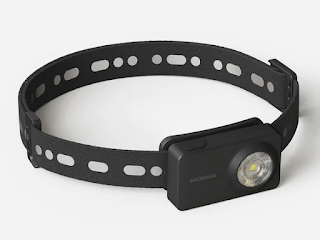
The Bookman Monocle (Image courtesy of Bookman)
Bookman "Monocle" Head Lamp:

Recently I was asked to review a product for bicycle lighting by a Swiss company named Bookman. I agreed to take a look and when the package arrived it had another, non-bicycle specific light in there. 

It was a head mounted light for running called the "Monocle". Head mounted lights are nothing new, of course, but with the activity of running in mind, certain design criteria were more important than say, a camp light you might find at the checkout of your local big-box home and lumber supply company. 

And to be honest, I did not know it was a product for running when I received it. In fact, I did not learn that until moments before I wrote this when I researched the company. So, my thoughts on how to make use of this gizmo light were far different than what Bookman may have envisioned. 

Where I work in an old building at the Cedar Valley Bicycle Collective, and considering my workshop at home is in a basement that is over 100 years old and wasn't designed to be a workshop, it is no wonder that the lighting is less than desirable. Especially for my old eyes. So my first thought was to use this at work, and conveniently, the day I received it I had to work. I charged it up, strapped it on my head, and wore it for the next five-ish hours. It lit up dark places on bikes and allowed me to have less frustration in getting stuff done. It's "stepless angle adjustment" allowed me to get just the right aim on my work too. I also used it on the way home to see if it might be a good supplementary light for night riding. 

With its claimed 225 Lumens of light at High, which will last a claimed 1.5 hours, I can say that signs were lit up  and I could use it to read cues easily, if I needed to. In fact, 225 is almost too bright for that. Thankfully there is a half power option which lasts four hours that is a bit less brilliant and glaring to use as "cockpit lighting". My only beef so far is that the button to power it on and tab through its three modes is a bit stiff.

The thing costs about $55.00, weighs 40 grams, and the strap has a lot of little reflective details. So far? Impressed. Standard Disclaimer applies. . (More on this and the other Bookman product I was sent will be posted soon)
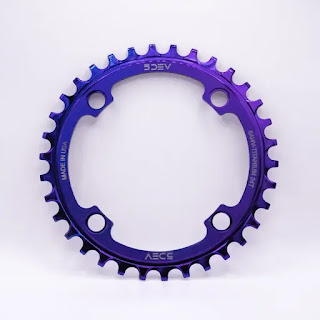
Titanium chainring from 5Dev (Image courtesy of 5Dev)

Titanium Chainring Promises Less Wear:

Titanium, that grey aerospace metal of fame and renown in bicycle circles, has not often been used for chain rings. But a USA company called "5DEV" may change that. 

The company, probably best known for their far-out designs for titanium stems and crank arms, now offers a 34t or 36T titanium chain ring in raw, or three other anodized colors including a teal (!!).

Benefits claimed are longer wear life, better toughness, and compatibility with SRAM or Shimano chains. 

Comments: I remember when Boone titanium cogs were the big deal for single speeders because they were (a) cool looking and (b) did not wear very much at all. I have a Boone Ti cog somewhere along with those weird wavy titanium spacers they made. I have to say that the cog has held up well over the years. 

That these are only $150.00 bucks isn't bad when you think about it. I know I could totally get on with one of these on my single speed or on my Ti Muk 2 fat bike with the Rohloff set up. I wonder though, how would this hold up on a 1X set up? That cross-chaining that you have to do with 1X usually wears cogs and chains out laterally instead of in the traditional way. 

Anyway, an interesting, if not a bit limited, option for some folks.
Image courtesy of Classified.

Classified Hub Gets A Big Shot Of Cash:

The Classified hub technology, which I first came across in  the Fall of 2020 as seen here in this "FN&V", has recently been infused with a reported 24 million USD in funding from the CEO of investment firm Active Partners and who is also Rapha's chairman. 

Cycling media outlets and commentators are suggesting that new wheel partners are also coming onboard with this technology. Speculation is that the investors want to see the Classified hub system on the same level as SRAM/Shimano in terms of market share and acceptance by the riding public. 

Comments: As always, anything that disrupts the "standards" which cyclists, mechanics, retailers, brands, and manufacturers hold dear is going to have a tough row to hoe when it comes to proprietary drive train ideas. Just look at Rohloff, Pinion, Gates Belts, or components that are slightly out of the main focus of Shimano's and SRAM's main fare. Sure, they are out there and available, but does anyone think that these ideas have taken a hold in mainstream cycling? I have a hard time believing that anyone would say "yes" to that. 

Essentially, if and until Shimano gets displaced as the de-facto arbiter of what is happening in mainstream tech for cycling, anything like Classified's hub will only ever be like a Rohloff Speedhub, or a Pinion system- Something that is an option for some people, but definitely not "the next big thing". 

That's a wrap on this week! Have a great weekend and get out and ride. Spring is coming soon!

Friday News And Views

Trek Dual Sport 2 Gen 5 (Image courtesy of Trek)
Trek Re-markets Dual Sport Bikes As "Gravel Bikes":

The Trek Dual Sport, a hybrid bike developed by Trek in the mid-2000's, is the "bike that saved 29"ers". That's what you'd hear if you talked to anyone at Trek that was there back then. The 29 inch wheel experiment was on 'life support' at the company in 2004 when sales of the wagon-wheeled MTB's were dismal. 

The Gary Fisher brand introduced 29"er MTB's to local bikes shops affiliated with the brand in the USA in 2002. However; retailers and salespeople didn't understand the then new idea of big wheels and how they were a distinct advantage over 26" MTB wheels. The wheel size, which up to that point, had been the standard in MTB riding. As a result, the experiment with these bikes, which was the brainchild of Gary Fisher, were up to be cut from the line-up in 2006. But a new hybrid bike, which was sort of like a 29"er, but wasn't, actually saved the 29"er from what may have been its early demise overall. 

That bike, as stated, was the so-called "Dual Sport", which had 29"er-like qualities, 700c wheels, but was positioned as a more dirt-worthy hybrid bike. Hybrid bikes, which were well understood by salespeople and retailers, were an easy sell, and the Dual Sport was the gateway to 29"er acceptance amongst that important link of the chain. Salespeople had to buy-in, and when they did, the lid was blown off for the acceptance of the 29"er side of MTB and well, you know the rest of that story.

Enter in the Gen 5 Dual Sport, a 27.5" wheeled bike with 2" tires and a very MTB-ish geometry and set up. Only now Trek is marketing it as a "gravel/adventure" bike, because, well.....gravel, don't cha know? That Trek is marketing, what is in all essence a MTB-lite bike as gravel, is fine with me. It's the details that I found interesting. 

For instance, the whole "Gen" thing. Trek has been working toward getting rid of model years for bicycles for at least 15 years now, and has recently enforced that messaging with its retailers. However; Shimano kind of has them held as hostages, along with the rest of the bicycle industry, due to the format of Shimano's component release scheduling. That said, the generational aspect of this marketing idea of Trek's means that consumers won't know that a Gen 4 Dual Sport is a 2022 model and that Gen 5 is 2023. Kind of..... Anyway....

The other thing? The price for this Dual Sport 2 with mostly Shimano Acera and a Chang Star hydraulic brake set is $849.99 (USD- MSRP) Acera at eight hundred and fifty bucks? I'm pretty sure that the bike which was analogous to this Dual Sport, the Trek FX 1, was about 500 bucks in the mid-twenty-teens. That's a big leap upward in pricing, which, as we all know, was expected. But sheesh...... 

The Bookman Monocle (Image courtesy of Bookman)
Bookman "Monocle" Head Lamp:

Recently I was asked to review a product for bicycle lighting by a Swiss company named Bookman. I agreed to take a look and when the package arrived it had another, non-bicycle specific light in there. 

It was a head mounted light for running called the "Monocle". Head mounted lights are nothing new, of course, but with the activity of running in mind, certain design criteria were more important than say, a camp light you might find at the checkout of your local big-box home and lumber supply company. 

And to be honest, I did not know it was a product for running when I received it. In fact, I did not learn that until moments before I wrote this when I researched the company. So, my thoughts on how to make use of this gizmo light were far different than what Bookman may have envisioned. 

Where I work in an old building at the Cedar Valley Bicycle Collective, and considering my workshop at home is in a basement that is over 100 years old and wasn't designed to be a workshop, it is no wonder that the lighting is less than desirable. Especially for my old eyes. So my first thought was to use this at work, and conveniently, the day I received it I had to work. I charged it up, strapped it on my head, and wore it for the next five-ish hours. It lit up dark places on bikes and allowed me to have less frustration in getting stuff done. It's "stepless angle adjustment" allowed me to get just the right aim on my work too. I also used it on the way home to see if it might be a good supplementary light for night riding. 

With its claimed 225 Lumens of light at High, which will last a claimed 1.5 hours, I can say that signs were lit up  and I could use it to read cues easily, if I needed to. In fact, 225 is almost too bright for that. Thankfully there is a half power option which lasts four hours that is a bit less brilliant and glaring to use as "cockpit lighting". My only beef so far is that the button to power it on and tab through its three modes is a bit stiff.

The thing costs about $55.00, weighs 40 grams, and the strap has a lot of little reflective details. So far? Impressed. Standard Disclaimer applies. . (More on this and the other Bookman product I was sent will be posted soon)

Titanium chainring from 5Dev (Image courtesy of 5Dev)

Titanium Chainring Promises Less Wear:

Titanium, that grey aerospace metal of fame and renown in bicycle circles, has not often been used for chain rings. But a USA company called "5DEV" may change that. 

The company, probably best known for their far-out designs for titanium stems and crank arms, now offers a 34t or 36T titanium chain ring in raw, or three other anodized colors including a teal (!!).

Benefits claimed are longer wear life, better toughness, and compatibility with SRAM or Shimano chains. 

Comments: I remember when Boone titanium cogs were the big deal for single speeders because they were (a) cool looking and (b) did not wear very much at all. I have a Boone Ti cog somewhere along with those weird wavy titanium spacers they made. I have to say that the cog has held up well over the years. 

That these are only $150.00 bucks isn't bad when you think about it. I know I could totally get on with one of these on my single speed or on my Ti Muk 2 fat bike with the Rohloff set up. I wonder though, how would this hold up on a 1X set up? That cross-chaining that you have to do with 1X usually wears cogs and chains out laterally instead of in the traditional way. 

Anyway, an interesting, if not a bit limited, option for some folks.

Image courtesy of Classified.

Classified Hub Gets A Big Shot Of Cash:

The Classified hub technology, which I first came across in  the Fall of 2020 as seen here in this "FN&V", has recently been infused with a reported 24 million USD in funding from the CEO of investment firm Active Partners and who is also Rapha's chairman. 

Cycling media outlets and commentators are suggesting that new wheel partners are also coming onboard with this technology. Speculation is that the investors want to see the Classified hub system on the same level as SRAM/Shimano in terms of market share and acceptance by the riding public. 

Comments: As always, anything that disrupts the "standards" which cyclists, mechanics, retailers, brands, and manufacturers hold dear is going to have a tough row to hoe when it comes to proprietary drive train ideas. Just look at Rohloff, Pinion, Gates Belts, or components that are slightly out of the main focus of Shimano's and SRAM's main fare. Sure, they are out there and available, but does anyone think that these ideas have taken a hold in mainstream cycling? I have a hard time believing that anyone would say "yes" to that. 

Essentially, if and until Shimano gets displaced as the de-facto arbiter of what is happening in mainstream tech for cycling, anything like Classified's hub will only ever be like a Rohloff Speedhub, or a Pinion system- Something that is an option for some people, but definitely not "the next big thing". 

That's a wrap on this week! Have a great weekend and get out and ride. Spring is coming soon!

Tuesday, September 06, 2022

Mukluk Maintenance: Part 3

Several days of chasing wires have past....
I mentioned in my last maintenance post on the Ti Muk 2 that I had a generator light failure riding home from work. Well, this put the Ti Muk 2 back on the rack and in between other responsibilities, I plied the trade of electrician to trace the signal from the hub upward toward the lights to se if this was a wire related issue.

Trying to determine faults in a dynamo hub had me doing a ton of online research to determine how to approach this problem. Let me tell ya.....there ain't a lot of clear info out there! First of all, did you know almost all modern "generator" lights are, in fact, magnetos? And that the way you determine if your hub is good is by dead shorting the terminals momentarily. (If'n ya gets a spark, she's a gud'un!) 

Crude, but effective, I guess. (As I slide the multi-meter back across the bench.....)

Anyway, I have connections, and I checked those out too. There were some questionable connections there, but that turned out not to be the issue. I kept on with my multi-meter set to check continuity and ended up finding that the only bit that wasn't passing current was the light unit itself. Which makes sense if the rest of it is checking out good, which it did. 

The B&M light seems to be the issue.

Further research revealed that it could be that the "super capacitor" may have failed, which is the electronic component that helps with low speed and stopped conditions so that the light doesn't dim or go off at stop lights, etc. 

But whatever it might be, the unit seems sealed and I don't see any good way to crack that aluminum egg without damaging it anyway. So.... 

A new light is in order. I've been digging into this of late, and with a couple of solid recommendations, I think that the SON Edelux II is the top runner in the field of possibilities at this time. That dovetails in well since I already own a SON rear light. 

Now, these critters are not cheap, and with the harnesses and what-nots I think I'll end up somewhere close to three hundred bucks on this. But there is no other good choice and since I have a SON system (mostly) already, may as well stay in that ecosystem, especially considering the experiences and expetise of those who recommended this to me. 

Anyway, property taxes and bills will take precedence until I can find the funds to get this back up and running again. Gotta put this in perspective here, and in due time, I'll have this all sorted. Until then, I've got bikes, USB rechargeable LED headlights, and taillights to get me by with. 

Stay tuned.....

Mukluk Maintenance: Part 3

Several days of chasing wires have past....
I mentioned in my last maintenance post on the Ti Muk 2 that I had a generator light failure riding home from work. Well, this put the Ti Muk 2 back on the rack and in between other responsibilities, I plied the trade of electrician to trace the signal from the hub upward toward the lights to se if this was a wire related issue.

Trying to determine faults in a dynamo hub had me doing a ton of online research to determine how to approach this problem. Let me tell ya.....there ain't a lot of clear info out there! First of all, did you know almost all modern "generator" lights are, in fact, magnetos? And that the way you determine if your hub is good is by dead shorting the terminals momentarily. (If'n ya gets a spark, she's a gud'un!) 

Crude, but effective, I guess. (As I slide the multi-meter back across the bench.....)

Anyway, I have connections, and I checked those out too. There were some questionable connections there, but that turned out not to be the issue. I kept on with my multi-meter set to check continuity and ended up finding that the only bit that wasn't passing current was the light unit itself. Which makes sense if the rest of it is checking out good, which it did. 

The B&M light seems to be the issue.

Further research revealed that it could be that the "super capacitor" may have failed, which is the electronic component that helps with low speed and stopped conditions so that the light doesn't dim or go off at stop lights, etc. 

But whatever it might be, the unit seems sealed and I don't see any good way to crack that aluminum egg without damaging it anyway. So.... 

A new light is in order. I've been digging into this of late, and with a couple of solid recommendations, I think that the SON Edelux II is the top runner in the field of possibilities at this time. That dovetails in well since I already own a SON rear light. 

Now, these critters are not cheap, and with the harnesses and what-nots I think I'll end up somewhere close to three hundred bucks on this. But there is no other good choice and since I have a SON system (mostly) already, may as well stay in that ecosystem, especially considering the experiences and expetise of those who recommended this to me. 

Anyway, property taxes and bills will take precedence until I can find the funds to get this back up and running again. Gotta put this in perspective here, and in due time, I'll have this all sorted. Until then, I've got bikes, USB rechargeable LED headlights, and taillights to get me by with. 

Stay tuned.....

Wednesday, April 20, 2022

Before There Was "Gravel": Lighting

Lights have come a long way in the last 17 years
The first look back at what we were doing with our equipment before the "Gravel™" thing took off in cycling went over pretty well. So, I thought I'd delve into another topic which we struggled with back in the day. 

Lighting for bicycles circa 2005 was generally centered around 24hr racing needs. Sure, you had your commuter lights, and I'll get to some of those, but generally speaking, a light only had to be blazingly bright for a little over an hour, maybe two (typical lap times at big 24Hr races were in the 1-2 hour range) and you'd be back at the pits where you'd grab another battery pack and so on.

There weren't really any needs being seen beyond that in terms of run time, different light levels, compact design, or what have you. Commuter lights were, frankly, a joke up until the mid-00's. I recall us selling halogen lights right up to about 2004. LED light technology was in its infancy at this time. 

The Blackburn Quadrant was a popular commuter light circa 2004-2005, but was a poor quality LED light.

I should mention that I will be primarily looking at this topic from my unique perspective in gravel events. At the time, Trans Iowa, The Dirty Kanza 200 (Now Unbound Gravel), and the Good Life Gravel Adventure (now Gravel Worlds) were the only 'big' events that required a light at all. Some smaller events which no longer exist did take place at night, such as the Moonlight Metric, which I did a couple of times, or the one-off Moonlight Madness event, which was an all-nighter as well. But for the most part, it was Trans Iowa that required the most from lighting back in the day. 

From my archived blog posts I was able to pull out a bunch of images and was reminded of how things were difficult for the night time gravel grinder back then. What I discovered overall are a few things. First, lights were pitifully weak and had really bad light throw and patterns back then. Secondly, most 'long-run' time set ups (More than 5-6 hours) needed heavy battery packs which had to be externally mounted to frames, bodies, or put into bags. Finally, there were great lights, but they were very expensive and had short run times.

The Cateye Triple Shot was one of the first really good LED lights

Lights like Cateye's then new Triple Shot, which debuted circa 2005, was a promising light, but it was focused on the endurance 24hr scene, and run times were low compared to what was necessary for Trans Iowa. Still, we could see then that this was where lights needed to go, we just needed longer run times. 

One thing that is overlooked here is that gravel events had unique needs. These typically were not addressed in these earlier lighting solutions where all-out power dominated the feature set with narrowish beam patterns that wasted a lot of the light in its beaming twoard the shy. But as you might know from mountain biking, sometimes your bike is pointed down, but you need the light 'out front', not pointed down at the trail, so these big, halo beam patterns made sense for MTB. 

Another issue we had was the nature of gravel, which has a LOT of higher frequency vibrations, and that would rattle loose mounts, lights, and other stuff! Early on into Trans Iowa riders found that a lot of equipment they attached to their bikes would be jettisoned off into the ditch or onto the gravel unexpectedly due to the severity of these vibrations. Fortunately, that is not an issue with these newer mounts which are much more secure. 

Just before the start of Trans Iowa v5 in 2009

So, above we have the riders gathering for the start of the fifth Trans Iowa in 2009. Keep in mind things like the Cateye Triple Shot have been around a few years already. That said, you can see that riders are opting for lower power, (note- not because they wanted to), options with longer run times. There are not a lot of helmet mounted lights, and the lights that are on are not all that impressive. The reflections of the camera flash from the reflective treatments is a LOT brighter than any lighting here. 

 
Trans Iowa v7 start line.


Two years later we start to see some seriously powerful lights creeping into use by the riders. By this time, in 2011, lighting technology had taken a bit of a turn. No longer were the lighting choices all about endurance 24hr riding. Now commuting needs were creeping into the picture, and smaller companies were fulfilling needs that the big companies couldn't cover, or wouldn't. Meanwhile, other older companies fell to the wayside as they were passed by in the ever changing LED technology of that time. 

One of the companies I was aware of at the time that was really pushing the boundaries with powerful LED lights and long run times was Ay Up from Australia. While they still required external battery packs, they were minimized in size and were easily swapped out if need be. I know several top riders of the day relied on this company's lights. But they were expensive and you kind of had to be 'in the know' to even be aware of them.

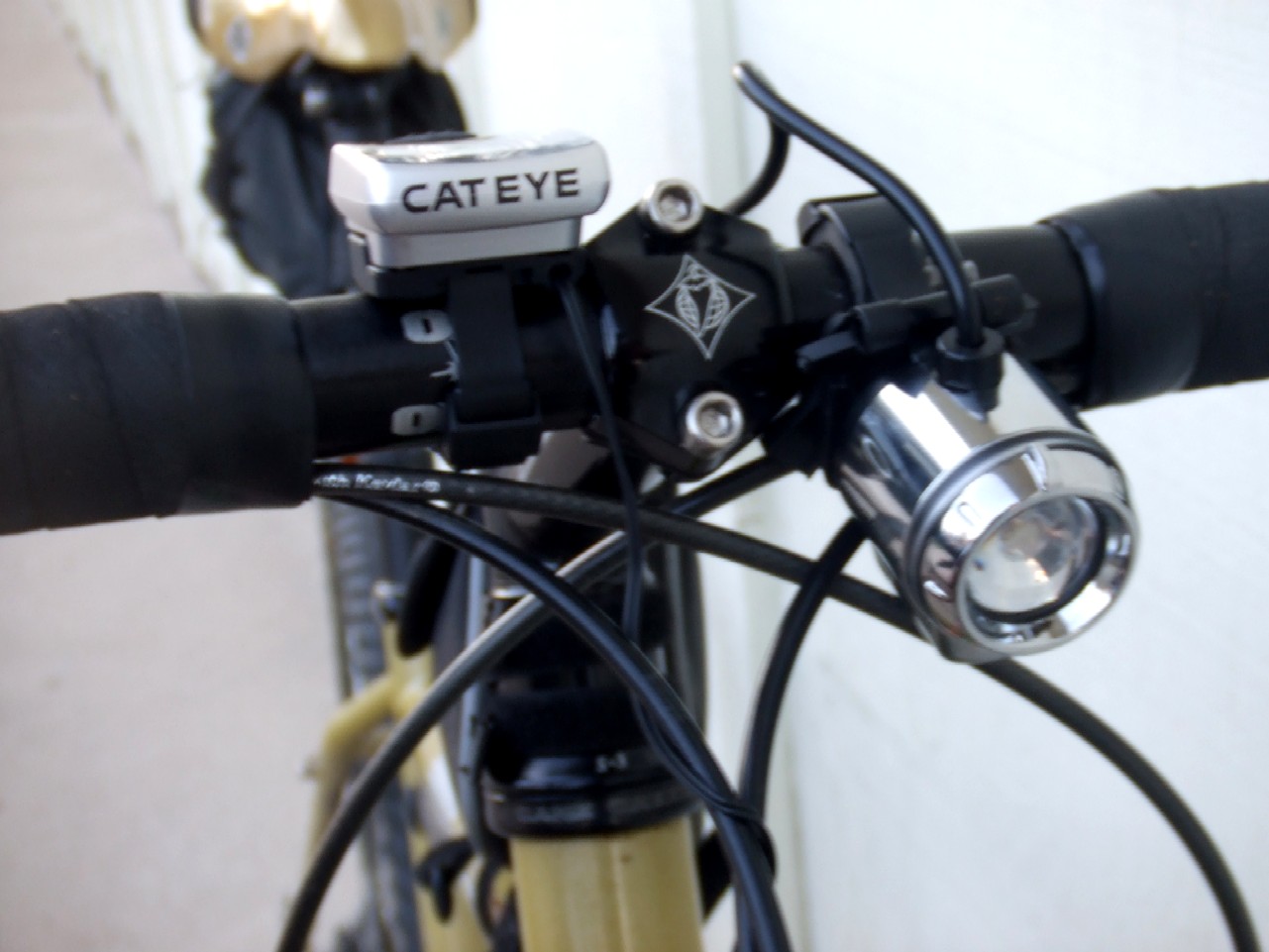
My light 'hack' circa 2009.

Meanwhile people like myself who were looking for lights to last for really long times were left to their own devices. I was wanting a light for six to ten hours of run time, so I ended up buying a head mounted torch from Eveready. It was meant for campers, but it had 110 Lumen output for 11 hours off three AAA batteries. I made a mount for the handle bar using an old Cateye computer mount and stuffed the battery pack into a top tube bag. 

The really cool thing about this light was that the beam pattern could be adjusted by twisting the lens bezel. It would go from a long-throw spot to a wide, washy light that went the entire width of the road. This was the light I used in the Moonlight Madness event where it rained the entire night, but I never wanted for light. The best part?  spent less than $60.00 on the entire set up.

It's hard to believe what we used to rely on a dozen or more years ago for lights. This was from the Moonlight Metric.

Around about 2010 or so I noted that things were changing rapidly. Suddenly there was a cottage industry springing up with light choices the big brands were not offering. Commuter lights began to become more powerful. No longer was 200-300 Lumen thought of as a high beam. Now it was 500 Lumen, or even 800 Lumen, which became the top setting. "Medium" settings of 150-250 Lumen were then making 4-6 hour run times possible. Now we were getting into some serious light choices! 

By T.I.v10 in 2014 lights had become pretty good and reasonably priced. (Image from a film by P. Ross)

The LED light technology became like an arms race. About every six months to a year some new emitter technology would appear, or new battery technology would appear, or both, and the lights one could get would take another leap forward in capabilities and another leap downward in price for what you got. Value per dolar has never been better now in that regard. 

Let's not forget how generator hub and light technology has changed as well. I recal seeing my first generator hub lights at Trans Iowa in 2007. Then, just three years later I remember seeing generator hub technology that blew anything else away. It was super bright, ran without hardly any drag, and would light up at super-slow speed. The only nit here was, and is, price. Plus you have to accept a dedication to one front wheel. 

The new Planet Bike "Dual Blaze"

Now you can have 1500 Lumen power in light with Medium settings that run up at 800 Lumen for hours and hours. We couldn't even get 800 Lumen lights in the early days! Now? Slap down a Benjamin and walk out with a self-contained, lightweight, durable, reliable light that will be all you'd ever need. Something that would have cost hundreds of dollars back in the day, if you could even find such a thing with those run times. 

So, it is easy to forget where we have come from with regard to lights for night time gravel riding. It's a really fun thing to do, and the lights are not really a barrier to the pursuit of the past time anymore. But yeah, about that...... Trans Iowa is gone. Who needs lights anymore for long gravel events, right?

Well, it's funny when I think about this. Obviously, Iowa Wind and Rock is kind of the evolution of Trans Iowa, but right about when I stopped T.I. other events decided this long distance deal was a thing. Unbound did the XL distance, (originally the DKXL), and then Gravel Worlds added a "Long Voyage" distance as well. So, yeah, you need long runtime, high-output lights. If you do those events, at any rate. 

So, there is a brief overview of lights from the earliest "Modern Gravel" era days till now. I hope that you enjoyed that look back at lights.

Before There Was "Gravel": Lighting

Lights have come a long way in the last 17 years
The first look back at what we were doing with our equipment before the "Gravel™" thing took off in cycling went over pretty well. So, I thought I'd delve into another topic which we struggled with back in the day. 

Lighting for bicycles circa 2005 was generally centered around 24hr racing needs. Sure, you had your commuter lights, and I'll get to some of those, but generally speaking, a light only had to be blazingly bright for a little over an hour, maybe two (typical lap times at big 24Hr races were in the 1-2 hour range) and you'd be back at the pits where you'd grab another battery pack and so on.

There weren't really any needs being seen beyond that in terms of run time, different light levels, compact design, or what have you. Commuter lights were, frankly, a joke up until the mid-00's. I recall us selling halogen lights right up to about 2004. LED light technology was in its infancy at this time. 

The Blackburn Quadrant was a popular commuter light circa 2004-2005, but was a poor quality LED light.

I should mention that I will be primarily looking at this topic from my unique perspective in gravel events. At the time, Trans Iowa, The Dirty Kanza 200 (Now Unbound Gravel), and the Good Life Gravel Adventure (now Gravel Worlds) were the only 'big' events that required a light at all. Some smaller events which no longer exist did take place at night, such as the Moonlight Metric, which I did a couple of times, or the one-off Moonlight Madness event, which was an all-nighter as well. But for the most part, it was Trans Iowa that required the most from lighting back in the day. 

From my archived blog posts I was able to pull out a bunch of images and was reminded of how things were difficult for the night time gravel grinder back then. What I discovered overall are a few things. First, lights were pitifully weak and had really bad light throw and patterns back then. Secondly, most 'long-run' time set ups (More than 5-6 hours) needed heavy battery packs which had to be externally mounted to frames, bodies, or put into bags. Finally, there were great lights, but they were very expensive and had short run times.

The Cateye Triple Shot was one of the first really good LED lights

Lights like Cateye's then new Triple Shot, which debuted circa 2005, was a promising light, but it was focused on the endurance 24hr scene, and run times were low compared to what was necessary for Trans Iowa. Still, we could see then that this was where lights needed to go, we just needed longer run times. 

One thing that is overlooked here is that gravel events had unique needs. These typically were not addressed in these earlier lighting solutions where all-out power dominated the feature set with narrowish beam patterns that wasted a lot of the light in its beaming twoard the shy. But as you might know from mountain biking, sometimes your bike is pointed down, but you need the light 'out front', not pointed down at the trail, so these big, halo beam patterns made sense for MTB. 

Another issue we had was the nature of gravel, which has a LOT of higher frequency vibrations, and that would rattle loose mounts, lights, and other stuff! Early on into Trans Iowa riders found that a lot of equipment they attached to their bikes would be jettisoned off into the ditch or onto the gravel unexpectedly due to the severity of these vibrations. Fortunately, that is not an issue with these newer mounts which are much more secure. 

Just before the start of Trans Iowa v5 in 2009

So, above we have the riders gathering for the start of the fifth Trans Iowa in 2009. Keep in mind things like the Cateye Triple Shot have been around a few years already. That said, you can see that riders are opting for lower power, (note- not because they wanted to), options with longer run times. There are not a lot of helmet mounted lights, and the lights that are on are not all that impressive. The reflections of the camera flash from the reflective treatments is a LOT brighter than any lighting here. 

 
Trans Iowa v7 start line.


Two years later we start to see some seriously powerful lights creeping into use by the riders. By this time, in 2011, lighting technology had taken a bit of a turn. No longer were the lighting choices all about endurance 24hr riding. Now commuting needs were creeping into the picture, and smaller companies were fulfilling needs that the big companies couldn't cover, or wouldn't. Meanwhile, other older companies fell to the wayside as they were passed by in the ever changing LED technology of that time. 

One of the companies I was aware of at the time that was really pushing the boundaries with powerful LED lights and long run times was Ay Up from Australia. While they still required external battery packs, they were minimized in size and were easily swapped out if need be. I know several top riders of the day relied on this company's lights. But they were expensive and you kind of had to be 'in the know' to even be aware of them.

My light 'hack' circa 2009.

Meanwhile people like myself who were looking for lights to last for really long times were left to their own devices. I was wanting a light for six to ten hours of run time, so I ended up buying a head mounted torch from Eveready. It was meant for campers, but it had 110 Lumen output for 11 hours off three AAA batteries. I made a mount for the handle bar using an old Cateye computer mount and stuffed the battery pack into a top tube bag. 

The really cool thing about this light was that the beam pattern could be adjusted by twisting the lens bezel. It would go from a long-throw spot to a wide, washy light that went the entire width of the road. This was the light I used in the Moonlight Madness event where it rained the entire night, but I never wanted for light. The best part?  spent less than $60.00 on the entire set up.

It's hard to believe what we used to rely on a dozen or more years ago for lights. This was from the Moonlight Metric.

Around about 2010 or so I noted that things were changing rapidly. Suddenly there was a cottage industry springing up with light choices the big brands were not offering. Commuter lights began to become more powerful. No longer was 200-300 Lumen thought of as a high beam. Now it was 500 Lumen, or even 800 Lumen, which became the top setting. "Medium" settings of 150-250 Lumen were then making 4-6 hour run times possible. Now we were getting into some serious light choices! 

By T.I.v10 in 2014 lights had become pretty good and reasonably priced. (Image from a film by P. Ross)

The LED light technology became like an arms race. About every six months to a year some new emitter technology would appear, or new battery technology would appear, or both, and the lights one could get would take another leap forward in capabilities and another leap downward in price for what you got. Value per dolar has never been better now in that regard. 

Let's not forget how generator hub and light technology has changed as well. I recal seeing my first generator hub lights at Trans Iowa in 2007. Then, just three years later I remember seeing generator hub technology that blew anything else away. It was super bright, ran without hardly any drag, and would light up at super-slow speed. The only nit here was, and is, price. Plus you have to accept a dedication to one front wheel. 

The new Planet Bike "Dual Blaze"

Now you can have 1500 Lumen power in light with Medium settings that run up at 800 Lumen for hours and hours. We couldn't even get 800 Lumen lights in the early days! Now? Slap down a Benjamin and walk out with a self-contained, lightweight, durable, reliable light that will be all you'd ever need. Something that would have cost hundreds of dollars back in the day, if you could even find such a thing with those run times. 

So, it is easy to forget where we have come from with regard to lights for night time gravel riding. It's a really fun thing to do, and the lights are not really a barrier to the pursuit of the past time anymore. But yeah, about that...... Trans Iowa is gone. Who needs lights anymore for long gravel events, right?

Well, it's funny when I think about this. Obviously, Iowa Wind and Rock is kind of the evolution of Trans Iowa, but right about when I stopped T.I. other events decided this long distance deal was a thing. Unbound did the XL distance, (originally the DKXL), and then Gravel Worlds added a "Long Voyage" distance as well. So, yeah, you need long runtime, high-output lights. If you do those events, at any rate. 

So, there is a brief overview of lights from the earliest "Modern Gravel" era days till now. I hope that you enjoyed that look back at lights.