|
The same road that was a big problem in 2015 was used again this year with similar results.
|
WARNING: A long ranty post for today. You've been forewarned...
Now after several days of looking at commentary and stories about the 2023 Unbound event, I have a few things to get off my chest concerning how things went down. Especially since our media is so piecemeal now that you cannot get a good read on things unless you read ten articles and look at scads of Insta and Facebook posts. Couldn't we just go back to when we had to wait a month for the cycling mags to print? It was sooo much calmer then! Ha!
So the big deal this year was that the Pro Men and Women would each get separate starts ahead of the plebeian masses whom the event is banked off of. That's another matter for another time, but the important point was that NOW things would be more "fair" in terms of who was racing for a living out there.
Next: There were a few days of pop-up, heavy thunderstorms leading up to the event that were dumping copious amounts of rain on the course, which was to feature the very same three mile stretch of dirt road that we had to march during the 2015 "Mud Year" of the DK200. These storms were random, but significant enough and occurring often enough that they became a factor in the event.
The next piece of the puzzle was that Unbound Race Director, Ben Sachs, told media gathered there the day before that there was a re-route which could be implemented if necessary to avoid the three miles of goo, which by the way, was the first time that section had been used since 2015.
“Those who cannot remember the past are condemned to repeat it.” – George Santayana, The Life of Reason, 1905.
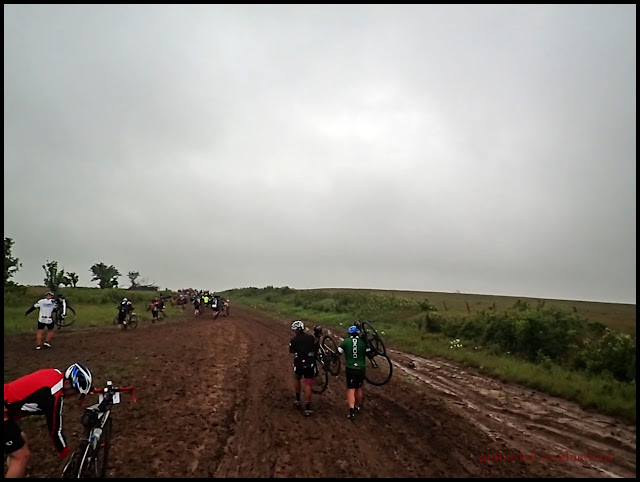 |
My view of the D Road Hill in 2015
|
Now there was rain overnight before the 2023 Unbound event and the three mile section in question here is only about 11-12 miles out from Emporia. I dunno......
Maybe it wasn't easy to check it out before the riders launched at 6:00am?
Regardless, the riders were sent off and there was no implementation of the reroute. Was this done to keep the "spirit of the event" or.....? So far, neither Mr. Sachs nor anyone from Unbound will say- yet anyway. That could change. We'll get to why that is and what I think will happen a bit later.
Right now all you need to know is that many Pro men in the field of 116 riders failed to finish, many of them directly or indirectly due to this stretch of road. This field's stragglers were caught by the Women's field, which was made up of 57 riders, and saw fully about a third of that number as DNF's by the end of the day, again, many blaming this section of road. The women's field, in turn, was caught by the fast end of the amateurs running the 200. By the time all was said and done, by Mile 20 it did not matter much that the Pro Men and Women got a preferred start ahead of the masses, which numbered about 1100, according to stories I read. Of course, of those many did not finish. I read somewhere that the attrition rate in the 200 was 43% of the field.
 |
During the 2015 event, the entire course was either wet, mud, or had standing water across the roadway.
|
So, naturally we could find several instances of complaints about course conditions, how "all that training went to waste in 11 miles" (Where have I heard THAT before!) , or how, at least in second place Woman's Pro rider Sofia Gomez Vllfane's opinion, the Woman should have their own race day and that it should be shorter.
Here's the deal: First off, the RD, Mr. Sachs did not, for whatever reasons, utilize the reroute for D Road. Why not? This is an important question. Without an answer, I will have to assume that what happened was preordained. Update: Thanks to "Nebo" in the comments on this post, we do have a response from Life Time's President, Kimo Seymour: See HERE)
So, the mud section came and yes- if you have not been paying attention here, you might come away from the Unbound thinking that was too extreme, or that somehow this played into "unfair" situations for some riders. Well, here's the thing folks- weather can squash anyone and elevate others. It's random sometimes, and yes- Low finishing rates are a result. This is what has been accepted in gravel racing since 2005.
In other words- "Hey Pro riders and media- DO YOUR RESEARCH!" And- If you don't like the idea of any of that mud or rain, or whatever, then maybe these events are not for you. That's right folks. Gravel events are not going to be every cyclists cup of tea, and that's okay. I don't like crit racing, and so I don't enter crits, even if I was good enough to make money at it. I still would not sign up. But that's me. The point here is that I shouldn't ask criterium overlords to make criterium racing easier for me to accept. You shouldn't ask gravel racing promoters to make their events easier either. Just don't go if you have issues with the format.
 |
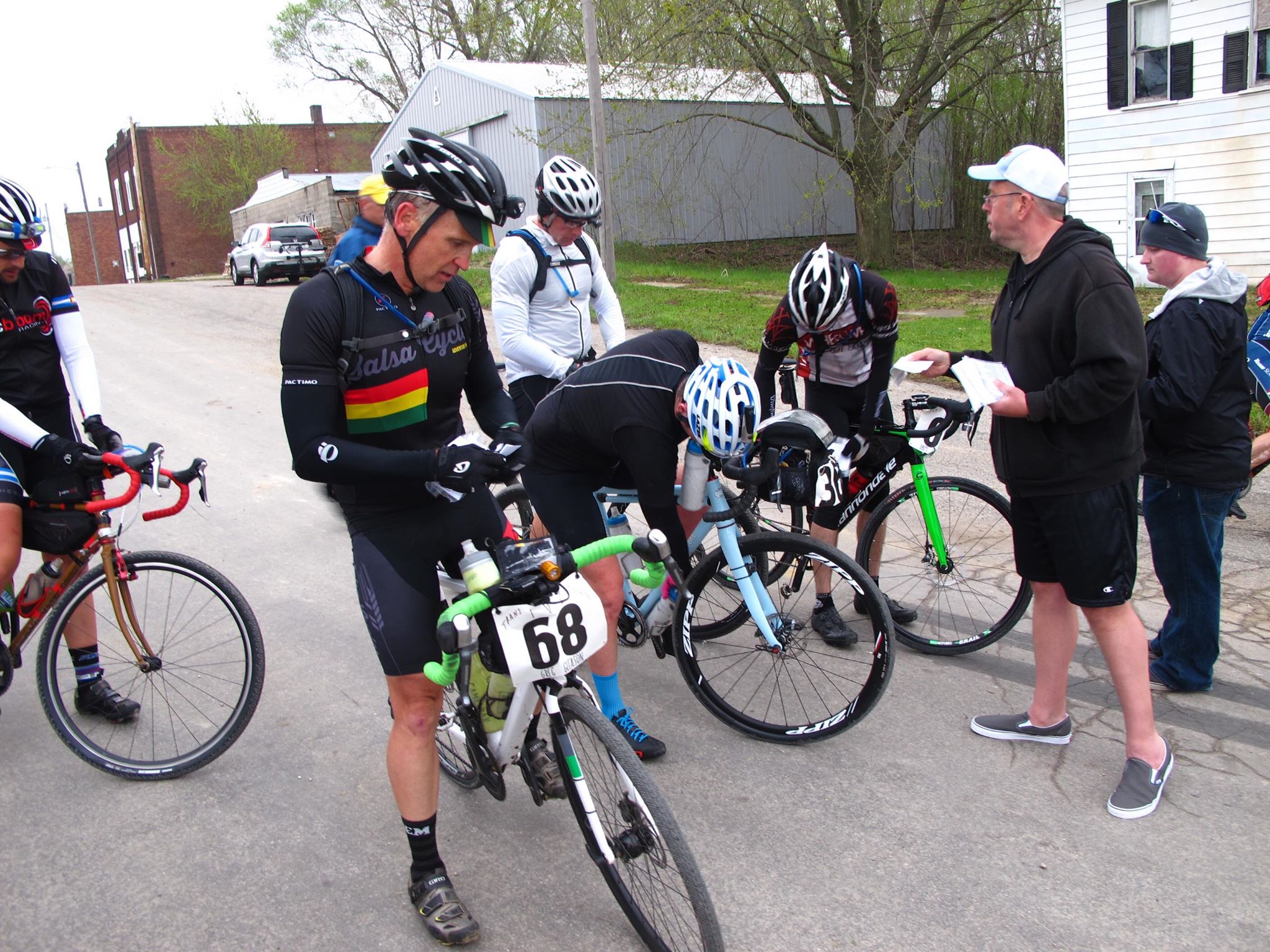
Checkpoint #1 Trans Iowa v12
|
The other story I saw wasn't so much a complaint but that what was observed was thought to be a "new tactic" that the Pro Men were using at Unbound.
What could it have been? Was it new GPS computer tracking? No? How about some nutritional ju-ju no one has tried before? No? What was it?
Here is what it was: The guys and gals are using cell phones to call in to support for the reasons of quicker pit stops.
As if THAT hasn't been going on since, well since cell coverage got good enough that rural riders could count on getting messages across the air waves. Be that by an actual call or text, the result is the same.
So, sorry to bust your bubble out there, but this is definitely not a novel use of a cell phone. If you've been reading this blog for a long time, you already know that I wrestled with cell phone usage for years when I put on Trans Iowa. Coaching, emotional support, navigation, awareness of competitor's positions, and more were all used in Trans Iowa. Prearranged support probably was too, I just never caught anyone doing that, but look, I'm pretty sure that happened looking at the evidence.
And this use of texting in an order to your "pits", (which is essentially what the Pros have for themselves now), is prearranged support. It is not fair to all the riders, but you know, as long as all the plebeians have paid their entry fees, Unbound probably doesn't care about what is fair or not to the entire field. And the whole idea of having three to four mechanics and team people there at those pits is not new either. That came from cyclo cross and 24hr racing. That happened in 2005 at Trans Iowa. So, yeah....
Then we have the folks who are complaining that this or that is "unfair" or if not that then it's "not right". This brings us back to whether or not Unbound or its directors will address this mud year thing. In my event it was "Take it or don't come to the event. This is what it is." However; there is a slight bit of an issue with Unbound being able to stand their ground in this area. That would be their entry fee.
 |
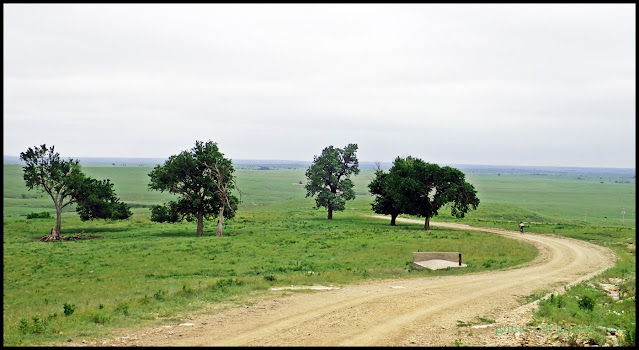
An image from Trans Iowa v6 by Steve Fuller
|
When you charge a fee for an event, you are taking money in exchange for several things. The event production and maybe the race director get a portion of that. The fee covers insurance, technical things like timing, lights, tape, and race numbers. Stuff like that. Stuff many of you think about when you go to an event that "should be there".
But there are also intangibles and unseen expectations at work here Things like "The course better be doable by at least 80% of the riders" (where THAT came from is pretty random) , or "My training better pay off here", or related, "My coaching better show up as being worthwhile here".
Other things like, courses that leave gear in pristine running conditions, or easily traversed terrain, or how about having a big welcome at the finish. (Yes, really. I've seen and heard people have a conniption over not getting fanfare at finish lines)
So, Unbound has all of that and this becomes even more of a pressure placed on the event organization due to the extremely high entry fee and the fact that the event is difficult to get in to. That it is a "bucket list" event also adds to the pressures with regard to people wanting some assurances/insurance that they will finish and have a good time.
Well, here's news for ya: Failure Is An Option. I get that it can be deflating, regrettable, and that it is really hard to see the person in the mirror in front of you as having the most responsibility in that. It's easy to point at the RD, the event, or someone else. But those four other fingers are pointed at the person who really needs to own up to what happened.
And what happened could be 100% out of your control. Yep! Hard to swallow, I know. I've been there. I know all about this. And it is 100% relatable to this year's Unbound.
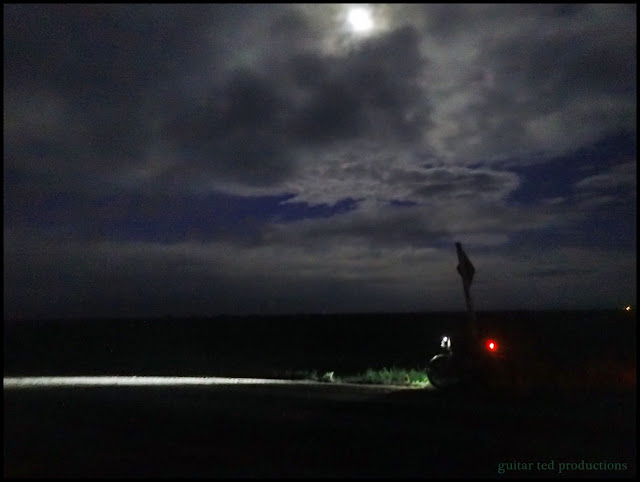 |
I missed the cut-off at Checkpoint two at the DK200 in 2015 by two minutes.
|
So, back to Unbound and their high entry fee. You expect to be able to ask - nay demand - that for nearly $400.00 and more for housing, travel, equipment, etc, not to mention all that training time, that you shouldn't have to put up with _____ (Fill in that blank any way you want to)
And Unbound, well, ya know, they gotta listen. Maybe they hold to their guns, or Corporate may lean on the RD's and say that they gotta start cleaning up the complaints. But I hope that they don't. I hope that Unbound doesn't sanitize their event. I hope that they don't think that they should change because of 173 Pro racers while ignoring the 3K+ others. This is not where gravel racing came from. You want a curated experience with a near 100% chance of a positive outcome as a Pro? Well, again - maybe this is not for you. And yes, we're okay with that. That's what I hope Unbound will do.
Gravel racing was never about making things easier. It was about an event that stretched you, that challenged you, that maybe no one would finish. And that was good. It was seen as something to be celebrated. Hard years at Trans Iowa were cherished and desired. We had a nearly perfect year for Trans Iowa in v12, the year I saw the most finishers ever for one event. You know what I heard afterward from many of the riders? They wanted to try Trans Iowa again and they hoped for a "mud year" because that would be a "real" challenge.
In other words, the people at Trans Iowa, and many other gravel events, didn't want to participate in an event that "most people would finish". They wanted to be pushed to limits and see if they could go past them. I get that money invested in high entry fees, high-dollar equipment, (which is 100% NOT necessary to compete) and time investments, make it hard to see what is the thing that made gravel events take off. But I can tell you that making things easier, more sanitized, and "equal" is not a recipe for truly satisfying and soul - stretching experiences.
Failure is an option.
Sometimes it is the best thing that could ever happen to you.