Thursday, February 13, 2025

CABDA Photo Dump by Ari Andonopoulous

My good friend Ari Andonopoulous attended the Chicago Area Bicycles Dealer Association dealer only trade show/expo on Wednesday and sent me a short report and a bunch of images. I will share the best of the crop and provide some captions to them. Ari took all the images. 

This is a great look at an event that many people don't realize happens in the industry. Trade shows used to be quite prevalent 20 years ago but they are few and far between in the cycling industry in North America anymore. 

Enjoy! 

Welcome to the show!
Schaumberg Convention Center, Schaumberg IL, February 12th, 2025 : I had been looking forward to attending CABDA for a few months now. It’s a good way to break up the winter and have a chance to socialize with like minded people. We had a snow “event” roll thru Chicago so schools were called off and I was able to drive to the show as my wife was working from home.

I woke up a bit late and scurried out of the house. I was excited to take photos with my Canon but I left in such a hurry that I forgot the battery on the charger at home. Luckily I packed a Sony camera and it worked out. I took it easy driving there and arrived a few minutes before opening, completely missing the meet and greet breakfast. I lucked out on a last cup of coffee and fueled up with sugary gels and bars samples. 

An old trade show attendee hack: Living off the free nutritional samples!

The event was well attended with many companies represented. Surprised to see QBP and Giant there. Also Niner, Transition, Factor, Cervelo and other notables. I was impressed with a new Vittoria gravel tire, a Pedro’s Bottom Bracket tool, lots of new lubes and a Krypto lock with a mesh that kills the wheel on angle grinders. 

I met a lot of friends from the Chicago area bike scene and chatted with a lot of friendly vendors.
The bike industry is ever changing and as much as people criticize it I believe it’s driven by passionate people that love bikes and cycling. I would not hesitate going to CABDA again and look forward to attending next year. - Ari

Photo Dump

 A row of swank, sleek looking Factor bikes.

Trudi is from the people behind BERD spokes. This wheel building machine costs $6,999.00

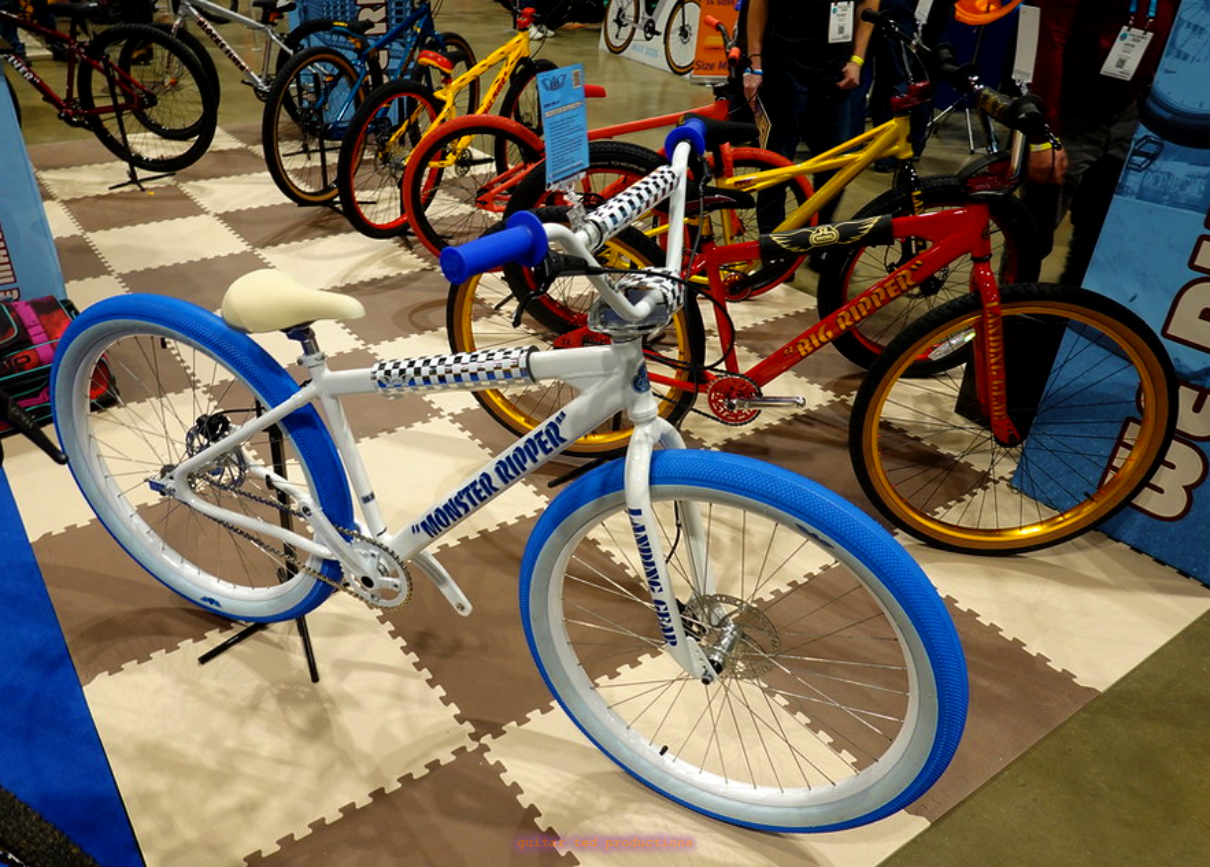
PK Rippers as seen at CABDA. These types of bicycles are big in urban areas.

Reminds me of Tioga Psycho tires! These Vittoria Terreno Pros are made from 92% recycled materials.

Olympic Supply still offers printed dealer catalogs. Old school!
This new Pedros bottom bracket tool uses inserts and one aluminum cup to cover several BB standards in one tool.

Trade shows are great for finding new products to use in a repair shop. 

It is kind of ironic that Quality Bicycle Products is showing at CABDA. At one time, its Frostbike trade show was the darling of the Mid-West trade show circuit.  


Trade shows also allow mechanics and dealers to get face-to-face explanations of new technologies.


One of the hidden gems of Muc Off's range is this Eco Parts Washer. 
Clik Valve shows its wares. I'll have an update on my review of these products later this Summer.

BIKE TUBES was there showing off these colorful TPU tubes.

That's a wrap from the Schaumberg Convention Center, Schaumberg, Illinois! Thanks Ari!

Wednesday, February 12, 2025

It Is Not A Mountain Bike

 Not where you should review a gravel bike.
The other day I was looking at some stuff on the internet and I came across a review for a gravel bike I was interested in. I clicked on to the You Tube video and saw an unbelievable thing. Crazy good single track! Mountainous terrain! Twisties, descents, and roots!

Just exactly the type of terrain everyone has at their disposal and wants to ride a "gravel bike" on, right?

Well...... No, not really

I mean, I'm not going to tell anyone where they can ride whatever bike they want to ride, but in a review? I think you really need to review any bike on terrain it was meant to be ridden on. This is another reason why "gravel" in the bike's name is the wrong term. Had this been called an "all-road" bike, the ridiculousness of how this bike was reviewed would have been immediately obvious to the journo that was making the video. Having said that, it should have been painfully obvious anyway.  

I have reviewed products for years and I take pride in how I do that process. Now, I'm not here to throw shade on other reviewers. I'm just taken back by this reviewing of a road bike on mountain bike terrain. A thing you can do - yes, obviously - but it isn't the point, or should not be, of a gravel bike review. 

Then I came across this nugget on posted by a user of Threads:

 "Every gravel bike review is always obsessing about the same things. Tire clearance?! UDH?! Is it compatible with the same set up that Dylan Johnson used at Unbound?!?! It's so boring and repetitive."

Maybe try some gravel roads to test your bikes, eh?

This is the other facet of most cycling media that seems to keep living on and on. The utterly ridiculous focus on the elite racer, their gear, and the misconception of how racing informs every cyclists choice when it comes to gear and bicycles. 

Elite level cyclists who are finely tuned athletes make up way less than one percent of the world's cycling folks. Way less than one percent. Yet I would wager that more than 90% of what passes as reviews and opinions on cycling, what is proffered for events, and what gets focused on in general, is Pro/Elite level people, gear, and associated things like training, etc. 

That does not make any sense. Now, I would also like to point out that certain segments of cycling media don't focus on this stuff that represents so little of the world's cyclists. If you get the chance, look up some electric bike media. It is so different than what you'd see from 100% human powered cycling media that it looks alien to my jaded eyes. At least what I see there is actually relevant to everyday cyclists

All I am saying is if and when I see something like that bike review of a "gravel" bike done on MTB trails, or any obviously incongruent review things, I am not prone to putting any trust in the source. I'm sure I cannot be the only one thinking this.

Tuesday, February 11, 2025

BIKETUBES 26 X 4.0"-4.5" TPU Tubes: Final Review

 Note: Guitar Ted purchased three BIKETUBES 26" X 4.0"-4.5" TPU tubes for test/review. BIKETUBES has no knowledge of this review previous to this post and all opinions are Guitar Ted's.

This is the final review of the new fat bike sized TPU tubes from BIKETUBES. My mid-term report and a link back to the introduction can be found HERE

Please go back to find out the technical details, first impressions, and what I found that I did and did not like about these tubes at that point. This post will focus on my latest impressions and final word on these TPU fat bikes tubes. 

To start out, I wanted to address the air retention of these TPU fat bike tubes. I had reported that I had found there to be some leak-down which wasn't consistent with other TPU tubes I've tried. 

Fortunately since that time I haven't noted any big air pressure losses and these tubes are acting much more in line with my expectations for a TPU tube. I don't know why I was seeing the drop in pressure from the one check I reported on, but it may have been due to "operator error", so I think I will just run with that. 

Also, since the last update we had a run of really cold weather here. This was a chance to see how these tubes would adapt to sub-freezing temperatures. I got a ride in with the air temperature down in the teens (F) and saw no ill effect. I cannot speak to what might happen at sub-zero temperatures.

Our lack of snow meant that a little bushwhacking was in order.

I was able to get into some fat bike style rambling through a freshly cut ravine with a sand base. The surface was severely pockmarked by deer hooves and there were several embedded branches. This tested out the TPU tubes ability to conform to oddly shaped trail surfaces to see if the tires and tubes would work. 

I had a good ride and the tires were working well over the debris and deer tracks. I think it was better than with butyl tubes, but I would have guessed that seeing as how these old Larry tires are transformed by using TPU tubes. So, I think TPU is an upgrade over butyl rubber for tire performance. Especially in a fat bike application. 

Conclusions: TPU tubes seem flimsy, weird, and are expensive. However; they have come a long way in a short time, proving themselves in many situations, and saving weight, and more importantly, lowering rolling resistance. All without having the hassles of a tubeless set up. 

These fat bike tubes made a huge difference in the way this fat bike I've had for over a decade rides. In fact, it has made the bike lighter, more fun to ride, and has transformed the tires which weren't all that great to begin with. Now? They feel like more modern day, high performance fat bike tires. It makes me wonder how these TPU tubes would do in nicer tires. 

I'm not a big fan of the valve stems on these tubes. They are TPU material, or some other plastic, bendy, and not threaded so they cannot be fixed against the rim. This makes inflation a fiddly chore because you have to be very careful not to damage the stem. 

Air retention is, despite my early surprise, rock solid. TPU tubes have a reputation for holding air better than butyl tubes can. Some might fear that TPU tubes will puncture easier, but in most testing I have seen, this isn't true. TPU has a claim of being more resistant to punctures. I did not have any troubles, so I cannot speak to that facet of using a TPU tube. I do know that it is imperative that you use talc powder or baby powder with these TPU tubes or scuffing the TPU material inside the tire during usage may cause premature failures. It isn't any different with other tube materials, however butyl rubber does resist this issue far better without talc/baby powder.

TPU tubes have a much smaller size when rolled up compared to a butyl tube. This and the much lighter weight of TPU makes a TPU tube a great option for a bail-out solution even if you do run tubeless. They take up far less room in a bag and cut off a lot of dead weight.

So, despite the higher initial cost of a TPU tube, I think the benefits of using them in a fat bike far outweigh the costs. Just in ride feel alone a TPU tube is convincing. I highly recommend trying these out if you run 3.8" to 4.6" tires. Keep in mind that TPU stretches but does not return to its original state when deflated. So, if you use one in a larger tire, you are stuck with it in that wheel. More sizes would be welcomed. As of this writing there were no 27.5" sized fat bike tubes, and there were no sizes for 4.6" + sized 26"er tires either. Hopefully that will change soon in the future for fat bikers.

Monday, February 10, 2025

Gravel Grinder News: Leaks From Shimano, Tease From Cannondale

Enhanced image. (Courtesy of Cannondale social media)
New Aero Cannondale Gravel Bike?.

Over the weekend a Cannondale post on Bluesky social media (and other channels) showed a shadowy image of what looks like a gravel bike with a decided lean to aero. 

In the image you can see a few details that would perhaps lead to this being a new gravel bike. There is the definite lack of a front derailleur, for one thing, and that sculpted, thin section seat tube near the bottom bracket points to a way to allow for more comfort over rougher roads like gravel. 

Also notable is the "three-pack" bosses on the down tube, something you probably would not put on a road racing bike. The tires seem to be skin wall and while it is hard to tell, there is a hint of knobs there, again indicating a gravel bike/cyclo cross bike vs a road racing bike. 

Finally, Cannondale indicated in their teaser that this was going to be an "X-rated release". Cannondale has traditionally used the "X" designation for its cyclo - cross bikes. However; Cannondale has also used the same frame for both CX and gravel so this may also be an instance where this is a new aero gravel bike AND a new CX bike. 

Stay tuned....

As seen on various websites recently

Shimano XTR Leaked?.

Over the past week or so many online sources have been showing what is believed by many to be the next Shimano XTR derailleur. 

Featuring what appears to be a fully wireless design, the rear derailleur has a battery in the parallelogram, and the front derailleur battery appears to be of a different size in images I have seen. 

While this may point to a new update coming soon to Shimano's flagship MTB group, many believe that GRX stands to gain similar design cues soon as well. Could we see a new GRX 13 Di2 with a completely wireless derailleur and shifter design? 

Time will tell. Traditionally these leaks happen in the months leading up to Sea Otter, where Shimano has released its MTB and Road updates in the past. If any news on GRX is coming, it most likely would be released or teased at Unbound, and then fully released in the Summer.  

Comments: While aero road design and techy, fully electronic "gizmo" drive trains are seemingly what the racers want, and what the big component brands are willing to give us, this always begs the question: "What about us Regular Folks?" 

Many people do not care for, or want a fully aero gravel/road bike or a technological wonder for a drive train. Simple, easy to maintain, and FUN bicycles with long-lasting, low-cost maintenance drive trains have a place. I know that many might point to CUES as being an example of the drive train I am thinking of, but that is not quite it really. 

Once upon a time, way back during the Interbike days, Gary Fisher opined to me that what the regular folks want/need is a drive train made with the eye to quality and function that the first XTR group had in 1992. 100% mechanical, but the very highest precision, beautifully anodized parts that had great durability and service life. 

He wasn't wrong then, and he isn't wrong for us in 2025. I'd like to see a complete group with a "better than" CUES level of execution that was 100% mechanical. But that is probably a pipe dream....

Sunday, February 09, 2025

Gravel Season Kick-Off

 In celebration of the twentieth year of this blog, I have a few tales to tell. This post is one of them. This series will occur off and on throughout this anniversary year, I hope to illuminate some behind-the-scenes stories and highlights from the blog during this time. Enjoy!

Over the past 20 years of blogging readers could generally start to see a switch to gravel rides during the latter parts of February as the years went on. This makes sense since the typical Iowa Winter is usually starting to let up on its grip on this area by the time February comes to a close. Sure, there are years where I have been out in January, but more often than not, it is mid- to late February before gravel season kicks off. 

February 2016

Many times I was sick during January anyway, so if it had been warm enough in January I wasn't able to take advantage of it. 

I love getting out in February when Winter is still hanging on but it is still warm enough to ride. The receding drifts  are always a pleasure to view with their wind-sculpted shapes which defy definition in words. The roads are often smooth and still firm with the frost yet to boil out of them. The Sun is getting higher in the sky and its warmth soaks into your bones as you pedal away the miles. February rides can often be really good. 

Maybe missing gravel for most of December and usually all of January is to blame for the joy I often feel when getting a February ride in. Being cooped up for weeks might do that to an individual that loves the outdoors and cycling. I'm sure that if it were possible to have a February conditions ride in , say June sometime, it wouldn't be so pleasant. 

Or maybe it would, An escape from intense heat might be nice to experience about then!

February 2017
Lately those drifts in the ditch and the usual February feelings have been missing. Drier than normal weather has plagued us around here for several years now in a row. We've had, as of this writing, four total inches of snow all Winter. (That may change as of yesterday's snow fall)

Last year we had one significant snow in January. About eight inches, as I recall. But that all melted away in three weeks and you'd have never known it had snowed at all by late February. 

But February is still cold and January this year was the coldest, they say, in eleven years. So, that still is a barrier to riding in a country with wind-swept plains and no cover. I still am waiting for those 50 degree afternoons with Sun and little wind to kick the gravel season off this year. When that happens, the blog will tell the story, just like it has for almost 20 years now. 

Saturday, February 08, 2025

Project "Old School Gravel"

This year I am going on a bit of a retro-gravel journey. I started by taking my very first dedicated gravel bicycle, my 2003 Karate Monkey, and setting it up with the Good Grief Cycles Nice Bar. I also went with some older tires, the WTB Vulpine, (the original XC 29"er ones - not the current gravel versions) and rim brakes. 

But I am not stopping there. I am going to try to use stuff that is from the 2000's as much as possible. Things like the current tires, disc brakes, bags, racks, or even GPS computers are not going to be considered here. 

So, one of the items that will be employed in this project is an NOS Cat Eye Velo 9 computer. Now this may be an item which cuts across my self-imposed border of 2010, but it's close to what we would have used back in the day, and I don't think anyone will really quibble about this wired computer being representative of the era. 

I happened to come across this when it was donated to the Cedar Valley Bicycle Collective. I purchased it and will now be attaching it to the Karate Monkey. This will be part of my old school navigation system. The other part will be a cue sheet holder made from an old water bottle and a clip for office files. It's a design I actually used several times before in the past, and was what I used when I completed Gravel Worlds in 2016. 

I'm still weighing my options when it comes to hydration. I could use a hydration pack, and I happen to have an older Osprey pack and a few bladders. They will need serious cleaning though so I do not get sick. Those nasty growing things! 

OR - I may use a half frame bag like my old Revelate Tangle Bag and stuff water bottles in there or again - a hydration bladder with the hose clipped to my stem. OR - I may use clamps and put bottles on the fork, but that is my least favorite option. 

Then it will be on to some adventures on the set up,which should start happening yet this month. I also want to try this set up in Kansas, if that trip pans out. 

Stay tuned....

Friday, February 07, 2025

Friday News And Views

Image courtesy of Salsa Cycles
New Timberjack Model:

Salsa Cycles revealed earlier this week that it has a new Timberjack model out. It features a Deore SLX 12 speed 1X drive train and a Rock Shox Psylo Silver fork with 140mm of travel. 

The 6061 T-6 aluminum frame feattures fully lined internal routing, a dropper post route, and plenty of accessory mounts. The bike also has the Alternator V2 drop outs for single speed or varying your wheel base. 

This model is set up with 29" wheels but Timberjacks can also support 27.5"er wheels and tires as well. The Timberjack Deore SLX is listed at $1,699.00 USD. You can see more on this bike HERE

Salsa also announced new Rangefinder models. These are Salsa's entry level hardtail MTB's with prices ranging from $899.00 to $1,499.00 in varying spec and colors with 27.5" and 29" wheels. Check those out HERE

Finally, Salsa also announced that they now offer a UDH compatible Alternator drop out. See your Salsa dealer for details. 

Blogs Making A Comeback?

Recently I have noticed a very small bit of chatter online concerning social media platforms, content creation, and the desire for created content to have more accessibility and permanence. It seems that many people are seeing certain social media platform owners as being not very palatable, and also there is a feeling of missing connections with prospective viewers/readers due to how social media platforms operate. Content can be dropped and can be buried in a feed quickly, making its impact of little import. 

So, there has been talk of people resurrecting, or creating blogs again. I saw one such instance where a blog which had been dormant since 2012 was started up again. Others are also thinking along these lines and some are pointing to content sites like Substack as a venue for more permanent content holding. 

There used to be a thriving network of cycling related bloggers which one could "make the rounds" on every day or weekly, depending on how often a creator uploaded content. That all died away in the late 2000's when Facebook basically took that role over. However; now many see that social media site as less than optimal. Many see the owner, "Mr Z", as being a person they do not wish to support by using the site. 

Another facet of this may be the disappearance of physical media, the lack of any quality, free centralized informative cycling sites or publications online, and the wish for reading material versus videos. Many have cited videos as being tiring and not how they want to connect. I don't know, but if blogging makes a comeback, I'm here for it. 

They say what comes around goes around....

Image courtesy of Dirtsixer's Instagram

Will 32" Tires Become A Thing?

Dirtysixer, a small company specializing in larger diameter wheeled bicycles, has shown a new tire from Maxxis on one of their gravel bike models recently with a promise that this tire will be available from Dirtysixer on their 32"er wheeled gravel and MTB models. 

Comments: The tire, an Aspen, would make sense from the perspective of being good at gravel, dirt, and broken up surfaces. The tire is a versatile model, very popular in Maxxis' range, and should be a very good performer. 

However; it is what this says about the future of 32" wheels which is possibly of more importance. Understanding that a company like Maxxis isn't going to open a new mold willy-nilly. No, they don't do things like this unless they plan on selling a lot of tires. 

It would seem to me, knowing what I know from the past and 29"er development, that someone else other than Dirtsixer is interested in doing 32"er bikes. Of course, that could be any brand out there, but if I had to guess, I would exclude Trek, Giant, Specialized, and Cannondale off the top. Now certainly, it is entirely possible I am wrong, but usually bigger companies wait on trends to see if they will take hold before stripping away resources from somewhere else to develop a heretofore unknown quantity. 

We will see. Next time you are riding in a big gravel event, look closely at those taller riders. If they are on a Dirtysixer, you may get a close-up of this new Maxxis tire, or the Vee Tire model also being offered in 32" by Dirtysixer. Happy tire spotting!

Image courtesy of Twin Six

A Gravel Road Themed T-Shirt:

Twin Six, the Minneapolis, Minnesota based apparel company, usually launches a "T-shirt of the Month" every 6th of any given month. They have been doing this for years now.  

February's T-shirt of the Month is a gravel road themed design that I have not seen the likes of from Twin Six. In fact, it may be their first ever gravel road oriented t-shirt design. I cannot think of another from the past, but I could be wrong. 

For what it is worth, these Twin Six offerings are fantastic t-shirts. I just got one last year in the Fall (Bicycle riding Jesus) and it feels great and launders well. These shirts from Twin Six run around 28 bucks and should last you for years. 

Okay, so you are probably thinking I'm getting one of these. And I would, but for a hang-up I have with light colored/white t-shirts. I refuse to wear light colored/white t's. I just can't do it. I feel horrible in almost any color that isn't black, but I have been known to wear dark blue, dark grey, maroon, and maybe a few other colors here and there. But yeah.....I wish this woulda been a black T-shirt. But it isn't It's "Oatmeal". 

sigh!

Get yours if you don't have a hang-up like mine soon because Twin Six only does these T's of the Month in limited quantities. 

That's a wrap on this week's FN&V! Now get out there and ride a bicycle!

Thursday, February 06, 2025

Gremlins

 Sometimes I am at a loss for explanations as to how things happen with bicycles. Take for instance what happened on Monday of this week. I was going to ride to work and had decided I'd use my Ti Muk 2, the Salsa Cycles titanium Mukluk I own. 

Immediately upon pedaling away from the house I felt like the right side pedal was weird. Like it was sagging. Bent pedal spindle? No.... That wouldn't feel the same way through the pedal's orbit. What the....!

Now I have to stop here to point out that I last had ridden the bike home from work. I felt nothing wrong at all. Everything was completely normal. In fact, I remember really cranking out some speed riding up the hill on West 2nd Street. No weirdness felt whatsoever.

Okay, so now back to Monday. I stopped a half a block from the house, looked down, and I could see the right crank arm was seriously loose. Like, not just a little bit. And when a Race Face crank set comes loose, the whole assembly can move laterally, and it was moving about a half an inch! 

Now, you tell me - This did not just happen all of a sudden - so why did I not notice something so awry as this the last time I had ridden it before Monday

These are the mysteries of cycling that may never be explained. And it didn't really matter how it got to that point, it needed to be fixed. So, I went back home, grabbed another bike, (the benefits of having several), and went on to work. 

The caliper had crept over toward the centerline of the bike.

When it came time to fix it, I found that it was just a loose crank bolt so I torqued that back on. I will just have to be more vigilant about checking that bolt from now on. But then I discovered my rear caliper was dragging on the rotor badly. 

Another of life's mysterious happenings. Creeping calipers! So, I had to reset that, torque it down, and then I noticed that the chain was a bit too slack. Now this one comes down to wear. No mystery here! 

The Salsa Mukluk has the v1 Alternator drop out plates and well..... I find the design a bit annoying in that you need three hex keys of different sizes to adjust it. 

I get the big six millimeter fixing bolt, because that is the anchor that holds everything in place. But could we have had the other two just be 5mm hex heads? Nope! The adjuster is a 3mm fitment. Anyway.... A minor gripe. Nothing to fret over. 

Then I found out that the adjustment to the chain tension threw off my brake adjustment and I had to do that again. A great example of how everything is not as rock solid on a bicycle as you might think. Oh, and working a post mount brake bolt that is inside the rear triangle and behind a rack stay is really fun. You should try it sometime! (I kid!) 

Then I took off the XT flat pedals because they have woefully inadequate pins and reinstalled my Fyxation Mesa MP's. Quite the work session! But it all came out fine in the end and all gremlins were eradicated.

Wednesday, February 05, 2025

Two Things

This is my photo of Jim Cummings (L) and Joel Dyke, co-founders of the DK200
The Guitar Ted Podcast Episode #66:

The latest podcast dropped last Friday evening. This one was inspired by you, the readers of Guitar Ted Productions. I received a couple comments which were questions and I took them to the podcast to give you all some longer answers. Plus we get N.Y. Roll's perspective as well. 

I also covered the recent news from the Gravel Cycling Hall of Fame. You can refer to the post I made when the news came out by clicking HERE

In that post I mentioned the issue I had with Jim Cummings exclusion from the Hall. While some of you may have noticed, some of you may not read the comments to my posts. I received a comment from a GCHoF board member who completely ignored the question of Jim's exclusion and instead restated that the current direction of the GCHoF will be maintained going forward. 

I only bring this up because I reference this in the podcast. So there is some context for my remarks should you choose to listen in. The episode can be accessed HERE on Spotify, or you can find the Guitar Ted Podcast on Apple Podcasts, or wherever you get your podcasts from.

New PCL jersey

New Jersey Day:

The Pirate Cycling League (PCL) is an entity that has been around now for almost 20 years. You could argue that its roots go back further than 2006, but the jersey says 2006, so... I'm going with that. 

One of the latest designs for a jersey from the PCL just arrived here at GT Headquarters and I must say, I like it a lot! This jersey says - to me at least - what it is about gravel cycling that I found attractive in the first place. 

A couple of things come to mind immediately. First, gravel cycling was, at least originally, a rebellion. The act of putting on events, be they competitive or not, on gravel was an act of defiance in several ways. There was the rejection of overly complicated rules, uppity attitudes, and against the licensing/entry fees that seemed to be designed to fleece the rider and enrich....somebody

That is reflected in the motorcycle gang-like faux denim look with 'patches' and non-matching fonts. It also is a bit "punk rock" in that way. Knowing the mind(s) behind this, I'm leaning more punk rockish here. 

Then there is the historical aspect. The front features several "patches" which represent notable people and events from the PCL's past. You have "CVO", (Christopher Van Oyen) and the rainbow striped "g" for Randy Gibson. Two "pirates" that we lost far too soon. 

You've got the "TODR" patch (Tour of Dirt Roads), which represents the PCL's first event promoted that took in the area around Lincoln, Nebraska's dirt roads or "MMR's" as they are known as around those parts. 

Then maybe my favorite thing on the jersey is the "Hello" sticker. It hearkens back to a time when events were smaller, less structured, and everyone was interested in everyone else. No pretenses, just humans in honest fellowship. 

I need another jersey like I need a another hole in my head, but this spoke to me and I had to grab one. It will go alongside my other PCL jerseys and I'll likely be wearing this one a bunch during 2024. I know it may not matter to anyone else, but this PCL thing means something - to me, at any rate. 

The PCL's motto, "Ride Free", encapsulates so much of what I like about gravel and some gravel events from the past to the present. It eschews corporatization, barriers to entry, and any attempts to codify the sport by way of rules or a culture driven only by competition. 

Yes, Gravel Worlds was a PCL event until recently. You could say that Gravel Worlds strayed from the molds cast originally by the PCL, and you'd get no argument from me. But now that the PCL has separated itself from Gravel Worlds, I think the ideas behind what the PCL stands for are better represented. That's just my opinion on matters.

Tuesday, February 04, 2025

The Six String Side: Kittycaster Mohair Fuzztortion Pedal

 When I started this blog nearly 20 years ago, I stated that it was a "Bicycle and guitar oriented elixir....". Well, the "guitar" part sort of got pushed out by the bicycle stuff, but I've always been playing. In an Easter post, several years ago, I mentioned playing my '90 Strat, and someone suggested I detail the fleet,which I have done in the past. (Just search "the Six String Side" in the search box in the upper left of the header to find those older posts) This post is a review of an effects pedal. Enjoy!


While it may seem useless to some to write a review on an effects pedal with no sound samples, that's what I am going to do here. Hey! "Back in the day" all we had were written reviews. Besides, there are a ton of You Tube videos on this pedal out there for you to listen to, if that is your bag. So, here we go...

The Kittycaster Mohair is a fuzz/distortion box that has its roots in the Big Muff from Electro Harmonix. Designer of the circuit in the Mohair, Howard Gee, stated that he did not get on with the Big Muff circuit and he wanted to see if he could make something similar that he did want to play. Okay, this grabbed my attention, as I have had zero luck getting a Big Muff to sound good to my ears. Now before you get all in a huff and hit the comments, I happen to love a lot of players work that used Big Muffs. Gilmore, J. Mascis, and Billy Corgan, who are probably the best known Muff users, are players who have a tone and sound that I do like. It is when I play a Big Muff that I don't like the sound. And I've tried it. With every combination available to me, in two different eras. 

My first Big Muff was bought from the Mandolin Brothers' catalog back in 1980. Back when all I had to go on were magazine articles that stated what people were using. To say I was bitterly disappointed in the sound is an understatement. I sold it in short order. Or did I give it way? Can't remember. I do know I hated the way it sounded. 

Same thing in 2010 when I bought another Big Muff thinking that now I would get it. But.....I didn't. Same hate, different decade. Big Muffs sound cool when other people play them, just not when I do. So, when Howard Gee stated he was going to make a Muff circuit for himself, a person who apparently didn't get on with a Muff, I was intrigued.

Upon opening the box. That's a bandana, by the way.

I followed the Kittycaster social channels and waited to see how this was going to come out. Fuzz is an interesting effect, maybe the most popular form of distortion for guitarists, if what I see being proffered out there by builders is any indication. Fuzz circuits are fairly simple, so getting a fuzz to sound like something interesting probably is pretty hard to do now. This made me even more curious as to just how Howard Gee was going to pull this off.

A typical Big Muff sounds buzzy, with a lot of lower frequencies, and Muff's don't poke out from a mix well due to the lack of midrange. Perhaps this is what makes them hard for me to like when I play the Muff. But I've always been bothered by the graininess and "broken" quality to the sound. The very thing a lot of players say they love about a Muff. Yeah, a Muff just is not for me, right? But this begs the question: How is it that I love the tones these other artists are getting who use a Big Muff? What is the secret? You know, I still don't quite get it. 

I tried eq'ing, using a Rangemaster in front, and other things, but to no avail. Then when I heard that Howard Gee was going to put a Rangemaster circuit into his new pedal I figured it wouldn't work, unless......

Maybe Howard knows what he's on to. Maybe. 

The pedal. The 'case candy'.

Then the official release came out with a long You Tube video of Howard demonstrating the pedal. (The video can be seen on the Mohair page HERE)  And I liked it, but of course I did. I wasn't playing it! Still, the boost circuit seemed like it was the saving grace, and the demonstration showed some really wide-ranging tones. 

Maybe.....

Then Kittycaster ran a sale, and I jumped on and purchased the Mohair back in September of last year (2024) Since then I've played it off and on using it in front of my Roland JC-40 and in front of a Fender Deluxe Reverb RI. 

So..... Was it the same ol' - same ol' or? Well, it was both. The Mohair does a fair interpretation of a Big Muff. Howard Gee wanted the pedal to retain pick attack and clarity, and to some extent, that was successful in my mind. I can hear that when I play just the Mohair side of the pedal. I can dial in a smoother, less raspy/broken distorted tone too. Just the type of thing that maybe some would argue is 'less Big Muff, more something else', and I cannot deny that. But the Muff sound, or a pretty close approximation of the sound, is still in the Mohair. 

Gut shot.

The Boost circuit is based on a Rangemaster, according to Howard Gee, and is accessed via the right foot switch. You can add the Boost to the Fuzz, or not, but you cannot get just the Boost. I feel that is a bit of a miss, but hey..... I did not design the pedal. I wish I could have just the boost though. 

I will say that it is the Boost that makes this pedal something quite different from most Muffs out there. In fact, it 'un-Muffs' the circuit and turns the Mohair into a distortion box that can be mild or gritty and mean. It probably does what a lot of distortion boxes do, but then you can go back to a Muff at the push of a foot switch, so, maybe this is what makes a Mohair a worthwhile pedal. 

It is not a pedal that "cleans up" with a lowering of the volume control on your guitar like a Fuzz Face type circuit. It does clean up a little, and maybe that's enough for you. But if you are looking for a fuzz that does that glassy-clean thing with a tiny bit of hair? This is not that pedal. I happen to have a Reeves Electro 2n2 Face, a silicon based Fuzz Face design, and that does do the clean up thing magnificently, so I know the difference. 

Conclusion: So, did Howard Gee get to the finish line with a design that does Muff but with clarity and definition? Yes, but the Boost circuit makes this something else altogether, and to my ears, the Boost + Fuzz is where I would live. So, it doesn't make me love a Muff based circuit any more than I did, which was not much! I am still exploring ways to use the Mohair, and it is on my board for now. 

From a 'Big Muff family sound' point of view, I think this is more a Muff-adjacent design than something a person who loves a Big Muff would like to hear. Maybe you would like something a hair off center from a true Muff? On the other hand, if you never liked Muffs, but want to? This might work for you. 

It's well made, the presentation of the product is great, and it has Howard Gee pedigree, if that appeals to you. It should be said that Gee left Kittycaster shortly after I bought this pedal and is currently trying to start another company. His first product will be another fuzz design.  Surprise, surprise! Maybe that will be something I'd like, but we'll see. The fuzz quest continues! 

Note: Kittycaster did not pay for this review, nor sponsor me in any way. I paid for the Mohair out of pocket.  Kittycaster were totally unaware that I was going to write this. All opinions are my own.

Monday, February 03, 2025

Clik Valves, Cores, and Pump Head: Review Update 1

 Note: Guitar Ted received a suite of products from Clik Valve for test and review at no charge. Guitar Ted is not being bribed nor paid for this review. All opinions are Guitar Ted's.

Last time I posted on the Clik Valve products I introduced all the range and parts I was sent to test/review. You can check that out HERE in case you missed that or want a refresher. In this post I will cover the installation of the pump head parts, the installation of the valve cores, and then how that all worked in practice when used.

Of course, if I was going to use Clik Valve cores I needed a pump to use with them. I chose my SILCA Pista Plus floor pump and it was an easy swap to use the screw-in Clik Valve pump head converter. However; when I went to use this I discovered that my SILCA pump's gauge was not working. So.... Plan B!

This meant I needed to convert my old Topeak Joe Blow pump. I noted that this pump utilized the press-in barbed nozzle and hose fitment which happened to be what the complete Clik Valve pump head uses. So, I actually got to use both heads from Clik Valve in this operation. 

Then, obviously, I had to swap out valve cores on one of my bikes. With Winter being nearly over and, quite frankly, non-existent with the exception of sub-zero temperatures now and again, I decided that it looked like gravel season might start early. Now wait..... I probably just jinxed it. We'll have three weeks of snow! 

Anyway, I chose the Honeman Flyer I had made by King Fabrications. The single speed gravel bike will see a lot of use in the upcoming early parts of gravel riding for the year. The swap of valve cores was pretty simple, but I did notice one detail that I hadn't considered before. 

While the Clik Valve cores have flats so you can use a tool to tighten them, most "over-the-core" tools will not slip over the lipped opening of a Clik Valve. I was happy that Clik Valve did decide to utilize knurling on the valve core's body so I could get enough purchase on the valve core to tighten it by hand.  I am thinking a small, spanner-like wrench would be what you'd need here if you wanted a tool, but I am not aware of such a tool off the top of my head. In the end, I didn't need a tool, but if I had a problem in the field, and I needed to install a tube? I might wish for that spanner-like core removal tool. 

Maybe.

Since catastrophic tire failures are not a big thing, at least around here, I am not too worried about this detail, but I know that for some folks it is a concern, so you may want to look for an appropriate tool. 

Airing up the tires with Clik Valve parts on my pump and valve stem is definitely easier than using Presta or Schrader valves. Pushing on the pump head couldn't be any easier, and the pump head stayed put on the valve as I pumped up my tires to 40psi, which was done to account for the cold air of January outside. Now, of course, this isn't a big deal for low pressure tires, perhaps. So, I would like to try this on a road bike. I do have one, but I need to check to see if I have any tubes with removable cores to do that test. Once I get that lined up, I'll report back with a finding on how this Clik Valve pump head does going up to 100psi. 

You can see here how the pump head adapter screws into this SILCA fitting.

So Far... A ride or two, and sitting around for a bit shows me that the cores do not leak. That's a good sign. The only thing to do now is to complete many cycles of inflation and do a bunch of riding to determine if these cores are doing a good job. 

I am looking for any clogging of the valve that may cause difficulty with inflation. I will also be inspecting the seals on the cores after some time to see how they hold up against sealant. I'll be looking at the pump head to determine if there is any degradation in use over time. And I'll get around to that high pressure test as well.

Meanwhile I do have the full valves from Clik Valve to evaluate, I just need to figure out which wheels I am going to use with those. Hopefully that will be the next update on the Clik Valve products. So far, I am impressed with the ease of operation.

Sunday, February 02, 2025

Gravel Grinder News: Shimano CUES Drop Bar Components

CUES 10/11 speed hydraulic Dual Control Lever. Image courtesy of Shimano
Note: All Images courtesy of Shimano

As expected when Shimano released the CUES flat bar parts, a drop bar lever for CUES has now been revealed. We first got wind of the parts last year, which I talked about in this FN&V.

Featuring hydraulic and mechanical brake Dual Control Lever options, along with "dummy" levers for 1X set ups, this group stands to become one of the more popular, affordable choices for gravel riders. 

These levers will be available for 9,10, and 11 speed set ups, but like their flat bar siblings, CUES has its own cassette spacing and lever pull ratios so these cannot be mixed and matched with any other current Shimano 9,10, or 11 speed components. 

However; you can mix and match within the CUES ecosystem. So, say for instance that you had purchased a 10 speed CUES flat bar bike and then got a sweet deal on a drop bar frame for gravel. One could just buy the Dual Control Levers, use the rest of the CUES flat bar parts, and save a little coin. 

CUES mechanical Dual Control Lever
CUES drop bar will also have 1X and 2X options for crank sets. In 2X they will offer 50/34 and 46/32 options using HollowTech, two piece design. In 1X there will be a 42T and a 40T option in HollowTech along with a heavier, hot forged two piece model with the same chain ring options. 

Brakes, cassettes, and rear and front derailleurs are all similar to the current CUES offerings with the addition of a braze-on style mount option. Both new front derailleurs are optimized for their companion crank sets. 

Essa 8spd: It should also be noted that a drop bar lever set for Shimano Essa has also been introduced, albeit in just a 1X configuration. Essa is compatible with previous Shimano 8spd parts. 

Comments: This is great news for those who want lesser expensive alternatives to 11 and 12 speed groups and should satisfy many folks in terms of look and feel. 

There have been some reports that I have seen with issues with  CUES rear derailleurs not operating correctly. This may be due to some manufacturing issues, so it is hoped that those things can, or have been addressed. It is also notable here that CUES uses LinkGlide cogs and chains which prioritize shifting precision, and not speed, so instantaneous shifts are not going to happen within the CUES range.

CUES as a concept is valid, but in its implementation it finds some push-back from those in the cycling community. It would appear that the incompatibility with anything else Shimano has out is part of this. But when you think about things, Shimano had to make some kind of call on spacing/shifter ratio. They either had to use nine, or ten, or eleven standard, and then in terms of 10 and 11 you have the difference between MTB and road ratios, which are different as well. 

So, what did you think Shimano should have done? They decided to circumvent all the choices and made a call to make one that fit their intentions. I totally get it, and it does make sense. The wish for a "backward compatible 9/10/11 groupset" is a pipe dream. 

What concerns me more are the reports of rear derailleurs that are not up to snuff in terms of precision or durability. One would hope that Shimano will, or has, addressed this. 

If the rear derailleur issues are behind Shimano with regard to CUES, then this is an exciting development.

Saturday, February 01, 2025

Some Things Didn't Stick

 In celebration of the twentieth year of this blog, I have a few tales to tell. This post is one of them. This series will occur off and on throughout this anniversary year, I hope to illuminate some behind-the-scenes stories and highlights from the blog during this time. Enjoy!

In the nearly 20 years of blogging here I have had the privilege to share a lot of really cool things that most riders may not ever get the chance to try out. Some stuff like full suspension 29"ers, carbon wheels, and "gravel bikes" that I was afforded early access to have become rather standard items now. Most of you readers have likely tried all of those. 

But I have also tried a few things that I would characterize as "fringe" in terms of desirable products. Heated flat bar grips come to mind there. I have also tried some stuff that didn't stick, not in a mainstream sense, but are things you could still try. Take for instance Gates Center Track Belt Drive.

Gates Center Track Carbon Belt Drive on a Trek (Gary Fisher) Sawyer.

"The Belt", as I called it then. Back around the late 2000's and early twenty-teens, Gates was trying hard to make their "Carbon" Center Track belts a mainstay of cycling. One way they tried doing this was to get me, a belt critic, to be convinced of The Belt's "magic powers". I tried these belts out at Interbike at first and this was before Center Track. That was, quite frankly, an abject failure and Gates quickly pivoted to the vastly superior Center Track version of The Belt which was reinforced with carbon strands. 

I ran this for an extended period of time. I had some hiccups along the way. Sizing The Belt was not quite figured out at this point, and there were limitations to The Belt which made it a sort of niche, at best, application for most cyclists. 

I really liked this Raleigh XXIX with The Belt.

The worst parts of The Belt is that, although the claim is that these are quiet, The Belt can and will squeak. Very dry or very wet conditions will bring this out. In the dry, silicone spray will take care of the noise, for a while, but it comes back again, and again, and.....

The Belt can and will break. I've seen it (at Trans Iowa back in the day) and have heard about this before from riders. You cannot fix that. You must be carrying a complete belt to replace the broken one with. And there are strict rules as to how a belt can be stowed so as not to cause it to fail. 

The Belt, and its required cogs, are expensive. Far more so than with a chain and alloy or steel cogs are. You need a belt compatible frame, which is another barrier. And finally, you have to run an internally geared hub or gear box to use The Belt. No lighter, more efficient external drive trains (past single speed) here. 

Of course, now belts are being promoted as a solution for down hill racing, since that discipline often now uses gear box drive trains. Still, that's not going to be quite the mainstream goal Gates had back in the late 2000's. 

That was a multi-year try with a product which, in the right applications, works, but isn't anywhere close to "mainstream". I was proud to be able to bring this to the blog when it all was very new. Just one of the really cool things I was able to be a part of because of this platform.