Showing posts with label concept bike. Show all posts

Thursday, February 06, 2020

Concept Bike Revisited; Part 4

It's hard to go custom when you can get something like this for such a reasonable price.
Note: This will be the last look at the Concept Bike Revisited series. You can follow backward by starting with the previous post here

Okay, I'm going to state the obvious here; Money is an object. Or to put it a better way- Money is a barrier. Last week I discussed several titanium bike choices, why that was desirable, and what were the shortcomings of each, in my opinion, for my needs. This week I am going to suggest a few steel framed alternatives that tic the "reasonably priced" alternatives to the titanium beauties listed last week.

Steel has several "titanium-like" qualities and, obviously, is a durable frame material for a bike that will see a lot of mud, grit, and poor conditions in general. I'll put up my 2008 Fargo as a proof of that concept. That bike has been put through the wringer so many times, yet it still is kicking it today in 2020. Steel. Is it "real" or just darn tough and decent? Whatever you want to think, I will take a steel rig any day and have the confidence that if I want to try to see if something is rideable, I won't be grinding through a chain stay with mud and grit. But that may just be me.

Now getting back to the "Concept Bike" thing. I have bikes already which have served me well and have come really close to what I would do in a custom bike anyway. Bikes like my Tamland, or the "Orange Crush" Black Mountain Cycles bike, or the Black Mountain Cycles MCD. Sure, none of those bikes are perfect, but to get even close to that, a steel frame which is customized for my tastes is going to cost in the neighborhood of $1500.00 and up. I could buy two Black Mountain Cycles MCD's and have change to spare. So, it has to be something worth spending the money on in the first place. 

The Twin Six Standard Rando 2.0: It could be a contender.
 The things that bug me the most when I look at bike geometry is head angle and bottom bracket height. I know that if these two critical measurements are off by too much that I will not like the bike. Take bottom bracket drop, for instance. That's the one thing about the original Black Mountain Cycles Monster Cross frame that is not right for me. It is something in the high 60's of millimeters, as I recall. I believe it is 70mm on the current ones, as that was changed several years ago. 70? I could live with that. Less than that? No. It's just too squirrely going down a fast loose gravel descent for my tastes. Then there is head angle.

Many gravel bikes are running 72° head tube angles, and frankly, I think that's too steep. My MCD has that head angle. It's okay, but it could be better. In my opinion, anything steeper than a 72° isn't gravel geometry. In fact, I'd almost be willing to put 72° in that "not a gravel bike" category too. That's because I feel, and have always felt, the 71° head tube angle is where it should be at with a 50+ mm long fork offset.

So, where do you go to get this unicorn? Well, the aforementioned MCD is a great package despite the nearly too steep head angle and nearly too high bottom bracket. It makes up for those things with copious water bottle mounting choices, BIG tire clearances, and 2X drive train capabilities. Plus, it comes with a steel fork, which is another thing I'd "druther have" than a carbon fork. It is a frame and fork, which in my opinion is far too under-priced. And Mike Varley, of Black Mountain Cycles, after holding prices firm for many years, is actually bumping up that price finally. It's still a smoking deal.

Another possibility is the upcoming second version of the steel Standard Rando by Twin Six. Shown above, it looks like through axles are finally a thing. The old Standard Rando had a low, 75mm bottom bracket drop and a 72° head tube angle. I am expecting that things will be tweaked, but I have no clue where T-6 is taking this design. I'm keeping a close eye on this one.

Noble Bikes showed this steel frame/carbon fork bike two years ago at Sea Otter.
Now for a bike with its roots in the Raleigh Tamland which may be another choice. It is also a Noble Bikes design, like my carbon framed bike from Noble I have here now.

This one would feature Reynolds tubing, (if they hold true to the original prototype) and would have the lower bottom bracket (72.5mm drop) and slacker head angle, (71.5°) that my Tamland has. It was promised to come out last year, but it has not as yet. Will it ever? Who knows, but it would be a great choice, and not crazy expensive as a frame/fork. Oh, and even though the fork is carbon, if it is similar to what is on the carbon GX5 Noble makes, well I'd be fine with that. Yes, there are no fork mounts shown on the prototype. Perhaps those get added, but again- who knows? 

I should also mention that last week's titanium example from Knolly Bikes, the Cache, also comes in steel. It has bang on geometry, just like the titanium one, but the fork is an unknown, and the severely sloping top tube means only two water bottles in the main triangle. Still, it is an intriguing offering. I certainly could make that work, and it also is on the table as a choice.

Fimally. an odd-ball. The Otso Cycles Warrakin. This isn't steel, it is stainless steel. I know long time blog readers will remember I tested one of these a few years ago. It has the proper geometry in the "long" setting, it has huge tire clearances, is 2X compatible, and looks ace. It has three bottle mounts on the main frame, but their Lithic fork does not have bosses. Boo. I could make this work, but it is expensive. Nearly titanium money expensive. They also have the Waheela in steel with a slightly slacker head tube angle. And that costs less. Otherwise similar specs, it's just that its paint scheme is less than inspiring. (I know.....vanity.)

So, to wrap this up: Things have come along nicely since I dreamt this rig up ten years ago, and ya know.....I must have been prophetic or something, because the geometry is very close to what I was wanting back then on several bikes you can get now. It mitigates the need to go custom. Not that I wouldn't, but the choices are so good now, small variances can be forgiven. Of course, if I were to stick with my wacky under the chain stay caliper brake, then custom would be my only option. So, thankfully disc brakes, ride quality, geometry, and accessories are what they are for choices now. We're spoiled, really, and the gravel scene has expanded so much in ten years it is crazy.

Concepts ten years ago are reality today, for the most part. So stay tuned as a replacement frame and fork for the aging Tamland are sourced. What will it be? One of the beauties I have outlined in the series, or an as yet unknown?

Stay tuned.............

Concept Bike Revisited; Part 4

It's hard to go custom when you can get something like this for such a reasonable price.
Note: This will be the last look at the Concept Bike Revisited series. You can follow backward by starting with the previous post here

Okay, I'm going to state the obvious here; Money is an object. Or to put it a better way- Money is a barrier. Last week I discussed several titanium bike choices, why that was desirable, and what were the shortcomings of each, in my opinion, for my needs. This week I am going to suggest a few steel framed alternatives that tic the "reasonably priced" alternatives to the titanium beauties listed last week.

Steel has several "titanium-like" qualities and, obviously, is a durable frame material for a bike that will see a lot of mud, grit, and poor conditions in general. I'll put up my 2008 Fargo as a proof of that concept. That bike has been put through the wringer so many times, yet it still is kicking it today in 2020. Steel. Is it "real" or just darn tough and decent? Whatever you want to think, I will take a steel rig any day and have the confidence that if I want to try to see if something is rideable, I won't be grinding through a chain stay with mud and grit. But that may just be me.

Now getting back to the "Concept Bike" thing. I have bikes already which have served me well and have come really close to what I would do in a custom bike anyway. Bikes like my Tamland, or the "Orange Crush" Black Mountain Cycles bike, or the Black Mountain Cycles MCD. Sure, none of those bikes are perfect, but to get even close to that, a steel frame which is customized for my tastes is going to cost in the neighborhood of $1500.00 and up. I could buy two Black Mountain Cycles MCD's and have change to spare. So, it has to be something worth spending the money on in the first place. 

The Twin Six Standard Rando 2.0: It could be a contender.
 The things that bug me the most when I look at bike geometry is head angle and bottom bracket height. I know that if these two critical measurements are off by too much that I will not like the bike. Take bottom bracket drop, for instance. That's the one thing about the original Black Mountain Cycles Monster Cross frame that is not right for me. It is something in the high 60's of millimeters, as I recall. I believe it is 70mm on the current ones, as that was changed several years ago. 70? I could live with that. Less than that? No. It's just too squirrely going down a fast loose gravel descent for my tastes. Then there is head angle.

Many gravel bikes are running 72° head tube angles, and frankly, I think that's too steep. My MCD has that head angle. It's okay, but it could be better. In my opinion, anything steeper than a 72° isn't gravel geometry. In fact, I'd almost be willing to put 72° in that "not a gravel bike" category too. That's because I feel, and have always felt, the 71° head tube angle is where it should be at with a 50+ mm long fork offset.

So, where do you go to get this unicorn? Well, the aforementioned MCD is a great package despite the nearly too steep head angle and nearly too high bottom bracket. It makes up for those things with copious water bottle mounting choices, BIG tire clearances, and 2X drive train capabilities. Plus, it comes with a steel fork, which is another thing I'd "druther have" than a carbon fork. It is a frame and fork, which in my opinion is far too under-priced. And Mike Varley, of Black Mountain Cycles, after holding prices firm for many years, is actually bumping up that price finally. It's still a smoking deal.

Another possibility is the upcoming second version of the steel Standard Rando by Twin Six. Shown above, it looks like through axles are finally a thing. The old Standard Rando had a low, 75mm bottom bracket drop and a 72° head tube angle. I am expecting that things will be tweaked, but I have no clue where T-6 is taking this design. I'm keeping a close eye on this one.

Noble Bikes showed this steel frame/carbon fork bike two years ago at Sea Otter.
Now for a bike with its roots in the Raleigh Tamland which may be another choice. It is also a Noble Bikes design, like my carbon framed bike from Noble I have here now.

This one would feature Reynolds tubing, (if they hold true to the original prototype) and would have the lower bottom bracket (72.5mm drop) and slacker head angle, (71.5°) that my Tamland has. It was promised to come out last year, but it has not as yet. Will it ever? Who knows, but it would be a great choice, and not crazy expensive as a frame/fork. Oh, and even though the fork is carbon, if it is similar to what is on the carbon GX5 Noble makes, well I'd be fine with that. Yes, there are no fork mounts shown on the prototype. Perhaps those get added, but again- who knows? 

I should also mention that last week's titanium example from Knolly Bikes, the Cache, also comes in steel. It has bang on geometry, just like the titanium one, but the fork is an unknown, and the severely sloping top tube means only two water bottles in the main triangle. Still, it is an intriguing offering. I certainly could make that work, and it also is on the table as a choice.

Fimally. an odd-ball. The Otso Cycles Warrakin. This isn't steel, it is stainless steel. I know long time blog readers will remember I tested one of these a few years ago. It has the proper geometry in the "long" setting, it has huge tire clearances, is 2X compatible, and looks ace. It has three bottle mounts on the main frame, but their Lithic fork does not have bosses. Boo. I could make this work, but it is expensive. Nearly titanium money expensive. They also have the Waheela in steel with a slightly slacker head tube angle. And that costs less. Otherwise similar specs, it's just that its paint scheme is less than inspiring. (I know.....vanity.)

So, to wrap this up: Things have come along nicely since I dreamt this rig up ten years ago, and ya know.....I must have been prophetic or something, because the geometry is very close to what I was wanting back then on several bikes you can get now. It mitigates the need to go custom. Not that I wouldn't, but the choices are so good now, small variances can be forgiven. Of course, if I were to stick with my wacky under the chain stay caliper brake, then custom would be my only option. So, thankfully disc brakes, ride quality, geometry, and accessories are what they are for choices now. We're spoiled, really, and the gravel scene has expanded so much in ten years it is crazy.

Concepts ten years ago are reality today, for the most part. So stay tuned as a replacement frame and fork for the aging Tamland are sourced. What will it be? One of the beauties I have outlined in the series, or an as yet unknown?

Stay tuned.............
Tuesday, January 28, 2020

Concept Bike Revisited; Part 3

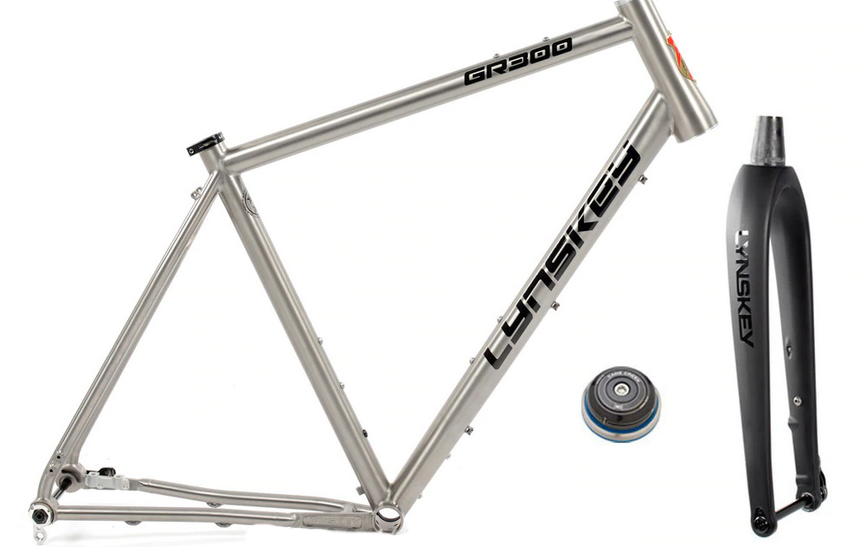
The Lynskey GR300 has the geometry, but misses on the details.
Last time I wrote about the "Concept Bike" ideas, I contrasted what I thought was going to make for a good gravel bike with what we can get today. This time I am going to write about materials, and also details, which I have preferences for in regard to what I deem as the "perfect all-roads bike". Keeping in mind that what you think may be radically different, I will proceed.

The geometry has to be right, and if it is, then I look at what the bike is made out of. I've been around the gravel riding thing for a long time and I have seen failures, heard about more, and I have ridden a lot of different bikes. In my opinion, titanium is where it is at for a gravel bike. Carbon is sexy, light, and can be made to ride well, but it also can be fragile in severe conditions. Finishes get scoured off by gritty mud, layers of carbon get ground through, and then what? Uggh..... 

Yes, I understand that titanium can break, get worn through by gritty mud, and suffer damage, but if it does, it can be repaired by a good welder/frame maker. Carbon can be repaired, but not always. Plus, it is very difficult to recycle if it fails. Titanium can be recycled easier if need be. But would it ever need to be? Carbon, depending upon the damage, is not always repairable. It's my opinion, but titanium feels like it is a longer term investment. And if I had my druthers, that's what I'd get. "So.....what titanium frame would you get?", you might ask. Well, there are a few I'd consider, but let's look at the Lynskey GR300.

The GR300 is U.S. made, high quality, well designed, and has the right geometry. However; there are "missing" bits. It has fender and rack mounts, but only the three traditional mounts for bottles. Yeah.....none on the fork. That could be remedied, by getting a different fork, but then you have to match the geometry, and it isn't as easy as it sounds. Plus, their fork is an unknown quantity which may or may not ride the way I want it to. So, now with that looked at, let's pick on another Ti bike example........

The Twin Six Ti Standard Rando
Another bike I could lay my hands on is the Twin Six Ti Standard Rando. I once owned the steel version of this bike, and so it has the geometry nearly locked down. A little steep in the head angle, but really, a good bike on Iowa gravel.

As you can see, it also sports an extra water bottle mount, but still no fork mounted bottles. Dang it! Anyway, I could make this work, but......

There is always a "but", right?

The Standard Rando has limited 700c tire clearances. You'd be hard pressed to stick a 42-43mm tire in that thing and say you had "mud clearances". The deeper bottom bracket height, (75mm), would be a bit of an issue at times with 650B x 47mm tires, as I know from having done that with the steel version of this bike. And, of course, it sports a Whiskey carbon fork, which again- I don't know that I'd like that. Oh, and this bike has one death knell in spec- quick release axle standard. Boo! If it had through axles, well then.....maybe.

But of all the bikes out now for gravel, I really like the more level top tube of the Twin Six. It just looks "right", but I am old-school. And yes- there is a Standard Rando XC, but it is 1X only. Boo again. Take the through axles that bike has, the wider tire clearances it has, and mix that with this Ti Standard Rando so I could have big tires and 2X? Sold! 

The Knolly Bikes Cache Ti
Okay, one more. The Knolly Bikes Cache Ti. It has the geo nailed. It's spot on. So, what's wrong with it? Well, water bottle capacity suffers due to the extreme sloping top tube. You get the traditional three bottle mounts. That's it. 

I'm also not a huge fan of a gravel bike that looks like a hard tail mountain frame with drop bars and anemic looking tires. It's that severely sloping top tube that puts me off there. Call me crazy, or vain, or both, but I am not excited by that. Even the fact that my pink BMC is somewhat like that bugs me. 

Carbon fork, of course, and while Knolly preaches compliance, well, I don't know anything about this fork. But let's say they have a good, nicely riding fork. Well, the price you pay here is steep. Like over 3G steep. That's frame and fork only. That's well within the range of custom frame pricing. I'm not going to compromise on anything if I'm spending that much, so yes- their lack of water bottle mounts is unacceptable. That and the unknown fork, and the weirdly sloping top tube.....well, I cannot go there without more knowledge and a blessing of unforeseen magnitude in cash anyway.

Yeah, so in the meantime.........

So, as you can see, it isn't easy. You can find titanium bikes, but at a reasonable cost and with everything I want? I think we are in custom bike frame territory here folks. And if that is the case, then titanium is going to be too rich for this poor bike mechanic. Steel is what I'd have to go with then, and ya know, that ain't all bad...... 

Next: The final look at this idea, what it would take now to make me happy, and some possible solutions. 

Concept Bike Revisited; Part 3

The Lynskey GR300 has the geometry, but misses on the details.
Last time I wrote about the "Concept Bike" ideas, I contrasted what I thought was going to make for a good gravel bike with what we can get today. This time I am going to write about materials, and also details, which I have preferences for in regard to what I deem as the "perfect all-roads bike". Keeping in mind that what you think may be radically different, I will proceed.

The geometry has to be right, and if it is, then I look at what the bike is made out of. I've been around the gravel riding thing for a long time and I have seen failures, heard about more, and I have ridden a lot of different bikes. In my opinion, titanium is where it is at for a gravel bike. Carbon is sexy, light, and can be made to ride well, but it also can be fragile in severe conditions. Finishes get scoured off by gritty mud, layers of carbon get ground through, and then what? Uggh..... 

Yes, I understand that titanium can break, get worn through by gritty mud, and suffer damage, but if it does, it can be repaired by a good welder/frame maker. Carbon can be repaired, but not always. Plus, it is very difficult to recycle if it fails. Titanium can be recycled easier if need be. But would it ever need to be? Carbon, depending upon the damage, is not always repairable. It's my opinion, but titanium feels like it is a longer term investment. And if I had my druthers, that's what I'd get. "So.....what titanium frame would you get?", you might ask. Well, there are a few I'd consider, but let's look at the Lynskey GR300.

The GR300 is U.S. made, high quality, well designed, and has the right geometry. However; there are "missing" bits. It has fender and rack mounts, but only the three traditional mounts for bottles. Yeah.....none on the fork. That could be remedied, by getting a different fork, but then you have to match the geometry, and it isn't as easy as it sounds. Plus, their fork is an unknown quantity which may or may not ride the way I want it to. So, now with that looked at, let's pick on another Ti bike example........

The Twin Six Ti Standard Rando
Another bike I could lay my hands on is the Twin Six Ti Standard Rando. I once owned the steel version of this bike, and so it has the geometry nearly locked down. A little steep in the head angle, but really, a good bike on Iowa gravel.

As you can see, it also sports an extra water bottle mount, but still no fork mounted bottles. Dang it! Anyway, I could make this work, but......

There is always a "but", right?

The Standard Rando has limited 700c tire clearances. You'd be hard pressed to stick a 42-43mm tire in that thing and say you had "mud clearances". The deeper bottom bracket height, (75mm), would be a bit of an issue at times with 650B x 47mm tires, as I know from having done that with the steel version of this bike. And, of course, it sports a Whiskey carbon fork, which again- I don't know that I'd like that. Oh, and this bike has one death knell in spec- quick release axle standard. Boo! If it had through axles, well then.....maybe.

But of all the bikes out now for gravel, I really like the more level top tube of the Twin Six. It just looks "right", but I am old-school. And yes- there is a Standard Rando XC, but it is 1X only. Boo again. Take the through axles that bike has, the wider tire clearances it has, and mix that with this Ti Standard Rando so I could have big tires and 2X? Sold! 

The Knolly Bikes Cache Ti
Okay, one more. The Knolly Bikes Cache Ti. It has the geo nailed. It's spot on. So, what's wrong with it? Well, water bottle capacity suffers due to the extreme sloping top tube. You get the traditional three bottle mounts. That's it. 

I'm also not a huge fan of a gravel bike that looks like a hard tail mountain frame with drop bars and anemic looking tires. It's that severely sloping top tube that puts me off there. Call me crazy, or vain, or both, but I am not excited by that. Even the fact that my pink BMC is somewhat like that bugs me. 

Carbon fork, of course, and while Knolly preaches compliance, well, I don't know anything about this fork. But let's say they have a good, nicely riding fork. Well, the price you pay here is steep. Like over 3G steep. That's frame and fork only. That's well within the range of custom frame pricing. I'm not going to compromise on anything if I'm spending that much, so yes- their lack of water bottle mounts is unacceptable. That and the unknown fork, and the weirdly sloping top tube.....well, I cannot go there without more knowledge and a blessing of unforeseen magnitude in cash anyway.

Yeah, so in the meantime.........

So, as you can see, it isn't easy. You can find titanium bikes, but at a reasonable cost and with everything I want? I think we are in custom bike frame territory here folks. And if that is the case, then titanium is going to be too rich for this poor bike mechanic. Steel is what I'd have to go with then, and ya know, that ain't all bad...... 

Next: The final look at this idea, what it would take now to make me happy, and some possible solutions. 

Wednesday, January 22, 2020

Concept Bike Revisited; Part 2

Last week I re-introduced my decade old idea and quest for the "perfect all roads" bike. (click here to see that post) Remembering that in 2010 there were no gravel bikes being marketed as such, (hard to believe now, innit?) we now have to adjust our viewpoint due to the current situation. So, let's see how far off I was from things which I spec'ed in 2010. This will be focused primarily on geometry.

A quick refresher for you non-clicker types that may not have seen, or remembered, last week's post then before we continue. This also will serve as a good quick reference anyway.

  • Head angle 71.5° (I said 72° might be okay)
  • 73° seat tube angle.
  • Bottom bracket drop in the 75-80mm range.
  • Moderate length chain stays.
  • Room for 42mm tires.
I need to address the fourth point because I wasn't very specific. I can say that we were thinking around 430mm there. So that's "shorter than a touring bike's chain stays" and definitely not as short as a cyclo cross bike's. Also, as a note on the tire clearance, that assumes plenty of mud clearance as well. In dry conditions, this ideal frame could run 45mm tires too, but my ideal, all-around tire width was thought to be a 42mm tire at that time. Keep in mind that there were no gravel specific tires at this point in history either. Yes- A lot has changed in a decade!

Now let's take a close look at a "modern" gravel bike. My Noble Bikes GX5 will be our subject here. It has a carbon fiber frame, internal cable routing, disc brakes in the flat mount style, and basically could be thought of as a prototypical gravel bike circa 2020.

The current state of the Noble Bikes GX5
So, if we consider the geometry here, things are not far off from my list of desires. Here is the geometry of the Noble Bikes GX5 from their site. This is for the 58cm size, by the way.
  • Head Tube Angle: 71.5°
  • Fork Offset: 52mm
  • Seat Tube Angle: 72.5°
  • Bottom Bracket Drop: 72.5mm
  • Chain Stay Length: 440mm
  • Tire Clearance: 40mm recommended*
Okay, so I'll contrast and compare starting from the top of the list. So, first is the head tube angle which is dead on what I was wanting here. The fork offset actually is a tick longer, which leads to a slightly quicker handling bike. That's maybe counter-intuitive to you, but that's how offset works given other parameters stay the same. Longer offset = quicker handling. Shorter is the reverse.

The seat tube angle is a half a degree slacker on the GX5. Note that the rest of the size range has 73° seat tube angles. Pretty close here. But now we come to bottom bracket drop and something which we could not consider in 2010 affects this a bit. That being wide 650B tires for gravel travel.

Fatter 650B tires allow for a different ride characteristic and performance.
These tires allowed for a wider, more voluminous tire to be fitted to a bike that might otherwise not be able to handle a 47mm-50mm tire in 700c. The slightly smaller diameter meant that your bottom bracket would end up being closer to the ground though. This could be a problem. It all depends on your bike and its bottom bracket drop.

So, as an example, I had a Twin Six Standard Rando for a while. This bike has a 75mm bottom bracket drop. Right in the range I wanted for this "concept bike". The Standard Rando worked well with 650B tires and wheels, but I would clip a pedal now and again running the 47mm width tires. How close was it? With 172.5mm crank arms I could dip my heel in my size 46 shoes and drag my heel off the tops of the rocks on the road. Any lower in bottom bracket height and I'd be in trouble with 650B X 47mm tires.

So, I've modified my bottom bracket height requirements for a bike that would run dual wheel sizes. Now if you weren't ever going to run 650B wheels and tires, then dip that bottom bracket lower. It'll be fine. Same thing with bigger tires. If you'd never run anything smaller than a 700c X 45mm, then the bottom bracket could be made to be lower as well.

Note also that Noble Bikes GX5's in smaller than 58cm sizes are running 75mm bottom bracket drop. So, this bike would be a candidate for 650B wheels, but........ What about tire clearances? 

The Noble Bikes GX5 with 650B wheels and tires mounted.
 *Well, Noble listed the GX5 as being good for only a 700c X 40mm tire. That said, this is based upon a very conservative industry standard. Noble cannot recommend anything larger per this requirement, but that doesn't mean bigger tires won't fit. 700 X 42's will work fine, and you can even shoehorn in a 650B X 47mm wheel and tire. There is not a ton of clearance with 650B X 47 on this bike though, so no wetter or muddy gravel or dirt.

Finally, the chain stays on the GX5 are 440mm long, and 10mm longer than I figured necessary. Okay, I will admit that the GX5 is a really stable, really smooth riding bike, and no doubt, that extra chain stay length probably lends a bit to the tire clearances, but it is longer. Could this be done in a 430mm length? Probably, but perhaps at the expense of comfort. Maybe a compromise of 435mm? Maybe. I think a steel bike could be 430mm chain stay length, so I will allow that the carbon construction here perhaps is the main limitation. To get a shorter stay, you'd probably see that dropped drive side chain stay, like so many other carbon bikes have.

Now with that done, the next post will cover frame materials and things like water bottle bosses, fender mounts, and smaller details. Then I'll get on to my final vision for the concept bike. Stay tuned.......

Concept Bike Revisited; Part 2

Last week I re-introduced my decade old idea and quest for the "perfect all roads" bike. (click here to see that post) Remembering that in 2010 there were no gravel bikes being marketed as such, (hard to believe now, innit?) we now have to adjust our viewpoint due to the current situation. So, let's see how far off I was from things which I spec'ed in 2010. This will be focused primarily on geometry.

A quick refresher for you non-clicker types that may not have seen, or remembered, last week's post then before we continue. This also will serve as a good quick reference anyway.

  • Head angle 71.5° (I said 72° might be okay)
  • 73° seat tube angle.
  • Bottom bracket drop in the 75-80mm range.
  • Moderate length chain stays.
  • Room for 42mm tires.
I need to address the fourth point because I wasn't very specific. I can say that we were thinking around 430mm there. So that's "shorter than a touring bike's chain stays" and definitely not as short as a cyclo cross bike's. Also, as a note on the tire clearance, that assumes plenty of mud clearance as well. In dry conditions, this ideal frame could run 45mm tires too, but my ideal, all-around tire width was thought to be a 42mm tire at that time. Keep in mind that there were no gravel specific tires at this point in history either. Yes- A lot has changed in a decade!

Now let's take a close look at a "modern" gravel bike. My Noble Bikes GX5 will be our subject here. It has a carbon fiber frame, internal cable routing, disc brakes in the flat mount style, and basically could be thought of as a prototypical gravel bike circa 2020.

The current state of the Noble Bikes GX5
So, if we consider the geometry here, things are not far off from my list of desires. Here is the geometry of the Noble Bikes GX5 from their site. This is for the 58cm size, by the way.
  • Head Tube Angle: 71.5°
  • Fork Offset: 52mm
  • Seat Tube Angle: 72.5°
  • Bottom Bracket Drop: 72.5mm
  • Chain Stay Length: 440mm
  • Tire Clearance: 40mm recommended*
Okay, so I'll contrast and compare starting from the top of the list. So, first is the head tube angle which is dead on what I was wanting here. The fork offset actually is a tick longer, which leads to a slightly quicker handling bike. That's maybe counter-intuitive to you, but that's how offset works given other parameters stay the same. Longer offset = quicker handling. Shorter is the reverse.

The seat tube angle is a half a degree slacker on the GX5. Note that the rest of the size range has 73° seat tube angles. Pretty close here. But now we come to bottom bracket drop and something which we could not consider in 2010 affects this a bit. That being wide 650B tires for gravel travel.

Fatter 650B tires allow for a different ride characteristic and performance.
These tires allowed for a wider, more voluminous tire to be fitted to a bike that might otherwise not be able to handle a 47mm-50mm tire in 700c. The slightly smaller diameter meant that your bottom bracket would end up being closer to the ground though. This could be a problem. It all depends on your bike and its bottom bracket drop.

So, as an example, I had a Twin Six Standard Rando for a while. This bike has a 75mm bottom bracket drop. Right in the range I wanted for this "concept bike". The Standard Rando worked well with 650B tires and wheels, but I would clip a pedal now and again running the 47mm width tires. How close was it? With 172.5mm crank arms I could dip my heel in my size 46 shoes and drag my heel off the tops of the rocks on the road. Any lower in bottom bracket height and I'd be in trouble with 650B X 47mm tires.

So, I've modified my bottom bracket height requirements for a bike that would run dual wheel sizes. Now if you weren't ever going to run 650B wheels and tires, then dip that bottom bracket lower. It'll be fine. Same thing with bigger tires. If you'd never run anything smaller than a 700c X 45mm, then the bottom bracket could be made to be lower as well.

Note also that Noble Bikes GX5's in smaller than 58cm sizes are running 75mm bottom bracket drop. So, this bike would be a candidate for 650B wheels, but........ What about tire clearances? 

The Noble Bikes GX5 with 650B wheels and tires mounted.
 *Well, Noble listed the GX5 as being good for only a 700c X 40mm tire. That said, this is based upon a very conservative industry standard. Noble cannot recommend anything larger per this requirement, but that doesn't mean bigger tires won't fit. 700 X 42's will work fine, and you can even shoehorn in a 650B X 47mm wheel and tire. There is not a ton of clearance with 650B X 47 on this bike though, so no wetter or muddy gravel or dirt.

Finally, the chain stays on the GX5 are 440mm long, and 10mm longer than I figured necessary. Okay, I will admit that the GX5 is a really stable, really smooth riding bike, and no doubt, that extra chain stay length probably lends a bit to the tire clearances, but it is longer. Could this be done in a 430mm length? Probably, but perhaps at the expense of comfort. Maybe a compromise of 435mm? Maybe. I think a steel bike could be 430mm chain stay length, so I will allow that the carbon construction here perhaps is the main limitation. To get a shorter stay, you'd probably see that dropped drive side chain stay, like so many other carbon bikes have.

Now with that done, the next post will cover frame materials and things like water bottle bosses, fender mounts, and smaller details. Then I'll get on to my final vision for the concept bike. Stay tuned.......

Wednesday, January 15, 2020

Concept Bike Revisited; Part 1

How do my ideas from a decade ago stack up with what is available today?
Last Friday I brought up my "Time For A Concept Bike" series from ten years ago. This was in response to what, at that time, I saw as a need for a specific "all-road" solution for what it was we were engaged in. Gravel riding, broken up pavement riding, dirt road riding, and maybe a touch of single track/adventure bushwhacking thrown in for good measure.

We had three types of bicycles in those days: Road racing styled bikes, mountain bikes, and touring/cyclo cross bikes. There were elements of all of these bikes which I liked from my perspective, and this might be a good time to mention something regarding perspective.

It was my perspective. This "concept bike" nonsense was never meant for anything other than my own personal goals for realizing a "better tool for the job". Whether or not anyone else was going to like it, or want it, was not my concern at that time. I had ideas that I was sure would be far better than what I had available to me at that time. Now, of course, if other people happened to like the idea, well.....okay. That would be great. But make no mistake- I was going to end up with a bicycle like this regardless. That the folks out there doing what I was doing ended up- more or less- on a similar page is amazing and cool. Totally not my plan though.

Now, back to the bike choices. I liked a few things about road geometry because, well, we were riding on roads, not single track. So, while mountain bike tires with their cushy, comfortable, and stable ride were attractive, the geometry of those bikes weren't lending themselves to a ride mainly in the saddle for hours at a time. The road bikes were a bit too "racy" though, and this was/is because paved roads which are smooth, don't require any concessions to stability or comfort which you have to have on rougher, looser surfaces like gravel and sometimes dirt. Not to mention that tire clearances on road racing based bikes was severely limited. It's interesting to note now how gravel riding has actually influenced the road racing bikes of 2020, many of which can now handle a 32mm-35mm tire. This was unheard of - no, it was unthinkable - ten years ago.

Cyclo cross bikes did have adequate tire clearances in may cases, but the specific nature of their design meant that they had certain features which did not translate well to long days in the saddle. CX bikes were meant for clearing barriers, pedaling in deep ruts, and had to be able to carve tight corners at slow speeds. Plus, efficiency was king, meaning any concessions for rider comfort were secondary, or not considered into their design. I recall many "pure" CX bikes in the 90's didn't even have water bottle bosses. Those were things that just got in the way.

I used to use mountain bikes on gravel, but it wasn't completely ideal.
So, coming from the design sheet that CX does, you can see where the deficiencies were in terms of coming over to do gravel riding. Of course, it is obvious that CX bikes were widely used in the 00's during modern gravel riding's rise to popularity, but once gravel bikes hit the scene, those bikes became far less common, and now are rare to see at gravel events.

One could make an argument for touring bikes here. They have the geometry, the tire clearances, and the capability for carrying necessities, but there are a couple things about them that were not what I wanted at all. First and foremost, any touring bike worth its salt is going to be designed to handle and ride best when fully loaded. This means that when the touring bike is unladen it rides differently. Without panniers and bags full of gear, the touring bike frame becomes a stiff beast which isn't fun to ride on for very long on rougher roads. Secondly, the chain stays on touring bikes are a bit cartoonishly long so that when bags are mounted on the rear, there is clearance for legs and feet. We aren't going to be needing panniers on gravel bikes, so my take was that the chain stays could be shorter and the frame tubing could be more forgiving without having 75lbs of gear strapped to it.

What I was after was an amalgam of all of the good things from all of the above bikes. Here were my parameters which I listed back in 2010.
  • 71.5 degree head angle. (Could go to 72, but we'll see.)
  • 73 degree seat angle.
  • 50mm offset fork (Could change)
  • Low bottom bracket height. (Something around 75-80mm drop)
  • Not touring length chain stays, but not cyclo-cross short either. 
  • Room for 42mm tires
My friend Ben Witt also was down with this idea. Now, it has to be mentioned, and remembering that this was 2010, we also had an odd idea here which probably is as controversial today as it was ten years ago. The reasoning we wanted this odd arrangement, which I will share here in a moment, was that we had a theory, borrowed from none other than mountain bike pioneer, Joe Breeze, that the longer each frame tube could be without interruption, the more compliance it will have. This will be understood here after I explain the odd component choice.

Paul Components Racer brake (Center mount style shown)
Yep! That's right. An old design refreshed by Paul Component Engineering, the Racer Brake. Why? Well, reread that paragraph above. Disc brakes, while they are all the rage, and work well, do something to frame design that isn't adding to rider comfort. It takes it away to a degree, as a matter of fact. Look closely at any flat mount brake on the left chain stay. See how that flat mount effectively interrupts the tubing? In effect, it stiffens that tube up, which may or may not be a good thing. I'll admit that the rear flat mount is less intrusive than the old IS disc brake mount was, but in the area of fork design, it doesn't matter if the mount for the brake is flat or IS. The fork compliance suffers, and that's an area which is critical to the comfort of a rider on rougher surfaces.

So, here was the idea Ben and I had. Crazy as it may sound. We wanted to use the braze on vesion of the Racer brake because it uses mounting posts which attach closer to the fork crown, allowing the blades to have an uninterrupted tube for better compliance from the drop out to the fork crown. Plus, the braze on makes the Racer brake more responsive. Now, here's the kicker. This is where minds get twisted and people think Ben and I are crazy.

The rear Racer brake we wanted to have with the same braze on mounts, but located under the chain stay, like some older mountain bikes do.

I can hear you all now screaming at your glowing screen that this is a stupid, idiotic idea. "What about mud! That's a horrible place for a brake!" Or.....is it? Here's why we wanted to do this, if you haven't already figured it out. We wanted brake-free seat stays for the best rider comfort we could get. In fact, we were going to spec the lightest, thinnest seat stay tubing that we could. Also, with the brake mounted to the chain stay, you get massive brake response. Hardly any flex there! And a shield could be made, ala Charlie Cunninham's ideas (many examples shown here) to ward off dust and debris. With fenders, this would be even less of an issue.

So, there are the reasons and the background for the 2010 concept bike. Next time we will see where these ideas, (minus the oddball brake ideas, of course) fit into today's scene and what I would do differently now if I were to have this bike built.

Concept Bike Revisited; Part 1

How do my ideas from a decade ago stack up with what is available today?
Last Friday I brought up my "Time For A Concept Bike" series from ten years ago. This was in response to what, at that time, I saw as a need for a specific "all-road" solution for what it was we were engaged in. Gravel riding, broken up pavement riding, dirt road riding, and maybe a touch of single track/adventure bushwhacking thrown in for good measure.

We had three types of bicycles in those days: Road racing styled bikes, mountain bikes, and touring/cyclo cross bikes. There were elements of all of these bikes which I liked from my perspective, and this might be a good time to mention something regarding perspective.

It was my perspective. This "concept bike" nonsense was never meant for anything other than my own personal goals for realizing a "better tool for the job". Whether or not anyone else was going to like it, or want it, was not my concern at that time. I had ideas that I was sure would be far better than what I had available to me at that time. Now, of course, if other people happened to like the idea, well.....okay. That would be great. But make no mistake- I was going to end up with a bicycle like this regardless. That the folks out there doing what I was doing ended up- more or less- on a similar page is amazing and cool. Totally not my plan though.

Now, back to the bike choices. I liked a few things about road geometry because, well, we were riding on roads, not single track. So, while mountain bike tires with their cushy, comfortable, and stable ride were attractive, the geometry of those bikes weren't lending themselves to a ride mainly in the saddle for hours at a time. The road bikes were a bit too "racy" though, and this was/is because paved roads which are smooth, don't require any concessions to stability or comfort which you have to have on rougher, looser surfaces like gravel and sometimes dirt. Not to mention that tire clearances on road racing based bikes was severely limited. It's interesting to note now how gravel riding has actually influenced the road racing bikes of 2020, many of which can now handle a 32mm-35mm tire. This was unheard of - no, it was unthinkable - ten years ago.

Cyclo cross bikes did have adequate tire clearances in may cases, but the specific nature of their design meant that they had certain features which did not translate well to long days in the saddle. CX bikes were meant for clearing barriers, pedaling in deep ruts, and had to be able to carve tight corners at slow speeds. Plus, efficiency was king, meaning any concessions for rider comfort were secondary, or not considered into their design. I recall many "pure" CX bikes in the 90's didn't even have water bottle bosses. Those were things that just got in the way.

I used to use mountain bikes on gravel, but it wasn't completely ideal.
So, coming from the design sheet that CX does, you can see where the deficiencies were in terms of coming over to do gravel riding. Of course, it is obvious that CX bikes were widely used in the 00's during modern gravel riding's rise to popularity, but once gravel bikes hit the scene, those bikes became far less common, and now are rare to see at gravel events.

One could make an argument for touring bikes here. They have the geometry, the tire clearances, and the capability for carrying necessities, but there are a couple things about them that were not what I wanted at all. First and foremost, any touring bike worth its salt is going to be designed to handle and ride best when fully loaded. This means that when the touring bike is unladen it rides differently. Without panniers and bags full of gear, the touring bike frame becomes a stiff beast which isn't fun to ride on for very long on rougher roads. Secondly, the chain stays on touring bikes are a bit cartoonishly long so that when bags are mounted on the rear, there is clearance for legs and feet. We aren't going to be needing panniers on gravel bikes, so my take was that the chain stays could be shorter and the frame tubing could be more forgiving without having 75lbs of gear strapped to it.

What I was after was an amalgam of all of the good things from all of the above bikes. Here were my parameters which I listed back in 2010.
  • 71.5 degree head angle. (Could go to 72, but we'll see.)
  • 73 degree seat angle.
  • 50mm offset fork (Could change)
  • Low bottom bracket height. (Something around 75-80mm drop)
  • Not touring length chain stays, but not cyclo-cross short either. 
  • Room for 42mm tires
My friend Ben Witt also was down with this idea. Now, it has to be mentioned, and remembering that this was 2010, we also had an odd idea here which probably is as controversial today as it was ten years ago. The reasoning we wanted this odd arrangement, which I will share here in a moment, was that we had a theory, borrowed from none other than mountain bike pioneer, Joe Breeze, that the longer each frame tube could be without interruption, the more compliance it will have. This will be understood here after I explain the odd component choice.

Paul Components Racer brake (Center mount style shown)
Yep! That's right. An old design refreshed by Paul Component Engineering, the Racer Brake. Why? Well, reread that paragraph above. Disc brakes, while they are all the rage, and work well, do something to frame design that isn't adding to rider comfort. It takes it away to a degree, as a matter of fact. Look closely at any flat mount brake on the left chain stay. See how that flat mount effectively interrupts the tubing? In effect, it stiffens that tube up, which may or may not be a good thing. I'll admit that the rear flat mount is less intrusive than the old IS disc brake mount was, but in the area of fork design, it doesn't matter if the mount for the brake is flat or IS. The fork compliance suffers, and that's an area which is critical to the comfort of a rider on rougher surfaces.

So, here was the idea Ben and I had. Crazy as it may sound. We wanted to use the braze on vesion of the Racer brake because it uses mounting posts which attach closer to the fork crown, allowing the blades to have an uninterrupted tube for better compliance from the drop out to the fork crown. Plus, the braze on makes the Racer brake more responsive. Now, here's the kicker. This is where minds get twisted and people think Ben and I are crazy.

The rear Racer brake we wanted to have with the same braze on mounts, but located under the chain stay, like some older mountain bikes do.

I can hear you all now screaming at your glowing screen that this is a stupid, idiotic idea. "What about mud! That's a horrible place for a brake!" Or.....is it? Here's why we wanted to do this, if you haven't already figured it out. We wanted brake-free seat stays for the best rider comfort we could get. In fact, we were going to spec the lightest, thinnest seat stay tubing that we could. Also, with the brake mounted to the chain stay, you get massive brake response. Hardly any flex there! And a shield could be made, ala Charlie Cunninham's ideas (many examples shown here) to ward off dust and debris. With fenders, this would be even less of an issue.

So, there are the reasons and the background for the 2010 concept bike. Next time we will see where these ideas, (minus the oddball brake ideas, of course) fit into today's scene and what I would do differently now if I were to have this bike built.

Friday, January 10, 2020

Friday News And Views

C.O.G. 100 Registration Still Open:

The field for the second annual C.O.G. 100 has been filling up nicely. We still have spots available though, so head on over to the C.O.G. 100 registration page and sign on. We are still looking for you women out there to get on board with this deal too, so keep in mind, that field is small to non-existent and you could be the Iowa Single Speed Gravel Champion. We have hats being designed and everyone signing up gets one. Plus, we have two different t-shirt designs on offer and those are optional. We plan on opening up the t-shirt offer to the general public also, so keep on the lookout for that coming soon.

Otherwise we have a bit of time before we have to get out again to look at the roads once more and assess whether or not we need to execute any re-routes. I know we had a couple of spots we were worried about, so those will be getting our attention first. We have to also clear our start/finish area with the proper authorities. Details like number plates have to be taken care of and organizing volunteers as well. Much to do yet, but I foresee it all coming together well in the end.

The whole "search for a gravel bike" led me to this- The BMC "Orange Crush"
 Time For A Concept Bike Revisited:

Almost ten years ago, in late 2010, I had a series of posts on the site dubbed "Time For A Concept Bike!", and I know it went along to about six or seven parts. In the end of it all, I was supposed to be having a new, custom made rig done in steel.

I had posted my thoughts on the blog with the result being a huge blowing up of discussion and debate about some of my thoughts. Not least of which were that "all I needed was a cyclo cross bike" and the surrounding "geometry differences in millimeters doesn't matter" which came along with all of that. Of course, that is nonsensical thinking, and we all accept that a cyclo cross bike is not a gravel bike these days. Ten years ago, well....it was quite a sticking point. Mostly because there were no gravel bikes. No one had ever ridden what I was talking about, or if they had, they weren't commenting on the blog. People dismissed the idea out of hand.

Well, this mythical gravel rig, hand made as it was going to be, never materialized. I became a bit tight in the funding department, and so I put out a search for a stop-gap bike to "make do" with until such a time arrived that money was less an issue and I could go forward with the project. One thing I was against for this bike was a disc brake. (Which eliminated the Vaya) I narrowed my search down to two cyclo cross inspired rigs, (again- there were no gravel bikes in those days.), but they were cyclo cross in name only. Well, one was actually called a "Monster Cross" bike, and you know now which bike I ended up with.The old orange Black Mountain Cycles Monster Cross from 2011.

It is a great bike, but not exactly what I had in mind. So, this "stop-gap" bike was really only meant to be around for a little while. Then 2012 came along and the whole deal with Raleigh and the Tamland started up. I waited to see what that would result in, and in 2014, I got my Tamland. Well, that was "good enough" and by this time the whole "concept bike" thing had faded into a distant memory.

So, I came across those old posts researching stuff on the blog last month. I thought it might be fun to revisit what it was that I had in mind, compare it to some of the more radical "gravel rigs" of 2020, and then, maybe, I will see about actually doing this for real. I'll also see whether I was wrong, or whether I was right, about my guesses from 2010 in terms of what would make a good gravel rig. Stay tuned for that new series coming next week.

The Airbourne Hob Goblin 29"er FS bike.
 Airborne Is Still Doing It:

Let's see, I think the first time I ever heard about Airborne they were doing titanium direct to consumer bikes named after famous WWII bombers and fighter planes. That would have been in the early 2000's. Then there was a problem with the company, resulting in a buyout by the Huffy Corporation. I actually reviewed an Airborne Goblin 29"er about ten or so years ago now.

Looking up the history, I see that Huffy sold the company to the the son of the founder of the DK BMX bike brand, (which Huffy also owned at the time), and he and his team are bringing back Airborne for another go-round selling consumer direct. Yes, consumer direct bike brands have been around a loooong time. 

It's funny when you think about it. Back 20 years ago, a consumer direct brand like Airborne was looked at with very suspicious eyes by most consumers. It was assumed, (and many a time rightly so), that spec and quality wasn't up to snuff. Mainstream brands sneered at these "sub-quality", "pretenders", and paid no attention to the ground swelling of consumer interest in these brands. Much to their detriment, even today, I would suggest.

Consumer direct brands were always assumed to operate in the marketplace as the "cheapest, race to the bottom" back-marker of the industry, but they were striking a nerve, and not just because the prices were so attractive. If you recall, many of these brands did not sell on technical, jargon-infested marketing ploys. They never used pro racers or that sort of "high-brow", ultra-fit athlete look. They sold on the every-man having fun at a price that wasn't bad. They cut the "BS" and went for what makes bikes fun in the first place, you know......fun? Not this "type 2" so-called "fun", or whatever "real racers" and the wannabees come up with for their definition of fun. But the sort of, "get this cheap and get out and have fun already" message which resonates with consumers. They could care less about "APB", "Mini-Link", or whatever length the chain stays are. It was about freaking fun! Pop the rig outta the box, go ride, get rad fun. Cut the song and dance. Ya know?

But the direct to consumer brands didn't make good decisions on components, geometry, and yes, the length of chain stays, so many folks got turned away by their end user experiences. Had companies been more conscious of that, then I feel direct to consumer would have gained a much bigger foothold than they have. They still could, if they upped their consumer satisfaction and serviced them at LBS's.

Yes, I feel that the future will be a blend of the stalled out consumer direct model and the old, stale LBS one. A model where the best of both things will finally create a new model where consumers don't have to navigate "The Culture of Bro" (or the latest "PC-du jour" mash-up) and will get a decently priced bike with "boots on the ground" service that consumer direct never had. Will that be Airbourne, or some other brand? I doubt the "Four Behemoths" of the industry we have now will figure it out. Time will tell......

That's all for this week. have a great weekend, and as always, thank you for reading here!


Friday News And Views

C.O.G. 100 Registration Still Open:

The field for the second annual C.O.G. 100 has been filling up nicely. We still have spots available though, so head on over to the C.O.G. 100 registration page and sign on. We are still looking for you women out there to get on board with this deal too, so keep in mind, that field is small to non-existent and you could be the Iowa Single Speed Gravel Champion. We have hats being designed and everyone signing up gets one. Plus, we have two different t-shirt designs on offer and those are optional. We plan on opening up the t-shirt offer to the general public also, so keep on the lookout for that coming soon.

Otherwise we have a bit of time before we have to get out again to look at the roads once more and assess whether or not we need to execute any re-routes. I know we had a couple of spots we were worried about, so those will be getting our attention first. We have to also clear our start/finish area with the proper authorities. Details like number plates have to be taken care of and organizing volunteers as well. Much to do yet, but I foresee it all coming together well in the end.

The whole "search for a gravel bike" led me to this- The BMC "Orange Crush"
 Time For A Concept Bike Revisited:

Almost ten years ago, in late 2010, I had a series of posts on the site dubbed "Time For A Concept Bike!", and I know it went along to about six or seven parts. In the end of it all, I was supposed to be having a new, custom made rig done in steel.

I had posted my thoughts on the blog with the result being a huge blowing up of discussion and debate about some of my thoughts. Not least of which were that "all I needed was a cyclo cross bike" and the surrounding "geometry differences in millimeters doesn't matter" which came along with all of that. Of course, that is nonsensical thinking, and we all accept that a cyclo cross bike is not a gravel bike these days. Ten years ago, well....it was quite a sticking point. Mostly because there were no gravel bikes. No one had ever ridden what I was talking about, or if they had, they weren't commenting on the blog. People dismissed the idea out of hand.

Well, this mythical gravel rig, hand made as it was going to be, never materialized. I became a bit tight in the funding department, and so I put out a search for a stop-gap bike to "make do" with until such a time arrived that money was less an issue and I could go forward with the project. One thing I was against for this bike was a disc brake. (Which eliminated the Vaya) I narrowed my search down to two cyclo cross inspired rigs, (again- there were no gravel bikes in those days.), but they were cyclo cross in name only. Well, one was actually called a "Monster Cross" bike, and you know now which bike I ended up with.The old orange Black Mountain Cycles Monster Cross from 2011.

It is a great bike, but not exactly what I had in mind. So, this "stop-gap" bike was really only meant to be around for a little while. Then 2012 came along and the whole deal with Raleigh and the Tamland started up. I waited to see what that would result in, and in 2014, I got my Tamland. Well, that was "good enough" and by this time the whole "concept bike" thing had faded into a distant memory.

So, I came across those old posts researching stuff on the blog last month. I thought it might be fun to revisit what it was that I had in mind, compare it to some of the more radical "gravel rigs" of 2020, and then, maybe, I will see about actually doing this for real. I'll also see whether I was wrong, or whether I was right, about my guesses from 2010 in terms of what would make a good gravel rig. Stay tuned for that new series coming next week.

The Airbourne Hob Goblin 29"er FS bike.
 Airborne Is Still Doing It:

Let's see, I think the first time I ever heard about Airborne they were doing titanium direct to consumer bikes named after famous WWII bombers and fighter planes. That would have been in the early 2000's. Then there was a problem with the company, resulting in a buyout by the Huffy Corporation. I actually reviewed an Airborne Goblin 29"er about ten or so years ago now.

Looking up the history, I see that Huffy sold the company to the the son of the founder of the DK BMX bike brand, (which Huffy also owned at the time), and he and his team are bringing back Airborne for another go-round selling consumer direct. Yes, consumer direct bike brands have been around a loooong time. 

It's funny when you think about it. Back 20 years ago, a consumer direct brand like Airborne was looked at with very suspicious eyes by most consumers. It was assumed, (and many a time rightly so), that spec and quality wasn't up to snuff. Mainstream brands sneered at these "sub-quality", "pretenders", and paid no attention to the ground swelling of consumer interest in these brands. Much to their detriment, even today, I would suggest.

Consumer direct brands were always assumed to operate in the marketplace as the "cheapest, race to the bottom" back-marker of the industry, but they were striking a nerve, and not just because the prices were so attractive. If you recall, many of these brands did not sell on technical, jargon-infested marketing ploys. They never used pro racers or that sort of "high-brow", ultra-fit athlete look. They sold on the every-man having fun at a price that wasn't bad. They cut the "BS" and went for what makes bikes fun in the first place, you know......fun? Not this "type 2" so-called "fun", or whatever "real racers" and the wannabees come up with for their definition of fun. But the sort of, "get this cheap and get out and have fun already" message which resonates with consumers. They could care less about "APB", "Mini-Link", or whatever length the chain stays are. It was about freaking fun! Pop the rig outta the box, go ride, get rad fun. Cut the song and dance. Ya know?

But the direct to consumer brands didn't make good decisions on components, geometry, and yes, the length of chain stays, so many folks got turned away by their end user experiences. Had companies been more conscious of that, then I feel direct to consumer would have gained a much bigger foothold than they have. They still could, if they upped their consumer satisfaction and serviced them at LBS's.

Yes, I feel that the future will be a blend of the stalled out consumer direct model and the old, stale LBS one. A model where the best of both things will finally create a new model where consumers don't have to navigate "The Culture of Bro" (or the latest "PC-du jour" mash-up) and will get a decently priced bike with "boots on the ground" service that consumer direct never had. Will that be Airbourne, or some other brand? I doubt the "Four Behemoths" of the industry we have now will figure it out. Time will tell......

That's all for this week. have a great weekend, and as always, thank you for reading here!


Tuesday, February 12, 2013

So Many Bikes- So Little Time (And $$$!)

It's Winter, it's cold, and you may be sick like me right now and can not ride much, or at all. Well, whattya gonna do? Dream about bikes, look at bikes, and check out the webz for more new bikes. Here are a few things I found interesting for various reasons.....

Black Mountain Cycles Cross: US Made?
It was announced yesterday that Black Mountain Cycles is going to try to do a run of U.S. made frame sets of the "cross" variety. They will be made in San Francisco of True Temper tubing and in a very limited number.

Although the geometry numbers are supposed to be the same as the current "monster cross" frame and fork, (like mine shown here), the tire clearances will be slightly limited from the amount seen on the Taiwanese frames. Still, the claim is that 43mm tires will clear, which is plenty big enough for gravel riding.

If that sounds good to you, and a U.S. sourced and built frame ticks your boxes, prepare to pony up about 1600 big ones and contact Black Mountain Cycles soon. I've really been happy with the one I bought from BMC and it does what I need it to very well. I imagine the U.S. built frame will feel differently, but handling should be right in the ball park with mine and it handles really well on gravel.

Ed Oxley stands proud....
On One Surprises: 

The next thing that popped onto the radar yesterday was a modified single pivot full suspension device with an On One brand on the downtube.


What? On One to make a full susser?

Apparently. This bike is a prototype and has been dubbed the "Codeine". Through a screed of Twitter babble between On One designer Brant Richards, his test rider/mate Ed Oxley, and other U.K. Tweeters/Facebookers, I read that the bike has a 128mm rear travel and is fit for front forks in the 140mm-160mm (???!!!) range.

The bike's designer, Brant Richrads, was said to have been medicated on Codeine when he designed the bike, thus the name. Hmmmm.....well, whatever, a name is a name. According to more sleuthing I did, I found that the prototype is said to have 440mm chain stay length and a 67 degree head angle. The proto is said to be fitted with a DSP Dueler rear shock. Estimate on availability? Folks connected to this are saying about a year or so.

I think it is an interesting specimen from the standpoint that it isn't a 27.5" wheeled bike, (which Mr. Richards has said he doesn't care for in the past), and that it has different travel front to rear. However it goes, this was a surprise find yesterday.

Johnny Mole design
But Is It UCI Certified?

This "artsy-fartsy" rig was making the rounds yesterday as well. I'm not really a roadie, so take the following with a grain of salt...

This wasn't very impressive to me. In fact, haven't I seen something like this before, only better? Let me think.....how about a Look 596 track bike, or how about that Factor Superbike? Maybe the Specialized McLaren? Or about any triathlon/time trial rig these days. Meh!

And this thing won a design award already. Good luck with that. I'm sure it will go a long way in making this design something we start knocking down doors for. Now- I know it has some cool storage "tech boxes" and that the frame has a single structural element running from the stem to the rear drop out. Big deal.

It is about as appealing to me as a bicycle as living in a stark white room with one plastic chair would be. Meaning: it isn't appealing at all to me as something I would want to ride. As art, or an architectural element, or just an interesting shape? Yeah.....it works for me on that level. Maybe you dig it? That's cool. I think it looks like it was designed to be a PlaySkool toy, but that's just me, maybe.

And that's what I was looking at yesterday in the world of bicycles......