Showing posts with label 650B. Show all posts

Thursday, January 30, 2025

Industry Changes Revolve Around Wheels

A 29"er wheel circa 2012
 I was researching my blog, as one does after writing stuff for nearly 20 years, and came across something that made me think. I wrote this post about how 29 inch wheels had changed the cycling industry. First off, I often find it surprising to see what I wrote more than ten years ago. But more than that, I noted that as of 2025 we have finally exited an era where wheel sizes and types have finally settled back into a groove not seen since the year 2000. 

Previous to 2000 wheel size was not a question. Road bikes? 700c. Mountain bikes? 26" diameter. Sure, you had some weird niches here and there. Of course, we cannot ignore the rando/French touring group. A small, insular bunch. Hardly anyone outside of themselves had any idea of their existence. They were the bastion of 650B tire use. There were the old 27"ers being used yet, but no new bikes with those wheels were being produced anymore. Finally, you had the oddball 26" based tires and rims which some Schwinns had and some 70's era department store bikes used. 

But for the outliers, it was 700c based stuff and 26"er MTB wheels. That was pretty much it. Then "The Tire" came along, the internet became democratized, and information started to flow in a way that had never occurred before. These things made a pathway for people to start dreaming about "what ifs" and some business people bought in. 

If 29"ers hadn't come along, would we have ever seen things like this?
I'd argue that the 2010's were the zenith for wheel experimentation. Bicycle shops were then carrying a dizzying assortment of wheel diameters and tires to fit them. 

There were even variants on certain diameters that made them so different that they were unrecognizable next to their more traditional rim/tire combinations. 650B tires, fat bike tires, and 29"ers all used rim diameters that had been around for decades, but they were so different they all required their own special components and frames/forks. 

The "Pandora's Box" of wheel sizes and tire formats had been opened. 36" wheels, 32" wheels, and now 24" X 6" wheels and tires are now all a thing which previous to 2000 did not have any foothold or even a hint of a chance of being real, as they are now. Add to this the weird combinations that some electrified bikes have these days and you can see how things are very different now. 

In my opinion, these wheel size changes and innovations are what drives the industry. Just take the big fat bike tires, or larger, wider 700c tires that became known as 29"ers as an example. Both wrought changes in the industry that were exciting and drove consumer demand. Without those tires, and rims, of course, that demand doesn't materialize. 

Now that the wheel thing has been pretty much exhausted, the cycling industry is trying to recreate demand with "technological advancements" and motors. Aerodynamics, esoteric changes to cabling, and proprietary drive train ideas are being put forth with the hopes that "the next big thing" will be hit on. But these types of incremental, niche interest changes are not going to move the needle like the wheel changes and ideas to implement those ideas did. 

The "next big thing", in my opinion, will be when governments and the people at large start to realize that electric cars, self-driving cars, and more of those are not the answer. Healthy, outdoors in the Sun, moving on bicycles and the safer, separated infrastructure to utilize bicycles on - be they motorized or not - is what we need. That will be the next big deal, and while it may not happen in my lifetime, the sooner it does, the better for the cycling industry, people, and the environment.

Wednesday, October 30, 2024

Why "The Tire" Matters Today: 25 Years Of 29"ers

Now known as the "Nano" (Image courtesy of WTB)
Yesterday I covered three major players in 29"er development and acceptance that, in my opinion, helped 29"ers be successful and not just a passing fad. It is my belief that those three players, amongst a few others, were responsible for the early momentum behind big wheels for MTB. 

It all started with the 29" Nanoraptor, without which none of what followed it may have happened. So why should we give the Nano a nod in 2024 and beyond? Why should any cyclist care? 

Well, today I am going to play a game of "What if?" regarding the Nanoraptor, 29"ers in general, and the influence of big wheels on cycling. What if the Nanoraptor never happened

Well, for one thing there is a pretty good chance that you would still be riding a 26 inch wheeled mountain bike. Not only that, but front derailleurs would probably still be alive and well, since those smaller diameter wheels lower gearing range enough that getting a wide range of gears out of smaller wheels would pretty much exclude any 1X type drive trains. 

Fork Offset: The ability to tune your ride today is a given with the ability to choose different offsets for your suspension forks. This was not an option until 29"ers came along and Gary Fisher Bikes debuted their "G2" geometry which included a longer offset fork. Getting Fox to make this was a huge hurdle, and afterward other companies had to follow suit. Now you have choices, thanks to 29"ers.

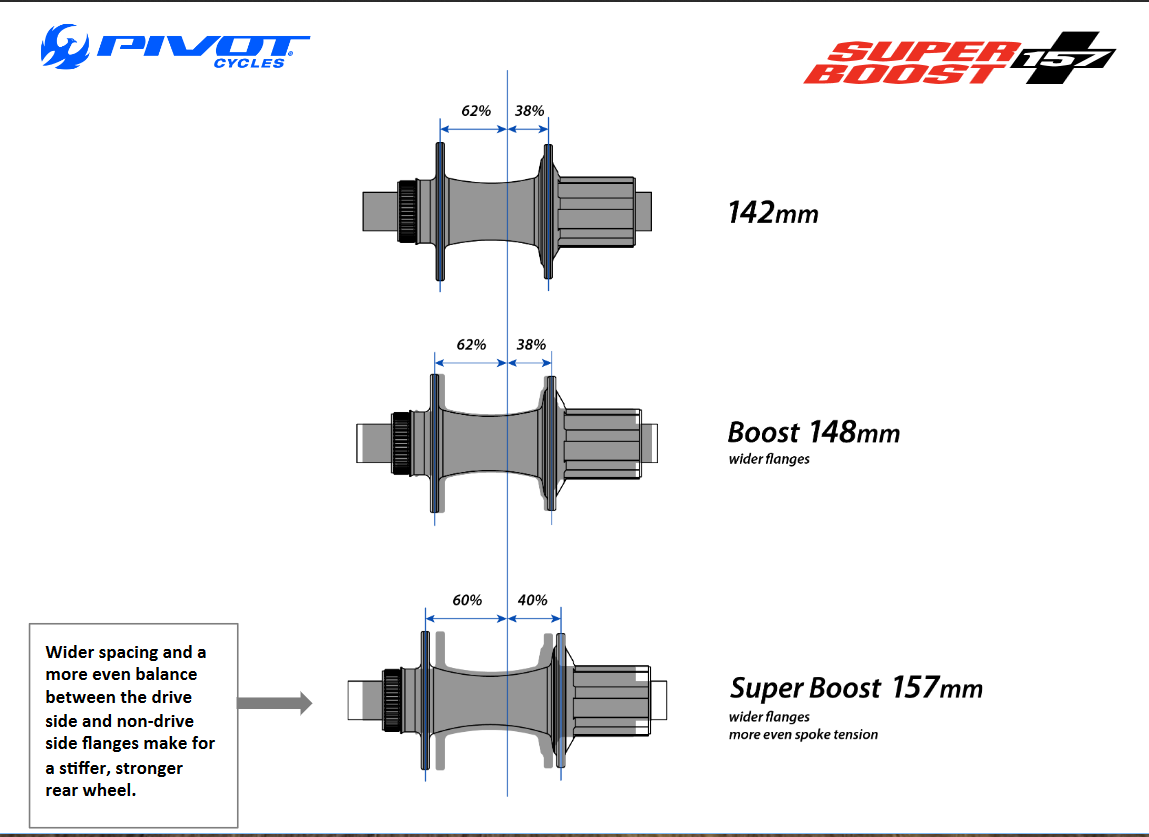
Image courtesy of Pivot Cycles

Wider Spaced Wheels: 

While wide overlock dimension wheels probably came along due to tandems and down hill bikes, it may have not caught on for all MTB's if we were still stuck on 26"ers yet. 

29 inch wheels, with their longer spokes, needed a wider base (hub flnge spacing) to really get the wheels to work well off-road. I recall a set of wheels I was to review that were so laterally unstable that I made it about 100 yards down a trail and turned back to head for the shed. Wider spaced flanges helped 29"er wheels immensely and may not have happened had it not been for their existence. 

650B/27.5 Mountain Bike Wheels:

The "mid-sized" 27.5" wheels we still see being utilized on some mountain bikes may not have ever happened without the existence of 29"ers. It wasn't until after 29"ers were gaining a lot of market share that Kirk Pacenti literally stitched together a set of tires to stretch across a 650B rim and the first 2"+ wide 650B tires were seen for MTB. 

Had it not been for the 29"er this alternative to 29"ers may have been seen as just not enough of a difference from 26"ers to matter. In fact, 650B originally was a 26" diameter wheel size! It took the larger volume mountain bike sized 650B tires to get that 27.5" overall diameter. Of course, a bigger, more voluminous 26" tire would do about the same thing. So, in my "what if world", 650B MTB doesn't happen without 29"ers. 

Drop Bar MTB/Adventure Bikes:

Part of the early 29"er scene was about adopting niche, or one could say "weird" traits seen in MTB from years past. Certainly single speeding was one of those things widely adopted by 29"er freaks in the early days. This was so pervasive that brands often made their first 29"er offering a single speed. 

Another widely adopted niche component by 29"er fans was the flared drop bar. Many were drawn to these bars as a way to make a statement and stand out from the crowd of "same thing/different day" 26" wheeled bikes. 

This became something of a movement and became an influence on Salsa Cycles to introduce a drop bar 29"er "adventure" bike. In 2008, the Fargo, a bike well ahead of its time, debuted in the Fall of that year. This bike and its fans would forecast the emergence of the now commonplace drop bar 29"er adventure/bikepacking rigs. Had 29"ers not happened, would this segment of bicycles exist today? I am thinking that they would have been far less attractive, if they existed at all, as 26"ers.  

Gravel grinding on a drop barred Karate Monkey in 2006

Gravel Bikes:

This might seem like a bit of a stretch. But here I go anyway! My feeling is that had the 29"er not come into existence when it did that gravel bikes, as a category, would have been based upon road bikes a lot more than they were. However; elements of MTB have always been a part of gravel riding. This hasn't been more true than with today's fashion for bigger gravel tires bordering on 29"er sized rubber. 

Originally many gravel riders were using cyclo - cross bikes, drop bar 29"ers, or just any mountain bike they could find, for the lack of any true gravel designs. While a cyclo - cross style was eventually adopted, some features influenced by 29'ers were there right away in the flared drop bars and disc brakes. 

Had 29"ers never been in existence it also calls into question whether or not any tires for gravel bikes would have been done. Manufacturers were into playing it safe, up until the 29"er came along. The big wheels took a bit to catch on, but when they did, it was the hottest trend of the late 2000's in off-road and many brands were caught on the outside looking in. This fueled a sort of consciousness amongst brands and marketers to not miss "The Next Big Thing". When gravel bikes did hit the floors of dealers in 2012, brands started to get geared up to hop on that trend immediately. One of the big hold ups was the lack of "real" gravel tires. This spurred WTB, (Yes - them again!) to come out with the Nano 40, a tire probably chosen to reflect that this gravel trend was much like that of the 29"er. 

While other brands, notably Clement/Donnelly, had a gravel tire, it was WTB that stepped up the production levels and offered a true tubeless tire for gravel first. Their experiences with the Nanoraptor 29 were certainly an influence here. So, while gravel bikes and that whole scene may have happened without 29"ers, it probably would have looked a lot different than it has looked. 

That's a wrap on this series. I hope that you enjoyed that look back at the 25 years since 29"ers were first hitting the single track. Thanks for reading Guitar Ted Productions.

Sunday, July 28, 2024

Comment Section Trolls

 In celebration of the twentieth year of this blog, I have a few tales to tell. This post is one of them. This series will occur off and on throughout this anniversary year, I hope to illuminate some behind-the-scenes stories and highlights from the blog during this time. Enjoy!

Blogs have comment sections. Well, most of them do. This blog has always allowed comments, but that process has changed a few times over the years and with that there are some stories to share.

Originally you could comment and hit "enter" and your comment was there immediately. Anyone could comment at anytime. There weren't "bots", spam comment machines, or the like. But people were, and still can be, troll-ish and mean. The comment section here was proof of this. 

Around late 2006 or sometime during 2007, (sorry! I cannot remember when this was!), I ran into an alarming situation that required me to make a big change to how the comments worked here. It had to do with what was then the new 650B/27.5"er MTB wheels which Kirk Pacenti was championing. I'm not sure which post of mine set off the things that forced me to change the comment section, but it very well may have been THIS POST from late 2007. At any rate, I was alerted to an issue in my comments section via email and when I checked it out, alarms went off in my mind. 

A colorized scan of the OG G-Ted logo drawn in the early 2000's.

There were pages of comments. Derogatory, defaming comments about myself and my take on 650B wheels. Apparently some ill-willed fans of the wheel size hatched a plan on mtbr.com's 650B forums and hit my blog repeatedly all day long with comments. 

This forced me to delete the entire comments section going back to the beginnings of the blog. There was no other way to do the work effectively otherwise. Then I installed a new comments section that required moderation. 

It was kind of a bummer because there were a lot of gems in the comment section back then from a lot of folks who also blogged in the cycling sphere and from folks I miss like Joel Dyke and others from the early Trans Iowa days. But trolls often ruin things and you should never read the comments sections anyway, right?

There was one other time when Google bought out Blogger and I had to flush the old comments out and start all over again with another version of the comments feature. Since then things have stabilized. But what do you expect after almost 20 years of blogging? Things happen. 

It has been really good ever since then as far as the comments go and I appreciate everyone that has taken the opportunity to comment and I have tried to keep things decent and have discussions here that acknowledge other's points of view. I have had a few times where I had to shut down a person because they were just being inflammatory and not adding to the discussion, but that is quite rare here these days.

Thanks for engaging here, if you do use this feature to communicate with me. I truly appreciate that you do comment and especially if you are a regular reader here.

Wednesday, September 28, 2022

650B For Gravel: Dead, Dying, Or Dormant?

Back in 2016 WTB shocked the gravel world with the "Road Plus" idea. It was a 650B sized tire, but not in the traditional 42mm size. This tire was a 47mm width and brought with it more volume than the skinnier 650B tires did for road bikes. 

The first tire they debuted, the Horizon, was a slick tire, but it did okay on gravel. Then the Byway came along, and the Venture, and the Sendero. Meanwhile, other brands jumped onboard. Panaracer, Terrene, IRC, and others all started offering 650B X 47-50mm tires. 

The gravel bicycle manufacturers responded with advertising for swappable wheel sizes. Salsa Cycles Journeyman was sold with either wheel size, as an example. Other brands advertised their versatility in that they could support 650B wheels.

Wheel manufacturers came onboard, of course, and many company's press releases contained new information on wheels including that smaller diameter wheel, the 650B size. But in the last few years, the heat for 650B has seemed to cool off some. I've noted less tire news. I've noted fewer 650B alternative choices in wheel news. I've noted less talk about 650B in new bicycle introductions as well. 

My old T-6 Standard Rando with 650B Terrene tires.
Now, we have to take things in some context here. The past two-plus years we've seen economic weirdness. Supply chain issues still persist, and those issues certainly have affected the more niche categories of cycling than others. So, we can probably point to the pandemic as a reason we are not seeing more 650B news. 

That said, I still find it odd that the marketing talk has cooled way off for 650B. I'm not sure we can read a lot into that just yet, and more time will be needed to really get a handle on what is up with this wheel size. 

However; if I had to make a comment on where I thought 650B was in terms of relevancy to gravel/backroad riding right now, I would say that 650B is definitely waning in popularity. At least on the high-end, and on the OEM side. There are riders committed to the size, I am sure of that, and I don't think that this tire size will go away for gravel, but I also do not think it will be as prominent or an option many times going into the future. 

I do think 650B has a place in cycling. Rando riders like that size. Smaller statured folk need that size. So, I think the 650B wheel has its place, but I also believe that most adult humans should ride the biggest wheel available for their size, and for most of us that is 700c right now. 

650B For Gravel: Dead, Dying, Or Dormant?

Back in 2016 WTB shocked the gravel world with the "Road Plus" idea. It was a 650B sized tire, but not in the traditional 42mm size. This tire was a 47mm width and brought with it more volume than the skinnier 650B tires did for road bikes. 

The first tire they debuted, the Horizon, was a slick tire, but it did okay on gravel. Then the Byway came along, and the Venture, and the Sendero. Meanwhile, other brands jumped onboard. Panaracer, Terrene, IRC, and others all started offering 650B X 47-50mm tires. 

The gravel bicycle manufacturers responded with advertising for swappable wheel sizes. Salsa Cycles Journeyman was sold with either wheel size, as an example. Other brands advertised their versatility in that they could support 650B wheels.

Wheel manufacturers came onboard, of course, and many company's press releases contained new information on wheels including that smaller diameter wheel, the 650B size. But in the last few years, the heat for 650B has seemed to cool off some. I've noted less tire news. I've noted fewer 650B alternative choices in wheel news. I've noted less talk about 650B in new bicycle introductions as well. 

My old T-6 Standard Rando with 650B Terrene tires.
Now, we have to take things in some context here. The past two-plus years we've seen economic weirdness. Supply chain issues still persist, and those issues certainly have affected the more niche categories of cycling than others. So, we can probably point to the pandemic as a reason we are not seeing more 650B news. 

That said, I still find it odd that the marketing talk has cooled way off for 650B. I'm not sure we can read a lot into that just yet, and more time will be needed to really get a handle on what is up with this wheel size. 

However; if I had to make a comment on where I thought 650B was in terms of relevancy to gravel/backroad riding right now, I would say that 650B is definitely waning in popularity. At least on the high-end, and on the OEM side. There are riders committed to the size, I am sure of that, and I don't think that this tire size will go away for gravel, but I also do not think it will be as prominent or an option many times going into the future. 

I do think 650B has a place in cycling. Rando riders like that size. Smaller statured folk need that size. So, I think the 650B wheel has its place, but I also believe that most adult humans should ride the biggest wheel available for their size, and for most of us that is 700c right now. 

Monday, June 14, 2021

650B vs 700c For Gravel

No "Country Views" today- I had a little graduation celebration to attend to.
 Normally I would have a big ride report today, but I had a busy weekend setting up for, attending, and tearing down for my son's graduation celebration for his final High School year. In between doing all those things I did get around to swapping back the Standard Rando v2 to 700c wheels and tires and getting a couple of shorter rides in on it. I wanted to get a feel for the bigger diameter wheel again before giving my assessment on the 650B vs 700c wheel debate for gravel bicycles. 

Also, and obviously if you hang around here for very long, I have been riding other 700c wheeled bicycles on gravel right alongside the Twin Six Standard Rando v2 with 650B wheels for months. So, this post will also draw from all those experiences, plus my past thoughts and experiences with both wheel sizes going back for several years now. So, without further adieu, here are my thoughts on the wheel sizes and why I would choose one over the other. 

So, some of this opinion has been formed over a decade of messing about on 27.5"/650B MTB wheels and tires. I have ridden several bikes with that wheel size on mountains, gravel, single track, and on the road. Of course, at one point a lot of people thought that 650B/27.5, (they are essentially the same thing, so don't get confused), was going to knock 29"er wheels and tires out and take over the MTB world, but as we all know, 27.5"ers have, to a great extent, been relegated to being the size better suited to shorter statured riders off-road. But, as we now know, 29"ers actually gained ground on 27.5"ers over the years, and it is now the established wheel size for many styles of MTB bikes. 

I mention this because as others have formed their own opinions over the years, and market forces naturally selected out which bikes have big wheels and which do not, the findings I have regarding the 650B vs 700c debate for gravel follow roughly the same thoughts as many others have come around to over the years. That said, I have had strongly held opinions about each wheel size for over decade and a half of riding, reading about, and writing about these wheels. So, that's where I am coming from here. 

650B for Gravel: 

The most recent review I wrote for RidingGravel.com was for a set of 650B tires, so I rode those wheels and tires for the better part of three months most recently. I have ridden 650B gravel wheels and tires before that, most often for all those WTB tires that came out, and last year for some IRC tires, so it isn't like I haven't been on 650B for a long time before this. I feel like I have a pretty good handle on what is going on here. 

In my opinion this wheel size does a couple things for you. One- It gives you more cushion, if you choose the right tires. It is close to what you might get out of a heavier, larger wheel with wide tires. That is- if you are comparing similar quality wheels. A heavy, entry level 650B wheel set will just plain suck compared to a decent set of 700c wheels and tires, and vice versa. If all the 700c wheels were heavy and all you could get were nice 650B wheels, then the choice is obvious. Nice wheels (light, strong, stiff laterally) trump all including diameter, to a degree, and especially for this discussion. More on that in relation to my specific situation in a bit....

But the point is, big air volume = better comfort, theoretically. The truth is, 650B kind of gets you there, but there is something missing, which I will bring up in a bit. 

Secondly, those wider tires can aid in getting over rougher, looser gravel and dirt with more stability. You get maybe a bit better flotation too, so a bit better in mud, loose sand, etc. A wider footprint, if you will, and that is something that, if we are talking running 700 X 43 or 650B X 47-50? In the same bike? That's where it makes a difference. But keep in mind, this debate is mostly about the bikes that claim to fit either wheel size, but have clearance limitations, like my Standard Rando here. 

But the big bummer with these wheels, in my opinion, is that they just do not carry momentum like a larger diameter wheel. And maybe you are not at all in 'tune' with that. Then you will not understand my criticism here. But, as a single speeder first, I crave momentum and use it often. 650B looses that momentum faster than a bigger wheel, like 700c X 45mm, let's say. I can feel this every time I ride 650B. These wheels also do not have that roll over effect, the way a big wheel does, so they seem to feel rougher, and things have more of a 'zing' to the hands when you hit them with 650B wheels. So, remember that air volume thing? Some of that gets lost in the trade-off to a smaller diameter wheel. 


700c for Gravel:

So, if you have a bike that takes both wheel sizes, you likely have the option for wider, 650B X 47/48mm tires or something like 700c X 43-45mm. Which do you choose? Well, I already have told you a few things about why I would choose 700c, but what are the downsides? Well, in this specific situation, 700c looses that 'big-volume' tire thing. So, it doesn't float as well, it is not as stable on looser soils and gravel, and you cannot tease out as much comfort with air pressure settings like you can with 650B. That said, in the case of this Standard Rando v2, I am much happier with the bike in 700c mode. 

These wheels just roll over stuff better and they stay rolling with more ease. Oh, yeah....one other thing. This has specifically to do with single speed bikes, but a smaller wheel diameter lowers the gear versus everything else being the same but the wheel size getting slightly larger, as it does with 700c. So, now with the 700c wheels, I have a slightly 'taller' gear, but I'll adapt to that quickly. I could approximate similar gearing range by varying the rear cog by one tooth, but I have the same cogs for both wheel sets. 

And speaking of that, I promised I would get back to the wheels. I wanted to point out that in my comparison here, the 650B wheels you see are the same model as the 700c ones. They are both Irwin Cycles Aon Carbon 35's. The only difference is the diameter. So, this is an apples to apples comparison in this case. 

So, while some of the benefits of 650B are worthwhile to pursue, for general purpose gravel riding I choose 700c. I choose the 650B option when flotation and traction are imperative, as in Wintry conditions, or on really soft, early Spring roads, as a for instance. But most of the time I'm going to run 700c and it works better, in my opinion, than 650b for all-around stuff. Again- this only applies to bicycles like my T-6 Standard Rando which cannot clear big 700c rubber. I mean, I have  put 650B on a Fargo, but for most riding I'd do, a 29"er tire would work better on a bike that can clear a 29"er tire. 


Which brings me to bikes like my Black Mountain Cycles MCD, or an Otso Warakin, or several others of that ilk that can clear up to a 29" X 2.0 tire. In some cases even bigger. Here the need to swap in 650B wheels and tires is even less, in my opinion. Maybe if you are 5'4", that's a different story, but for me at 6'1"? I'm never going to want to swap 650B wheels and tires into the MCD, not when I can run a 700c X 47mm tire like the Teravail Rutlands.

So, to my way of thinking 650B is a good option if it makes sense for a specific bike/situation. But again- for most riding and for many bicycles? I am opting for 700c. That's my take on things.

650B vs 700c For Gravel

No "Country Views" today- I had a little graduation celebration to attend to.
 Normally I would have a big ride report today, but I had a busy weekend setting up for, attending, and tearing down for my son's graduation celebration for his final High School year. In between doing all those things I did get around to swapping back the Standard Rando v2 to 700c wheels and tires and getting a couple of shorter rides in on it. I wanted to get a feel for the bigger diameter wheel again before giving my assessment on the 650B vs 700c wheel debate for gravel bicycles. 

Also, and obviously if you hang around here for very long, I have been riding other 700c wheeled bicycles on gravel right alongside the Twin Six Standard Rando v2 with 650B wheels for months. So, this post will also draw from all those experiences, plus my past thoughts and experiences with both wheel sizes going back for several years now. So, without further adieu, here are my thoughts on the wheel sizes and why I would choose one over the other. 

So, some of this opinion has been formed over a decade of messing about on 27.5"/650B MTB wheels and tires. I have ridden several bikes with that wheel size on mountains, gravel, single track, and on the road. Of course, at one point a lot of people thought that 650B/27.5, (they are essentially the same thing, so don't get confused), was going to knock 29"er wheels and tires out and take over the MTB world, but as we all know, 27.5"ers have, to a great extent, been relegated to being the size better suited to shorter statured riders off-road. But, as we now know, 29"ers actually gained ground on 27.5"ers over the years, and it is now the established wheel size for many styles of MTB bikes. 

I mention this because as others have formed their own opinions over the years, and market forces naturally selected out which bikes have big wheels and which do not, the findings I have regarding the 650B vs 700c debate for gravel follow roughly the same thoughts as many others have come around to over the years. That said, I have had strongly held opinions about each wheel size for over decade and a half of riding, reading about, and writing about these wheels. So, that's where I am coming from here. 

650B for Gravel: 

The most recent review I wrote for RidingGravel.com was for a set of 650B tires, so I rode those wheels and tires for the better part of three months most recently. I have ridden 650B gravel wheels and tires before that, most often for all those WTB tires that came out, and last year for some IRC tires, so it isn't like I haven't been on 650B for a long time before this. I feel like I have a pretty good handle on what is going on here. 

In my opinion this wheel size does a couple things for you. One- It gives you more cushion, if you choose the right tires. It is close to what you might get out of a heavier, larger wheel with wide tires. That is- if you are comparing similar quality wheels. A heavy, entry level 650B wheel set will just plain suck compared to a decent set of 700c wheels and tires, and vice versa. If all the 700c wheels were heavy and all you could get were nice 650B wheels, then the choice is obvious. Nice wheels (light, strong, stiff laterally) trump all including diameter, to a degree, and especially for this discussion. More on that in relation to my specific situation in a bit....

But the point is, big air volume = better comfort, theoretically. The truth is, 650B kind of gets you there, but there is something missing, which I will bring up in a bit. 

Secondly, those wider tires can aid in getting over rougher, looser gravel and dirt with more stability. You get maybe a bit better flotation too, so a bit better in mud, loose sand, etc. A wider footprint, if you will, and that is something that, if we are talking running 700 X 43 or 650B X 47-50? In the same bike? That's where it makes a difference. But keep in mind, this debate is mostly about the bikes that claim to fit either wheel size, but have clearance limitations, like my Standard Rando here. 

But the big bummer with these wheels, in my opinion, is that they just do not carry momentum like a larger diameter wheel. And maybe you are not at all in 'tune' with that. Then you will not understand my criticism here. But, as a single speeder first, I crave momentum and use it often. 650B looses that momentum faster than a bigger wheel, like 700c X 45mm, let's say. I can feel this every time I ride 650B. These wheels also do not have that roll over effect, the way a big wheel does, so they seem to feel rougher, and things have more of a 'zing' to the hands when you hit them with 650B wheels. So, remember that air volume thing? Some of that gets lost in the trade-off to a smaller diameter wheel. 


700c for Gravel:

So, if you have a bike that takes both wheel sizes, you likely have the option for wider, 650B X 47/48mm tires or something like 700c X 43-45mm. Which do you choose? Well, I already have told you a few things about why I would choose 700c, but what are the downsides? Well, in this specific situation, 700c looses that 'big-volume' tire thing. So, it doesn't float as well, it is not as stable on looser soils and gravel, and you cannot tease out as much comfort with air pressure settings like you can with 650B. That said, in the case of this Standard Rando v2, I am much happier with the bike in 700c mode. 

These wheels just roll over stuff better and they stay rolling with more ease. Oh, yeah....one other thing. This has specifically to do with single speed bikes, but a smaller wheel diameter lowers the gear versus everything else being the same but the wheel size getting slightly larger, as it does with 700c. So, now with the 700c wheels, I have a slightly 'taller' gear, but I'll adapt to that quickly. I could approximate similar gearing range by varying the rear cog by one tooth, but I have the same cogs for both wheel sets. 

And speaking of that, I promised I would get back to the wheels. I wanted to point out that in my comparison here, the 650B wheels you see are the same model as the 700c ones. They are both Irwin Cycles Aon Carbon 35's. The only difference is the diameter. So, this is an apples to apples comparison in this case. 

So, while some of the benefits of 650B are worthwhile to pursue, for general purpose gravel riding I choose 700c. I choose the 650B option when flotation and traction are imperative, as in Wintry conditions, or on really soft, early Spring roads, as a for instance. But most of the time I'm going to run 700c and it works better, in my opinion, than 650b for all-around stuff. Again- this only applies to bicycles like my T-6 Standard Rando which cannot clear big 700c rubber. I mean, I have  put 650B on a Fargo, but for most riding I'd do, a 29"er tire would work better on a bike that can clear a 29"er tire. 


Which brings me to bikes like my Black Mountain Cycles MCD, or an Otso Warakin, or several others of that ilk that can clear up to a 29" X 2.0 tire. In some cases even bigger. Here the need to swap in 650B wheels and tires is even less, in my opinion. Maybe if you are 5'4", that's a different story, but for me at 6'1"? I'm never going to want to swap 650B wheels and tires into the MCD, not when I can run a 700c X 47mm tire like the Teravail Rutlands.

So, to my way of thinking 650B is a good option if it makes sense for a specific bike/situation. But again- for most riding and for many bicycles? I am opting for 700c. That's my take on things.

Monday, April 12, 2021

In Case You Forgot- It's Still Spring!

Got those 650B tires set up over the weekend.
 Remember when I was telling you it was too dry and that I had been riding in shirt-sleeves, and that it was in the 70's? Well, about that....... nature has a way of balancing out, and well, it is still Spring! We got the memo this past week.

Cold winds, rain, and grey skies dominated the latter part of the week and over the weekend? pssssshaawww...

Let's just say that if this had been a Trans Iowa weekend it would have been a classic weekend of weather for it. I wasn't going to go out and battle 25-30mph winds in air that was often so wet that it seemed like we were in a mist-machine of some evil Summer hating villain. Besides, I was going to err on the side of caution in terms of health.

You see, in case you missed the mention last week, I got my second shot of the Pfizer vaccine last week and the side effects were being felt all the way into the weekend to a degree. I just wasn't quite 100%, and the weather we had demands that you be 100%. Because that kind of weather will drag you down, in terms of health, and if you are already weakened? Not good.....So, I played it safe and just decided to set up the tires and risk a bit of a test loop around town here to make sure the 650B's were settled in correctly.  

Since I am on a single speed with these tires, you notice the diameter difference between 650B and 700c a bit more acutely. Using smaller diameter wheels lowers you gear ratio a tad bit. I was definitely feeling that on the test ride. But it isn't terrible. I could maybe get back to where I want to be with 700c by dropping a tooth in the rear, but I'll leave it for now. I've got plans......

More on the wheels and tires soon.

In Case You Forgot- It's Still Spring!

Got those 650B tires set up over the weekend.
 Remember when I was telling you it was too dry and that I had been riding in shirt-sleeves, and that it was in the 70's? Well, about that....... nature has a way of balancing out, and well, it is still Spring! We got the memo this past week.

Cold winds, rain, and grey skies dominated the latter part of the week and over the weekend? pssssshaawww...

Let's just say that if this had been a Trans Iowa weekend it would have been a classic weekend of weather for it. I wasn't going to go out and battle 25-30mph winds in air that was often so wet that it seemed like we were in a mist-machine of some evil Summer hating villain. Besides, I was going to err on the side of caution in terms of health.

You see, in case you missed the mention last week, I got my second shot of the Pfizer vaccine last week and the side effects were being felt all the way into the weekend to a degree. I just wasn't quite 100%, and the weather we had demands that you be 100%. Because that kind of weather will drag you down, in terms of health, and if you are already weakened? Not good.....So, I played it safe and just decided to set up the tires and risk a bit of a test loop around town here to make sure the 650B's were settled in correctly.  

Since I am on a single speed with these tires, you notice the diameter difference between 650B and 700c a bit more acutely. Using smaller diameter wheels lowers you gear ratio a tad bit. I was definitely feeling that on the test ride. But it isn't terrible. I could maybe get back to where I want to be with 700c by dropping a tooth in the rear, but I'll leave it for now. I've got plans......

More on the wheels and tires soon.

Wednesday, September 02, 2020

When 26 Is Like 27

Kona Bikes Dew Plus
WARNING: Intense bike nerding out to follow. Please move on if the consideration of the minutiae of bike tire and wheel technology finds you falling asleep!

 I had a chance to build up a Kona Dew Plus yesterday at Andy''s Bike Shop and it got me to thinking. "Twenty Six is like Twenty Seven". If you know your wheel size history, you'll understand. No- this is not my goofy understanding of math coming to the fore. But yeah....I can see where you might think that. My math skills are not what you might call 'very good'. 

Anyway..... Years ago there were tons of bicycles sold at retail which had the 630ISO bead diameter. These were commonly known as "27 inch tires". They are slightly bigger in diameter than 700c, which is the modern road bike derived size that also supports 29'er MTB and most all gravel tires. So, what happened to twenty seven inch tires and wheels? 

Well, they were phased out in the 1980's when Mavic and some other racing oriented companies moved to the ISO622 diameter sized wheel, or otherwise known as 700c (French designation). These tires and wheels were slightly smaller in diameter, but more importantly, they were lighter. Most manufacturers copied this for their designs on road racing style and lightweight bikes going forward. 27"/630ISO became a 'dead' wheel size, but of course, there are a million of these bikes out there yet, so tires are still available, albeit in limited options. Since 27"/630ISO is now relegated to having no new development, the 'replacement' tires and wheels tend to be- but not always- very low quality items. This has been the norm since I started in the bicycle business in the early 1990's. 

Compare this to what has happened to 26"/559ISO diameter tires and wheels. Once the darling of every high end mountain bike line, with scads of high end wheel and tire offerings, this wheel size has shrunk down to resemble the standing of 27"/630ISO in a very short period of time. It's really one of the startling, untold stories of the bicycling world. 

Think back ten years ago. In 2010 26" wheels were in a heated race for market supremacy with- ironically - a 622ISO based wheel, once again, fitted with 2"+ sized rubber, dubbed "29"ers".  At the time many said there was no way that 26" MTB would ever fade away. 29"ers were just too big and cumbersome for many things off-road riders wanted to do. Meanwhile, in 2007, Kirk Pacenti hacked a tire down to 27.5" size, claiming this 'new' MTB wheel/tire combo, presented as half the good stuff of 26" mixed with the other half of the good stuff from 29", was now going to be the "Next Big Thing". 

Of course, three tire sizes for off road was ridiculous. One of them, or two of them, had to go. Without beating the story to death, we all know which bird got pushed out of the nest. It was 26"ers that were doomed to the dust heap of forgotten tire and wheel sizes. 

I'd say that without fat bikes, anything 559ISO would pretty much be replacement type fare, just as with 27'/630ISO stuff. The 27.5" thing became a MTB size, which you all know now, but it isn't really 'new'. It is a derivative of an old French utilitarian/tandem/commuter wheel known as 650B in the French and 584ISO by the bike industry. In fact, it is a variant on 26" diameter wheels in reality. However; that has been pretty much lost to the depths of time now. 

What matters now is that, for all intents and purposes, adult, lightweight, sporting bikes are either 650B/584ISO or 700c/622ISO and the old 26" MTB and 27" road sizes are dinosaurs of our past. I think it is a fascinating turn of events, and the Kona Dew Plus was a sharp reminder of what has happened in a very short period of time.

When 26 Is Like 27

Kona Bikes Dew Plus
WARNING: Intense bike nerding out to follow. Please move on if the consideration of the minutiae of bike tire and wheel technology finds you falling asleep!

 I had a chance to build up a Kona Dew Plus yesterday at Andy''s Bike Shop and it got me to thinking. "Twenty Six is like Twenty Seven". If you know your wheel size history, you'll understand. No- this is not my goofy understanding of math coming to the fore. But yeah....I can see where you might think that. My math skills are not what you might call 'very good'. 

Anyway..... Years ago there were tons of bicycles sold at retail which had the 630ISO bead diameter. These were commonly known as "27 inch tires". They are slightly bigger in diameter than 700c, which is the modern road bike derived size that also supports 29'er MTB and most all gravel tires. So, what happened to twenty seven inch tires and wheels? 

Well, they were phased out in the 1980's when Mavic and some other racing oriented companies moved to the ISO622 diameter sized wheel, or otherwise known as 700c (French designation). These tires and wheels were slightly smaller in diameter, but more importantly, they were lighter. Most manufacturers copied this for their designs on road racing style and lightweight bikes going forward. 27"/630ISO became a 'dead' wheel size, but of course, there are a million of these bikes out there yet, so tires are still available, albeit in limited options. Since 27"/630ISO is now relegated to having no new development, the 'replacement' tires and wheels tend to be- but not always- very low quality items. This has been the norm since I started in the bicycle business in the early 1990's. 

Compare this to what has happened to 26"/559ISO diameter tires and wheels. Once the darling of every high end mountain bike line, with scads of high end wheel and tire offerings, this wheel size has shrunk down to resemble the standing of 27"/630ISO in a very short period of time. It's really one of the startling, untold stories of the bicycling world. 

Think back ten years ago. In 2010 26" wheels were in a heated race for market supremacy with- ironically - a 622ISO based wheel, once again, fitted with 2"+ sized rubber, dubbed "29"ers".  At the time many said there was no way that 26" MTB would ever fade away. 29"ers were just too big and cumbersome for many things off-road riders wanted to do. Meanwhile, in 2007, Kirk Pacenti hacked a tire down to 27.5" size, claiming this 'new' MTB wheel/tire combo, presented as half the good stuff of 26" mixed with the other half of the good stuff from 29", was now going to be the "Next Big Thing". 

Of course, three tire sizes for off road was ridiculous. One of them, or two of them, had to go. Without beating the story to death, we all know which bird got pushed out of the nest. It was 26"ers that were doomed to the dust heap of forgotten tire and wheel sizes. 

I'd say that without fat bikes, anything 559ISO would pretty much be replacement type fare, just as with 27'/630ISO stuff. The 27.5" thing became a MTB size, which you all know now, but it isn't really 'new'. It is a derivative of an old French utilitarian/tandem/commuter wheel known as 650B in the French and 584ISO by the bike industry. In fact, it is a variant on 26" diameter wheels in reality. However; that has been pretty much lost to the depths of time now. 

What matters now is that, for all intents and purposes, adult, lightweight, sporting bikes are either 650B/584ISO or 700c/622ISO and the old 26" MTB and 27" road sizes are dinosaurs of our past. I think it is a fascinating turn of events, and the Kona Dew Plus was a sharp reminder of what has happened in a very short period of time.

Thursday, February 20, 2020

Deep Dive; Down The Rabbit Hole Of Tire Nomenclature

In the late 19th Century, it was all about diameter.
Okay! Today you had better be prepared to get your "nerd' on, because we're taking a deep dive into why tires have the designations that they do. Some of what I am going to share is knowledge I picked up along my journey as a bicycle mechanic. But I am going to credit a few folks right up front here. Thank you to Wes Williams, Clayton Wangbichler of WTB, and the inimitable Sheldon Brown (RIP) and his website.

I'm going to breeze through a LOT of technicalities here and focus only on a few salient points, so please bear this in mind. 

Wheels. That was what it all was about back in the late 19th Century. Wheels determined how fast or slow you could go, and this was figured out based upon a formula which required the measurement of the overall diameter of said wheel. Keep in mind that "tires' were nothing more than a steel strip over wood, or maybe a wired on rubber tube later on.  Pneumatic tires came around right around the turn of the century, but this wouldn't get sorted out until the 20th Century as tires you and I might recognize today. The point is, tires added little, if anything, to overall diameter.

Along with this tire/wheel thing, we had other factors which eventually lead to the "Safety Bike". Now wheels were not driven "directly", but by means of a crankset, chain, rear cog, and the rear wheel. This complicated things for the early wheelman, as it made figuring out your wheel development, or how far your wheel traveled with one revolution, much more of a chore. However; rear wheel diameter was still important to know so one could figure this out. Pnuematic tires also complicated things because they added to the overall wheel diameter. Now throw in bigger, or smaller volume of tires. Generally speaking, wider tires are going to add more diameter to a fixed diameter of wheel/rim. This radically changed gear development, so something had to be done to tame this cacophony of innovation and confusing tire/wheel sizes. This didn't happen for several years, thanks to two World Wars, innovations in automobiles and airplanes, and the ups and downs of economies. But eventually, it happened.

We pretty much have the French to thank for our predicament today. They helped develop a system of codification for wheels. Because the bicycle wheel was a worldwide phenomenon, we ended up with a mixed bag of Imperial and Metric measures for wheels. This really makes things hard, but we will stick to the metric side of things here.

The French made some wheels standardized around the 650mm diameter, but keep in mind, that's overall diameter. They way it was supposed to work was that if you had a skinny, low volume tire, you'd need a larger diameter rim to make the tire/rim combination equal 650mm. This was designated as 650A. Medium sized tires, with larger volume, required a smaller diameter rim, and thus the 650B designation. The largest volume tires went on even smaller rims, and these were designated 650C.

650B really doesn't tell us what size tires we are looking at anymore like it used to.
Copy and paste for 700 sized wheels. They were supposed to be 700mm overall diameter and rims varied in diameter depending upon tire volume. You now know that the "c" in 700c meant- originally- that a pretty good sized tire was supposed to be on there. But none of this applies in 2020. Obviously. That "c" in 700c is pretty much meaningless. You know this because a 29"er tire and a 700 X 44mm tire can both go on the same rim, but both result in vastly different diameters.

And of course, figuring out wheel/gear development is an arcane practice which few engage in anymore anyway. We keep saying "700c" because we need to call it something and traditions die hard. But now you know a little bit of that story. Now I want to address another letter "c".

That being the "c" people sometimes drop behind the millimeter measurement of a tire's width. Example: 700 X 44c. What is that? If we are measuring in millimeters, is the "c" for centimeters? Obviously that cannot be the case, although a 44cm wide tire would be rad on snow! No, here's what the deal is, as I have come to find out. Thanks to WTB's Clayton Wangbichler for the following.

Rims weren't always how we know them today. There were hookless rims, (Schwinn was famous for these), and there were a type of hooked bead rim called "crochet style". The "c" behind the tire designation for width would often have an upper case "C" to designate that the tire was designed for the crochet style rim bead. So, "44C" would be an example of how many companies would have designated such a thing. Eventually this important designation became meaningless as all rims became more or less standardized, and the "C" became "c", because.........tradition and marketing. It doesn't tell us anything.

In fact, Clayton from WTB told me that WTB has dropped the "c" on 700 and the "c" or "mm" from the width too. (Note the image above) So, there ya go. I've always wondered what the heck the 'c" was for on the width measurement, and now I know it doesn't really mean anything. It's just a mannerism, a vestige of days gone by. Not that you or anyone else should follow suit with WTB and stop using that, but, as Clayton told me, "We've all offended", and I think what he means is that we all were just doing what we had been seeing and not really asking "why?'. I think, given the history, it maybe will bring about a clearer way for talking about tires in the future. Not that we've gotten away from some other confusing bits. Like mixing metric and Imperial measurements!

For a bit of a visual presentation on the "A", "B", "C" French thing, here is a link to a GCN video which does a great job of explaining it.  https://youtu.be/xlyuWSrbGyk?t=786

Once again, a big thanks to all of you folks for reading.

Deep Dive; Down The Rabbit Hole Of Tire Nomenclature

In the late 19th Century, it was all about diameter.
Okay! Today you had better be prepared to get your "nerd' on, because we're taking a deep dive into why tires have the designations that they do. Some of what I am going to share is knowledge I picked up along my journey as a bicycle mechanic. But I am going to credit a few folks right up front here. Thank you to Wes Williams, Clayton Wangbichler of WTB, and the inimitable Sheldon Brown (RIP) and his website.

I'm going to breeze through a LOT of technicalities here and focus only on a few salient points, so please bear this in mind. 

Wheels. That was what it all was about back in the late 19th Century. Wheels determined how fast or slow you could go, and this was figured out based upon a formula which required the measurement of the overall diameter of said wheel. Keep in mind that "tires' were nothing more than a steel strip over wood, or maybe a wired on rubber tube later on.  Pneumatic tires came around right around the turn of the century, but this wouldn't get sorted out until the 20th Century as tires you and I might recognize today. The point is, tires added little, if anything, to overall diameter.

Along with this tire/wheel thing, we had other factors which eventually lead to the "Safety Bike". Now wheels were not driven "directly", but by means of a crankset, chain, rear cog, and the rear wheel. This complicated things for the early wheelman, as it made figuring out your wheel development, or how far your wheel traveled with one revolution, much more of a chore. However; rear wheel diameter was still important to know so one could figure this out. Pnuematic tires also complicated things because they added to the overall wheel diameter. Now throw in bigger, or smaller volume of tires. Generally speaking, wider tires are going to add more diameter to a fixed diameter of wheel/rim. This radically changed gear development, so something had to be done to tame this cacophony of innovation and confusing tire/wheel sizes. This didn't happen for several years, thanks to two World Wars, innovations in automobiles and airplanes, and the ups and downs of economies. But eventually, it happened.

We pretty much have the French to thank for our predicament today. They helped develop a system of codification for wheels. Because the bicycle wheel was a worldwide phenomenon, we ended up with a mixed bag of Imperial and Metric measures for wheels. This really makes things hard, but we will stick to the metric side of things here.

The French made some wheels standardized around the 650mm diameter, but keep in mind, that's overall diameter. They way it was supposed to work was that if you had a skinny, low volume tire, you'd need a larger diameter rim to make the tire/rim combination equal 650mm. This was designated as 650A. Medium sized tires, with larger volume, required a smaller diameter rim, and thus the 650B designation. The largest volume tires went on even smaller rims, and these were designated 650C.

650B really doesn't tell us what size tires we are looking at anymore like it used to.
Copy and paste for 700 sized wheels. They were supposed to be 700mm overall diameter and rims varied in diameter depending upon tire volume. You now know that the "c" in 700c meant- originally- that a pretty good sized tire was supposed to be on there. But none of this applies in 2020. Obviously. That "c" in 700c is pretty much meaningless. You know this because a 29"er tire and a 700 X 44mm tire can both go on the same rim, but both result in vastly different diameters.

And of course, figuring out wheel/gear development is an arcane practice which few engage in anymore anyway. We keep saying "700c" because we need to call it something and traditions die hard. But now you know a little bit of that story. Now I want to address another letter "c".

That being the "c" people sometimes drop behind the millimeter measurement of a tire's width. Example: 700 X 44c. What is that? If we are measuring in millimeters, is the "c" for centimeters? Obviously that cannot be the case, although a 44cm wide tire would be rad on snow! No, here's what the deal is, as I have come to find out. Thanks to WTB's Clayton Wangbichler for the following.

Rims weren't always how we know them today. There were hookless rims, (Schwinn was famous for these), and there were a type of hooked bead rim called "crochet style". The "c" behind the tire designation for width would often have an upper case "C" to designate that the tire was designed for the crochet style rim bead. So, "44C" would be an example of how many companies would have designated such a thing. Eventually this important designation became meaningless as all rims became more or less standardized, and the "C" became "c", because.........tradition and marketing. It doesn't tell us anything.

In fact, Clayton from WTB told me that WTB has dropped the "c" on 700 and the "c" or "mm" from the width too. (Note the image above) So, there ya go. I've always wondered what the heck the 'c" was for on the width measurement, and now I know it doesn't really mean anything. It's just a mannerism, a vestige of days gone by. Not that you or anyone else should follow suit with WTB and stop using that, but, as Clayton told me, "We've all offended", and I think what he means is that we all were just doing what we had been seeing and not really asking "why?'. I think, given the history, it maybe will bring about a clearer way for talking about tires in the future. Not that we've gotten away from some other confusing bits. Like mixing metric and Imperial measurements!

For a bit of a visual presentation on the "A", "B", "C" French thing, here is a link to a GCN video which does a great job of explaining it.  https://youtu.be/xlyuWSrbGyk?t=786

Once again, a big thanks to all of you folks for reading.

Wednesday, August 28, 2019

2 650B Or Not 2 650B: That Is The Question

Last March I thought 650B tires were the bomb on this ride.
The 650B tire/wheel size seems like a bit of an odd man out in the gravel world. I see that size sometimes, but not a lot. I'm not really sure why that is either. I have a guess or two, but I don't know enough to say for sure.

I do know that I vacillate back and forth between thinking these wheels are great, and then back to not even caring if I ever rode another 650B wheel again in my life. Generally speaking, for my tastes, diameter is "king" and unless a smaller wheel is exceptional at something, I don't get too excited. That said, there have been more than a few times I thought the wheel size was rad.

I think there are a few things I need to see out of a 650B wheel before I get too excited. First of all, don't even come around here with a 650B wheel with a tire narrower than the Road Plus standard, which is 47mm. In fact, I am beginning to feel that is too small. Poofy tires, if they must exist, must be exactly that- big, voluminous, and worth their weight. Using a 42mm tire in a 650B format seems......backward, especially when most gravel bikes worth their salt can fit a 43mm tire with ease in a 700c diameter. Remember- diameter is king, and if you are going to go smaller, then you need to make up for that smaller diameter with air volume. Otherwise, why bother? 

For example, when Surly came out with the Extraterrestrial tire in 26" diameter, they did not offer it in a 26" X 2.1....noooo. They went right out to 2.5" and good for them. If you ever ride one, you'll get it. They are awesome at about 20psi tubeless. Almost makes me want to run 26"ers again it does!

Smaller diameter, but super volume and super smooth ride. Make it worthwhile if you drop down a size in diameter and go wide, or go home. I'm not at all interested in 650B X (anything less than) 47mm. Nope. Give me a big, voluminous 650B, and maybe I'll fall in love with that. So then, why not just go wide and keep it 700c? Yes indeed- why not? 

700 X 50? Why yes. Don't mind if I do.
 The trouble is that then you end up with a bike that almost cannot be anything but a Fargo or clone thereof. I was online the other night perusing Kona's line up for 2020 at the suggestion of a reader here. They make the Sutra model which sports 700c X 50mm tires, but it isn't a whole lot different than a Fargo and has limitations which a Fargo does not have regarding the drive train and tire clearances. (Or you could see that the other way around too.) The 700c X 45+ size tires start to get into a territory that road based drive trains were never meant to live in. That and the emasculation of MTB gearing choices down to a single chain ring has really pinched the rider that understands wide range gearing that promotes a straight chain line. Your choices are more limited than ever on the mountain biking side of things.

So, 650B to the rescue. I guess. There you can get that wider tire stuffed into a frame and still get away with a road based, wide range drive train. You lose that diameter component, but the choices are greater when looking at gearing and all. I'll be checking out some more tire choices and running 650B sizes in the future, and I'll probably still be going back and forth about it.

Stay tuned....

2 650B Or Not 2 650B: That Is The Question

Last March I thought 650B tires were the bomb on this ride.
The 650B tire/wheel size seems like a bit of an odd man out in the gravel world. I see that size sometimes, but not a lot. I'm not really sure why that is either. I have a guess or two, but I don't know enough to say for sure.

I do know that I vacillate back and forth between thinking these wheels are great, and then back to not even caring if I ever rode another 650B wheel again in my life. Generally speaking, for my tastes, diameter is "king" and unless a smaller wheel is exceptional at something, I don't get too excited. That said, there have been more than a few times I thought the wheel size was rad.

I think there are a few things I need to see out of a 650B wheel before I get too excited. First of all, don't even come around here with a 650B wheel with a tire narrower than the Road Plus standard, which is 47mm. In fact, I am beginning to feel that is too small. Poofy tires, if they must exist, must be exactly that- big, voluminous, and worth their weight. Using a 42mm tire in a 650B format seems......backward, especially when most gravel bikes worth their salt can fit a 43mm tire with ease in a 700c diameter. Remember- diameter is king, and if you are going to go smaller, then you need to make up for that smaller diameter with air volume. Otherwise, why bother? 

For example, when Surly came out with the Extraterrestrial tire in 26" diameter, they did not offer it in a 26" X 2.1....noooo. They went right out to 2.5" and good for them. If you ever ride one, you'll get it. They are awesome at about 20psi tubeless. Almost makes me want to run 26"ers again it does!

Smaller diameter, but super volume and super smooth ride. Make it worthwhile if you drop down a size in diameter and go wide, or go home. I'm not at all interested in 650B X (anything less than) 47mm. Nope. Give me a big, voluminous 650B, and maybe I'll fall in love with that. So then, why not just go wide and keep it 700c? Yes indeed- why not? 

700 X 50? Why yes. Don't mind if I do.
 The trouble is that then you end up with a bike that almost cannot be anything but a Fargo or clone thereof. I was online the other night perusing Kona's line up for 2020 at the suggestion of a reader here. They make the Sutra model which sports 700c X 50mm tires, but it isn't a whole lot different than a Fargo and has limitations which a Fargo does not have regarding the drive train and tire clearances. (Or you could see that the other way around too.) The 700c X 45+ size tires start to get into a territory that road based drive trains were never meant to live in. That and the emasculation of MTB gearing choices down to a single chain ring has really pinched the rider that understands wide range gearing that promotes a straight chain line. Your choices are more limited than ever on the mountain biking side of things.

So, 650B to the rescue. I guess. There you can get that wider tire stuffed into a frame and still get away with a road based, wide range drive train. You lose that diameter component, but the choices are greater when looking at gearing and all. I'll be checking out some more tire choices and running 650B sizes in the future, and I'll probably still be going back and forth about it.

Stay tuned....

Friday, April 26, 2019

Friday News And Views

PBO spokes on the Spinergy GX wheels are.......different.
Non-Metallic Wonders:

Many times we assume certain things are always going to be a certain way. The Sun is coming up tomorrow, you will pay taxes, and some day you will die. Pretty sure bets. But sometimes we think things are going to always be a certain way......until they aren't. 

Such were my thoughts about spokes early into my mechanic career. Steel is what spokes are made of. Why wouldn't they be? They are about perfect for the job at hand, and if things are designed and assembled correctly, they can last the lifetime of a bicycle. Then someone made spokes out of titanium. Hmm.......that wasn't as good. Then someone made spokes out of carbon fiber. Yeah...... Not so much. Then someone made spokes out of aluminum, and you know what? That works, but they are odd and not common. Then I saw PBO spokes in the late 90's. What the what? Yep- fiber based spokes. Okay, well Tioga did that tension disc thingie, maybe there is something to this too.....

So, anyway, I have these wheels from Spinergy with the PBO spokes to review for RidingGravel.com and I have to say that yes- there is something to this. But anytime you are going up against a widely accepted and proven technology, the question that begs to be asked is "why go a different direction?" It's a fair question to ask about the PBO spokes too. I will have to ride these quite a bit more to answer that question, but to my mind it's going to take a pretty substantial benefit to beat steel spokes. We'll see.......

Colored treads......again.
Panaracer Does Colored Treads And New Sealant:

I remember colored rubber tires when I was a kid. Then that disappeared and came back again in the late 70's/early 80's with BMX. Then it kind of went away again until the 1990's when colors popped up on Michelin MTB tires, some other barnds too, and then it went away again. Urban fixie riding had a dalliance with colored tires. Schwalbe kind of dabbled in it for a while. Then nothing again....Until now.....

Panaracer has revived colored rubber tires in its Gravel King series, (what else would it be!) and they just announced three more limited edition tires. I maybe can see myself riding the Ivory colored tires, but the other two colors are.....not for me. I actually really like Gravel King SK's and recommend them often to those who ask me. But the colored ones, not so much. That said, there is a Gravel King SK tire I have my eyes on, but it isn't a skinny one!

Panaracer sealant, yada,yada,yada....Look at the tire!
In an image sent to me in a press release about Panaracer's new sealant with Walnut shell chunks in it, (really!), I saw a tire I am interested in. The 700 X 50mm Gravel King SK skin wall tire. Yes! I like that idea a lot.

See, it is about time to switch up tires on the old Fargo, and I've been wanting something 50-ish wide and the Gravel King SK 700 X 50mm tire seems about right for the job. That it could be skin wall is even better. Maybe I might even try that new fangled walnut shell infused sealant of Panaracer's as well. We'll see, because I make my own sealant which has never been a problem for me, and there are other killer sealants on the market also. (I recommend Orange Seal and the Muc Off sealant) So, Panaracer has some high hurdles in the sealant game to leap over before I would be impressed. But they do make a good tire, and the Gravel King is about as good as there is for gravel travel out there. So, this 50mm one has my eye. Stay tuned.....

The press release said something about a more puncture resistant Gravel King and that 650B sizes were available. I could see a 650B X 50mm tire on a couple of my rigs at times. I'll have to look into that as well. I know Donnelly does a 650B X 50mm MSO, but it is black wall. I know........picky, picky, picky! 

Saturday snow in late April? Yep.
 Just When You Thought Winter Was Gone:

Well, that's a slap in the face! Last weekend it got up into the high 80's both days. Sure, it was windy as all get out, but it was so warm. Not at all humid either. Just glorious. Now a week later, the bill comes due.

 That bill is in the form of much colder weather, snow in some places, and rain everywhere else. Temperatures for highs Saturday will hover around the 40's in most places in the state. 50's if you are lucky. Then Saturday night/Sunday morning it is going to freeze. Like really freeze!

But I gotta be honest, this freeze is not at all unusual. I think for at least the last few Trans Iowas, and I know many of them, it has been under 32° at some point during the night Saturday or early Sunday morning. So, a sub-freezing night at this time of year is nothing new. But snow is odd, and rainy weather plus sub-freezing temperatures makes for a bone chilling weather pattern. Break out the thermal tights! (Where did I put those again?)

That is a wrap for this week. Hope that you get out and ride some. I'm going to try to get out at some point.