Showing posts with label carbon rims. Show all posts

Saturday, April 16, 2022

Thoughts On Wheel Vibration Damping

Berd spokes: Do they actually make the wheel more comfortable?
 Over this past week I got a question in the comments section regarding wheel vibration damping and if that was really a thing, or just a bunch of speculative, traditional, accepted bicycle lore that, in reality, doesn't exist. 

I do not claim to be a scientist, but I have read a lot of reports, listened to a lot of wise wheel people, and I have built hundreds of bicycle wheels. I have tested some of the most exotic combinations of materials for spokes and I have ridden some really bad designs. 

So, with my experience, learned over 30 years of being a mechanic, and with my lifetime of riding bicycles over 50 years now, I offer these thoughts and opinions on the subject. I'm not trying to sell you anything, and I am not trying to sell anyone else's stuff here. The following text is just my opinions on this subject, plain and simple. 

First of all, the dynamics of how a wheel system works might surprise you. I know when I learned what was actually going on with a rider on a bicycle when it comes to how a wheel works, I was a bit surprised. I'm not going to delve into all of that here, but I strongly recommend that you check out the subject. You could do worse than start here and in that short video you will see that there is a LOT of nerding out one can do on the subject of wheels. 

I'm sticking to wheel vibration damping characteristics and whether or not those are real or imagined. First off, what is 'damping' in terms of vibrations? (Hint- click the link) Essentially, in terms of what I am thinking about practically, I need to erase those pesky vibrations from crushed rock roads from buzzing my hands, feet, and rear end so I don't get fatigued as quickly, or go numb because my body is absorbing- or damping- that energy. 

The first line of defense: Your tires make the biggest difference of all in ride quality.
Obviously, we cannot discuss how a wheel damps vibrations, or even if it can, without discussing tires, because, well, no one should be riding on bare rims. We all are using tires. So that has to be included here. This is your first, and most effective part of the wheel system when it comes to damping vibrations. Tire air pressure is also critical. 

And again- I can write about that all day. But you must understand that how tires can work for you is WAY more important here than how the rest of the wheel will affect the ride. What a wheel might be able to add to the ride feel, vibration damping, and overall joy of your experience is minimized by how you choose a tire and how you choose to run it. (air pressure, tubed, tubeless) 

What is left over in terms of wheel ride feel is what vibrations are coming through the wheel system and then getting transferred into the fork/frame. Different materials will attenuate those frequencies, but they will not eliminate them. For instance, lower amplitude vibrations often are going to affect you as a rider no matter what you do, save running suspension components. But the good news is that those types of vibrations are not really the ones that knock you out so much as the high frequency ones do, which in my experience can be mostly attenuated out of the ride feel on a bicycle.(And not necessarily by using a wheel solution, by the way.)

The FLO Cycling wheels appeared too stiff- but were exactly the opposite of stiff.

So, to get rid of that energy we call vibration you need to dissipate it or absorb it. Dissipation of energy typically is a situation where something turns that energy into heat. Something typically has to move. Spokes don't typically 'move' per se', not in the traditional sense. They tension and lose tension, and they vibrate, at least steel spokes do. They are great at transferring vibration, and not so great at dissipating energy. Rims are not usually an ideal place to have vertical deflection, because - in a traditional rim design, that loads and unloads spokes even more which can lead to premature failures. Ideally, we don't want any rim deflection in a traditional wheel build, although- obviously- there is some. (See video linked in 4th paragraph)  

So, your carbon rim with typical steel spokes is not going to have a lot of vibration damping effect because it is designed to be stiff as all get-out. Especially so if it has low spoke count design. So where can we see a rim/spoke/hub set up that does have this vibration-eating quality? Box section rims? Interestingly, a study done on those wheels traditionally thought to be cobblestone dominating wheels, found them to be stiffer than modern wheels over cobbles! So, maybe that old saw that box section rims had some magical 'give' to them is just an old racers tale. 

Okay, so what could work? Well, a rim that actually deformed and damped vibrations without affecting the spokes. Or, spokes that actually stretched and compressed. Are there such things? Yes, there are. 

I tested a set of wheels from FLO Cycling with an aero profile, and while that is a whole 'nuther subject as well, the main benefit, in my opinion, was how the cross section of the rim worked. These were deep section wheels with the spokes attached at the innermost diameter of the rim, (think- at the pointy end towards the hub), and the deep section was kind of a bulged out, triangular shape in profile up to the wide rim bed. This "bulged out" section made a hollow interior. This allowed FLO Cycling to thin out those wall sections to where they actually flexed outward a bit when riding, and rougher surfaces activated this hysteresis (think like a tire deformation over a road surface) and that actually does something for you. Now keep in mind, the spokes are not a part of that section of the wheel, so this is why it can work. 

Berd spokes are woven fibers, and stretch like a rope.

I also tested, (at the same time period in 2020, ironically) a set of wheels which featured the amazing Berd fiber spokes. These woven spokes stretch and deform like a rope might do, and so they can also act in a similar way by hysteresis to damp vibrations and again- I could feel this. It was an attenuation of different frequencies than the FLO wheel set, but it was actually doing something a rider could benefit from. In a bit less dramatic way, the Spinergy GX and GXX wheels also do this. Not surprisingly those have fiber based spokes also.

So, in these instances, at least, where radically different design and material approaches were applied to wheel design, I think that you can expect a vibration damping benefit. However; when it comes to designs where the end result is more traditional, I have to raise an eyebrow here. 

While there may be some degree of vibration damping going on with more traditional wheel design models, it is minimal, at best, and your tire choice and the way that you set that tire up is going to have far, far more impact than the wheel will on vibration damping. I just don't see a wheel, in the traditional bicycle design sense, as being much of a benefit in this case. I think you have to look to these exotic solutions for any significant vibration damping effects. 

And then again, you have vibration damping handle bars, grips, saddles, stems, and gloves, bib shorts, and on and on. Bicycle fit is a huge thing here as well. There is just so much you can look at and do for yourself to find your "happy place". So, don't get lost in the weeds in wheel design, that is, unless that's your thing to nerd-out on. 

So, those are my thoughts, in general, on whether or not you can get a wheel to be a vibration damping device. Certainly, every wheel does this to a degree. But does that matter when the tire can be such a better way to get there? The only times I see that question being answered differently than "No" is where you have solutions like FLO Cycling and Berd. (And to a lesser extent- Spinergy PBO spokes) Then, yes, you are getting what you are looking for in a significant way. Those aren't the only solutions, I am sure, but those are the ones I am most familiar with that "do something" and are not just marketing-speak. 

Thanks for reading Guitar Ted Productions!

Thoughts On Wheel Vibration Damping

Berd spokes: Do they actually make the wheel more comfortable?
 Over this past week I got a question in the comments section regarding wheel vibration damping and if that was really a thing, or just a bunch of speculative, traditional, accepted bicycle lore that, in reality, doesn't exist. 

I do not claim to be a scientist, but I have read a lot of reports, listened to a lot of wise wheel people, and I have built hundreds of bicycle wheels. I have tested some of the most exotic combinations of materials for spokes and I have ridden some really bad designs. 

So, with my experience, learned over 30 years of being a mechanic, and with my lifetime of riding bicycles over 50 years now, I offer these thoughts and opinions on the subject. I'm not trying to sell you anything, and I am not trying to sell anyone else's stuff here. The following text is just my opinions on this subject, plain and simple. 

First of all, the dynamics of how a wheel system works might surprise you. I know when I learned what was actually going on with a rider on a bicycle when it comes to how a wheel works, I was a bit surprised. I'm not going to delve into all of that here, but I strongly recommend that you check out the subject. You could do worse than start here and in that short video you will see that there is a LOT of nerding out one can do on the subject of wheels. 

I'm sticking to wheel vibration damping characteristics and whether or not those are real or imagined. First off, what is 'damping' in terms of vibrations? (Hint- click the link) Essentially, in terms of what I am thinking about practically, I need to erase those pesky vibrations from crushed rock roads from buzzing my hands, feet, and rear end so I don't get fatigued as quickly, or go numb because my body is absorbing- or damping- that energy. 

The first line of defense: Your tires make the biggest difference of all in ride quality.
Obviously, we cannot discuss how a wheel damps vibrations, or even if it can, without discussing tires, because, well, no one should be riding on bare rims. We all are using tires. So that has to be included here. This is your first, and most effective part of the wheel system when it comes to damping vibrations. Tire air pressure is also critical. 

And again- I can write about that all day. But you must understand that how tires can work for you is WAY more important here than how the rest of the wheel will affect the ride. What a wheel might be able to add to the ride feel, vibration damping, and overall joy of your experience is minimized by how you choose a tire and how you choose to run it. (air pressure, tubed, tubeless) 

What is left over in terms of wheel ride feel is what vibrations are coming through the wheel system and then getting transferred into the fork/frame. Different materials will attenuate those frequencies, but they will not eliminate them. For instance, lower amplitude vibrations often are going to affect you as a rider no matter what you do, save running suspension components. But the good news is that those types of vibrations are not really the ones that knock you out so much as the high frequency ones do, which in my experience can be mostly attenuated out of the ride feel on a bicycle.(And not necessarily by using a wheel solution, by the way.)

The FLO Cycling wheels appeared too stiff- but were exactly the opposite of stiff.

So, to get rid of that energy we call vibration you need to dissipate it or absorb it. Dissipation of energy typically is a situation where something turns that energy into heat. Something typically has to move. Spokes don't typically 'move' per se', not in the traditional sense. They tension and lose tension, and they vibrate, at least steel spokes do. They are great at transferring vibration, and not so great at dissipating energy. Rims are not usually an ideal place to have vertical deflection, because - in a traditional rim design, that loads and unloads spokes even more which can lead to premature failures. Ideally, we don't want any rim deflection in a traditional wheel build, although- obviously- there is some. (See video linked in 4th paragraph)  

So, your carbon rim with typical steel spokes is not going to have a lot of vibration damping effect because it is designed to be stiff as all get-out. Especially so if it has low spoke count design. So where can we see a rim/spoke/hub set up that does have this vibration-eating quality? Box section rims? Interestingly, a study done on those wheels traditionally thought to be cobblestone dominating wheels, found them to be stiffer than modern wheels over cobbles! So, maybe that old saw that box section rims had some magical 'give' to them is just an old racers tale. 

Okay, so what could work? Well, a rim that actually deformed and damped vibrations without affecting the spokes. Or, spokes that actually stretched and compressed. Are there such things? Yes, there are. 

I tested a set of wheels from FLO Cycling with an aero profile, and while that is a whole 'nuther subject as well, the main benefit, in my opinion, was how the cross section of the rim worked. These were deep section wheels with the spokes attached at the innermost diameter of the rim, (think- at the pointy end towards the hub), and the deep section was kind of a bulged out, triangular shape in profile up to the wide rim bed. This "bulged out" section made a hollow interior. This allowed FLO Cycling to thin out those wall sections to where they actually flexed outward a bit when riding, and rougher surfaces activated this hysteresis (think like a tire deformation over a road surface) and that actually does something for you. Now keep in mind, the spokes are not a part of that section of the wheel, so this is why it can work. 

Berd spokes are woven fibers, and stretch like a rope.

I also tested, (at the same time period in 2020, ironically) a set of wheels which featured the amazing Berd fiber spokes. These woven spokes stretch and deform like a rope might do, and so they can also act in a similar way by hysteresis to damp vibrations and again- I could feel this. It was an attenuation of different frequencies than the FLO wheel set, but it was actually doing something a rider could benefit from. In a bit less dramatic way, the Spinergy GX and GXX wheels also do this. Not surprisingly those have fiber based spokes also.

So, in these instances, at least, where radically different design and material approaches were applied to wheel design, I think that you can expect a vibration damping benefit. However; when it comes to designs where the end result is more traditional, I have to raise an eyebrow here. 

While there may be some degree of vibration damping going on with more traditional wheel design models, it is minimal, at best, and your tire choice and the way that you set that tire up is going to have far, far more impact than the wheel will on vibration damping. I just don't see a wheel, in the traditional bicycle design sense, as being much of a benefit in this case. I think you have to look to these exotic solutions for any significant vibration damping effects. 

And then again, you have vibration damping handle bars, grips, saddles, stems, and gloves, bib shorts, and on and on. Bicycle fit is a huge thing here as well. There is just so much you can look at and do for yourself to find your "happy place". So, don't get lost in the weeds in wheel design, that is, unless that's your thing to nerd-out on. 

So, those are my thoughts, in general, on whether or not you can get a wheel to be a vibration damping device. Certainly, every wheel does this to a degree. But does that matter when the tire can be such a better way to get there? The only times I see that question being answered differently than "No" is where you have solutions like FLO Cycling and Berd. (And to a lesser extent- Spinergy PBO spokes) Then, yes, you are getting what you are looking for in a significant way. Those aren't the only solutions, I am sure, but those are the ones I am most familiar with that "do something" and are not just marketing-speak. 

Thanks for reading Guitar Ted Productions!

Thursday, February 03, 2022

Randomonium

 NOTE: Okay folks, if you haven't been around long enough here to know what a "Randomonium" post is, then here is the deal. I ramble, rant, and randomly moan about all things cycling in one, incohesive, bizarre post. "Randomonium", okay?

The Cotic Cascade
Fargo-like Bikes Appear To Satisfy Fat Tire Adventurers:

Recently I've noted that there is a rash of drop bar adventure bike choices out there now which can trace their lineage back to Salsa Cycle's original Fargo. Modernized a bit, to be sure, and set up with all the "Adventure Warts®" one could ever need. (Note- the term "Adventure Warts®" is my technical term for mounting bosses. ) 

The brand-spankin' new Cotic (Like 'psycotic' without the 'psy') Cascade model being one such introduction. This particular model derives more from a Gen 2 Fargo since it has a suspension corrected fork and no single speed option. Then there is the Panorama Cycles Taiga EXP which is more reminiscent of a current Fargo with a single speed option in the sliding rear drop outs. The Singular Gryphon is also set to make a comeback, but I'll have more to say about that one tomorrow along with some words about Panorama's flat bar Taiga bike on Saturday. 

Grinder Nationals Moves Venue:

The US Endurance sanctioning group has held a Gravel Grinder Nationals in Lawrence, Kansas for the past five years. Winners in each category have been awarded National Championship jerseys. Did you know that? Yep! Way before the bunch over at USA Cycling got a whiff of the gravel scene, these US Endurance folks have been paying attention and jumped in a while back. 

Anyway, after five years in the same place, US Endurance is moving Grinder Nationals. Here's a bit from the press release:

"After a 5-year residency in Lawrence, Kansas, the Gravel
Grinder National Championship presented by US Endurance is moving to the MidAtlantic and
scheduled to take place in beautiful Loudoun County, Virginia on May 7, 2022. Registration opens
Tuesday, February 1, 2022 on BikeReg.com

This year’s event, in conjunction with Dirty Kitten Productions, will feature a 100-mile “Grinder
Nationals” championship race and a 30-mile “Mini G” recreational ride on historic Loudoun
County gravel roads. Riders will start at B Chord Brewing Company & Farm in Round Hill, VA then
wind their way through the surrounding areas of Bluemont, Philomont, Purcellville, and Lovettsville.
"

Registration is HERE and you can check out more details at their website. 

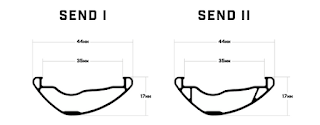
Rim profiles for the new "Send" rims from Black Bird.
Interesting New Rim Extrusion For MTB From Black Bird:

Rims for bicycle wheels have changed a lot in the past 20 years. Probably the most notable advancement has been in materials technology which has allowed for carbon fiber to be utilized as a material suitable for making rims for all manner of bicycles. 

One thing that has come out of the carbon rim designs of recent years is a use of a wider rim bead/edge to help tires not pinch flat when ridden at lowered pressures and on rocky terrain. Carbon is pretty easy to mold into any shape, so this feature was typically reserved for the most expensive of rims for mountain and gravel biking. 

Well, Ibis Cycles has now spun off a new brand and have designed an aluminum extrusion which mimics the same benefits in terms of pinch flat protection for enduro MTB racing, and presumably, any suitable mountain biking style. The brand Ibis created is called "Black Bird" and the new rim model is called the "Send". 

Ibis cleverly engineered a hollow section at the bead, creating the wider, blunter profile that carbon has utilized for a rim bead, but without the weight penalty of a solid aluminum structure there. The Send II model goes one step further with an extrusion featuring a supportive "strut" underneath the rim bead which further stiffens and strengthens the entire rim. 

Comments: This feature of the Black Bird Send rims is not completely unheard of. I searched the internet and found a few examples of hollow rim bead extrusions, but it is rare, and in this application, totally unique. It would be interesting to see this brought over to the gravel riding segment.

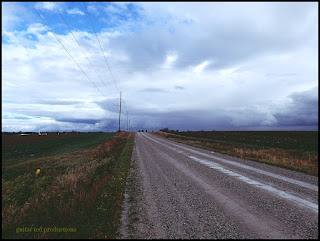
A Country View from 2015
Thinking About 'Riding Plans' Instead Of 'Events':

So, I see events are starting to really push registrations and therefore, commitments, for 2022. Can't say as I blame anyone on either side of the equation here. Promoters are eager to host folks after two years of sparse event choices and riders are eager to rub shoulders with other riders. 

I get that. However; if I've learned anything over this past two year period it is that I dearly love making my own challenges and I don't like the pressures associated with getting ready, preparing to travel, and dealing with logistics that are part and parcel of going to an 'event'. Not to mention the monetary commitment. 

I'm not saying "I'm not doing events." NO! Not at all. I am saying that it will have to be a pretty darn special deal if I am going to put up with the pressures and stresses created by how I deal with events. It's a personal issue, I am sure, and many of you probably don't understand why I wouldn't want to do a bunch of events on gravel. Just think about all the "fun" I'd miss out on by secluding myself to only what I want to put up with. 

I understand completely why many of you might be thinking that. I say- you do you. I'm not saying you should not go all over and see all kinds of people and ride rad gravel events and get all the props for finishing that you deserve. Good on ya! It just doesn't really do much for me anymore. 

I do like riding.On gravel. A LOT! Just not with a number pinned on and all that comes with that. I like stopping, or going, when I like, or when a small group likes to, and not being caught up in big time event pressures. If I want to lay in a ditch and take a nap, (like I did at Gravel Worlds more than once, and elsewhere) I don't want to feel 'bad' about that. If I decide to cut my day short, I don't want to feel like I 'wasted my money' or disappointed anyone rooting for me because it was an event. I don't want to spend hundreds of dollars to travel and stay in a motel when I could camp, or ride somewhere near Waterloo. 

I've done all that and I've stayed around here and have done my own 'riding plans' and I know which way was more fun. So, unless an event is REALLY compelling, yeah...... I'm not real sure I'll be going to anything soon. Not saying 'never going anywhere', far from it. I just have really enjoyed things like my "quest" in 2020 and the ToBHC that I did last year. More of that- less of the organized, big production stuff for me. 

That's a wrap on this Randomonium. Thank you for reading Guitar Ted Productions

Randomonium

 NOTE: Okay folks, if you haven't been around long enough here to know what a "Randomonium" post is, then here is the deal. I ramble, rant, and randomly moan about all things cycling in one, incohesive, bizarre post. "Randomonium", okay?

The Cotic Cascade
Fargo-like Bikes Appear To Satisfy Fat Tire Adventurers:

Recently I've noted that there is a rash of drop bar adventure bike choices out there now which can trace their lineage back to Salsa Cycle's original Fargo. Modernized a bit, to be sure, and set up with all the "Adventure Warts®" one could ever need. (Note- the term "Adventure Warts®" is my technical term for mounting bosses. ) 

The brand-spankin' new Cotic (Like 'psycotic' without the 'psy') Cascade model being one such introduction. This particular model derives more from a Gen 2 Fargo since it has a suspension corrected fork and no single speed option. Then there is the Panorama Cycles Taiga EXP which is more reminiscent of a current Fargo with a single speed option in the sliding rear drop outs. The Singular Gryphon is also set to make a comeback, but I'll have more to say about that one tomorrow along with some words about Panorama's flat bar Taiga bike on Saturday. 

Grinder Nationals Moves Venue:

The US Endurance sanctioning group has held a Gravel Grinder Nationals in Lawrence, Kansas for the past five years. Winners in each category have been awarded National Championship jerseys. Did you know that? Yep! Way before the bunch over at USA Cycling got a whiff of the gravel scene, these US Endurance folks have been paying attention and jumped in a while back. 

Anyway, after five years in the same place, US Endurance is moving Grinder Nationals. Here's a bit from the press release:

"After a 5-year residency in Lawrence, Kansas, the Gravel
Grinder National Championship presented by US Endurance is moving to the MidAtlantic and
scheduled to take place in beautiful Loudoun County, Virginia on May 7, 2022. Registration opens
Tuesday, February 1, 2022 on BikeReg.com

This year’s event, in conjunction with Dirty Kitten Productions, will feature a 100-mile “Grinder
Nationals” championship race and a 30-mile “Mini G” recreational ride on historic Loudoun
County gravel roads. Riders will start at B Chord Brewing Company & Farm in Round Hill, VA then
wind their way through the surrounding areas of Bluemont, Philomont, Purcellville, and Lovettsville.
"

Registration is HERE and you can check out more details at their website. 

Rim profiles for the new "Send" rims from Black Bird.
Interesting New Rim Extrusion For MTB From Black Bird:

Rims for bicycle wheels have changed a lot in the past 20 years. Probably the most notable advancement has been in materials technology which has allowed for carbon fiber to be utilized as a material suitable for making rims for all manner of bicycles. 

One thing that has come out of the carbon rim designs of recent years is a use of a wider rim bead/edge to help tires not pinch flat when ridden at lowered pressures and on rocky terrain. Carbon is pretty easy to mold into any shape, so this feature was typically reserved for the most expensive of rims for mountain and gravel biking. 

Well, Ibis Cycles has now spun off a new brand and have designed an aluminum extrusion which mimics the same benefits in terms of pinch flat protection for enduro MTB racing, and presumably, any suitable mountain biking style. The brand Ibis created is called "Black Bird" and the new rim model is called the "Send". 

Ibis cleverly engineered a hollow section at the bead, creating the wider, blunter profile that carbon has utilized for a rim bead, but without the weight penalty of a solid aluminum structure there. The Send II model goes one step further with an extrusion featuring a supportive "strut" underneath the rim bead which further stiffens and strengthens the entire rim. 

Comments: This feature of the Black Bird Send rims is not completely unheard of. I searched the internet and found a few examples of hollow rim bead extrusions, but it is rare, and in this application, totally unique. It would be interesting to see this brought over to the gravel riding segment.

A Country View from 2015
Thinking About 'Riding Plans' Instead Of 'Events':

So, I see events are starting to really push registrations and therefore, commitments, for 2022. Can't say as I blame anyone on either side of the equation here. Promoters are eager to host folks after two years of sparse event choices and riders are eager to rub shoulders with other riders. 

I get that. However; if I've learned anything over this past two year period it is that I dearly love making my own challenges and I don't like the pressures associated with getting ready, preparing to travel, and dealing with logistics that are part and parcel of going to an 'event'. Not to mention the monetary commitment. 

I'm not saying "I'm not doing events." NO! Not at all. I am saying that it will have to be a pretty darn special deal if I am going to put up with the pressures and stresses created by how I deal with events. It's a personal issue, I am sure, and many of you probably don't understand why I wouldn't want to do a bunch of events on gravel. Just think about all the "fun" I'd miss out on by secluding myself to only what I want to put up with. 

I understand completely why many of you might be thinking that. I say- you do you. I'm not saying you should not go all over and see all kinds of people and ride rad gravel events and get all the props for finishing that you deserve. Good on ya! It just doesn't really do much for me anymore. 

I do like riding.On gravel. A LOT! Just not with a number pinned on and all that comes with that. I like stopping, or going, when I like, or when a small group likes to, and not being caught up in big time event pressures. If I want to lay in a ditch and take a nap, (like I did at Gravel Worlds more than once, and elsewhere) I don't want to feel 'bad' about that. If I decide to cut my day short, I don't want to feel like I 'wasted my money' or disappointed anyone rooting for me because it was an event. I don't want to spend hundreds of dollars to travel and stay in a motel when I could camp, or ride somewhere near Waterloo. 

I've done all that and I've stayed around here and have done my own 'riding plans' and I know which way was more fun. So, unless an event is REALLY compelling, yeah...... I'm not real sure I'll be going to anything soon. Not saying 'never going anywhere', far from it. I just have really enjoyed things like my "quest" in 2020 and the ToBHC that I did last year. More of that- less of the organized, big production stuff for me. 

That's a wrap on this Randomonium. Thank you for reading Guitar Ted Productions

Friday, November 13, 2020

Friday News And Views

2020 Cutthroat frame/fork
 Salsa Cycles Issues Recall Notices On Cutthroat, Cutthroat Frame sets, And Carbon Forks: 

Earlier this week Salsa Cycles issued recall notices for certain Cutthroat, Cutthroat frame sets, and after market carbon forks. See the specifics here: https://salsacycles.com/cutthroat-carbon-v2-fork-recall

The statement released by Salsa Cycles reads as follows: 

"In some instances, the fork can crack or break which could lead to a crash. Stop riding your bicycle immediately and take it to a Salsa Authorized Retailer for inspection or replacement if necessary."

The models are listed on the site at the link provided above. Be aware that you cannot identify fork batch serial numbers without removing the fork, so an outward inspection is not enough. Please follow recommendations and check out your Cutthroat at a Salsa Cycles dealer if you think it may be affected by this recall.  

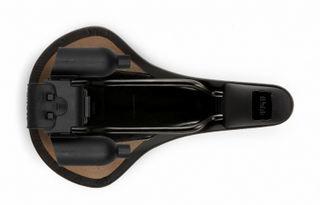
The fizik Alpaca Tool Carrier as mounted to a Terra XC saddle. Image courtesy of fizik.
fizik Debuts Tool Storage Solution:

Remember in last week's "FN&V" post where I shared with you all about that 'gravel specific Terra saddle from fizik? Well, they just announced a tool storage solution to go along with those saddles also. It is called the Alpaca Tool Carrier. 

It is not completely obvious how the Alpaca Tool Carrier integrates with the Terra saddles, but fizik says in its press release that" For a secure, integrated connection, the Tool Carrier easily affixes to your Alpaca saddle with a single screw." At any rate, you get a 12 function multi-tool and a place for two CO2 cartridges. The multi-tool body does double duty as an air inflation head. You also get "removable housing for two C02 cartridges, reusable zip ties and extra space for other small essentials. "

This isn't the first integrated tool carrying solution which works with a cycling saddle. THAT distinction would go to the Brooks B-17, most likely. Those two metal tabs on the back edge of Brooks B-17's are supposed to be mounting points for a leather tool bag, which Brooks also makes, (or did until recently). 

The fizik solution may appeal to those who buy into this saddle. It's kind of a neat, streamlined way to do things if you are all about CO2 carts. I know many of you are not really fans for various reasons. I also am not, but many folks dig the idea and this may be something that appeals to your needs. 

Arc8's new 'Eero' model gravel bike. Image courtesy of Arc8
A Look At The Latest In 'Gravel' Bikes: 

You may have noticed the mainstream cycling press sounding off on a new 'gravel' bike from a Swiss company called Arc8. The model the sites were carrying on about is the Eero, which is the first name of a famous rally car driver from the past with a penchant for gravel road performances, apparently. 

At any rate, while the marketing claims and hyperbole surrounding this release is somewhat laughable, I wanted to see what, if anything, this bike has that 'gravel' bikes had back in 2014 when the Tamland came around. So with that in mind, let's scrutinize the differences, shall we?

The Eero has what has been termed a 'more racy gravel geometry' which is not all slacked out. Hmm.... Okay, I found that these bikes sport a 71° head angle with a 50mm fork offset. The Tamland sported a 71.5° head angle with the same 50mm offset. The Eero has a 75mm bottom bracket drop with 420mm chain stays and clearances for 'up to a 50mm tire'. The Tamland had a 72.5mm bottom bracket drop with 435mm chain stays and clearances for up to a 50mm tire. 

The Eero has a frame which is carbon fiber, with claimed stiffness in the bottom bracket and a stiffer head tube than previous models offered by Arc8. The Tamland had a Reynolds 631 frame and fork with a beautiful 'steel' ride, and not at all like a carbon bike. 

The Eero also has the now prized 'clean' look since ALL it's cables are internally routed starting at the stem. The Raleigh had traditional, external routed cables with full run housing for both front and rear brakes.  Both bikes have two water bottle bosses inside the front triangle. The Eero also has a 'bento box' mount on the top tube and an additional cage mount underneath the down tube, as did later Tamlands. 

Comments: The geometry hasn't changed all that much with the exception of 'road racer' inspired short chain stays, which some say make the bike feel 'snappier'. I don't know about that, but I do know shoving the rear wheel underneath your butt more, (especially on larger sized riders) is a recipe for a bouncier ride off pavement. It also sketches out loose gravel descents. Noted also that the stiffness of the Eero was touted. Again- not exactly what we gravel riding folks are looking to have there. 

There are no provisions for bottle mounts on the forks of either this or the Tamland. However; you probably wouldn't want to ride a really stiff bike long enough to drink five water bottles worth of fluids either.  Or maybe you would. Good luck with that. 

Anyway, this whole 'gravel' thing should really be seen as an 'anti-racing', all-road, adventure, utility bike, better than racing bikes bike. Not a super-stiff race rocket, which is pretty much what the Eero sounds like to me. Maybe I'm all wrong, but if this is what becomes of gravel bikes, well some of it is right on, but rider comfort and control are, once again, being sacrificed. Not to mention ease of maintenance with the stupid internally routed stem cables. Gah! At least the Eero has a threaded bottom bracket. 

The WTB CZR rim in 23mm internal width. Image courtesy of WTB.
WTB Announces New Carbon Rims With The CZR:

Thursday WTB released news that they had a new offering for carbon rims dubbed CZR. Coming in two internal width sizes of 23mm and 30mm, WTB is aiming at the gravel and MTB riders here. This rim is lightweight, obviously, but according to WTB's press release, the CZR rims have also been tested and found to be very tough and stiff laterally. Both very desirable traits in a rim for off-pavement usage.   

The CZR also features WTB's 4D spoke hole 'geometry', which as a wheel builder myself, having used this feature, I can tell you that it does reduce unwanted tensions on the spoke where it exits the rim. This theoretically leads to a longer spoke life. I built an aluminum rimmed wheel set using WTB's 4D spoke drilling back 8 years ago and those wheels are still going with zero spoke issues. That's one data point, but it also is something to consider. 

Now for the bad part: $569.95 for EACH rim. Ouch! But......here's how I would look at this: You build up a set here with a decent hub set, let's say you spend around $600-$700 on that, then spokes, nipples, rim tape, and these rims. For under 2G you'd have a premium set of wheels, hand built, and I would expect them to last years and years. I mean, for gravel road riding? I'd think well over ten years would be nothing. You'd replace hub bearings maybe a time or three, but that's it. So, it would make sense for someone to build up a set IF they were thinking they would be cycling seriously and a lot for many years with a bike style that would fit this wheel's MO. 

Now on the MTB side, eh......less of a long term prospect here. Why? Well, wheel standards have changed what? Three times in the last ten years?  Changed so much that hubs are completely different lengths and with completely different interfaces. So, given that history, I would be remiss if I didn't think that trend would continue. In my opinion, the gravel bike thing is less likely to change, but even so- one could re-lace these to a new hub set. So, you would have to maybe think along those lines to justify the price. 

At any rate, an interesting new carbon rim here and something that can be used to lace up to any high end hub. There is a crash replacement warranty and a limited lifetime warranty on these as well. Check it out at WTB's site.  

That's a wrap for this week. Hope you all are getting outside! 

Friday News And Views

2020 Cutthroat frame/fork
 Salsa Cycles Issues Recall Notices On Cutthroat, Cutthroat Frame sets, And Carbon Forks: 

Earlier this week Salsa Cycles issued recall notices for certain Cutthroat, Cutthroat frame sets, and after market carbon forks. See the specifics here: https://salsacycles.com/cutthroat-carbon-v2-fork-recall

The statement released by Salsa Cycles reads as follows: 

"In some instances, the fork can crack or break which could lead to a crash. Stop riding your bicycle immediately and take it to a Salsa Authorized Retailer for inspection or replacement if necessary."

The models are listed on the site at the link provided above. Be aware that you cannot identify fork batch serial numbers without removing the fork, so an outward inspection is not enough. Please follow recommendations and check out your Cutthroat at a Salsa Cycles dealer if you think it may be affected by this recall.  

The fizik Alpaca Tool Carrier as mounted to a Terra XC saddle. Image courtesy of fizik.
fizik Debuts Tool Storage Solution:

Remember in last week's "FN&V" post where I shared with you all about that 'gravel specific Terra saddle from fizik? Well, they just announced a tool storage solution to go along with those saddles also. It is called the Alpaca Tool Carrier. 

It is not completely obvious how the Alpaca Tool Carrier integrates with the Terra saddles, but fizik says in its press release that" For a secure, integrated connection, the Tool Carrier easily affixes to your Alpaca saddle with a single screw." At any rate, you get a 12 function multi-tool and a place for two CO2 cartridges. The multi-tool body does double duty as an air inflation head. You also get "removable housing for two C02 cartridges, reusable zip ties and extra space for other small essentials. "

This isn't the first integrated tool carrying solution which works with a cycling saddle. THAT distinction would go to the Brooks B-17, most likely. Those two metal tabs on the back edge of Brooks B-17's are supposed to be mounting points for a leather tool bag, which Brooks also makes, (or did until recently). 

The fizik solution may appeal to those who buy into this saddle. It's kind of a neat, streamlined way to do things if you are all about CO2 carts. I know many of you are not really fans for various reasons. I also am not, but many folks dig the idea and this may be something that appeals to your needs. 

Arc8's new 'Eero' model gravel bike. Image courtesy of Arc8
A Look At The Latest In 'Gravel' Bikes: 

You may have noticed the mainstream cycling press sounding off on a new 'gravel' bike from a Swiss company called Arc8. The model the sites were carrying on about is the Eero, which is the first name of a famous rally car driver from the past with a penchant for gravel road performances, apparently. 

At any rate, while the marketing claims and hyperbole surrounding this release is somewhat laughable, I wanted to see what, if anything, this bike has that 'gravel' bikes had back in 2014 when the Tamland came around. So with that in mind, let's scrutinize the differences, shall we?

The Eero has what has been termed a 'more racy gravel geometry' which is not all slacked out. Hmm.... Okay, I found that these bikes sport a 71° head angle with a 50mm fork offset. The Tamland sported a 71.5° head angle with the same 50mm offset. The Eero has a 75mm bottom bracket drop with 420mm chain stays and clearances for 'up to a 50mm tire'. The Tamland had a 72.5mm bottom bracket drop with 435mm chain stays and clearances for up to a 50mm tire. 

The Eero has a frame which is carbon fiber, with claimed stiffness in the bottom bracket and a stiffer head tube than previous models offered by Arc8. The Tamland had a Reynolds 631 frame and fork with a beautiful 'steel' ride, and not at all like a carbon bike. 

The Eero also has the now prized 'clean' look since ALL it's cables are internally routed starting at the stem. The Raleigh had traditional, external routed cables with full run housing for both front and rear brakes.  Both bikes have two water bottle bosses inside the front triangle. The Eero also has a 'bento box' mount on the top tube and an additional cage mount underneath the down tube, as did later Tamlands. 

Comments: The geometry hasn't changed all that much with the exception of 'road racer' inspired short chain stays, which some say make the bike feel 'snappier'. I don't know about that, but I do know shoving the rear wheel underneath your butt more, (especially on larger sized riders) is a recipe for a bouncier ride off pavement. It also sketches out loose gravel descents. Noted also that the stiffness of the Eero was touted. Again- not exactly what we gravel riding folks are looking to have there. 

There are no provisions for bottle mounts on the forks of either this or the Tamland. However; you probably wouldn't want to ride a really stiff bike long enough to drink five water bottles worth of fluids either.  Or maybe you would. Good luck with that. 

Anyway, this whole 'gravel' thing should really be seen as an 'anti-racing', all-road, adventure, utility bike, better than racing bikes bike. Not a super-stiff race rocket, which is pretty much what the Eero sounds like to me. Maybe I'm all wrong, but if this is what becomes of gravel bikes, well some of it is right on, but rider comfort and control are, once again, being sacrificed. Not to mention ease of maintenance with the stupid internally routed stem cables. Gah! At least the Eero has a threaded bottom bracket. 

The WTB CZR rim in 23mm internal width. Image courtesy of WTB.
WTB Announces New Carbon Rims With The CZR:

Thursday WTB released news that they had a new offering for carbon rims dubbed CZR. Coming in two internal width sizes of 23mm and 30mm, WTB is aiming at the gravel and MTB riders here. This rim is lightweight, obviously, but according to WTB's press release, the CZR rims have also been tested and found to be very tough and stiff laterally. Both very desirable traits in a rim for off-pavement usage.   

The CZR also features WTB's 4D spoke hole 'geometry', which as a wheel builder myself, having used this feature, I can tell you that it does reduce unwanted tensions on the spoke where it exits the rim. This theoretically leads to a longer spoke life. I built an aluminum rimmed wheel set using WTB's 4D spoke drilling back 8 years ago and those wheels are still going with zero spoke issues. That's one data point, but it also is something to consider. 

Now for the bad part: $569.95 for EACH rim. Ouch! But......here's how I would look at this: You build up a set here with a decent hub set, let's say you spend around $600-$700 on that, then spokes, nipples, rim tape, and these rims. For under 2G you'd have a premium set of wheels, hand built, and I would expect them to last years and years. I mean, for gravel road riding? I'd think well over ten years would be nothing. You'd replace hub bearings maybe a time or three, but that's it. So, it would make sense for someone to build up a set IF they were thinking they would be cycling seriously and a lot for many years with a bike style that would fit this wheel's MO. 

Now on the MTB side, eh......less of a long term prospect here. Why? Well, wheel standards have changed what? Three times in the last ten years?  Changed so much that hubs are completely different lengths and with completely different interfaces. So, given that history, I would be remiss if I didn't think that trend would continue. In my opinion, the gravel bike thing is less likely to change, but even so- one could re-lace these to a new hub set. So, you would have to maybe think along those lines to justify the price. 

At any rate, an interesting new carbon rim here and something that can be used to lace up to any high end hub. There is a crash replacement warranty and a limited lifetime warranty on these as well. Check it out at WTB's site.  

That's a wrap for this week. Hope you all are getting outside!